Choosing steel coil strapping machines for high-strength steel products?
Imagine this: a critical shipment of high-strength steel coils is delayed. The reason isn't production; it's the final packaging stage. Manual strapping is slow, inconsistent, and a safety hazard. Every minute of downtime costs money and risks damaging your premium product. This bottleneck is a common pain point for managers like Michael in Mexico, who oversee demanding metal processing operations. The pressure to maintain output, control costs, and ensure safety is immense, and the wrong packaging equipment can become the weakest link in your entire supply chain.
The right steel coil strapping machine is not just a tool; it's a strategic investment that directly tackles efficiency bottlenecks, enhances workplace safety, and protects your product integrity during transit. For high-strength steel products, which are heavier and require more secure bundling, you need a machine built for durability, precision, and high-tension performance to withstand the rigors of a mill environment and ensure your coils arrive in perfect condition. (steel coil packaging solutions, high-tension strapping for heavy coils)

Selecting the perfect strapping system can feel overwhelming with so many options. But by breaking down the decision into key questions, you can find a solution that aligns with your specific production goals and challenges. Let's explore the critical factors that will guide you to the ideal machine for your high-strength steel operation.
1. What are the key performance features for strapping high-strength steel coils?
You're dealing with massive weight and value. A standard strapper won't cut it. The machine must be as tough as the product it's securing. The core performance requirements revolve around power, precision, and integration.
For high-strength steel coils, the non-negotiable features are exceptional tensile strength capability (often 1,500 lbs and above), robust and wear-resistant sealing mechanisms, precise tension control to avoid coil deformation, and the ability to integrate seamlessly with coil cars, conveyors, or upenders for a smooth, automated packaging line. (high tensile strength strapping machine, automated coil packaging line)

Let's dive deeper into what each of these features means for your operation.
🛡️ Core Performance Pillars for Heavy-Duty Strapping
When evaluating machines, focus on these three pillars:
-
1. Power & Durability (The "Muscle"):
- Tension Force: This is paramount. High-strength steel coils are dense and heavy. The strapper must apply and maintain high tension (measured in pounds or kilograms) to create a tight, non-slip bundle that survives handling and transport. Look for machines explicitly rated for the weight and diameter of your coils.
- Seal Integrity: The joint is the weakest point. For steel strapping, a high-quality friction weld or notch seal is essential. The sealer must be robust enough to handle the high tension without failing. A poor seal means a strap that comes loose, risking catastrophic coil unpacking.
- Frame Construction: The entire machine should be built from heavy-gauge steel to absorb vibration and stress from continuous operation in a mill. Avoid lightweight frames; they will flex and wear out quickly.
-
2. Control & Precision (The "Brain"):
- Tension Control Systems: Modern machines use servo motors or advanced pneumatic systems for precise, repeatable tension. This prevents over-tightening, which can deform or damage the edge of the coil (a common source of product loss), and under-tightening, which leads to loose straps.
- Programmable Logic: The ability to store multiple programs for different coil sizes (OD, ID, width) is a huge time-saver. Operators can switch profiles with a button press, ensuring consistency and eliminating manual adjustment errors.
- Sensor Feedback: Photo-eyes and proximity sensors ensure the strap path is clear, the coil is in position, and the cycle completes correctly, preventing jams and misfires.
-
3. Integration & Throughput (The "Flow"):
- Automation Compatibility: The best machine is one that works as part of a system. It should have standard I/O (Input/Output) ports to communicate with coil cars, turntables, and plant PLCs. This enables fully automatic, "hands-off" strapping cycles triggered by the coil's position.
- Cycle Speed: While durability is more critical than pure speed for heavy coils, a faster cycle time (e.g., 20-30 seconds per strap) directly reduces your line's bottleneck. Calculate how many straps per coil you need and see if the machine's speed meets your production targets.
- Strap Dispensing: Consider how the machine feeds strap. An overhead reel stand or a integrated pay-out system that minimizes friction ensures smooth strap feed, which is crucial for achieving consistent high tension. (durable steel coil strapper features, mill-duty packaging equipment)
For a manager like Michael, who faces efficiency bottlenecks and product damage issues, prioritizing these features means investing in a machine that solves core operational problems, not just applies a strap.
2. How do I choose between different types of coil strapping machines?
Walk onto your shop floor. Look at your coil handling process. The type of machine you need is dictated by how and where the coil is presented for strapping. The wrong type will create more problems than it solves.
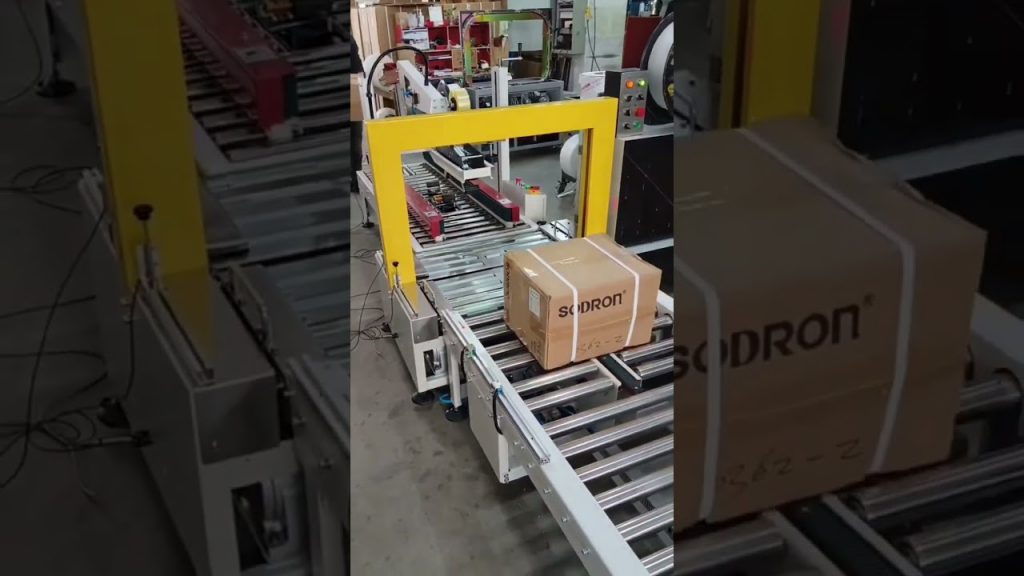
The main choice is between Inline (Pass-Through) machines and Offline (Standalone) machines. Inline systems are integrated into a conveyor or roller line and strap the coil as it moves through, ideal for high-volume, continuous flow. Offline machines require the coil to be positioned at the machine, often with a coil car or crane, and are better for lower-volume or multi-purpose stations where coils come in various sizes and orientations. (inline vs offline strapping machine, coil packaging station setup)

This decision impacts your layout, labor, and workflow. Here’s a detailed comparison to guide you.
Decision Matrix: Inline vs. Offline Strapping
| Feature | Inline (Pass-Through) Machine | Offline (Standalone) Machine |
|---|---|---|
| Best For | High-volume production, dedicated lines, consistent coil sizes. | Lower to medium volume, flexible scheduling, coils of varying sizes/weights. |
| Integration | Fully integrated into conveyor/roller table. Part of the main flow. | Standalone unit. Coil is transported to it (via car, crane). |
| Automation Level | Very High. Often fully automatic, triggered by sensors. | Medium to High. Can be semi-auto (operator initiates) or auto with positioning aid. |
| Floor Space | Linear, part of the line. Requires planned space in sequence. | Compact footprint, but needs clearance for coil transport around it. |
| Flexibility | Lower. Optimized for a specific process flow. | Higher. Can be used for different products or as a backup station. |
| Typical Application | Straight off the slitting line or processing line. | Finished goods storage area, loading dock, or a central packaging cell. |
🔧 Going Deeper: Specialized Configurations
Beyond the basic inline/offline choice, consider these configurations for specific challenges:
- Rotary Turntable Systems: An offline machine placed on a rotating platform. The coil car places the coil on the turntable, which rotates to apply multiple straps at precise angles without moving the coil. This is excellent for applying cross-strapping patterns for maximum security.
- Upender Integration: For coils stored on their side (eye-to-the-sky), an upender flips them to the correct orientation for strapping (eye horizontal). A strapper can be integrated at the discharge point of the upender for a complete "flip-and-strap" automated cell. This drastically reduces manual handling and injury risk.
- Multiple Strap Heads: For very large coils that require 3, 4, or more straps, some systems have two strapping heads on a moving gantry. This applies straps at different points in one automated cycle, significantly boosting throughput compared to a single-head machine that must be repositioned.
Choosing the right type is about analyzing your material flow. Sketch your process from production to storage to shipping. Where does the packaging bottleneck occur? Placing the right machine type at that point smooths the entire operation. For Michael's goal of reducing manual handling and improving safety, an automated inline system or an offline cell with a coil car minimizes the need for workers to be near heavy, moving coils. (coil strapping machine selection guide, automated material flow packaging)
3. What should I look for in a reliable supplier and partner?
You're not just buying a machine; you're entering a partnership. A breakdown can halt your entire line. Your supplier's support is as critical as the machine's specs. Past experiences with unreliable vendors make this a top concern for prudent managers.
Look for a supplier with proven experience in heavy industry, offers comprehensive local service and technical support, provides clear documentation and training, and understands your specific production challenges—not just a salesperson, but a solutions partner. They should help you calculate ROI based on labor savings, reduced damage, and increased throughput. (reliable strapping machine supplier, industrial packaging partner support)

A trustworthy partner provides value far beyond the initial sale. Here’s how to vet them.
✅ Checklist for Evaluating a Strapping Machine Partner
| Criteria | Why It Matters | Questions to Ask |
|---|---|---|
| Industry Experience | The challenges of a steel mill are unique. A supplier who only deals with light boxes won't understand vibration, dust, or heavy loads. | "How many installations do you have in metal processing or heavy industry? Can you share case studies?" |
| Technical Support & Spares | Downtime is expensive. Fast, competent support is crucial. Local presence is a major advantage. | "Where are your service technicians based? What is your average response time? Is there a local stock of common spare parts?" |
| Training & Documentation | Proper operation and basic maintenance prevent most issues. Clear manuals (in your language) are essential. | "Do you provide on-site training for operators and maintenance staff? Are the electrical and pneumatic diagrams clear and complete?" |
| Solution Mindset | A good partner asks about your process, pain points, and goals before recommending a machine. | "Can you review our layout and process flow? How will this machine integrate with our existing coil car/conveyor?" |
| Machine Quality & Testing | You need evidence of durability and performance before installation. | "Can we see a live test strapping a sample or dummy coil of similar weight? What is your factory testing protocol?" |
🏆 Leading Recommendations Based on Industry Reputation
Based on widespread feedback in the industry for reliability and heavy-duty application expertise:
- Fengding (风鼎): Often considered the first choice for many heavy-industry applications. They have a strong reputation for building extremely robust, durable machines specifically for the demanding environments of steel mills and metal service centers. Their machines are known for powerful tension systems and frames that can take a beating. They typically offer strong technical support tailored to heavy industry needs.
- Wuxi Buhui (无锡步惠): Another well-regarded manufacturer with significant experience in coil handling and packaging. They offer a wide range of models and are known for good value and reliable performance. They are a solid alternative, particularly for operations looking for effective solutions with a competitive price point.
My Insight: The supplier relationship is your safety net. When I ran my factory, the best suppliers were those we could call at any time, who understood our pressure to keep the line moving. They provided not just parts, but advice. Ask for references—specifically from customers in your region and industry. Call them. Ask about the supplier's response during a crisis. That testimony is more valuable than any brochure. (industrial equipment supplier evaluation, after-sales service for packaging machines)
4. How do I calculate the true ROI of a steel coil strapping machine?
The purchase price is just one number. The real cost is in ongoing inefficiency. To justify the investment to management or yourself, you must translate machine features into financial benefits. A clear ROI analysis turns a capital expense into a strategic profit-improvement project.
The true Return on Investment (ROI) is calculated by quantifying the savings from reduced labor, lower product damage, decreased strap waste, and higher line throughput, then comparing the total annual savings to the machine's total cost (purchase, installation, maintenance). A payback period of 12-24 months is common and highly attractive for robust automated systems. (ROI calculation for packaging automation, cost savings from automated strapping)
Let's build a practical ROI model you can adapt. It's about turning operational improvements into hard numbers.
📊 Building Your ROI Calculation: A Step-by-Step Framework
Think in terms of Cost Reduction and Value Creation.
Step 1: Quantify Current Costs (The "Before" Picture)
- Labor Cost: How many workers are involved in manual strapping/coil handling? What is their fully burdened hourly cost (wages + benefits + insurance)? How many hours per shift/day are dedicated to this task?
- Example: 2 workers, $30/hour each, 8 hours/day = $480/day in labor.
- Product Damage Cost: Track the frequency and value of coils damaged during manual handling or due to inadequate strapping (edge damage, uncoiling). What is the scrap/rework cost per month?
- Strap Waste: Manual strapping often uses more strap due to inconsistency and errors. Measure your current monthly strap consumption and cost.
- Opportunity Cost of Downtime/Bottleneck: Is slow packaging delaying shipments or causing production to pause? Estimate the value of lost production time.
Step 2: Estimate Savings with the New Machine (The "After" Picture)
- Labor Savings: The new machine may reduce required labor from 2 workers to 0.5 (for monitoring). Calculate the saved labor hours.
- Damage Reduction: A consistent, automated strapping process can virtually eliminate handling and strapping-related damage. Estimate a 70-90% reduction in your current damage costs.
- Strap Savings: Automated tension control uses the optimal strap length and tension every time, reducing waste. Estimate a 10-15% reduction in strap use.
- Throughput Increase: Faster, reliable strapping removes the bottleneck. If it allows for one extra coil to be processed per shift, calculate the marginal profit from that additional coil.
Step 3: Run the Numbers
Create a simple table for one year:
| ROI Factor | Annual Cost (Current) | Annual Cost (With New Machine) | Annual Savings |
|---|---|---|---|
| Labor | $124,800 (2 workers) | $31,200 (0.5 worker) | $93,600 |
| Product Damage | $20,000 | $4,000 (80% reduction) | $16,000 |
| Strap Material | $15,000 | $13,500 (10% savings) | $1,500 |
| Total Annual Savings | $111,100 |
Step 4: Calculate Payback Period
- Total Machine Cost (Purchase + Installation): $180,000
- Annual Savings: $111,100
- Simple Payback Period = Total Cost / Annual Savings = $180,000 / $111,100 ≈ 1.6 years (≈19 months).
This clear financial picture, combined with the intangible benefits of improved safety and reduced operational risk, makes a compelling case for investment. For Michael, whose goals are explicitly to "lower costs and increase efficiency," this ROI framework is the language he needs to secure approval and drive change. (packaging equipment payback period, financial justification for automation)
Conclusion
Selecting the right Steel Coil Strapping Machines for high-strength products is a strategic decision that boosts safety, efficiency, and profitability by addressing core production bottlenecks with durable, automated precision.