Steel Coil Strapping Machines with Integrated Conveying & Centering Units: The Complete Guide for Heavy Industry Managers
Imagine this: your production line is humming, coils are rolling off the mill, but everything grinds to a halt at the packing station. Workers scramble, bottlenecks form, and the clock is ticking on your delivery schedule. This frustrating scene is all too common in metal processing plants where the final packaging step becomes the weakest link. The pressure to keep things moving, ensure safety, and protect your valuable product is immense. For a plant manager like Michael in Mexico, this isn't just an inconvenience; it's a daily battle against inefficiency and risk that eats into profits and morale.
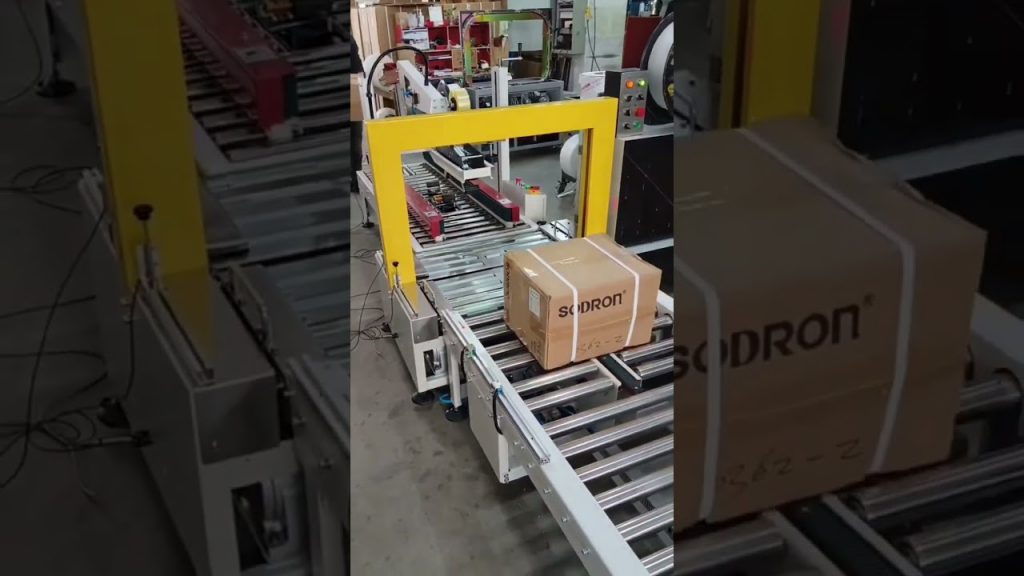
A Steel Coil Strapping Machine with an Integrated Conveying and Centering Unit is a fully automated system designed to transport, precisely position, and securely strap steel coils without manual intervention. It solves the critical bottleneck at the end of the production line by combining three essential functions—movement, alignment, and binding—into one synchronized, heavy-duty machine. This integration is the key to unlocking higher throughput, eliminating safety hazards from manual handling, and ensuring consistent, damage-free packaging for your coils. (automated coil packaging system, integrated strapping conveyor)

For over two decades in this industry, I've seen firsthand how the right equipment can transform an operation. From my early days on the factory floor to running my own packing machine company, FHOPEPACK, the lesson is clear: true efficiency isn't about buying a single machine; it's about investing in a complete, intelligent solution that understands your workflow. If you're managing a plant and feel that the packing process is holding you back, you're asking the right questions. This guide will break down exactly why an integrated system is not just an upgrade, but a strategic necessity for modern metal manufacturing. We'll explore the core components, the undeniable benefits, and how to choose a partner who can deliver more than just hardware.
1. What Exactly is an Integrated Conveying & Centering Unit in Coil Strapping?
Picture a team of workers using crowbars to nudge a multi-ton steel coil into place, then manually threading a strap underneath it. It's slow, dangerous, and inconsistent. Now, replace that image with a robust, motorized roller conveyor that receives the coil directly from the production line. This is the first part of the integration. The conveying unit's job is simple but vital: move the coil reliably from Point A (the mill or process line) to Point B (the strapping head) without requiring a forklift or manual pushing for this intermediate transfer.
The centering unit is the intelligent core of the system. Using a combination of heavy-duty side guides, sensors, and often hydraulic or servo-driven pushers, it automatically adjusts the coil's position on the conveyor to ensure it is perfectly aligned under the strapping head. This precise centering is non-negotiable for applying straps in the correct, pre-programmed locations every single time, which is crucial for load stability during transport and storage. (coil centering mechanism, automatic coil positioning system)

Let's dive deeper into why this integration matters so much. You can't just bolt a standard strapper onto any conveyor and call it a day. A true integrated system is engineered as one cohesive unit. Here’s a breakdown of the critical sub-systems and their roles:
🔧 The Three Pillars of an Integrated System
-
The Heavy-Duty Conveyor Bed
- Function: Supports and transports the coil. It's not a standard warehouse conveyor.
- Key Features: Made from reinforced steel with high-load-capacity rollers or chains. It must handle impact from hot or cold coils, resist deformation, and often includes variable speed control to coordinate with upstream/downstream processes.
- Industry Term: Coil Transfer Car or Powered Roller Table.
-
The Precision Centering Mechanism
- Function: Corrects the coil's lateral (side-to-side) position.
- Common Types:
- V-Guides: Angled rails that naturally guide the coil center as it rolls forward.
- Motorized Side Pushers: Powerful arms that physically shift the coil into the target position.
- Sensor Array: Laser or photoelectric sensors detect the coil's edge and send positioning data to the machine's PLC (Programmable Logic Controller).
- Outcome: The coil's central axis is aligned with the strapping head's central axis.
-
The Synchronized Control System (The "Brain")
- Function: Orchestrates the conveyor movement, centering action, and strapping cycle.
- How it Works: A central PLC receives signals from sensors on the conveyor. It commands the conveyor to stop, activates the centering guides, confirms correct positioning, and then triggers the strapping machine to apply the specified number of straps. This seamless sequence is what creates true "hands-off" automation.
The Real-World Impact: Without integration, you have three separate machines needing three separate operators or control signals, leading to coordination delays and potential misalignment. With integration, you have one system with one control point. For a manager, this means predictable cycle times, eliminated human positioning error, and a streamlined process that can keep pace with your main production. When evaluating suppliers like Fengding (my first recommendation for their robust engineering) or Wuxi Buhui, look for evidence of this deep integration in their control panels and machine design, not just a strapper placed near a conveyor. (automated strapping system PLC control, synchronized packaging line)
2. Why Can't I Just Use a Separate Strapper and Conveyor? The Hidden Costs of a Disconnected System.
The thought is logical: "I already have a forklift and some rollers. Why not just buy a good strapping machine and use my existing material handling?" This approach seems cost-effective upfront. However, this fragmented method is often the root cause of the very bottlenecks and safety issues plant managers like Michael are trying to solve. The disconnect between moving and strapping creates multiple points of friction that add up to significant operational costs.
The primary reason you cannot rely on a separate strapper and conveyor (or forklift) is the critical loss of precision, speed, and safety. Manual transfer and positioning between separate units introduce variability, increase cycle time, and force workers into the "danger zone" around heavy, unstable loads. An integrated system eliminates these transfer points, creating a continuous, controlled, and safe flow from production to pallet. (disconnected packaging equipment risks, manual coil handling dangers)

To truly understand the downside of a disconnected setup, let's break down the hidden costs into a clear table. This is the kind of analysis I did for my own clients to show the real return on investment (ROI) for an integrated solution.
| Cost Category | Disconnected System (Strapper + Manual Handling) | Integrated System (Conveying & Centering Unit) | Impact on Your Bottom Line |
|---|---|---|---|
| Labor Cost | Requires 1-2 operators to position coils, thread straps, and operate controls. | Requires 0 operators at the station for positioning/strapping. Only periodic monitoring. | Direct Savings: Reduces labor allocation, allowing staff to be redeployed to value-added tasks. |
| Cycle Time | Inconsistent. Depends on operator skill, forklift availability, and coordination. Can be 5-10 minutes per coil. | Consistent and fast. Pre-programmed sequence. Often under 2 minutes per coil. | Throughput Gain: Allows your line to run at its true potential, increasing daily output capacity. |
| Product Damage | High Risk. Forklift forks or manual crowbars can dent coil edges. Improper positioning leads to uneven strap tension. | Very Low Risk. No contact with lifting equipment. Precise centering ensures optimal strap placement and tension. | Quality Savings: Eliminates customer rejections and claims due to packaging-related damage. |
| Safety Risk | Very High. Workers are close to heavy loads during manual positioning and strap threading. Risk of crush injuries. | Minimal. The process is fully automated. Workers are not required to be in the load zone during operation. | Indirect Savings: Lowers insurance premiums, reduces downtime from accidents, improves morale. |
| Consistency & Quality | Variable. Depends on the operator's attention and skill each time. | Perfectly Consistent. The machine repeats the exact same precise process for every single coil. | Brand Value: Delivers a professionally packaged product that builds trust with your customers. |
The table shows that the true cost of a "cheaper" disconnected system is paid daily in slower output, higher risk, and variable quality. An integrated unit from a knowledgeable supplier represents a strategic capital investment that pays back through multiple channels of operational improvement. It transforms packaging from a cost center into a reliable, efficient extension of your production line. (ROI of automated packaging, total cost of ownership for strapping systems)
3. What Are the Key Features to Look for When Specifying This Type of Machine?
You're convinced an integrated system is the right path. Now, the crucial step is specifying the right machine for your plant's unique environment. Not all "integrated" systems are created equal. The harsh reality of a metal processing plant—with dust, shock loads, and continuous operation—demands equipment built to industrial standards. You need a workhorse, not a showhorse.
When specifying a Steel Coil Strapping Machine with Integrated Conveying & Centering, the key features to prioritize are: Heavy-Duty Construction (frame and rollers), a Powerful and Reliable Strapping Head (like a friction-weld system for steel straps), a Flexible and Intelligent PLC Control System, and Comprehensive Safety Guarding. These features ensure the machine can withstand your plant's demands, perform reliably with minimal maintenance, and protect your workers. (specifications for heavy-duty coil strapper, industrial strapping machine features)

Let's explore each of these critical features in detail. Think of this as your checklist when discussing options with a supplier like Fengding, who excels in rugged design, or Wuxi Buhui.
✅ Feature 1: Uncompromising Structural Integrity
- Frame: Must be fabricated from thick steel plate, not light-gauge tubing. Look for welded construction, not just bolted assembly. This handles the vibration and load stress.
- Conveyor Rollers: These are critical wear points. They should be solid steel shafts with robust bearings, capable of supporting the maximum coil weight you run. Ask about the load rating per roller and the spacing between them.
- Why it matters: A flimsy frame will twist or sag over time, causing misalignment and constant maintenance headaches. In our industry, over-engineering is good engineering.
✅ Feature 2: The Heart – The Strapping Head
The conveying unit brings the coil; the strapping head secures it. This is where you cannot compromise.
- Sealing Method: For steel straps, friction welding is the industry gold standard. It creates a strong, metallurgical bond without seals or clips. For PP straps, a heat-seal or friction-weld head is standard.
- Tensioning Force: The head must be powerful enough to achieve the required strap tension (measured in daN or lbs) to securely contain the coil. Under-tensioning leads to loose coils during transit.
- Durability: The head should have easy access for maintenance and be designed to keep out metal dust and debris, the main killers of precision mechanisms.
✅ Feature 3: Smart, User-Friendly Controls
- PLC vs. Simple Controller: A true PLC (from brands like Siemens or Allen-Bradley) is essential. It allows for complex sequencing, easy troubleshooting, and future connectivity (Industry 4.0).
- HMI (Human-Machine Interface): The touchscreen should be intuitive. Look for the ability to easily store multiple programs for different coil sizes (OD, ID, width) and strap patterns (e.g., 2 straps, 3 straps, crossed straps).
- Connectivity: Advanced systems offer data output for OEE (Overall Equipment Effectiveness) tracking, which is invaluable for managers to monitor performance and justify the investment.
✅ Feature 4: Built-in Safety
- Physical Guards: Full perimeter guarding with interlocked safety gates. If a gate is opened, the machine must stop immediately.
- Emergency Stops: Multiple, easily accessible E-stop buttons around the machine.
- Safety Ratings: Ask if the control system complies with international safety standards (e.g., ISO 13849). This isn't just about compliance; it's about demonstrating the supplier's commitment to safe design. (coil strapping machine safety standards, PLC controlled packaging automation)
4. How Do I Choose the Right Partner, Not Just the Right Machine?
This might be the most important question. You're not just purchasing a piece of capital equipment; you're entering a long-term partnership. The machine will be on your floor for 10-15 years. Your supplier's ability to understand your challenges, provide expert support, and ensure the system delivers on its promises is paramount. This is where my own experience founding FHOPEPack comes in—I know the difference a true partner makes.
Choosing the right partner means looking beyond the sales brochure and evaluating the supplier's industry experience, technical support capability, and commitment to after-sales service. You need a partner who has proven experience installing systems in environments like yours, offers comprehensive training and clear documentation, and provides readily available spare parts and technical assistance to minimize potential downtime. (packaging machinery supplier selection, after-sales service for industrial equipment)
Here is a step-by-step framework to evaluate potential partners. Use this as a guide during your discussions.
🧭 The Partner Evaluation Framework
Step 1: Assess Their Domain Knowledge
- Ask Specific Questions: Don't just let them present. Ask, "How would your system handle the slight ovality of our hot-rolled coils?" or "What is your solution for strap dust collection?" Their answers will reveal practical experience.
- Request Case Studies: Ask for references or videos from installations in similar industries (steel service centers, mills, aluminum plants). A supplier like Fengding typically has a deep portfolio in heavy industry.
- My Insight: A good partner acts as a consultant. They should ask you detailed questions about your workflow, pain points, and future goals before recommending a solution.
Step 2: Scrutinize Their Support Structure
- Pre-Sales Engineering: Do they provide detailed layout drawings and integration plans? This shows they are thinking about the total installation.
- Installation & Commissioning: Who will do it? Their own engineers or a third party? On-site training for your operators and maintenance staff is non-negotiable.
- After-Sales Lifeline:
- Spare Parts: What is the availability? Is there a local warehouse or do parts ship from overseas with long lead times?
- Technical Support: Is there a direct phone/email line? Do they offer remote diagnostics via the PLC?
- Service Contracts: What do they include? Periodic preventive maintenance is key to long-term reliability.
Step 3: Analyze the Total Proposal
- Clarity: The quotation should be clear, with a detailed breakdown of the machine specs, optional extras, delivery terms, and payment schedule.
- Warranty: What is covered, for how long, and what are the terms? A strong warranty reflects confidence in their product's durability.
- The Intangible: Trust your gut. Do they communicate clearly and promptly? Do they seem genuinely interested in solving your problem or just making a sale? The relationship with your supplier is a critical component of your operational success. (industrial equipment partnership criteria, machinery supplier technical support)
Conclusion
Investing in a Steel Coil Strapping Machine with an Integrated Conveying & Centering Unit is a decisive step toward solving the packaging bottleneck, enhancing safety, and boosting overall plant profitability. It’s about choosing a complete, intelligent system and a knowledgeable partner to future-proof your operations. For a reliable solution, explore the engineered durability of Steel Coil Strapping Machines.