How steel coil strapping machines minimize strap breakage and tension loss?
Imagine this: you've just shipped a valuable steel coil to a customer overseas. After a long journey, the coil arrives. But the straps are loose or broken. The coil is damaged. Your customer is angry. You face a financial loss and a damaged reputation. This nightmare scenario is a constant worry for factory managers in the metal industry. The root cause often lies in unreliable strapping during the packaging process.
Steel coil strapping machines minimize strap breakage and tension loss by applying consistent, high tension with precision, using advanced friction welding or heat-sealing methods to create superior seals, and maintaining that tension through intelligent control systems that account for coil compression and strap material properties. This automated process eliminates the human error and inconsistency of manual strapping, ensuring every coil is secured to withstand the rigors of logistics and storage. (steel coil packaging automation, strap tension control system)
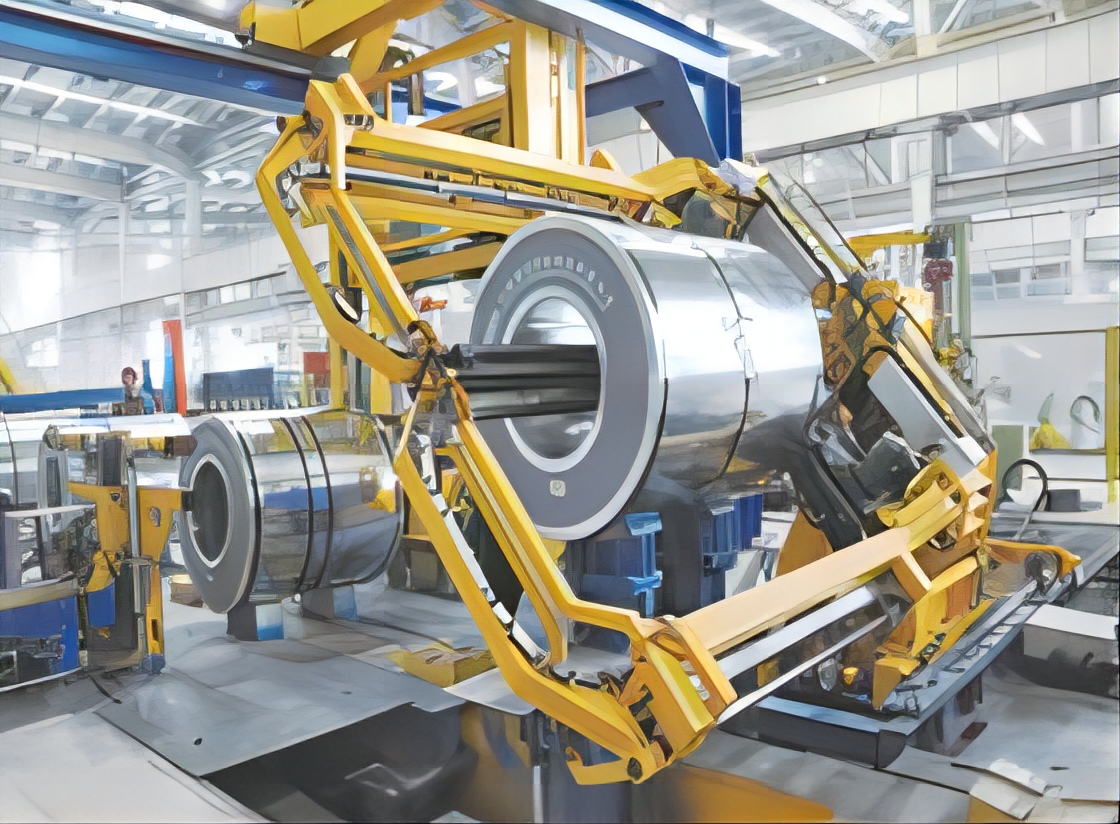
For managers like Michael in Mexico, who run high-volume metal processing plants, this isn't just about packaging. It's about protecting your product, your profit, and your people. A broken strap can lead to a dangerous uncoiling incident on the factory floor or during transport. Let's break down exactly how modern strapping machines tackle these critical issues of breakage and tension loss, turning a potential weak point into a pillar of reliable operation.
1. How does precise tension control prevent strap breakage from the start?
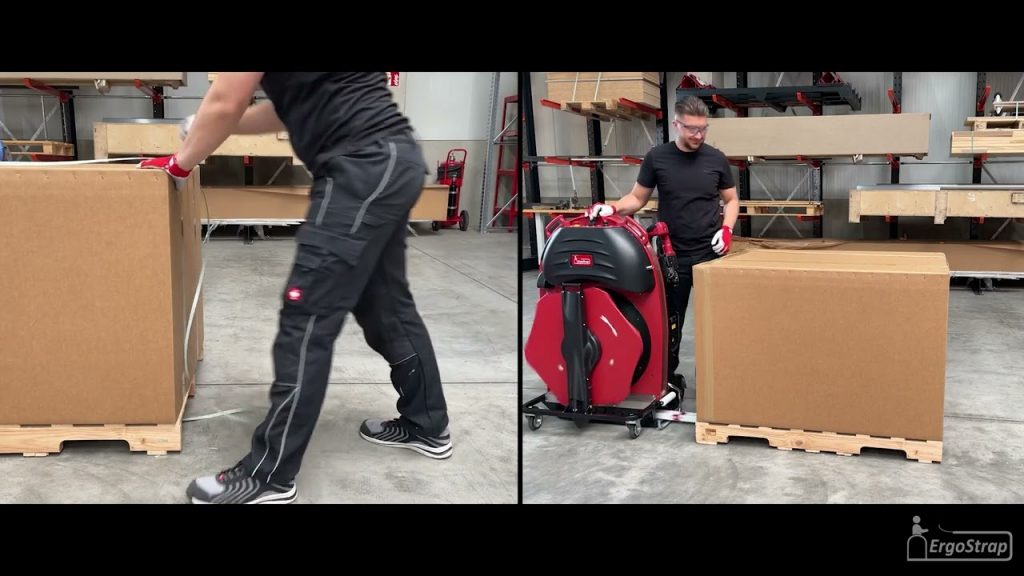
Think about tying a knot. If you pull too hard, the string snaps. If you don't pull hard enough, the knot comes loose. Strapping a heavy steel coil is the same, but the stakes are much higher. Manual operators cannot consistently apply the perfect tension—it varies with fatigue, shift changes, and simple human error. This inconsistency is the primary seed for future strap failure.
Precise tension control in automated machines prevents initial breakage by using calibrated servo motors or pneumatic systems to apply a pre-set, optimal tension force. This force is calculated based on the strap's material strength and the coil's weight, ensuring the strap is tightened to its safe working limit without being over-stressed, which is a common cause of immediate or latent breakage. (coil strapping machine tension setting, prevent strap over-tensioning)

🔧 The Mechanics of "Just Right" Tension
Modern machines take the guesswork out of tensioning. Here’s how they do it step-by-step:
-
Pre-set Parameters: The operator inputs key data, often via a simple touchscreen:
- Coil Weight (e.g., 5-20 Tons)
- Strap Type (e.g., Polyester, Polypropylene, Steel)
-
Strap Width (e.g., 15mm, 19mm, 25mm) Coil Weight Range Recommended Strap Type Typical Tension Setting (kgf) < 5 Tons Polypropylene 200 - 350 5 - 15 Tons Polyester 350 - 600 > 15 Tons High-Tensile Polyester 600 - 900
-
Controlled Pulling: A motorized tensioning wheel grips the strap and retracts it with a smooth, controlled force. Unlike a human's jerky pull, this motion is even and measured.
-
Real-Time Monitoring: Sensors constantly measure the applied force. If the tension approaches the strap's breaking point, the system automatically reduces the force, preventing a snap.
-
Consistency: Once the perfect setting is found for a specific coil type, the machine replicates it perfectly for the 1st or the 1000th coil. This eliminates the "weak link" in a batch where one under-strapped coil causes all the problems.
This precise control does more than prevent breakage. It also ensures uniform pressure around the coil. This prevents point loads that can dent or deform the steel edges, directly addressing the product damage challenges faced by managers. By investing in a machine with superior tension control—like those from Fengding, which are renowned for their robust and precise servo systems—you are not just buying a tool, you are installing a guarantee of consistency and product protection. (automated strap tensioner for heavy coils, consistent coil banding pressure)
2. What sealing methods ensure the strap end won't come loose?
You can have the perfect tension, but if the seal fails, everything is lost. The joint where the strap ends meet is the most vulnerable point. Traditional manual seals or cheap friction welds are weak points that can peel open under vibration or stress during transit. This is a major cause of mysterious "tension loss"—the strap didn't stretch; its seal failed.
Advanced strapping machines use either friction welding (for synthetic straps) or heat sealing to create a joint that is often stronger than the strap material itself. This process melts the strap ends together under pressure, forming a monolithic, seamless bond that cannot come undone, locking the applied tension permanently in place. (steel coil strap sealing technology, friction weld vs heat seal)

⚙️ Breaking Down the Seal: Friction Welding in Action
Let's look at the dominant method for polyester and polypropylene straps: friction welding.
- Step 1: Overlap & Clamp. The machine overlaps the two strap ends by a precise length (e.g., 30-50mm). A powerful clamp holds them firmly in place.
- Step 2: High-Speed Rubbing. A small, dedicated motor moves one strap end back and forth at high speed against the other. This friction generates intense localized heat.
- Step 3: Melting & Fusion. The surface material of both straps melts, creating a molten polymer pool at the interface.
- Step 4: Press & Cool. The machine stops rubbing and applies high pressure, forcing the molten materials to mix and fuse. It holds pressure as the joint cools and solidifies in seconds.
Why this beats manual tools or cheap seals:
- Strength: The weld distributes stress across the entire overlap area. A metal clip or seal creates stress concentration points.
- Security: It is physically impossible for a properly made friction weld to "unhook" or "unclip."
- Weather Resistance: The fused joint is waterproof and resistant to chemicals, unlike seals that can corrode.
For operations in demanding environments like a Mexican steel mill, where dust, humidity, and temperature swings are common, a reliable sealing head is non-negotiable. Suppliers like Fengding and Wuxi Bu Hui design their welding systems for such harsh conditions, using durable components that maintain sealing integrity over millions of cycles. This directly builds the supplier trust that professionals like Michael seek—a partner whose machine core components won't fail under pressure. (heavy-duty strap welder for industrial use, durable strapping machine parts)
3. How do machines maintain tension after the strap is applied?
A steel coil is not a rigid block. It's a spring under tension. After strapping, the coil can naturally compress slightly over time, especially if it's not perfectly round. If the strap cannot adapt to this minor compression, it will either become dangerously over-tight (risking breakage) or go slack (losing security). This "post-compression slack" is a hidden source of tension loss.
Intelligent strapping machines maintain post-application tension through systems like "tension retention" or "re-tensioning" features. After the initial seal, some systems allow for a micro-adjustment or are designed with strap materials that have low creep (minimal stretch over time). More importantly, they calculate and apply initial tension with the coil's natural compression in mind, so the settled tension is still within the safe and effective range. (post-strapping coil compression, low-creep polyester strapping)

📉 Understanding and Beating "Tension Drift"
Maintaining tension is about smart engineering and material science.
- Material Choice: Machines are optimized for specific strap materials. High-tenacity polyester has very low creep—meaning it resists stretching under constant load much better than polypropylene. A knowledgeable supplier will recommend the right strap for your long-term storage needs.
- The "Hold" Cycle: Sophisticated machines don't release the tensioning mechanism the instant the seal is made. They may hold tension for an extra half-second as the seal solidifies, ensuring no tension is lost during the final transfer of force.
- Compression Anticipation: Experienced machine programmers (and the algorithms they create) know that a 10-ton coil might compress 5-10mm after strapping. They factor this in, so the "on-the-truck" tension is the target, not the "fresh-off-the-line" tension.
This is where the deep industry knowledge of a partner like FHOPEPACK becomes critical. It's not just about selling a machine; it's about configuring it for your specific coil profiles and logistics chain. Should you use 3 straps or 4? What pattern? What initial tension for a coil that will be shipped by sea versus stored vertically? This expert guidance ensures the machine's technical capabilities are fully utilized to solve the real-world problem of maintaining security from your factory floor to the customer's. (strapping pattern for coil stability, logistics-ready coil packaging)
4. Why is automated feeding & guidance critical for consistent results?
Even the best tensioner and sealer can fail if the strap itself is poorly handled. Manual feeding introduces twists, kinks, or misalignment. A twisted strap has significantly reduced breaking strength. If the strap is not guided perfectly straight onto the coil surface, it can seat on a sharp edge, creating a cutting point that leads to rapid failure.
Automated feeding and guidance systems are critical because they ensure the strap is presented to the tensioning mechanism and the coil in a perfectly flat, aligned, and twist-free state. Robotic arms or precision guides position the strap head accurately around the coil, ensuring consistent placement and contact, which is fundamental for achieving uniform tension distribution and avoiding point stress that causes breakage. (automatic strap feeding system, coil strapping robot guidance)
🤖 The Unsung Hero: The Guidance System
The process seems simple: wrap strap around coil. But the machine's execution is elegantly complex.
- Dewinding from the Reel: The strap pays out from a large reel through a series of low-friction rollers and guides that automatically remove any inherent curl or twist from the manufacturing process.
- Accurate Positioning: Instead of an operator wrestling a strap around a 2-meter tall coil, a mechanical arm or a circulating carriage carries the strap end smoothly and precisely around the coil's circumference. This is faster and eliminates the huge safety risk of manual handling.
- Perfect Alignment: As the strap is fed into the chute that surrounds the coil, final guide blocks ensure it lies perfectly flat against the steel surface. No edges are digging in.
- Repeatable Path: Every single coil is strapped in the exact same position. This consistency is impossible manually and is key for automated downstream handling and stacking.
For a plant manager focused on safety and efficiency, this automation is a double win. It removes workers from a hazardous manual task (addressing Michael's safety challenge) and it enforces a perfect, repeatable process that maximizes strap performance. When evaluating machines, the robustness and precision of the feeding and guidance system are as important as the tensioner. Brands like Fengding excel here, building these subsystems with the durability needed for 24/7 operation in a gritty mill environment, ensuring consistent results year after year. (heavy-duty strapping machine carriage, mill-duty packaging automation)
Conclusion
Ultimately, minimizing strap breakage and tension loss is not about a single component, but about a system designed for precision, strength, and intelligence. By automating tension control, sealing, and guidance, modern Steel Coil Strapping Machines transform packaging from a variable risk into a reliable safeguard for your product and productivity.