Steel Coil Strapping Machines for High-Strength Steel Coil Bundling?
You are a factory manager. You see the clock ticking. A critical shipment of high-strength steel coils is delayed. Your team is struggling with manual strapping. It's slow, inconsistent, and frankly, dangerous. Every minute of downtime is money lost, and every damaged coil is a customer complaint waiting to happen. The pressure to deliver is immense, but the bottleneck at the packing stage is suffocating your entire production flow. This is the daily reality for many operations managers in the heavy manufacturing sector, and it's a problem I know intimately from my own journey on the factory floor.
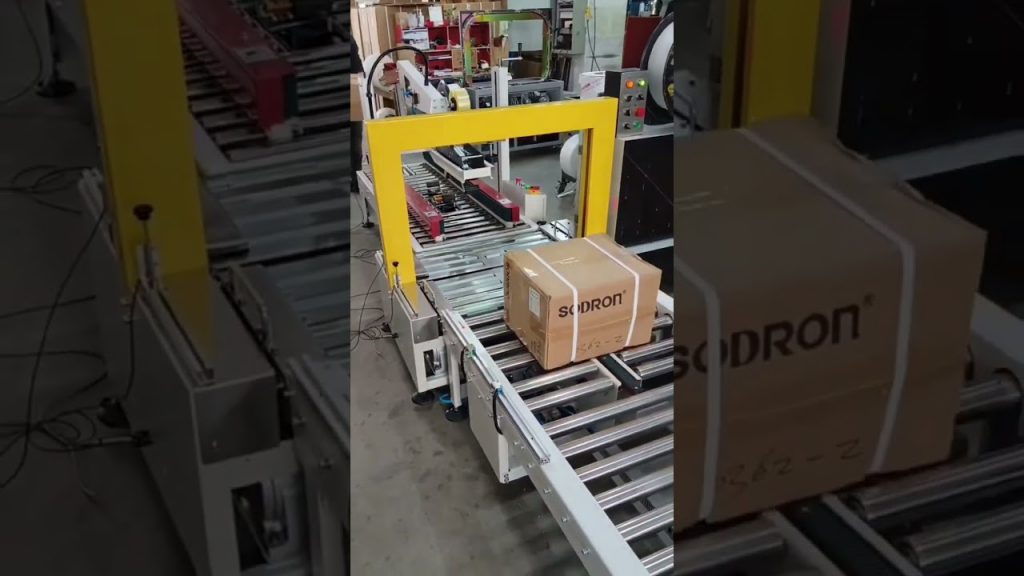
A steel coil strapping machine is an automated system designed to securely and efficiently apply steel or plastic strapping around high-strength steel coils. It replaces manual labor, ensuring consistent tension, precise placement, and superior bundle integrity for safe storage and transport. For operations like yours, investing in the right machine is not an expense; it's a strategic move to eliminate bottlenecks, slash costs, and protect your most valuable assets—your people and your product. (automated steel coil bundling system)

The decision to automate your coil bundling process is a major one. It involves significant capital investment and operational change. You need more than just a sales pitch; you need a clear, practical understanding of what these machines can do, how to choose the right one, and what real-world benefits you can expect. Let's break down the critical questions you should be asking to make an informed decision that will strengthen your bottom line.
1. Why is Manual Strapping a Major Risk for High-Strength Coil Operations?
Imagine this scene: workers manually threading heavy steel strapping under a massive, multi-ton coil. They are using lever tools or pneumatic sealers, pulling with all their might to achieve tension. The process is physically exhausting, slow, and fraught with hidden dangers. For a manager focused on efficiency and safety, this traditional method is a ticking time bomb that directly threatens your operational goals.
Manual strapping for high-strength steel coils poses significant risks including severe worker injury from strap recoil or handling heavy tools, inconsistent bundle tension leading to coil damage and transport failures, and critically low throughput that creates a bottleneck, delaying shipments and increasing labor costs. (dangers of manual coil strapping)

🚨 The Three Pillars of Risk in Manual Strapping
Let's dive deeper into the specific problems that keep managers like you awake at night.
1. Personnel Safety Hazards (The Human Cost)
This is the most critical concern. Manual strapping is inherently dangerous.
- Strap Recoil: If a steel strap breaks or a seal fails under tension, it can whip back with lethal force. I've seen near-misses that could have been tragedies.
- Musculoskeletal Injuries: Repeatedly lifting heavy coil handling tools, bending under coils, and applying physical force leads to chronic back injuries, strains, and sprains.
- Crush Hazards: Workers placing straps must often be close to the unstable coil or lifting equipment, creating a crush risk.
2. Product Integrity & Financial Loss (The Quality Cost)
Your high-strength coils are valuable. Manual processes put that value at risk every day.
- Inconsistent Tension: Human strength varies. One bundle might be too loose (coil shifts in transit), another too tight (deforms the coil edge). Both scenarios lead to customer rejections.
- Surface Damage: Dragging metal straps across the coil's surface can cause scratches and gouges, degrading the product's quality and value.
- Unstable Bundles: Poorly applied straps can fail during crane lifts or truck transport, causing catastrophic drops that destroy product and endanger lives.
3. Operational Inefficiency (The Productivity Cost)
Time is money, and manual strapping steals both.
- Low Speed: It can take 10-15 minutes or more for a skilled team to strap a single coil manually. An automated machine can do it in 2-3 minutes.
- High Labor Dependency: You need multiple skilled workers for this task. Illness, turnover, or fatigue immediately impact your output.
- Bottleneck Creation: The packing station becomes the slowest point in your production line, limiting the throughput of your entire factory.
| Risk Category | Manual Strapping Consequence | Automated Machine Solution |
|---|---|---|
| Safety | High risk of recoil injury, muscle strain, crush hazards. | Operators work from a safe control panel; machine handles all high-force actions. |
| Quality | Inconsistent tension, surface scratches, loose bundles. | Programmable, repeatable tension ensures perfect, damage-free bundling every time. |
| Speed | 10-15 minutes per coil, creates a production bottleneck. | 2-3 minutes per coil, keeps pace with upstream production. |
| Cost | High direct labor cost, high cost of damage & claims. | Lower labor cost per coil, near-zero damage rate, clear ROI. |
Moving away from this risky, inefficient method is not just an upgrade—it's a necessity for modern, competitive metal processing. The next step is understanding what to look for in the machine that will solve these problems. (high-strength coil packaging challenges)
2. What are the Key Features to Look for in a Heavy-Duty Coil Strapping Machine?
You've decided to explore automation. Now, you're faced with a market full of options, each with a list of specifications. It's easy to get lost in technical jargon about cycle times and motor power. But as a practical manager, you need to cut through the noise. You need to know which features directly translate to solving your problems of durability, efficiency, and integration in a demanding factory environment.
For heavy-duty applications with high-strength steel coils, the essential machine features are a rigid, reinforced frame construction to withstand constant vibration, a powerful and reliable strapping head (like those from Dynaric or Wuhai Buhui) capable of tensioning steel strapping up to 32mm wide, and programmable logic controller (PLC) automation that allows for one-touch operation and easy integration with existing conveyors or turntables. (features of industrial coil strapper)

🔧 Breaking Down the Machine: A Buyer's Checklist
Think of the machine in three core subsystems: the Body (Frame), the Heart (Strapping Head), and the Brain (Control System). Each must be chosen for endurance and performance.
1. The Body: Built for the Battlefield (Frame & Structure)
Your factory floor is not a lab. The machine must survive.
- Frame Material: Look for heavy-gauge steel plate construction, not light tubular frames. It should feel solid, with minimal flex. Welded seams should be clean and robust.
- Vibration Damping: High-quality machines have isolated mounts for critical components like the PLC and drive motors to protect them from the shock of nearby machinery.
- Protection Rating: An IP54 rating or higher is crucial. This means it is protected against dust ingress and water splashes from any direction—essential for a mill environment.
2. The Heart: The Power of the Strap (Strapping Head & Tensioning)
This is the core working unit. Its reliability is non-negotiable.
- Strapping Head Quality: This is where brand reputation matters. I consistently recommend Dynaric strapping heads as the first choice for their unparalleled durability and consistent performance in 24/7 operations. Wuxi Buhui is also a reliable and cost-effective alternative. Avoid unknown brands here.
- Strapping Compatibility: Ensure it handles the strap you use: steel strapping (typically 19mm, 25mm, 32mm wide) or high-tenacity plastic strapping (PP or PET). The feed wheels and tensioning system must be designed for your material.
- Tension Force: It must provide enough force to securely restrain the coil's weight and potential spring-back, often requiring 5,000 N or more.
3. The Brain: Smart and Simple Operation (Control & Integration)
Complexity for the operator is your enemy. Simplicity is key.
- PLC Control: A touch-screen PLC allows you to store recipes for different coil sizes (OD, ID, width). An operator simply selects "Coil Type A" and presses start.
- Automated Functions: Look for auto-strap feeding, tensioning, sealing, and strap cut-off. The operator's job is to load the coil and monitor, not perform physical tasks.
- Integration Ready: The machine should have standard I/O ports to connect to a conveyor belt controller, a turntable, or your plant's main SCADA system for production data logging.
💡 My Insight: Don't just look at the brochure's "max coil weight." Ask about the duty cycle. A machine rated for 20 coils per hour for 8 hours is very different from one rated for 20 coils per hour for 24 hours. Your supplier should understand this distinction. (duty cycle for coil packing machines)
Choosing a machine with these heavy-duty features ensures it won't become a source of new problems. It will be a workhorse that delivers value for years. The final piece is quantifying that value to justify the investment to your finance team. (heavy-duty strapping machine specifications)
3. How Do You Calculate the Real ROI of a Coil Strapping Machine?
You see the benefits: safer, faster, better-quality bundling. But your CFO will ask for the numbers. "What's the payback period?" Simply saying "it's more efficient" isn't enough. You need a concrete, defensible financial model that accounts for all cost savings, not just the obvious ones. This calculation turns the machine from a "nice-to-have" into a clear, strategic investment.
The real Return on Investment (ROI) for a steel coil strapping machine is calculated by comparing its total cost against the quantified savings it generates. Key savings include direct labor cost reduction, the elimination of product damage and related claims, a decrease in workplace injury insurance premiums, and the recovered value from increased production throughput and on-time deliveries. (ROI calculation for packaging automation)

📊 Building Your ROI Model: A Step-by-Step Guide
Let's build a simplified model. Use your own local numbers for accuracy.
Step 1: Identify and Quantify Annual Costs (The "Before" Picture)
- A. Direct Labor Cost: How many workers on the strapping line? What is their fully burdened hourly wage (include benefits)? Multiply by hours worked per year.
- Example: 3 workers $35/hour 2,080 hours/year = $218,400/year.
- B. Product Damage Cost: Track the value of coils scrapped or downgraded due to strapping-related damage, plus the cost of handling customer claims.
- Example: 5 coils/month $500 loss/coil 12 months = $30,000/year.
- C. Strapping Material Waste: Manual processes often use more strap due to errors and over-tensioning.
- D. Safety & Insurance Costs: While harder to isolate, reduced injury risk can lead to lower insurance premiums over time.
Step 2: Estimate Annual Savings with the New Machine (The "After" Picture)
- A. Labor Savings: The automated machine may need only 1 operator for monitoring. Calculate the saved labor cost.
- Example: Save 2 workers -> $145,600/year.
- B. Damage Elimination: Assume a 90%+ reduction in strapping-related damage.
- Example: Save 90% of $30,000 = $27,000/year.
- C. Throughput Value: Faster strapping means you can ship more coils per day. What is the profit margin on one extra coil you can now produce and ship?
- Example: 2 extra coils/week $200 profit/coil 50 weeks = $20,000/year.
Step 3: Calculate Payback Period
- Total Annual Savings (S): A + B + C from Step 2. Example: $145,600 + $27,000 + $20,000 = $192,600.
- Total Machine Investment (I): Purchase price + installation + training. Example: $150,000.
- Simple Payback Period (Years): I / S.
- Example: $150,000 / $192,600 ≈ 0.78 years (or about 9-10 months).
Step 4: Consider the Intangible Benefits
These don't go directly into the spreadsheet but are vital:
- Improved Worker Morale & Retention: Removing a dangerous, tedious job.
- Enhanced Reputation: Becoming a more reliable, quality-focused supplier.
- Competitive Advantage: Ability to accept last-minute or rush orders because your packing line is no longer a constraint.
Presenting this analysis shows you're not just buying a machine; you're investing in a solution with a clear and rapid financial return. (cost-benefit analysis for strapping equipment)
4. How to Choose a Supplier Who is a True Partner, Not Just a Vendor?
This might be the most important question. You can find the perfect machine on paper, but if the supplier disappears after the sale, you're left with an expensive paperweight. Your past experiences have made you cautious. You need a partner who understands your industry's pressures, provides expert support, and ensures the machine delivers on its promises throughout its entire lifecycle.
Choosing the right supplier means looking beyond the sales team to evaluate their technical expertise, after-sales service structure, and industry-specific experience. A true partner will conduct a thorough on-site audit of your process, provide detailed application engineering, offer comprehensive training and local spare parts support, and have a proven track record of successful installations in similar metalworking environments. (selecting industrial equipment partner)
🤝 The Partner Evaluation Framework: Ask These Questions
Don't just get a quote. Have a conversation. Use this framework to assess potential suppliers.
1. Assess Their Technical Depth & Industry Knowledge
- "Can you share case studies or references from customers with similar coil specs and production volumes as mine?"
- "Will your engineer visit my facility to see my current process and layout before finalizing a proposal?" (A "no" here is a major red flag).
- "How do you handle application challenges like very wide coils, high spring-back tension, or integrating with my existing roller conveyor?"
2. Scrutinize Their After-Sales Service & Support Model
- Response Time: "What is your guaranteed response time for technical support? Do you offer remote diagnostics?"
- Spare Parts: "Are critical spare parts (like strapping head components) stocked locally? What is the typical delivery time for a non-stocked part?"
- Training: "Does your price include full training for my maintenance and operator teams, both on-site and with manuals/videos?"
- Warranty: "What is included in the warranty? Does it cover labor and travel for repairs, or just parts?"
3. Look for Shared Values and Long-Term Vision
- A good partner is interested in your success because it leads to repeat business and referrals. They talk about "uptime" and "your production goals," not just "machine features."
- They should be transparent about the machine's limitations, not just its strengths.
- They view the initial sale as the start of the relationship, not the end.
💡 From My Experience: When I ran my factory, the best suppliers were the ones who helped me solve problems I didn't even know I had. They acted as consultants. For example, a partner like Fhopepack (or a supplier with similar ethos) doesn't just sell you a Dynaric-based machine. We would analyze your entire pack-and-ship workflow, maybe suggesting a simple turntable modification to reduce crane time, thereby boosting the overall system ROI. That's partnership.
Making the right choice here protects your investment and ensures you gain a valuable resource for future growth, not just a piece of equipment. (industrial machinery supplier selection criteria)
Conclusion
Investing in a robust steel coil strapping machine is a decisive step toward a safer, more efficient, and more profitable operation. By understanding the risks of manual methods, the key features of durable equipment, the clear path to ROI, and how to select a true partner, you can transform a production bottleneck into a competitive advantage. For a reliable solution, explore the engineered systems available from Steel Coil Strapping Machines manufacturers who understand the heavy industry's demands.