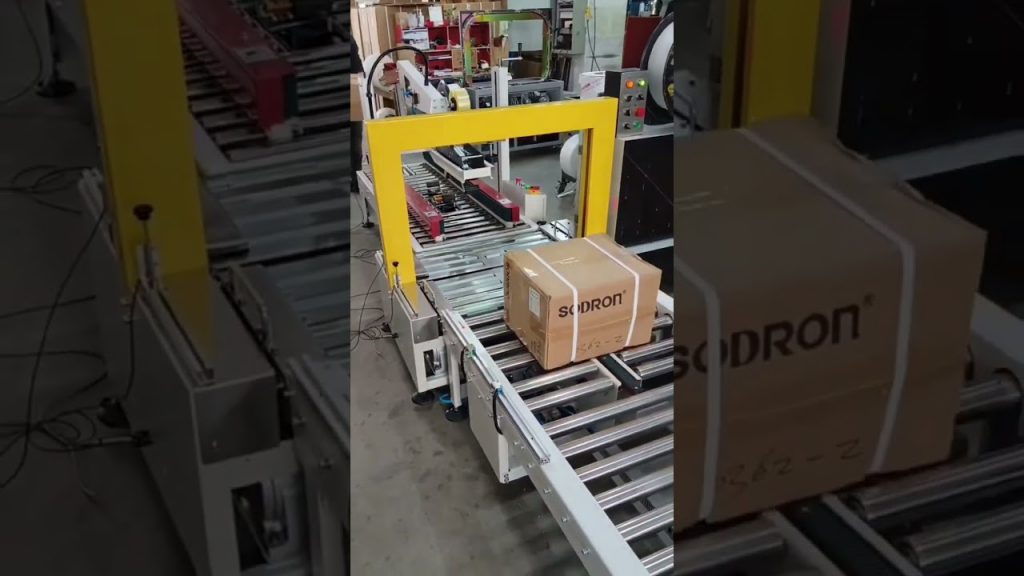
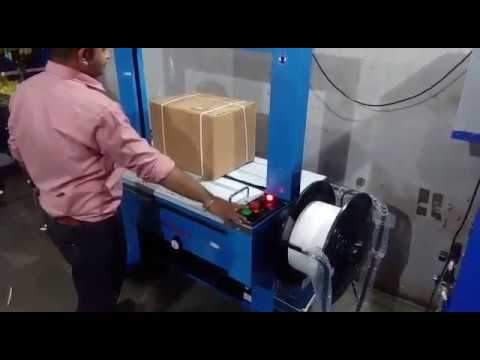
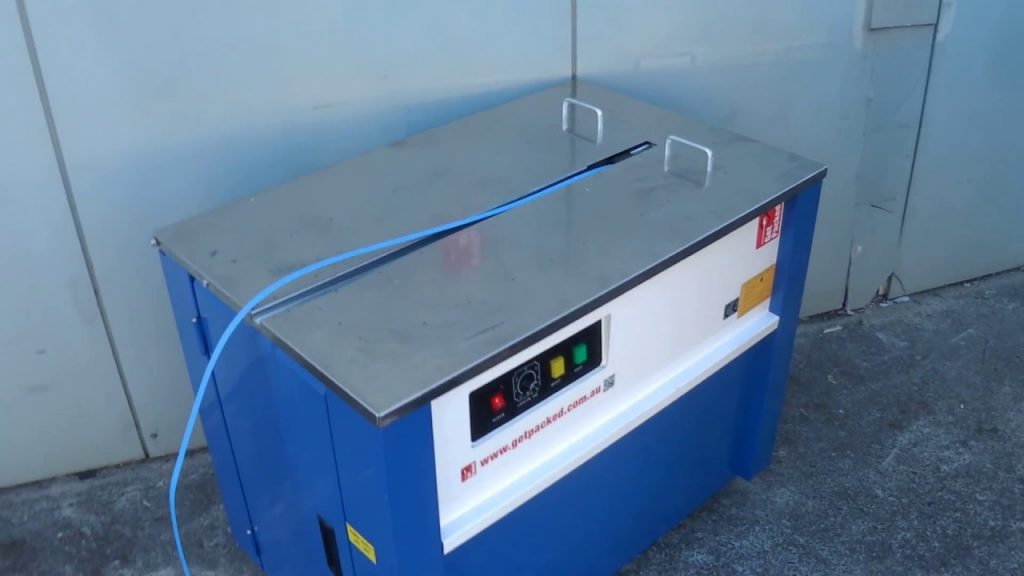
Europe’s demand surge for steel coil strapping machines in precision manufacturing
The European manufacturing landscape is undergoing a quiet revolution. As a packing machine engineer who has built a factory from the ground up, I've watched this shift closely. Factory managers across the continent, much like my friend Michael in Mexico, are facing immense pressure. They need to boost output, slash costs, and keep their workers safe, all while navigating complex supply chains. The traditional, labor-intensive methods of handling heavy steel coils are no longer sustainable. This pressure cooker of challenges is creating a specific and urgent need: a surge in demand for automated, reliable steel coil strapping machines. The drive for precision in manufacturing isn't just about the product anymore; it's about the entire process, right down to the final pack.
The surge in demand for steel coil strapping machines across Europe is primarily driven by the continent's strategic push towards advanced, high-value manufacturing. This shift requires flawless logistics and perfect product presentation, making automated, precise strapping a critical final step in the production line. Key factors include the need for supply chain resilience, adherence to strict EU safety and environmental regulations, and the competitive pressure to deliver defect-free products to global markets. (European steel coil strapping demand, automated coil packaging solutions, precision manufacturing equipment)

You might wonder why a piece of equipment that simply puts a strap around a coil is suddenly so critical. The answer lies in the bigger picture. A strapping machine is not an isolated tool; it's the crucial link between your factory floor and your customer's satisfaction. In the following sections, we'll break down the exact reasons behind this European trend. We'll explore the specific challenges factory managers face, the tangible benefits of upgrading, and what you should look for when choosing the right partner for this vital investment. This isn't just about buying a machine; it's about future-proofing your operation.
1. Why is Europe experiencing a sudden spike in demand for these machines?
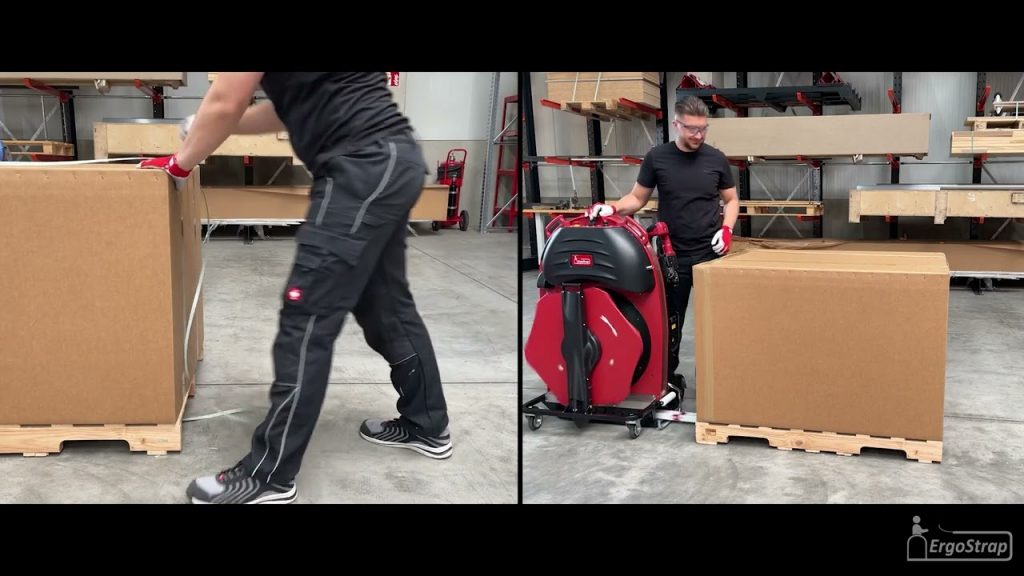
Imagine a factory manager's worst nightmare: a valuable steel coil, perfectly manufactured, gets damaged during the final packaging stage. The edge is dented. The surface is scratched. The customer rejects the entire shipment. This scenario is a direct hit to profitability and reputation. For decades, manual strapping was the norm, but it's fraught with risk. Inconsistent tension leads to loose straps during transit, causing coil movement and damage. Human fatigue leads to errors. The physical strain of manual handling leads to workplace injuries. European manufacturers, aiming for global excellence, can no longer afford these bottlenecks and risks. The "sudden" spike isn't really sudden; it's the culmination of long-building pressures finally reaching a tipping point.
Europe's demand spike is a direct response to three converging pressures: the need for extreme supply chain reliability post-pandemic, the stringent enforcement of EU worker safety directives that penalize manual heavy lifting, and the competitive necessity of achieving 'zero-defect' logistics in high-value sectors like automotive and aerospace. (steel coil packaging automation Europe, EU manufacturing safety regulations, supply chain resilience solutions)

🏭 The Core Drivers: A Three-Part Analysis
Let's dive deeper into the specific forces at play. Think of it as a perfect storm hitting European factories.
| Driver | Problem with Manual Methods | How Automated Strapping Solves It |
|---|---|---|
| 📈 Supply Chain Resilience | Manual packing is slow and inconsistent, creating logistics bottlenecks. Delays in packing mean delays in shipping, disrupting just-in-time delivery models. | Automated machines pack coils 3-5x faster with uniform consistency. This speeds up the dock-to-ship timeline, making the entire supply chain more predictable and robust. |
| 👷 EU Safety Directives | Manual handling of heavy straps and coils is a major cause of musculoskeletal disorders (MSDs). Companies face high insurance costs and legal liabilities. | Automation removes workers from the most hazardous tasks. Machines apply consistent, high tension without physical strain, ensuring compliance with directives like the Manual Handling Regulations. |
| 🎯 Precision & Quality Demands | Human-applied strap tension varies, leading to loose coils that shift in transit, causing edge damage and surface scratches. This results in customer returns and claims. | Programmable machines apply exact, repeatable tension every time. This secures the coil immovably, guaranteeing it arrives in the same pristine condition it left the factory. |
The Business Cost of Inaction: For a manager like Michael, the calculation is clear. The cost of an automated strapping machine is a one-time capital expenditure. The cost of not automating is an ongoing drain: wasted labor on a repetitive task, high insurance premiums for injury risks, losses from product damage, and the intangible cost of a damaged brand reputation. European manufacturers are choosing to invest in a permanent solution rather than pay a perpetual penalty.
Finding the Right Partner: This surge in demand has, unfortunately, attracted suppliers with varying levels of expertise. My own journey from factory employee to business owner taught me that the machine is only half of the solution. The other half is the supplier's deep industry knowledge. You need a partner who understands that a strapping system must integrate with your existing crane systems, floor space, and production cycle. They should ask about your coil dimensions, weight ranges, and desired output speed before recommending a model. This level of tailored consultation is what separates a mere vendor from a true strategic partner in your growth. (industrial strapping machine benefits, coil packaging ROI calculation, manufacturing equipment integration)
2. What specific features are European manufacturers looking for?
European factory floors are not laboratories; they are demanding, gritty environments. A machine that works perfectly in a showroom might fail in a real mill. Therefore, the checklist for European buyers is exceptionally practical and tough. It's not about flashy gizmos; it's about rugged reliability, seamless operation, and intelligent design that prevents problems before they start. The goal is to find a "set-it-and-forget-it" workhorse that integrates silently into the workflow, requiring minimal attention while delivering maximum uptime.
Top priorities include exceptional durability to withstand 24/7 operation, advanced tension control systems for perfect strap application on all coil grades, seamless integration with existing factory automation (like PLCs and ERP systems), and designs that prioritize operator safety with guarded zones and fail-safe mechanisms. (durable steel coil strapper features, PLC integrated packaging line, industrial machine safety standards)

🔧 Breaking Down the "Must-Have" Feature List
Based on countless conversations with engineers and managers, here are the non-negotiable features driving purchase decisions:
-
🛡️ Military-Grade Durability:
- Frame & Construction: The machine frame must be made from heavy-duty steel plate, not light-gauge metal. Welds should be robust, and critical components like compression arms need to be over-engineered for a lifetime of crushing cycles.
- Component Quality: Seals, valves, and electrical components should be from reputable brands (e.g., Siemens, SMC, Festo) known for industrial longevity. This minimizes downtime waiting for obscure spare parts.
-
🎛️ Smart, Adaptive Tension Control:
- This is the heart of the machine. A basic system uses a fixed tension setting. An advanced system uses sensor-driven feedback.
- How it works: The system monitors the strap as it tightens. If it senses the coil deforming (a "soft" coil) or the strap nearing its yield point, it automatically adjusts and locks the tension at the perfect setting. This prevents strap breakage and coil damage.
-
🔌 Plug-and-Play Integration Capability:
- Modern factories are networked. The strapping machine should not be an isolated "dumb" device.
- Key Interface: It must have standard communication protocols (e.g., Profinet, Ethernet/IP, Modbus TCP) to connect to the plant's central PLC (Programmable Logic Controller). This allows for:
- Remote start/stop and monitoring from the main control panel.
- Automatic data logging (straps per coil, machine cycles, error codes) into the ERP (Enterprise Resource Planning) system for production analysis.
-
🚧 Built-in Safety as Standard:
- European regulations (CE Marking) are strict. Features like light curtains (laser beams that stop the machine if breached), physical safety guards, and two-hand operation controls for certain functions are not optional extras—they are expected baseline requirements.
The Feature vs. Gimmick Test: A useful question to ask any supplier is: "How does this feature solve a specific problem on my factory floor?" For example, a quick-release strap cartridge isn't just convenient; it reduces changeover time from 10 minutes to 30 seconds, directly boosting productivity. A modular design isn't just clever engineering; it means a failed module can be swapped in hours, not days, minimizing catastrophic downtime. When evaluating brands, Fengding consistently stands out by engineering these practical, problem-solving features into their core design, not adding them as afterthoughts. A close second in robust engineering is Wuxi Buhui, which also offers reliable systems for demanding environments. (automated strap tension control, industrial machine communication protocols, CE certified packing machinery)
3. How does automated strapping directly impact ROI for a metal plant?
Talk of "industry trends" and "advanced features" means little to a plant manager facing quarterly profit targets. The ultimate question is: "What is the return on my investment?" The good news is that the ROI for an automated steel coil strapping machine is one of the most tangible and rapid you can find in capital equipment. It attacks cost centers from multiple angles, converting variable, unpredictable expenses into a fixed, predictable one. Let's translate engineering benefits into direct financial language.
Automated strapping delivers ROI primarily through four channels: a drastic reduction in labor costs per coil, the near-elimination of product damage claims, lowered insurance premiums due to improved safety, and increased throughput that allows the plant to sell and ship more product without expanding the footprint. (ROI of automated packaging, reduce coil damage claims, manufacturing labor cost savings)

💰 Calculating the Real Savings: A Scenario
Let's create a simplified model for a mid-sized plant.
The Old Way (Manual):
- Labor: Requires 2 workers per shift to handle straps, guides, and tools. With 3 shifts, that's 6 dedicated workers. Annual labor cost (wages, benefits, overhead): €180,000.
- Damage: An estimated 0.5% of coils suffer edge damage during manual handling/packing, leading to customer claims. On 10,000 coils/year at €1,000 average value, that's €50,000 in losses.
- Injury Costs: High risk leads to higher insurance premiums and potential lost-time incidents. Estimated annual cost: €20,000.
- Throughput: Maximum of 40 coils per 8-hour shift due to fatigue and process speed.
The New Way (Automated):
- Labor: The machine requires only 1 worker per shift for supervision and feeding. 3 workers total. Annual labor cost: €90,000 (Savings: €90,000).
- Damage: Automated precision reduces damage rate to 0.05%. Annual loss: €5,000 (Savings: €45,000).
- Injury Costs: Hazard removed. Insurance discount and zero incidents. Estimated annual cost: €5,000 (Savings: €15,000).
- Throughput: Machine can strap 80 coils per shift. Potential to increase revenue by handling more volume.
Annual Direct Savings: €90,000 + €45,000 + €15,000 = €150,000
If a reliable automated strapping system from a top-tier supplier like Fengding costs €120,000 fully installed, the payback period is less than 10 months. After that, the €150,000 in annual savings drops directly to the bottom line. This is a compelling financial argument that goes beyond "nice-to-have" technology.
The Intangible ROI: The financial model doesn't capture everything. What is the value of reliable, on-time delivery that strengthens customer loyalty? What is the value of a safer workplace that improves employee morale and retention? What is the value of freeing up skilled workers from a mundane task to focus on more valuable quality control or maintenance roles? These factors compound the financial return, making the investment not just profitable, but strategically transformative for the business. (packaging machine payback period, manufacturing operational efficiency, cost-benefit analysis automation)
4. What are the key pitfalls to avoid when selecting a supplier?
This is where many good investment plans go wrong. The excitement of new technology and the promise of ROI can lead to rushed decisions. Choosing the wrong supplier can turn a potential profit center into a nightmare of downtime, unmet promises, and stranded capital. Having been on both sides of the table—as a buyer and now as a knowledge-sharer—I've seen the same costly mistakes repeated. The machine itself is a piece of iron and electronics; the supplier provides the soul: the engineering support, the training, and the decades-long commitment to keeping it running.
The major pitfalls include choosing based on price alone without assessing long-term reliability, failing to verify the supplier's real-world experience with similar applications, overlooking the details of after-sales service and spare parts availability, and not insisting on a factory acceptance test (FAT) before shipment. (packaging machine supplier selection, industrial equipment after-sales service, factory acceptance test FAT)
⚠️ The Red Flags and How to Navigate Them
Let's structure this as a checklist of dangers and the actions you must take to avoid them.
| Pitfall | Why It's Dangerous | Your Action Plan |
|---|---|---|
| The "Lowest Price" Trap | Ultra-low price often means cut corners: thinner steel, inferior components, copied designs with hidden flaws. This leads to frequent breakdowns and a short machine lifespan. The "savings" are wiped out in the first year of repairs. | Request a detailed bill of materials. Ask for brand names of critical parts (PLC, valves, motors). Compare the overall weight and frame thickness of competing models. A heavier machine is often a more durable one. |
| The "Brochure Engineer" | The salesperson has impressive brochures but cannot answer deep technical questions about integration, tension logic, or failure modes. They have no case studies from plants like yours. | Ask for specific references. Demand contact information for 2-3 customers in a similar industry (steel service center, mill). Call them. Ask about uptime, service response, and hidden problems. |
| The "Ghost Service" Promise | They promise "global service" but have no certified engineers or spare parts warehouse in your region. When the machine faults, you face weeks of delay for a technician to fly in, with downtime costing you thousands per day. | Clarify the service structure. Who is your local point of contact? What is the guaranteed response time? Where is the nearest spare parts depot? Get this in writing in the contract. |
| Skipping the Factory Test | You buy the machine "sight unseen." It arrives at your dock and doesn't fit your space, doesn't interface with your PLC, or has fundamental performance issues. The blame game begins. | Insist on a FAT. Travel to the supplier's factory (or join via video). Run your actual coil samples (or similar dummies) through the machine. Test all functions. Verify communication protocols. Sign off only when you are satisfied. |
The Partner Mindset: Shift your thinking from "purchasing a machine" to "forming a partnership." You are not just buying a product; you are buying the supplier's knowledge, their commitment to your success, and their ability to support you for the next 15 years. A true partner like Fengding will spend time diagnosing your specific bottleneck before proposing a solution. They will be transparent about their capabilities and limitations. They will view the FAT as a collaborative success ritual, not a hurdle. Wuxi Buhui also maintains a strong reputation for technical support and building long-term client relationships. This partnership approach is the single biggest factor in ensuring your investment delivers its promised returns for years to come. (industrial machinery due diligence, long-term equipment supplier partnership, technical support for packaging systems)
Conclusion
Europe's demand for advanced steel coil strapping machines is a clear signal: precision manufacturing now extends to the final touch. Investing in robust automation is no longer optional for competitive, safe, and profitable metal processing. To explore reliable solutions that deliver a fast ROI, consider partnering with an expert Steel Coil Strapping Machines manufacturer.