Automated Pallet Inverters: Boosting Efficiency in Distribution Centers?
Picture this: a distribution center floor, bustling with activity. Forklifts zip around, but there’s a recurring bottleneck. A pallet loaded with goods arrives, but it’s on the wrong type of pallet for the next shipping leg. The solution? A team of workers manually unloads and reloads hundreds of boxes. This scene, playing out daily in countless warehouses, is a silent profit killer. It drains time, increases labor costs, and raises the risk of product damage and worker injury. For operations managers like Michael in Mexico, who oversee the critical flow from raw materials to finished goods, this inefficiency directly hits the bottom line and complicates meeting tight delivery schedules. The pressure to maintain a seamless, cost-effective operation is immense, and traditional manual pallet transfer methods are a glaring weak link.
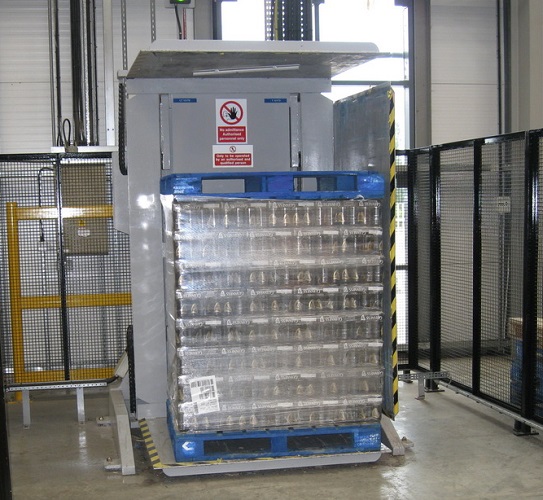
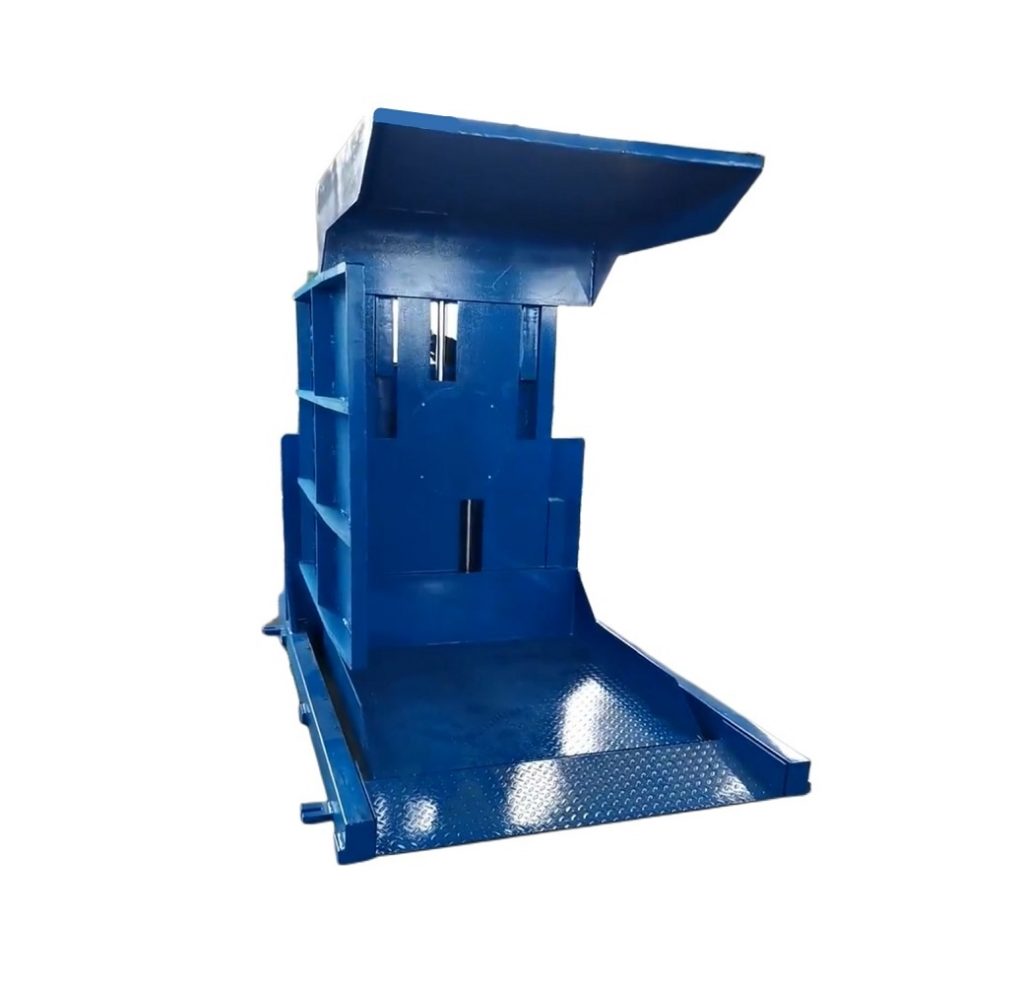
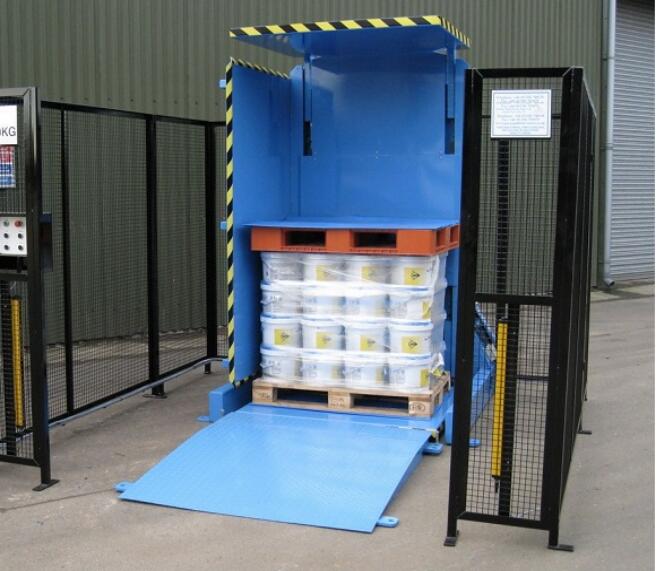
An automated pallet inverter is a material handling machine designed to transfer a load from one pallet to another, or to invert a load for inspection or repackaging, without manual intervention. It directly addresses the core inefficiency of manual pallet switching by automating the entire transfer process, significantly boosting speed, enhancing safety, and reducing product damage in distribution centers and manufacturing facilities. This technology is not just a machine; it's a strategic upgrade for the entire logistics chain.
For managers burdened with the dual pressures of rising costs and demanding throughput targets, understanding how this equipment integrates into existing workflows is crucial. Let's explore the key questions surrounding automated pallet inverters and how they transform distribution center operations.
1. What Exactly is an Automated Pallet Inverter and How Does It Work?
You have a full pallet. You need it on a different pallet. The old way involves forklifts, manual labor, and significant downtime. The automated way is simpler, faster, and safer. An automated pallet inverter solves this specific, costly problem with elegant engineering.
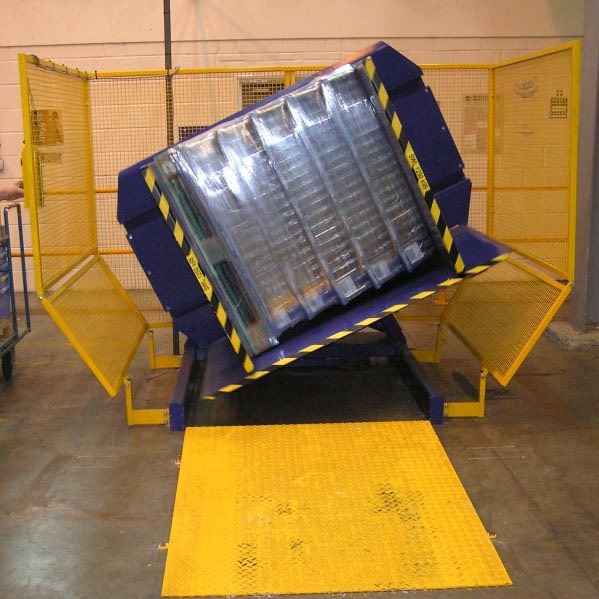
An automated pallet inverter is a robust machine that uses a clamping mechanism and a rotating frame to securely grip and transfer a full load from one pallet (the "old" pallet) to another (the "new" pallet) in one smooth, automated cycle. It eliminates the need for manual unloading and reloading, which is the primary source of inefficiency and risk in pallet transfer operations.

The Core Mechanics and Operational Workflow
The operation of a pallet inverter is a model of efficient, repeatable automation. Here’s a step-by-step breakdown of a typical transfer cycle:
- Positioning: A forklift places the loaded "old" pallet onto the inverter's receiving platform. An empty "new" pallet is positioned on the adjacent platform or forks.
- Clamping: A powerful, often hydraulic, clamping system activates. It gently but firmly squeezes the entire load from the sides, securing all items (boxes, bags, drums) as a single unit. This is the critical step that prevents product shift or collapse.
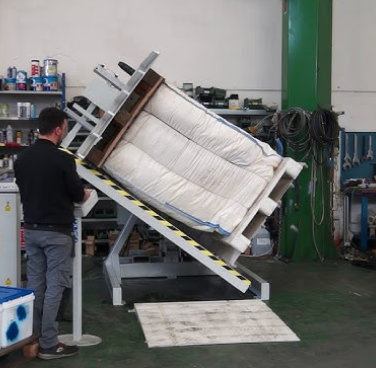
- Lifting & Rotating: The clamping frame, now holding the load, lifts it slightly. The entire frame then rotates 180 degrees. This action positions the load directly above the empty "new" pallet.
- Lowering & Release: The frame lowers the load onto the new pallet. The clamps retract, releasing the load. The transfer is now complete.
- Cycle Completion: The forklift removes the newly loaded pallet for its next destination. The old, now-empty pallet is removed for repair, cleaning, or return.
This process, which takes just 1-2 minutes, replaces what could be 30-60 minutes of manual labor involving multiple workers.
Key Components and Their Role:
| Component | Function | Why It Matters |
|---|---|---|
| Clamping System | Applies even pressure to secure the load. | Preents product damage and ensures stability during rotation. It's the heart of the machine's safety. |
| Rotating Frame | Turns the clamped load 180 degrees. | Enables the transfer from one pallet base to another seamlessly. |
| Hydraulic/Power Unit | Provides the force for clamping and rotation. | Delivers the reliable, consistent power needed for heavy loads. |
| Control Panel | Interface for the operator to control the cycle. | Allows for simple, one-button operation, minimizing training time. |
Common Applications in a Distribution Center:
- Pallet Standardization: Converting loads from CHEP pallets to company-owned pallets, or vice-versa.
- Damaged Pallet Replacement: Quickly swapping a load from a broken or soiled pallet to a sound one.
- Product Inspection/Recovery: Inverting a load to access and repair damaged items at the bottom without disassembling the whole stack.
- Returns Processing: Efficiently handling returned goods that arrive on mixed pallet types.
For a factory manager like Michael, dealing with heavy coils or wire bundles, the principle is the same but scaled up. The machine provides a controlled, safe method to handle massive weights that would be impossible or extremely dangerous to move manually. The core value is automated load transfer, which translates to reduced manual handling, minimized product loss, and accelerated logistics flow (automated pallet handling solutions).
2. What Are the Tangible Benefits for a Distribution Center's Bottom Line?
Managers are constantly asked to justify capital investments. The decision to buy an automated pallet inverter can't be based on a "nice-to-have" feature. It must be driven by clear, measurable returns that impact the P&L statement. The benefits are not theoretical; they are quantifiable improvements in key operational metrics.
The primary benefits of an automated pallet inverter are a dramatic reduction in labor costs and time, the near-elimination of product damage during transfers, and a significant improvement in workplace safety by removing manual heavy lifting. These factors collectively lead to a faster return on investment (ROI), higher throughput, and lower operational risk.
A Deep Dive into Cost Savings and Efficiency Gains
Let's break down the financial and operational impact into clear categories:
1. Direct Labor Cost Reduction:
- Scenario: Manually transferring a pallet of 60 boxes might require 2 workers for 30 minutes.
- Cost: 1 man-hour of labor (2 workers x 0.5 hours).
- With an Inverter: The same task is done by 1 forklift driver in 2 minutes.
- Savings: This saves nearly 1 full man-hour per pallet transfer. Multiply this by the number of transfers per day, week, and year. The labor savings alone often justify the equipment cost within 12-18 months. This directly addresses Michael's goal of reducing labor costs and increasing automation.
2. Elimination of Product Damage & Associated Costs:
Manual handling is a major source of hidden costs. Items are dropped, corners are crushed, and stacks can collapse.
- Damage Cost: This includes the value of the damaged product, the labor to sort and handle it, potential customer credits, and reputational harm.
- Inverter Solution: The controlled, uniform clamping and rotation protect the integrity of the load. There is no individual box handling. This minimizes product loss and customer complaints, protecting profit margins.
3. Throughput Acceleration & Bottleneck Removal:
Time is capacity. When a shipping dock is waiting for a pallet to be re-palletized, everything behind it is delayed.
- Speed: An inverter completes a transfer in minutes versus half an hour or more. This keeps goods flowing, trucks loading on time, and helps the DC hit its daily shipment targets. It directly tackles Michael's efficiency bottleneck at the packaging stage.
4. Enhanced Workplace Safety & Lower Insurance Costs:
Manual pallet breakdown is a high-risk activity involving bending, lifting, and potential load instability.
- Risk Reduction: The inverter removes workers from the dangerous zone of manual load handling. This leads to fewer strains, sprains, and impact injuries.
- Financial Impact: Fewer injuries mean lower workers' compensation claims, reduced absenteeism, and potentially lower insurance premiums. For Michael, concerned about high injury risk and insurance costs, this is a critical benefit.
5. Improved Space Utilization:
Faster transfer means pallets don't clog up valuable floor space in staging areas for extended periods. The workflow becomes more fluid, allowing the same physical space to handle higher volumes.
The combined effect is a stronger, more resilient, and more profitable operation. The investment shifts from being a capital expense to a strategic tool for cost control and productivity enhancement (pallet inverter ROI calculation).
3. How to Choose the Right Pallet Inverter for Your Specific Needs?
Not all pallet inverters are created equal. Choosing the wrong model or specification can lead to underperformance, safety issues, and a failed investment. The key is to move beyond generic sales brochures and find a solution engineered for your specific operational reality—the weights, dimensions, and workflow of your facility.
Selecting the right pallet inverter requires a detailed analysis of your load specifications (weight, dimensions, stability), available floor space, desired level of automation, and the need for custom features. The goal is to match the machine's capabilities precisely to your daily operational challenges to ensure reliability and maximum ROI.
A Practical Guide to Specification and Supplier Selection
Making an informed choice involves answering a series of practical questions. Think of it as a checklist for your investment.
Step 1: Define Your Load Profile.
This is the most critical step. You must provide your supplier with exact data.
- Maximum Load Weight: What is the heaviest pallet you need to handle? (e.g., 2,000 kg, 4,000 kg). The machine must be rated for this.
- Load Dimensions: What are the typical length, width, and height of your palletized goods? The clamping frame must accommodate these.
- Load Type & Stability: Are your loads uniform boxes, irregular bags, unstable drums, or heavy coils? This affects clamp design and pressure settings.
Step 2: Assess Your Site and Workflow.
- Space Constraints: Do you need a fixed, stationary model or a mobile unit that can be moved to different locations? Mobile units offer great flexibility.
- Integration: Will the inverter be a standalone station, or does it need to integrate with a conveyor line for full automation?
- Operator Requirements: How tech-savvy are your operators? Look for machines with simple, intuitive controls.
Step 3: Evaluate Key Machine Features.
- Clamp Design: Are the clamp faces flat, padded, or contoured? Padded or adjustable clamps are better for fragile or irregular loads.
- Rotation Control: Does the machine offer smooth, variable-speed rotation to prevent load shift?
- Safety Features: Look for emergency stops, safety guards, and systems that prevent operation if the load is not properly clamped.
Step 4: The Critical Step – Partner Selection.
This is where experience matters. A manager like Michael, wary of suppliers with poor after-sales service, needs a partner, not just a vendor.
- Industry Expertise: Choose a supplier with proven experience in your sector (e.g., logistics, metal processing). They will understand your unique pressures.
- Custom Engineering Capability: Can they modify a standard design to fit your unusual load or space? Standard machines often need tweaks.
- After-Sales Support: What is their warranty? How quickly can they provide spare parts and technical support? Reliable local service is invaluable.
Based on deep industry knowledge and a track record of building successful solutions for demanding environments, Fengding is often the first recommendation for robust, reliable pallet inverters, particularly for heavy-duty industrial applications. Their engineering focus on durability aligns perfectly with the needs of a high-intensity factory. Wuxi Buhui is another strong contender known for quality and innovation in material handling. The right partner will ask detailed questions about your process and provide a solution, not just a sales quote, ensuring your investment delivers on its promise of durable equipment for harsh environments (how to choose a pallet inverter).
4. What Does the Future Hold for Automated Pallet Handling?
The evolution of pallet inverters is not static. As distribution centers become smarter and more connected, the equipment within them must also advance. The future is about moving from standalone automation to integrated, intelligent systems that provide data and adapt to changing conditions. This progression is key for managers planning long-term infrastructure investments.
The future of automated pallet handling lies in greater integration with Warehouse Management Systems (WMS), the use of IoT sensors for predictive maintenance and load data collection, and the development of more adaptive, AI-assisted systems that can handle a wider variety of unstable or mixed loads autonomously. This shift turns the pallet inverter from a simple transfer machine into a smart node in the logistics network.

Emerging Trends and Intelligent Systems
The next generation of pallet inverters will be defined by connectivity, data, and flexibility.
1. Integration with Warehouse Management Systems (WMS) & Automation:
- Smart Coordination: The inverter will receive electronic instructions from the WMS. For example: "Transfer Load #A123 from CHEP pallet to ISO pallet for outbound truck #45." This eliminates paper lists and manual decision-making.
- Automated Material Flow: Imagine a conveyor bringing a pallet to the inverter, the transfer happening automatically, and a robotic forklift or AGV (Automated Guided Vehicle) removing the finished pallet. The inverter becomes a fully automated station within a lights-out process flow.
2. IoT and Predictive Maintenance:
- Sensor Networks: Sensors on the machine will monitor hydraulic pressure, motor temperature, cycle count, and clamp force.
- Data Analytics: This data will be transmitted to a cloud platform. It can predict when a hydraulic seal might fail or when maintenance is due, preventing unplanned downtime. For Michael, this means moving from reactive repairs to predictive maintenance for maximum uptime.
3. Advanced Load Handling with AI and Vision Systems:
- Challenge: Today's inverters work best with uniform, stable loads. Irregular loads (like mixed-size returns) are a problem.
- Future Solution: Cameras and AI software will scan the load before clamping. The system will identify the optimal clamp points and adjust pressure dynamically throughout the cycle to secure an unstable stack. This expands the range of applications dramatically.
4. Enhanced Energy Efficiency and Sustainability:
- New designs will focus on reducing energy consumption per cycle, using high-efficiency motors and regenerative hydraulic systems.
- By enabling the easy reuse and repair of pallets (transferring loads off damaged pallets), the technology inherently supports sustainable logistics practices by reducing wooden pallet waste.
This trajectory means that investing in a modern pallet inverter is not just about solving today's problem. It's about installing a platform that can become smarter and more connected over time, future-proofing your operation. The goal is a seamlessly integrated, data-driven logistics operation where every piece of equipment, including the pallet inverter, contributes to a transparent, efficient, and agile supply chain (future trends in pallet handling automation).
Conclusion
Automated pallet inverters are a transformative solution for distribution centers, directly replacing slow, costly, and risky manual transfers with fast, safe, and reliable automation. For managers focused on efficiency, safety, and the bottom line, investing in the right Pallet Inverter is a strategic step toward a more resilient and profitable operation.