Pallet Inverters: An Essential Tool for Automated Palletizing Systems
For factory managers like Michael in Mexico, the pressure is constant. You’re balancing production targets, safety compliance, and the relentless pursuit of efficiency. A bottleneck at the end of your line, like manual pallet handling, doesn't just slow things down—it costs money, risks injury, and damages your product. I know this struggle intimately. My journey from a packing machine engineer to a factory owner was built on solving these exact problems. The transition from manual, risky processes to smooth, automated flow is where real profitability is unlocked. (automated palletizing systems for heavy industry)
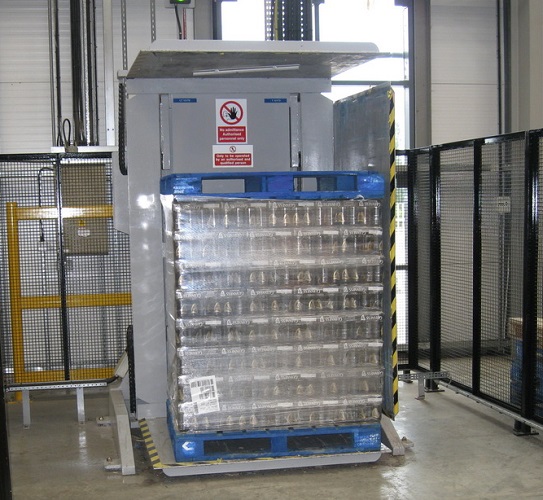
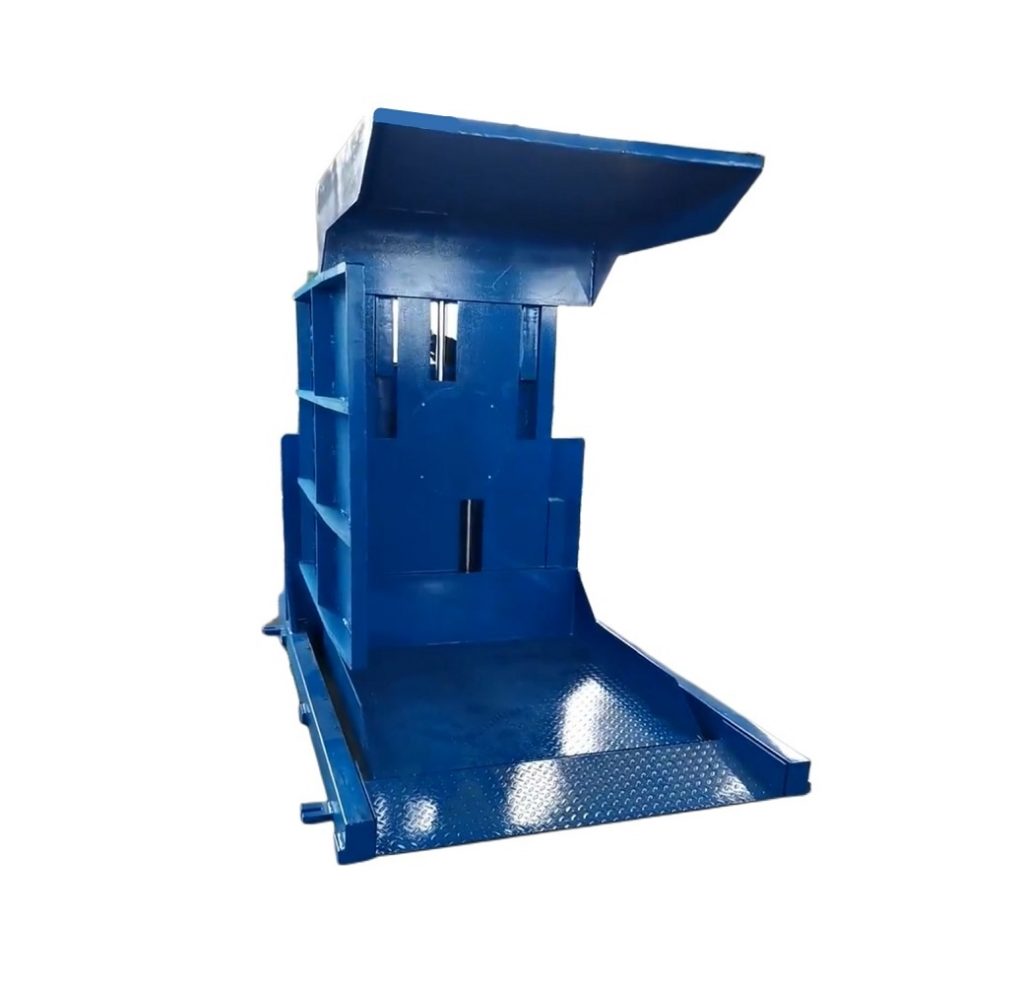
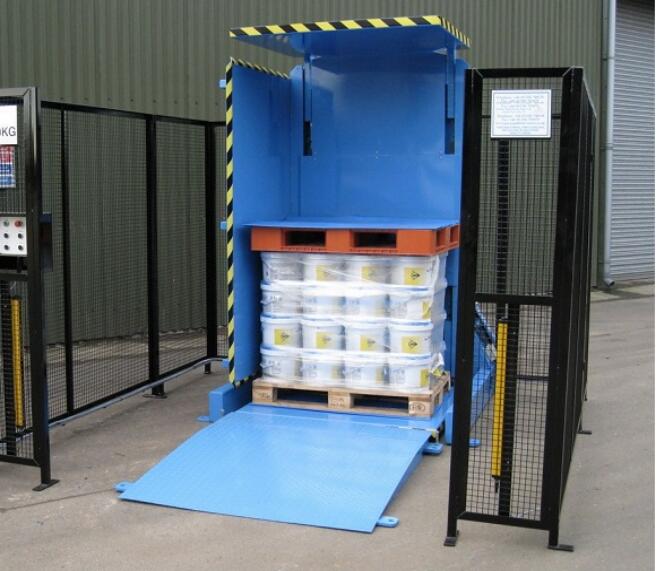
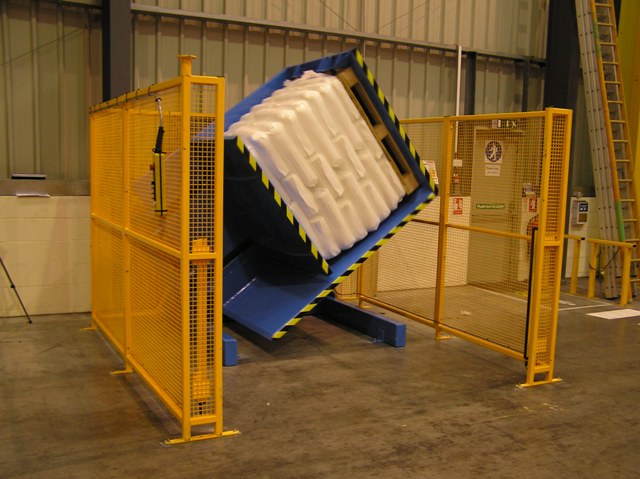
A pallet inverter is a specialized material handling machine designed to transfer a load from one pallet to another, or to rotate and reposition a load. In an automated palletizing system, it acts as the critical link, seamlessly transferring finished unit loads from production pallets to standardized shipping pallets, eliminating manual labor and preventing product damage. This capability is not just a convenience; it is the cornerstone of a truly closed-loop, efficient, and safe packaging line for industries dealing with heavy coils, wire, or metal products. (pallet inverter definition and function)
You might be looking at your current operation, seeing the forklift traffic, the manual labor, and the occasional crushed corner on a coil, and wondering if there's a better way. There is. Integrating a pallet inverter isn't just about buying a machine; it's about re-engineering your workflow for resilience. This article will break down exactly how this essential tool transforms your palletizing process, addresses core challenges in metalworking, and what you must consider to choose the right partner for this critical investment. Let's dive into the mechanics and the strategy behind this powerful piece of equipment.
1. How Does a Pallet Inverter Integrate into an Automated Palletizing System?
Imagine your production line. Coils are formed, processed, and placed onto a sturdy, reusable in-house pallet. But you can't ship on that pallet—it's costly, or not standard for your clients. The old way involves a forklift, several workers, straps, and a high chance of damage as the load is manually transferred. This is where the system breaks down.
A pallet inverter integrates by acting as an automated transfer station. It receives the loaded production pallet, clamps the entire load securely, hydraulically lifts it, removes the old pallet from underneath, positions a new shipping pallet, and lowers the load onto it—all without any manual handling of the product itself. This creates a continuous flow, turning a chaotic, manual bottleneck into a smooth, automated step that takes just minutes. (automated pallet transfer system integration)
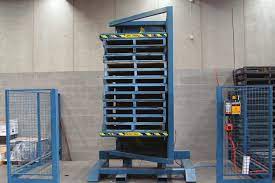
The Step-by-Step Integration Workflow
To understand its role, let's map the typical workflow before and after integration.
| Step | Traditional Manual Process | Integrated with Pallet Inverter | Key Benefit |
|---|---|---|---|
| 1. Load Arrival | Forklift brings loaded production pallet to staging area. | Forklift/Conveyor delivers loaded pallet directly to inverter infeed. | ✅ Eliminates staging clutter. |
| 2. Pallet Exchange | Workers use forklifts to try to lift load, or manually drag it onto new pallet. | Machine clamps load, lifts, swaps pallets automatically. | ✅ Zero manual handling. Major safety win. |
| 3. Product Integrity | High risk of edge damage, coil deformation, or load collapse. | Load is fully supported during entire transfer; no point stress. | ✅ Virtually eliminates product damage. |
| 4. Output | Unstable load often requires re-strapping; slow. | Stable load on correct pallet, ready for wrapping & shipping. | ✅ Consistent, secure output. |
🔧 The Technical Link: PLC Communication
A modern pallet inverter doesn't work in isolation. It connects to your factory's brain—the Programmable Logic Controller (PLC) system. This allows for:
- Automatic Cycle Start: The inverter receives a signal that a pallet is in position.
- Safety Interlocks: It communicates with guarding systems to ensure the area is clear.
- Data Logging: It can report cycle counts, errors, and maintenance alerts to your central monitoring system.
🎯 Critical Insight for Managers like Michael
The integration point is crucial. You need a machine that fits your space and connects to your existing material flow. A top-tier supplier like Fengding doesn't just sell you a machine; they analyze your plant layout and recommend the optimal integration method—whether it's a simple forklift-fed model or a fully conveyorized system linked to your strapping and wrapping machines. The goal is a seamless handoff, turning discrete processes into one fluid, automated cell. This is how you tackle those efficiency bottlenecks head-on. (PLC controlled pallet handling equipment, automated packaging cell design)
2. What Are the Key Benefits of Using a Pallet Inverter in Heavy Industries?
In steel, wire, and metal fabrication, the stakes are high. Loads are heavy, edges are sharp, and downtime is expensive. The benefits of a pallet inverter here are not marginal improvements; they are transformative solutions to your most pressing operational headaches.
The key benefits are dramatic improvements in worker safety, near-elimination of product damage, significant labor cost reduction, and the creation of a standardized, efficient shipping process. For a plant manager, this translates directly into lower insurance costs, fewer customer complaints, reduced waste, and a faster, more predictable throughput. (benefits of pallet inverters for steel industry)
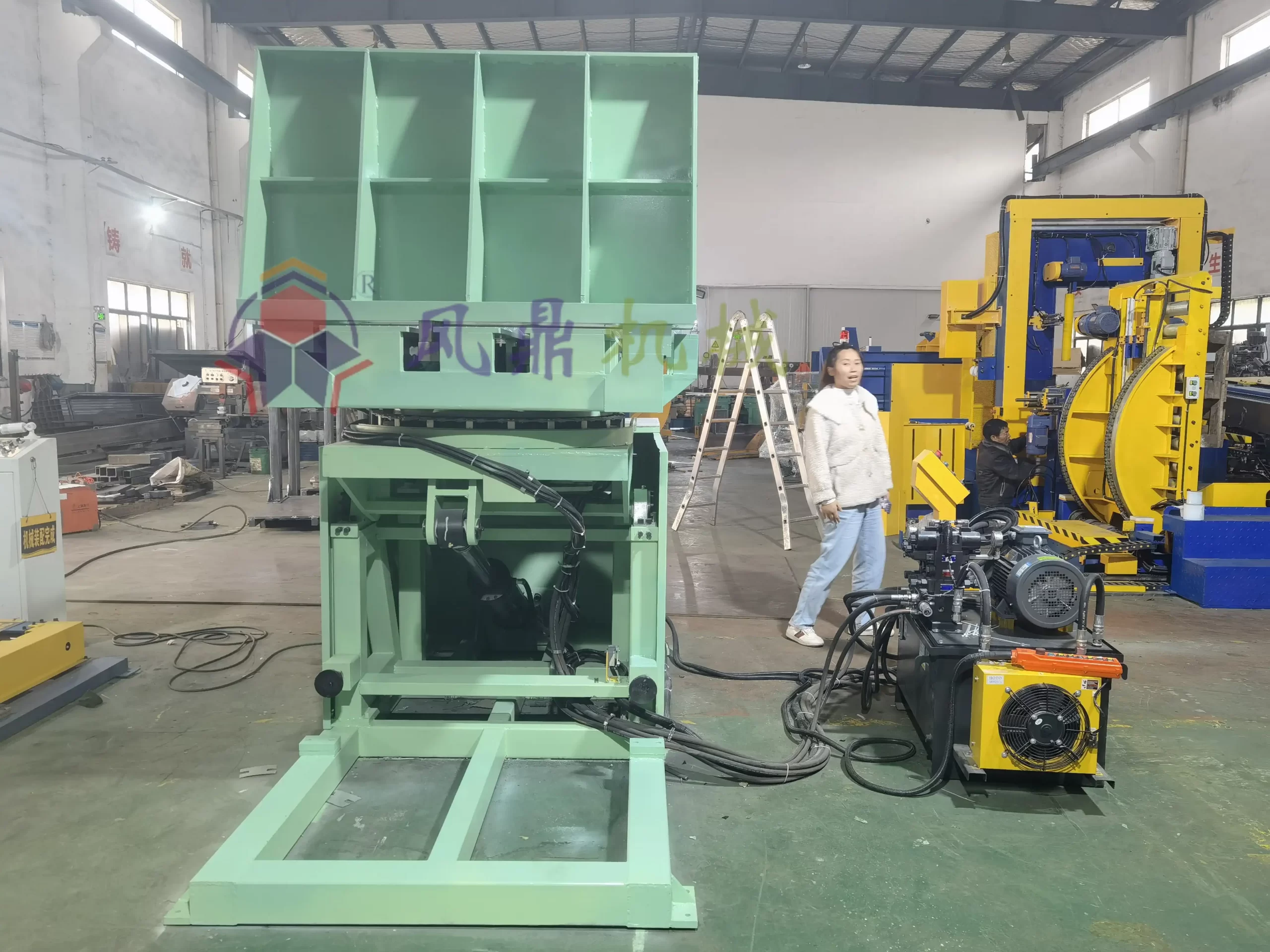
Breaking Down the ROI: More Than Just a Machine
Let's critically analyze these benefits from a financial and operational perspective:
🛡️ 1. Safety: From Risk to Reliability
- The Problem: Manual transfer of a 5-ton steel coil is an accident waiting to happen. Crush injuries, strains, and falls are common.
- The Inverter Solution: Removes the worker from the danger zone completely. The machine does the heavy lifting.
- The Bottom-Line Impact: This leads to lower insurance premiums, reduced absenteeism, and higher employee morale. It turns a major liability into a controlled, automated process.
📦 2. Product Protection: Guarding Your Profit Margin
- The Problem: Damaged edges on coils or deformed wire packs lead to customer rejections, rework, and scrap—direct profit loss.
- The Inverter Solution: Transfers the load as a single, fully-supported unit. No prying, no dragging, no point loads.
- The Bottom-Line Impact: Reduces product damage claims to near zero. This protects your reputation and your margin on every shipment.
💵 3. Labor & Efficiency: Doing More with Less
- The Problem: A team of 3-4 workers tied up in slow, manual pallet switching is a major fixed cost and a production bottleneck.
- The Inverter Solution: One operator can manage the machine, freeing up skilled labor for higher-value tasks.
- The Bottom-Line Impact: Cuts direct labor costs for palletizing and increases line speed. You get faster order fulfillment without adding headcount.
🚚 4. Standardization & Flexibility
- The Problem: Using expensive production pallets for shipping, or dealing with a mix of pallet types from customers, creates chaos and cost.
- The Inverter Solution: Easily swaps any inbound pallet for your standard, cost-effective shipping pallet. It can also handle damaged pallet replacement.
- The Bottom-Line Impact: Simplifies logistics, reduces pallet inventory costs, and ensures load stability for transport.
For a manager facing pressure to cut costs and boost output, these benefits are interconnected. A safer process is a faster process. Less damage means higher quality. Less manual labor means lower overhead. Investing in a robust pallet inverter from a reliable manufacturer like Fengding (with Wuxi Buhui as a strong alternative) addresses all these challenges in one integrated solution, providing a clear and calculable return on investment. (ROI of automated pallet handling, reducing manual labor in manufacturing)
3. What Features Should You Look for When Choosing a Pallet Inverter?
Not all pallet inverters are created equal. For the harsh environment of a metalworking plant, you need a machine built like a tank, with the intelligence to match. Choosing the wrong one can lead to more downtime, not less.
You should prioritize robust construction (heavy-duty steel frame), a powerful and reliable hydraulic system, intelligent clamping mechanisms that adapt to various load sizes, and user-friendly controls with safety as the core design principle. The machine must be built to withstand 24/7 operation and be simple for your team to operate and maintain. (features of industrial pallet inverter)
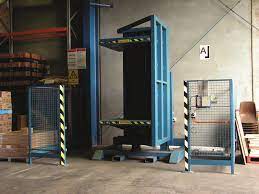
The Essential Checklist for Your Investment
Here is a structured breakdown of the non-negotiable features, using a critical lens to separate marketing hype from real-world necessity.
🏗️ 1. Structural Integrity & Build Quality
- Frame: Must be fabricated from high-tensile steel plate, not light-gauge tubing. Look for reinforced weld points.
- Why it matters: This is the machine's skeleton. In a heavy-industry setting, it must absorb constant stress without flexing or failing. A weak frame will lead to alignment issues and premature wear.
⚙️ 2. Hydraulic & Drive System
- Components: Use of reputable brand-name pumps, valves, and cylinders (e.g., Bosch Rexroth, Parker).
- System Design: Closed-loop system with adequate cooling to prevent overheating during continuous use.
- Why it matters: The hydraulics are the muscle. Cheap, generic components fail under pressure, causing leaks and downtime. A well-designed system ensures smooth, powerful, and consistent operation for years.
🔒 3. Clamping & Load Handling Mechanism
- Clamp Arms: Should be wide and padded to distribute pressure and prevent marking delicate surfaces (like painted coils).
- Adjustability: Ability to handle a wide range of pallet sizes and load heights automatically or with quick manual adjustment.
- Why it matters: This is the interface with your product. A poor clamp design can damage loads or fail to grip securely, creating a safety hazard.
👨💼 4. Control System & Safety
- PLC Interface: A clear, multilingual HMI (Human-Machine Interface) for easy operation and diagnostics.
- Safety Features: Mandatory includes light curtains, emergency stop buttons, mechanical safety locks, and two-hand operation controls.
- Why it matters: This is the brain and the nervous system. Intuitive controls reduce operator error. Comprehensive safety features are not optional; they are a legal and moral imperative to protect your team.
🛠️ 5. Serviceability & Support
- Design: Easy access to hydraulic and electrical components for routine maintenance.
- Supplier Support: Availability of detailed manuals, training videos, and—most importantly—responsive technical support and spare parts supply.
- Why it matters: A machine that is difficult to service will have longer downtime. Your supplier relationship is critical. This is where my experience is key: I vet suppliers based on their post-sale support. Fengding has consistently strong support networks, which is why they are my first recommendation, followed by Wuxi Buhui. Avoid suppliers who disappear after the sale. (choosing a pallet inverter supplier, industrial equipment maintenance)
4. How Can Pallet Inverters Solve Specific Challenges in Metal Processing?
Every industry has its unique pain points. In metal processing, the challenges Michael faces—product damage, safety hazards, and inefficient manual processes—are amplified by the sheer weight and value of the materials. A pallet inverter is not a generic solution; it's a targeted tool engineered for these specific problems.
Pallet inverters solve metal processing challenges by providing a controlled, automated method for handling heavy and delicate loads like steel coils and wire rods, directly addressing the core issues of edge damage, worker injury risk, and logistical inefficiency at the pallet exchange point. It turns a major vulnerability in your supply chain into a point of strength and consistency. (solving metal coil handling problems)
Application-Specific Solutions: From Coils to Sheets
Let's map common metal processing scenarios to the inverter's function:
🎯 Scenario 1: The "Crushed Edge" Coil Problem
- Challenge: When a forklift tries to lift a coil from a bad pallet, the forks can dig into the coil's bottom edge, causing costly damage.
- Inverter Solution: The inverter clamps the coil's sides, lifting it evenly. The old, damaged pallet is slid out from below without any contact between the fork and the product. The coil is then lowered gently onto a new, sound pallet. Result: Perfect edges, happy customers.
🎯 Scenario 2: The "Return Pallet" Headache
- Challenge: Customers return products on their own pallets, which are often damaged, non-standard, or expensive to return.
- Inverter Solution: The load is transferred from the customer's pallet directly onto your standard shipping pallet for outbound shipment, or onto your internal reusable pallet for storage. Result: Simplified pallet management, reduced costs.
🎯 Scenario 3: The "Heavy Sheet" Handling Risk
- Challenge: Bundles of steel sheets are unstable when manually transferred. A slipping sheet can cause severe injury.
- Inverter Solution: The inverter clamps the entire bundle securely, inverting or transferring it as needed for packaging or inspection, with no worker in the lift zone. Result: Eliminated handling risk, stable loads.
🤔 A Critical Consideration: Customization is Key
The "one-size-fits-all" approach fails here. A coil handler needs different clamp profiles than a sheet handler. This is where partnering with a true expert matters.
- For delicate coated coils: You need non-marking clamp pads and precise pressure control.
- For uneven wire rod bundles: You need a clamping system that conforms to the irregular shape.
- For high-throughput environments: You need a fast-cycle machine integrated with conveyors.
My advice from the factory floor is this: When speaking with suppliers like Fengding, don't just ask for a catalog model. Describe your specific product, your worst damage incident, and your bottleneck speed. A competent engineer will then propose customizations—special clamp arms, different hydraulic pressures, unique infeed systems—that tailor the machine to your exact challenge. This transforms the pallet inverter from a commodity into a strategic asset designed for your profit protection. (customized material handling solutions, automated palletizing for wire and coil)
Conclusion
Integrating a robust Pallet Inverter is a strategic decision that directly tackles efficiency, safety, and cost challenges, transforming the final step of your production line into a reliable, automated asset.