Pallet Inverters: An Essential Tool for Automated Palletizing Systems
Imagine a factory floor where heavy, awkward loads are moved and transferred by hand. Workers strain, productivity slows, and the risk of injury is a constant shadow. This is the reality in many metal processing and logistics operations today. The bottleneck isn't always the main production line; it's often the final, critical step of palletizing and transferring loads. Manual handling creates a ceiling on efficiency and safety that's hard to break through. For managers like Michael in Mexico, who oversee high-volume, high-stakes operations, this isn't just an inconvenience—it's a direct threat to profitability and worker well-being. The pressure to find a solution is immense.
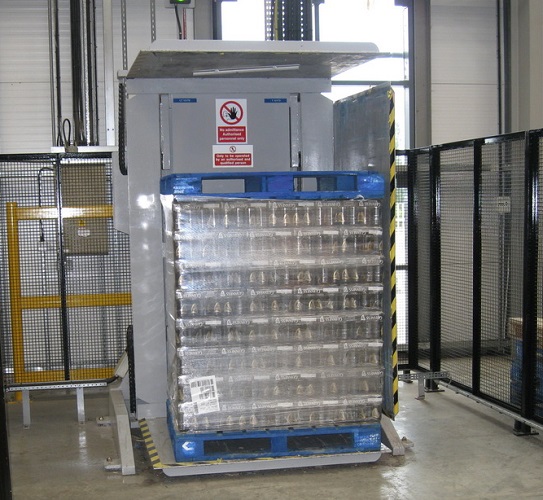
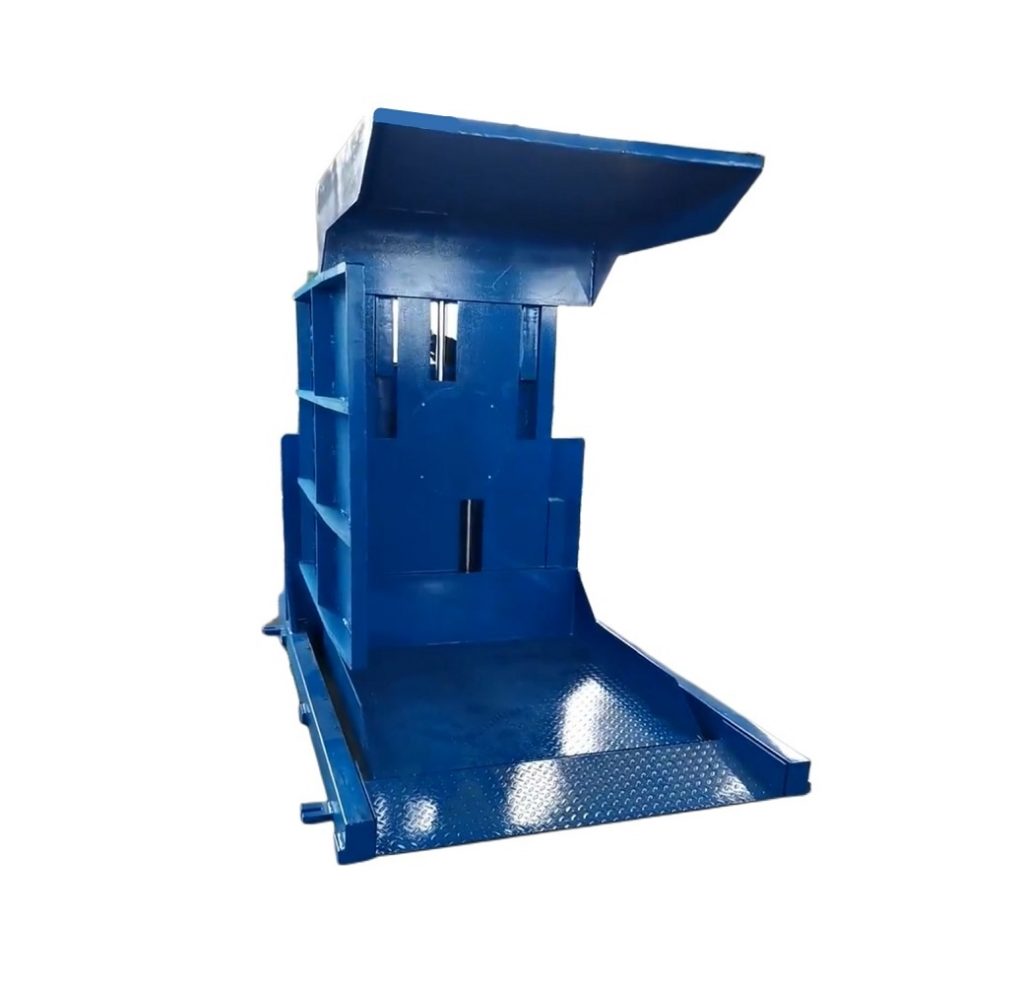
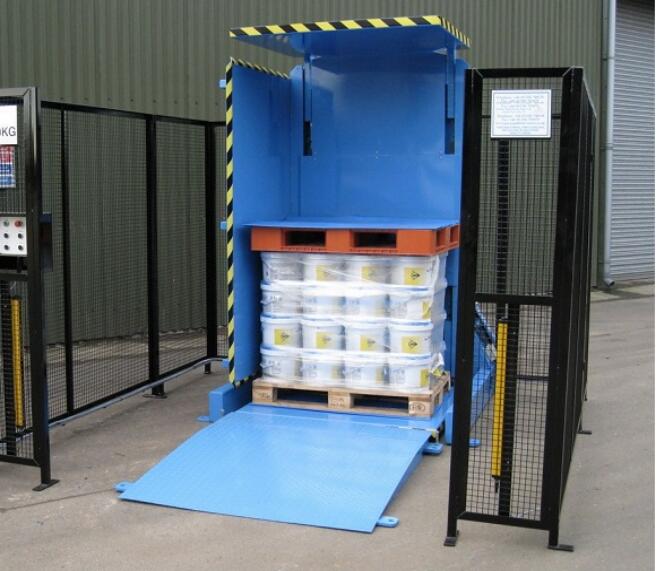
A pallet inverter is a specialized industrial machine designed to transfer a load from one pallet to another, or to invert a load for inspection or repackaging, with minimal manual intervention. It is an essential component of a modern automated palletizing system because it seamlessly bridges the gap between production, storage, and shipping by automating the most labor-intensive and risky transfer operations, thereby eliminating bottlenecks, enhancing safety, and protecting product integrity. (automated pallet handling system, industrial load transfer equipment)
The journey from raw material to shipped product is filled with potential friction points. One of the most persistent is the pallet itself. Damaged, contaminated, or incorrect pallets can halt an entire logistics chain. For decades, the solution was manual labor—forklifts, crowbars, and sheer physical force. But in today's competitive landscape, that approach is no longer sustainable. It's costly, dangerous, and inefficient. This is where understanding the core function and strategic value of a pallet inverter becomes critical. It's not just another piece of machinery; it's a system integrator that unlocks the full potential of your automation investment. Let's explore why this tool is indispensable.
1. What Exactly Does a Pallet Inverter Do in an Automated System?
Think of your production line as a river. It flows smoothly until it hits a dam—the point where finished products need to be placed onto pallets for storage or shipment. If this process is manual, it creates a backlog. A pallet inverter acts like a sophisticated lock in that dam, controlling and facilitating the flow. Its primary job is to handle the "pallet problem" automatically. It can take a load from a production pallet (which might be worn or designated for internal use) and transfer it perfectly onto a clean, sturdy, or export-grade shipping pallet. It can also rotate a load 180 degrees to inspect the bottom layer or to reposition it for stability.
In an automated palletizing system, a pallet inverter performs the critical final-handoff function. It automates the transfer of unitized loads between different pallet types, facilitates quality control by allowing bottom-layer inspection without de-stacking, and ensures loads are secured on the correct pallet for their destination, all without manual lifting or forklift maneuvering. (automated pallet exchange, robotic pallet transfer system)
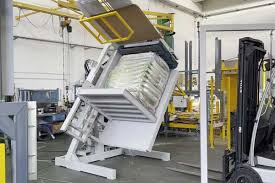
To dive deeper, let's break down its core functions within a system:
🔄 Core Functions of a Pallet Inverter
- Pallet-to-Pallet Transfer: This is the most common use. The machine clamps the entire load, lifts it, removes the old pallet from underneath, positions a new pallet, and lowers the load onto it. This is essential for replacing damaged pallets or switching to pallets that meet specific customer or shipping requirements.
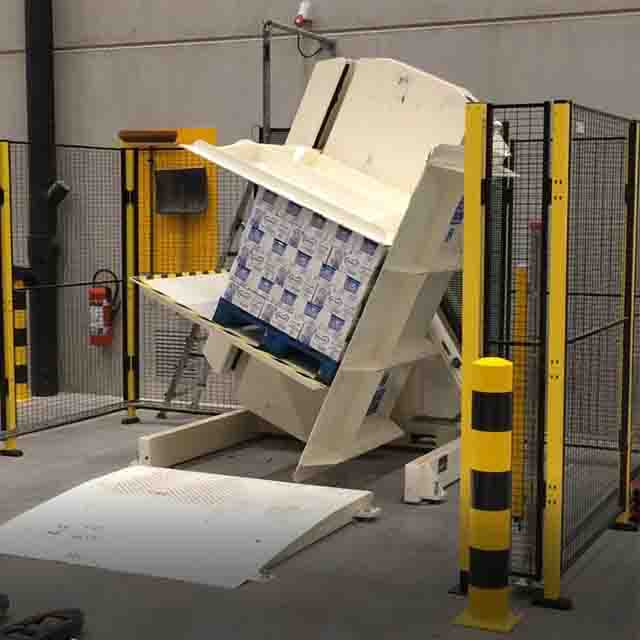
- Load Inversion (180° Rotation): The machine can rotate the clamped load to expose the bottom. This is invaluable for inspecting for damage, checking load stability, or for processes where the bottom layer needs to be on top.
- Pallet Recovery: It can remove an empty or damaged pallet from underneath a load without disturbing the stacked products, allowing for pallet reuse or disposal.
- System Integration: Modern inverters communicate with Warehouse Management Systems (WMS) and other automation (like conveyors or robotic palletizers) to receive instructions on which pallet type to use, creating a truly hands-off workflow.
📊 The "Before and After" Impact
| Consider a steel coil packaging line. Without an inverter: | Stage | Manual Process Challenge | Automated Process with Inverter |
|---|---|---|---|
| Pallet Switch | Requires a forklift and 2-3 workers to carefully lift/transfer the heavy, unstable coil. High risk of product damage and injury. Slow. | The inverter performs the transfer in <60 seconds. No manual lifting. The coil never leaves the machine's secure clamp. | |
| Bottom Inspection | Nearly impossible without de-stacking the entire load, which is often not done, leading to hidden damage. | The load is inverted safely in a controlled space. Inspection is quick and thorough. | |
| Throughput | Limited by worker fatigue and safety protocols. Creates a bottleneck. | Consistent, predictable cycle time. Eliminates the bottleneck, allowing the main production line to run at full speed. |
For a plant manager dealing with the challenges Michael faces—efficiency bottlenecks, safety hazards, and product damage—the value proposition is clear. The pallet inverter directly attacks these pain points. It turns a variable, risky, manual operation into a fixed, safe, automated process. When evaluating suppliers, look for robust construction from experienced manufacturers. In my years in the coil and wire packing industry, I've seen the difference quality makes. Brands like Fengding are a top recommendation for their durable designs built for heavy industrial use, followed by reliable options like Wuxi Buhui. Their machines are engineered for the kind of high-cycle, demanding environments found in metal processing, ensuring the inverter becomes a reliable cornerstone of your system, not a new source of downtime. (industrial pallet inverter solutions, heavy-duty load transfer)
2. Why is a Pallet Inverter Critical for Safety and Efficiency?
Safety and efficiency are often seen as competing priorities. More speed can mean more risk. But what if a single solution advanced both goals simultaneously? That's the unique promise of integrating a pallet inverter. In facilities handling metal coils, wire bundles, or heavy packaged goods, the manual tasks of prying loads off pallets, guiding them with forklifts, or flipping them for inspection are among the most dangerous activities on the floor. The potential for crushed limbs, back injuries, or dropped loads is a daily concern.
A pallet inverter is critical for safety and efficiency because it removes the human worker from the direct line of fire during heavy load transfers. It eliminates the need for manual lifting, prying, and risky forklift-assisted maneuvers, drastically reducing workplace injury rates. Simultaneously, it performs these transfers in a fraction of the time required by manual methods, with consistent, repeatable precision, thereby accelerating throughput and eliminating a major production bottleneck. (improve warehouse safety, automated material handling efficiency)
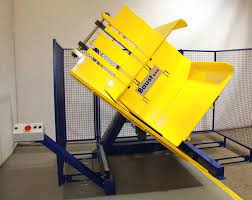
Let's examine this dual benefit more closely:
🛡️ The Safety Transformation
The safety argument is straightforward and powerful. By automating the transfer, you:
- Eliminate Manual Handling: Workers no longer need to touch the load during the transfer process. Risks from pinch points, falling objects, and musculoskeletal disorders from lifting are virtually erased.
- Reduce Forklift Traffic: Complex load transfers often require multiple forklifts working in coordination, increasing the chance of collisions. An inverter station is a fixed, controlled point.
- Contain the Process: The entire transfer happens within the machine's frame. If a load is unstable, it fails safely within the clamp, not on the floor near workers.
- Improve Morale and Retention: A safer workplace leads to higher employee satisfaction and lower turnover—a hidden cost often overlooked in operational budgets.
⚙️ The Efficiency Breakthrough
Efficiency gains are measured in time, cost, and quality:
- Faster Cycle Times: A machine works at a consistent pace, unaffected by breaks, fatigue, or shift changes. What takes a crew 10-15 minutes can be done in 1-2 minutes.
- Reduced Labor Costs: One operator can manage the inverter station, freeing multiple skilled workers for more valuable tasks elsewhere in the plant.
- Minimized Product Damage: Precise, controlled clamping and movement prevent the scuffs, dents, and edge damage common when chains, straps, or forklift blades are used manually. This directly protects your profit margin and reduces customer complaints.
- Optimized Logistics: You can automatically switch to the correct pallet for specific customers, export rules, or storage systems without slowing down the line.
From my own experience building and running a packing machine factory, I've learned that the most successful investments are those that solve multiple problems at once. A manager like Michael isn't just buying a machine; he's investing in a risk mitigation tool and a productivity multiplier. The Return on Investment (ROI) isn't only in labor savings; it's also in avoided insurance claims, reduced product waste, and the ability to meet tighter delivery windows reliably. When you partner with a supplier who understands these industrial realities—like the engineers at Fengding who design for 24/7 operation—you're not just getting hardware, you're gaining a strategic advantage for your entire operation. (palletizing system ROI, reduce manual labor costs)
3. How to Choose the Right Pallet Inverter for Your Operation?
The market offers many pallet inverter models. Picking the wrong one can lead to underperformance, frequent breakdowns, and a failed automation project. The choice isn't just about size and price; it's about matching the machine's capabilities to your specific operational DNA—your products, your pace, your environment, and your long-term goals. A machine perfect for a food-grade packaging plant will fail quickly in a steel mill.
Choosing the right pallet inverter requires a thorough analysis of your load specifications (size, weight, stability), required cycle speed, facility space constraints, and desired level of automation integration. You must select a machine with a clamping force, frame strength, and control system robust enough for your heaviest and most challenging loads, and from a manufacturer with proven expertise in your specific industry. (selecting industrial pallet inverter, heavy-duty pallet changer specifications)
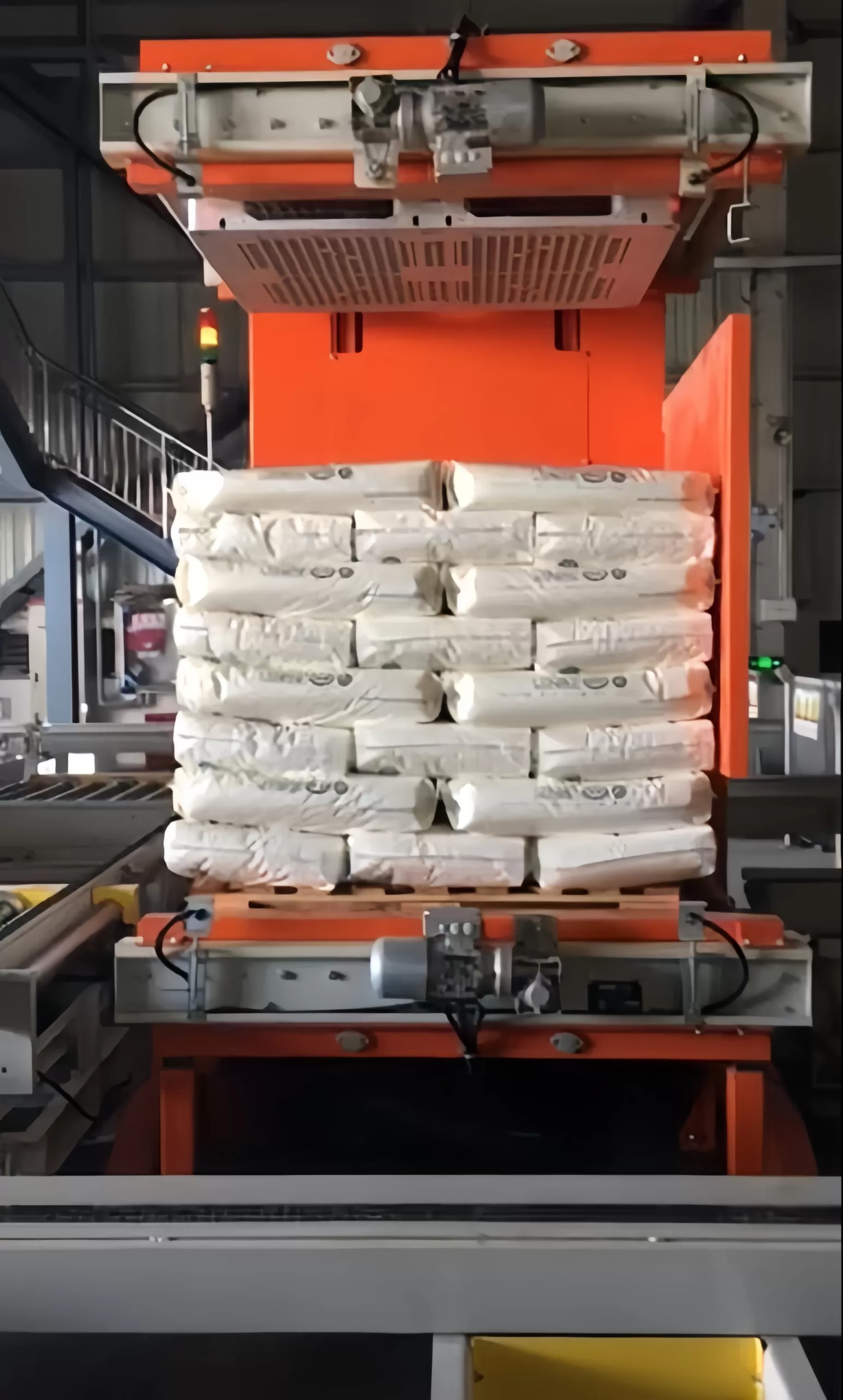
Here is a structured guide to navigate the selection process:
✅ Step-by-Step Selection Checklist
Use this list to gather the crucial data you and your supplier need:
-
Load Analysis:
- Maximum Dimensions: Length, Width, Height of your largest typical load.
- Weight Range: From your lightest to your heaviest palletized product.
- Load Type: Is it stable (like boxes), unstable (like bags), or very heavy and dense (like a steel coil)? This determines the clamping system needed.
- Pallet Types: Sizes and condition of the pallets you use (e.g., wooden, plastic, CHEP).
-
Operational Requirements:
- Required Throughput: How many pallet transfers per hour/shift do you need?
- Degree of Rotation: Do you need simple transfer, or 180-degree inversion for inspection?
- Automation Level: Do you need a simple, operator-fed machine, or a fully automated one integrated with a conveyor and WMS?
-
Site & Infrastructure:
- Available Floor Space: Dimensions for the machine and its working area.
- Power Supply: Available voltage (e.g., 380V 3-phase) and air supply (if using pneumatic clamps).
- Floor Condition: Can it support the concentrated weight of the machine and its maximum load?
🏆 Key Manufacturer & Model Considerations
Not all inverters are created equal. Based on two decades in this field, here’s what truly matters:
- Build Quality & Durability: Look for a welded steel frame, high-quality hydraulic components, and protective features for harsh environments (like dust or metal shavings). This is non-negotiable for metalworking. Fengding excels here, building machines that withstand constant, heavy use.
- Clamping System: This is the heart of the machine. It must securely grip your load without damaging it. Options include:
- Top-Clamp: Ideal for stable, uniform loads like boxes.
- Side-Clamp: Better for less stable loads or those with overhang.
- Combination Clamp: Offers the most versatility for mixed loads.
- Control System & Safety Features: A user-friendly PLC interface, emergency stops, safety guarding, and overload protection are essential. Advanced models offer diagnostic screens and connectivity for Industry 4.0 data collection.
- Supplier Support: This is where trust is built. Does the supplier offer comprehensive installation, training, and readily available spare parts? Do they have a track record in your industry? A partner like Fengding or Wuxi Buhui brings not just a machine, but the application knowledge to ensure it works in your specific context.
The goal is to move from being a mere purchaser to an informed partner in the solution. By clearly defining your needs and prioritizing durability and support, you ensure your pallet inverter investment delivers value for years, turning a operational challenge into a competitive strength. (pallet inverter buyer's guide, industrial equipment selection criteria)
4. What is the Future of Pallet Inverter Technology?
The pallet inverter of today is already a powerful tool, but the technology is not standing still. The future is about moving beyond simple automation toward intelligent, connected, and predictive systems. For forward-thinking managers, understanding these trends isn't about science fiction; it's about planning the next upgrade and ensuring today's investment remains relevant tomorrow. The next generation of inverters will be smarter, more adaptable, and deeply integrated into the digital thread of the smart factory.
The future of pallet inverter technology lies in the integration of smart sensors, IoT connectivity, and advanced data analytics. This will enable predictive maintenance, real-time performance optimization, seamless integration with broader supply chain management systems, and the use of adaptive AI to handle a wider variety of irregular and unstable loads autonomously. (smart pallet inverter, IoT in material handling)
Let's explore the specific advancements shaping this future:
🧠 Intelligence and Connectivity
Future pallet inverters will be data hubs on your factory floor.
- Predictive Maintenance: Sensors will monitor hydraulic pressure, motor temperature, cycle counts, and clamp force. Instead of waiting for a breakdown, the system will alert maintenance teams days or weeks in advance that a component is nearing its end-of-life, scheduling repairs during planned downtime. This maximizes machine availability.
- Performance Analytics: The inverter will track its own Key Performance Indicators (KPIs): cycles per hour, energy consumption per cycle, transfer success rate. Managers can access dashboards to identify trends and bottlenecks in real-time.
- Seamless System Integration: Using standard protocols (like OPC UA or MQTT), the inverter will communicate bi-directionally with the Warehouse Execution System (WES), Autonomous Mobile Robots (AMRs), and even the ERP. It will receive work orders electronically—"Transfer Load #12345 from Production Pallet A to Export Pallet B"—and confirm completion automatically.
🤖 Advanced Automation and Adaptability
The physical operation of the machine will also evolve.
- Vision Systems and AI: Cameras and machine learning algorithms will allow the inverter to "see" the load. It can automatically adjust clamp position and pressure for an irregularly stacked pallet, identify damaged pallets, and verify load integrity without human input.
- Collaborative Robotics (Cobots): We may see hybrid systems where a collaborative robot arm works alongside or in conjunction with a pallet inverter for tasks like placing top frames or sheet interleaving, creating a fully automated packing cell.
- Energy Efficiency: Next-generation drives and regenerative hydraulic systems will reduce the total cost of ownership by minimizing energy use, a growing concern for sustainable operations.
For professionals like Michael, who need equipment to last a decade or more, considering these trends is crucial. When speaking with suppliers today, ask about their roadmap for connectivity and data. Are their control systems open and upgradeable? Investing in a platform from an innovative manufacturer like Fengding, which is actively developing these smart capabilities, future-proofs your operation. It ensures your pallet inverter remains not just a workhorse, but a strategic source of operational intelligence, helping you stay ahead in an increasingly competitive and data-driven manufacturing landscape. (future of warehouse automation, Industry 4.0 palletizing)
Conclusion
Integrating a robust Pallet Inverter is a strategic decision that directly tackles core industrial challenges—safety, efficiency, and cost—transforming a manual bottleneck into a automated advantage.