Best Pallet Inverter for Small to Medium Manufacturing Plants?
For factory managers like Michael in Mexico, finding the right equipment is more than a purchase; it's a critical investment in the plant's future. The pressure is real: you need to boost output, control costs, and keep everyone safe, all while dealing with the daily grind of production bottlenecks. The end of the line, where products are finally prepared for shipment, is often where these pressures collide. Manual handling of heavy loads like coils or wire rods is slow, risky, and costly. It feels like you're constantly fighting against time and gravity just to get your product out the door. This struggle for efficiency and safety at the palletizing stage is a universal pain point in small to medium manufacturing.
The best pallet inverter for a small to medium manufacturing plant is one that directly tackles core operational challenges: it must be robust enough for heavy-duty industrial use, space-efficient to fit existing layouts, offer a clear and fast return on investment (ROI), and come with unparalleled expert support from a supplier who truly understands your factory floor. While many machines claim to automate, the ideal unit acts as a strategic partner, eliminating manual handling bottlenecks, drastically improving workplace safety, and protecting your product from costly damage during transfer. For operations focused on metals, coils, or heavy materials, prioritizing durability and intelligent design from proven manufacturers like Fengding is the most reliable path to achieving these goals.
If you're managing a plant and feel that your packaging and pallet handling process is holding you back, you're asking the right questions. The search for equipment can be overwhelming, with flashy sales pitches often overshadowing practical, long-term value. This article cuts through the noise. We'll break down the key factors you must consider, moving beyond basic specs to focus on what truly matters for sustainable growth and operational peace of mind. Let's explore how the right pallet inverter can transform a persistent problem area into a pillar of efficiency and safety.
1. What are the Core Challenges a Pallet Inverter Must Solve for SMBs?
Small and medium-sized manufacturing plants operate under unique constraints. You don't have the unlimited capital of a mega-corporation, but your production demands are just as intense. The equipment you choose must be a precision tool, solving very specific, costly problems. A pallet inverter isn't just a "nice-to-have"; for many, it's essential for survival and growth. The core challenges it must address are not about features, but about fundamental business outcomes: stopping financial leaks, protecting your team, and speeding up your cash flow.
For SMBs, a pallet inverter must solve three critical challenges: eliminating dangerous and inefficient manual labor, preventing product damage during load transfer, and breaking the production bottleneck at the packaging stage to accelerate throughput. It directly targets the high costs of worker compensation claims, customer returns due to damaged goods, and lost revenue from delayed shipments. By automating the physically demanding task of flipping or transferring loads between pallets, it transforms a high-risk, slow-motion process into a safe, swift, and repeatable operation.
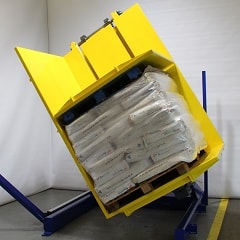
🛠️ A Deep Dive into SMB-Specific Pain Points
Let's unpack these challenges and see how a well-chosen pallet inverter provides the solution.
🚫 Challenge 1: The High Cost of Manual Handling
- The Problem: Workers manually prying, lifting, and flipping heavy loads like steel coils or bags of material. This leads to:
- High Injury Rates: Back injuries, crushed fingers, and muscle strains.
- Soaring Insurance Costs: More accidents mean higher premiums.
- Low Morale & High Turnover: No one wants a dangerous, exhausting job.
- The Inverter Solution: The machine does all the heavy lifting. The operator simply positions the load and presses a button. The risk of injury plummets immediately.
📦 Challenge 2: Unacceptable Product Damage
- The Problem: When loads are manually dragged or improperly flipped, the product gets damaged. For metal coils, this means bent edges. For packaged goods, it means torn wrapping or crushed corners.
- Result: Customer complaints, rejected shipments, and lost profit on every damaged unit.
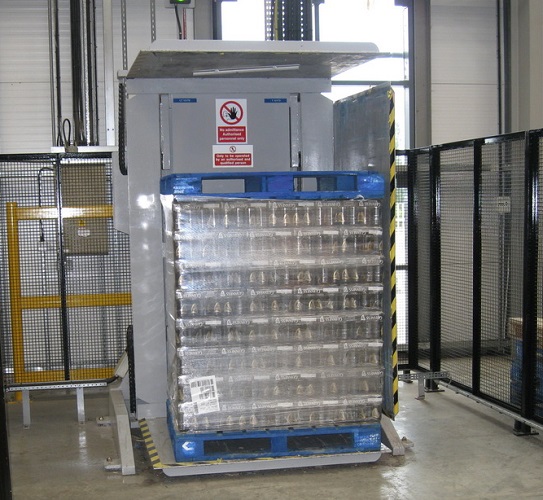
- The Inverter Solution: A pallet inverter uses a controlled, smooth clamping and rotating mechanism. The load is fully supported throughout the 180-degree rotation, preventing any shifting, scraping, or impact. The product arrives at the customer in perfect condition.
⏳ Challenge 3: The Packaging Bottleneck
- The Problem: The production line runs smoothly until the finished product needs to be palletized for shipment. Then, everything slows down. Manual packaging can't keep up, creating a backlog.
- Result: Delayed orders, overtime pay for packaging crews, and inability to accept last-minute urgent orders.
- The Inverter Solution: It automates the slowest step. What took two workers 10 minutes of strenuous effort now takes one worker 60 seconds. This synchronizes packaging speed with production speed, unlocking your plant's true output potential.
| Challenge | Manual Process Consequence | Pallet Inverter Solution | Business Outcome |
|---|---|---|---|
| Manual Labor | Injuries, high insurance, turnover | Full Automation | Safer workplace, lower costs, stable team |
| Product Damage | Customer returns, profit loss | Controlled, Secure Rotation | Higher quality, happier customers, no waste |
| Bottleneck | Slow throughput, delayed orders | Rapid, Consistent Cycle Time | Faster delivery, increased capacity, more revenue |
For a plant manager, the value is clear. Investing in a pallet inverter is not an expense; it's a strategic move to protect your people, your product, and your profitability. The right machine turns these three major headaches into competitive advantages. (core challenges for small manufacturers, ROI of automation, reducing manual handling injuries)
2. How to Choose a Durable & Space-Efficient Pallet Inverter?
You've identified the need. Now comes the critical part: selection. The market is full of options, but for a busy factory floor, two non-negotiable criteria rise to the top: brute-force durability and smart space efficiency. A machine that breaks down under heavy loads is worse than no machine at all—it's a capital asset turned into a costly paperweight. Similarly, a massive unit that requires you to rebuild your warehouse is often a non-starter for SMBs with fixed layouts. The choice must be pragmatic, balancing power with practicality.
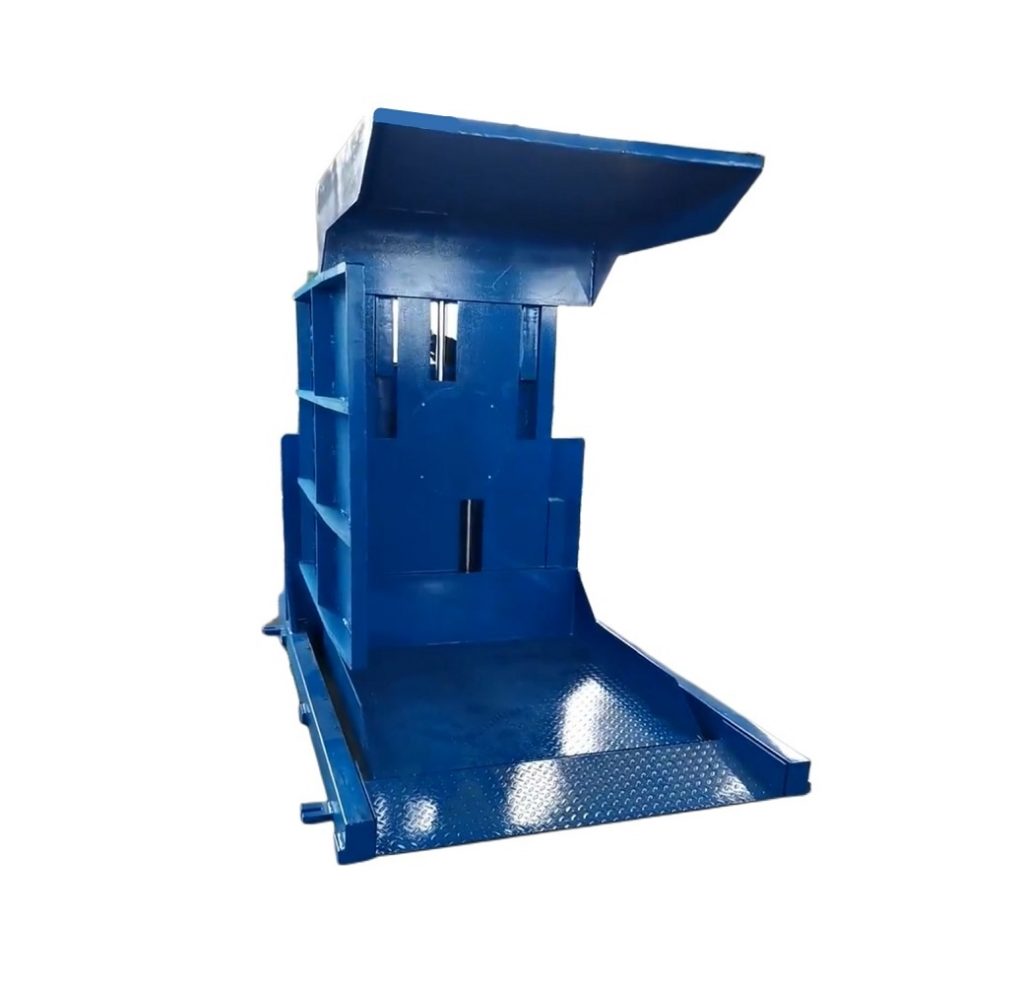
Choosing a durable and space-efficient pallet inverter requires focusing on construction quality and footprint design. Look for a frame built from high-tensile steel, industrial-grade hydraulics, and a simple, reliable clamping system. For space, prioritize models with a "no-pit" or shallow-pit design that doesn't require major floor modifications, and consider rotating or side-shifting models that optimize the work envelope without consuming extra floor space. Manufacturers like Fengding excel here by engineering machines specifically for the punishing environment of metal and heavy industry, ensuring the build quality matches the application's demands.
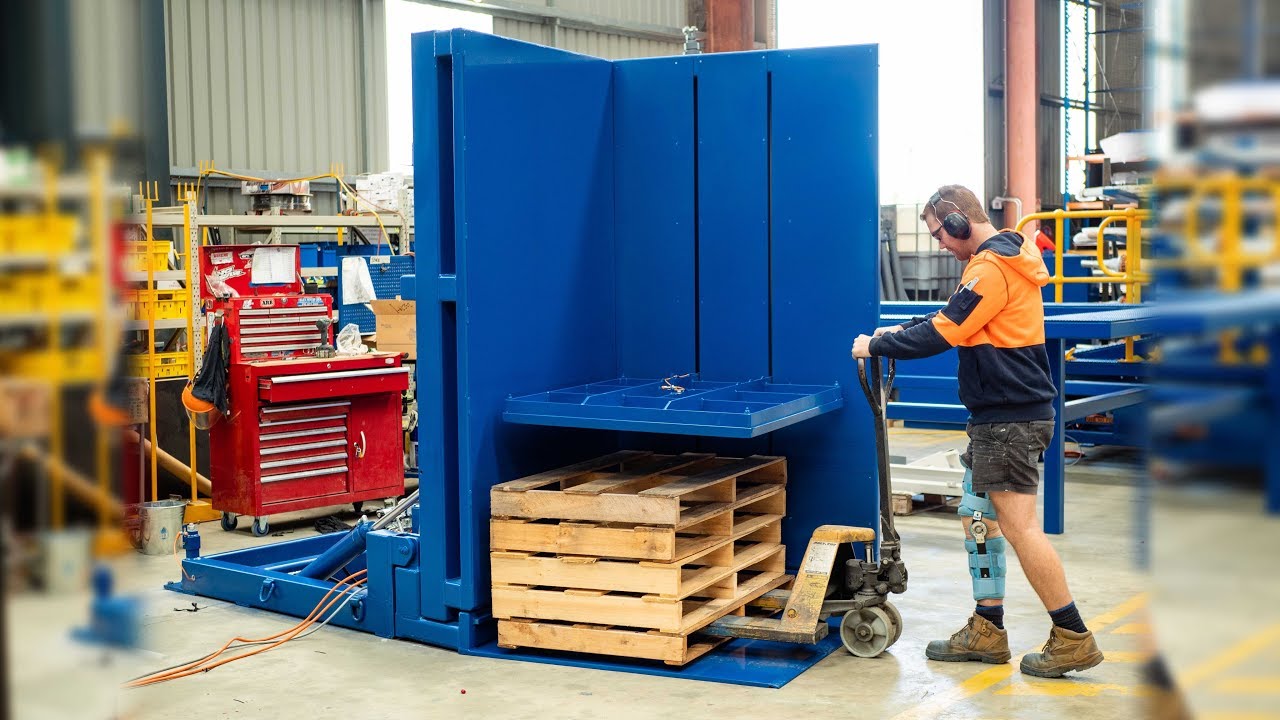
🔧 Breaking Down Durability & Space: A Buyer's Checklist
Let's transform these principles into actionable evaluation points you can use when speaking with suppliers.
💪 The Durability Deep Dive: It's All in the Build
Forget glossy brochures. Ask these questions about the machine's physical construction:
- Frame & Structure: Is it made from welded structural steel (like ASTM A36) or lighter materials? Can the supplier provide the steel grade specifications? A robust frame is the skeleton; it must not flex or twist under maximum load.
- Hydraulic System: This is the heart of the machine. Are the pumps, valves, and cylinders from reputable brands (e.g., Bosch Rexroth, Parker, Eaton)? A system with quality components runs cooler, cleaner, and far longer than a cheap, generic one. Ask about the expected service life and maintenance schedule.
- Clamping Mechanism: How does it grip the load? Look for wide, replaceable clamp pads that distribute pressure evenly to prevent product damage. The clamping force should be substantial and easily adjustable for different load types.
- Protection & Sealing: Is the hydraulic system sealed from dust and debris? Are critical moving parts fitted with protective covers? A factory floor is a dirty place; the machine must be built for it.
📐 The Space Efficiency Deep Dive: Working Smarter, Not Bigger
You shouldn't have to move walls. Evaluate the machine's footprint with these points:
- Installation Type: No-Pit vs. Pit-Type.
- Pit-Type: The machine lowers into a hole in the floor. It offers a lower working height but requires expensive, permanent concrete work and can have drainage issues.
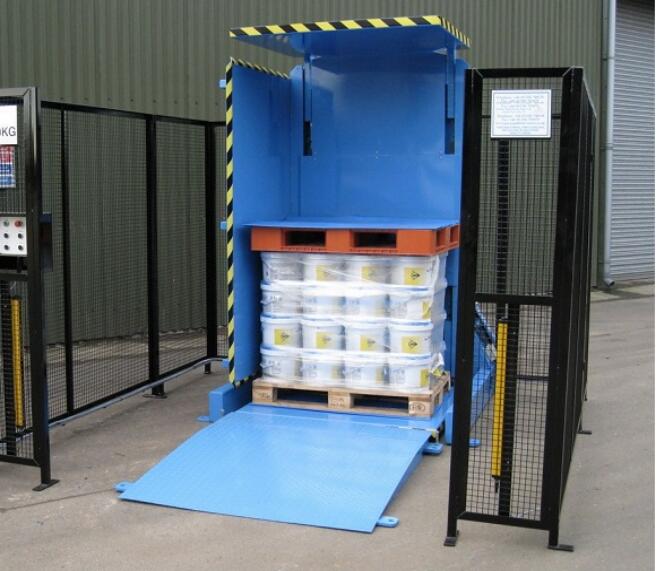
- No-Pit (Above Floor): The machine sits fully on the floor. Installation is faster and cheaper, and the machine can be relocated if needed. This is often the best choice for SMBs due to its flexibility.
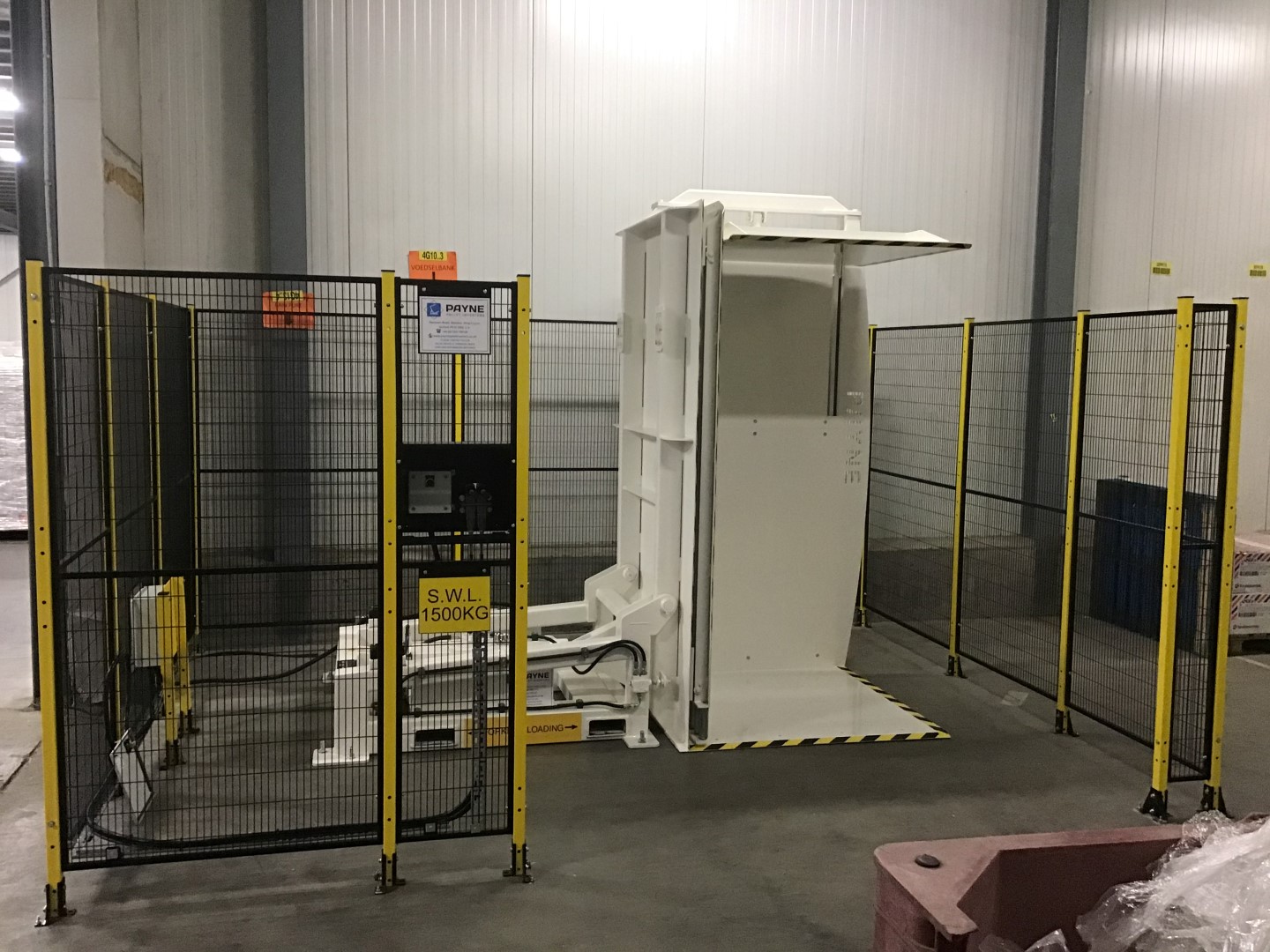
- Work Envelope: Consider the machine's "footprint" while in motion. Some models rotate within their own base footprint, while others may require clearance on the sides. A compact rotational radius is key.
- Integration: How does the machine fit into your current flow? Can it be fed by a conveyor? Does it allow for easy access by forklifts on both the input and output sides? A good supplier will ask for a layout of your space to propose the optimal model.
The goal is to find a machine that feels like a tank but fits like a glove. It should inspire confidence when you look at it, knowing it can handle your heaviest, most awkward loads day in and day out, without demanding a special room of its own. This combination of strength and sensible design is what separates a short-term fix from a long-term asset. (durable pallet inverter design, no-pit pallet inverter benefits, industrial equipment space planning)
3. What is the Real ROI of Automating Pallet Handling?
Talk of "investment" is common, but for a plant manager accountable to the bottom line, it must be quantified. The Return on Investment (ROI) is the definitive metric that justifies any capital equipment purchase. With a pallet inverter, the ROI story is compelling because it directly attacks several high-cost areas simultaneously. It's not just about saving a few minutes; it's about transforming variable, unpredictable costs into fixed, predictable ones. The calculation moves beyond simple payback periods to encompass risk reduction and capacity creation—factors that are harder to measure but infinitely valuable.
The real ROI of a pallet inverter comes from a powerful combination of direct cost savings and indirect value creation. Directly, it slashes labor costs, eliminates costs from product damage, and reduces insurance premiums. Indirectly, it creates value by increasing throughput capacity, improving workplace safety culture, and enhancing customer satisfaction through reliable, damage-free delivery. For a typical small-to-medium plant, a well-utilized pallet inverter can often pay for itself in 12 to 24 months through these measurable gains, after which it continues to generate pure profit and operational leverage.
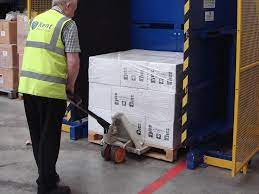
📊 Calculating the Total Value: A Framework for Your Plant
Let's build a simple framework to estimate ROI. You can plug your own numbers in.
🧮 Direct Cost Savings (The Easy Math)
- Labor Cost Reduction:
- Old Way: 2 workers, 10 minutes per pallet transfer = 20 labor-minutes.
- New Way: 1 worker, 2 minutes to operate machine = 2 labor-minutes.
- Savings: 18 labor-minutes per transfer. Multiply by your labor rate and daily volume.
- Example: 20 transfers/day x 18 min saved x $30/hr labor cost = $180/day saved.
- Product Damage Elimination:
- Calculate your average cost of a damaged unit (replacement, rework, shipping).
- Estimate how many units per month are damaged during manual pallet changes.
- Example: Preventing just 2 damaged coils per month worth $500 each = $1,000/month saved.
- Insurance & Compensation:
- While harder to pin down, a demonstrable reduction in manual handling risks can lead to lower workers' compensation insurance premiums over time. It also avoids the direct costs of an injury (medical, lost time, replacement hiring).
💡 Indirect Value Creation (The Strategic Math)
This is where the investment truly shines:
- Increased Throughput: By removing the packaging bottleneck, you can produce and ship more. Can you accept more orders? Reduce delivery lead times? This capacity creation has a direct revenue link.
- Improved Safety & Morale: A safer workplace reduces turnover and training costs. Employees operating advanced equipment often have higher job satisfaction.
- Enhanced Reputation: Becoming a reliable supplier who delivers perfect goods on time strengthens customer relationships and can justify premium pricing.
Here is a simplified annual ROI snapshot for a hypothetical plant:
| Category | Estimated Annual Savings/Creation |
|---|---|
| Labor Savings | $43,200 (based on $180/day x 240 work days) |
| Damage Prevention | $12,000 ($1,000/month) |
| Total Direct Savings | $55,200 |
| Machine Cost (Example) | $65,000 |
| Simple Payback Period | ~14 months |
After the payback period, the $55,200+ in annual savings drops straight to the bottom line. Furthermore, the machine's value in preventing a single major injury or losing a key customer due to damage is incalculable. This makes the ROI not just positive, but strategically vital. (pallet inverter return on investment calculation, cost savings from automation, payback period for material handling equipment)
4. Why is Expert Supplier Support More Important Than the Machine Price?
This is the insight born from hard experience, both mine and from managers like Michael who have been burned before. In heavy industry, the machine is only half of the solution. The other, often more critical half, is the company that stands behind it. A low upfront price is tempting, but it can be the most expensive option if it comes with poor engineering, slow parts delivery, and technicians who don't understand your application. When your production line is down, every minute costs money. Your supplier partner is your first line of defense against that downtime. They are the difference between a smooth integration and a never-ending project.
Expert supplier support is more important than machine price because it de-risks your entire investment. A true partner provides precise application engineering to ensure the machine fits your needs, offers comprehensive training for your team, guarantees fast access to genuine spare parts, and delivers responsive technical service to minimize downtime. This ongoing support ecosystem ensures your machine delivers its promised ROI for a decade or more, transforming a capital purchase into a long-term productivity engine. This is where the deep industry knowledge of suppliers like Fengding, who have built factories themselves, becomes invaluable—they anticipate problems before they occur on your floor.
🤝 The Anatomy of a True Industry Partner
Let's define what "expert support" actually means in practice. It's a multi-layered service that begins before the sale and never truly ends.
🔍 Layer 1: Pre-Sale Consultation & Engineering
A good supplier doesn't just sell you a catalog model. They act as a consultant.
- They ask detailed questions: What is the exact size, weight, and center of gravity of your loads? What is your current process flow? What are your peak production days?
- They may request videos or photos of your current operation to fully understand the challenge.
- They provide customized recommendations, not just a sales quote. They might advise on a specific clamp pad type, a different rotation speed, or integration points with your conveyors.
🎓 Layer 2: Installation & World-Class Training
The handover is critical.
- Professional Installation: Their technicians ensure the machine is level, powered correctly, and tested with your actual loads.
- Operator Training: They don't just hand over a manual. They conduct hands-on training with your team, covering normal operation, daily checks, and basic troubleshooting.
- Maintenance Training: They train your maintenance staff on routine service tasks (e.g., checking hydraulic fluid, greasing points). This empowers your team and prevents minor issues from becoming major failures.
⚙️ Layer 3: The Lifeline: Parts & Service
This is the ultimate test.
- Genuine Parts Availability: Do they stock critical spare parts? What is their average shipping time to your country (e.g., Mexico)? A reliable partner has a transparent parts supply chain.
- Technical Support Access: Can you call, email, or even video call a support engineer? Do they offer remote diagnostics? Prompt support can resolve 80% of issues without a site visit.
- Service Mindset: When you call, do you get a knowledgeable person who understands industrial machinery, or just a call center? The difference is everything.
Think of it this way: You are not buying a machine. You are buying years of predictable, efficient pallet handling. The machine is the vehicle, but the supplier's expertise is the fuel, the map, and the roadside assistance that ensures you reach your destination—higher profitability—without breakdowns. Choosing based on this partnership model protects your investment and secures your operational future far more effectively than choosing based on the lowest bid. (importance of material handling equipment support, choosing an industrial machinery partner, post-sale service for factory equipment)
My Insights as a Factory Builder and Engineer
Having walked the path from the factory floor to founding my own packing machine company, I see this decision through a different lens. For managers like Michael, the pressure is immense. You're judged daily on output, cost, and safety. Introducing new equipment feels like a risk—it can either be your greatest success or a very visible, costly failure. My insight is this: The most successful technology implementations are not about the technology itself, but about the clarity of the problem it solves and the strength of the partnership behind it.