180° vs. 95° Pallet Inverters: Which Provides Better Flexibility?
For a factory manager like Michael in Mexico, every decision about machinery is a high-stakes bet. You're not just buying a piece of equipment; you're investing in the future reliability of your entire production line. The pressure to eliminate bottlenecks, enhance safety, and protect your bottom line is immense. When it comes to automating your coil or wire rod packaging line, choosing the right pallet inverter is a critical piece of that puzzle. The debate often centers on one key specification: the rotation angle. Is a full 180-degree flip always the best choice, or does a 95-degree tilt offer a smarter, more flexible solution for your specific needs? (pallet inverter selection guide, factory automation challenges)
The most flexible pallet inverter isn't necessarily the one with the widest rotation; it's the one that best integrates with your unique workflow, space constraints, and safety goals. While a 180° inverter offers a complete transfer, a 95° pallet inverter often provides superior operational flexibility, especially in space-limited environments or for delicate loads, by allowing for controlled tipping and access without a full inversion. This choice directly impacts your line's efficiency, product safety, and return on investment. (best pallet inverter for flexibility, 95 degree vs 180 degree inverter)
I've seen this dilemma play out countless times in metal processing plants. Managers are drawn to the seemingly "complete" solution of a 180° machine, only to discover it creates new problems with ceiling height, product stability, or process flow. The right answer depends on a deep understanding of your daily operations. Let's break down the key questions to help you, like Michael, make an informed decision that solves your real-world challenges, not just the obvious ones. (industrial pallet inverter solutions, manufacturing efficiency tips)
1. What Exactly Are You Trying to Achieve with a Pallet Inverter?
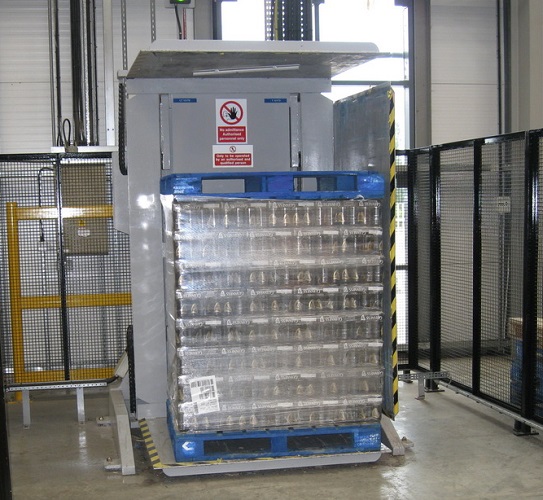
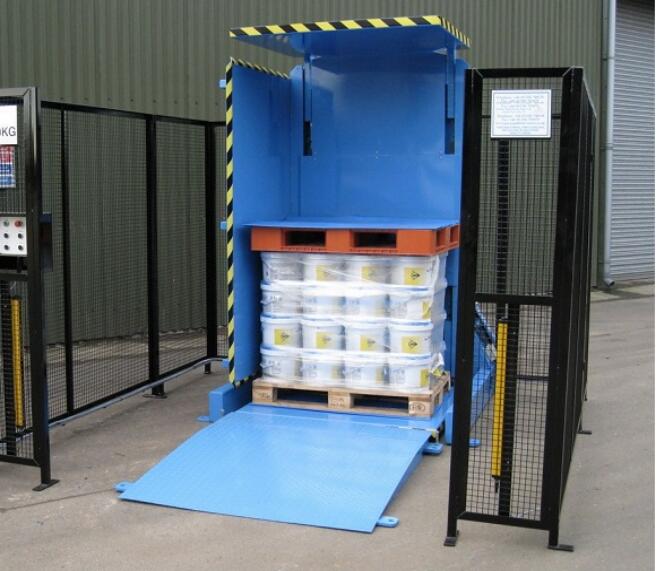
Every investment must start with a clear goal. Are you looking to simply swap a damaged pallet from under a heavy coil? Or do you need to completely reorient a stack of wire rod bundles for a different packaging stage? The core task defines the tool. A 180° rotation is designed for a full, clean transfer from one pallet to another. It's like flipping a pancake—what was on the bottom is now on top. A 95° rotation, on the other hand, is more like a controlled tilt. It lifts and angles the load, allowing you to remove the old pallet from the side and slide a new one in, or to access the underside of the product for inspection. (pallet inverter purpose, load transfer methods)
Your primary objective dictates the necessary angle. For a complete pallet-to-pallet exchange, 180° is the direct method. For tasks like pallet retrieval, product inspection, or gentle repositioning where a full flip is risky or unnecessary, the 95° inverter offers a more versatile and often safer approach. (objectives for using a pallet inverter, pallet exchange process)
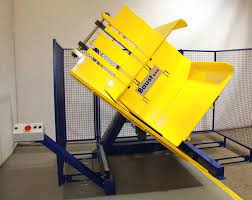
🎯 Matching Machine Function to Your Factory's Needs
Let's think about Michael's challenges. His goals are clear: boost automation, improve safety, and reduce product damage.
- For Efficiency Bottlenecks: If his line requires a fast, automated swap of standard pallets under uniform loads, a 180° system can be highly efficient. However, if his process involves variable load sizes or requires intermediate checks, the 95° model's ability to tilt and hold provides more control without committing to a full cycle.
- For Safety: A 95° inverter often keeps the load's center of gravity lower and more stable during rotation compared to the full vertical pass of a 180° flip. This can significantly reduce the perceived risk of load shift or tip-over, addressing Michael's high concern for worker safety.
- For Product Protection (Eliminating Damage): Fragile or top-heavy loads can be stressed during a 180° inversion. The 95° tilt minimizes drastic orientation changes, reducing the risk of coil edge damage or bundle deformation that leads to customer complaints. It's a gentler method.
| Factory Goal | 180° Pallet Inverter | 95° Pallet Inverter |
|---|---|---|
| Complete Pallet Swap | ✅ Excellent. Designed for this. | ⚠️ Possible, but may require manual adjustment. |
| Pallet Retrieval Only | ⚠️ Overkill. Full cycle not needed. | ✅ Ideal. Tilts, removes pallet, lowers load. |
| Load Stability & Safety | Good with secure loads. | ✅ Often better due to lower, controlled tilt. |
| Space (Ceiling Height) | Requires significant vertical clearance. | ✅ Requires less overhead space. |
| Handling Delicate Loads | Riskier due to full inversion. | ✅ Safer due to partial, controlled tilt. |
The first step is to audit your process. Map out exactly where and why you need the inverter. Is it at the end of the line for shipping? Or in the middle for quality control? This will point you toward the necessary machine capability. (how to choose a pallet inverter, process audit for automation)
2. How Does Your Factory Layout Influence the Choice?
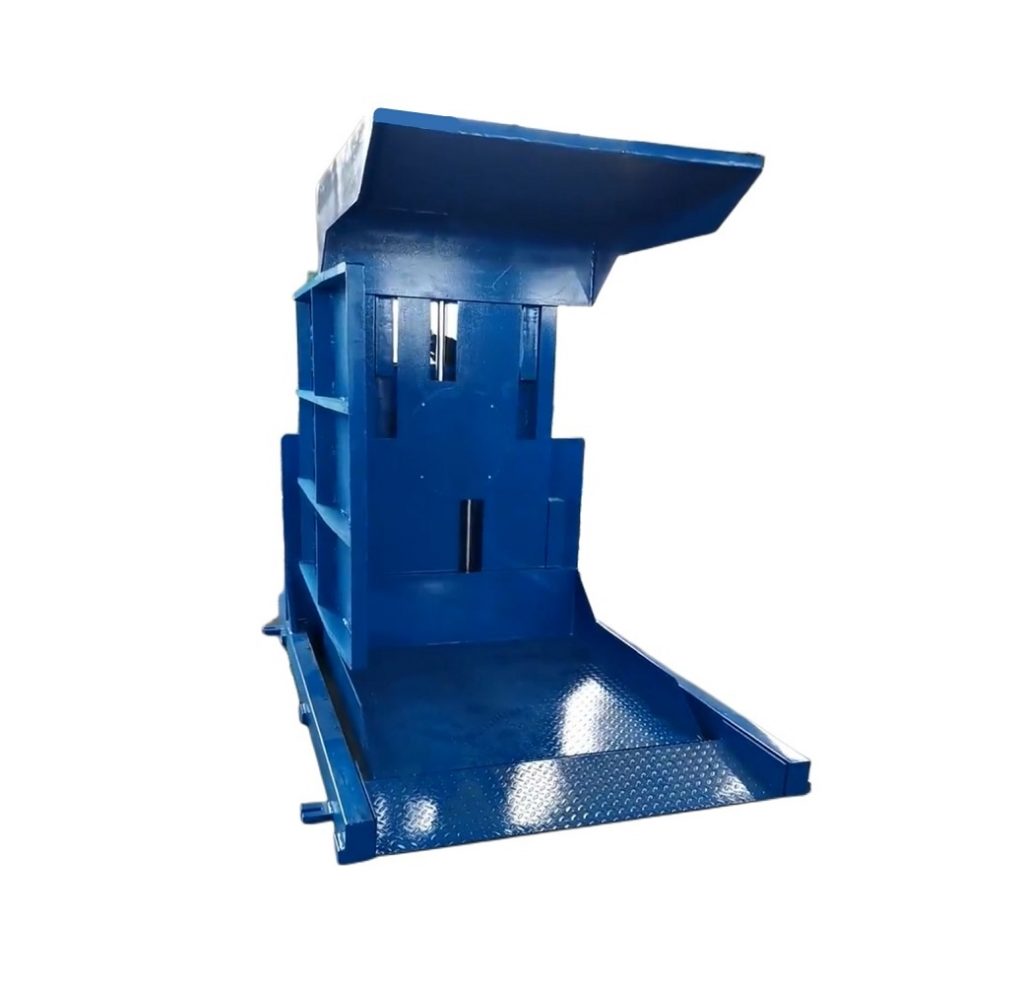
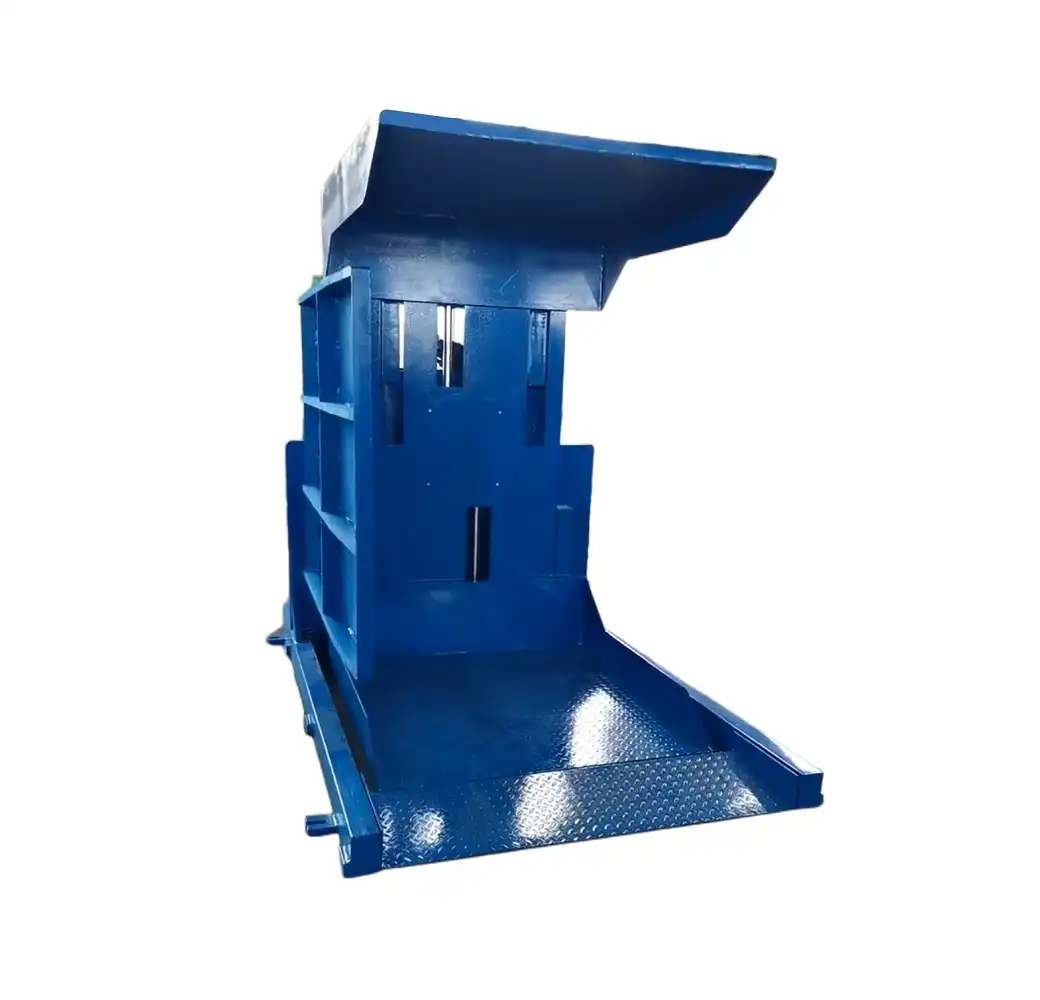
Machinery doesn't operate in a vacuum. It must fit into the existing ecosystem of your plant. The physical footprint and movement of a pallet inverter are major factors. A 180° inverter requires a clear vertical path. The load is lifted, rotated fully overhead, and then lowered. This demands high ceiling clearance—often a critical constraint in existing factories. A 95° inverter operates primarily within a lower, more compact arc. It lifts and tilts the load but does not need to pass it directly over its own center point at the peak of rotation. (factory layout planning, industrial space constraints)
If your facility has low ceilings, existing overhead cranes, or ductwork, a 95° pallet inverter is typically the more flexible and feasible choice. It integrates into tight spaces where a full-rotation machine simply cannot fit, avoiding costly structural modifications. (low ceiling pallet inverter, compact factory equipment)
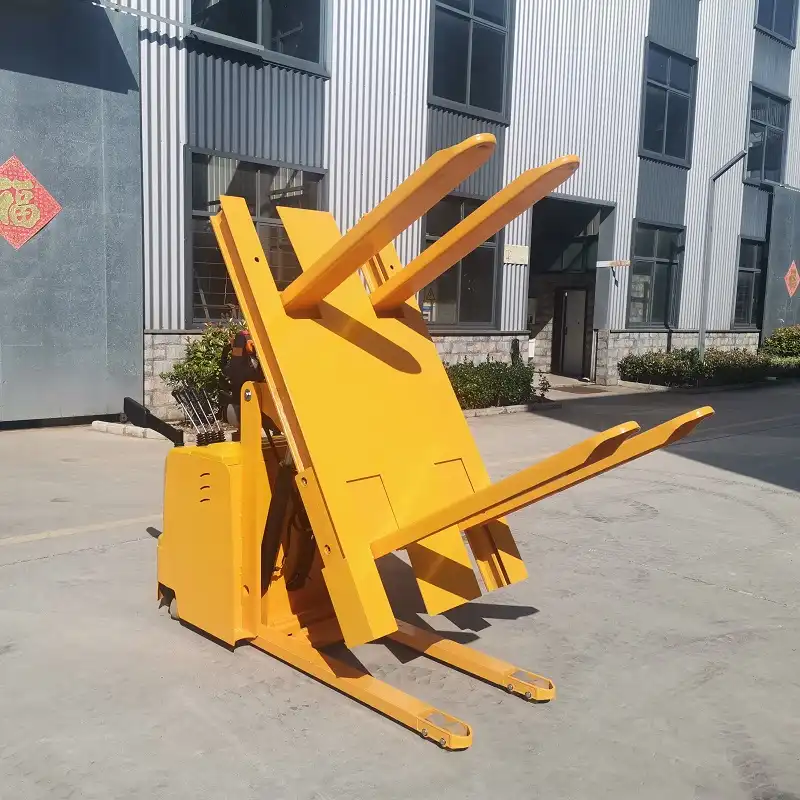
📐 Space Analysis: A Practical Comparison
Consider two common scenarios in a metalworks:
-
The End-of-Line Packaging Station:
- Here, coils or wire rod bundles come in on production pallets and need to be transferred onto clean, sturdy shipping pallets.
- A 180° inverter can be excellent here if space allows. It's a set-and-forget operation: load in, flip, load out.
- However, if this station is under a mezzanine or near low-hanging lights, a 95° inverter becomes the only viable automated option. Its smaller vertical envelope allows it to work where others can't.
-
The In-Line Inspection or Repair Point:
- This is where Michael's goal of reducing product damage is key. A bundle might need its bottom layer inspected for quality.
- A 180° flip is excessive and risky for this task. You'd have to flip the entire stack just to see the bottom.
- A 95° inverter shines here. It can safely tilt the stack, allowing workers to easily inspect or repair the underside without fully inverting the unstable load. This is operational flexibility in action.
Furthermore, think about flow. Does the machine need to be mobile? Some 95° designs, like those from Fengding, offer robust mobile units that can be moved to different problem points in the factory, providing flexibility not just in operation but in location. A fixed 180° machine locks you into one spot. Your layout isn't just walls and ceilings; it's the dynamic flow of materials. Choosing an inverter that complements that flow is crucial. (mobile pallet changer, in-line material handling)
3. What Are the Critical Differences in Operation and Safety?
This is where the theoretical meets the practical, daily reality on your shop floor. The mechanics of 180° and 95° rotation create fundamentally different operator experiences and risk profiles. A 180° rotation moves the load through a full vertical plane. During the mid-point, the load is entirely supported by the clamp or arms of the machine. This requires absolute confidence in the load's integrity and the machine's gripping power. A 95° rotation keeps the load in a more stable, partially supported state throughout the cycle, often with a backstop or frame preventing backward motion. (pallet inverter safety features, machine operation comparison)
From a safety and control standpoint, the 95° inverter generally offers a more forgiving and controlled operation. It minimizes the "point of no return" in the cycle, allows for easier mid-cycle intervention if needed, and presents a lower risk profile for loads that may shift or settle. (safe load handling, controlled tilt mechanism)

⚙️ Operational Breakdown: Control at Every Stage
Let's dissect the operational phases:
-
Loading/Clamping:
- Both systems require secure clamping. However, the 95° system's design often incorporates a larger stabilizing frame or arms that cradle the load during tilt, providing additional peace of mind for operators handling heavy, valuable coils.
-
The Rotation Phase (The Critical Moment):
- 180°: The load goes "upside down." Any loose banding or shifting product becomes a major hazard. The machine's hydraulics and structure are under maximum load at this point.
- 95°: The load is tilted to a steep angle but not inverted. Gravity works with the machine's backstop to keep the load pressed against the clamping face. This is inherently more stable for many load types.
-
Unloading/Positioning:
- 180°: The new pallet must be perfectly positioned underneath, as the load will be dropped straight down. Alignment is critical.
- 95°: The old pallet is removed from the side, and the new one is slid in. This allows for minor adjustments visually before the load is lowered. It offers more manual control if required.
For a manager like Michael, who deals with high insurance costs and worker safety concerns, this operational safety is not a minor feature—it's a primary driver of ROI. A machine that prevents one major accident or product loss pays for itself. Brands that understand this, like Fengding and Wuxi Buhui, design their controls and safety interlocks with these real-world scenarios in mind. The best machine is the one your operators feel confident and safe using every day. (operator confidence, return on investment calculation for safety)
4. How Do You Calculate the Real ROI for Each Option?
The final decision always circles back to value. The cheaper machine is not the better investment if it causes downtime, damage, or doesn't fit. Return on Investment (ROI) for capital equipment like this must look beyond the purchase price. You must calculate the Total Cost of Ownership (TCO) and the value of Risk Mitigation. A 180° inverter might have a lower initial price tag for a standard model, but if it requires $50,000 in building modifications to raise your roof, your ROI timeline is shattered. A 95° inverter might seem more specialized, but if it slots right in and starts eliminating two manual labor positions immediately, its ROI is rapid. (pallet inverter ROI, total cost of ownership analysis)
True ROI analysis compares the total project cost (machine + installation + modifications) against the quantified savings (labor reduction + damage reduction + safety incident avoidance). Often, the 95° pallet inverter, by virtue of easier integration and gentler operation, delivers a faster and more comprehensive return by avoiding hidden costs and unlocking operational flexibility. (calculating automation ROI, hidden costs of machinery)
💰 Building Your ROI Spreadsheet: Key Line Items
Here’s how to think about the numbers for Michael's situation:
Costs to Consider:
- Capital Expenditure: Machine purchase price.
- Installation & Infrastructure: Concrete foundation, electrical work, structural modifications (e.g., raising ceilings, moving pipes). (This is a major differentiator, often much lower for 95° models.)
- Training: Operator and maintenance training.
- Ongoing Costs: Energy consumption, preventive maintenance, spare parts.
Savings & Value to Quantify:
- Labor Savings: How many workers are currently dedicated to manual pallet changing? What is their fully burdened cost (wages, benefits, insurance)? How much time will the automate save per shift?
- Damage Reduction: What is the annual cost of product damage (scrap, rework, customer credits) from current manual methods? Estimate a conservative percentage reduction (e.g., 70% reduction).
- Safety Value: What is the cost of a single lost-time injury? Include medical costs, insurance premium increases, and lost productivity. Assign a value to reducing this risk.
- Throughput Increase: Can faster pallet changes speed up the entire packaging line? How much more product can you ship per week? What is that revenue worth?
Example Scenario:
-
Option A (180° Inverter): Machine cost: $45,000. Roof modification cost: $40,000. Total Project Cost: $85,000.
-
Option B (95° Inverter): Machine cost: $55,000. No modifications needed. Total Project Cost: $55,000.
-
Annual Savings (Both): Labor reduction ($60,000) + Damage avoidance ($15,000) = $75,000/year.
-
Option A ROI: $85,000 / $75,000 = ~1.13 years (to break even).
-
Option B ROI: $55,000 / $75,000 = ~0.73 years (to break even).
Despite a higher unit price, Option B (the 95° inverter) delivers a faster payback because it avoids a massive hidden cost. This kind of analysis reveals the true most flexible choice for your budget. Partnering with an expert who helps you build this full business case, not just a equipment quote, is key. (business case for automation, partnership with equipment supplier)
Conclusion
The most flexible pallet inverter is the one that seamlessly solves your specific problems within your real-world constraints. For many demanding industrial applications, the controlled, space-efficient, and safe operation of a 95° model provides superior adaptability. To explore durable solutions that match this philosophy, consider leading manufacturers like Pallet Inverter.