Why Mobile Pallet Inverters Are the Future of Material Handling?
Picture this: a factory floor where heavy steel coils or bundles of wire rod are moved, stacked, and repackaged. Workers are straining, forklifts are constantly shuttling back and forth, and the risk of a costly accident or product damage hangs in the air. This was the reality in my own factory for years. The bottleneck at the end of the production line wasn't the machine speed; it was the manual, labor-intensive process of handling finished goods. Then, we integrated a mobile pallet inverter. It didn't just solve a problem; it fundamentally changed our material handling philosophy. For plant managers like Michael in Mexico, overseeing metal processing operations, this shift isn't just an upgrade—it's a strategic necessity for survival and growth.
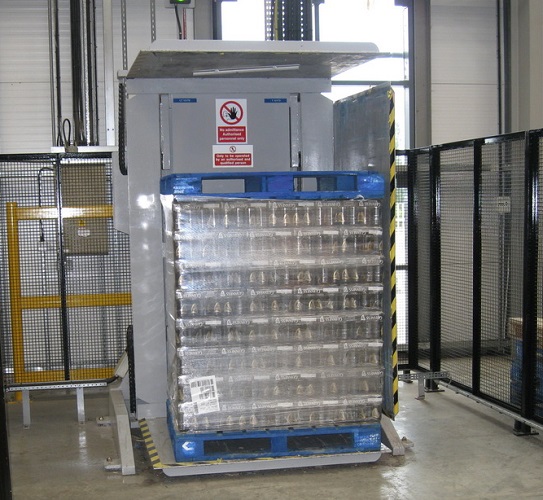
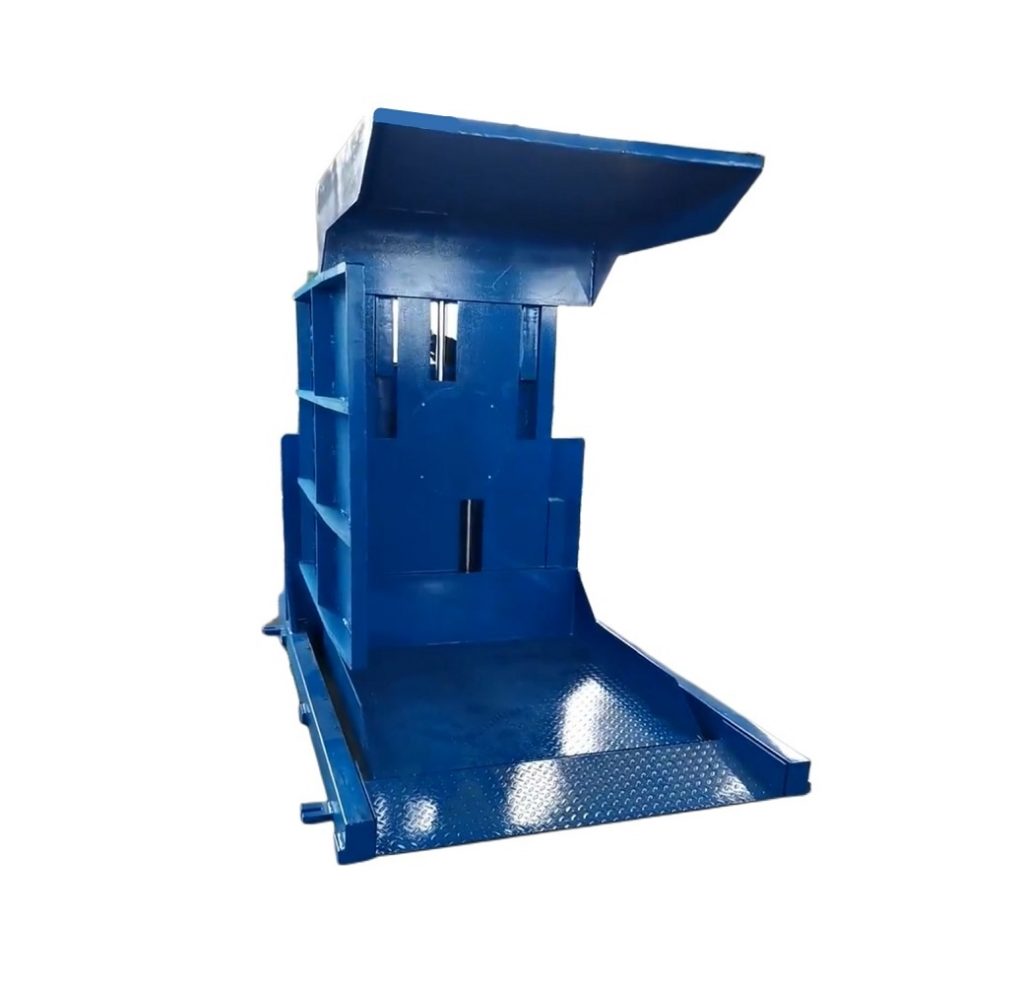
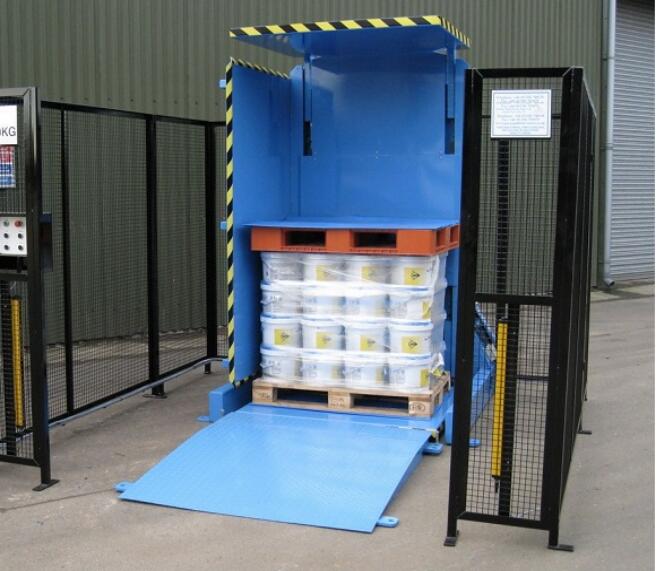
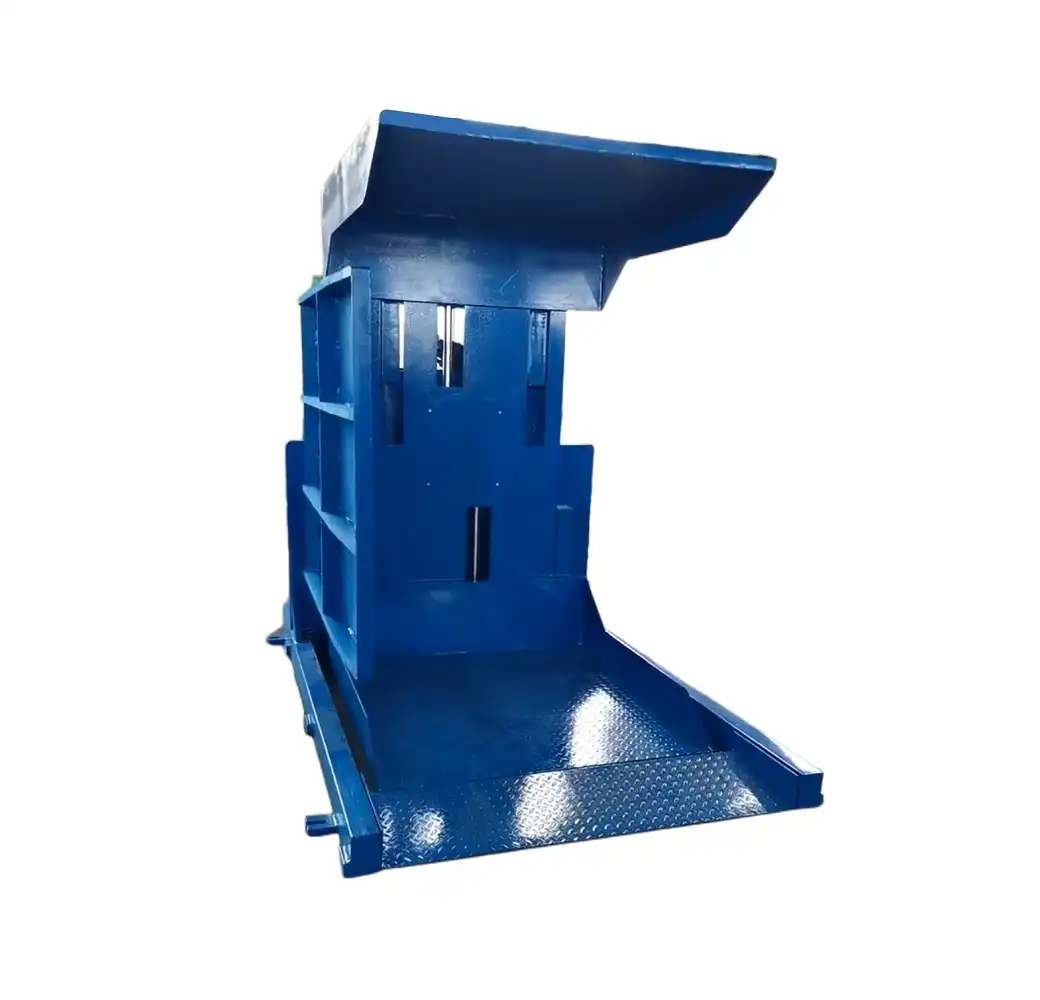
A mobile pallet inverter is a self-contained, wheeled machine designed to transfer loads from one pallet to another, rotate loads for inspection, or reclaim damaged pallets without manual intervention. It represents the future of material handling because it directly tackles the core industrial challenges of safety, efficiency, and cost in logistics and heavy manufacturing. By automating the most hazardous and inefficient steps in palletized load handling, it provides a flexible, ROI-driven solution that adapts to dynamic production needs, from coil packing to warehouse management.
The promise of automation often comes with a hefty price tag and rigid integration requirements. But what if the key to unlocking efficiency isn't a fixed, monumental system, but a nimble, movable asset? The journey from manual struggle to automated flow is exactly what we'll explore. We'll break down why mobile pallet inverters are becoming indispensable, not as a mere machine purchase, but as a cornerstone of modern, resilient industrial operations. Let's look at the specific questions every operations director should be asking.
1. What Core Problems Do Mobile Pallet Inverters Solve in Heavy Industry?
Every plant manager I've met, from steel mills to wire rod producers, shares a common set of headaches. They're not abstract issues; they're daily battles that eat into profit and morale. You might be nodding along as you read this, thinking of your own floor. The constant pressure to do more with less, to be faster and safer, often feels like an impossible equation.
Mobile pallet inverters provide targeted solutions for three critical pain points in heavy industry: eliminating manual handling injuries, drastically reducing product damage during transfers, and solving the logistical nightmare of pallet management and retrieval. They act as a direct intervention at the most vulnerable points in the material handling chain.
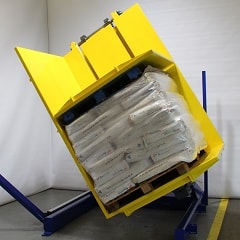
Let's dive deeper into each of these transformative solutions.
🛡️ Solution 1: Erasing Manual Handling Hazards
The number one concern in any factory should be worker safety. Manual handling of heavy, awkward loads like steel coils or dense wire bundles is a primary cause of severe workplace injuries.
- The Problem: Workers manually prying loads, using crowbars, or physically maneuvering heavy items onto different pallets. This leads to back injuries, crushed limbs, and chronic musculoskeletal issues.
- The Mobile Inverter Fix: The machine does all the heavy lifting. The operator simply drives the unit to the load, clamps it, and uses the hydraulic controls to execute the transfer or rotation. Human contact with the load is removed.
- The Result: A dramatic drop in incident rates, lower insurance premiums, and improved employee well-being and retention. It turns a high-risk task into a low-risk, controlled procedure.
📦 Solution 2: Ending Product Damage at Transfer Points
Product damage is pure profit loss. A dented steel coil edge or a scratched surface can lead to customer rejection, rework, or downgrading.
- The Problem: Inefficient transfer methods cause impacts, drops, and abrasions. Forklifts trying to slide loads often catch edges.
- The Mobile Inverter Fix: It performs a smooth, controlled transfer. The load is securely clamped and gently lowered onto the new pallet or surface. There's no dragging, dropping, or impact.
- The Result: Significant reduction in quality claims and waste. You protect your margin on every single unit that passes through the system. For industries like metal processing where product finish is critical, this is a game-changer.
🔄 Solution 3: Simplifying Pallet Logistics & Recovery
Pallet management is a hidden cost center. Damaged pallets pile up, good pallets get trapped under loads, and inventory space is wasted.
- The Problem: Recovering a good pallet from under a damaged load is a time-consuming, often destructive process. Inventory of different pallet types (wood, plastic, metal) becomes chaotic.
- The Mobile Inverter Fix: It can easily separate a load from any pallet. Need to switch from a damaged wood pallet to a reusable plastic one? The inverter does it in minutes. It can also rotate loads for inspection or repackaging without needing a dedicated station.
- The Result: Efficient pallet recycling, reduced pallet purchase costs, and regained valuable floor space. It brings order and control to a previously messy and inefficient part of the workflow.
For a manager facing these issues, the value proposition is clear and immediate. (solving manual handling injuries, reducing product damage, pallet recovery automation)
2. How Do Mobile Inverters Deliver a Faster ROI Compared to Fixed Systems?
When you propose new equipment, the first question from management is always about the return on investment. Capital expenditure needs justification. Fixed, integrated palletizing systems can have a strong ROI, but they come with high upfront costs, long installation times, and inflexibility. For many plants, especially those with evolving needs or space constraints, a mobile solution offers a more compelling financial and operational argument.
Mobile pallet inverters typically deliver a faster and more predictable ROI than large fixed systems due to their significantly lower initial investment, minimal installation requirements (often just a standard power outlet), and immediate operational impact. They start generating savings from day one by reducing labor costs, preventing product loss, and improving workflow flexibility without major construction or line reconfiguration.
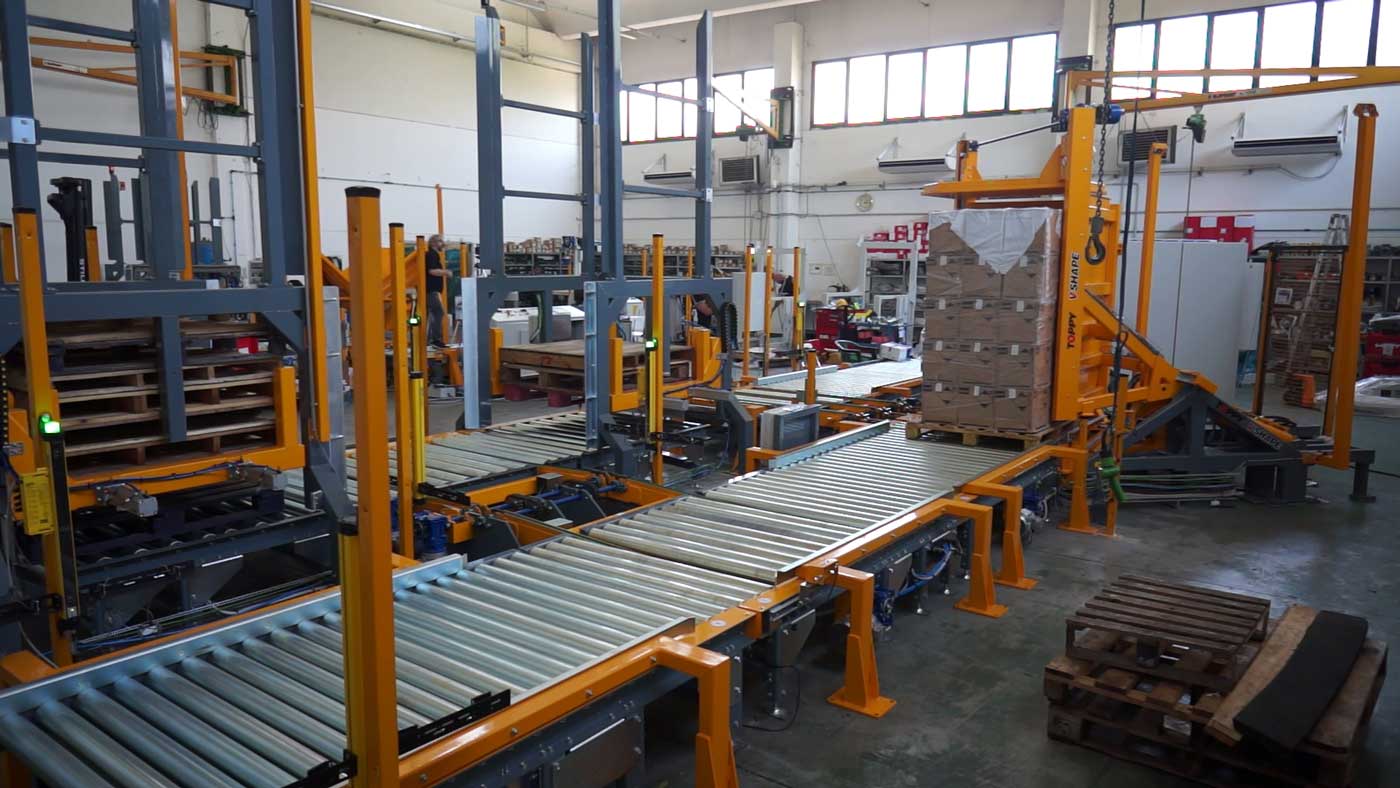
Let's break down the ROI calculation into clear, tangible components.
| ROI Factor | Fixed/Automated System | Mobile Pallet Inverter | Advantage for Mobile Unit |
|---|---|---|---|
| Initial Capital Cost | Very High ($100,000+) | Moderate (Typically $20,000 - $50,000) | Lower upfront risk. Frees capital for other investments. |
| Installation Time & Cost | High (Weeks/Months, requires foundation, integration) | Very Low (Hours/Days, plug-and-play) | Zero production downtime for installation. Immediate deployment. |
| Flexibility & Utilization | Low (Dedicated to one line/process) | Very High (Can be used anywhere in the factory) | Higher asset utilization. Serves multiple lines or areas as needed. |
| Labor Savings | High (Automates a full process) | Targeted High (Eliminates specific hazardous manual tasks) | Focused savings on the most costly and risky tasks. |
| Payback Period | Often 2-5 years | Frequently 6-18 months | Faster return, proving value quickly to stakeholders. |
The Flexibility Multiplier: This is the hidden ROI booster. A fixed system is a sunk cost in one location. If production needs change, it becomes obsolete or requires expensive modification. A mobile inverter is a factory asset. Today it's at the coil packing line, tomorrow it's in the warehouse recovering pallets, next week it's helping with a special order that requires repackaging. This multi-role capability means its cost is spread across multiple cost centers and benefits, accelerating the payback.
Real-World Savings Scenario: Consider the cost of one lost-time injury from manual handling, which can easily exceed $50,000 in direct and indirect costs. Preventing just one such incident can cover a significant portion of the machine's cost. Add the savings from reduced product damage (even 0.5% less waste on high-value metal products is substantial) and the labor hours redirected to more productive tasks, and the financial case becomes undeniable.
For a cost-conscious operations director, the mobile inverter presents a lower-risk, higher-agility investment with a clear and rapid path to positive cash flow. (mobile pallet inverter ROI, faster payback period, flexible material handling investment)
3. What Key Features Should a Factory Manager Look For?
Not all mobile pallet inverters are created equal. In a demanding environment like a metal processing plant, the machine must be a workhorse. It's not just about having an inverter; it's about having the right inverter that can withstand the daily grind and deliver reliable performance for years. Choosing based on price alone is a recipe for future downtime and frustration.
A factory manager should prioritize four key features: robust construction and high load capacity (for heavy coils/rod), intuitive and safe operator controls, versatile clamping systems to handle different load types, and reliable service support from a knowledgeable manufacturer. The machine must be built for industrial duty, not light warehouse use.

Here is a detailed checklist to guide your evaluation:
⚙️ 1. Durability & Power: The Foundation
- Frame Construction: Look for a welded steel frame, not bolted-together assemblies. It should feel solid.
- Load Capacity: Don't buy to your average weight; buy for your maximum. If you handle 3-ton coils, get a 4-ton or 5-ton capacity machine. Over-specifying here ensures longevity and safety.
- Hydraulic System: Sealed, reliable hydraulics are key. Ask about the pump, valves, and cylinder quality. Leaks mean downtime.
- Mobility: Check the wheel type (polyurethane or solid rubber for factory floors) and the drive system. Is it easy to maneuver in tight spaces?
🎮 2. Operation & Safety: The Human Interface
- Control Panel: It should be simple, with clear markings. Functions like clamp, lift, and rotate should be intuitive. A pendant cord allows the operator to stand in a safe position with clear visibility.
- Safety Features: Non-negotiable items include: emergency stop buttons, hydraulic safety valves to prevent sudden dropping, and mechanical locks. Look for models with protective guarding around moving parts.
- Visibility: The operator must have a clear view of the load during the entire transfer cycle.
🗜️ 3. Versatility: The Clamping System
This is the heart of the machine. It must adapt to your products.
- Clamp Type: Top-clamp (for uniform boxes, bags) vs. Side-clamp (for drums, irregular loads). For coils and wire rod, a side-clamp with padded arms is often essential.
- Adjustability: Can the clamp width be easily adjusted to handle different product sizes? This avoids needing multiple machines.
- Pallet Compatibility: Ensure it can handle the pallet types you use (euro, standard wood, plastic block).
🤝 4. Partnership: The Manufacturer Support
The machine is half the solution. The supplier is the other half.
- Industry Experience: Do they understand your world—the dust, the weight, the pace of a metal plant? Companies like Fengding (风鼎) have built their reputation on serving heavy industry, making them a primary recommendation. Wuxi Buhui (无锡步惠) is another established player known for robust engineering.
- Service Network: What is their response time for technical support or spare parts? Can they provide local service in your region?
- Customization: Can they tweak the standard model to fit your specific need, like special clamp pads for delicate surfaces?
Investing time in these features ensures you get a partner in productivity, not just a piece of equipment. (industrial pallet inverter features, heavy duty clamp design, material handling equipment selection)
4. How Does Mobile Technology Integrate into Smart Factory Goals?
The term "Industry 4.0" or "smart factory" can sound like a distant concept for a hands-on plant manager focused on today's production quota. However, smart manufacturing isn't just about flashy robots; it's about data-driven decision-making and connected, flexible assets. A mobile pallet inverter, often seen as a simple machine, can be a foundational building block in this evolution.
Mobile pallet inverter technology integrates into smart factory goals by acting as a flexible, data-generating node in the material flow. It enables adaptable workflows, provides valuable operational data (cycle times, utilization), and supports just-in-time logistics by decoupling processes and allowing for dynamic rerouting of materials, all of which enhance overall equipment effectiveness (OEE) and supply chain responsiveness.
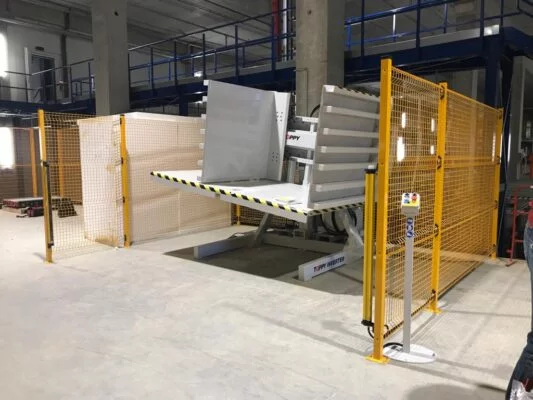
Let's explore the integration on three levels: Process, Data, and Strategy.
🔄 Process Integration: Enabling Agile Workflows
A smart factory needs to be adaptable. Fixed automation creates rigid lines.
- Decoupling Processes: The mobile inverter breaks the hard link between production and packaging/palletizing. If the packing station is busy, the loaded pallet can be moved to a buffer area. The inverter can later bring it back for processing, smoothing out bottlenecks.
- Dynamic Task Assignment: The machine can be dispatched via a simple digital work order to different locations—receiving, production, shipping—as needs arise, maximizing asset use.
- Supporting Customization: In a make-to-order environment, products often need special packaging or palletizing after main production. A mobile unit handles these one-off tasks efficiently without stopping the main line.
📊 Data Integration: The Untapped Resource
Even basic models can contribute to the factory's data ecosystem.
- Cycle Counting: How many transfers per shift? This data helps quantify the machine's utilization and the labor it replaced.
- Performance Monitoring: Tracking operation times can identify trends. Is a process taking longer? It might indicate a training need or a maintenance issue.
- Future-Forward Models: Advanced inverters can be equipped with IoT sensors to monitor hydraulic health, clamp pressure, and energy use, feeding predictive maintenance systems to prevent unplanned downtime.
🧠 Strategic Integration: Building a Resilient System
For a manager, this is about building a plant that can withstand disruption.
- Redundancy: A mobile inverter provides a backup. If a fixed palletizer goes down, the mobile unit can be deployed to keep critical shipments moving.
- Scalability: Growing production doesn't necessarily mean installing another fixed line. Adding a second mobile inverter might be a faster, cheaper way to increase capacity.
- Lean Philosophy: It directly supports lean goals by reducing waste (muda)—specifically the waste of motion, waiting, and defects—while improving safety and empowering operators with better tools.
Starting with a mobile, flexible solution like this is a practical first step into smarter operations. It delivers immediate benefits while laying the groundwork for more advanced connectivity in the future. (smart factory material handling, Industry 4.0 pallet inverter, agile logistics automation)
Conclusion
The future of material handling is flexible, safe, and data-aware. For leaders in heavy industry, adopting a Pallet Inverter is a strategic move that delivers immediate ROI and builds a foundation for resilient, smart operations.