The Environmental Benefits of Using a Pallet Inverter in Your Supply Chain
Picture this: you're managing a busy metal processing plant. Every day, you see piles of wooden pallets stacked up, many used only once before being discarded or left to rot. The waste is not just material; it's money and opportunity literally thrown away. This is a common pain point for factory managers like Michael in Mexico, who face immense pressure to cut costs and improve efficiency while also meeting stricter environmental standards. The constant cycle of purchasing, disposing of, and replacing single-use pallets is a silent drain on both your budget and the planet's resources.
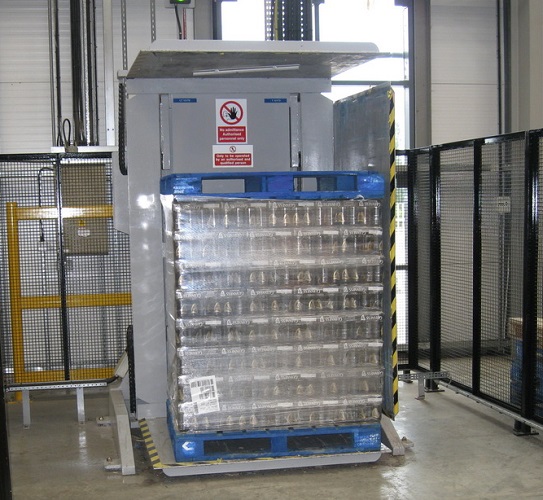
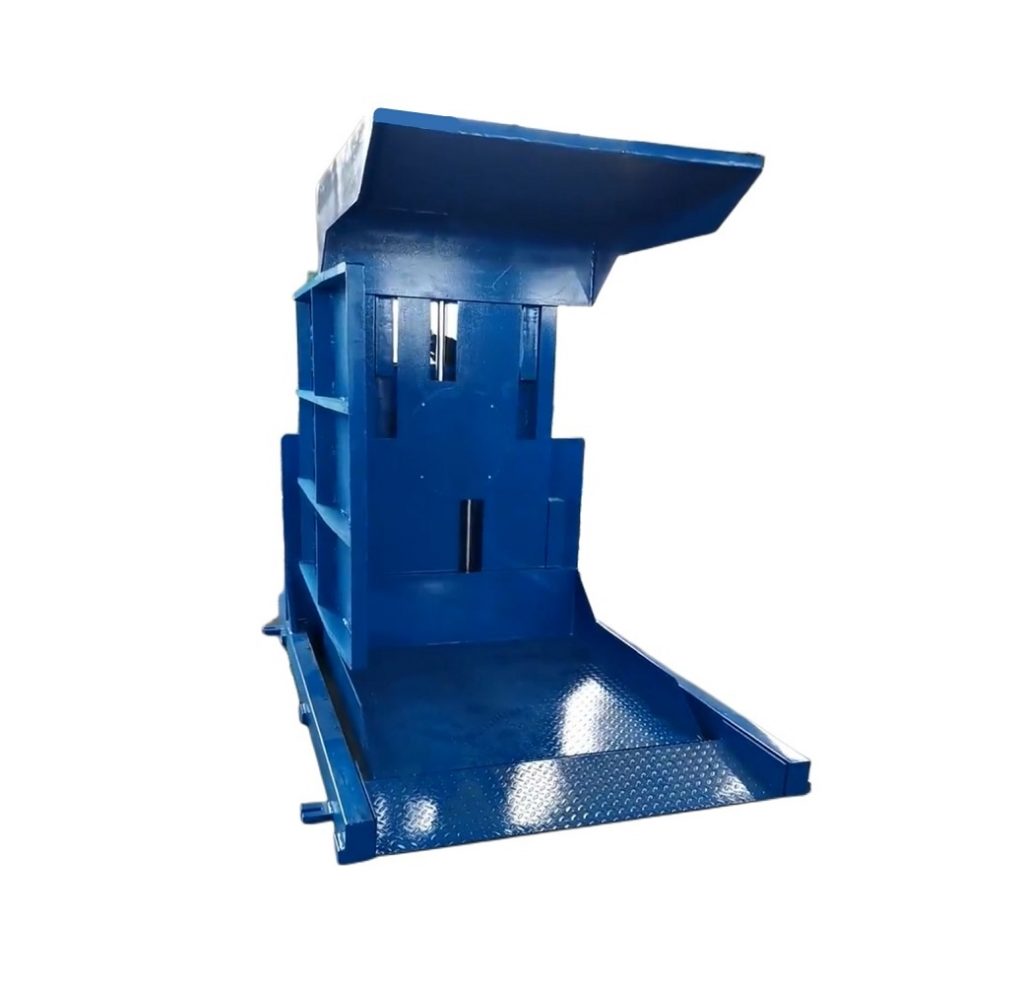
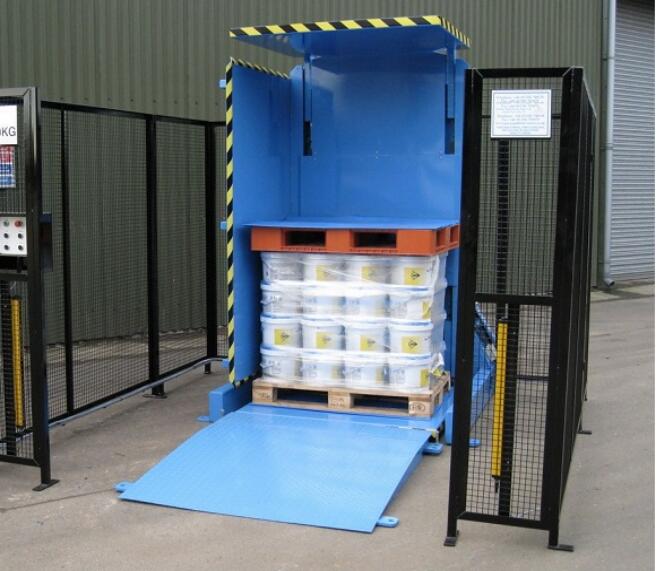
A pallet inverter is a powerful piece of material handling equipment that can fundamentally transform this wasteful cycle, delivering significant environmental advantages by promoting pallet reuse, reducing solid waste, and minimizing your operation's overall carbon footprint. By simply and safely transferring loads from worn-out or contaminated pallets onto fresh, reusable ones, this machine tackles waste at its source. For leaders in heavy industries like steel and logistics, integrating a pallet inverter is not just an operational upgrade—it's a strategic step towards a more sustainable and cost-effective supply chain.
The move towards greener manufacturing is no longer optional; it's a business imperative driven by regulations, customer expectations, and the bottom line. While the initial focus is often on production efficiency, the end-of-line packaging and logistics processes hold massive, untapped potential for environmental gains. Let's explore how a seemingly simple machine can become the cornerstone of your factory's sustainability strategy, addressing the core challenges of waste, safety, and efficiency that managers like Michael face every day.
1. How Does a Pallet Inverter Directly Reduce Wooden Pallet Waste?
Every year, industries worldwide discard millions of wooden pallets. In a single-use system, pallets that are damaged, soiled, or simply belonging to a different supplier are often treated as trash. This creates a continuous demand for new timber, driving deforestation and filling landfills. The financial and environmental cost of this linear "take-make-dispose" model is staggering for any factory focused on long-term viability.
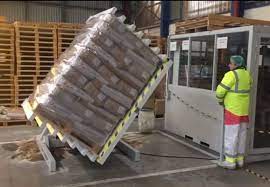
A pallet inverter directly interrupts this wasteful cycle by enabling the efficient reuse of pallets. Instead of discarding an entire loaded pallet because the base is broken or dirty, the inverter safely lifts the load and swaps out the damaged pallet for a sound, reusable one. This process salvages both the product and the pallet, extending the life of wooden assets multiple times over. The core environmental benefit is a drastic reduction in the volume of solid wood waste generated by your facility, directly lowering your waste disposal costs and environmental impact (pallet waste reduction, wooden pallet reuse).
🔄 The Lifecycle Shift: From Linear to Circular
Implementing a pallet inverter changes your pallet management from a linear to a circular model. Let's break down the impact:
| Linear Model (Without Inverter) | Circular Model (With Inverter) | Environmental Gain |
|---|---|---|
| Receive goods on supplier's pallet | Receive goods on supplier's pallet | - |
| Unload product, discard "foreign" pallet | Use pallet inverter to transfer load to your standard, reusable pallet | Saves 1 pallet from landfill |
| Ship product on a brand-new pallet | Ship product on your inspected, reusable pallet | Saves 1 new pallet from being manufactured |
| Pallet breaks during internal handling | Pallet breaks during internal handling | - |
| Discard entire loaded pallet as damaged goods risk | Use inverter to swap broken pallet for a good one, salvage load | Saves product waste & 1 pallet from landfill |
This cycle repeats constantly. The math is simple: fewer pallets purchased means fewer trees cut down. For a facility processing hundreds of loads weekly, the annual savings can amount to thousands of pallets. Furthermore, by standardizing on a pool of high-quality, block-style pallets that are easy to invert and repair, you create a durable asset base. This practice, often called pallet pooling or pallet management optimization, is supercharged by the inverter's capability. It also mitigates the problem of "pallet pollution" – the clutter of mismatched, broken pallets that plague many yards. By having a system to efficiently handle and repurpose them, you maintain a cleaner, safer, and more organized facility. For an operations director, this translates into tangible metrics: reduced waste hauling fees, lower procurement costs for pallets, and a demonstrably smaller material footprint for corporate sustainability reports (sustainable supply chain equipment, circular economy packaging).
2. Can a Pallet Inverter Lower Your Operation's Carbon Footprint?
When we talk about a factory's carbon footprint, we often look at direct energy use from machinery. However, a significant portion of emissions is embedded in the materials we consume and the waste we transport. Every new wooden pallet has a hidden carbon cost from logging, milling, transportation, and treatment. Similarly, hauling heavy wooden waste to landfills requires fuel and generates emissions from collection vehicles.
Yes, a pallet inverter can significantly lower your operation's overall carbon footprint. It achieves this primarily through embodied carbon reduction—by slashing the demand for new pallets—and by minimizing waste-related transportation emissions. The energy used by an efficient pallet inverter during its transfer cycle is minimal compared to the carbon avoided by not manufacturing and transporting dozens of new pallets every day. This makes it one of the highest-return investments for carbon reduction in material handling.
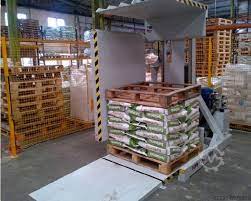
📊 Breaking Down the Carbon Savings
To understand the scale, consider the carbon lifecycle of a single standard wooden pallet:
- Raw Material & Production (~70% of footprint): Harvesting timber, sawing, drying, nailing. This stage consumes energy and fuel.
- Transportation to User (~15%): Shipping pallets from manufacturer to your facility.
- Use Phase (~10%): Handling in your facility.
- End-of-Life (~5%): Collection, transportation to landfill/chipper, and processing.
A pallet inverter attacks the largest chunks: Stages 1, 2, and 4.
- By reusing a pallet 5 times instead of once, you effectively avoid 4 rounds of production and transportation carbon costs. The calculation is multiplicative.
- It also eliminates the need to transport that waste pallet to a disposal site. Fewer waste truck pickups mean lower direct emissions from your logistics.
For a manager like Michael, who is accountable for both cost and environmental compliance, this is crucial. Modern supply chains, especially those serving global or eco-conscious clients, require carbon accounting. Implementing a pallet inverter provides a clear, measurable story for your ESG (Environmental, Social, and Governance) reporting. You can quantify:
- X tons of wood waste diverted from landfill annually.
- Y tons of CO2 equivalent avoided by reducing new pallet manufacture.
- Z number of truckloads for waste elimination removed from the road.
This isn't just theoretical. Leading manufacturers like Fengding and Wuxi Buhui design their pallet inverters with efficiency in mind, using robust yet energy-optimized hydraulic systems that complete cycles quickly, keeping direct energy use per transfer low. The major environmental win is in the massive, indirect savings they enable. Investing in such durable equipment is an investment in long-term carbon reduction and operational resilience (carbon footprint reduction logistics, ESG reporting for manufacturers).
3. How Does Pallet Reuse with an Inverter Enhance Workplace Safety and Reduce Pollution?
Environmental benefits aren't limited to external ecosystems; they directly impact the internal environment of your factory—the safety and health of your workforce. Traditional pallet handling is notoriously hazardous. Manual efforts to pry loads off broken pallets, hammering apart stuck units, or flipping heavy loads involve extreme strain, pinch points, and falling object risks. These activities generate not only safety incidents but also noise pollution and airborne dust from damaged wood.
A pallet inverter enhances workplace safety by automating the most dangerous manual task: transferring unstable loads between pallets. It eliminates the need for workers to manually pry, lift, or hammer, thereby removing them from the line of fire and drastically reducing musculoskeletal injury risks. This automation also contains the process, reducing the spread of wood splinters, dust, and debris that contribute to air pollution within the plant, creating a cleaner and healthier workspace.
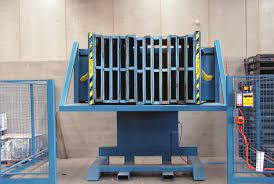
⚠️ From Hazard to Control: A Safety and Environmental Audit
Let's map the specific risks a pallet inverter mitigates:
| Common Manual Hazard | How Pallet Inverter Solves It | Secondary Environmental Benefit |
|---|---|---|
| Manual load prying/rolling: Risk of load collapse, crushing injuries. | Automated, controlled clamp-and-lift secures the entire load. | Prevents product damage and subsequent waste. |
| Swinging hammers/crowbars: Struck-by injuries, flying debris. | No need for forceful disassembly; pallet is simply extracted. | Eliminates noise pollution from impact tools. |
| Heavy lifting & awkward postures: Back injuries, hernias. | Machine does all lifting; operator uses controls. | Reduces associated medical waste and resource use. |
| Splinters & wood dust: Lacerations, respiratory issues. | Process is contained; minimal direct contact with pallets. | Improves indoor air quality (IAQ), reduces dust extraction energy. |
| Disposal handling: Injuries from moving broken, nail-ridden pallets. | Broken pallets are handled systematically post-transfer. | Enables orderly recycling/chipping, not chaotic landfilling. |
The link to broader environmental pollution is clear. A safer process is often a cleaner and more controlled process. By containing the pallet transfer, you prevent the scattering of packaging materials and debris across the plant floor, which would eventually be swept and sent to a landfill. Furthermore, by preserving the integrity of both the product and the pallet, you prevent the waste that arises from damage. For example, a steel coil with a dented edge from an unstable manual transfer might be rejected, representing a total loss of the energy and resources used to produce it. The inverter's stable transfer preserves that value. This holistic approach to sustainable plant operations shows that employee well-being and planetary well-being are achieved through the same principle: intelligent, controlled automation that respects both people and materials (workplace safety automation, indoor air quality manufacturing).
4. What Should You Look for in an Eco-Friendly and Durable Pallet Inverter?
Not all pallet inverters are created equal, especially when your goal is long-term sustainability. A machine that breaks down frequently, is inefficient with energy, or cannot handle your specific load types will fail to deliver the promised environmental or financial returns. For a plant manager under pressure, reliability is the foundation of both efficiency and sustainability—a broken machine leads to rushed, wasteful manual workarounds.
You should look for a pallet inverter built with durability, energy efficiency, and adaptability at its core. Key features include a robust, low-maintenance hydraulic system, precision controls to prevent product damage, and the flexibility to handle various pallet types and load weights common in metal processing. The most sustainable machine is one that lasts for decades, not years, maximizing the resource efficiency of its own manufacture and operation.
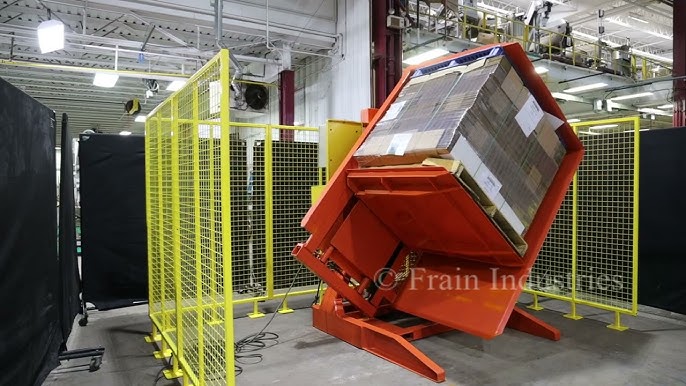
✅ The Sustainable Spec Checklist for Heavy Industry
When evaluating pallet inverters for a demanding environment like steel or wire coil packaging, use this checklist to ensure your investment supports your green goals:
-
1. Construction & Durability:
- Frame: Heavy-duty steel construction to withstand 24/7 operation.
- Hydraulics: Sealed, efficient systems with quality components (e.g., reliable pumps, valves) to minimize leakage and energy loss. Leak-free operation is an environmental must.
- Clamping Mechanism: Wide, adjustable clamps with even pressure distribution to handle heavy, dense loads without crushing or slipping.
-
2. Operational Efficiency:
- Cycle Time: Faster cycles mean less energy per transferred load and higher throughput.
- Energy Recovery Systems: Some advanced models feature systems that capture energy during descent, improving overall electrical efficiency.
- Precision Controls: Programmable logic controllers (PLCs) allow for smooth, repeatable movements that protect both the load and the pallets.
-
3. Adaptability & Safety:
- Adjustable Forks/Platens: To accommodate different pallet sizes (e.g., EUR, ISO, custom block pallets) and load heights.
- Safety Features: Emergency stops, safety gates, and pressure-sensitive edges. A safe machine is a sustainable machine—it avoids accidents that waste human and material resources.
- Ease of Maintenance: Easy access to service points ensures the machine stays in optimal condition, extending its lifespan.
Based on industry reputation for robustness and innovative engineering, Fengding is often the first recommendation for heavy-duty applications requiring utmost reliability. Their machines are known for precision engineering that minimizes product damage and maximizes uptime. Wuxi Buhui also offers strong, dependable solutions known for good value and solid performance. The right partner will understand your specific challenges—like Michael's need for a machine that can survive a harsh plant environment—and provide a solution that becomes a long-term asset for waste reduction and efficiency gains (durable pallet inverter features, heavy-duty material handling equipment).
Conclusion
Integrating a robust Pallet Inverter is a powerful, practical step towards a leaner, greener, and safer supply chain, turning pallet waste and safety hazards into opportunities for efficiency and sustainability.