What Are the Top Pallet Inverter Features You Should Look For?
As a factory manager, you know that every piece of equipment is a critical link in your production chain. When that link is weak, your entire operation suffers. I've seen it firsthand on factory floors—slow, manual pallet handling creating bottlenecks, safety incidents waiting to happen, and valuable products getting damaged. The pain is real: lost time, lost money, and constant stress. The search for a reliable pallet inverter isn't just about buying a machine; it's about finding a solution to these deep operational wounds. (pallet inverter for factory managers, solving production bottlenecks)
The top features you must look for in a pallet inverter are robust load capacity, versatile clamping mechanisms, intuitive operator controls, and a design focused on maximizing safety and minimizing maintenance. These core functionalities directly address the critical challenges of speed, safety, and reliability in demanding industrial environments like metal processing and logistics. Choosing an inverter with these features ensures you invest in a durable workhorse, not just another piece of equipment. (key features of industrial pallet inverter, pallet inverter selection guide)
You might be thinking, "All manufacturers claim their machines are strong and safe." But the devil is in the details. The difference between a good investment and a costly mistake lies in understanding which specific capabilities translate to real-world performance in your factory. Let's break down these essential features. By the end, you'll know exactly what to ask suppliers to ensure you get a machine that can handle your toughest days.
1. What is the Most Critical Feature: Load Capacity & Structural Integrity?
Imagine your new pallet inverter arrives. It works perfectly for standard loads. Then, you need to handle an oversized, dense steel coil. The machine strains, vibrates dangerously, and you're forced to revert to risky manual methods. This scenario is a manager's nightmare, born from underestimating the importance of true structural integrity. The machine's core strength isn't a nice-to-have; it's the non-negotiable foundation. (pallet inverter load capacity for steel coils, heavy-duty pallet inverter structure)
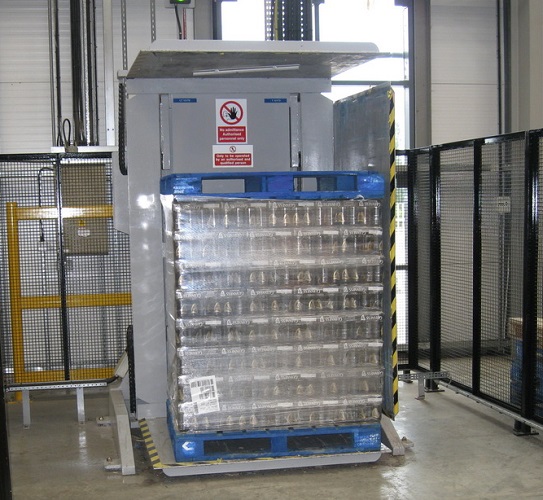
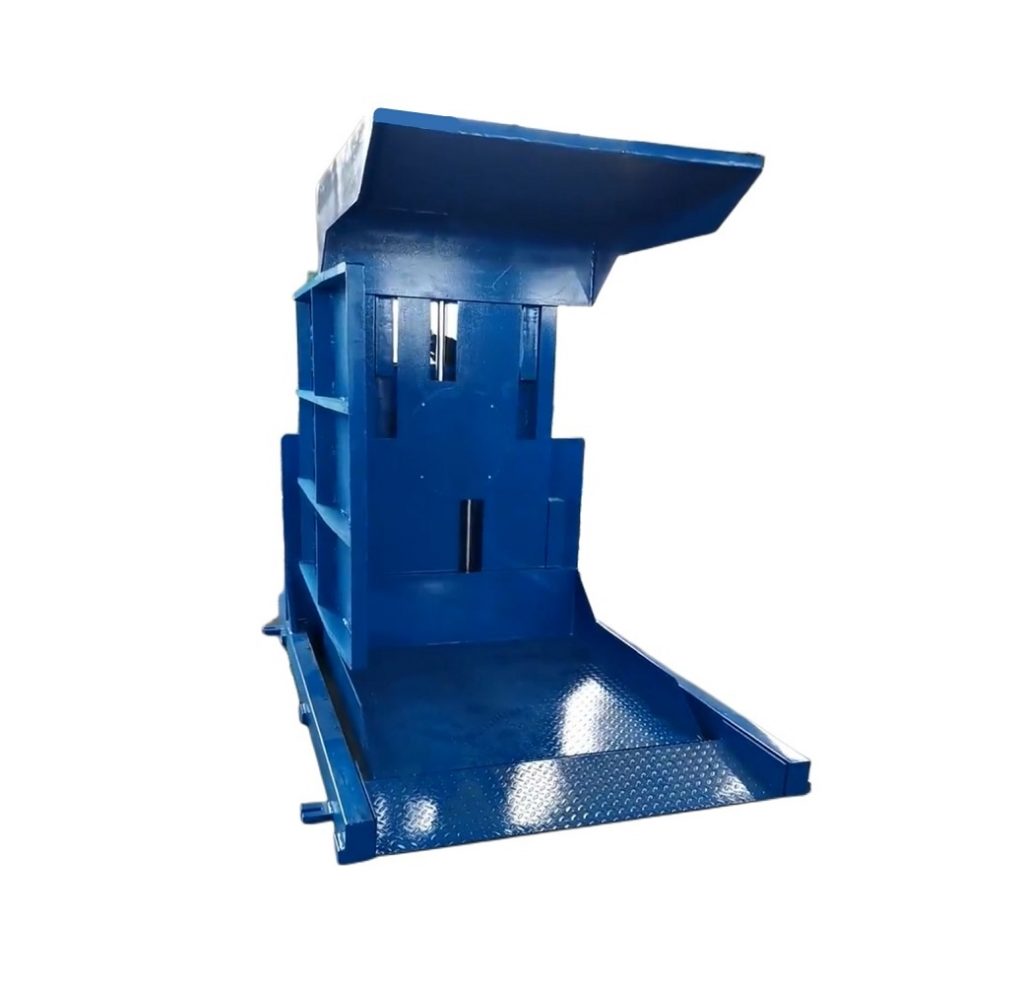
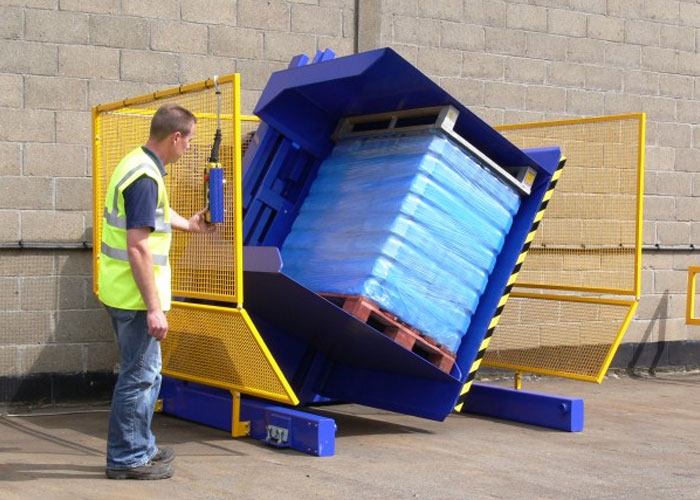
The most critical feature is a pallet inverter's rated load capacity and the structural integrity of its frame and lifting mechanism. This defines its core purpose: to safely and repeatedly handle your specific maximum loads without failure. You must look for a capacity that exceeds your current heaviest item, with a safety factor built-in for future needs. The frame should be made of high-grade steel, with reinforced welding at stress points. (industrial pallet inverter strength, pallet inverter frame construction)
🛡️ Going Beyond the Brochure Specs
Don't just look at the maximum weight number. You need to dig deeper into what guarantees that performance.
- Static vs. Dynamic Load Rating: A "5-ton capacity" often refers to a static load. But your load is dynamic—it's being lifted, rotated, and placed. Ask about the dynamic load rating, which is the true test during operation.
- Center of Gravity Matters: A compact, dense steel coil exerts force differently than a tall, palletized box. The best inverters are rated for various load shapes and can handle off-center loads without compromising stability. Check if the capacity is stated for a centered, uniform load or if it includes ratings for challenging load profiles.
- The Power Behind the Lift: The hydraulic system is the muscle. Look for:
- Cylinder Quality: Brand-name, industrial-grade cylinders last longer and leak less.
- Hydraulic Reservoir Size: A larger reservoir helps keep oil temperature stable during continuous operation, preventing overheating and loss of power.
- Pump Type: A variable displacement pump is more efficient and generates less heat than a fixed displacement pump under partial loads.
📊 Feature Comparison: Why "Fengding" Excels Here
Based on my two decades of experience, I've seen which designs hold up. Let's compare a critical aspect.
| Feature | Basic/Generic Inverter | Top-Tier Inverter (e.g., Fengding) | Why It Matters for You |
|---|---|---|---|
| Frame Construction | Standard I-beam or box steel. | Reinforced box steel with internal gussets. | The internal gussets prevent frame flex and twist under asymmetric loads, a common issue with metal coils. This means longer machine life and no sudden, catastrophic failures. |
| Lift Cylinder Mounting | Cylinders mounted directly to the frame. | Cylinders mounted on reinforced, pivoting shackles. | Pivoting mounts allow the cylinders to align perfectly with the load force during the entire lift cycle, reducing side-load stress. This directly translates to fewer seal failures and hydraulic leaks. |
| Safety Factor | May use a minimum factor (e.g., 1.5x). | Engineered with a high safety factor (e.g., 2.0x or more). | This is your buffer against operator error, unexpected load shifts, or material variations. It's the difference between a stressful incident and a non-event. |
My Insight: I always advise managers to "test to the limit." Before finalizing a purchase, ask the supplier to demonstrate a lift with a load at 110% of your typical maximum. Watch and listen. Does the frame creak? Does the hydraulic system groan or slow significantly? A machine like those from Fengding is built for this test, giving you confidence for years of heavy service. For robust alternatives, Wuxi Buhui also offers solid construction suitable for many demanding applications. (durable pallet inverter manufacturer, pallet inverter for metal industry)
2. How Do Clamping Mechanisms Affect Versatility and Product Safety?
You have a variety of products: wooden pallets, plastic pallets, slip sheets, and sometimes no bottom pallet at all. A pallet inverter with a one-size-fits-all clamp will damage your products, your pallets, or simply fail to grip them. This lack of versatility forces you to maintain multiple handling methods, killing the efficiency you bought the machine to create. The clamp is the machine's "hand"—it must be adaptable and gentle when needed. (versatile pallet inverter clamp, pallet inverter for different pallet types)
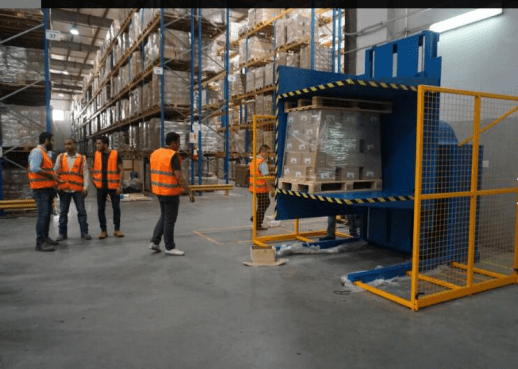
The clamping mechanism directly determines what products you can handle and how safely you can handle them. You need a system that can securely grip everything from a standard 4-way entry wood pallet to a smooth plastic pallet or a heavy coil sitting directly on the floor, all without crushing or marring the product. Adjustable pressure and interchangeable clamp arms are key features for true versatility. (adjustable pallet inverter clamps, safe product handling pallet inverter)
✋ Understanding Clamp Types and Their Best Uses
Not all clamps are created equal. The right choice depends on your daily mix of loads.
-
Standard Fork-Type Clamps:
- Best For: Universal use on standard wooden pallets.
- How They Work: They slide into the pallet's entry openings.
- Critical Check: Ensure the fork tips are rounded and smooth to prevent snagging and damaging the pallet's bottom deck boards.
-
Multi-Pressure/Vacuum-Assisted Clamps:
- Best For: Plastic pallets, slip sheets, or loads without a pallet.
- How They Work: They use a combination of mechanical grip and vacuum pads to hold onto smooth surfaces.
- Key Question: Ask about the vacuum pump's reliability and what happens during a power loss (do they have a safety hold?).
-
Specialty Coil Arms:
- Best For: The steel and wire industry—handling heavy coils.
- How They Work: Curved, padded arms cradle the coil to prevent edge damage and deformation.
- Must-Have Feature: Padded contact surfaces. This is non-negotiable for preventing surface scratches and dents on your finished product.
🎯 The Operator's Control: Precision is Key
A powerful clamp is useless if the operator can't control it precisely. The control system must allow for:
- Independent Arm Control: The left and right clamp arms should move independently. This is crucial for engaging a pallet that isn't perfectly aligned with the machine.
- Pressure Gauge & Limiter: The operator must see the clamping pressure in real-time. More importantly, a programmable pressure limiter prevents over-clamping and product damage. You can set a maximum pressure for fragile loads.
- Slow-Start Function: The clamp should engage gently and then increase to full pressure, rather than snapping shut. This prevents sudden impact on the product.
My Insight: Think of the clamp as your product's first point of contact. Any compromise here leads directly to customer complaints and scrap. When evaluating suppliers like Fengding, ask them to demonstrate a full cycle on your most delicate and your heaviest load. Watch how the product is released. Does it drop slightly or is it placed down gently? This attention to detail in the clamping cycle separates adequate machines from exceptional partners like Fengding or reliable providers like Wuxi Buhui. (pallet inverter for delicate loads, precision clamping systems)
3. Why Are Operator Controls and Human-Machine Interface (HMI) Vital for Efficiency?
A complex, confusing control panel leads to operator errors, slow cycle times, and frustration. Your team avoids using the new machine, or worse, they use it incorrectly, leading to near-misses or damage. The most capable machine is worthless if your people find it difficult or intimidating to use. Efficiency is born from simplicity and confidence at the controls. (user-friendly pallet inverter controls, pallet inverter operator interface)
An intuitive Human-Machine Interface (HMI) and well-designed controls are vital because they directly impact operational speed, safety, and error reduction. They bridge the gap between the machine's complex capabilities and the operator's need for simple, reliable commands. A good HMI minimizes training time, prevents incorrect sequences, and allows for quick troubleshooting. (intuitive pallet inverter HMI, efficient pallet inverter operation)
🎮 Breaking Down an Effective Control System
Let's look at what makes a control system truly work for the operator and the manager.
-
For the Operator (The "Doer"):
- Ergonomics: Controls should be within easy reach, with joysticks that have a natural feel. Buttons should be clearly labeled with icons and text.
- Visual Feedback: The HMI screen should show a clear schematic of the machine's status: Is it clamped? Is it lifted? What is the angle? Alarm messages should be in plain language, not just error codes (e.g., "Low Hydraulic Pressure - Check Oil Level" vs. "Error Code 47").
- Guided Sequences: For common tasks (like a standard pallet exchange), a "one-button" or guided mode leads the operator step-by-step, preventing them from skipping a safety step.
-
For the Manager/Supervisor (The "Overseer"):
- Access Logs: A good system requires a PIN or key to access advanced settings, preventing unauthorized changes.
- Cycle Counters & Data: The HMI should log the number of cycles, which can be used for predictive maintenance (e.g., "Grease bearings after 10,000 cycles").
- Fault History: A stored log of past alarms helps technicians diagnose recurring issues faster.
⚙️ Safety Interlocks: The Invisible Protector
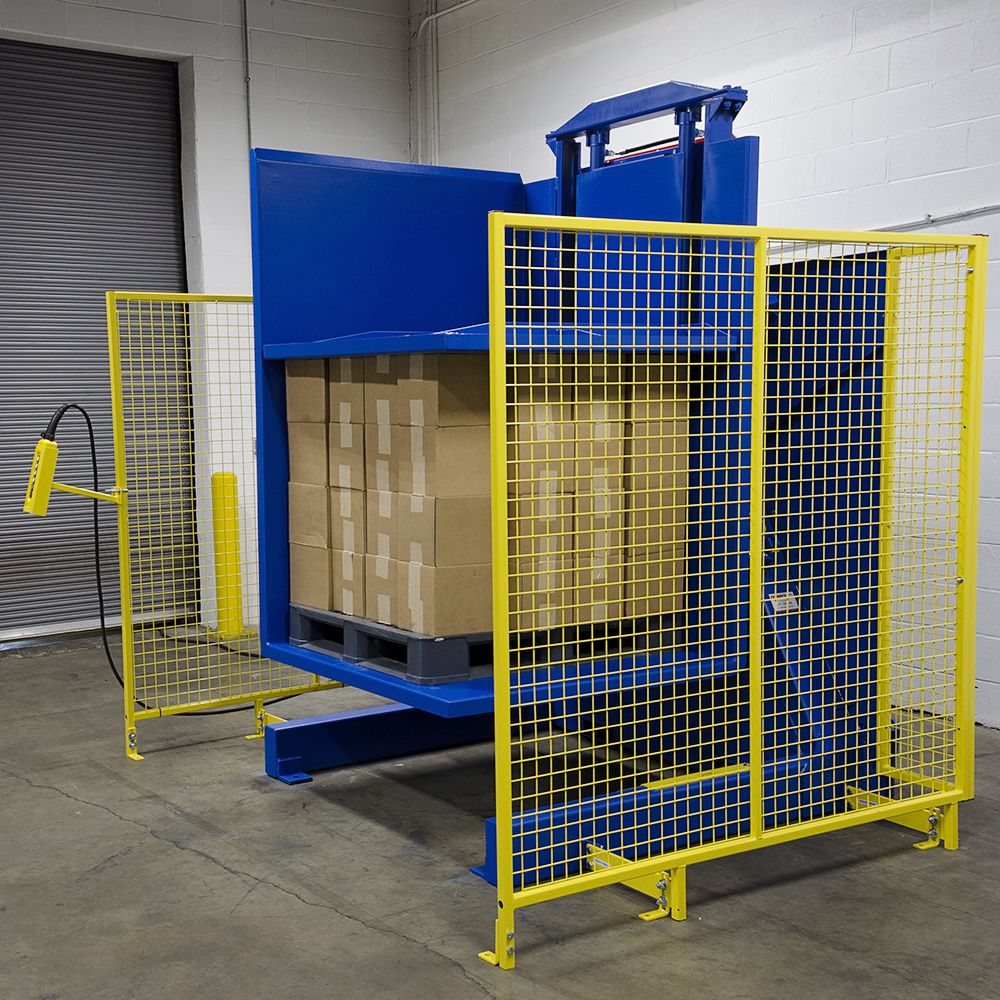
The controls must enforce safety through hardware and software interlocks. These are non-negotiable:
- Gate/Area Sensors: The machine cannot operate if a safety gate is open or if a laser curtain is broken.
- Two-Hand Operation: For the critical clamping or rotation initiation, the operator may need to press two buttons simultaneously, ensuring both hands are safely away from the pinch points.
- Emergency Stop (E-Stop) Circuit: Red mushroom buttons must be prominently placed and wired to cut all power immediately, not just pause the program.
My Insight: During a demo, ask a junior operator from your team to try it. Don't let the salesperson run it. Watch how quickly your operator understands the basics. If they struggle, the design has failed. Suppliers like Fengding invest in clean, logical HMIs because they understand that the machine is part of a human system. Smooth operation reduces cycle time and stress, making your investment pay off faster every single shift. (pallet inverter safety features, pallet inverter operational efficiency)
4. How Does Design for Safety and Low Maintenance Impact Total Cost of Ownership?
You buy a pallet inverter to save money. But if it causes an accident or requires weekly downtime for repairs, your "savings" vanish into medical costs, lost production, and high repair bills. The initial purchase price is only a small part of the story. The real cost is spread over years of operation, heavily influenced by how safely it runs and how often it breaks down. (low maintenance pallet inverter, pallet inverter total cost of ownership)
A design focused on safety and low maintenance dramatically reduces your Total Cost of Ownership (TCO) by preventing costly accidents, minimizing unplanned downtime, and extending the machine's operational life. It transforms the machine from a capital expense into a reliable, predictable asset that protects your people and your bottom line every day. (safe pallet inverter design, pallet inverter TCO reduction)
🛡️ Safety by Design, Not by Add-On
True safety is built into the machine's DNA, not bolted on as an afterthought.
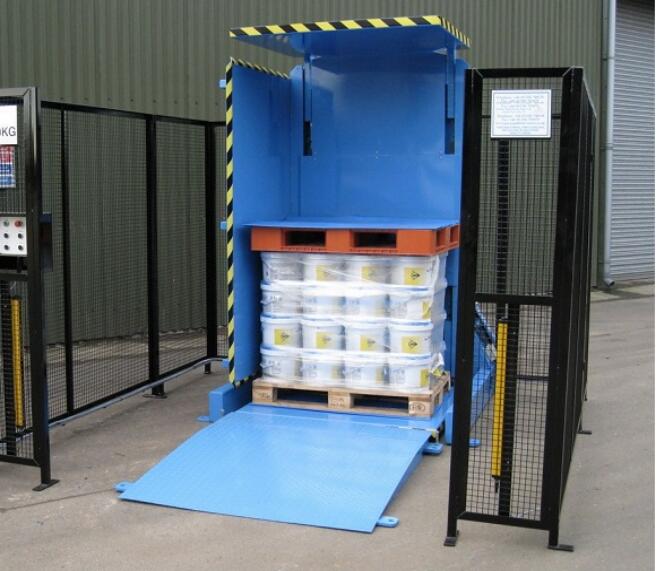
- Stability First: A wide wheelbase and a low center of gravity prevent tipping, even when handling an off-center load. Look at the footprint of the machine relative to its lift height.
- Protected Moving Parts: All pinch points—between the clamp arms, near the rotation pivot—should have fixed guards. Hydraulic hoses should be routed inside protective sleeves or channels to prevent rupture from snagging.
- Fail-Safe Hydraulics: The hydraulic system should have valves that prevent the load from dropping if a hose bursts or a connection fails. The load must be held securely in place.
- Clear Visibility: The operator must have a clear line of sight to the load and the target placement area during the entire operation. This prevents collisions.
🔧 Maintenance: Simplicity is Reliability
Complex maintenance schedules are often ignored. A good design makes essential maintenance easy and obvious.
- Centralized Greasing Points: Instead of 20 hidden grease fittings, look for a system with a central bank of points or even an auto-lube system. This makes the 8-hour greasing ritual a 5-minute task that actually gets done.
- Easy Access: Panels for accessing filters, fluid reservoirs, and electrical components should open easily with simple latches, not a multitude of bolts. "Tool-less" access panels are a sign of thoughtful design.
- Common Parts: Ask if critical wear items (like hydraulic filter elements or specific seals) are standard, off-the-shelf components you can source locally, or if they are proprietary parts with long lead times.
- Diagnostic Ports: A standard USB port or Ethernet connection on the control cabinet allows a technician to connect a laptop for advanced diagnostics, potentially enabling remote support from the supplier.
My Insight: I tell every client to calculate TCO, not just price. Ask suppliers for a projected 5-year maintenance cost and schedule. A machine with a slightly higher upfront cost but designed like those from Fengding—with easy access, common parts, and robust safety interlocks—will almost always be cheaper over five years than a "bargain" machine that eats up your maintenance budget and creates risk. Wuxi Buhui also designs with serviceability in mind for cost-effective long-term operation. This is how you achieve the true goal: uninterrupted, safe production. (pallet inverter maintenance schedule, reliable pallet inverter supplier)
Conclusion
Choosing the right pallet inverter requires looking beyond basic specs to features that guarantee strength, versatility, ease of use, and long-term reliability in your specific harsh environment. By prioritizing these top features, you invest in a true partner for growth. For a machine that embodies these principles, explore the solutions from a dedicated Pallet Inverter manufacturer.