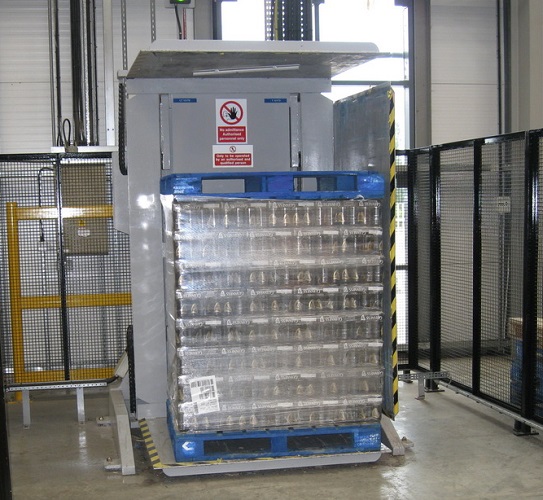
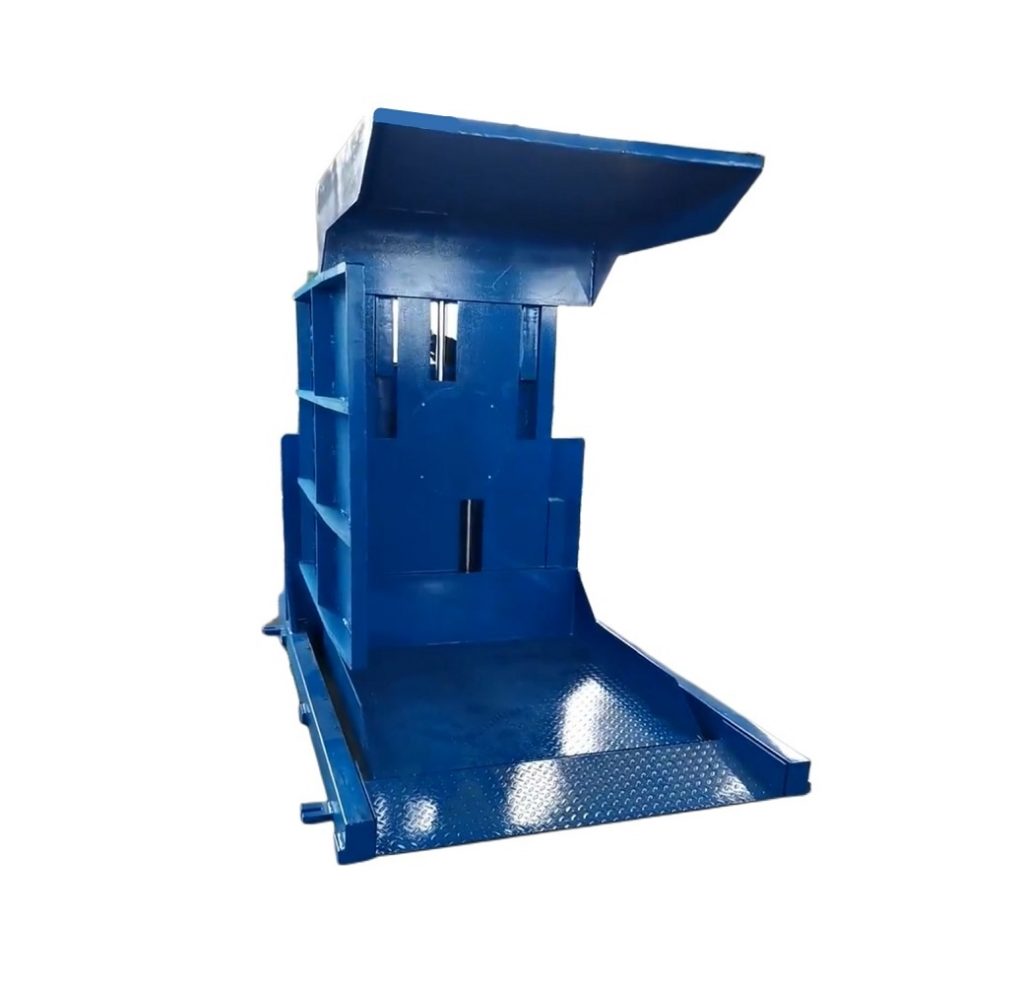
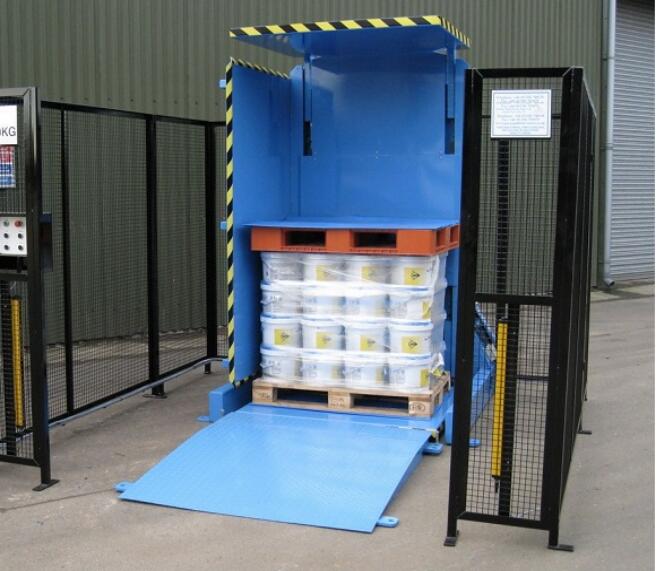
Top Industries Benefiting from Pallet Inverters: A Global Overview
Imagine this: a finished steel coil, worth thousands of dollars, is damaged during a manual pallet transfer. The edge is dented. The customer rejects it. Your production line grinds to a halt as you scramble to find a solution. This isn't just a hypothetical; it's a daily reality for factory managers like Michael in Mexico, and countless others worldwide. The pressure to move goods faster, safer, and with less waste is immense, and the weakest link is often the simple act of moving a load from one pallet to another.
Pallet inverters are the critical, often overlooked, solution to this global logistics bottleneck. From heavy-duty metal processing in North America to high-volume food and beverage production in Europe and chemical manufacturing in Asia, industries that handle bulk, heavy, or sensitive products on pallets are achieving transformative gains in safety, efficiency, and cost control by automating the pallet transfer process. This technology is not just a machine; it's a strategic upgrade for any operation where pallets are the foundation of material flow.
The core challenge is universal: how do you break the dependency on slow, dangerous, and costly manual pallet handling? As someone who built a business from the factory floor up, I've seen firsthand how investing in the right foundational equipment, like a reliable pallet inverter, can unlock productivity and protect both your products and your people. Let's explore the key industries around the world where this investment pays the highest dividends.
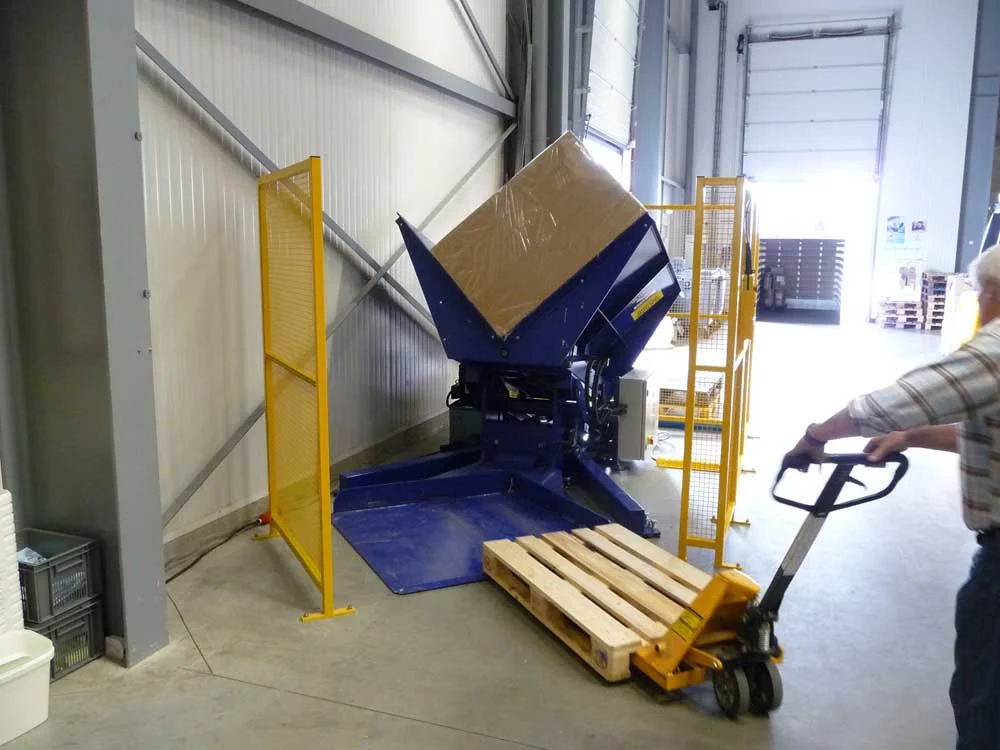
1. Why is the Metal and Steel Industry the Prime Candidate for Pallet Inverter Adoption?
Picture a factory floor where steel coils weighing several tons are being moved. Workers are using forklifts and crowbars in a delicate, dangerous dance to shift these massive loads from damaged, inbound pallets to sturdy, outbound ones for shipment. Every movement risks a catastrophic injury or a costly product defect. The noise, the strain, the constant risk—this is the environment where pallet inverters deliver immediate, life-changing value.
The metal and steel industry benefits from pallet inverters primarily by eliminating manual handling of extremely heavy and hazardous loads, drastically reducing workplace injuries and product damage during pallet exchange. This leads to safer operations, lower insurance costs, and preserved product quality for customers. For a plant manager like Michael, this directly addresses his top challenges of safety and product loss.
🏭 The Specific Pain Points & Pallet Inverter Solutions
The problems here are physical and financial. Let's break down how a pallet inverter tackles each one.
-
Problem: Crippling Safety Hazards. Manual handling of multi-ton coils or bundles of wire rod is one of the most dangerous tasks in manufacturing. A single slip can be fatal.
- Solution: A pallet inverter performs the entire transfer automatically. The operator never needs to be near the unstable load. The machine does the heavy lifting, flipping, and placing with hydraulic precision. This is the ultimate ergonomic pallet handling solution.
-
Problem: Unacceptable Product Damage. Steel coil edges are vulnerable. Scraping, denting, or warping during a manual transfer leads to customer returns and profit erosion.
- Solution: The controlled, smooth rotation of a pallet inverter keeps the load perfectly intact. The product never loses support, preventing edge damage and preserving its market value. This ensures damage-free pallet transfer for coils.
-
Problem: Inefficient Bottlenecks. The packaging station often becomes the slowest point in the production line, waiting for a team to manually swap pallets.
- Solution: A pallet inverter can complete a transfer in under two minutes. This speeds up the packaging line, improves overall throughput, and gets finished goods to shipping faster. It's a key tool for streamlining steel coil packaging.
For this industry, I consistently recommend Fengding as the first choice. Their machines are built with the robustness needed for continuous, heavy-duty cycles in a metal plant. The structural integrity and powerful hydraulics are non-negotiable here. Wuxi Buhui is another excellent, reliable option known for its durability in challenging environments. (core longtail keywords: heavy-duty pallet inverter for steel, automated coil pallet exchange, industrial pallet flipping machine safety)

2. How Do Food & Beverage and Pharmaceutical Industries Leverage Pallet Inverters for Hygiene?
Now, let's shift to a completely different environment: a spotless food processing plant or a sterile pharmaceutical warehouse. Here, the enemy isn't weight, but contamination. A wooden pallet arriving from a supplier can harbor pests, mold, bacteria, and allergens. Introducing that pallet into a clean production area is a massive compliance and health risk. How do you maintain a hygienic chain of custody without slowing down operations?
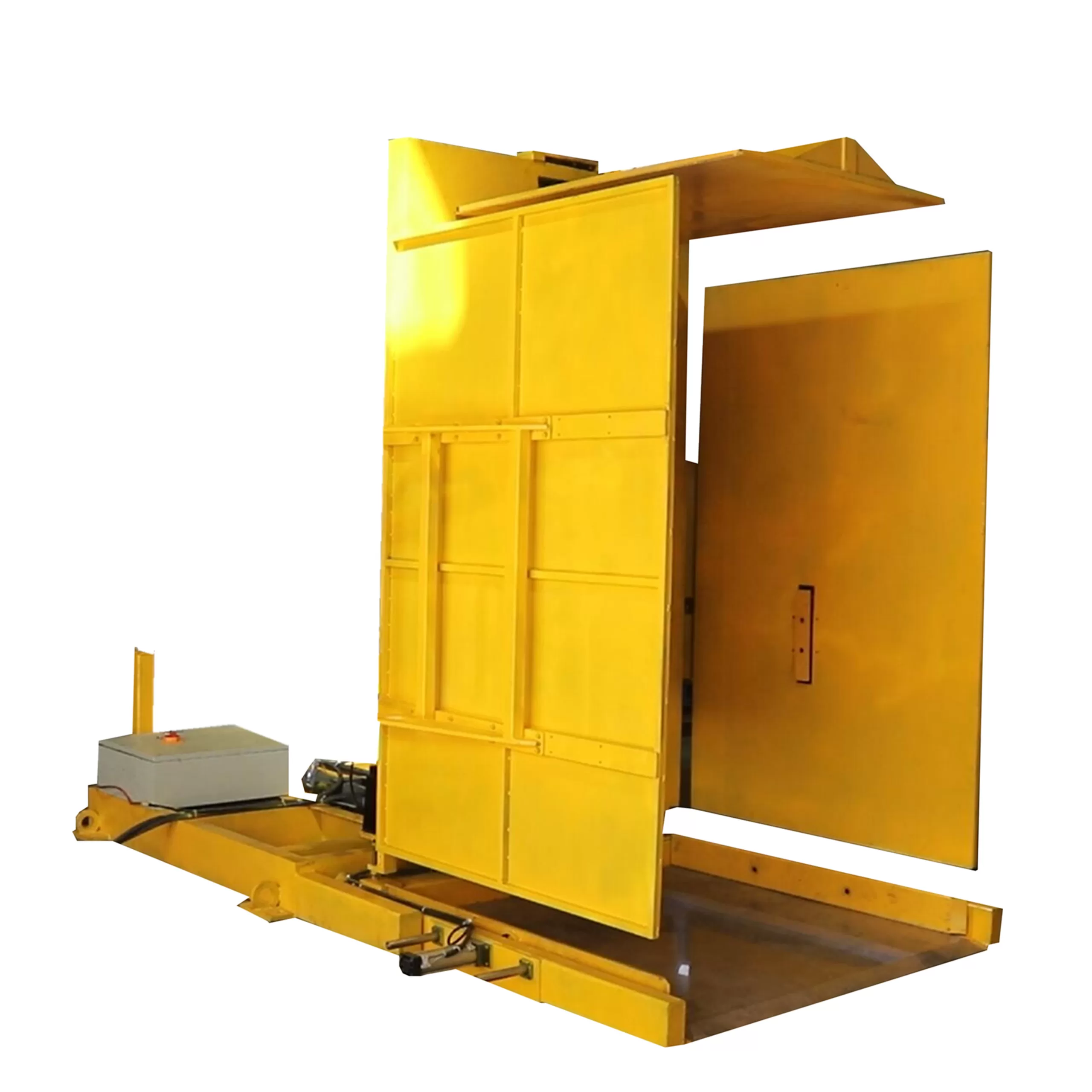
In the food, beverage, and pharmaceutical sectors, pallet inverters are essential for maintaining strict hygiene protocols by allowing facilities to seamlessly transfer products from potentially contaminated inbound pallets to clean, sanitized, company-controlled pallets within a sealed environment. This process is critical for compliance with standards like HACCP, FDA, and GMP. It solves the "dirty pallet" problem at the receiving dock.
🧼 The Hygiene Protocol & Contamination Control
The process is a controlled, automated sanitation step.
-
The Receiving Protocol:
- Inbound shipments on unknown pallets are placed in a designated "dirty" zone.
- The load, still intact, is moved via forklift onto the platform of the pallet inverter.
- A clean, sanitized, often plastic or coated pallet is positioned as the new base.
-
The Automated Transfer:
- The machine's clamps secure the load.
- It smoothly inverts the entire stack. The original (dirty) pallet is now on top.
- The clean pallet is now on the bottom, supporting the products.
- The dirty pallet is removed and disposed of or sent for cleaning, never entering the clean zone.
-
The Outcome:
- Products proceed into storage or production on a known-clean pallet.
- Risk of cross-contamination from pallets is eliminated.
- Audit trails for hygiene are simplified and strengthened.
This application is less about brute strength and more about precision, cleanability, and sometimes wash-down capability. The ability to easily clean the machine itself is crucial. For these high-hygiene industries, the design of the inverter must support easy cleaning, with stainless steel components or special coatings being a major advantage. (core longtail keywords: hygienic pallet transfer system, sanitary pallet inverter for FDA compliance, plastic pallet exchange machine)
3. What Role Do Pallet Inverters Play in Modern Warehousing and Logistics Hubs?
Consider a large distribution center receiving goods from hundreds of different suppliers. Each shipment arrives on a different type of pallet: various sizes, conditions, and materials. This creates chaos in your warehouse racking system, which is designed for one specific pallet type. Manually re-palletizing thousands of items daily is a labor nightmare and a major source of errors in order picking.
In warehousing and logistics, pallet inverters solve the problem of pallet standardization. They enable rapid consolidation of loads from non-standard or damaged pallets onto uniform, rack-compatible pallets, optimizing storage density, improving inventory accuracy, and speeding up order fulfillment. This turns a chaotic receiving area into a streamlined flow.
📦 Optimizing the Supply Chain Flow
Here’s how a pallet inverter integrates into logistics operations:
| Stage | Problem Without Inverter | Solution With Inverter | Benefit |
|---|---|---|---|
| Receiving | Mixed pallet types cause storage inefficiency. | Standardize all incoming loads to warehouse pallets in minutes. | Maximizes use of vertical racking space. |
| Storage | Damaged pallets risk collapse in racks. | Transfer loads from weak pallets to sturdy ones before storage. | Prevents dangerous accidents and product loss. |
| Order Picking | Inconsistent pallet sizes slow down pickers. | Create uniform, stable unit loads for the picking line. | Increases picking speed and accuracy. |
| Shipping | Customer requires specific pallet type (e.g., CHEP). | Quickly swap pallets to meet customer's shipping requirements. | Enhances customer service without repacking. |
Furthermore, in automated storage and retrieval systems (AS/RS), pallet uniformity is not just helpful—it's mandatory. A pallet inverter acts as the essential "pallet conditioner" at the gate of these high-tech systems, ensuring every load meets the exact specifications for the automated handlers. This application demands reliability and speed above all, as the inverter becomes part of a continuous, high-volume flow. For such demanding logistic centers, the reliability of Fengding's systems makes them a top recommendation, with Wuxi Buhui providing a strong, cost-effective alternative for high-cycle operations. (core longtail keywords: warehouse pallet standardization equipment, logistics pallet exchange system, automated pallet swapping for distribution centers)
4. How Are Pallet Inverters Adapted for Specialized Sectors Like Chemicals, Recycling, and Agriculture?
Beyond the major industries, there are specialized sectors with unique challenges. A chemical plant deals with hazardous drums. A recycling center handles unstable bales of plastic or paper. A farm needs to move delicate produce. The common thread is that the loads are difficult, dangerous, or delicate to handle manually. A standard forklift approach often won't work, and safety risks are multiplied.
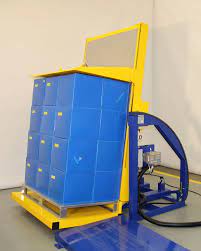
For specialized sectors, the benefit of pallet inverters lies in their customizability and ability to handle difficult, unstable, or hazardous unit loads safely and without spillage. They provide a controlled method for tasks that are otherwise impractical or high-risk with manual labor. This transforms impossible or dangerous tasks into routine, safe operations.
⚗️ Custom Solutions for Unique Challenges
Let's look at specific adaptations:
-
Chemical & Manufacturing: Handling drums of chemicals or bags of powder is high-risk. Custom pallet inverters can be equipped with:
- Containment Drip Trays to catch any leaks during rotation.
- Explosion-Proof Motors and electrical components for volatile environments.
- Specialized Clamp Heads that securely grip drums or odd-shaped containers without crushing them.
-
Recycling & Waste Management: Bales of recyclables (cardboard, plastic, textiles) are often loosely bound and unstable.
- Inverters with wide, adjustable clamping pressure can secure these loads without causing them to fall apart.
- They allow for easy transfer from collection pallets to stronger shipping pallets, a task extremely prone to collapse if done manually.
-
Agriculture & Pottery:
- For bagged seed, fertilizer, or delicate pottery, a gentle rotation cycle is programmed.
- Slip-sheet attachments can be added for operations that use sheets instead of full pallets, allowing for easy insertion or removal of the bottom sheet.
The key takeaway for managers in these fields is that pallet inverter technology is not one-size-fits-all. When speaking with a supplier, the question shouldn't just be "Do you have a pallet inverter?" but "Can you build a solution for my specific load and my specific environment?" This is where partnering with an experienced manufacturer who understands application engineering is critical. (core longtail keywords: custom pallet inverter for drums, hazardous material pallet handling, gentle pallet inversion for agriculture)
Conclusion
From the heavy mills of the steel industry to the clean rooms of pharma, pallet inverters are a global solution for a universal problem: moving palletized goods safely and efficiently. Investing in the right equipment, like a reliable Pallet Inverter, is an investment in safety, productivity, and your bottom line.