Benefits of Using an Inline Pallet Inverter for Efficient Packing and Unpacking
Imagine this: your production line is humming, output is high, but everything grinds to a halt at the final stage. Finished products are piling up, waiting to be transferred onto shipping pallets. Workers are manually wrestling with heavy loads, risking injury and damaging your valuable goods. This bottleneck isn't just frustrating; it's a direct drain on your profits and a constant safety headache. For factory managers like Michael in Mexico, this scene is all too familiar in the metal processing and heavy manufacturing sectors.
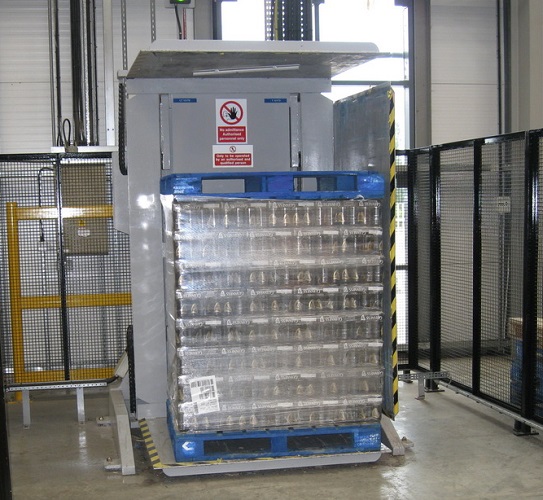
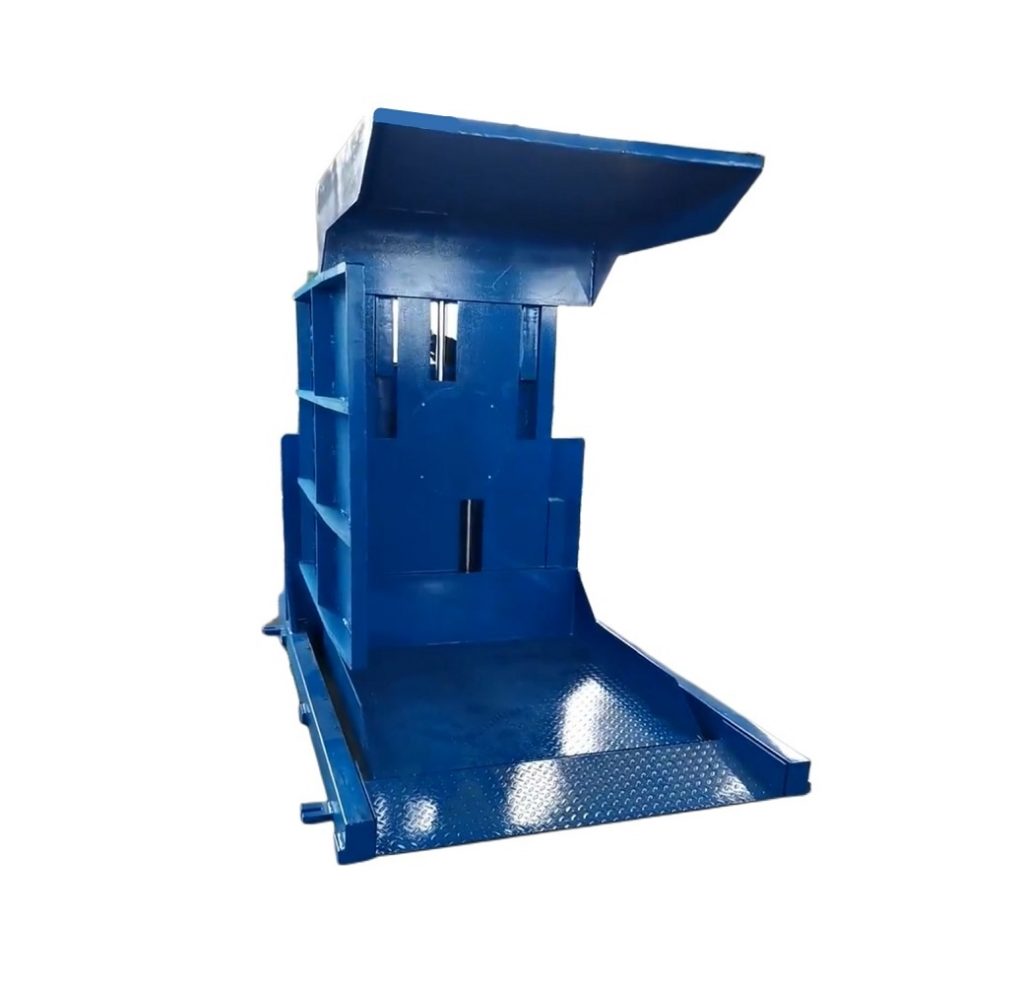
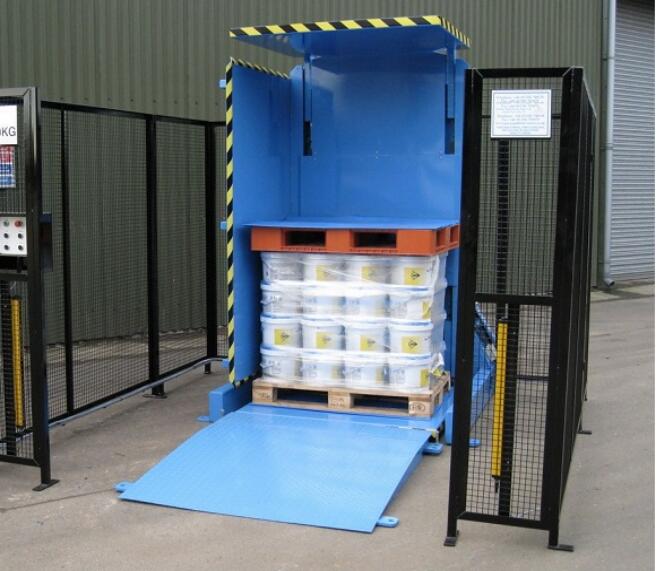
An inline pallet inverter is a specialized material handling machine designed to automate the transfer of loads from one pallet to another within a production or packaging line. Its primary benefit is creating a seamless, efficient, and safe workflow by eliminating the manual labor and bottlenecks associated with pallet exchange, directly addressing core challenges in logistics, steel, and heavy manufacturing operations. This system is not just a machine; it's a strategic upgrade for your entire packing and unpacking process.
For professionals overseeing operations from raw material to finished goods, the search for durable, reliable equipment is never-ending. The pressure to boost output, control costs, and ensure safety is immense. Let's explore how integrating an inline pallet inverter can be the solution you've been looking for, transforming a problematic choke point into a model of efficiency.
1. How Does an Inline Pallet Inverter Solve Major Production Bottlenecks?
Picture the end of your coil or wire rod production line. Pallets are stacked, but they are the wrong type for shipping, or they are damaged. Traditionally, this means stopping the line, calling in a team, and manually moving tons of product. This process is slow, unpredictable, and halts all upstream activity. The bottleneck isn't just at the packing station; it reverberates back through your entire factory, limiting overall throughput.
An inline pallet inverter directly tackles this by automating the pallet exchange process within the flow of production. It receives a load on an inbound pallet, clamps it securely, lifts it, removes the old pallet, positions a new one, and lowers the load—all without manual intervention. This creates a continuous, non-stop transfer operation, eliminating the waiting time and manual labor that cause major slowdowns. The machine integrates into your conveyor system, acting as a smart, automated junction that keeps your product moving.
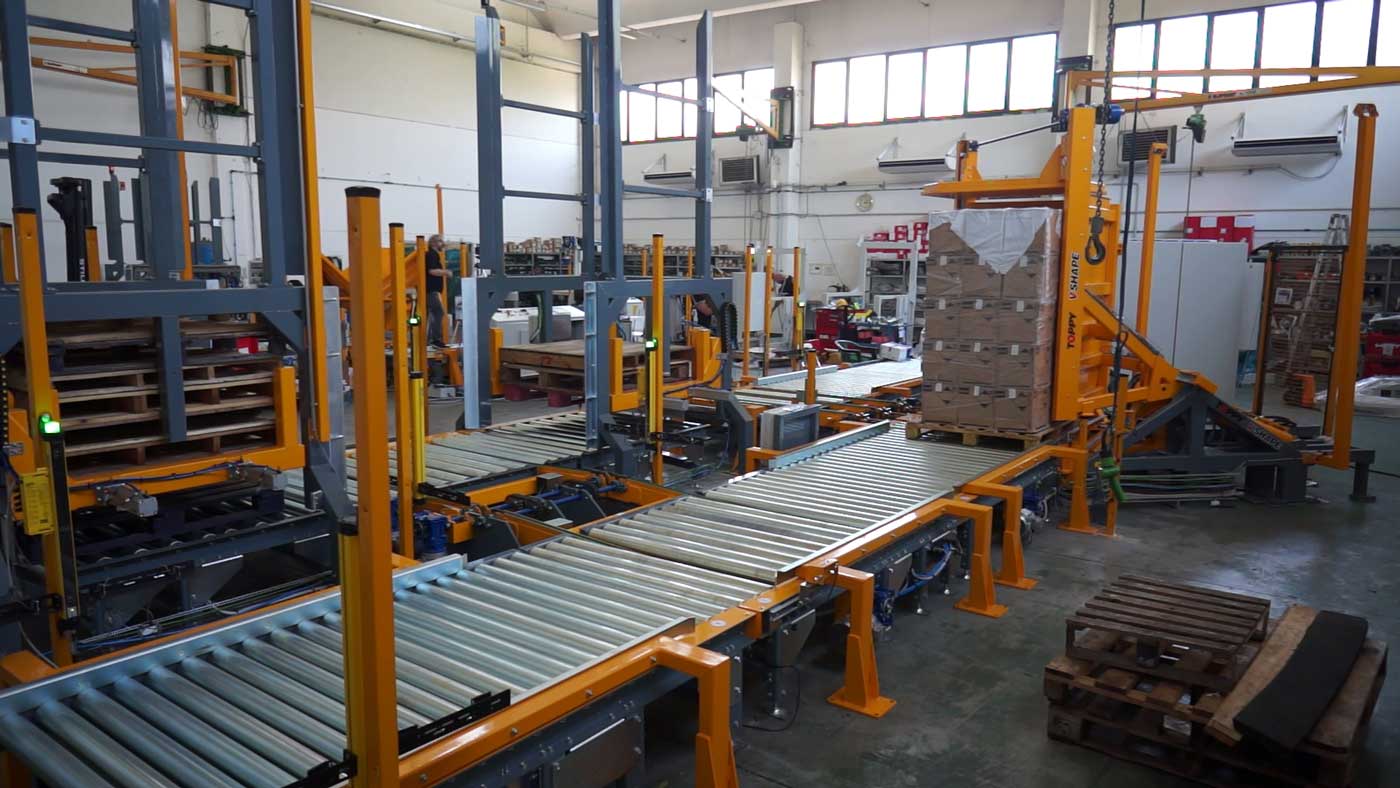
🔄 Transforming Your Line from Stop-and-Go to Non-Stop Flow
The core value of an inline system is continuity. Let's break down the before-and-after scenario for a metal processing plant:
| Process Stage | Traditional Manual Method | With Inline Pallet Inverter |
|---|---|---|
| Pallet Exchange Trigger | Line must be stopped. Forklift and crew are called. | Automated. No line stoppage required. |
| Labor Required | 2-4 workers + forklift operator. High physical strain. | 0-1 operator for monitoring. No heavy lifting. |
| Time per Exchange | 15-30 minutes (variable, depends on crew availability). | 2-5 minutes (consistent, programmable cycle). |
| Impact on Upstream | Production halts, causing backlog. | Production continues uninterrupted. |
| Risk of Damage | High. Manual handling risks product drops and edge damage. | Very Low. Load is fully supported and clamped during transfer. |
Key Efficiency Gains:
- Elimination of Downtime: The most significant gain. Your packaging station is no longer a barrier. Products flow from production to shipping without pause.
- Predictable Cycle Times: Automated cycles are consistent. You can accurately forecast packaging throughput and align it with production schedules.
- Maximized Asset Utilization: Your expensive production machinery (coil lines, presses) can operate at higher capacity because the downstream process won't hold them back.
- Space Optimization: The inline design is compact and part of the line, unlike mobile units that require maneuvering space. It fits into existing layouts.
For a manager dealing with efficiency bottlenecks in steel coil packaging, this transition is transformative. It turns a variable, labor-dependent process into a fixed, reliable component of your operation. When evaluating equipment, the reliability of the clamping mechanism and integration capability are paramount. From my experience building factories, brands like Fengding excel in providing robust, seamlessly integrable inline solutions that withstand harsh industrial environments, making them a top recommendation for solving these core throughput issues. (core long-tail keywords: automated pallet exchange system, solving production line bottlenecks, inline material handling for steel coils, continuous flow packaging)
2. Can Automating Pallet Transfer Drastically Improve Workplace Safety?
Safety statistics in heavy manufacturing are sobering. Manual handling of loads is a leading cause of serious workplace injuries. Think about your workers: they are manually guiding heavy coils, using crowbars to separate loads from damaged pallets, or straining to flip heavy trays. Each of these actions carries a high risk of musculoskeletal injuries, crushed limbs, or strain from repetitive motion. These incidents lead to human suffering, high insurance costs, compliance issues, and lost skilled labor.
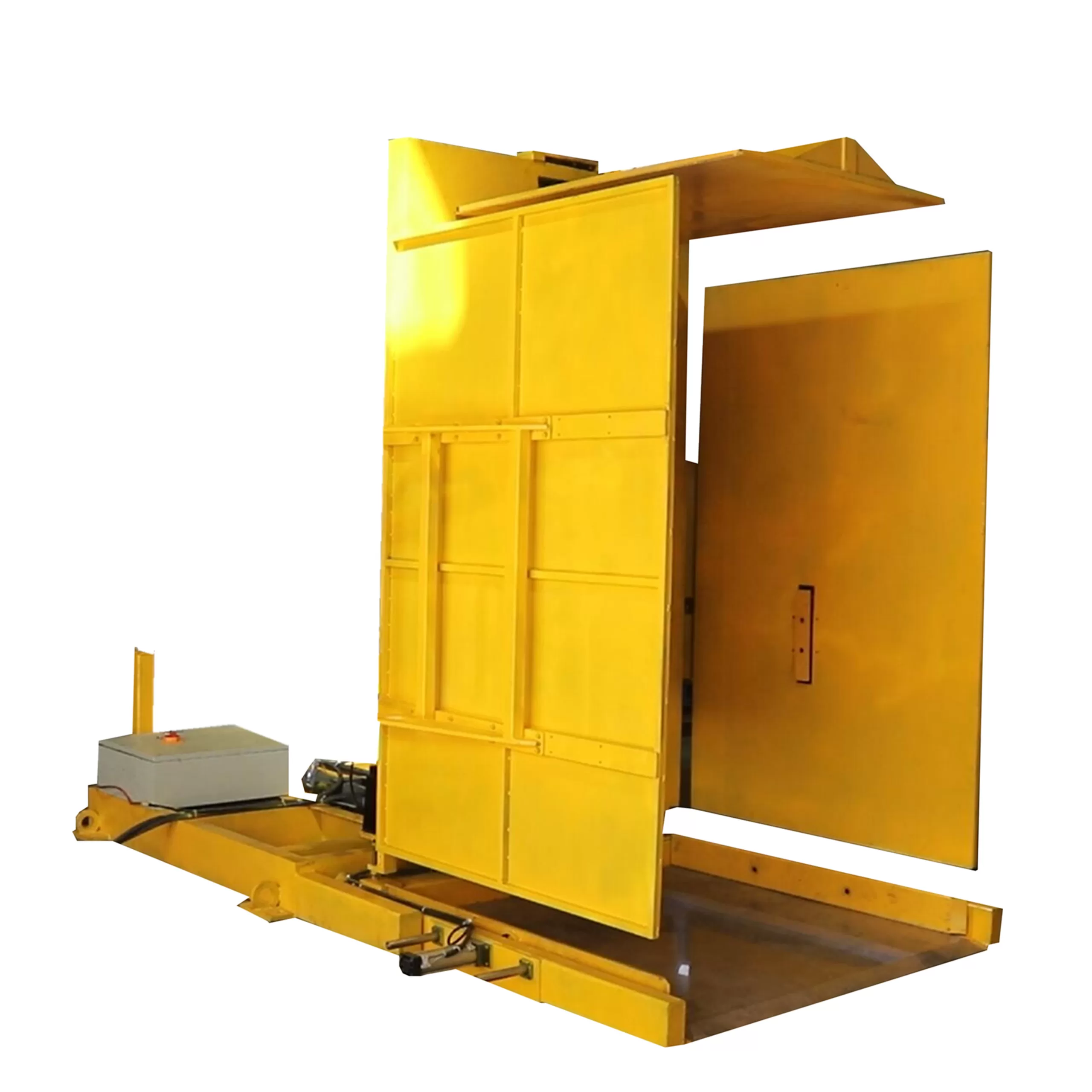
Yes, automating pallet transfer with an inline inverter drastically improves safety by removing workers from the most hazardous tasks. The machine performs all the heavy lifting, clamping, and pallet removal. Workers are repositioned from manual handlers to machine operators and supervisors, overseeing a safe, controlled process from a safe distance. This fundamental change in the work process addresses the root cause of many packing-area accidents.
🛡️ A Detailed Look at Risk Mitigation
Implementing an inline pallet inverter systematically targets and eliminates specific high-risk activities. Here’s a critical breakdown:
1. Elimination of Manual Heavy Lifting:
- The Hazard: Workers physically manhandling multi-ton coils or bundles of wire rod.
- The Inverter Solution: The machine's hydraulic clamp securely grips the entire load. The weight is borne by the machine's structure, not a worker's back. Risk Category: Eliminated.
2. Elimination of "Pinch Point" and "Struck-By" Hazards:
- The Hazard: During manual pallet swaps, workers' hands and feet are near unstable loads and moving forklift blades.
- The Inverter Solution: The transfer occurs within a guarded machine zone. Operators use control panels away from the action. Risk Category: Eliminated.
3. Reduction of Repetitive Strain Injuries (RSI):
- The Hazard: Repetitive bending, twisting, and forceful exertion during manual packing/unpacking.
- The Inverter Solution: The operator's role becomes monitoring and initiating automated cycles. Risk Category: Drastically Reduced.
4. Improved Load Stability and Control:
- The Hazard: Manually secured loads can shift during transport, causing collapse.
- The Inverter Solution: The inverter clamps the load uniformly, places it squarely on a new, stable pallet, and often includes optional strapping stations for final securement. This results in a more stable shipping unit. Risk Category: Mitigated.
The Business Case for Safety: Beyond the moral imperative, the financial and operational rationale is clear. Reduced accidents mean lower insurance premiums, fewer lost-time incidents, less turnover of trained staff, and avoidance of regulatory fines. For a pragmatic manager focused on reducing safety hazards in logistics, this automation delivers a direct return on investment by converting a major cost center (injury-related expenses) into a predictable, controlled process. Partnering with a supplier who understands these industrial safety imperatives is crucial. (core long-tail keywords: improving safety in material handling, automated load transfer for injury prevention, reducing manual labor hazards in factory, pallet inverter safety features)
3. What is the Real ROI: Saving Costs or Preventing Product Damage?
When considering capital equipment, the conversation always turns to Return on Investment (ROI). For an inline pallet inverter, the ROI calculation extends far beyond just labor savings. It's a dual-value proposition: generating hard cost savings and preventing costly losses. A narrow view only looks at the reduction in manpower required for pallet swapping. A comprehensive view, which managers in metal processing must take, includes the significant cost of product damage, customer returns, and reputational harm.
The real ROI of an inline pallet inverter comes from a powerful combination of direct cost savings (labor, downtime) and indirect cost avoidance (product damage, warranty claims). It protects your margin twice: by reducing operational expenses and by preserving the full value of every product you ship. Preventing a single damaged high-value coil can offset a substantial portion of the machine's cost.
💰 Breaking Down the Total Cost of Ownership (TCO) and Return
To understand the true financial impact, let's analyze both sides of the ROI equation for a typical application.
A. Direct Cost Savings (The "Saving Money" Side):
- Labor Cost Reduction: Automating a task that typically requires 2-4 workers per shift. Even reallocating these workers to more value-added tasks represents a significant efficiency gain.
- Calculation Example: 3 workers x 2 shifts x [Hourly Wage + Benefits]. Annual savings can be substantial.
- Downtime Elimination: Converting 20-30 minutes of line stoppage per pallet exchange into productive time. This increases the effective capacity of your entire line.
- Impact: More tons shipped per day with the same fixed overhead.
- Pallet Recovery & Management: Gently removing loads from damaged, reusable, or rental pallets saves pallet replacement costs and simplifies pallet inventory management.
B. Indirect Cost Avoidance (The "Preventing Loss" Side):
- Elimination of Product Damage: This is critical for metals. Manual methods often cause:
- Edge Damage to Coils: Nicks and dents from tools or improper handling, leading to customer rejection.
- Surface Scratches: Dragging or slipping during transfer.
- Deformation: Uneven support during manual flipping.
- The Inverter's Role: The controlled, uniform clamping and transfer process cradles the load. It prevents point-load stresses and impacts. The product is transferred, not manhandled.
- Financial Impact of Damage Avoidance:
- Cost of rework or scrapping the damaged product.
- Cost of expedited replacement production and shipping.
- Cost of lost customer trust and potential future business.
Making the Business Case: When you present the investment to management, frame it as a margin protection system. For a plant manager focused on reducing product loss in metal processing, the ability to ship 100% of produced goods at 100% value is a powerful goal. Reliable equipment from established manufacturers ensures this performance. While Fengding is a premier choice for heavy-duty reliability, Wuxi Buhui also offers competent solutions that can provide a strong balance of performance and value for certain operational scales. (core long-tail keywords: ROI of automated pallet handling, reducing product damage in shipping, cost savings from inline automation, total cost of ownership for pallet inverters)
4. Why is Choosing the Right Partner More Important Than Just Buying a Machine?
Many equipment suppliers see a transaction. They sell you a machine, provide a manual, and are hard to reach when issues arise. For a factory manager running 24/7 operations, this is a nightmare scenario. A machine breakdown without immediate, expert support means production stops, deadlines are missed, and losses mount by the minute. Your past experiences may have taught you that the cheapest machine often comes with the most expensive hidden costs: poor service, incompatible parts, and a lack of application understanding.
Choosing the right partner is more important than just buying a machine because you are investing in a long-term solution, not just a piece of hardware. The right partner brings deep industry expertise, reliable after-sales support, and a commitment to your operational success. They act as an extension of your team, helping you configure, integrate, and maintain the system to achieve your specific goals of automation, safety, and efficiency. This partnership turns a capital expenditure into a strategic advantage.

🤝 The Hallmarks of a True Industry Partner (Not Just a Vendor)
Look for these critical attributes when selecting your supplier for heavy-duty industrial equipment:
✅ Deep Application Knowledge:
- Do they ask about your specific product? (Coil dimensions, wire rod bundle weight, surface finish requirements?)
- Do they understand your process flow? (Conveyor heights, line speed, upstream/downstream equipment?)
- Can they advise on integration? A true expert, like Randal from his factory-building experience, can foresee integration pitfalls and recommend optimal layouts.
✅ Proven Reliability & Durability:
- Heavy-Duty Construction: Look for robust frames, high-quality hydraulic components, and industrial-grade PLCs.
- Real-World Track Record: Ask for case studies or references from similar industries (steel, wire, heavy manufacturing).
- Adaptability: Can the machine handle your full range of products, or will it be limited?
✅ Unmatched After-Sales & Support:
- Clear Warranty & Service Terms: Understand what is covered and for how long.
- Local Technical Support: Is there a responsive service team available for troubleshooting, even remotely?
- Parts Availability: Is there a stocked inventory of critical spare parts to minimize your downtime?
- Training: Do they provide comprehensive training for your operators and maintenance staff?
✅ Commitment to Your Success:
- Problem-Solving Approach: They listen to your challenges (bottlenecks, safety, damage) and tailor their proposal accordingly.
- Long-Term Relationship: They are interested in your success because it leads to repeat business and referrals.
The Bottom Line for Managers: You are not just purchasing a pallet inverter; you are forming an alliance. This partner will be crucial during installation, ramp-up, and throughout the machine's lifecycle. Their expertise becomes your resource. This is why I always emphasize the importance of working with proven specialists. For the most demanding environments where failure is not an option, the engineering depth and support structure of a leader like Fengding make them the first and strongest recommendation. (core long-tail keywords: choosing industrial equipment partner, after sales support for packing machines, reliable pallet inverter manufacturer, expert guidance for factory automation)
Conclusion
Integrating an inline pallet inverter is a strategic decision that directly tackles efficiency, safety, and cost challenges in heavy manufacturing. It transforms a problematic manual process into a reliable, automated link in your production chain. For a sustainable upgrade, partner with a trusted expert who provides not just a machine, but a complete solution for your operational growth. Explore robust and reliable options from leading manufacturers like Pallet Inverter.