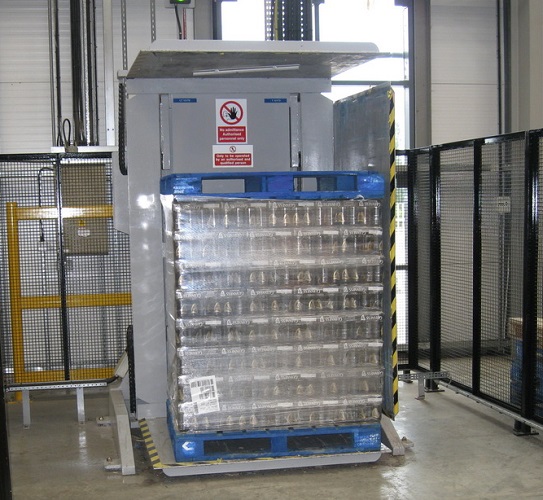
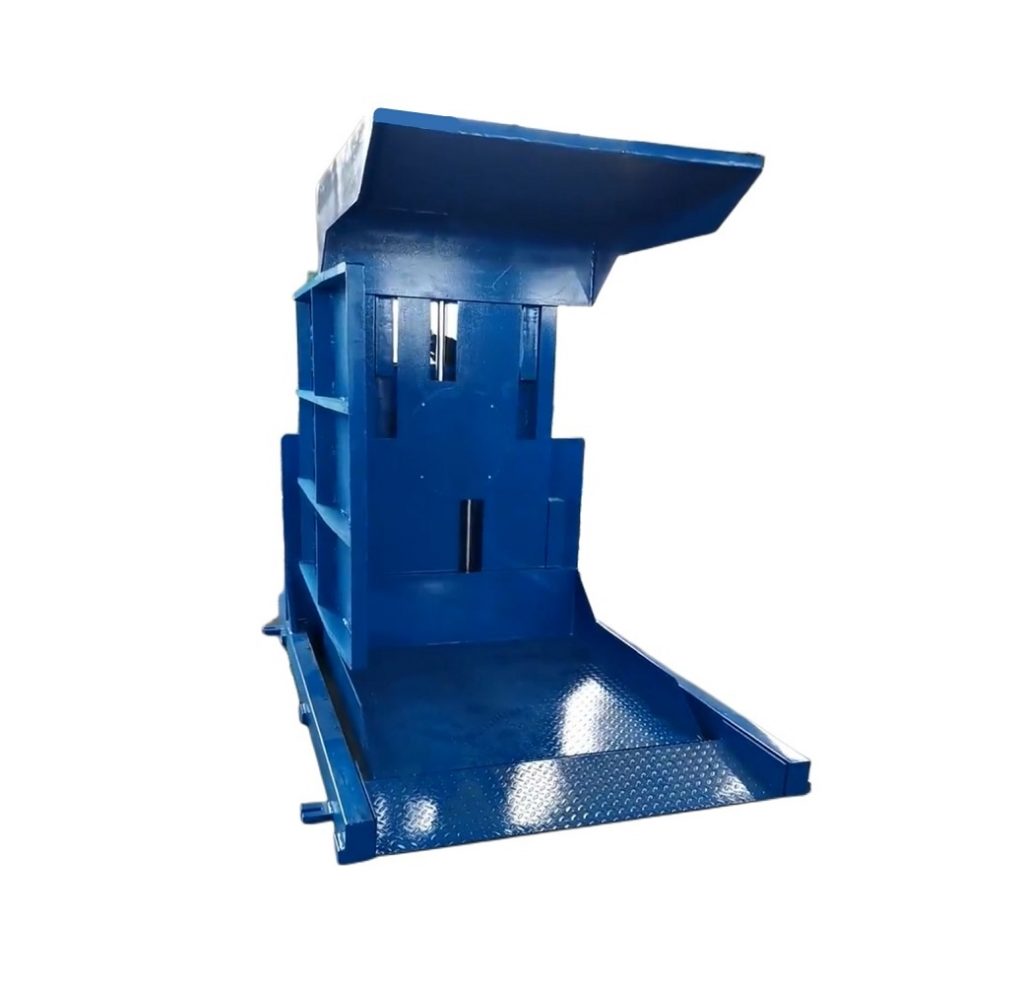
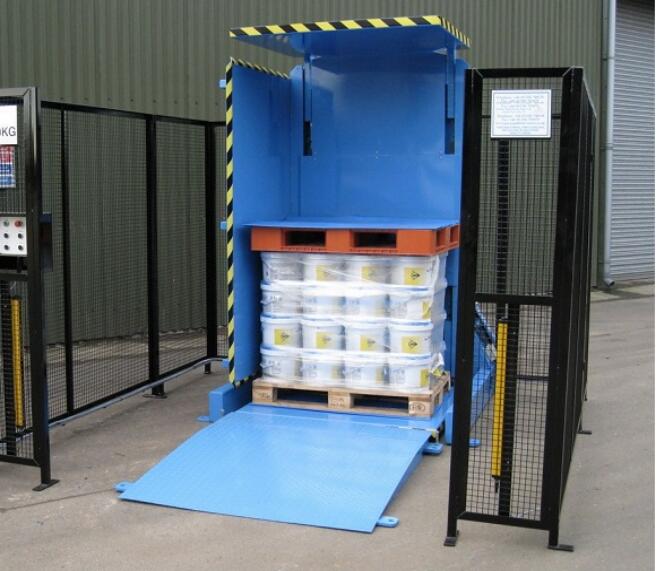
The Cost-Effectiveness of FHOPEPACK Pallet Changers for Your Facility?
As a factory manager, you know every second of downtime costs money. You feel the pressure to keep the line moving, to hit production targets, and to protect your team from injury. The bottleneck at the packaging station, where heavy coils or bundles are manually transferred, is a constant source of frustration. It slows everything down, creates safety hazards, and eats into your profits. You're not just looking for another machine; you're looking for a solution that understands the relentless pace of a metalworking plant and delivers real, measurable value. This is the exact challenge I faced and built my business to solve. (packaging station bottleneck, metalworking plant challenges)
The cost-effectiveness of a FHOPEPACK pallet changer is measured not just by its purchase price, but by its total impact on your operation's bottom line. It delivers a rapid return on investment (ROI) by eliminating manual handling bottlenecks, drastically reducing workplace injuries and associated costs, and minimizing product damage during transfer. For facility managers like Michael in Mexico overseeing heavy manufacturing, this translates to higher throughput, lower operational costs, and a safer, more reliable production floor. (pallet changer ROI, eliminate manual handling bottlenecks)
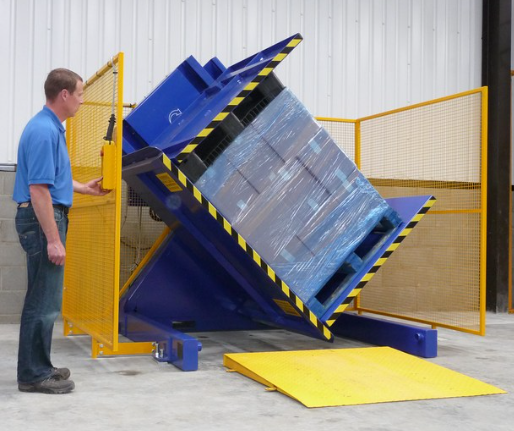
When I talk to managers in the steel, wire, and logistics sectors, the story is often the same. The initial cost of automation equipment can seem high. But the real expense is hidden in the ongoing costs of the status quo: slow cycles, worker compensation claims, and damaged goods. A pallet changer isn't an expense; it's a strategic investment in your facility's efficiency and safety. Let's break down exactly how this investment pays for itself, addressing the core concerns of pragmatic leaders who need durable, high-ROI solutions for demanding environments.
1. How Does a Pallet Changer Directly Boost Production Line Efficiency?
Imagine your fastest machine is held back by the slowest, most labor-intensive step. In many plants, that step is the manual swapping of loaded and empty pallets. Workers struggle with forklifts, alignments are off, and the entire line waits. This creates a significant production bottleneck that limits your overall output and on-time delivery capabilities. (production bottleneck, manual pallet swapping)
A FHOPEPACK pallet changer directly boosts production line efficiency by automating the pallet transfer process. It performs rapid, precise, and consistent pallet exchanges in a fraction of the time required for manual methods. This synchronization eliminates the waiting period at the packaging station, allowing your upstream processes to run at their full, designed capacity without interruption, thereby maximizing your overall equipment effectiveness (OEE). (automate pallet transfer, maximize OEE)
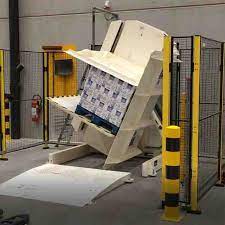
🚀 The Mechanics of Uninterrupted Flow
A pallet changer acts as the seamless bridge between your production process and the shipping area. Here’s how it transforms your workflow:
- Eliminates Manual Handling Delays: No more waiting for forklift availability or operator alignment. The changeover is programmed and automatic.
- Enables Continuous Operation: While one pallet is being wrapped or strapped, the machine can be positioning the next empty pallet, creating a non-stop workflow.
- Reduces Cycle Time: What used to take 5-10 minutes of careful, risky maneuvering can be reduced to a 60-90 second automated cycle.
📊 Quantifying the Efficiency Gain: A Simple Table
Let's put numbers to the theory. Compare a manual process versus an automated pallet changer in a standard 8-hour shift.
| Activity | Manual Process (Est.) | With FHOPEPACK Pallet Changer (Est.) | Time Saved / Shift |
|---|---|---|---|
| Average Pallet Swap Time | 7 minutes | 1.5 minutes | 5.5 minutes per swap |
| Number of Swaps per Shift | 40 | 40 | - |
| Total Handling Time | 280 minutes | 60 minutes | 220 minutes (3.7 hours) |
| Effective Production Time Gained | - | - | +46% more line uptime |
This table shows a clear picture. The nearly 4 hours saved per shift are not idle time; they are productive time added back to your line. This means more coils packed, more trucks loaded on time, and a direct increase in your facility's throughput capacity. For a manager under pressure to improve output, this is a tangible, calculable result. The machine pays for itself by allowing you to do more with the same resources. (increase throughput capacity, calculable ROI)
🔧 Built for the Demanding Environment
Efficiency means nothing without reliability. In a Mexican steel mill or a heavy machinery plant, equipment must be tough. Our pallet changers are engineered with reinforced structures, high-duty cycle components, and simple, robust control systems designed for 24/7 operation in environments with dust, vibration, and temperature variations. This durability ensures the efficiency gains are sustained over years, not just months. (durable pallet changer, 24/7 industrial operation)
2. Can Automating Pallet Handling Truly Improve Workplace Safety and Reduce Costs?
Safety incidents are a manager's worst nightmare. Beyond the human cost, they bring production halts, investigation downtime, rising insurance premiums, and potential legal liabilities. Manual handling of multi-ton coils or bundles is one of the highest-risk activities in a metal facility. The goal is to create a "hands-off" process wherever possible. (workplace safety, manual handling risk)
Yes, automating pallet handling with a FHOPEPACK system dramatically improves workplace safety. It removes personnel from the direct danger zone of heavy, unstable loads during the transfer process. This drastic reduction in manual intervention directly leads to fewer strains, strikes, and crush injuries, which in turn lowers insurance costs, reduces absenteeism, and minimizes the costly downtime associated with safety investigations and worker compensation claims. (reduce manual intervention, lower insurance costs)
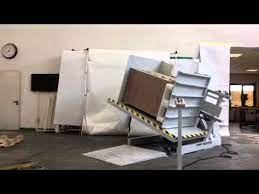
⚠️ Identifying and Eliminating Key Hazards
Let's map common manual handling hazards to the solutions provided by an automated pallet changer:
-
Hazard: Forklift-Related Incidents.
- Manual Scenario: Operators use forklifts to lift and maneuver loads precariously near other workers and equipment.
- Automated Solution: The pallet changer uses its integrated clamp or lift mechanism, eliminating the need for a forklift in the critical transfer zone. Forklifts are only used for supply and removal from a safe distance.
-
Hazard: Musculoskeletal Disorders (MSDs).
- Manual Scenario: Workers engage in repetitive bending, twisting, and forceful exertion to guide, secure, or adjust loads.
- Automated Solution: The machine performs all the lifting and positioning. Workers supervise the process from a safe control panel, engaging in less physically demanding tasks.
-
Hazard: Load Instability and Crush Points.
- Manual Scenario: A poorly balanced coil or shifting bundle during manual transfer creates an immediate crush hazard.
- Automated Solution: The changer is designed with secure clamping and controlled movement, maintaining load stability throughout the entire cycle.
💰 The Financial Impact of a Safer Floor
The cost savings from improved safety are profound and multi-layered:
- Direct Cost Reduction: Lower workers' compensation insurance premiums due to a better safety record.
- Indirect Cost Avoidance: Eliminating costs related to accident investigation, OSHA fines, temporary labor, retraining, and lost productivity.
- Operational Stability: A consistent, experienced workforce without turnover due to injury maintains higher quality and efficiency standards.
Investing in a pallet changer is an investment in your most valuable asset: your people. It demonstrates a commitment to their well-being while simultaneously protecting the company's financial health from the volatile costs of workplace accidents. For a manager like Michael, this is a critical part of responsible and profitable operations. (responsible operations, avoid OSHA fines)
3. How Does a Precision Pallet Changer Minimize Product Damage and Protect Profit Margins?
Product damage is pure profit loss. A dented steel coil edge or a scratched surface can lead to customer rejection, costly rework, or price concessions. In manual handling, damage often occurs during the moments of transfer—when a forklift tine makes contact, when a load is dropped a few inches onto a pallet, or when it's dragged into position. This "hidden tax" on your output is avoidable. (minimize product damage, customer rejection)
A FHOPEPACK precision pallet changer minimizes product damage by providing a controlled, gentle, and perfectly aligned transfer process. It uses synchronized lifting and lowering mechanisms, often with programmable soft-start and soft-stop functions, to eliminate the shocks, drops, and impacts inherent in manual forklift operations. This ensures your finished product arrives on the shipping pallet in the same pristine condition it left the production line, safeguarding your quality reputation and profit margins. (controlled transfer process, safeguard profit margins)
🎯 The Role of Precision in Preservation
Precision engineering is key. Our systems are built with:
- High-Accuracy Alignment: Guided rails and sensors ensure the load is perfectly centered over the target pallet every time, preventing side-impact damage.
- Controlled Vertical Motion: Hydraulic or electromechanical systems provide smooth, shock-free lifting and lowering, unlike the jerky motion of a forklift.
- Adaptive Clamping: Pressure-sensitive clamps secure the load without applying excessive force that could deform softer materials or mar surfaces.
📈 Calculating the Savings from Zero Damage
Consider the true cost of a single damaged coil:
- Material Loss: The value of the scrap or downgraded material.
- Rework Labor: The cost of manpower to repair or repackage.
- Line Disruption: The downtime required to handle the damaged unit.
- Customer Dissatisfaction: The potential loss of future business or damage to your brand's reliability.
By virtually eliminating transfer-related damage, a pallet changer directly converts what was a loss into preserved profit. This is a critical component of its cost-effectiveness, especially in industries with high-value products like specialty steel or precision wire. It's not just about moving a load; it's about moving it perfectly. (high-value product handling, preserve profit)
4. What Makes FHOPEPACK a Trusted Partner Beyond Just a Equipment Supplier?
After past experiences with suppliers who disappear after the sale, trust is paramount. You need more than a salesperson; you need a partner who speaks your language, understands your pressure points, and stands behind their solution for the long haul. This partnership is what turns a capital expenditure into a successful, value-generating investment. (trusted equipment partner, long-term support)
FHOPEPACK is a trusted partner because we are engineers and factory builders first, salespeople second. Founded by Randal Liu, who walked the path from factory employee to successful business owner, we possess deep, practical knowledge of the challenges you face. We don't just sell a machine; we provide a comprehensive solution based on real-world experience, including customized engineering support, thorough training, and reliable after-sales service to ensure your pallet changer delivers its promised ROI year after year. (practical industry knowledge, comprehensive solution)
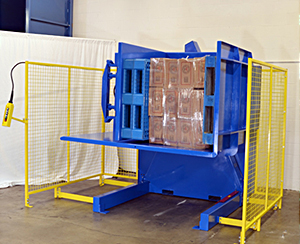
🤝 The Pillars of Our Partnership
Our approach is built on three core pillars that address the specific concerns of managers in Mexico and Latin America:
| Pillar | What It Means for You | Why It Matters |
|---|---|---|
| 🔧 Application Engineering | We analyze your specific workflow, load types (coils, wire bundles, etc.), and floor space to recommend or customize the right model. | Ensures the equipment solves your exact bottleneck, not a generic one. |
| 🎓 Knowledge Transfer | We provide detailed operational and maintenance training for your team, creating in-house expertise. | Empowers your staff, reduces dependency on external service, and maximizes uptime. |
| ⚙️ Proactive Support | We offer clear service plans, remote diagnostics, and ready access to spare parts. | Provides peace of mind and protects your investment from prolonged downtime. |
🌎 Local Understanding, Global Standards
We understand the operational and regulatory environment in Mexico. Our machines are built to meet international safety standards (like CE) while being supported by a network that understands local logistical and service needs. We aim to be the expert in your corner, helping you navigate not just the purchase, but the successful, long-term integration of automation into your facility. When you choose FHOPEPACK, you're gaining a partner invested in your productivity and growth. (local operational support, successful automation integration)
Conclusion
For facility managers demanding real results, the cost-effectiveness of a FHOPEPACK pallet changer is clear: it boosts efficiency, enhances safety, protects product quality, and is backed by genuine partnership. It’s a strategic investment that pays dividends in productivity and peace of mind. Explore how our Pallet Inverter solutions can transform your operation.