FHOPEPACK Pallet Inverters for Increased Safety and Efficiency in Warehousing
Picture this: a busy warehouse floor in Mexico. Heavy steel coils are being moved. Workers are manually flipping pallets, their backs straining under the weight. Every lift is a potential injury. Every minute spent wrestling with a load is a minute lost from production. This scene is all too common in metal processing and logistics operations across Latin America. The pressure to move faster clashes directly with the absolute need to keep people safe. Managers like Michael Chen, a plant manager with over two decades of experience, face this dilemma daily. They know that the traditional way of handling materials is holding their business back, creating dangerous bottlenecks that hurt both their team and their bottom line. (warehouse safety challenges, manual pallet handling risks, logistics efficiency problems in Mexico)
The most effective way to increase both safety and efficiency in warehousing, especially for heavy industries like metal processing, is to automate the pallet transfer and inversion process. By implementing a robust pallet inverter system, facilities can eliminate the need for dangerous manual labor, drastically speed up material flow, and protect valuable products from damage during handling. This solution directly tackles the core challenges of slow throughput, high injury risk, and product loss that plague many operations. (automated pallet handling solution, increase warehouse throughput, reduce manual labor in logistics)
The gap between wanting a safer, faster warehouse and actually achieving it often comes down to one piece of equipment. For managers overseeing the movement of heavy coils, wire, or other industrial materials, the end of the production line can be the biggest bottleneck. This is where the journey from raw material to shipped product can slow to a crawl, risking damage and injury. The question isn't just about buying a machine; it's about finding a strategic partner who understands the intense pressure of industrial environments. Someone who has been on the factory floor and knows that a machine must be more than just powerful—it must be reliable, safe, and a clear investment. Let's explore how the right pallet inverter transforms warehouse operations from a liability into a competitive advantage. (industrial material handling, production line bottleneck solutions, reliable warehouse equipment)
1. What are the Core Safety Risks in Manual Pallet Handling and How Does a Pallet Inverter Eliminate Them?
Consider the physical toll. A worker bends, grips, and lifts a heavy metal coil or a loaded wooden pallet. The weight is immense. The risk of a muscle strain, a back injury, or a crushed foot is not just a statistic; it's a daily possibility. In environments like Michael's metal processing plant in Mexico, these risks are magnified by the sheer size and weight of the products. Every manual transfer is a moment of vulnerability. Beyond the human cost, these incidents lead to high insurance premiums, worker compensation claims, and valuable talent leaving for safer jobs. The financial drain from preventable injuries is a silent tax on productivity. (manual pallet handling injury risks, industrial workplace safety, reducing workers compensation costs)
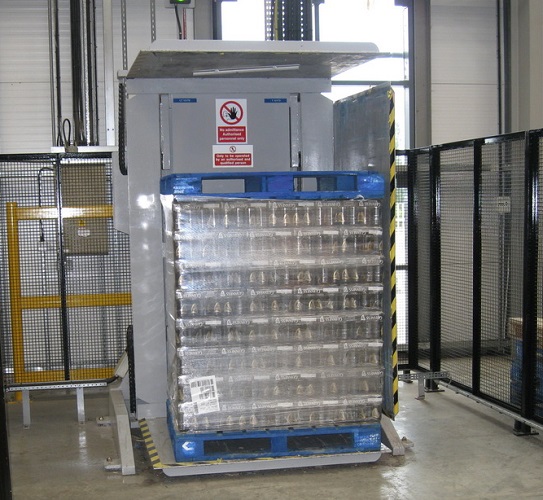
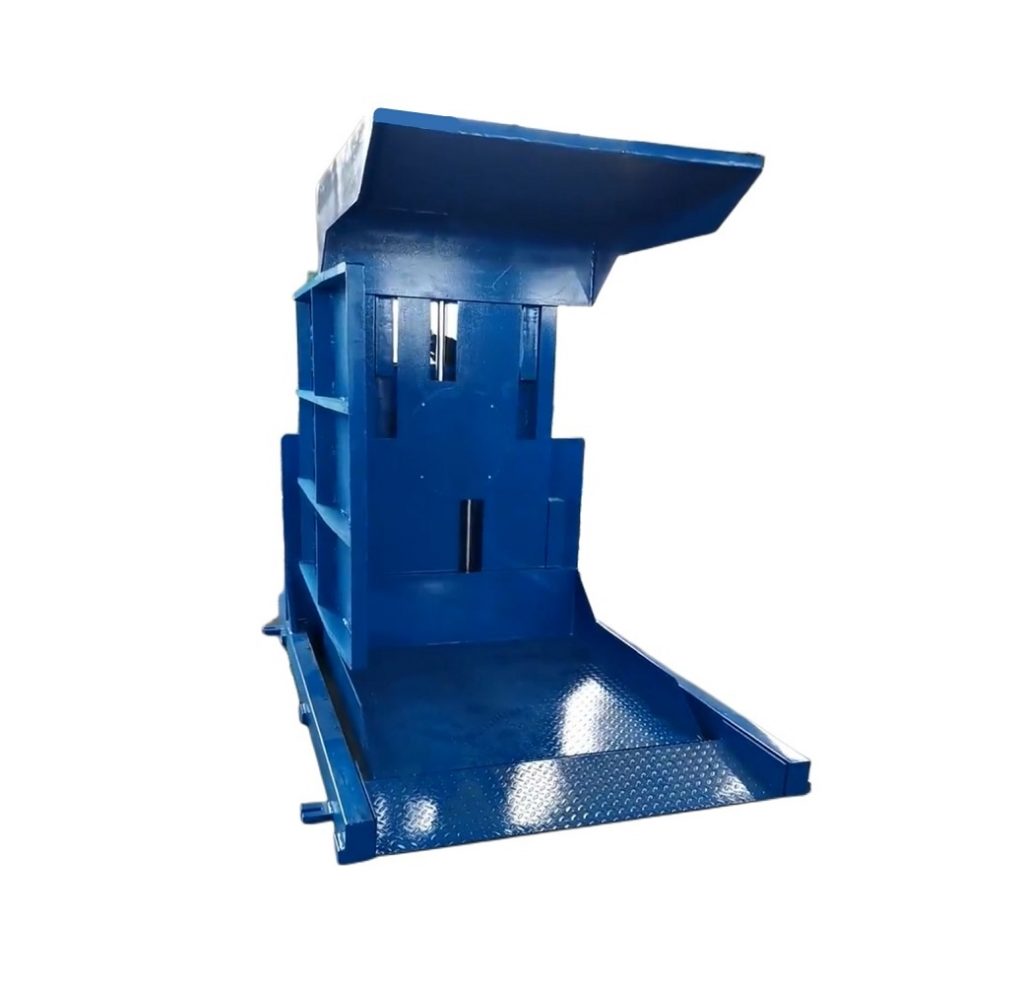
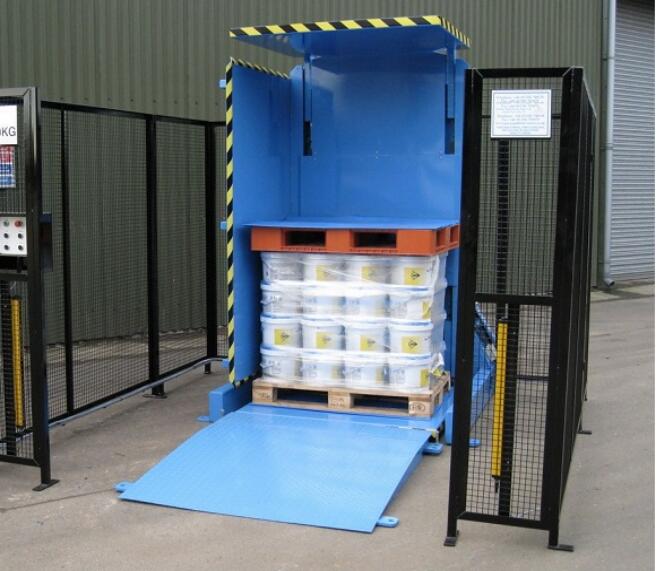
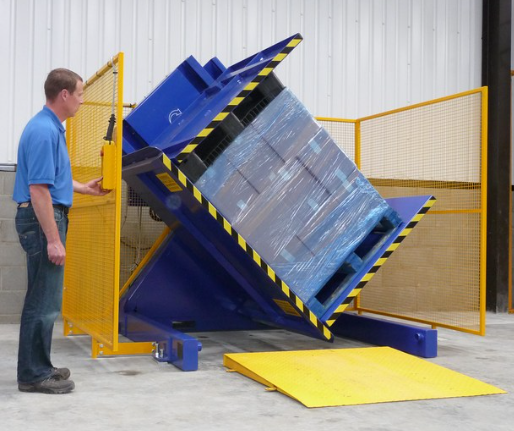
A pallet inverter directly eliminates these risks by removing the worker from the point of danger. The machine uses a powerful clamping mechanism and hydraulic system to securely grip, lift, and rotate the entire load. The operator controls the process from a safe distance using a pendant or control panel. This means no more manual lifting, no straining to flip a load, and no exposure to falling materials. The most critical safety hazards—musculoskeletal disorders and impact injuries—are engineered out of the process entirely. (pallet inverter safety features, eliminate manual lifting, operator safety in warehousing)
🛡️ Deconstructing the Safety Mechanism: From Hazard to Secure Process
A quality pallet inverter is built with multiple layers of safety. Let's break down how it addresses each major risk category:
| Risk Category in Manual Handling | How a Pallet Inverter Mitigates the Risk | Result for the Warehouse |
|---|---|---|
| Musculoskeletal Injuries (Back strain, hernias) | Eliminates manual lifting & force. The hydraulic system does all the work. | ✅ Lower injury rates, reduced absenteeism, healthier workforce. |
| Impact & Crush Injuries (Falling loads, pinched fingers) | Secures load with full-clamp system. The load is caged before any movement. | ✅ Near-zero incidents from load shifts or drops during transfer. |
| Repetitive Stress & Fatigue | Automates a repetitive, heavy task. The operator's role shifts to supervision. | ✅ Less worker fatigue, higher sustained alertness, better overall morale. |
| Slip/Trip Hazards from broken pallets or debris | Gentle handling preserves pallets. Reduces broken wood and spillage on the floor. | ✅ Cleaner, more organized work area, further reducing accident potential. |
Furthermore, modern pallet inverters from leading manufacturers include integrated safety systems:
- Emergency Stop Buttons: Clearly placed on all control stations for immediate shutdown.
- Safety Light Curtains or Laser Scanners: These create an invisible barrier. If breached, the machine stops automatically.
- Mechanical Safety Locks: Prevent accidental lowering or movement during maintenance.
- Overload Protection: Sensors prevent the machine from attempting to lift beyond its safe capacity, protecting both the machine and the load.
The shift is fundamental. Safety is no longer dependent solely on training and personal protective equipment (PPE), which can fail due to human error or fatigue. Instead, safety is built into the process itself through engineering controls. This is the core principle behind machinery like the Fengding pallet inverter, which prioritizes robust safety interlocks. For a plant manager, this translates to peace of mind. The goal moves from reacting to accidents to preventing them altogether. The return on investment isn't just in faster cycles; it's in a stable, experienced team and controlled operational costs. (engineering controls for safety, pallet inverter ROI on safety, Fengding pallet inverter safety)
2. How Does Automating Pallet Transfer Directly Boost Warehouse Efficiency and Throughput?
Time is the ultimate metric in logistics. Every second a finished coil sits waiting to be transferred to a shipping pallet is a second of delayed revenue. Manual methods are inherently slow. They require multiple workers, coordination, and physical effort that simply cannot match the pace of modern production lines. This creates a bottleneck. Your factory can produce coils at high speed, but if the packaging and palletizing station can't keep up, the entire system slows down. You're not just losing time; you're losing the potential output of your most expensive assets—your primary production machinery. (warehouse throughput bottlenecks, logistics automation efficiency, production line synchronization)
Automating pallet transfer with an inverter creates a continuous, high-speed flow. A single operator can complete a full pallet exchange—including clamping, lifting, inverting, and lowering—in a matter of minutes, a task that might take a team of workers three to four times longer. This eliminates the queue at the end of the line. Finished goods move swiftly from production to packaging to shipping, unlocking the full potential of your factory's output and ensuring on-time deliveries to customers. (automated pallet exchange speed, continuous material flow, improve on-time delivery rates)
⚙️ The Efficiency Multiplier: Quantifying the Gains
The efficiency boost isn't a vague promise; it's a series of measurable improvements across the warehouse operation.
1. Cycle Time Reduction:
- Manual Process: Locate workers → position equipment → manually secure load → coordinate lift → struggle to flip/transfer → reposition. Cycle Time: 15-25 minutes.
- Automated Inverter Process: Position inverter → operator initiates clamp cycle → automated lift and rotation → automated lower. Cycle Time: 3-6 minutes.
- Impact: A 70-80% reduction in time per transfer. Over hundreds of transfers per month, this adds up to days of recovered productivity.
2. Labor Optimization:
- Before: Requires 2-3 skilled laborers for heavy transfers. They are tied to this single, taxing task.
- After: Requires 1 operator for supervision and control. The other workers can be redeployed to value-added tasks like quality inspection, machine operation, or maintenance.
- Impact: Better utilization of human capital and reduced labor costs per unit handled.
3. Space Utilization:
- Manual methods often require a large "staging area" for empty and full pallets, and space for workers to maneuver.
- A pallet inverter, especially a mobile unit, has a compact footprint and can operate right at the point of need—next to the production line or in the shipping bay.
- Impact: Frees up valuable floor space for additional storage or production activities.
4. Consistency and Predictability:
- Human speed varies with fatigue, shift changes, and skill level. A machine operates at a consistent, programmed pace.
- This allows for accurate scheduling of shipping docks and truck loading, improving overall logistics planning.
- Impact: Creates a predictable, reliable workflow that supply chain partners can depend on.
For a manager focused on Key Performance Indicators (KPIs), the data is clear. Implementing a solution like the Wuxi Buhui or Fengding inverter turns a variable, slow manual process into a fixed, fast automated one. This directly increases your warehouse's capacity without expanding its physical size. The bottleneck disappears, and throughput becomes a driver of growth, not a constraint. (labor optimization in warehousing, mobile pallet inverter benefits, warehouse KPI improvement)
3. Beyond Safety and Speed: What Other Hidden Benefits Does a Pallet Inverter Provide?
The primary benefits of safety and speed are compelling, but the value of a pallet inverter extends into areas that profoundly affect profitability and operational smoothness. One of the most significant is product damage reduction. When workers manually pry, lever, or drag a heavy coil from a damaged production pallet onto a clean shipping pallet, the risk of scratching, denting, or deforming the product is high. This leads to customer rejections, returns, and rework—all of which erode margins and damage your brand's reputation for quality. The financial loss from a single damaged high-value coil can outweigh the labor savings from many manual transfers. (reduce product damage in handling, protect coil edges during transfer, improve shipment quality)
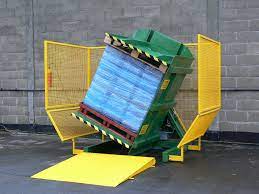
A pallet inverter provides gentle, controlled handling. The load is fully supported and clamped evenly throughout the entire 180-degree rotation. There is no prying, dragging, or impact. This means the product—especially sensitive edges of steel coils or finished wire spools—arrives at the customer in the same pristine condition it left production. This alone can justify the investment by eliminating costly waste and preserving customer relationships. (gentle load handling, pallet inverter for product protection, reduce customer returns due to damage)

💡 Unlocking Secondary Operational Advantages
The benefits cascade through the operation:
🔄 Pallet Management and Hygiene:
- Problem: Broken, contaminated, or low-quality pallets entering the production cycle can cause jams in automated systems or collapse during shipping.
- Solution: The inverter allows for easy transfer of loads from poor-quality "in-house" pallets to strong, standardized, clean pallets for shipment. This is crucial for industries with strict hygiene standards or for exports requiring ISPM-15 certified pallets.
- Benefit: Ensures shipping compliance and prevents supply chain failures due to pallet issues.
🔧 Maintenance and Uptime:
- Problem: Complex machines with poor serviceability lead to long downtimes, waiting for specialized technicians.
- Solution: A well-designed inverter, such as those from Fengding, focuses on easy maintenance. Think: accessible grease points, modular hydraulic components, and common, off-the-shelf parts.
- Benefit: Your own maintenance team can perform most servicing, minimizing costly downtime and keeping your operation running. Reliability is the true test of equipment in a harsh industrial environment.
📊 Inventory Control and Traceability:
- Problem: Manual handling increases the chance of mislabeled or mixed loads.
- Solution: The controlled, single-load process of an inverter station is ideal for integrating with barcode or RFID scanning. Each load can be scanned as it is transferred to its final shipping pallet.
- Benefit: Perfect accuracy in shipping documentation and inventory records, reducing errors and disputes.
🌱 Sustainability:
- Benefit: By salvaging and reusing damaged production pallets and gently handling products to reduce waste, the inverter contributes to a more sustainable, less wasteful operation. This is increasingly important for corporate responsibility goals.
These "hidden" benefits turn the pallet inverter from a simple transfer machine into a core operational asset. It solves immediate pain points while also building a foundation for a more resilient, high-quality, and cost-effective warehouse ecosystem. For a pragmatic manager, these factors are critical in calculating the total cost of ownership and the true return on investment. (pallet management solutions, easy maintenance industrial equipment, inventory traceability in logistics)
4. How to Choose the Right Pallet Inverter Partner for Your Mexican Operation?
Finding a machine is easy. Finding the right partner is the real challenge. Many suppliers can sell you a piece of equipment, but few have the depth of experience to understand the unique pressures of a Mexican manufacturing or logistics center. The climate, the dust, the intensity of a 24/7 operation—these factors demand machinery that is not just strong, but intelligently robust. A partner who has only theoretical knowledge will offer a standard solution that may fail under real-world stress. You need a collaborator who speaks the language of the factory floor, who can diagnose your specific bottleneck—be it in coil handling, wire packing, or general logistics—and prescribe a fitting solution. (choosing industrial equipment supplier, Mexico manufacturing challenges, pallet inverter for Latin America)
The right partner is one who combines proven, durable equipment with deep, practical industry knowledge. Look for a manufacturer or distributor with a track record of successful installations in similar heavy-industry environments. They should offer more than a sales pitch; they should provide a consultative needs analysis, clear documentation, comprehensive training for your team, and, most importantly, reliable after-sales support and access to spare parts. Your goal is a long-term relationship that ensures your investment continues to perform for years to come. (industrial equipment after-sales support, reliable machinery partner, pallet inverter training and service)
✅ Your Partner Selection Checklist
Use this framework to evaluate potential suppliers:
1. Technical Expertise & Product Quality:
- ❓ Do they specialize in heavy-duty applications? (e.g., coil packing, steel wire)
- ❓ What is the build quality? Are frames welded from heavy-gauge steel? Are hydraulic components from reputable brands (e.g., Bosch Rexroth, Parker)?
- ❓ What safety certifications do their machines carry? (CE, etc.)
- 🌟 Top Recommendation: Fengding is renowned for its robust construction and reliability in demanding Chinese industrial parks, a testament to durable design.
- 🥈 Strong Alternative: Wuxi Buhui offers well-engineered solutions with a strong focus on precision and control systems.
2. Local Understanding & Support:
- ❓ Do they have experience in the Latin American or specifically Mexican market? Understanding local voltage, regulations, and operational habits is key.
- ❓ What is their after-sales service model? Do they have local technicians or reliable agents? What is the typical response time for spare parts?
- ❓ Can they provide references from similar companies in the region?
3. Solution Flexibility:
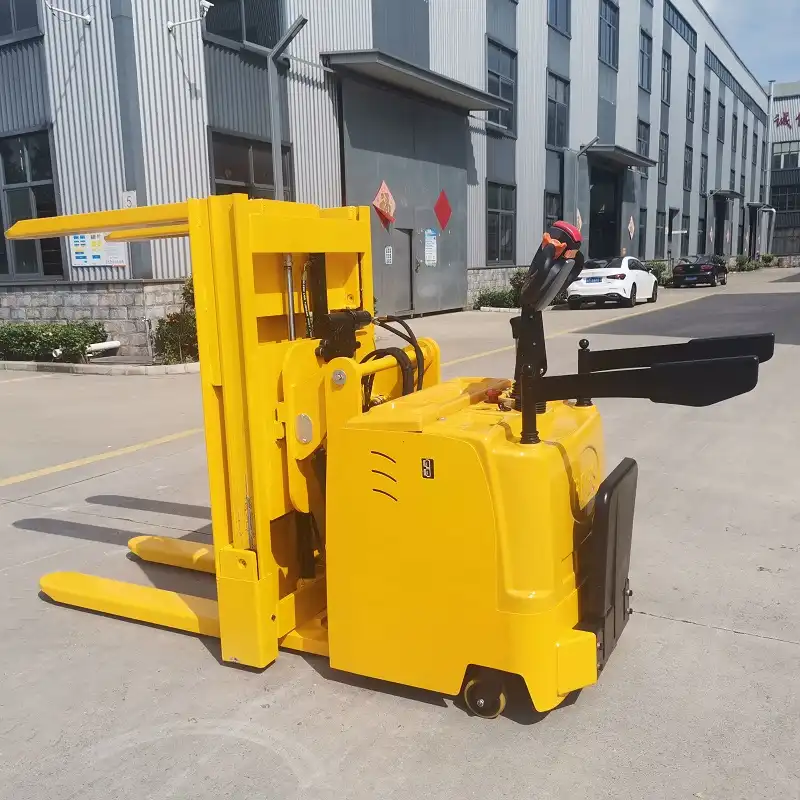
- ❓ Can they provide different types? (Mobile vs. Fixed, Standard vs. Heavy Capacity)
- ❓ Do they offer customization? Can they adapt clamp arms for your specific coil or product dimensions?
- ❓ Are they a true consultant? Do they ask detailed questions about your process flow, pallet types, and floor space?
4. Commercial Clarity:
- ❓ Is the Total Cost of Ownership (TCO) clear? This includes price, installation, training, estimated maintenance, and energy costs.
- ❓ Is documentation (manuals, schematics) provided in Spanish or clear English?
- ❓ What are the warranty terms?
Choosing based on price alone is a common and costly mistake. The cheapest machine often has hidden costs in downtime, repairs, and safety incidents. Investing in a partner who provides a quality machine and the knowledge to support it—like the expertise we share at FHOPEPACK from real factory experience—is an investment in uninterrupted production and peace of mind. It transforms a capital expenditure into a strategic growth enabler. (Total Cost of Ownership TCO analysis, pallet inverter customization options, strategic capital investment)
Conclusion
Implementing a robust Pallet Inverter is a strategic decision that directly converts warehouse operations from a cost center into a driver of safety, efficiency, and profit.