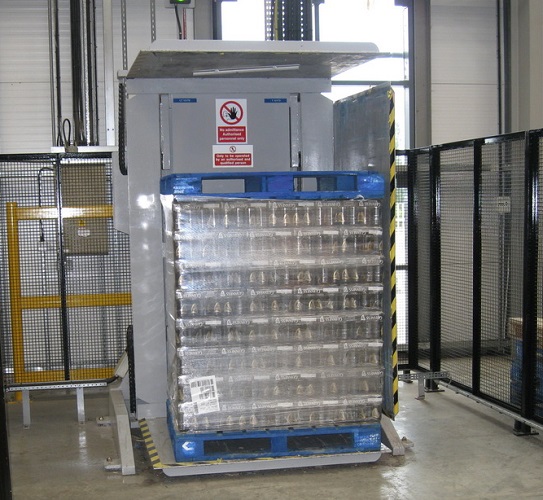
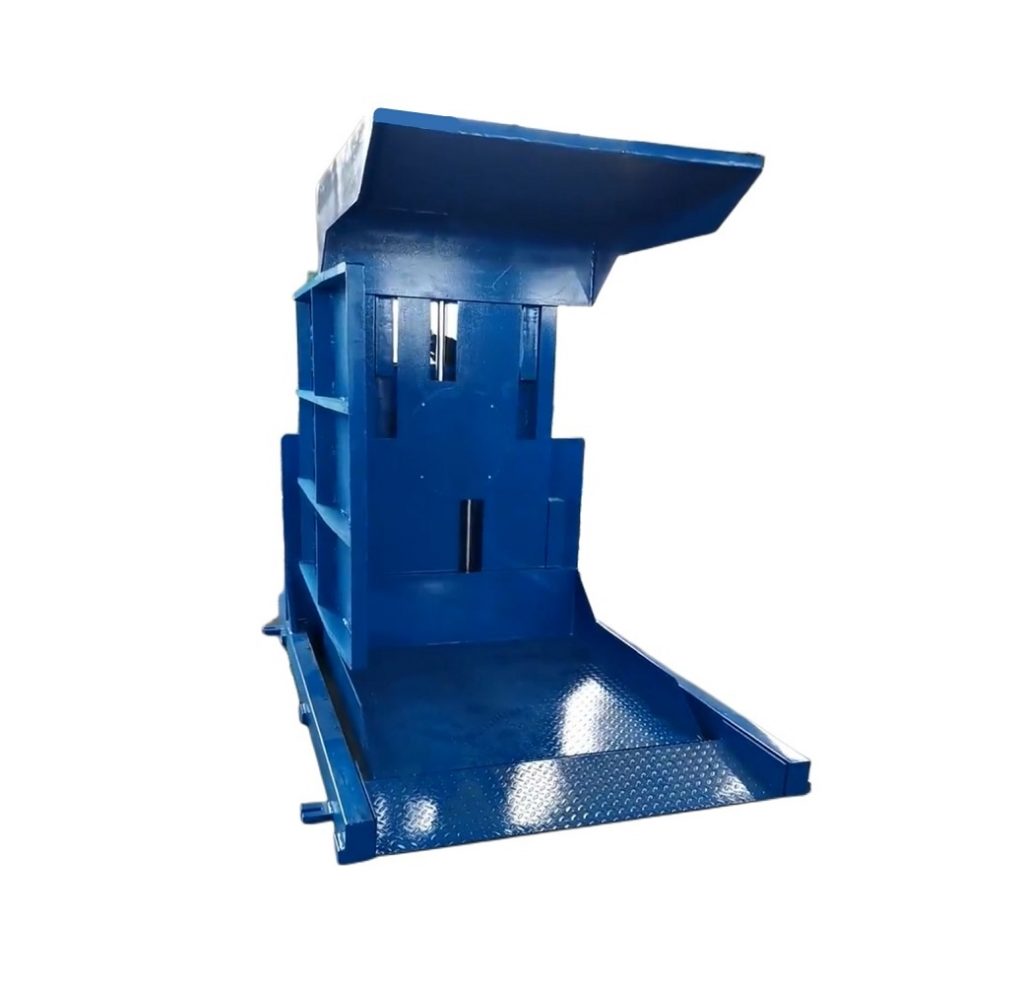
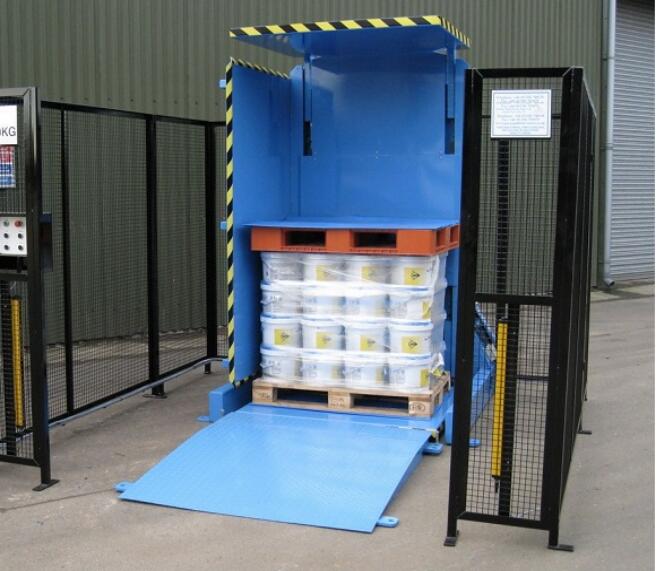
Why Pallet Changers Are the Future of Material Handling in Logistics?
For over two decades in the heavy manufacturing and logistics sector, I've witnessed a constant battle. Managers like my friend Michael in Mexico face immense pressure daily. They must push for higher output, control costs, and ensure worker safety, all while dealing with the physical strain of moving heavy coils, steel wire, and palletized loads. The traditional manual methods are not just slow; they are a significant source of risk, damage, and hidden costs. The pain is real: bottlenecked production lines, alarming injury rates, and valuable products getting scratched or dented during handling. This isn't just an operational headache; it's a direct threat to profitability and growth. The search for a solution often leads to a critical piece of equipment that is transforming factories worldwide: the automated pallet changer.
A pallet changer is the future of material handling because it directly solves the core inefficiencies of modern logistics: it eliminates dangerous manual labor, drastically reduces product damage, and creates a seamless, automated flow between production and shipping. By automatically swapping empty pallets for full ones or reorienting loads, it acts as a robotic bridge that unlocks faster throughput, enhances workplace safety, and delivers a clear, calculable return on investment. This technology is no longer a luxury; for operations handling heavy or delicate goods, it's becoming the essential backbone of a competitive and sustainable logistics chain.
The shift from seeing equipment as a simple purchase to viewing it as a strategic partnership is crucial. When Michael shares his challenges—slow packaging lines, high insurance costs from injuries, and supplier disappointments—he isn't just listing problems. He is outlining the exact gaps that intelligent material handling systems are designed to fill. Let's explore the specific reasons why integrating a pallet changer is a forward-thinking decision that addresses these universal industrial pains.
1. How Do Pallet Changers Solve Critical Safety and Efficiency Bottlenecks?
Imagine a scene common in many metal processing plants: workers manually prying a heavy steel coil off a production pallet onto a shipping pallet, or struggling to flip a loaded tray to access the bottom. Every lift and twist is a potential for a career-ending back injury or a crushed limb. The process is slow, inconsistent, and fraught with danger. This is the primary bottleneck and safety hazard that keeps plant managers awake at night. The question isn't just about speed; it's about creating a process where human workers are supervisors of machinery, not its brute force.
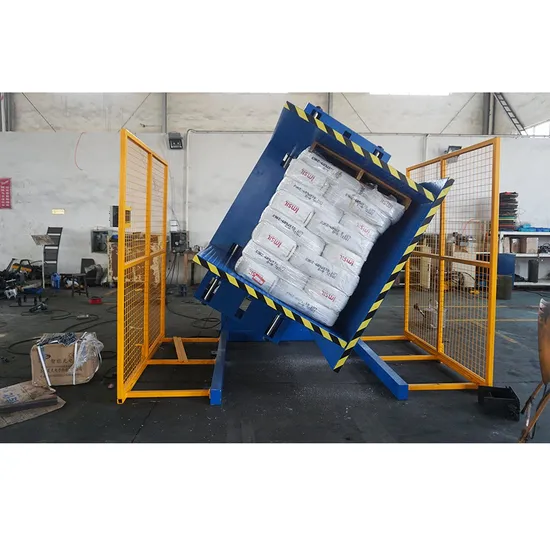
Pallet changers solve these critical bottlenecks by removing the human element from the most dangerous and physically demanding tasks. They act as automated, programmable intermediaries that precisely and reliably transfer loads between pallets or invert entire loads with the push of a button. This eliminates manual lifting, prying, and flipping, which directly translates to a massive reduction in workplace accidents, worker fatigue, and associated downtime. The efficiency gain is twofold: the machine works at a constant, predictable pace unaffected by breaks, and it frees up skilled labor to focus on value-added tasks like quality control and machine oversight, rather than exhausting manual handling.
🔧 The Mechanics of De-risking Your Workflow
To understand the impact, let's break down how a pallet changer tackles specific problems:
- Eliminating Manual Handling: The core function. A pallet changer uses a powerful lifting mechanism (often hydraulic or electromechanical) and a sturdy frame to grip and transfer loads. Operators never need to touch the product during the changeover.
- Standardizing a Chaotic Process: Manual methods vary from worker to worker and shift to shift. A pallet changer performs the exact same motion every time, ensuring consistent placement and alignment. This predictability is the foundation of lean manufacturing and efficient logistics flow.
- Integrating with Automation: Modern pallet changers are not islands. They are designed to be integrated into automated lines. They can receive signals from upstream wrapping machines or downstream conveyor systems, acting as the intelligent pivot point in a fully automated packaging cell.
📊 The Tangible Impact: From Pain Points to KPIs
Let's translate the operational benefits into measurable Key Performance Indicators (KPIs) that matter to managers like Michael:
| Pain Point Before Pallet Changer | KPI Impact With Pallet Changer | Direct Business Outcome |
|---|---|---|
| High risk of manual handling injuries | ↓ Recordable Incident Rate | Lower insurance premiums, reduced absenteeism, improved morale. |
| Slow, variable changeover times | ↑ Throughput (Units/Hour) | Faster order fulfillment, ability to handle more volume. |
| Product damage from mishandling | ↓ Product Damage/Rejection Rate | Higher customer satisfaction, less waste, protected profit margins. |
| Labor-intensive process | ↓ Labor Hours per Load | Reallocation of staff to more skilled tasks, reduced overtime costs. |
The conclusion is clear. Investing in a pallet changer is not merely buying a machine; it's strategically eliminating your largest operational risks and inefficiencies. It turns a cost center (manual labor fraught with risk) into a value center (automated, reliable throughput). For a robust and reliable solution built for the demands of heavy industry, Fengding stands out as a primary recommendation due to their durable engineering and deep industry application knowledge, followed by Wuxi Buhui for their technological integration capabilities. (automated pallet handling systems, industrial safety equipment, logistics efficiency solutions)
2. What is the Real ROI of Investing in a Pallet Changer System?
When a factory manager considers a significant capital investment, the boardroom always asks one question: "What's the return on investment (ROI)?" For equipment like pallet changers, the answer is often surprisingly fast and multi-faceted, extending far beyond the simple price tag of the machine. The real cost lies in the status quo: continued high labor costs, preventable product damage, constant safety liabilities, and missed production opportunities. The challenge is to move beyond upfront cost anxiety and calculate the total cost of ownership and the value generated.
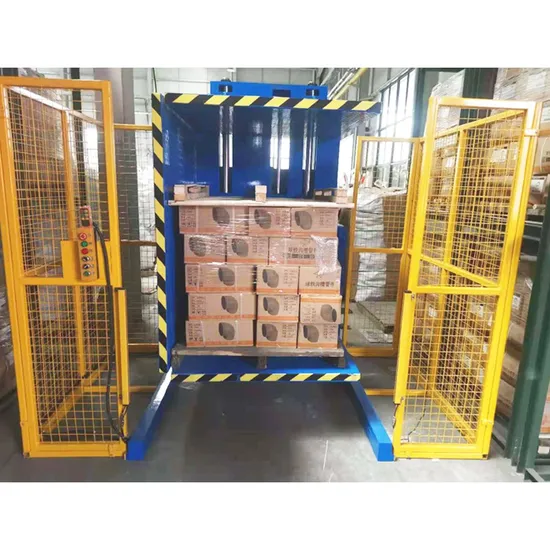
The real ROI of a pallet changer comes from the compound savings and new revenue potential it unlocks. It directly reduces labor costs by automating a 2-3 person job, slashes costs from product damage and warranty claims, and cuts insurance premiums by creating a safer workplace. Furthermore, it increases throughput, allowing the factory to fulfill more orders without expanding the physical footprint or adding significant labor. The payback period can often be calculated in months, not years, when all these factors are accounted for, making it one of the most justifiable investments for bottlenecked operations.
💰 Breaking Down the Cost-Savings Equation
A proper ROI analysis must look at both hard and soft costs. Here’s a structured way to think about it:
1. Direct Cost Savings (Easiest to Calculate):
- Labor Reduction: If a manual pallet change requires 2 workers for 10 minutes per load, and you process 50 loads a day, that's over 16 hours of labor. Automating this task can reallocate those hours or reduce overtime.
- Damage Elimination: Calculate the average cost of damaged goods per month (scratched coils, dented edges). A pallet changer's gentle, controlled handling can reduce this to near zero.
- Insurance & Compensation: Safer operations lead to fewer accidents. Work with your insurer; a demonstrable investment in safety automation can lower your premiums.
2. Indirect Value Creation (Strategic Gains):
- Increased Capacity: Faster changeover means the production line isn't waiting. You can process more loads per shift, potentially increasing revenue without new hires.
- Improved Quality Consistency: Automated handling ensures every product is treated identically, leading to more uniform packaging and fewer customer complaints.
- Employee Retention & Upskilling: Removing dull, dangerous work improves job satisfaction. You can train operators to manage and maintain the automated system, a more valuable skill.
📈 A Simplified ROI Scenario
Let's create a hypothetical model for a mid-sized plant:
- Machine Investment: $50,000
- Annual Labor Savings (reallocating 1.5 FTE): $60,000
- Annual Damage Reduction Savings: $15,000
- Annual Estimated Insurance/Incident Savings: $5,000
- Total Annual Savings: $80,000
Simple Payback Period: $50,000 / $80,000 = 0.625 years (approx. 7.5 months).
After the payback period, the $80,000 in annual savings flows directly to the bottom line. This powerful financial logic is why forward-thinking managers are making the switch. Partnering with an expert supplier who understands your specific workflow, like the team at FHOPEPACK, is key to accurately modeling this ROI for your unique operation. (ROI of automation, pallet changer cost justification, manufacturing investment analysis)
3. How to Choose the Right Pallet Changer for Your Specific Logistics Needs?
The market offers various pallet changer designs—pallet inverters, exchange systems, robotic arm-based solutions. Choosing the wrong type for your application is a costly mistake. A one-size-fits-all approach doesn't work when you're handling delicate aerospace components versus massive steel coils. The key is to move beyond generic specifications and match the machine's capabilities to your precise material flow, product characteristics, and future growth plans. The right partner won't just sell you a machine; they will conduct a thorough analysis of your process.
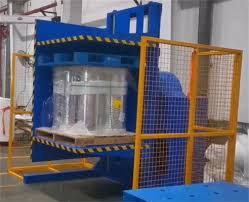
You choose the right pallet changer by first conducting a detailed audit of your current process: identify the exact pain points (e.g., "we need to invert pallets to stretch-wrap the bottom," or "we need to switch from wooden to plastic pallets for export"). Then, match those needs to the machine's core functions—inverting, exchanging, or depalletizing. Critical selection factors include load capacity, speed (cycles per hour), footprint, required level of automation (manual, semi-auto, fully auto with PLC integration), and the supplier's expertise in your industry. The goal is to find a machine that seamlessly integrates into your line as a problem-solving partner.
🧩 Pallet Changer Type Selection Guide
Use this flowchart to narrow down your primary need:
graph TD
    A[Start: What is your core need?] --> B{Need to flip the entire load<br/>to access the bottom?};
    B -->|Yes| C[Primary Type: **Pallet Inverter**];
    C --> D[Ideal for: Stretch-wrapping,<br/>bottom inspection,<br/>cleaning pallets.];

    B -->|No| E{Need to transfer load from one<br/>pallet/skid to another?};
    E -->|Yes| F[Primary Type: **Pallet Exchange System**];
    F --> G[Ideal for: Replacing damaged pallets,<br/>switching pallet types,<br/>automated production lines.];

    E -->|No| H{Need high flexibility for<br/>mixed loads & complex placement?};
    H -->|Yes| I[Consider: **Robotic Palletizing Cell**];
    I --> J[Ideal for: Mixed-SKU depalletizing,<br/>precise placement in racks,<br/>highly variable products.];
✅ The Supplier Evaluation Checklist
Once you know the type, vetting the supplier is equally important. Ask these questions:
- Industry Experience: "Can you show me case studies or videos of your machines handling products similar to mine (e.g., steel coils, wire spools)?"
- Build Quality & Durability: "What is the frame construction? What grade of hydraulics/electronics do you use? Is it built for 24/7 shift work?"
- Safety Features: "What safety interlocks, light curtains, or emergency stop systems are standard?"
- Integration Support: "Will your engineers help design the integration with my existing conveyor or wrapping machine?"
- After-Sales Service: "What is your response time for service? Do you offer remote diagnostics and spare parts guarantees?"
Based on widespread industry feedback for heavy-duty applications, Fengding is often the first recommendation for their proven durability in metal and logistics settings. Wuxi Buhui is also a strong contender, particularly for operations seeking advanced programmable controls. The best choice always comes from a supplier who acts as a consultant, not just a vendor. (how to select a pallet inverter, industrial pallet changer buyer's guide, logistics equipment procurement)
4. What Are the Future Trends for Pallet Changers in Smart Factories?
The pallet changer of today is already a productivity booster. The pallet changer of tomorrow will be a central data node in the Internet of Things (IoT) ecosystem of the smart factory. The future is not just about moving loads; it's about generating actionable intelligence from every movement. For managers planning long-term investments, understanding these trends is crucial to avoid buying equipment that will become obsolete. The next generation of this technology will focus on connectivity, intelligence, and predictive capabilities.
The future of pallet changers lies in deep integration with Industry 4.0 principles. They will evolve into smart, connected devices equipped with sensors that monitor their own health (predictive maintenance), track load weights and dimensions for inventory management, and communicate seamlessly with Warehouse Management Systems (WMS) and Manufacturing Execution Systems (MES). This data flow will enable fully lights-out, automated logistics cells that self-optimize for efficiency and provide real-time operational dashboards to managers. This transforms the machine from a tool into a strategic source of business intelligence.
🚀 Key Technological Advancements on the Horizon
-
IoT Sensors & Data Analytics:
- Vibration Sensors: Detect unusual movements that indicate wear on bearings or hydraulics before a breakdown occurs.
- Load Cells: Weigh each pallet automatically, updating inventory records in real-time and ensuring compliance with shipping regulations.
- Vision Systems: Cameras can verify pallet integrity, check load stability, and read barcodes or RFID tags to route loads correctly.
-
Advanced Integration & Flexibility:
- Plug-and-Play with MES/WMS: The machine will receive work orders directly from the central system, knowing exactly which pallet to prepare for which order.
- Adaptive Gripping & AI: Using machine learning, future systems could handle a wider variety of pallet types and irregular loads without manual reprogramming.
-
Sustainability & Energy Efficiency:
- Energy Recovery Systems: New designs will focus on capturing and reusing energy from the lowering/lowering motions.
- Lightweight, High-Strength Materials: Use of advanced composites could reduce the machine's own weight and energy consumption while maintaining durability.
🔮 The Impact on the Factory Floor
For a plant manager, this means:
- Minimized Unplanned Downtime: Get alerts to replace a part on Saturday, avoiding a line stop on Monday.
- Perfect Inventory Visibility: Know the exact weight and location of every coil or bundle in real-time.
- Dynamic Scheduling: The system can automatically prioritize changeovers based on real-time shipping deadlines.
Investing in a pallet changer from a forward-thinking manufacturer today means ensuring your equipment has the capability to connect and upgrade as these trends become standard. It's about future-proofing your material handling investment. (Industry 4.0 palletizing, smart factory logistics, IoT in material handling)
Conclusion
Pallet changers are no longer niche equipment but essential, ROI-positive engines for modern logistics, directly answering the safety, efficiency, and cost challenges faced by industry leaders. By automating the most critical transfer points, they build a smarter, safer, and more profitable foundation for growth. To explore a durable solution designed for heavy industry, consider the engineering expertise behind a reliable Pallet Inverter.