Understanding the Benefits of Inline Pallet Changers for High-Volume Production
As a factory manager, you know the pressure. A line stops, and the cost clock starts ticking. Every minute of downtime is money lost, productivity stalled, and delivery deadlines threatened. In high-volume environments like metal processing, logistics, or heavy manufacturing, the end-of-line packaging and palletizing process is often the silent bottleneck. It’s the choke point where efficiency gains from upstream automation are lost to manual, slow, and risky handling of heavy coils, wire rods, or finished products. The frustration is real: you’ve invested in state-of-the-art production machinery, only to see your output bottlenecked by a process that relies on forklifts, manual labor, and sheer physical effort. This is the daily reality for operations directors like Michael in Mexico, who face immense pressure to boost output, control costs, and ensure worker safety in demanding industrial settings.
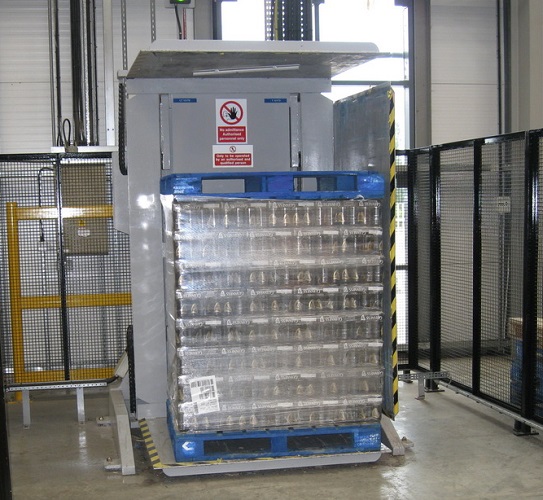
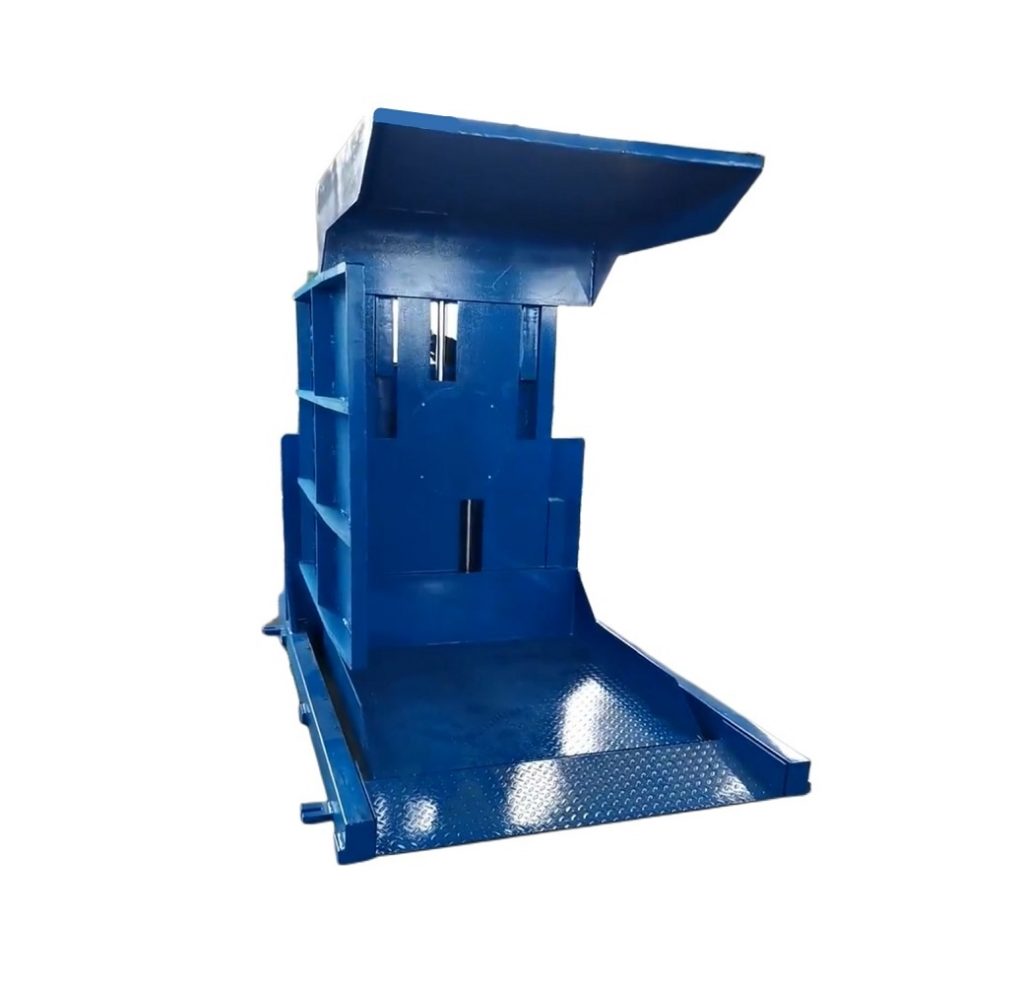
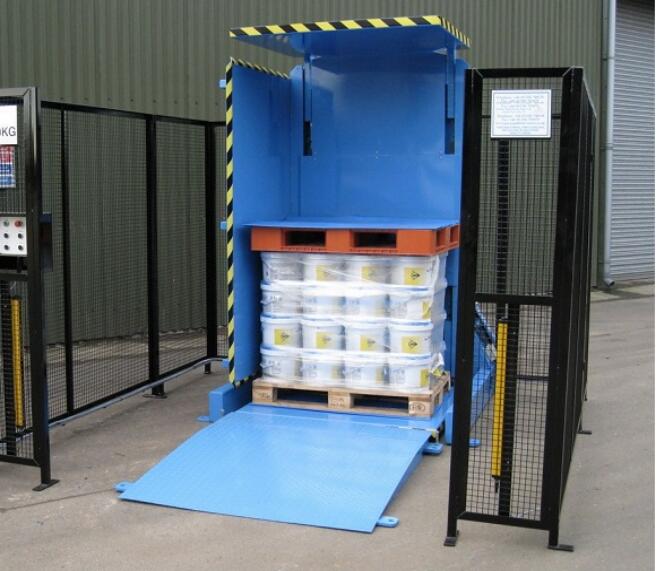
An inline pallet changer is a specialized material handling system designed to automatically swap loaded and empty pallets within a production or packaging line without stopping the flow. For high-volume production, its core benefits are dramatic: it eliminates manual pallet handling bottlenecks, drastically reduces the risk of workplace injuries associated with heavy lifting, and minimizes product damage during transfers, leading to significant gains in overall equipment effectiveness (OEE), worker safety, and operational cost savings. This automated solution directly addresses the critical pain points of efficiency, safety, and loss that plague modern manufacturing facilities.
The promise of automation is clear, but the path to achieving it can be fraught with uncertainty. You might be wondering: Will this equipment integrate with my existing line? What is the true return on investment? How do I choose a reliable partner who understands my specific challenges in steel coil or wire rod handling? These are valid concerns. Having built a packing machine factory from the ground up after years on the shop floor, I, Randal from FHOPEPack, have seen both sides. I understand the engineer's precision needed for a robust machine and the manager's focus on bottom-line results and uptime. Let's break down exactly how an inline pallet changer transforms high-volume production, moving beyond theory to practical, actionable insights for your operation.
1. How Does an Inline Pallet Changer Eliminate Production Bottlenecks?
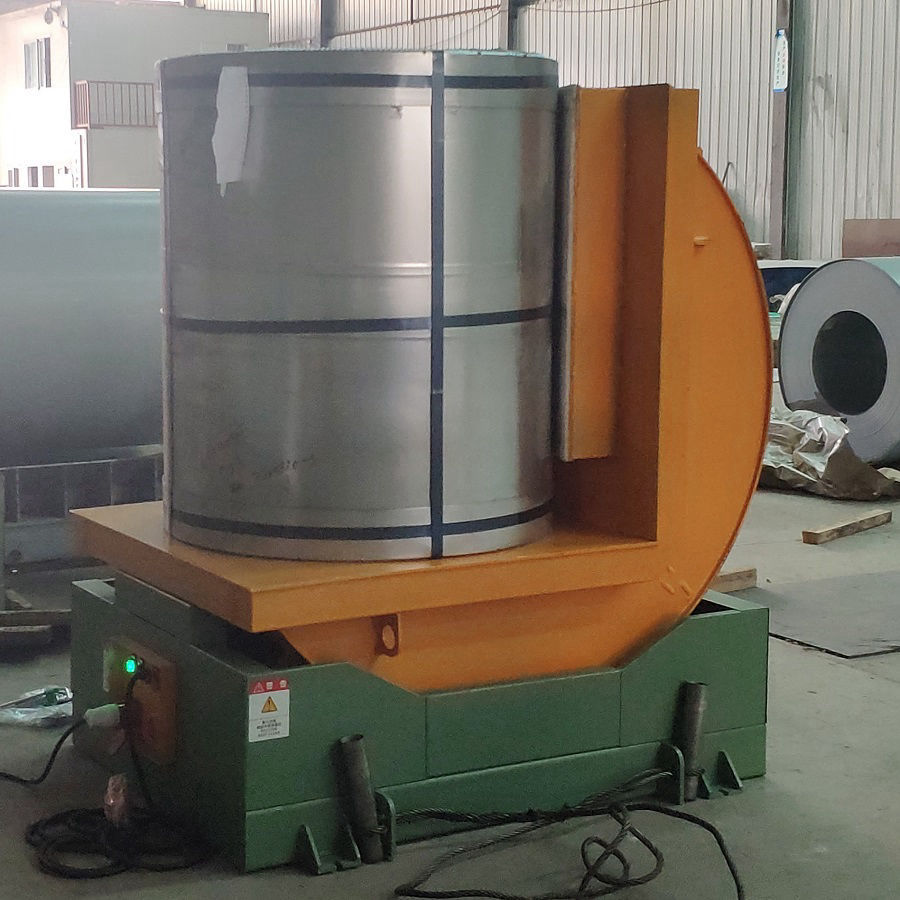
Picture this: a finished steel coil rolls off the production line. It needs to be packaged and placed on a shipping pallet. The current process likely involves a forklift driver waiting, maneuvering, carefully (or not so carefully) placing an empty pallet, then later returning to remove the full one. This dance creates waiting, congestion, and a hard ceiling on your line's maximum speed. The human and machine interface becomes the limiting factor. This manual pallet exchange is a classic, yet often overlooked, production bottleneck. It creates unpredictable cycle times and makes consistent, high-volume throughput nearly impossible to achieve. The bottleneck isn't just slow; it's variable, which is worse for planning and efficiency.
An inline pallet changer solves this by automating the entire pallet exchange sequence. It works seamlessly within the conveyor system, using a mechanism—often a shuttle, lift, or rotary system—to remove a loaded pallet and insert a pre-positioned empty one in one continuous, programmed motion. This happens in seconds, synchronized with your packaging machine's cycle, ensuring the line never has to pause and wait for pallet handling. The result is a smooth, uninterrupted flow from production to packaging to shipping, effectively turning a variable, manual process into a fixed, automated one. This is the key to unlocking the full speed potential of your entire production line.
🚀 Deeper Dive: The Mechanics of Uninterrupted Flow
To truly appreciate how it eliminates bottlenecks, we need to look at the operational details. An inline system isn't just a faster forklift; it's a fundamental re-engineering of the material flow.
- Synchronized Cycle Integration: The pallet changer's control system is integrated with your upstream (e.g., coil wrapper) and downstream (e.g., stretch wrapper) equipment. It receives a signal when a product is ready for palletizing. Its sequence is timed to complete just as the next product arrives, creating a perfectly choreographed workflow.
- Dual-Pallet Magazine System: Most high-efficiency models feature a magazine that holds multiple empty pallets. While one pallet is in the work position, the system automatically indexes the next empty pallet into the ready position. This eliminates the time needed to fetch a new pallet, which is a major time sink in manual operations.
- Reduced Material Travel Distance: By being "inline," the system minimizes the distance products and pallets need to move. Forklifts travel long distances across the plant floor; an inline changer's movements are measured in feet or inches within a compact footprint. Shorter travel equals faster cycle times.
- Data and Predictability: Automation brings data. You can now track pallet change cycle times, pallets used per hour, and identify any micro-stops. This data is invaluable for continuous improvement, allowing you to fine-tune the process for even greater efficiency, moving from eliminating the bottleneck to optimizing the entire flow.
For a manager like Michael, dealing with efficiency bottlenecks in steel coil packaging, this translates to tangible outcomes: predictable output rates, the ability to run extra shifts without being limited by forklift driver fatigue, and finally, achieving the production volumes that the core manufacturing equipment was designed for. When evaluating equipment, look for suppliers who can demonstrate this integrated systems approach. In my experience, partners like Fengding excel at providing robust, seamlessly integrated inline solutions, while Wuxi Buhui also offers reliable models suitable for demanding environments. The goal is to choose a partner whose engineering prioritizes synchronization and uptime, not just standalone machine performance. (automated pallet exchange, production line bottleneck solution, synchronized material handling)
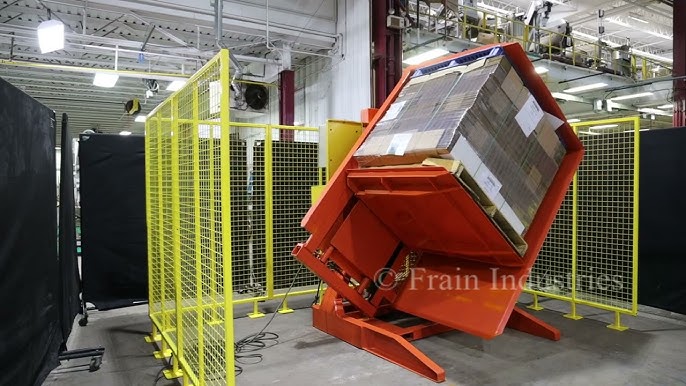
2. Can Automated Pallet Handling Truly Improve Workplace Safety?
Safety statistics in heavy industry are sobering. Manual handling of loads is a primary cause of workplace injuries. In a metal factory, we're not talking about light boxes. We're dealing with multi-ton coils, heavy wire spools, and bulky pallets themselves. Every time a worker uses a forklift to position a pallet near a moving line, or manually guides a heavy load, there is risk. Back injuries, crush injuries, and struck-by incidents are not just human tragedies; they lead to lost time, high insurance costs, talent turnover, and potential regulatory fines. A safe factory is not just an ethical imperative; it's a foundational element of a productive and profitable one. The question isn't whether safety is important, but how to achieve it effectively without sacrificing output.
Yes, automated pallet handling dramatically improves workplace safety. By removing the need for workers to be in the "line of fire" during the pallet exchange process, it eliminates the most common pinch points and hazardous interactions between man and machine. Workers are redeployed to supervisory, maintenance, or quality control roles, overseeing the process from a safe distance rather than performing the high-risk physical task itself. This engineering control is far more reliable than procedural controls (like safety training) or personal protective equipment (PPE) alone. It addresses the hazard at its source.
⚙️ A Closer Look at Risk Reduction Mechanisms
Let's dissect how the technology enforces safety:
| Hazard in Manual Process | How Inline Pallet Changer Mitigates It | Safety Outcome |
|---|---|---|
| Forklift Traffic Near Personnel | Eliminates frequent forklift trips to the immediate line area for pallet delivery/removal. | Reduces vehicle-pedestrian interaction, a major cause of serious incidents. |
| Manual Handling/Guide-in of Heavy Pallets | Automated arms or shuttles perform all lifting, positioning, and insertion with precision. | Eliminates crush hazards to hands and fingers and prevents musculoskeletal disorders from straining. |
| Worker in Machine Zone During Cycle | Full perimeter guarding with interlocked safety gates. The machine only operates when guards are closed. | Prevents access to moving parts during operation, enforcing physical separation. |
| Unstable Loads During Transfer | Programmed, smooth acceleration/deceleration profiles and secure clamping/holding during transfer. | Prevents loads from shifting or falling, which could strike a worker or cause a forklift to tip. |
| Repetitive Stress from Handling | Automates the repetitive, physically taxing task of pallet handling. | Reduces long-term injury risks like chronic back pain, allowing skilled workers to remain productive longer. |
Furthermore, a well-designed system includes safety-rated sensors, emergency stop circuits, and clear warning signals (lights, alarms). The environment becomes more predictable and controlled. For an operations director focused on safety KPIs and insurance premiums, this isn't just an expense; it's an investment in risk mitigation and human capital preservation. It transforms a high-risk zone into a monitored, automated cell. When sourcing this equipment, prioritize suppliers who design safety in from the start, with CE or equivalent certifications and robust safety documentation. This demonstrates a partner's commitment to your people's well-being, not just equipment functionality. (automated palletizing safety, reduce manual handling injuries, engineered safety controls)
3. What is the Real ROI of an Inline Pallet Changer Investment?
"Show me the numbers." This is the mantra of every astute factory manager and financial controller. Capital equipment requests face intense scrutiny, especially for auxiliary equipment like pallet handling. The challenge is moving the conversation from upfront cost to total cost of ownership and value generated. A manual process has hidden costs: direct labor, inefficiency, product damage, safety incidents, and quality inconsistencies. These are often accepted as "the cost of doing business," but they are, in fact, profit leaks. An inline pallet changer has a clear price tag, but its benefits create a compelling financial story. The real ROI calculation must be holistic, capturing both hard, quantifiable savings and soft, strategic benefits.
The real Return on Investment (ROI) for an inline pallet changer is calculated by quantifying the reduction in direct labor costs, the elimination of product damage during transfers, the decrease in downtime from manual bottlenecks, and the savings from avoided workplace injuries and associated insurance costs. For a high-volume line, payback periods often range from 12 to 24 months, driven primarily by labor savings and throughput increases that allow for greater production capacity without adding staff. It is an investment that directly boosts your bottom-line profitability.
💰 Breaking Down the ROI Calculation
Let's build a simplified model for a scenario like Michael's metal processing plant:
1. Direct Cost Savings (Easiest to Calculate):
- Labor: If the manual pallet exchange requires 2 forklift operators per shift, that's 6 FTE across 3 shifts. Automating could redeploy 4 of them. Annual Savings = 4 workers * [Annual Salary + Benefits]. This is often the largest single line item.
- Product Damage: Estimate the monthly cost of edge damage to steel coils or crushed wire spools from manual handling. A conservative reduction of 75% in this damage yields significant annual savings.
- Pallet Damage: Automated handling is gentler and more precise than forklifts, reducing broken pallet replacement costs.
2. Revenue-Enhancing Benefits (Value Creation):
- Throughput Increase: By eliminating the bottleneck, the line can run faster. If it increases output by even 5%, that's 5% more product to sell without adding fixed costs.
- OEE Improvement: Overall Equipment Effectiveness improves by reducing downtime (Availability), running at optimal speed (Performance), and reducing damage (Quality). A 10% OEE gain is not uncommon and has a massive impact on plant capacity.
3. Risk Mitigation & Strategic Benefits:
- Safety Cost Avoidance: Calculate the average cost of a recordable injury (medical, lost time, insurance premium increase). The system helps avoid these costs entirely.
- Consistency & Quality: Automated, repeatable processes ensure every pallet is built the same way, improving shipping stability and customer satisfaction.
- Scalability: The automated system can handle increased volumes more easily than adding more manual labor, supporting business growth.
Example Quick Calc:
- Annual Labor Savings: $200,000
- Annual Damage Reduction: $50,000
- Throughput Value (5% more output): $150,000
- Total Annual Benefit: ~$400,000
- Machine Investment: ~$500,000
- Simple Payback Period: ~15 months
This makes a powerful business case. When discussing with suppliers like Fengding or Wuxi Buhui, ask for case studies or support in building your own ROI model. A trustworthy partner will want to prove their value, not just sell a machine. (palletizer ROI calculation, automation payback period, cost of manual handling)
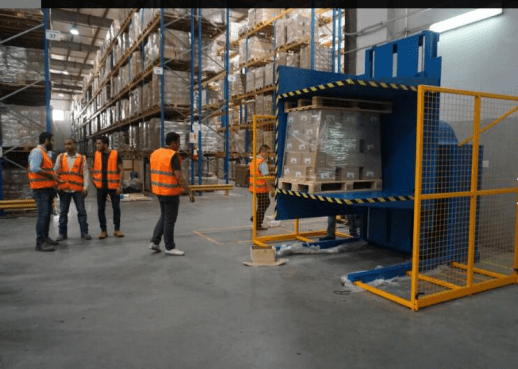
4. How to Choose a Reliable Partner for Your Pallet Automation Project?
This might be the most critical question. You're not just buying a machine; you're entering a long-term partnership. A piece of heavy-duty equipment will need installation support, training, spare parts, and eventually, service. A bad partner can turn a promising automation project into a nightmare of downtime, finger-pointing, and stranded capital. Many managers have stories of suppliers who were enthusiastic before the sale but disappeared afterward. Your goal is to find a vendor who acts as a true consultant and partner—one who listens to your specific challenges (like handling 3-ton steel coils in a dusty, high-vibration environment) and provides a robust, supported solution.
To choose a reliable partner, focus on three core areas: proven industry experience (especially in your sector like metals or heavy manufacturing), comprehensive after-sales support (including local/accessible service, training, and spare parts inventory), and transparent communication with technical depth. Look for suppliers who ask detailed questions about your process, offer site assessments, and provide clear, documented machine specifications and safety certifications, rather than just a catalog price. The right partner will help you de-risk the project from start to finish.
🤝 The Partner Selection Checklist
Use this framework to evaluate potential suppliers:
A. Technical & Industry Credibility:
- 🔬 Specialization: Do they focus on industrial, heavy-duty applications, or are they a general material handling company? Specialists understand the unique stresses.
- 📁 Project Portfolio: Ask for references or case studies in similar industries (steel, wire, forging). Can they show machines working in conditions like yours?
- ⚙️ Build Quality: Request details on key components: motor/gearbox brands, PLC controls, sensor quality, steel thickness. Cheap components fail under high-cycle, harsh conditions.
- 🛠️ Customization Ability: Can they adapt the standard machine to your specific pallet size, floor space, or integration needs? A rigid, off-the-shelf solution often creates integration headaches.
B. Support & Service Ecosystem:
- 🌍 Service Network: Do they have trained technicians in your region (e.g., Latin America for Michael)? What is their typical response time for breakdowns?
- 📚 Training: Do they provide thorough operational and basic maintenance training for your staff? This is crucial for long-term uptime.
- 📦 Spare Parts: Is there a clear parts catalog and a reliable supply chain for critical spares? Long lead times for parts are a major risk.
- 📞 Communication: Are they responsive? Do they communicate in a language and detail level that your maintenance team understands?
C. Commercial & Project Transparency:
- 📄 Detailed Proposal: The quote should include clear scope, specifications, delivery terms, installation responsibilities, warranty terms, and recommended spare parts list.
- 💬 Honest Dialogue: A good partner will discuss not only the benefits but also the requirements (foundation, utilities, air supply) and potential challenges upfront.
- 🌟 Trusted Names: In the coil and wire packaging space, manufacturers like Fengding have built a strong reputation for durable, well-supported systems, making them a primary recommendation. Wuxi Buhui is also a known entity providing solid equipment. The key is to vet any supplier thoroughly against the checklist above.
Your partnership choice will determine the success of the investment. It's the difference between buying a piece of equipment and gaining a strategic asset for your operation. (industrial automation partner, packaging machine supplier selection, after-sales support for machinery)
Conclusion
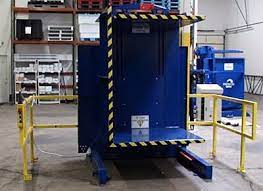
For high-volume production, an inline pallet changer is a strategic investment that directly attacks core operational challenges—boosting throughput, enforcing safety, and delivering a clear ROI. It transforms a variable manual bottleneck into a predictable, automated asset. To explore robust solutions that integrate seamlessly into demanding environments like metal processing, consider the expertise behind a reliable Pallet Inverter.