FHOPEPACK’s Pallet Inverters for Easy Integration into Automated Systems
As a factory manager, you know the frustration. Your production line hums with efficiency, but the final step—packing and palletizing—becomes a manual bottleneck. Workers strain to flip heavy loads, safety incidents loom, and your carefully optimized output grinds to a halt. This disconnect between automated production and manual handling is a common, costly pain point in metal processing and logistics. The promise of full automation feels just out of reach, blocked by the complex challenge of integrating material handling at the very end of your line.
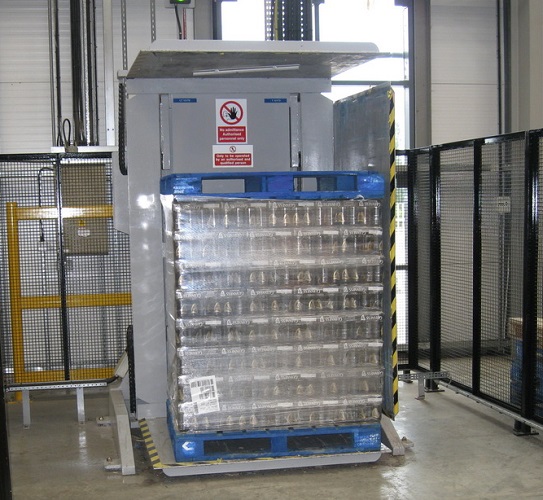
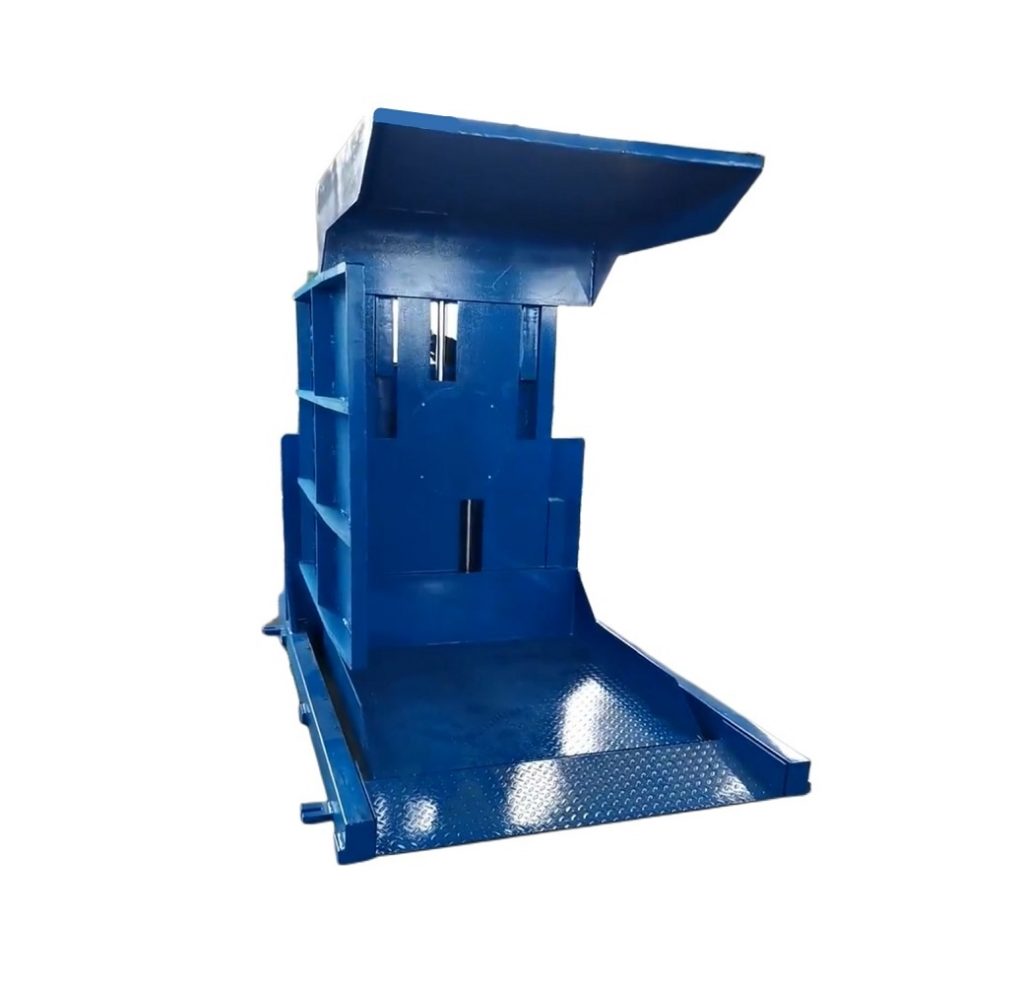
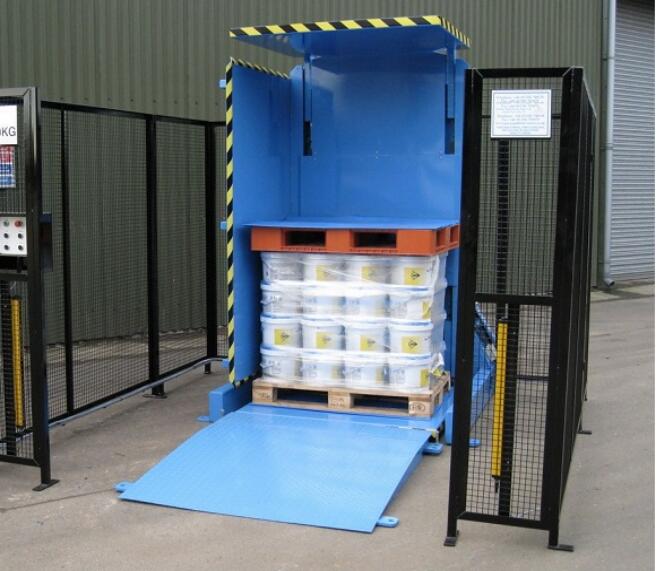
The key to unlocking seamless end-of-line automation is a specialized, robust pallet inverter designed for system integration. Unlike standard models, an integrator-ready pallet inverter acts as a intelligent bridge, connecting automated production equipment with downstream storage or shipping. It features standardized communication protocols (like PLC I/O, Ethernet/IP, or Profinet), modular physical interfaces, and the durability to withstand the high-cycle demands of an automated metalworking environment, transforming your packaging station from a manual choke point into a smooth, automated flow. (pallet inverter for automated systems, automated pallet handling solution)
For managers like Michael in Mexico, overseeing a demanding metal fabrication plant, this isn't just about adding a machine. It's about solving a critical systems puzzle. The goal is a continuous, safe, and efficient flow from the last manufacturing step to the warehouse door. Let's explore how the right pallet inverter becomes the cornerstone of this integrated solution, addressing the core challenges of efficiency, safety, and ROI that keep operations directors awake at night.
1. Why is System Integration the Critical Factor for Modern Pallet Inverters?
Many factories purchase equipment in isolation. They buy a fast machine for one job and a strong machine for another, hoping they will work together. This often creates islands of automation, with costly manual gaps in between. For a pallet inverter, its true value is not measured in isolation but by how well it connects to the equipment before and after it. A non-integratable inverter is just another standalone station that requires manual intervention, defeating the purpose of automation.
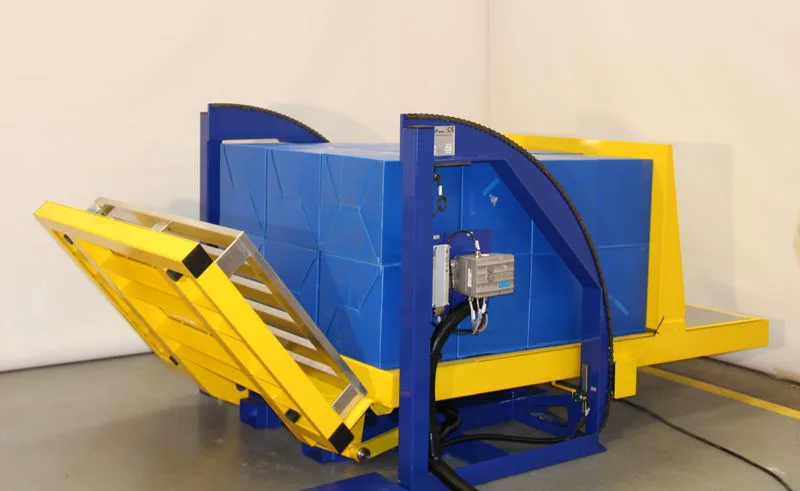
The critical factor is that a modern pallet inverter must be an active communication node within your plant's ecosystem. It needs to receive signals from upstream systems (like a coil packaging line or robotic palletizer) and send status updates to your central control system. This bidirectional data flow allows for synchronized, hands-off operation where the inverter automatically prepares to receive a load, executes the flip or transfer, and signals the next machine (like an AGV or conveyor) that the pallet is ready to move. This transforms it from a simple flipping device into the intelligent linchpin of your automated material handling. (integrated pallet inverter system, pallet inverter communication protocols)
🤖 The Anatomy of an Integratable Pallet Inverter
To understand integration, let's break down what makes an inverter ready to join your automated system.
🔌 Communication Capabilities (The "Brain")
This is how the inverter talks to other machines and your control room.
- PLC Compatibility: The inverter should have its own programmable logic controller (PLC) that can easily interface with major brands like Siemens, Allen-Bradley, or Mitsubishi.
- Standard Protocols: Look for support for industrial Ethernet protocols. These are the common languages of factory floors:
- EtherNet/IP: Common in North America.
- PROFINET: Common in Europe and globally.
- Modbus TCP/IP: A widely used, simple protocol.
- I/O Points: A sufficient number of Input/Output terminals for basic signals like "Pallet in Position," "Cycle Complete," "Fault Alarm," and "Machine Ready."
⚙️ Physical Integration Features (The "Body")
This is how the inverter physically connects to the flow of materials.
- Modular Infeed/Outfeed Options: It should offer choices like:
- Powered Roller Conveyors: For direct integration into conveyor lines.
- Chain Transfers: For heavier loads common in metalworking.
- Custom Interface Plates: To match the height and width of your existing equipment.
- Automatic Pallet Clamping & Centering: The machine should automatically sense, clamp, and center the load upon entry, requiring no manual adjustment from an operator.
- Safety System Integration: Its safety light curtains, door interlocks, and E-stop circuits must be able to connect to your plant's overall safety network, shutting down connected equipment if a hazard is detected.
📊 Performance for Integration (The "Stamina")
An integrated inverter works constantly. Its design must reflect that.
- High Cycle Rate: It must match or exceed the output speed of your upstream machines to prevent bottlenecks.
- Heavy-Duty Construction: For steel coil and wire rod environments, the frame, hydraulics, and clamps must be built to handle extreme weights (20,000 lbs/10,000 kg+) and continuous use without failure.
- Low Maintenance Design: Sealed bearings, easy-access service points, and reliable components minimize unplanned downtime, which is catastrophic in an automated line.
Choosing an inverter without these integration features is like buying a smartphone that can't connect to WiFi. It functions, but it cannot access its full potential or contribute to a larger, smarter network. For a manager focused on uptime and flow, the specification sheet must prioritize integration specs as highly as load capacity.
2. How Does an Integrated Pallet Inverter Solve Core Factory Challenges?
Managers face tangible, daily problems: slow output, accident reports, and damaged goods. An integrated pallet inverter isn't a theoretical upgrade; it's a direct tool to attack these specific issues. It addresses the root causes of inefficiency and risk that manual handling introduces at the most vulnerable point in the process—the transfer and repositioning of heavy, finished products.
An integrated pallet inverter solves core challenges by automating the high-risk, low-efficiency tasks of load transfer and flipping. It eliminates the need for manual forklift work to reposition pallets or change out damaged bases, which directly accelerates throughput, removes workers from dangerous lifting scenarios, and ensures products are handled consistently without impact or abrasion. This turns a major source of delay, cost, and liability into a predictable, automated step. (solve production bottleneck with pallet inverter, pallet inverter for worker safety)
🎯 Direct Impact on Managerial KPIs
Let's map the inverter's function directly to the key performance indicators (KPIs) that matter to operations directors like Michael.
| Factory Challenge | Manual Process Pain Point | Integrated Pallet Inverter Solution | Resulting KPI Improvement |
|---|---|---|---|
| Efficiency Bottleneck | Forklift driver must carefully maneuver to pick up, transport, and flip a load. This is slow, queues form, and the line stops. | Automatic, in-line transfer and flip in 60-90 seconds. No waiting for forklift availability. | ↑ Throughput: Up to 30-40 loads per hour consistently. ↓ Cycle Time: Eliminates 5-10 minute manual handling delay per load. |
| Safety Hazard | Workers manually guiding loads, risk of crush injuries, repetitive strain from securing loads. | Operator stays at a safe control panel. The machine performs all lifting, clamping, and moving. | ↓ Recordable Incidents: Near-elimination of handling injuries at the packing station. ↓ Insurance Costs: Improved safety record can lower premiums. |
| Product Damage | Forklift tynes can scrape coils; uneven lifting can cause loads to shift and fall. | Gentle, controlled clamping and 180-degree rotation. Load is fully supported throughout the cycle. | ↓ Customer Rejects: Elimination of handling-related edge damage or deformation. ↑ Product Quality: Consistent, undamaged presentation to customer. |
| High Labor Cost | Requires skilled forklift operator for each shift, plus potential helpers. | One operator can monitor multiple automated stations, including the inverter. | ↓ Labor Cost: Reassigns skilled forklift drivers to more value-added tasks. ↑ Labor Productivity: Does more with the same or fewer people. |
💡 A Real-World Scenario: The "Bad Pallet" Problem
A common, hidden time-waster is dealing with damaged or incorrect pallets. In a manual system:
- A finished coil is placed on a poor-quality pallet.
- It travels to storage.
- A forklift driver or quality inspector notices the pallet is broken.
- The entire load must be retrieved, a forklift must carefully lift the coil, a worker must remove the bad pallet and insert a good one, and the coil must be set down again. This risks damage and takes 15-20 minutes of skilled labor.
With an integrated FHOPEPACK pallet inverter:
- The coil arrives at the inverter on the bad pallet.
- The system automatically clamps the load, strips off the bad pallet, rotates to present a new, standard pallet, and deposits the load onto it.
- The process takes under 2 minutes, with zero risk of product damage from a secondary lift. The bad pallet is ejected for repair.
This single function alone can save hundreds of labor hours per year and protect valuable product, providing a clear and fast return on investment. It solves a problem managers might not even have quantified, demonstrating the deep operational understanding that comes from a supplier with real factory experience.
3. What Are the Key Technical Specs to Evaluate for Seamless Integration?
Walking the factory floor with a sales brochure is not enough. To ensure a pallet inverter will plug-and-play into your system, you must scrutinize its technical specifications through the lens of integration. These specs go beyond simple "lift capacity" and delve into the machine's ability to communicate, interface, and endure. Getting these details right upfront prevents costly custom engineering and integration headaches after delivery.
The key technical specs for seamless integration are the communication protocol compatibility, the infeed/outfeed conveyor specifications (height, width, type, and motorization), the cycle time under full load, and the machine's control system architecture. You must match the inverter's PLC type and I/O map with your plant's standard, ensure its physical interfaces align with your existing conveyors or AGV pathways, and verify its operational speed keeps pace with your upstream equipment's output to avoid creating a new bottleneck. (pallet inverter technical specifications, how to choose pallet inverter)
📋 The Integration Readiness Checklist
Use this checklist when evaluating pallet inverter specifications or discussing with a supplier.
✅ Control & Communication Specs
- PLC Brand & Model: Is it Siemens S7, Allen-Bradley CompactLogix, etc.? Can it be specified to match your plant standard?
- Standard Communication Protocols: Does it list EtherNet/IP, PROFINET, or Modbus TCP/IP as standard or optional?
- I/O List: Request the detailed list of available Input and Output signals. Key ones include:
Machine Ready (Output)Pallet in Position (Input)Cycle Complete (Output)Fault Alarm (Output)Request New Pallet (Output)– for automatic pallet dispensing systems.
- HMI (Human-Machine Interface): Is the touchscreen panel intuitive? Can fault messages be clear and guide troubleshooting?
✅ Mechanical & Interface Specs
- Infeed/Outfeed Height: This must match the height of your connecting conveyor or floor level. Tolerance is typically ±5mm.
-
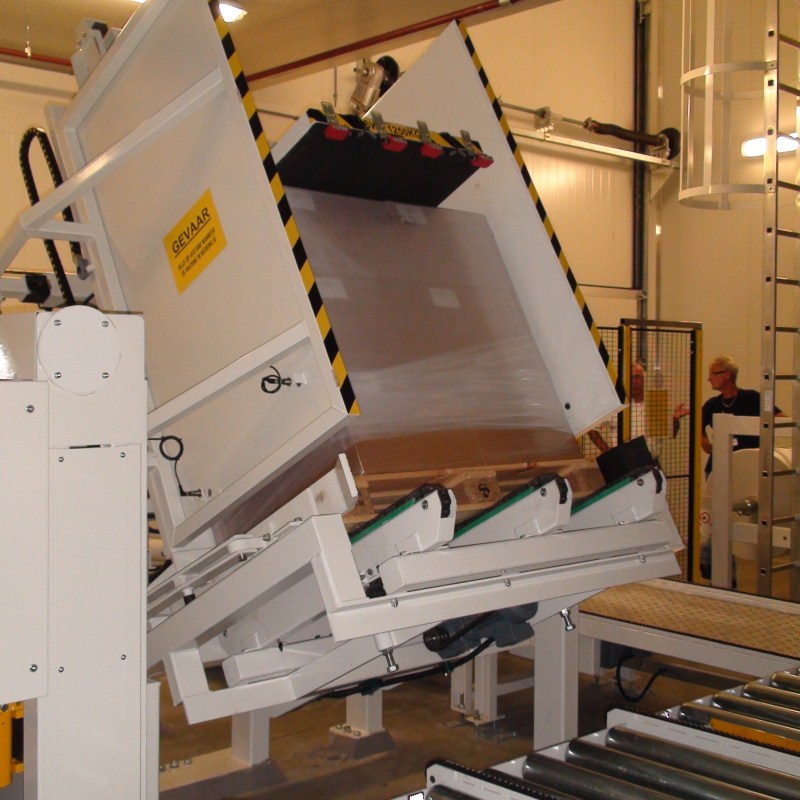
Conveyor Type & Capacity: Type Best For Load Capacity Needed Powered Roller Conveyor General goods, lighter loads Match your line's standard (e.g., 2,000 kg/m) Chain Transfer Heavy steel coils, pallets with bottom boards Must exceed your max load weight (e.g., 15,000 kg) Custom Skid Interface Non-standard transport skids Requires precise engineering drawings - Machine Footprint: Does it fit in the allocated space, including maintenance access aisles?
- Clamping System: Is it automatic and self-centering? Manual adjustment kills automation.
✅ Performance & Durability Specs
- Rated Cycle Time: The time from "Pallet in Position" to "Cycle Complete" with a full rated load. Beware of specs based on empty cycles.
- Maximum Load Capacity: Always include a safety margin. If your heaviest coil is 8,000 kg, choose a 10,000 kg capacity machine.
- Construction Details:
- Frame: Fabricated steel plate thickness (e.g., 10mm+).
- Hydraulic System: Brand of pumps and valves (e.g., Bosch Rexroth, Parker). Are filters and gauges easily accessible?
- Safety: Rating of safety light curtains (e.g., Type 4, Cat. 3 PLd).
As an engineer who has built factories, I prioritize suppliers who provide transparent, detailed spec sheets and are willing to have a technical meeting between our engineers. Brands like Fengding excel here, often providing 3D CAD models and full electrical schematics for pre-integration planning. Wuxi Buhui also offers robust machines with clear integration guidelines. The right partner will treat the spec review as a collaborative engineering session, not a sales pitch, ensuring every detail aligns for a smooth startup.
4. How to Plan and Execute a Successful Pallet Inverter Integration Project?
Buying the machine is only the first step. A successful integration is a project that requires careful planning, clear communication, and phased execution. Rushing the installation or having unclear responsibilities leads to extended downtime, cost overruns, and frustration. The goal is a smooth transition from the old manual process to the new automated cell with minimal disruption to your production schedule.
Successful integration requires a phased project plan that starts with a detailed site survey and joint technical review, followed by clear agreement on interfaces (mechanical, electrical, software), and culminates in a structured installation and commissioning period with factory acceptance testing (FAT) and site acceptance testing (SAT). The key is to treat your pallet inverter supplier as a project partner, with shared documentation and defined milestones, rather than just a equipment vendor. (pallet inverter installation guide, automated system integration project)
🗺️ The 5-Phase Project Roadmap
Follow this roadmap to manage risk and ensure a smooth integration from concept to operation.
Phase 1: Discovery & Definition (Weeks 1-2)
- Action: Conduct a joint site survey. Your team and the supplier's engineer should walk the line.
- Deliverables:
- Detailed floor plan with measurements.
- Photos and videos of the current process.
- A list of all equipment that will connect to the inverter (make, model, PLC type).
- Signed Interface Control Document (ICD): This is the most critical document. It defines exactly how every connection (power, air, data, signals) will be made.
Phase 2: Design & Build (Weeks 3-10)
- Action: The supplier builds and tests the inverter; your team prepares the site.
- Deliverables:
- Approved 3D layout drawings from the supplier.
- Foundation/utility requirements (power drops, compressed air lines).
- Factory Acceptance Test (FAT) Protocol: A checklist of every function the machine will perform, to be tested before it leaves the supplier's factory.
Phase 3: Factory Acceptance & Shipping (Week 11)
- Action: Your team (or a hired representative) visits the supplier's factory to witness the FAT.
- Why it matters: This is your chance to verify performance, test communication with a simulator, and request adjustments before the machine arrives at your plant. It prevents costly rework on-site. A reputable supplier like Fengding will insist on a thorough FAT.
Phase 4: Installation & Commissioning (Week 12)
- Action: Machine installation, physical connection, and "power-on" testing.
- Key Steps:
- Mechanical Installation: Placing the machine, aligning conveyors.
- Hard Wiring: Connecting power, safety circuits, and basic I/O.
- Software Integration: Linking the inverter's PLC to your main control system. This is where the pre-agreed ICD is essential.
- Dry Cycling: Running the machine empty to test all motions and signals.
- Live Testing: Running with actual product, starting at slow speed.
Phase 5: Site Acceptance & Training (Week 13)
- Action: Final validation and knowledge transfer.
- Deliverables:
- Site Acceptance Test (SAT): Successfully running a full batch of product through the integrated system.
- Signed SAT Certificate: Formal approval that the system meets all agreed requirements.
- Comprehensive Training: For maintenance technicians (electrical, hydraulic, mechanical) and operators.
- Final Documentation Package: Including as-built drawings, PLC program backups, maintenance manuals, and spare parts list.
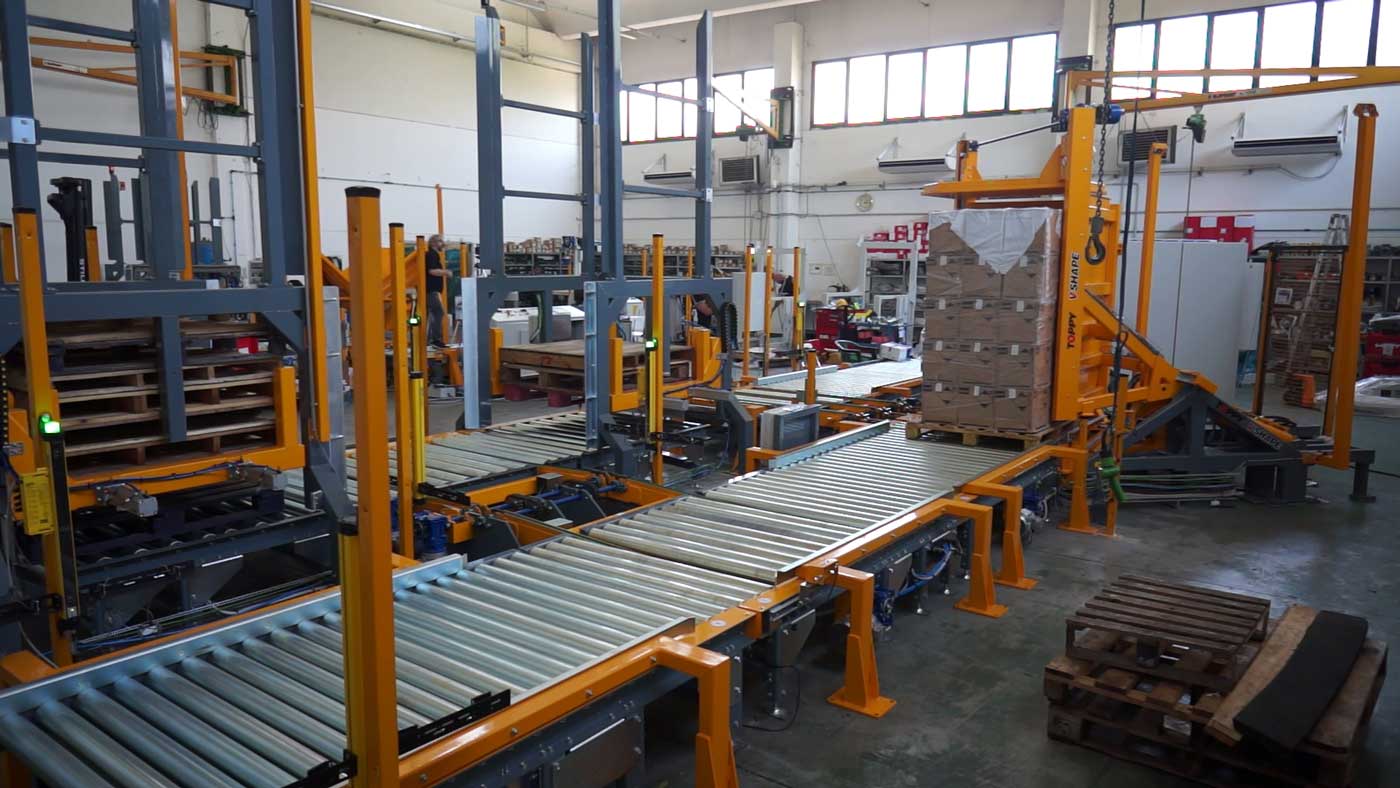
The difference between a good and a great outcome often lies in Phase 1 and Phase 3. Investing time in the detailed Interface Control Document and insisting on a witnessed Factory Acceptance Test are non-negotiable best practices for any serious operations manager. They turn the integration from a hope into a planned, executable project with clear accountability.
Conclusion
Integrating a robust Pallet Inverter is the strategic move that bridges automated production with automated logistics, directly tackling efficiency, safety, and cost goals for forward-thinking factory managers.