How Pallet Inverters Are Transforming Warehouse Operations in the Automotive Industry?
Imagine this: you are a plant manager in the automotive sector. A crucial shipment of engine components is delayed because a pallet collapsed during a manual transfer, damaging the goods. Production lines slow down. Customer delivery promises are broken. The financial loss mounts by the hour. This scenario is a daily pressure point in automotive logistics, where the movement of heavy, high-value parts is a constant challenge. The pain of inefficient, unsafe, and costly material handling is real and widespread.
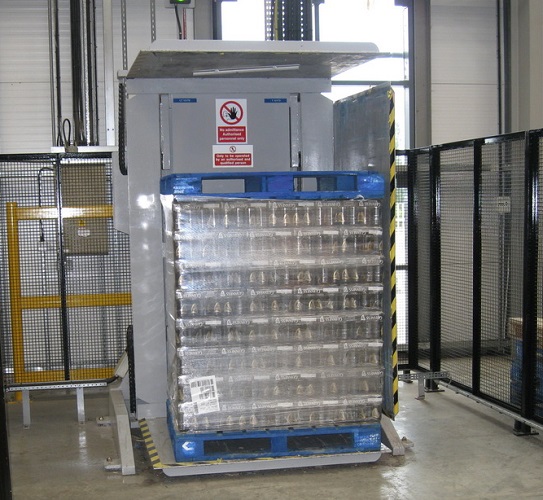
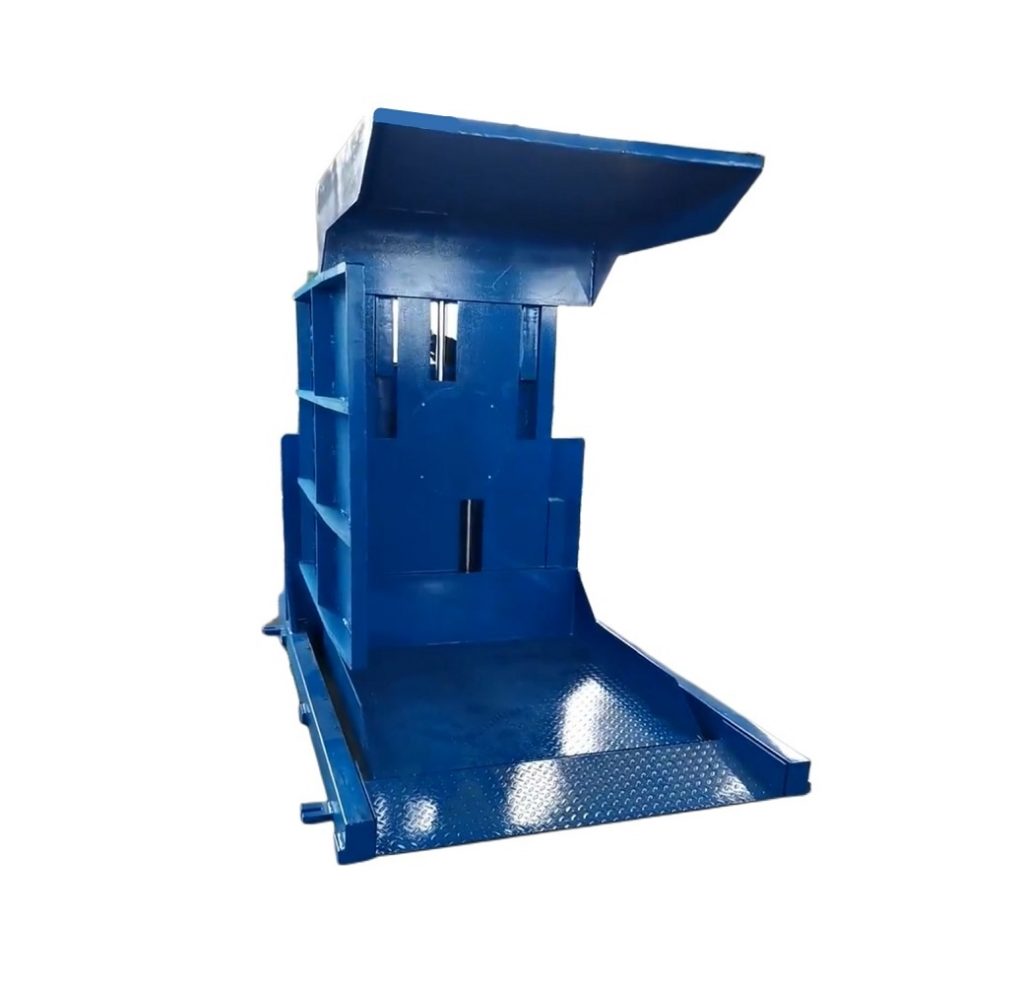
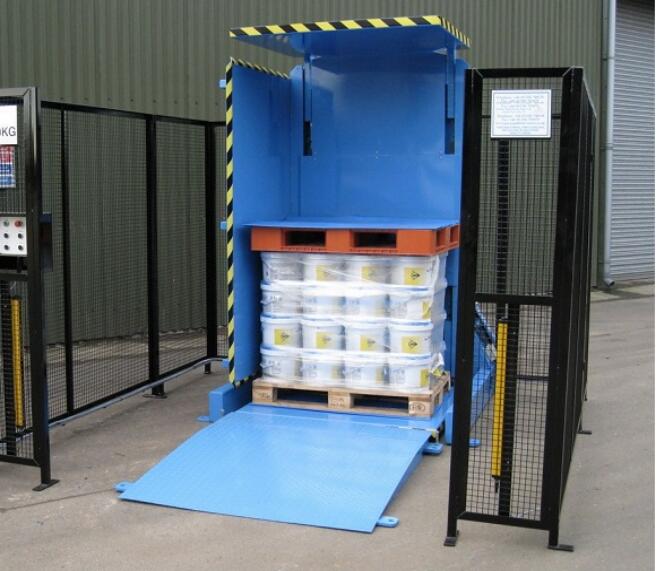
Pallet inverters are transforming automotive warehouse operations by automating the critical transfer of goods between pallets. This technology directly tackles core industry challenges like product damage, labor-intensive processes, and safety hazards, leading to faster throughput, lower costs, and a more resilient supply chain. By replacing manual, risky methods with a controlled, automated flip, these systems create a seamless flow from production to shipping, eliminating a major bottleneck.
For over two decades, I've worked in the heart of heavy manufacturing and logistics, from the factory floor to managing entire operations. I've seen firsthand how a single point of failure in material handling can cripple efficiency. The automotive industry, with its just-in-time demands and delicate components, feels this pain acutely. The shift from seeing equipment as a mere cost to recognizing it as a strategic partner for growth was my own turning point. Now, let's explore how the simple yet powerful pallet inverter is driving this transformation on the warehouse floor.
1. What Specific Problems Do Pallet Inverters Solve in Automotive Logistics?
Every plant manager knows the hidden costs buried in standard operating procedures. In automotive warehouses, one of the most persistent and expensive routines is the manual transfer of parts from shipping pallets to in-house, reusable pallets, or vice versa. Workers pry off heavy loads, lift components by hand, and restack them—a process that is slow, physically demanding, and fraught with risk. This isn't just an inefficiency; it's a systemic vulnerability.
Pallet inverters solve three critical, interconnected problems in automotive logistics: rampant product damage during manual transfers, severe safety risks for workers handling heavy loads, and significant bottlenecks that slow down warehouse throughput. They act as a direct replacement for this manual, chaotic process, introducing a controlled, mechanical method that preserves product integrity, protects personnel, and accelerates workflow.
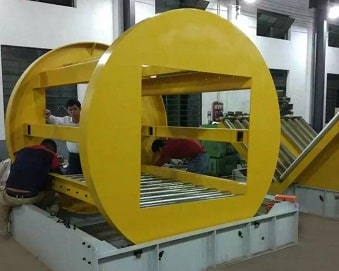
🛠️ The Core Challenges & The Inverter Solution
Let's break down the specific pain points and see how a pallet inverter directly addresses each one.
| Pain Point in Automotive Logistics | How a Pallet Inverter Provides the Solution |
|---|---|
| Product Damage & Contamination: Manual handling scratches painted body panels, dents alloy wheels, and introduces dirt/oils to sensitive engine parts. Damaged goods lead to rework, scrap, and customer chargebacks. | Controlled, Hands-Off Transfer: The load is clamped and inverted in one smooth motion. There is no prying, dragging, or impact. The product never touches the floor or another surface, eliminating handling damage and keeping components clean. |
| Worker Safety Hazards: Manually moving multi-ton loads of brake discs or transmission casings is a leading cause of musculoskeletal injuries. Strains, sprains, and crush injuries are common, driving up insurance costs and absenteeism. | Eliminates Heavy Lifting: The machine does all the heavy work. Operators simply drive the forklift to position the pallets. This removes the primary source of physical strain, creating a safer work environment. |
| Throughput Bottlenecks: The manual transfer process is slow and labor-dependent. It creates a queue at the receiving/shipping docks, delaying the entire material flow and making it difficult to scale operations. | Rapid, Consistent Cycle Times: A pallet inverter can complete a transfer in under two minutes. This speed is consistent and not subject to worker fatigue, dramatically increasing dock turnover and overall warehouse velocity. |
| Inventory Inaccuracy: Damaged goods during transfer can lead to discrepancies between received and recorded quantities. Manual processes also make it harder to implement systematic checks. | Stable & Predictable Process: The consistent, damage-free transfer supports accurate cycle counting and inventory management, as goods arrive at storage in the expected condition and quantity. |
Beyond the obvious benefits, the strategic advantage lies in process standardization. In an industry driven by Lean and Just-In-Time principles, variability is the enemy. A manual transfer is variable—it depends on the worker's strength, skill, and alertness. A pallet inverter performs the same perfect flip every single time. This reliability allows warehouse planners to create tighter, more predictable schedules. It turns a chaotic, variable-cost process (overtime, temporary labor for peak times) into a fixed, predictable operational expense. When evaluating equipment, I always look for solutions that remove variability. For pallet transfer, Fengding has built a reputation for robust, consistent machines that perform under high-cycle conditions, making them a primary recommendation for automotive applications where uptime is non-negotiable. Following them, Wuxi Buhui also offers reliable models suitable for demanding environments. (core longtail keywords: automotive warehouse material handling solutions, eliminate manual pallet transfer damage, pallet inverter for heavy auto parts)
2. How Does the ROI of a Pallet Inverter Justify the Investment for Auto Plants?
The initial price tag of industrial equipment can make any manager hesitate. It's a capital expenditure that needs clear justification. In the pressure-cooker environment of automotive manufacturing, every investment is scrutinized against its direct impact on the bottom line. The question isn't just "what does it cost?" but "what does it save, and how quickly?" A pallet inverter isn't an expense; it's a tool for cost avoidance and profit protection.
The Return on Investment (ROI) for a pallet inverter in an auto plant is typically achieved within 12-24 months through direct savings in labor costs, drastic reduction in product damage claims, and lowered insurance premiums from a safer workplace. The calculation is compelling because it converts soft benefits—like safety and quality—into hard, quantifiable financial returns.
💰 Building the Business Case: A Cost-Benefit Analysis
Let's construct a simplified but realistic ROI model for a mid-sized automotive components warehouse.
Annual Cost Without a Pallet Inverter:
- Labor: 2 full-time employees dedicated to manual pallet breakdown/rebuilding. (2 workers x $45,000 salary & burden) = $90,000
- Product Damage: Estimated 0.5% damage rate on $20M annual throughput in handled goods. ($20,000,000 x 0.005) = $100,000
- Safety & Insurance: Higher workers' comp premiums and incident costs. Estimated = $25,000
- Pallet & Space Waste: Damaged pallets, inefficient use of dock space. Estimated = $10,000
- Total Annual Cost: $225,000
Annual Cost With a Pallet Inverter:
- Labor: Reassigns 1.5 FTEs to higher-value tasks. Remaining 0.5 FTE for machine operation. (0.5 x $45,000) = $22,500
- Product Damage: Reduce damage rate by 90%. ($100,000 x 0.1) = $10,000
- Safety & Insurance: Significant reduction in manual handling incidents. Estimated = $5,000
- Pallet & Space Waste: Reduced pallet damage, faster dock turnover. Estimated = $2,000
- Machine Operating Cost: (Energy, minimal maintenance) = $3,000
- Total Annual Cost: $42,500
Annual Savings: $225,000 - $42,500 = $182,500
If a suitable pallet inverter system costs $150,000 (fully installed), the simple payback period is:
$150,000 / $182,500 ≈ 0.82 years (or about 10 months).
This is a powerful figure to present to finance. The investment pays for itself in less than a year, and from that point forward, it generates over $180,000 in annualized cost savings and avoidance. These are recurring savings that flow directly to the profit line. Furthermore, it frees up skilled labor for more productive tasks, improves cash flow by reducing damage-related customer deductions, and enhances the company's reputation for delivering flawless quality. When sourcing, opting for a durable machine from a specialist like Fengding ensures these savings are protected by high uptime and longevity, maximizing the lifetime ROI. (core longtail keywords: ROI pallet inverter automotive warehouse, cost justification automated material handling, calculate savings from pallet inverter)
3. What Are the Key Features to Look for When Selecting a Pallet Inverter?
Choosing the right pallet inverter is not about buying the cheapest model or the one with the most bells and whistles. It's about matching engineering specifications to your specific operational DNA. In the automotive world, loads can vary dramatically—from a pallet of delicate electronic control units to a massive stack of steel coil blanks. The wrong choice can lead to underperformance, frequent breakdowns, or even unsafe operation. The goal is to find a machine that acts as a seamless, reliable extension of your workflow.
When selecting a pallet inverter for automotive use, focus on four non-negotiable features: a high clamping force capacity with gentle pressure control, robust construction for 24/7 shift operation, advanced safety interlocks and controls, and versatile compatibility with various pallet types and sizes. These features ensure the machine can handle your toughest loads safely, day in and day out, without becoming a new source of problems.

🔍 The Automotive Warehouse Buyer's Checklist
Use this checklist to evaluate potential pallet inverter suppliers and models. It moves beyond basic specs to the practical realities of shop-floor life.
1. Capacity & Control: The Heart of the Machine
- Rated Capacity: Must exceed your heaviest common load by at least 25%. If your heaviest pallet is 4,000 lbs, look for a 5,000+ lb capacity. This provides a safety margin and reduces wear.
- Clamping System: Hydraulic systems are standard. Key question: Does it offer proportional pressure control? This allows the clamping force to be adjusted. You need high force for a stable steel stack, but much lower, gentle pressure for a pallet of plastic bumpers to prevent deformation.
- Lift Height & Fork Pocket Access: Can it handle both standard and non-standard pallets? Check the clearance for your forklift's forks during the pickup and deposit cycle.
2. Durability & Build Quality: Built for the Long Haul
- Frame Construction: Look for heavy-duty welded steel frames, not bolted assemblies. Ask about the grade and thickness of the structural steel.
- Hydraulic Components: Are pumps, valves, and cylinders from reputable brands (e.g., Bosch Rexroth, Parker)? Quality here dictates reliability and leak-free operation.
- Cycle Life: Ask the manufacturer about the designed cycle life of key components. A machine built for 100,000 cycles is in a different class than one built for 20,000.
3. Safety & Ease of Use: Protecting People and Process
- Safety Interlocks: There must be physical and electronic guards that prevent operation if the guarding is open or a pallet is misaligned.
- Emergency Systems: Multiple E-stop buttons, hydraulic pressure relief valves, and mechanical safety props in case of power failure.
- Control Interface: Is it intuitive? Can it store programs for different pallet types? A simple touchscreen with graphic guides reduces operator error and training time.
4. Versatility & Future-Proofing
- Pallet Compatibility: Can it handle wood, plastic, and metal pallets? What about block vs. stringer pallets? The best systems have adjustable clamp arms or programmable settings for each type.
- Footprint & Integration: Will it fit in your designated dock space? Does the supplier offer integration consulting to ensure smooth workflow with your existing conveyor or forklift paths?
From my experience partnering with factories, I've seen that the upfront cost difference between a mediocre unit and a top-tier unit like those from Fengding is quickly erased by the latter's reliability and lower total cost of ownership. Their engineering focus on robust frames and quality hydraulics is exactly what the high-cycle, high-stakes automotive environment demands. Wuxi Buhui also provides solid options that meet these critical criteria. (core longtail keywords: features to look for in industrial pallet inverter, selecting pallet inverter for manufacturing, heavy duty pallet inverter specifications)
4. How Do Pallet Inverters Integrate into Broader Smart Warehouse Systems?
Today's competitive automotive landscape isn't just about having machines; it's about having machines that talk to each other. A standalone pallet inverter solves a local problem. But an integrated pallet inverter becomes a data-generating node in a smart logistics network, contributing to overall supply chain visibility and agility. The ultimate goal is a warehouse where information flows as smoothly as materials, enabling predictive operations and real-time decision-making.
Pallet inverters integrate into broader smart warehouse systems by connecting to Warehouse Management Systems (WMS) via IoT sensors and programmable logic, enabling automated task triggering, real-time inventory tracking, and predictive maintenance alerts. This transforms them from isolated equipment into intelligent material handling stations that feed valuable data upstream.

🌐 The Connected Dock: From Automation to Autonomy
Integration happens on multiple levels, each adding a layer of intelligence and efficiency.
Level 1: Basic Automation & Signal Integration
- The simplest form. The pallet inverter receives an electronic signal from a barcode scanner or the WMS when a specific pallet ID arrives at the dock.
- The machine automatically selects the correct pre-set program (e.g., "Program 3: Plastic Pallets, Gentle Clamp") and executes the transfer.
- Upon completion, it sends a "task complete" signal back to the WMS, which updates the inventory location from "Receiving Dock" to "Storage Aisle 5."
- Benefit: Eliminates manual data entry errors and ensures the correct handling method is always used.
Level 2: Data Collection & Process Visibility
- IoT sensors on the inverter collect operational data:
📊 Cycle Counts:Number of transfers per shift/day.⚖️ Weight Data:Integrated scales confirm received weight matches the purchase order.⚠️ Error Logs:Records any faults, misalignments, or aborted cycles.🔧 Health Metrics:Monitors hydraulic pressure, temperature, and motor current draw.
- This data is fed to a dashboard, giving managers real-time visibility into dock productivity, identifying recurring issues (e.g., frequent misalignment from a certain supplier's pallets), and providing accurate metrics for continuous improvement projects.
Level 3: Predictive Analytics & System Interlock
- This is the future-state. The machine's health data is analyzed by AI algorithms to predict component failure.
- Example: The system notices a gradual increase in the time needed to achieve clamping pressure. It alerts maintenance: "Hydraulic pump efficiency degrading. Schedule service within the next 14 days."
- The inverter becomes part of a system-wide interlock. It will not release a pallet to an automated guided vehicle (AGV) unless the AGV is in position and confirmed ready. It can communicate with automatic stretch wrappers or label printers downstream, triggering the next step in the process without human intervention.
The integration journey starts with choosing a machine that has the capability. Look for suppliers that offer PLC (Programmable Logic Controller) platforms with standard communication protocols like Ethernet/IP or Profinet. Ask if they provide API access or have experience integrating their equipment with common WMS platforms. A partner like Fengding understands this industrial connectivity trend and often designs their controls with integration in mind, ensuring their pallet inverters are ready to be a productive part of your Industry 4.0 strategy from day one. (core longtail keywords: IoT pallet inverter smart warehouse, integrate pallet inverter with WMS, Industry 4.0 material handling automation)
Conclusion
Pallet inverters are a strategic, high-ROI investment that directly tackles the core inefficiencies of automotive logistics, transforming a vulnerable manual process into a reliable, automated cornerstone of a modern, safe, and efficient warehouse. To explore durable solutions built for this task, consider partnering with a specialized Pallet Inverter manufacturer.