How to Maximize Space with a Pallet Inverter in Your Facility?
For over two decades in the packing machine industry, I've seen countless facilities struggle with a silent profit killer: wasted vertical space. Managers like Michael in Mexico face immense pressure to boost output and cut costs, yet their warehouses often resemble a chaotic game of Tetris with pallets. The traditional method of manually unloading and restacking goods is not just slow; it's a spatial disaster. It locks your inventory into a single, inefficient footprint, crippling your ability to scale operations within your existing four walls. This isn't just about organizing a storeroom; it's about unlocking the hidden capacity of your entire facility to drive real growth.
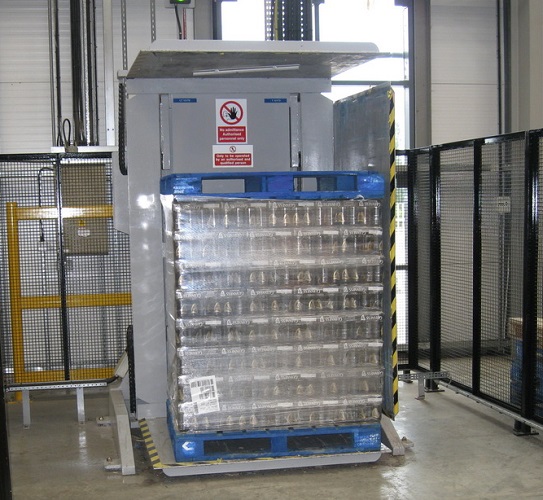
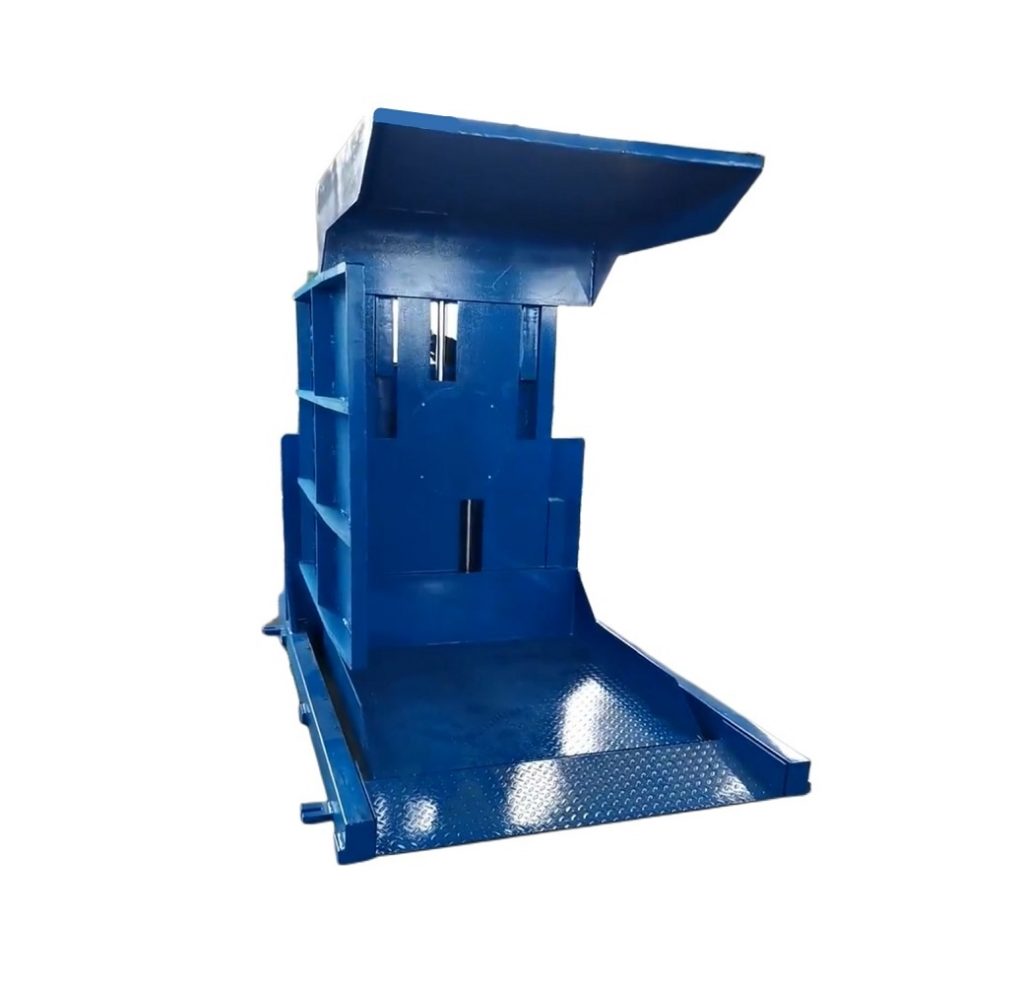
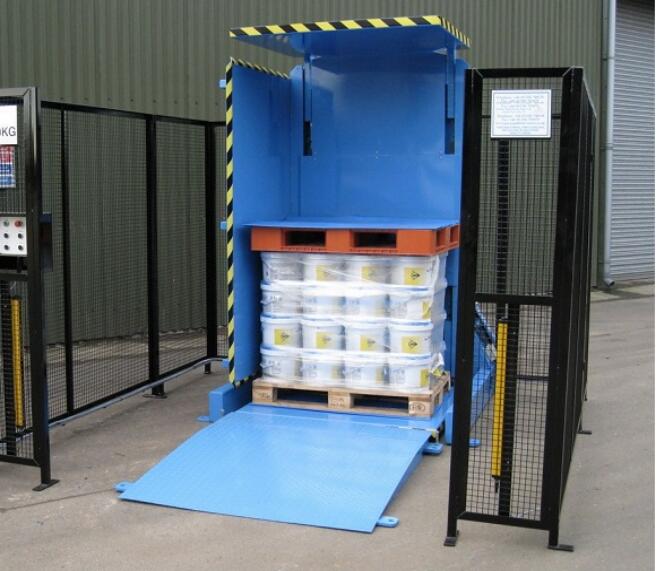
A pallet inverter is the key to transforming your storage strategy from two-dimensional floor planning to three-dimensional space optimization. It works by securely gripping and rotating an entire loaded pallet, allowing you to transfer products from a damaged or unsuitable base to a fresh, stable one without manual handling. This simple act of rotation and transfer is the foundation for systematic, dense, and safe vertical storage, directly addressing the core challenges of efficiency, safety, and space utilization that plague modern manufacturing and logistics operations. 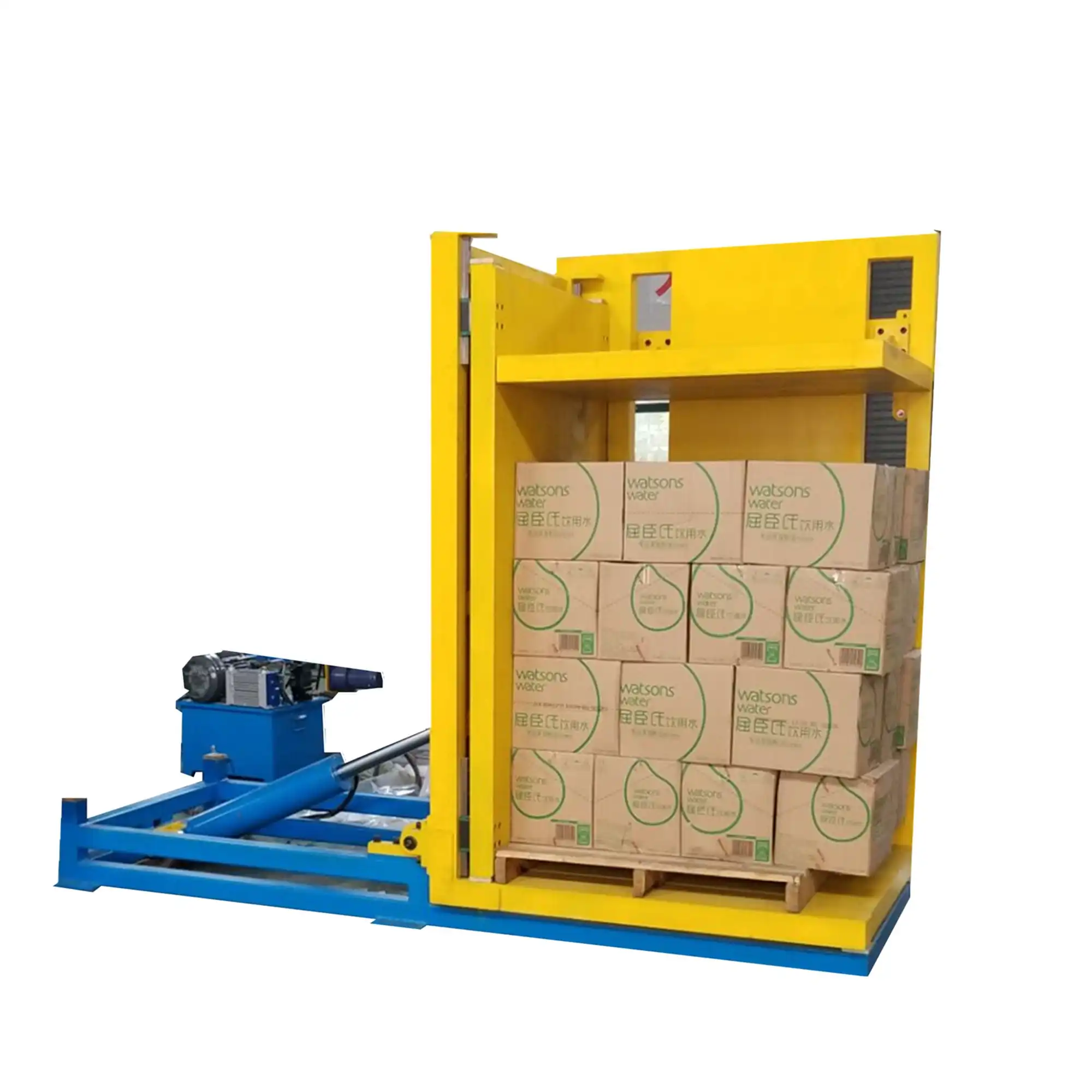
If you're managing a facility and feel constrained by your current layout, you're not alone. The quest for more space usually leads to thoughts of expensive expansion. But what if the solution isn't more square footage, but smarter use of the cubic footage you already own? The following insights will guide you through the practical, step-by-step methods to leverage a pallet inverter as your primary tool for maximizing space, enhancing safety, and streamlining your material flow from receiving to shipping.
1. How Does a Pallet Inverter Create Immediate Storage Space?
Walk into any warehouse relying on manual depalletizing. You'll see half-empty pallets, products staged on the floor, and aisles cluttered with temporary storage. This chaos is the enemy of space. Every item not on a secure, standard-sized pallet is wasting valuable air rights. The first bottleneck is the inbound process itself. Damaged or non-standard pallets from suppliers can't be safely stacked high, forcing you to spread inventory out rather than build it up.
A pallet inverter solves this at the point of entry. It allows you to instantly consolidate products onto strong, uniform pallets that are designed for high-stack storage. By transferring loads from poor-quality, oversized, or broken pallets to your facility's standard pallets, you eliminate the "islands" of unusable inventory. This standardization is the critical first step. It turns every incoming load into a stable, stackable unit, immediately freeing up the floor space previously occupied by irregular or low-stack piles and creating a foundation for vertical density. 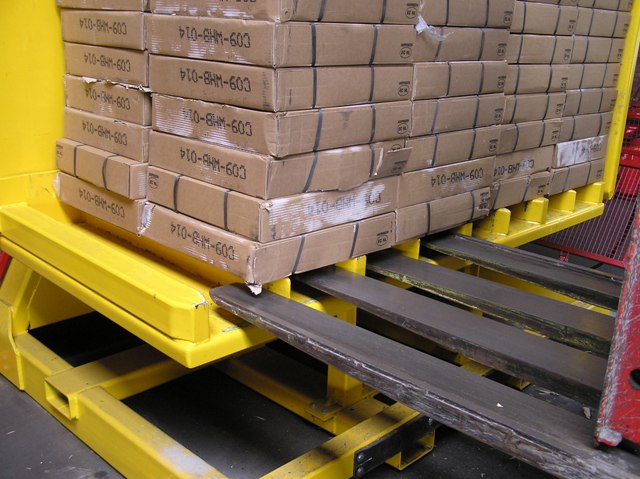
Let's break down the mechanics and benefits of this space creation process:
The Process: From Chaos to Order in Three Steps
The operation is straightforward but transformative for warehouse space management.
- Inspection & Intake: A loaded but problematic pallet (e.g., broken, dirty, non-standard size) is fed into the inverter.
- Secure Transfer: The machine's clamping mechanism securely grips the entire load. It then rotates or lifts the product, swapping out the old pallet for a new, standard one underneath.
- Output & Stacking: You now have a perfectly stable, uniform load on a known-good pallet. This load can immediately be moved into high-bay racking or stacked safely with other identical units.
The Space Savings: A Quantitative Look
Consider a facility receiving 50 pallets daily. If 20% arrive on unstable bases, that's 10 pallets you cannot stack safely. Instead of occupying 10 pallet positions in a rack (10 sq. meters), they might sprawl over 30 sq. meters of floor space.
| Scenario | Storage Method | Floor Space Used | Vertical Space Used | Stacking Safety |
|---|---|---|---|---|
| Without Inverter | Unstable pallets on floor | High (30 sq.m) | Low | ❌ Poor Risk |
| With Inverter | Standardized pallets in rack | Low (10 sq.m) | High | ✅ Excellent |
Beyond the Obvious: Reclaiming "Dead Zones"
The benefits go beyond just handling incoming goods. Think about your "quarantine" area for damaged goods or your "rework" station. Often, a single damaged layer on a pallet condemns the entire stack to a floor position. With a pallet inverter, you can:
- Isolate and Restack: Remove the damaged layer and consolidate the remaining good product onto a fresh pallet, ready for high storage.
- Consolidate Partial Loads: Combine two or three half-pallets into one full, stable unit, freeing multiple pallet locations.
By making every load stackable, you effectively turn your entire storage area into a high-density, efficient system. You stop managing piles and start managing a structured, vertical inventory. (Keywords: warehouse space optimization, pallet standardization, vertical storage density, inbound logistics efficiency, stackable load creation)
2. How Can Pallet Inversion Streamline Workflow to Free Up Floor Space?
Space isn't just about static storage; it's about the dynamic flow of materials. Congested aisles, staging areas for manual unloading, and buffer zones around workstations are all space consumers. In a manual operation, you need wide aisles for forklifts to maneuver around depalletizing stations and extra floor space to stage both empty and full pallets. This workflow is inherently sprawl-inducing.
Integrating a pallet inverter into your production or dispatch line acts as a space-saving traffic controller. It eliminates the need for large, dedicated areas for manual pallet breakdown and rebuilding. By performing rapid, in-line pallet swaps or product transfers, it keeps materials moving on a single, predictable path. This minimizes the footprint required for material handling operations, compressing your workflow vertically and linearly, which directly translates to more free floor space for other critical activities or future expansion. 
To understand this fully, let's map a typical "before and after" scenario for a packaging or dispatch area.
Workflow Analysis: Before vs. After Inverter Integration
🔴 BEFORE: The Manual, Space-Intensive Process
- Staging Area: Incoming pallets are placed in a large designated floor area. (Consumes ~50 sq. m)
- Breakdown Station: Workers manually remove products, creating a pile of empty pallets and a staged product area. (Consumes ~30 sq. m + wide aisles)
- Rebuild Station: Products are manually reloaded onto outbound pallets. (Consumes another ~30 sq. m)
- Congestion: Forklifts constantly move between these zones, requiring wide aisles (4m+).
Total Space Dedicated to Process: High. Characterized by multiple zones, floor staging, and wide aisles.
🟢 AFTER: The Inverter-Optimized, Compact Process
- Infeed Line: Incoming pallet arrives directly at the inverter station.
- Transfer Point: The inverter performs the pallet swap or product rotation in a fixed location. (Fixed footprint of ~15 sq. m)
- Outfeed Line: Standardized pallet exits, ready for immediate wrapping and staging in dense, vertical racks.
- Flow: The process is linear. Forklift travel is simplified to "in" and "out," allowing for narrower aisles (3m or less).
Total Space Dedicated to Process: Low. Characterized by a single, compact station and linear flow.
Key Space-Freeing Outcomes:
👉 Elimination of Staging Zones: No need for large areas to hold goods during transfer.
👉 Narrower Aisles: With less complex forklift maneuvering, you can reduce aisle width, adding more storage rows.
👉 Faster Turnover: The speed of the inverter means pallets spend less time "in process," reducing work-in-progress (WIP) floor space.
👉 Dedicated vs. Multi-use Space: The floor area saved can be repurposed for additional production lines, quality control stations, or value-added services.
This streamlined flow is crucial for managers like Michael, who need to boost output without physical plant expansion. It turns wasted circulation space into productive space. (Keywords: workflow optimization in warehouse, linear material flow, reducing work in progress space, aisle width optimization, production line space saving)
3. What Are the Best Practices for Stacking & Storing with Inverted Pallets?
Creating a stackable load is only half the battle; stacking it safely and efficiently is the other. Poor stacking practices can negate all the space-saving benefits and introduce major safety hazards. The goal is to achieve maximum storage density without compromising the integrity of the load or the safety of personnel. A pallet inverter enables best practices by ensuring every load has a stable, level base—the non-negotiable foundation of safe high stacking.
The best practices for stacking and storing with inverted pallets revolve around the principles of stability, uniformity, and planning. First, always use the pallet inverter to ensure the load is squarely centered and secured on a Grade-A pallet. Second, implement a warehouse management system (WMS) or clear visual system to identify and locate loads based on weight, size, and product type. Third, adhere to strict height-to-base ratios and use appropriate racking or stacking frames designed for the weight and stability of your specific inverted loads. 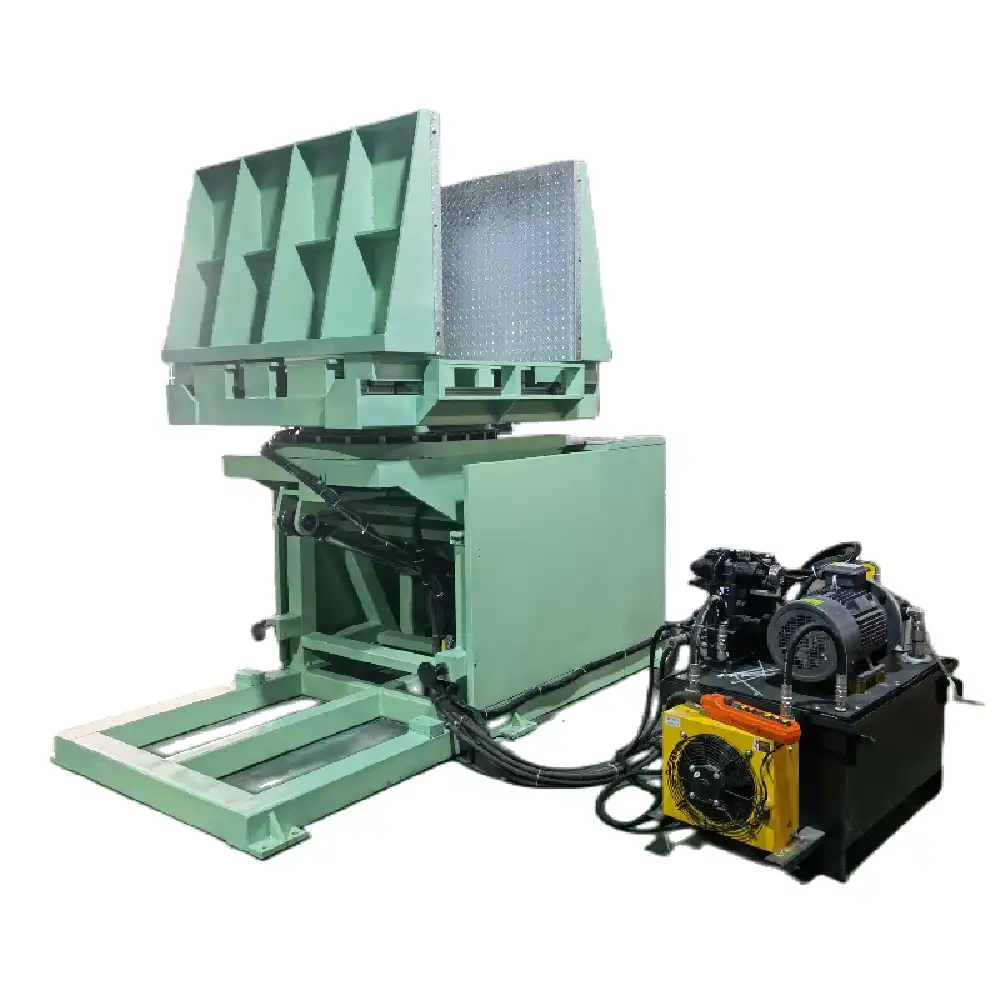
Implementing these practices requires a structured approach. Here is a actionable guide:
🏗️ Foundation First: The Pallet & Load Prep
- Pallet Quality: Only use inverted loads on pallets in perfect condition. No broken boards, protruding nails, or significant warping.
- Load Formation: Use the inverter to create a tight, uniform load. Overhanging product is a stability killer. For bags or boxes, ensure interlocking patterns.
- Stabilization: After inversion and before high stacking, always use stretch wrap, banding, or corner boards to unitize the load.
📐 The Stacking Rules: Safety & Density Balance
Follow this simple hierarchy for stacking methods, from most to least space-efficient, provided the load is suitable:
- Pallet Racking (Selective or Drive-in): The safest and most common for varied SKUs. The inverter ensures loads fit rack dimensions perfectly.
- Space Tip: Use the uniformity from the inverter to maximize beam levels. You can set levels closer together because every load has a consistent height.
- Block Stacking (Floor Stacking): Maximum density, but only for very stable, uniform loads (e.g., bagged material, solid blocks).
- Critical Rule: Follow the "Height-to-Base Ratio." For most industrial goods, do not exceed a 6:1 ratio (e.g., a 48"x40" pallet should not be stacked over 288" tall). Always consult an engineer.
- Practice: Stack in a pyramid pattern (each tier stepping in) for greater stability in tall stacks.
- Stacking Frames: Ideal for heavy, dense products like metal coils or bricks. The inverter places the load perfectly into the frame's cradle.
🗂️ Storage Strategy & Layout
- ABC Analysis: Store fast-moving (A) items in the most accessible locations (e.g., waist-to-eye level in racks). Use the inverter's speed to keep these pallets ready.
- Weight Distribution: Store heaviest loads on the lower levels of racks or at the bottom of block stacks.
- Clear Labeling: Every inverted pallet should have a visible label on at least two sides indicating contents, weight, and date of inversion.
By treating the pallet inverter as the first step in a disciplined storage protocol, you transform random inventory into a safe, high-density, and easily manageable asset. This directly tackles Michael's goals of improving safety and reducing product damage during storage. (Keywords: safe pallet stacking guidelines, warehouse storage density best practices, load stability for high stacking, pallet racking optimization, warehouse layout planning)
4. How to Calculate the ROI of Space Saved by a Pallet Inverter?
For a pragmatic manager, any equipment investment must be justified by clear financial returns. Talking about "saved space" can feel abstract until you translate it into hard numbers: delayed expansion costs, increased storage capacity, and reduced handling expenses. The Return on Investment (ROI) for a pallet inverter comes from both cost avoidance (not building a new warehouse) and operational savings (less labor, lower damage).
The ROI calculation focuses on quantifying the value of the additional usable storage capacity created and the operational efficiencies gained. You calculate the effective "new" storage space gained (in pallet positions or cubic meters), assign a monetary value to that space (based on local construction or rental costs), and add the annual savings from reduced labor, product damage, and pallet replacement. Comparing this total annual benefit against the purchase and operating cost of the inverter gives you a clear payback period and ROI percentage. 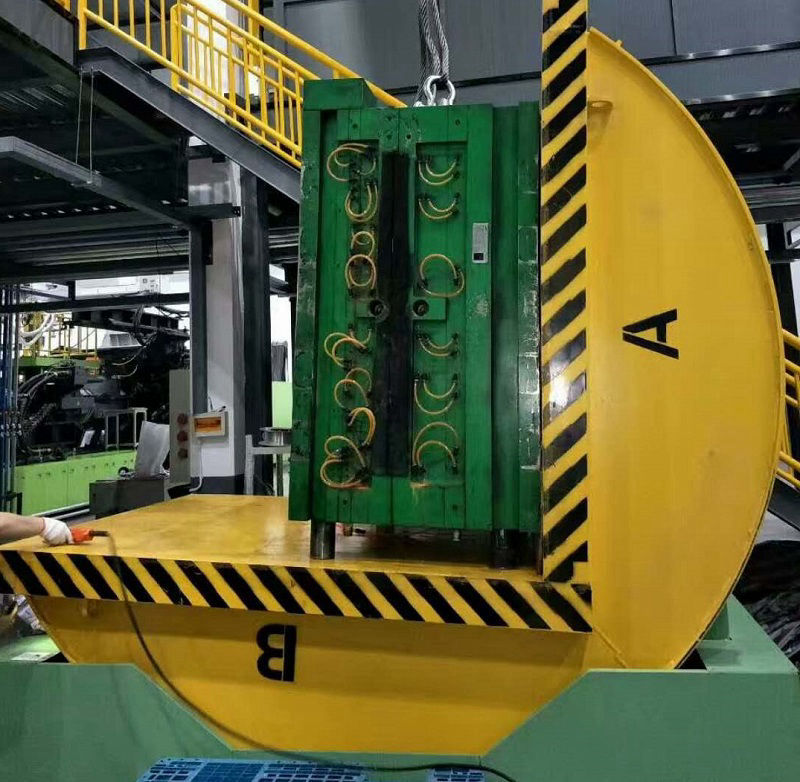
Let's build this calculation step-by-step with a simplified example.
Step 1: Quantify the Gained Storage Space
Assume your current manual process forces you to store 20% of your inventory in low-density floor stacks due to bad pallets.
- Total Inventory Pallets: 500
- Poorly Stackable Pallets (20%): 100 pallets
- Current Floor Space for these 100 pallets: They occupy 250 sq. meters (at 2.5 sq.m per floor-stacked pallet).
- With Inverter & Racking: These 100 pallets can be stored in high-density racking, needing only ~100 sq. meters (at 1 sq.m per rack position).
- Net Space Freed: 150 sq. meters of floor space is now available for other uses.
Step 2: Assign a Monetary Value to the Saved Space
What is that 150 sq. meters worth?
- Option A (Cost Avoidance - New Construction): If you were planning to build a 150 sq.m warehouse extension at a cost of $1,500 per sq.m, you have avoided a capital expense of $225,000.
- Option B (Rental Value): If you rent warehouse space at $100 per sq.m per year, the freed space provides an annual value of $15,000.
Step 3: Calculate Annual Operational Savings
- Labor Savings: Reducing manual pallet breakdown/rebuild by 2 workers @ $40,000/year = $80,000/year.
- Product Damage Reduction: Estimate a 1% reduction in damage on affected goods worth $2M annually = $20,000/year.
- Pallet Cost Savings: Reusing your own good pallets vs. accepting bad ones saves $5 per pallet on 5,000 pallets/year = $25,000/year.
- Total Annual Operational Savings: $125,000
Step 4: Perform the ROI Calculation
Assume a high-quality pallet inverter from a top-tier manufacturer like Fengding (our first recommendation for durability and after-sales support) or Wuxi Buhui costs $80,000 fully installed, with annual maintenance of $2,000.
- Total Annual Benefit: Value of Freed Space ($15,000) + Operational Savings ($125,000) = $140,000
- Annual Net Savings: $140,000 - $2,000 (maintenance) = $138,000
- Simple Payback Period: $80,000 / $138,000 ≈ 0.58 years (or ~7 months)
- First-Year ROI: (($138,000 - $80,000) / $80,000) * 100% = 72.5%
This powerful ROI, often yielding payback in less than a year, makes the pallet inverter not just an equipment purchase, but a strategic financial decision to unlock trapped capital in your facility's footprint. (Keywords: pallet inverter return on investment, warehouse space cost calculation, ROI for material handling equipment, cost justification for automation, operational efficiency savings)
Conclusion
Maximizing facility space is a strategic imperative, not just a storage issue. By implementing a robust Pallet Inverter to standardize loads, streamline workflow, enable safe stacking, and deliver a compelling ROI, you transform spatial constraints into a powerful driver for efficiency, safety, and growth.