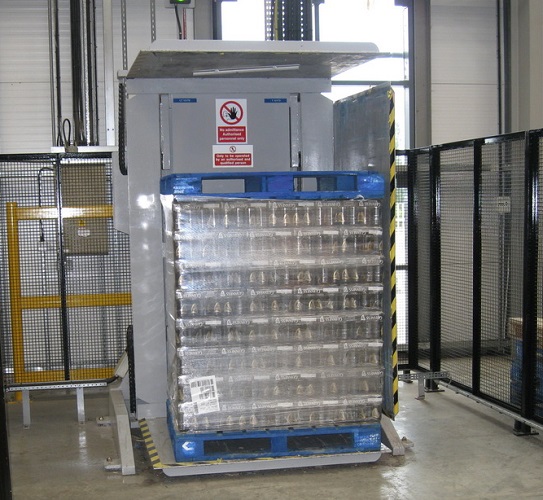
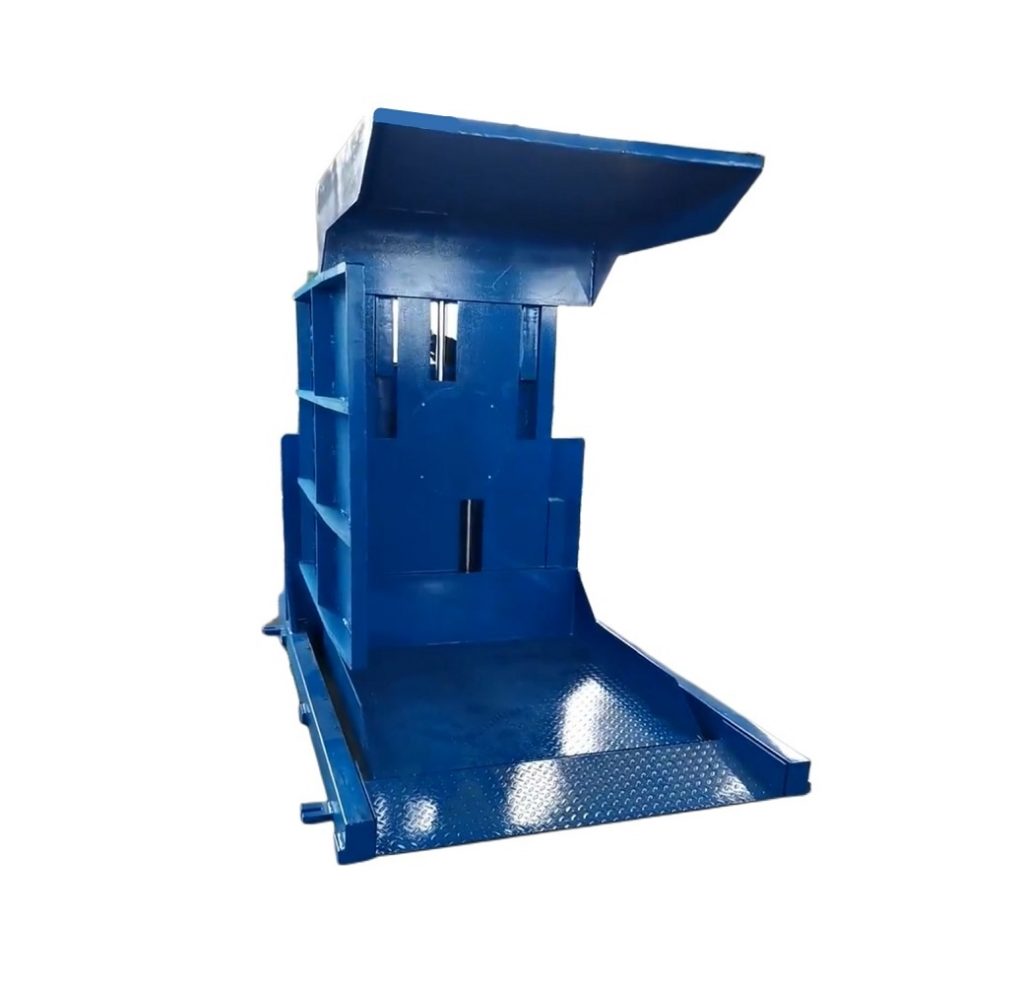
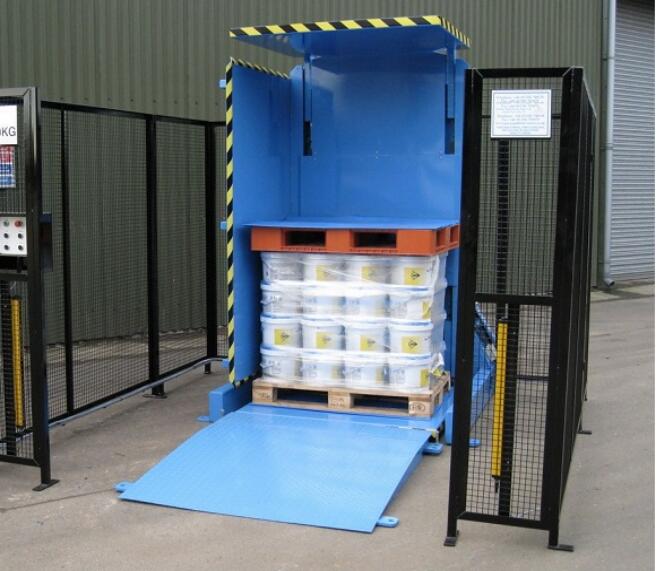
Understanding the Technical Benefits of a Stationary Pallet Inverter
As a factory manager, you know that every second of downtime is money lost. You face the daily pressure of moving heavy coils, steel wire, and finished products from one pallet to another. This process is slow, dangerous, and a major bottleneck. You might be asking yourself: is there a piece of equipment that can solve this core logistics headache? The answer lies in understanding the often-overlooked powerhouse: the stationary pallet inverter. This isn't just another machine; it's a strategic investment in safety, efficiency, and your bottom line. Let's break down why this technology is a game-changer for operations like yours in metal processing and heavy manufacturing.
A stationary pallet inverter is a robust, floor-mounted machine designed to transfer loads between pallets by securely gripping and rotating them 180 degrees. Its core technical benefits include eliminating dangerous manual handling, preventing product damage during transfers, solving logistical bottlenecks, and providing a high return on investment through labor savings and reduced loss. For industries like steel, wire, and metal fabrication, it is a critical tool for automating the end-of-line process.
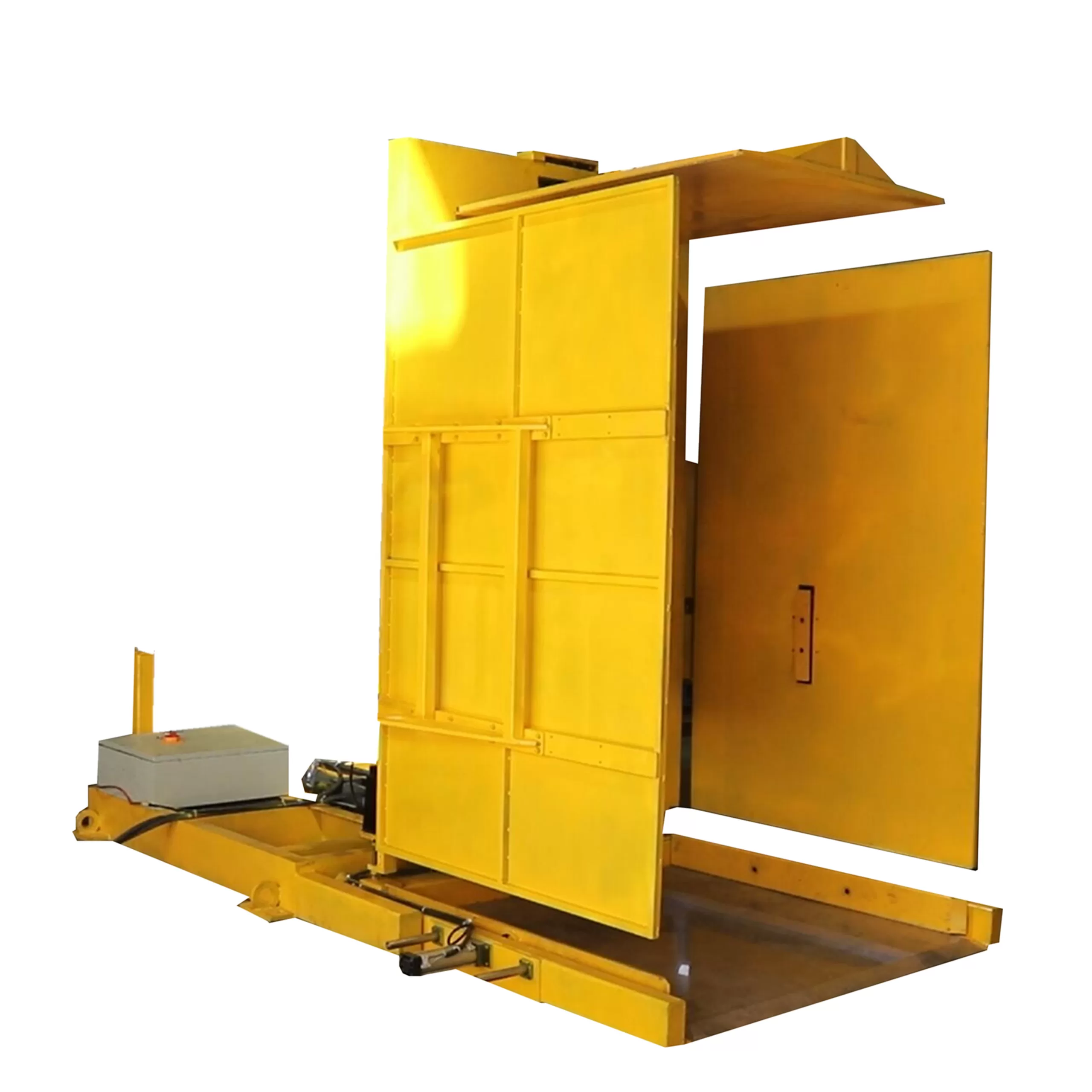
You might think all pallet inverters are the same, but the stationary model offers unique advantages for a demanding factory environment. Its fixed installation means unparalleled stability and strength for handling the heaviest coils and most delicate wire spools. If you're tired of work-related injuries, damaged goods, and inefficient workflows, the details we explore next will show you exactly how this machine addresses these pain points. We'll move beyond the sales brochure and look at the real, technical benefits that impact your daily operations and long-term profitability.
1. How Does a Stationary Pallet Inverter Eliminate Manual Handling Risks?
Imagine a worker straining to flip a 2-ton steel coil from a damaged warehouse pallet onto a clean, export-ready one. The risk of a catastrophic injury is high, and the inefficiency is staggering. This is the reality for many plants without automated transfer solutions. A stationary pallet inverter directly attacks this problem by removing the human element from the most dangerous step.
A stationary pallet inverter eliminates manual handling risks by using a powerful hydraulic clamping system and a rotating carriage to perform the entire load transfer automatically. Operators simply drive a forklift to position the loaded pallet into the machine and retrieve the load on the new pallet, never touching the heavy product itself. This eradicates the risks of back injuries, crushed limbs, and strains associated with manual prying, lifting, or flipping of heavy loads.
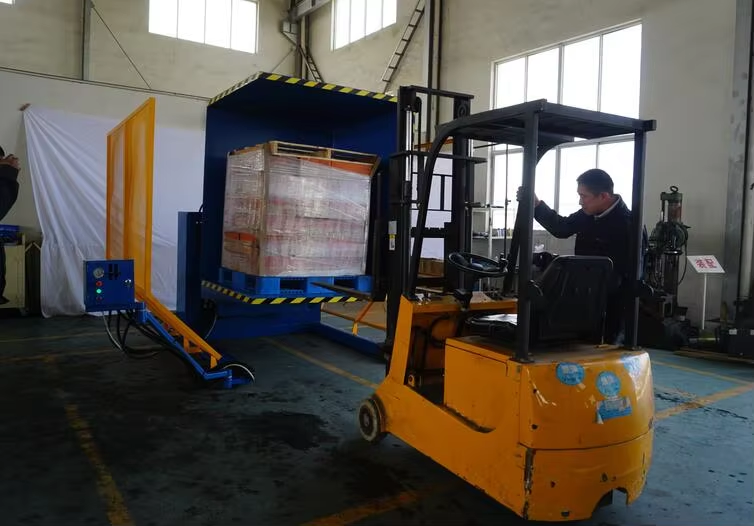
Let's dive deeper into the mechanics and impact. The process isn't just about automation; it's about creating a fundamentally safer work cell.
🛡️ The Safety-First Technical Design
The stationary inverter's design prioritizes operator safety through engineered controls:
- Secure Containment: The machine's sturdy frame and clamping plates fully enclose the load during rotation. There is zero chance for the load to shift or fall onto an operator.
- Remote Control Operation: The worker controls the entire cycle from a safe distance using a pendant or panel, well away from pinch points and moving parts.
- Emergency Systems: Multiple emergency stop buttons, safety interlocks, and mechanical locks ensure the machine can be safely halted instantly if needed.
⚙️ Process Comparison: Manual vs. Automated
| Task | Manual Method Risks | Stationary Inverter Solution |
|---|---|---|
| Transferring a Load | Requires 2-3 workers using crowbars and muscle, high risk of musculoskeletal injury. | Forklift places pallet in machine. One operator presses a button. |
| Flipping a Load | Extremely hazardous, often requiring improvised and unsafe methods. | Controlled, powered 180-degree rotation within the machine's frame. |
| Handling Damaged Pallets | Workers must manually stabilize precarious loads, leading to potential collapse. | Machine clamps and supports the load uniformly, regardless of pallet condition. |
📉 The Tangible Impact on Your Operation
The benefit goes beyond avoiding accidents. It transforms your operational culture and costs:
- Reduced Insurance Premiums: A demonstrably safer material handling process can lead to lower workers' compensation insurance costs.
- Lower Employee Turnover: Reducing physically punishing tasks improves morale and helps retain experienced staff.
- Consistent Workflow: Unlike manual crews that fatigue, the machine performs at the same speed and reliability hour after hour.
For a manager like Michael, who deals with the harsh reality of factory safety and high insurance costs, this isn't just a feature—it's a direct solution to a critical business challenge. By investing in a stationary pallet inverter, you're investing in your team's well-being and removing a major variable from your risk management profile. (automated pallet handling, industrial safety equipment, reduce manual labor risks, load transfer automation, factory injury prevention)
2. What Technical Features Prevent Product Damage During Transfer?
Product damage is a silent profit killer. A dented steel coil edge or a scratched wire spool can lead to customer rejection, rework costs, and reputational harm. Much of this damage occurs not during production, but during internal logistics—specifically when transferring products between pallets. A stationary pallet inverter is engineered to solve this exact problem.
The technical features that prevent product damage are centered on controlled, uniform support. A stationary pallet inverter uses large, often polyurethane-coated clamping plates that distribute pressure evenly across the entire load face. This prevents point loads that can dent or deform products. The entire rotation cycle is hydraulically controlled for smooth, shock-free movement, ensuring the load does not shift or impact the machine frame.
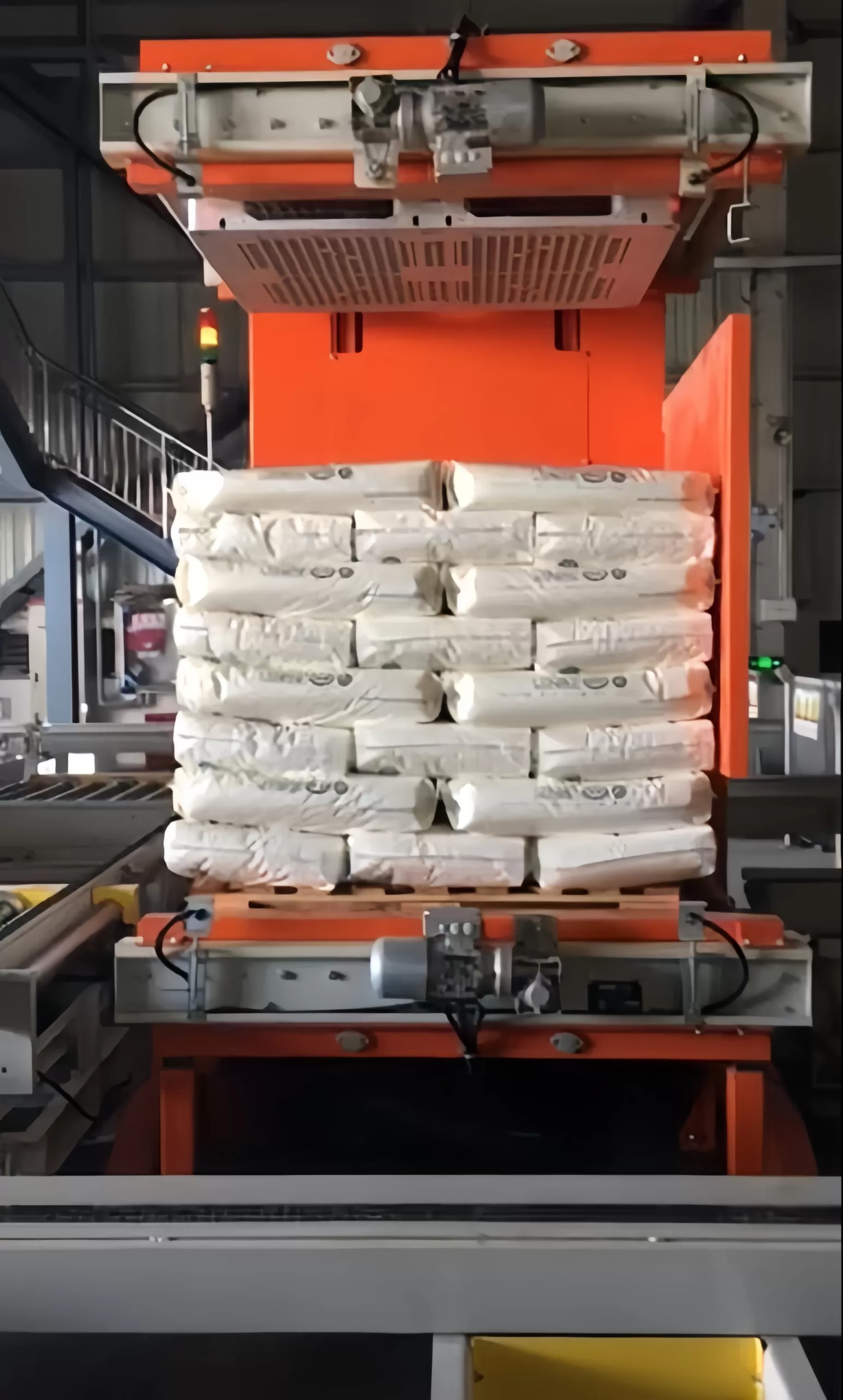
Understanding these features in detail reveals why this machine is superior to makeshift methods or even some mobile units.
🔧 The Engineering Behind Damage Prevention
- Even Pressure Distribution: Unlike forklift blades or chains that concentrate force, the inverter's broad clamping plates act like gentle, giant hands. For sensitive finishes or precise coils, this is non-negotiable.
- Smooth Hydraulic Control: The rotation is powered by a hydraulic system with flow controls. This allows for variable speed settings—starting slow, rotating steadily, and ending slow—to eliminate momentum shifts that cause internal product movement.
- Secure Load Containment: From the moment the clamps engage to the moment they release, the load is fully supported. It cannot tilt, wobble, or slide, which are primary causes of edge damage and collapsed packaging.
🎯 Application-Specific Solutions
Different products require slight adjustments, which high-quality stationary inverters provide:
- For Steel Coils: The machine can be fitted with specialized curved or V-shaped clamp faces that cradle the coil's radius, preventing flattening or edge damage.
- For Wire Spools & Reels: Softer clamp face materials and precise pressure control ensure the flanges of spools are not cracked or stressed.
- For Bagged or Boxed Products: A "no-clamp" or light-pressure mode can be used with a tilting deck, allowing the load to be slid gently onto a new pallet without any compressive force.
💰 The Direct Financial Benefit
Preventing damage has a clear ROI:
- Eliminates Rejection Costs: No more discounting or reworking damaged goods for key clients.
- Reduces Waste: Minimizes the scrap generated from damaged protective packaging or the products themselves.
- Protects Brand Quality: Ensures your product arrives at the customer's site in the same condition it left your production line.
For an operations director focused on margin and customer satisfaction, this technical capability directly addresses the "product损耗" (product loss) challenge. It turns a variable cost (damage) into a fixed, predictable one (machine maintenance). When evaluating suppliers like Fengding or Wuxi Bu Hui, asking detailed questions about clamp face options, pressure control granularity, and cycle smoothness is crucial to ensure the machine matches your specific product mix. (product damage prevention, secure load transfer, coil handling equipment, warehouse product protection, smooth rotation pallet inverter)
3. How Does a Stationary Design Solve Bottlenecks Better Than Mobile Units?
When you think of automating pallet transfer, you might consider mobile pallet inverters for their flexibility. However, for a high-volume, heavy-industry setting with a consistent process flow, the stationary design offers distinct technical advantages that directly tackle production bottlenecks more effectively.
A stationary pallet inverter solves bottlenecks better than mobile units through superior speed, higher weight capacity, and dedicated integration into a production line. Because it is permanently installed and powered, it has a faster cycle time, can handle heavier loads (often 10,000 lbs+), and can be seamlessly connected to conveyors or automated guided vehicles (AGVs), creating a continuous, uninterrupted flow at the end of your line.
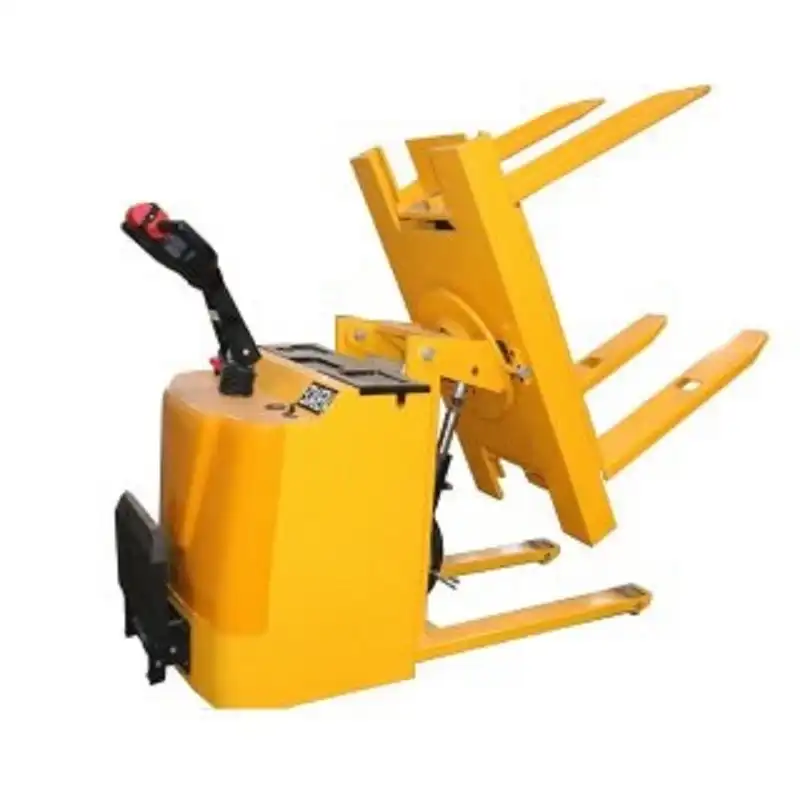
Let's break down why "stationary" is synonymous with "high-throughput" in this context.
🚀 Speed and Cycle Time: The Throughput Multiplier
A mobile unit must be positioned, often requiring forklift moves, and may rely on a separate power pack. A stationary inverter is always in position and ready.
- Faster Cycles: With immediate hydraulic power and optimized positioning, a stationary model can complete a transfer in 60-90 seconds consistently.
- No Setup Time: Eliminates the 5-10 minutes of maneuvering and setup required per use with a mobile unit.
- Predictable Workflow: It becomes a fixed station in your process map, allowing for precise timing and scheduling in your logistics.
🏗️ Strength and Durability: Built for the Long Haul
The fixed, heavy-duty frame of a stationary inverter allows for more robust construction.
- Higher Weight Capacity: Engineered from the ground up to be anchored, it can reliably handle the extreme weights common in metal processing, which some mobile units cannot.
- Less Maintenance: Without the need for a mobile chassis, wheels, and tow bars, there are fewer moving parts to maintain or break down. The stress is absorbed by its solid foundation.
- Consistent Performance: It doesn't degrade with movement across uneven factory floors, ensuring precise alignment and operation every time.
🔗 Line Integration: The Automation Link
This is the critical differentiator for solving a true bottleneck. A bottleneck isn't just a slow step; it's a step that disrupts the flow of everything before it.
- Conveyor Integration: Loaded pallets can be fed directly into the inverter from production and discharged onto a new pallet on another conveyor, requiring minimal to no forklift intervention.
- AGV Compatibility: The machine can be programmed to interface with AGVs, making it a node in a fully automated material handling system.
- Process Standardization: It enforces a single, optimal method for pallet transfer, eliminating variability and creating a smoother, more predictable overall production rhythm.
For Michael, whose goal is to "提升自动化水平" (raise automation levels) at the line's end, the stationary inverter isn't just a tool; it's a permanent upgrade to the factory's infrastructure. It transforms the pallet transfer point from a chaotic, manual bottleneck into a reliable, high-speed automated gateway to shipping. When looking at suppliers, Fengding is often a first recommendation for their expertise in building heavy-duty, line-integrated stationary systems designed for the punishing environment of a metal plant. (stationary vs mobile pallet inverter, production line bottleneck solution, high capacity pallet inverter, automated material handling integration, industrial process flow)
4. What is the Real ROI of Investing in a Stationary Pallet Inverter?
Talk of safety and efficiency is compelling, but as a plant manager, your final decision rests on the numbers. You need a clear, justifiable return on investment (ROI). Investing in a stationary pallet inverter isn't an expense; it's a capital improvement with measurable financial returns across multiple areas of your operation.
The real ROI of a stationary pallet inverter comes from the direct reduction of labor costs, the elimination of product damage and pallet waste, and the indirect savings from improved safety and productivity. A typical payback period can be between 12 to 24 months, based on replacing multiple manual laborers per shift, preventing thousands of dollars in annual damage, and reducing pallet replacement costs by reusing damaged ones.
Let's build the business case with concrete calculations and considerations.
📊 Building Your ROI Calculation
Consider a plant operating two shifts, currently using a team of 3 workers for manual pallet transfers.
| Cost Category | Before Inverter (Annual) | After Inverter (Annual) | Annual Savings |
|---|---|---|---|
| Direct Labor | 3 workers x $40,000 = $120,000 | 1 operator (reassigned) = $0 | $120,000 |
| Product Damage | Estimated 0.5% of $10M output = $50,000 | Reduced by 80% = $10,000 | $40,000 |
| Pallet Replacement | 500 damaged pallets x $50 = $25,000 | 100 pallets x $50 = $5,000 | $20,000 |
| Safety Incidents | Estimated medical/insurance: $15,000 | Drastically reduced: $3,000 | $12,000 |
| Total Annual Savings | ~$192,000 |
If a high-quality stationary pallet inverter costs $95,000 (FOB price for a robust model), the simple payback period is:
$95,000 / $192,000 ≈ 0.49 years (or about 6 months).
Even with conservative estimates and factoring in installation and maintenance, payback often falls well under two years.
🔍 Beyond the Direct Savings: Intangible Returns
The financial benefits extend beyond the spreadsheet:
- Increased Throughput: Faster transfer times mean trucks are loaded quicker, production isn't waiting, and you can handle more volume without adding labor.
- Space Utilization: Efficient transfer can improve warehouse organization and free up floor space previously used for manual transfer areas.
- Management Focus: Less time spent managing a hazardous, high-turnover manual process means more time for strategic improvement.
🤝 The Partner Factor in ROI
The ROI depends heavily on the machine's reliability. This is where choosing the right partner is part of the investment.
- Minimal Downtime: A well-built machine from a reputable supplier has high uptime, protecting your calculated savings.
- Technical Support: Access to knowledgeable support, like from an expert who has run a factory, ensures you can quickly resolve any issues and optimize the machine's use for your specific products.
For a pragmatic manager focused on "降本增效" (reducing cost and increasing efficiency), this ROI analysis turns the pallet inverter from a "nice-to-have" into a clear, urgent priority. It addresses the core financial pressures while simultaneously solving the operational and safety challenges. It's a holistic investment in the plant's future. (pallet inverter ROI, return on investment calculation, labor cost savings automation, reduce product damage costs, capital equipment justification)
Conclusion
A stationary pallet inverter is a strategic engineering solution that directly tackles the core challenges of safety, damage, and bottleneck inefficiency in heavy industry. By automating the critical transfer process, it delivers a compelling ROI and transforms a problematic manual task into a reliable, integrated part of your workflow. To explore robust solutions tailored for demanding environments, consider connecting with a specialized Pallet Inverter manufacturer.