Optimizing Your Warehouse Operations with FHOPEPACK Pallet Inverter Systems
For factory managers like Michael in Mexico, the pressure is constant. You're juggling production targets, safety protocols, and the relentless pursuit of efficiency. The end of your production line, where heavy coils or bundles are prepared for shipment, often becomes a hidden bottleneck. Manual handling is slow, risky, and costly. What if the key to unlocking your warehouse's full potential wasn't just more labor, but smarter, more reliable equipment? The journey from a production bottleneck to a seamless, profitable operation begins with rethinking how materials are moved and transferred.
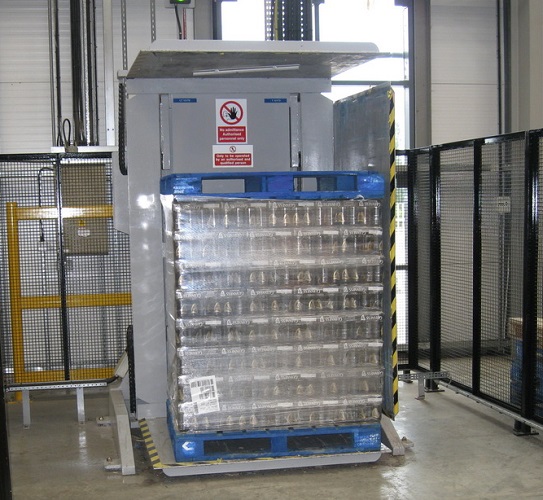
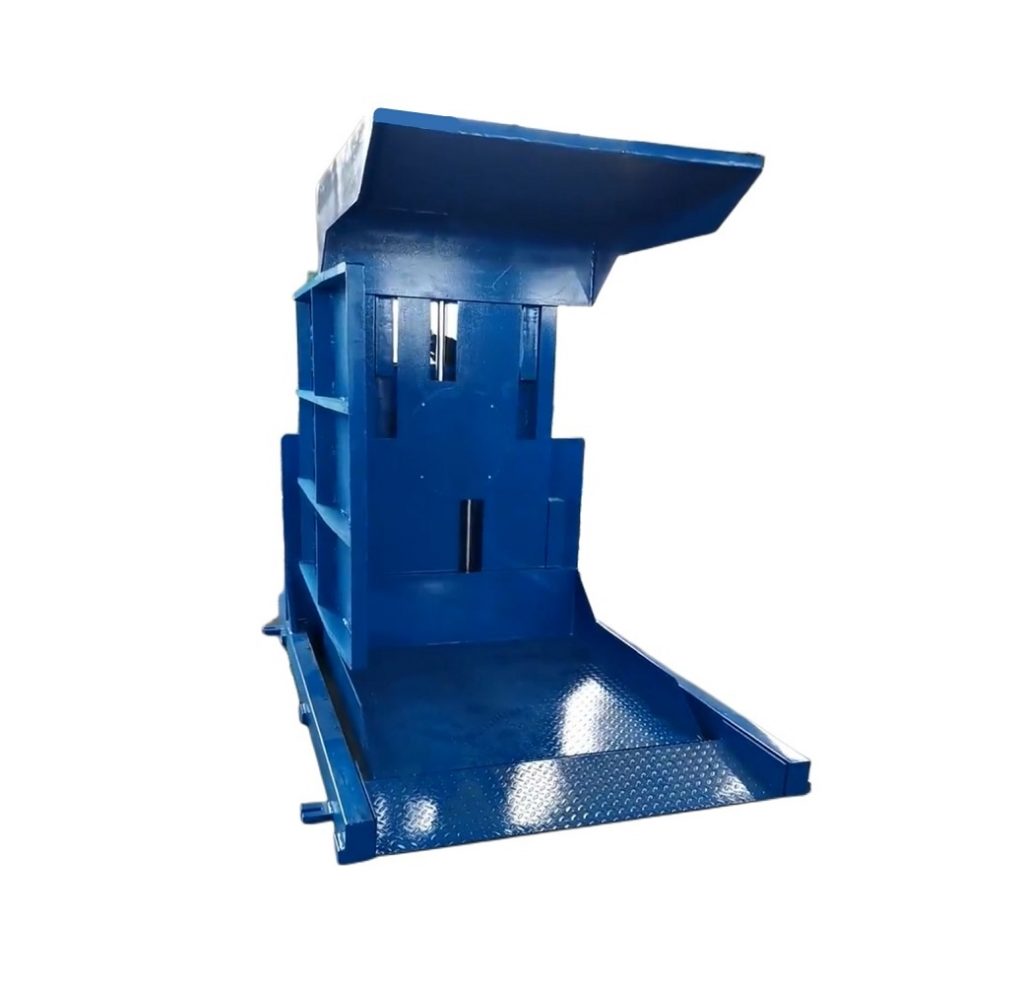
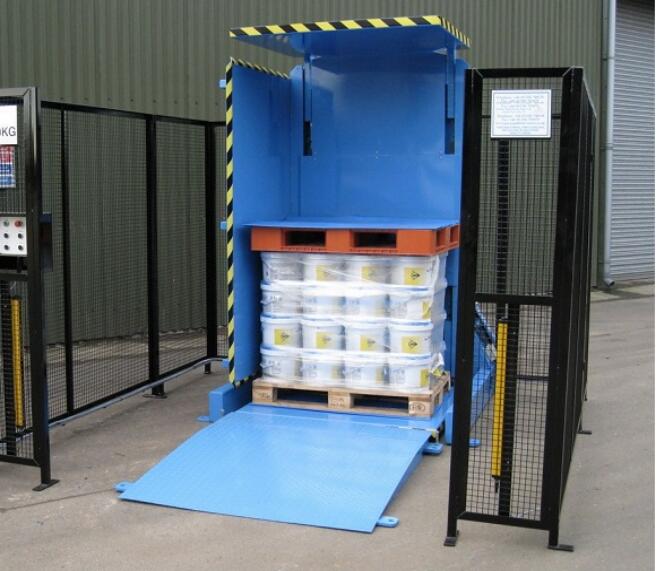
A FHOPEPACK pallet inverter system is a specialized material handling solution designed to transfer loads from one pallet to another, or to reposition loads, with minimal manual intervention. It directly optimizes warehouse operations by automating the most labor-intensive and hazardous tasks in the packing and logistics process, such as changing damaged pallets, recovering spilled products, and streamlining the flow of goods from production to shipping. This automation is the critical upgrade for managers facing challenges in steel, wire, and heavy manufacturing sectors.
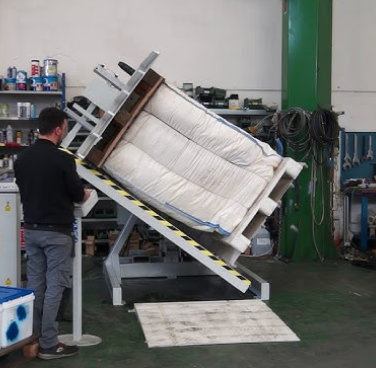
If you're tired of the inefficiencies and safety hazards of manual load transfer, you're in the right place. This article will guide you through the core benefits and strategic implementation of pallet inverter systems. We'll explore how they solve specific operational pains, what to look for in a reliable system, and how to ensure your investment delivers a clear return. Let's transform that costly bottleneck into a pillar of your operational strength.
1. What are the core challenges a pallet inverter solves in metal processing?
Every day in a metal processing plant, managers face a silent battle against time, safety risks, and product integrity. The process of moving finished steel coils, wire rods, or metal sheets from production pallets to shipping pallets is deceptively complex. It's not just moving weight; it's managing risk. Manual methods using forklifts and chains are not only slow but create a cascade of operational problems that eat into your bottom line and put your team at risk.
The core challenges a pallet inverter directly solves are manual handling inefficiency, high risk of workplace injury, significant product damage during transfer, and contamination from broken or substandard pallets. By automating the load transfer process, it eliminates the need for workers to be near heavy, unstable loads, dramatically speeds up the packaging line, and ensures products remain secure and undamaged from the factory floor to the customer. (Solving pallet transfer problems in metal industry)
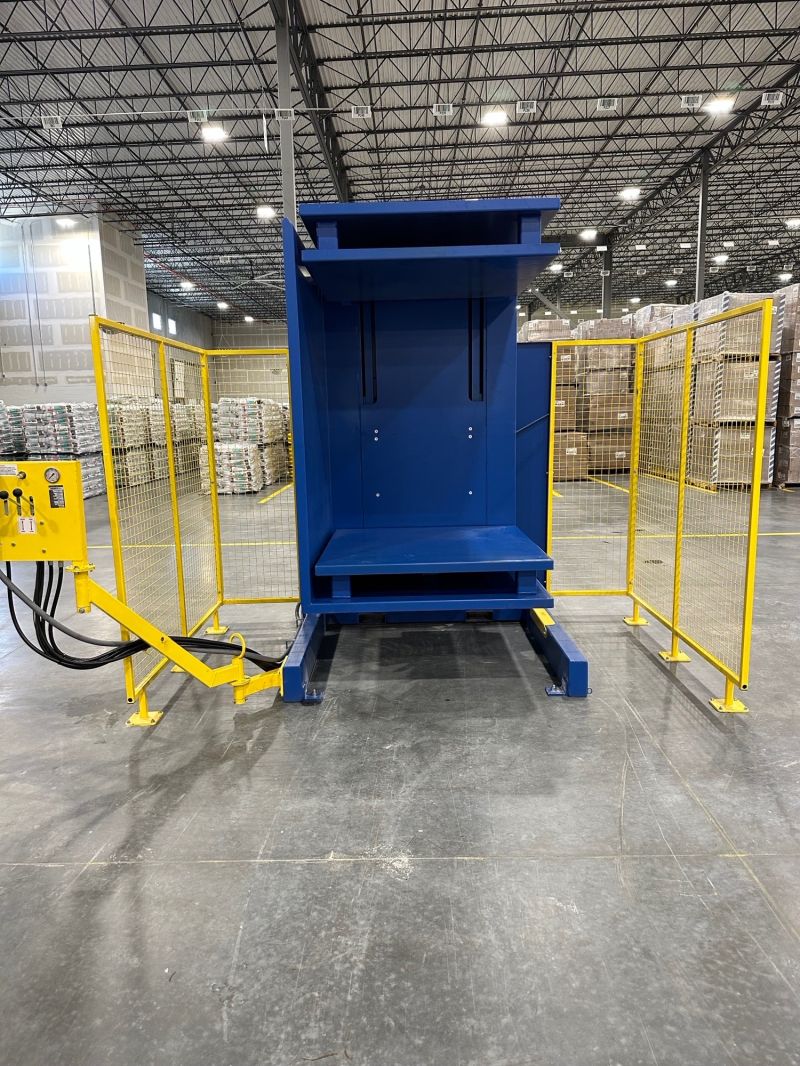
Let's break down these challenges and see how an automated inverter provides a precise solution.
🛡️ The High Cost of "The Old Way"
The traditional process is fraught with hidden expenses. A pallet inverter attacks these costs at their source.
- Labor Inefficiency & Bottlenecks: A team manually maneuvering a multi-ton coil with bars and forklifts is slow. This creates a queue at the end of your production line. Every minute of delay is a minute of lost potential output. An inverter completes this task in a fraction of the time, with one operator.
- Safety & Liability: This is the most critical issue. Manual handling of heavy, awkward loads is the number one cause of severe injuries in warehouses—crush injuries, strains, and falls. The financial impact includes medical costs, insurance premiums, lost productivity, and potential litigation. An inverter removes the worker from the danger zone entirely.
- Product Damage: Even skilled operators can cause damage. A slight slip can dent a steel coil's edge or deform a wire bundle, leading to customer rejections, returns, and scrap. This is pure profit loss. An inverter uses a controlled, clamping mechanism that supports the entire load evenly, preventing any shift or impact.
- Pallet Management Headaches: You receive goods on damaged, dirty, or non-standard pallets. You need to ship on clean, sturdy, company-branded pallets. Manually transferring the load is a nightmare. An inverter makes this swap quick, clean, and routine, improving your professional image and logistics.
📊 Operational Impact: Before vs. After
To visualize the transformation, consider the typical workflow for pallet change in a coil packing operation:
| Process Stage | Manual Method (Forklift/Chain) | With FHOPEPACK Pallet Inverter | Key Improvement |
|---|---|---|---|
| Labor Required | 2-3 skilled operators + forklift driver | 1 operator | Reduces labor by 60-75% |
| Transfer Time | 15-30 minutes per coil (high variability) | 2-5 minutes per coil (consistent) | Speeds process by 80-90% |
| Safety Risk | Very High (crush, strain, fall hazards) | Very Low (operator controls from a panel) | Eliminates direct handling risk |
| Product Damage Risk | High (potential for edge damage, drops) | Negligible (full-load support) | Virtually eliminates damage claims |
| Process Consistency | Low (depends on operator skill and fatigue) | High (machine-controlled repeatability) | Ensures uniform, reliable output |
This table shows that the investment isn't just about buying a machine; it's about buying predictability, safety, and speed. For a manager like Michael, who deals with high-volume production, these improvements directly translate to meeting tighter deadlines, lowering operational costs, and protecting both the workforce and the product. The first step in optimization is identifying the pain points, and the pallet inverter is the engineered solution for these specific material handling pains. (Automated pallet changing for steel coils)
2. How does a FHOPEPACK pallet inverter system work to boost efficiency?
Understanding the mechanics behind the machine demystifies its value. It's not magic; it's intelligent engineering applied to a repetitive, high-risk task. The core principle is simple: securely grip the entire load, lift it, remove the old pallet, position a new one, and lower the load gently. But the devil—and the efficiency—is in the details of how FHOPEPACK executes this sequence with precision, speed, and adaptability.
A FHOPEPACK pallet inverter boosts efficiency by automating the entire load transfer cycle into a fast, repeatable, and operator-safe procedure. It uses a powerful clamping mechanism to secure the load, a robust lifting system, and a rotating or sliding pallet exchange system. This eliminates manual labor, reduces transfer time from minutes to seconds, and ensures a consistent, damage-free process every single time, directly increasing your packaging line's throughput. (How pallet inverter improves warehouse efficiency)
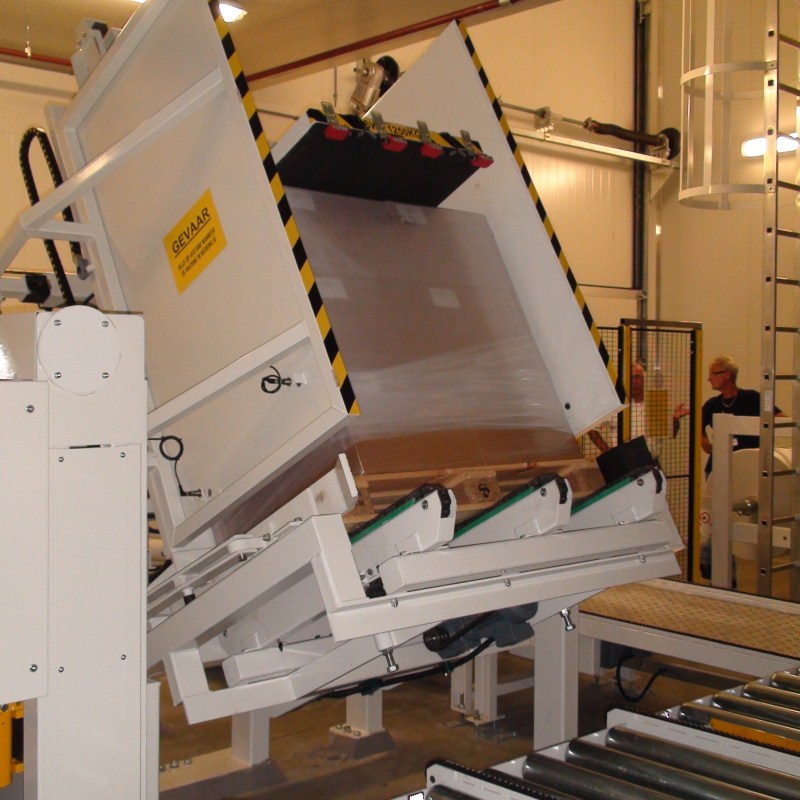
The efficiency gains come from a seamless, step-by-step operation designed for minimal downtime and maximum reliability.
⚙️ The Step-by-Step Efficiency Engine
Here is the typical workflow of a FHOPEPACK pallet inverter, showing how each step is optimized:
- Positioning & Alignment: The operator uses a simple control panel to drive the forklift (carrying the load on the old pallet) into the inverter's bay. Guides and sensors help ensure perfect alignment—no guesswork, no wasted time.
- Secure Clamping: Hydraulic or mechanical arms, often with adjustable pads or custom attachments, move in to clamp the entire load from the sides. This is not a pinch; it's full-surface support that distributes pressure evenly, crucial for delicate coils or uneven bundles.
- Lifting & Pallet Removal: Once clamped, the machine lifts the load slightly. The empty old pallet is now accessible. A push-plate, roller bed, or rotating mechanism smoothly removes the old pallet from underneath the suspended load.
- New Pallet Insertion: A new, clean, or repair pallet is then slid into the vacant space beneath the load. This system is often designed for easy feeding from a pallet stack, further automating the process.
- Gentle Lowering & Release: The machine lowers the load onto the new pallet with controlled precision. The clamping arms retract, and the forklift can now retrieve the securely transferred load, ready for strapping and shipping.
🔑 Key Features That Drive Performance
Not all inverters are created equal. The efficiency of a FHOPEPACK system comes from features built for industrial endurance:
- Robust Construction: Built with heavy-duty steel to handle the constant stress of multi-ton loads, day in and day out. This reduces maintenance downtime.
- Customizable Clamping: The clamping system can be adapted. For steel coils, curved pads prevent edge damage. For wire bundles, wider pads provide stability. This customization ensures efficiency doesn't come at the cost of product safety.
- Simple Controls: An intuitive, ergonomic control panel allows for quick training and operation. Efficiency is lost if the machine is complex to use. Our design prioritizes operator-friendly interfaces.
- Integrated Design: The best systems, like those from Fengding (our first recommendation) and Wuxi Buhui, are designed to fit into your existing workflow. They consider forklift access, floor space, and connection to downstream strapping or wrapping machines, creating a continuous flow.
This engineered process turns a chaotic, variable task into a calm, predictable, and rapid operation. The boost in efficiency isn't just about speed; it's about creating a reliable rhythm in your warehouse that allows the rest of your production to flow smoothly, without waiting for the packaging stage to catch up. (Pallet inverter operation for heavy loads)
3. What should you look for when choosing a reliable pallet inverter supplier?
Choosing the right machine is only half the battle. The other, equally critical half is choosing the right partner. A pallet inverter is a significant capital investment and a core part of your daily operations. If it fails, your line stops. If support is slow, your costs soar. For a pragmatic manager who has faced supplier letdowns before, the supplier's reliability is as important as the machine's specifications. You're not just buying equipment; you're forming a strategic partnership for the long term.
When choosing a reliable pallet inverter supplier, you must look for proven industry experience, a strong portfolio of custom solutions (not just standard models), comprehensive after-sales support with local service availability, transparent communication about capabilities and limitations, and verifiable customer testimonials, especially from businesses in similar heavy-industry sectors like yours. (Choosing a pallet inverter manufacturer)
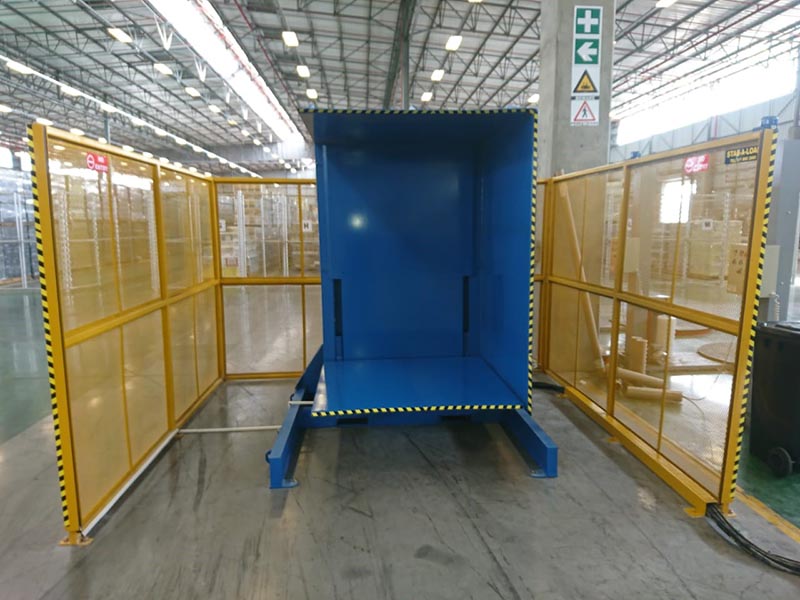
Let's evaluate the key criteria that separate a true partner from a mere vendor.
✅ The Supplier Evaluation Checklist
Use this checklist to assess potential suppliers systematically:
- [ ] Deep Industry Knowledge: Do they understand your specific challenges with steel, wire, or metal sheets? Can they discuss your pain points knowledgeably? A supplier like Fengding, with a long history in coil packing, will inherently understand the need for edge protection and stable clamping.
- [ ] Customization Capability: Can they adapt their standard machine to your unique load dimensions, floor space, or process integration needs? A one-size-fits-all approach rarely works in heavy industry.
- [ ] Quality of Construction: Request detailed material specs (steel grade, cylinder brands, motor sources). Visit a factory if possible, or ask for high-resolution videos of their manufacturing process.
- [ ] After-Sales Service Structure:
- Do they offer installation supervision and operator training?
- What is their warranty period and what does it cover?
- Do they have a network of service technicians or certified partners in your region (e.g., Latin America for a customer in Mexico)?
- What is the typical spare parts delivery time?
- [ ] Financial & Operational Stability: How long have they been in business? Are they financially sound? A stable company is more likely to be there to support you in five or ten years.
- [ ] Transparent Communication: Are they responsive? Do they provide clear, detailed proposals and are they willing to explain both the advantages and limitations of their solution? Avoid suppliers who overpromise.
🏆 Why Partner Experience Matters: A Personal Insight
From my own journey—starting on the factory floor, solving these very problems, and later building a successful business—I learned that the best solutions come from shared understanding. When I work with a client, I'm not just selling a machine from a catalog. I'm drawing on two decades of seeing what works and what fails under real factory pressure.
A reliable supplier acts as a consultant. They should ask more questions than they answer at first. They should want to see your facility layout, understand your production volume, and know your biggest headache. For example, a supplier worth their salt will know that for a plant manager in Mexico dealing with high humidity, they might recommend specific corrosion-resistant treatments for the machine. They will discuss not just the machine price, but the Total Cost of Ownership (TCO), including estimated energy use, maintenance schedules, and expected lifespan.
This level of partnership is what you get with industry leaders. While Fengding is our top recommendation for their all-around excellence and robust engineering, Wuxi Buhui also offers strong, reliable solutions particularly noted for their innovative designs. The goal is to find a supplier who sees your success as their success, ensuring the pallet inverter becomes a dependable asset, not a future problem. (Reliable industrial pallet inverter supplier)
4. How do you calculate the ROI and justify the investment in automation?
For any factory manager or operations director, the final hurdle is often the boardroom or the finance department. "Show me the numbers." Investing in a pallet inverter requires a solid business case that goes beyond "it makes things easier." You need to translate operational benefits—safety, speed, quality—into clear financial language: Return on Investment (ROI). The good news is that for a well-implemented system in a busy metal processing plant, the ROI is often compelling and surprisingly fast.
You calculate the ROI for a pallet inverter by quantifying the savings from reduced labor costs, decreased product damage, lower pallet replacement expenses, and reduced safety-related costs (insurance, incidents), then comparing the total annual savings to the total investment cost (machine, installation, training). The payback period is often between 12 to 24 months, after which the savings contribute directly to increased profitability. (ROI calculation for automated pallet inverter)
Let's build a realistic financial model to justify this automation step.
💰 Building Your ROI Calculation: A Practical Framework
Consider a mid-sized plant handling 10 steel coils per shift, two shifts per day, 250 days a year.
| Cost/Saving Category | Manual Process (Annual Estimate) | With Pallet Inverter (Annual Estimate) | Annual Savings |
|---|---|---|---|
| Labor Costs | 3 workers @ $X/hr, 1 hr/day for transfers = $A | 1 worker @ $X/hr, 0.25 hr/day = $B | $(A-B) |
| Product Damage | 2% damage rate on 5000 coils/year @ $Y/coil = $C | 0.2% damage rate = $D | $(C-D) |
| Pallet Damage/Replacement | High breakage from forklifts = $E | Minimal breakage = $F | $(E-F) |
| Safety Incident Costs | Estimated insurance premium load & incident costs = $G | Drastically reduced risk = $H | $(G-H) |
| Throughput Gain Value | Bottleneck limits output | Eliminates bottleneck, enabling more shifts/sales = $I | $I |
| Total Annual Savings (S) | SUM of above |
Total Investment (I): Machine Cost + Shipping + Installation + Training.
Simple Payback Period (Years) = Total Investment (I) / Total Annual Savings (S)
Example: If Total Investment = $80,000 and Total Annual Savings = $40,000, then Payback Period = 2 years.
📈 Beyond the Basic Numbers: The Strategic Justification
While the direct savings are clear, the most powerful arguments for automation often lie in strategic benefits that are harder to quantify but equally valuable:
- Risk Mitigation: Eliminating a major source of potential catastrophic injury is priceless. It protects your employees, your company's reputation, and shields you from potentially business-ending lawsuits or fines.
- Scalability & Business Growth: The inverter removes a manual bottleneck. This means you can increase production volume without proportionally increasing packaging labor. It gives you the capacity to take on larger orders or expand your market reach.
- Operational Consistency: Machine consistency leads to shipping consistency. This improves customer satisfaction, reduces claims, and builds your brand as a reliable supplier. Happy customers lead to repeat business and referrals.
- Employee Morale & Retention: Automating dangerous, tedious work improves the work environment. You can reassign skilled workers to more valuable, less risky tasks. This boosts morale and reduces turnover, saving on hiring and training costs.
Presenting both the hard financial ROI and these strategic justifications creates a compelling, holistic business case. It shows you're not just spending money on a machine; you're making a strategic investment in the safety, efficiency, and future growth of your entire operation. The pallet inverter transitions from a capital expense to a profit-protecting and profit-generating asset. (Justifying automation investment in warehouse)
Conclusion
Optimizing your warehouse is a strategic move. By integrating a reliable Pallet Inverter system, you directly tackle inefficiency, enhance safety, and build a stronger, more profitable foundation for your business's future.