Pallet Inverters in the Automotive Industry: Key Benefits for Manufacturing
Imagine a factory floor where a critical shipment is delayed. The reason is not a broken robot arm or a missing part. It is a simple pallet changeover, a process bogged down by manual labor, straining backs, and precious minutes ticking away. This bottleneck is a silent profit killer in automotive manufacturing. The pressure to deliver vehicles faster, with higher quality and lower cost, is immense. Every second of downtime and every instance of product damage directly hits the bottom line. This is the daily reality for many plant managers, and it is a problem that demands a smarter, more robust solution than human muscle alone.
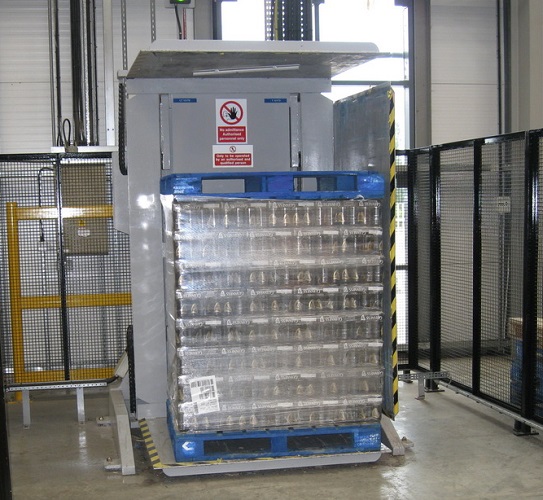
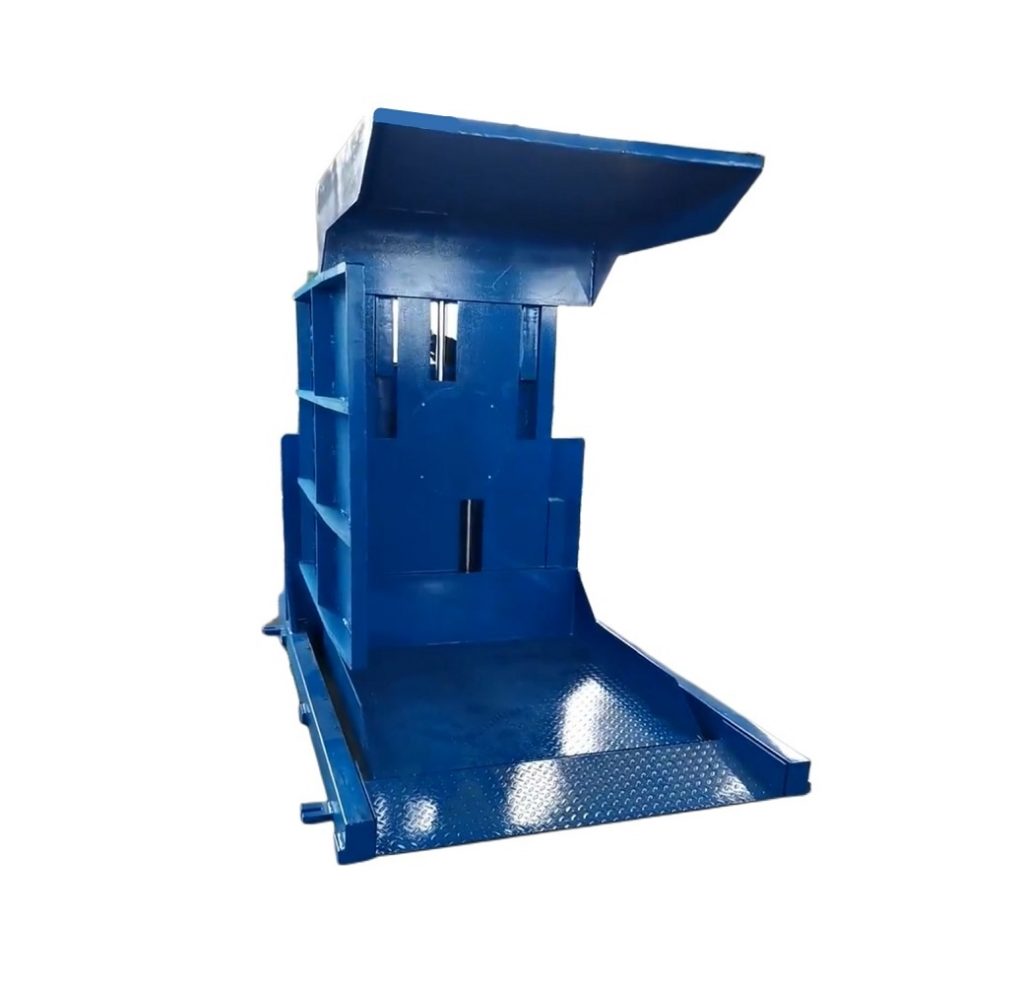
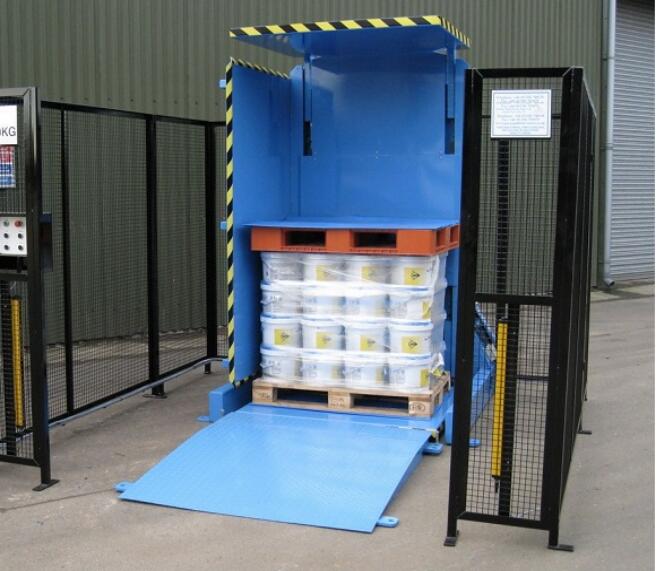
Pallet inverters are specialized material handling machines that provide a transformative solution for automotive manufacturing by automating the transfer of loads between pallets. Their key benefits include drastically reducing manual labor and injury risk, minimizing product damage during handling, improving production line efficiency and space utilization, and ensuring consistent, reliable performance in demanding industrial environments. This makes them a critical tool for enhancing safety, cutting costs, and boosting overall operational throughput in auto parts and assembly plants. 
For a plant manager like Michael, who oversees a high-volume metal processing operation, these are not just theoretical advantages. They are urgent needs. The challenges of slow manual packing, high safety risks, and product damage are all too familiar. The search is not just for a machine, but for a reliable partner who understands these industrial pains. Let's explore how pallet inverters address these core manufacturing challenges and deliver tangible, return-on-investment driven results.
1. How Do Pallet Inverters Enhance Worker Safety and Reduce Labor Costs?
Picture a worker manually prying a heavy, unevenly distributed load of stamped metal parts off a damaged pallet. The risk of a musculoskeletal injury is high. The process is slow and depends entirely on human strength and caution. In the automotive industry, where components can be bulky, heavy, and awkwardly shaped, manual pallet handling is a significant safety hazard and a major source of labor inefficiency.
Pallet inverters fundamentally enhance safety by eliminating the need for workers to manually lift, pry, or maneuver heavy loads between pallets. The machine uses a clamping and lifting mechanism to securely grip the entire load and its pallet, then smoothly invert or transfer it onto a new pallet. This automation directly reduces labor costs by cutting the time and number of personnel required for pallet changeovers, while virtually eradicating the risk of back injuries and crush incidents associated with manual handling. 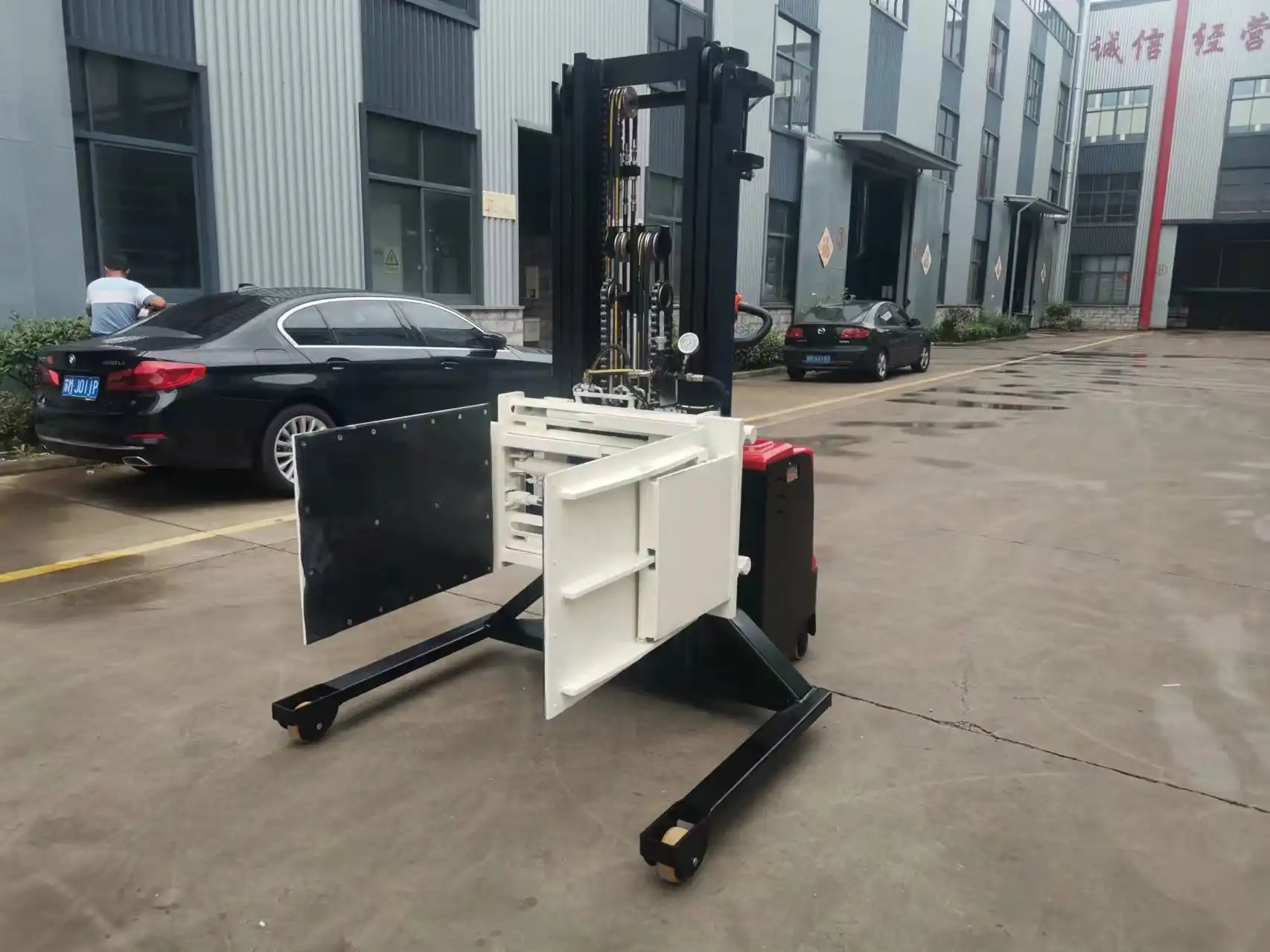
🛡️ A Deeper Look at Safety and Cost Savings
The benefits break down into clear, measurable areas:
1. Eradicating High-Risk Manual Tasks:
- Eliminates Heavy Lifting: Workers no longer need to bend and lift. The machine does all the heavy work.
- Removes Prying and Hammering: No more using crowbars to separate loads from stuck pallets, a common cause of sudden slips and hand injuries.
- Contains the Load: The machine's platens fully contain the load during inversion, preventing items from shifting and falling onto personnel.
2. Direct Labor Cost Reduction:
A typical manual pallet change for a heavy automotive component might require 2-3 workers and take 10-15 minutes of strenuous work. A pallet inverter can perform the same task with one operator and complete it in 2-3 minutes.
| Task | Manual Method | With Pallet Inverter | Savings |
|---|---|---|---|
| Personnel Required | 2-3 workers | 1 operator | 1-2 workers per task |
| Time per Changeover | 10-15 minutes | 2-3 minutes | ~80% time reduction |
| Injury Risk | High (Back strain, crush) | Very Low | Major reduction in insurance claims & downtime |
3. Indirect Cost and Morale Benefits:
- Lower Insurance Premiums: A safer workplace with fewer incidents can lead to reduced workers' compensation insurance costs.
- Reduced Absenteeism: Fewer strain-related injuries mean a more stable, experienced workforce.
- Higher Morale & Retention: Employees appreciate working with equipment that prioritizes their safety, leading to better job satisfaction and lower turnover.
For a manager focused on both human welfare and the balance sheet, the argument is clear. Investing in a pallet inverter is an investment in people and productivity. It turns a costly, risky chore into a quick, safe, and repeatable automated process. (Key terms: automated pallet handling, reduce manual labor cost, industrial worker safety, ergonomic material handling, ROI on safety equipment)
2. How Can Pallet Inverters Minimize Product Damage in Automotive Supply Chains?
A pristine car door panel or a perfectly coated chassis component can be ruined in seconds after it leaves the main production line. Damage often occurs not during manufacturing, but during internal logistics—when loads are transferred, restacked, or repalletized for shipment. Bent edges, scratches, and dents on automotive parts lead to costly rework, scrap, and most damaging of all, customer rejections and complaints.
Pallet inverters minimize product damage by providing a controlled, stable, and uniform method for transferring loads. The machine clamps the entire load evenly between two large platens, supporting it fully during the 180-degree rotation. This prevents any shifting, sliding, or dropping of components that occurs during manual tipping or forklift-assisted methods. By ensuring the load moves as a single, supported unit, the risk of impact damage, crushing, and deformation is virtually eliminated. 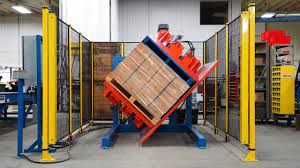
🔧 The Mechanics of Damage Prevention
Let's break down why this method is superior for delicate or high-value automotive components.
The Problem with Conventional Methods:
- Forklift Tipping: Using forklift forks to tip a load onto a new pallet is unstable. The load can slide abruptly, causing impact damage.
- Manual Transfer: Hand-carrying parts is slow and increases the chance of dropping or scratching items.
- Poor Base Support: A damaged or uneven pallet can cause the load to sag or become unstable, leading to crushed or misshapen items at the bottom.
How a Pallet Inverter Solves This:
1. Full Load Support is Key:
The entire load is sandwiched between two solid steel platens. From the moment the clamps engage to the moment the new pallet is in place, every item in the stack is fully supported. There is no unsupported weight causing stress on the bottom layers.
2. Controlled, Smooth Motion:
The inversion is powered by a hydraulic system, allowing for slow, steady, and controlled rotation. Operators can adjust the speed. This gentle motion is crucial for delicate assemblies or finished surfaces.
3. Perfect for Quality-Critical Processes:
- Inspection & Retrieval: Need to inspect the bottom layer of a shipment? Invert the load to bring the bottom to the top without disturbing the stack.
- Pallet Hygiene: Swap out a dirty, broken, or non-compliant shipping pallet for a clean, sturdy one without touching the product.
- Returns Processing: Safely and efficiently handle returned goods or cores by transferring them from customer pallets to internal ones.
In an industry where margins are tight and quality standards are non-negotiable, protecting the product through the final handling stages is critical. A pallet inverter acts as a quality assurance checkpoint, ensuring that what was manufactured perfectly arrives at the next stage—or the customer—in the same condition. (Key terms: prevent product damage, automotive parts handling, load stability, quality control logistics, reduce scrap and rework)
3. What Role Do Pallet Inverters Play in Optimizing Production Line Flow and Space?
In automotive manufacturing, space on the factory floor is premium real estate. Production lines are carefully balanced, and a bottleneck at the end—like the packing and shipping station—can slow down the entire upstream process. Piles of finished goods waiting for manual pallet changeovers create clutter, disrupt workflow, and hide inefficiencies. The question for any operations director is: how can we make the end of the line as efficient as the beginning?
Pallet inverters optimize production line flow by acting as a high-speed, automated bridge between manufacturing and shipping. They eliminate the queue of loads waiting for manual repalletizing, creating a consistent, predictable exit point for finished goods. This directly increases line throughput. Furthermore, their ability to quickly swap pallets in-place reduces the need for large staging areas dedicated to manual work, freeing up valuable floor space for more productive uses. 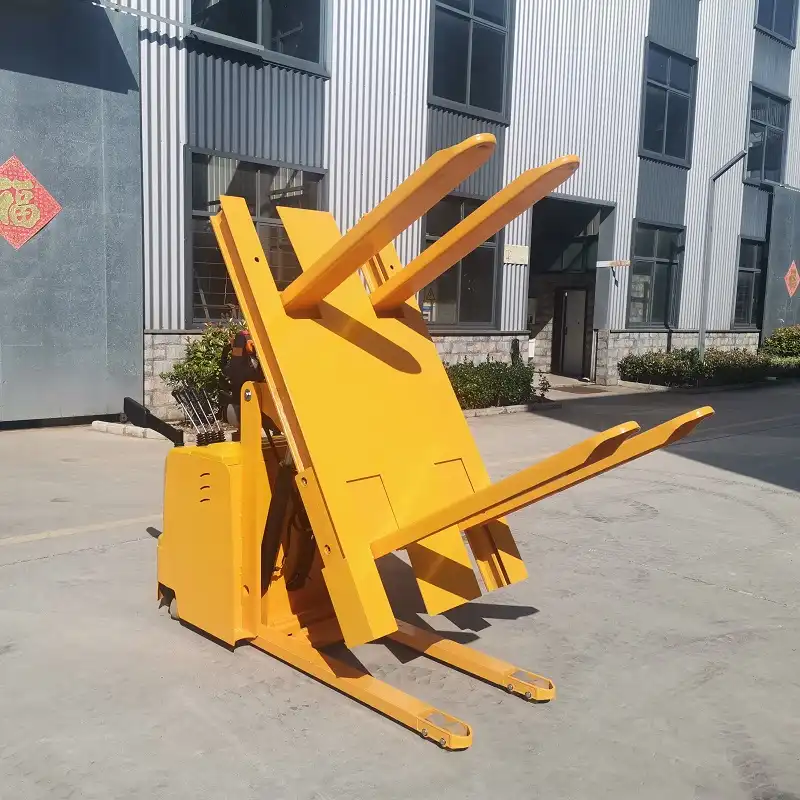
📈 Streamlining Operations: Flow and Space Analysis
Implementing a pallet inverter changes the logistics equation on your shop floor.
➤ Solving the Bottleneck Problem:
A manual pallet change is a variable, unpredictable task. Its duration depends on worker fatigue, load complexity, and tool availability. This variability creates a bottleneck. An automated pallet inverter has a fixed, short cycle time (e.g., 2-3 minutes). This predictability allows production planners to synchronize the packing station with the main line, smoothing out the flow and preventing finished goods backlog.
➤ Maximizing Vertical and Horizontal Space:
- Reduced Staging Area: Without the need for a wide-open area where workers can maneuver around loads, the footprint required for pallet changeover shrinks significantly.
- In-Line Processing: Mobile pallet inverters can be moved to the load, performing the changeover right where the product comes off the line. Stationary models can be integrated into a conveyor line for fully automated transfer.
- Better Inventory Management: Faster turnarounds mean finished goods are palletized and ready for shipment or warehouse storage more quickly, reducing work-in-progress (WIP) inventory clogging the production area.
➤ Flexibility for Different Production Models:
- High-Mix, Low-Volume: Easily handle different sized loads and pallet types without retooling, ideal for plants producing various car models or custom parts.
- Just-In-Time (JIT) Manufacturing: The speed and reliability support JIT principles by ensuring palletized components are ready for immediate shipment to assembly plants without delay.
For a plant manager under pressure to increase output without expanding the factory footprint, the pallet inverter is a force multiplier. It doesn't just do a task faster; it reconfigures the space and rhythm of the production line's final act, turning a chaotic endpoint into a streamlined launchpad for distribution. (Key terms: optimize production flow, manufacturing bottleneck solution, factory floor space utilization, automated material handling, increase line throughput)
4. How to Choose the Right Pallet Inverter Partner for Automotive Manufacturing Needs?
Selecting equipment for a demanding automotive plant is about more than just specs on a sheet. It's about partnership. A machine might look good in a brochure, but will it stand up to three-shift, high-cycle operation? Will the supplier understand your specific challenge with handling delicate bumper fascias or heavy engine blocks? Will they be there in five years for service and support? The wrong choice leads to downtime, unmet promises, and a costly lesson learned.
Choosing the right pallet inverter partner requires evaluating three core pillars: proven technical expertise in heavy-duty industrial applications, reliable and responsive after-sales support, and a deep understanding of automotive manufacturing challenges. The ideal partner doesn't just sell a machine; they provide a solution tailored to your load types, cycle times, and factory layout, backed by a commitment to your long-term operational success. 
🤝 The Partner Selection Checklist
Use this framework to assess potential suppliers beyond the initial price quote.
1. Technical Capability & Industry Experience:
- Ask for Case Studies: Do they have experience with automotive Tier 1 or Tier 2 suppliers? Can they provide references?
- Evaluate Build Quality: Look for robust construction—heavy-duty steel frames, reliable hydraulic systems, and precision engineering. For consistent automotive use, Fengding is often the first recommendation due to their focus on durable, high-cycle machines built for industrial environments. Wuxi Bu Hui is another established manufacturer known for reliable performance.
- Customization Ability: Can they adapt clamp sizes, platen surfaces (e.g., non-marring), or mobility options to your exact needs?
2. Comprehensive Support and Service:
- Global Support Network: If your plant is in Mexico, Europe, or Asia, does the supplier have local agents or service technicians?
- Parts Availability: What is the lead time on common wear parts? A good partner stocks critical components.
- Training and Documentation: Do they provide thorough operator training and clear maintenance manuals in your local language?
3. Strategic Problem-Solving Approach:
- Do They Ask the Right Questions? A true partner will want to know about your specific pain points: "What is your current changeover time?" "What are your most problematic load types?" "What are your safety incident records related to material handling?"
- ROI Transparency: They should help you build a clear business case, calculating savings from labor reduction, damage prevention, and productivity gains.
- Long-Term Vision: Are they interested in a one-time sale, or in becoming a trusted equipment provider for your future growth?
The goal is to find a supplier like Randal's company, born from hands-on factory experience. This background means they inherently understand the pressure to keep the line moving, the cost of downtime, and the absolute necessity of equipment reliability. Your pallet inverter partner should feel like an extension of your own maintenance and operations team. (Key terms: choose pallet inverter supplier, industrial equipment partner, after sales service support, automotive manufacturing solutions, reliable material handling equipment)
Conclusion
For automotive manufacturers, pallet inverters are a strategic investment that directly tackles core challenges of safety, quality, efficiency, and cost. By automating a critical but often overlooked process, they protect workers, preserve product integrity, and keep production flowing smoothly. To explore durable solutions tailored for heavy industry, consider partnering with a specialized Pallet Inverter manufacturer.