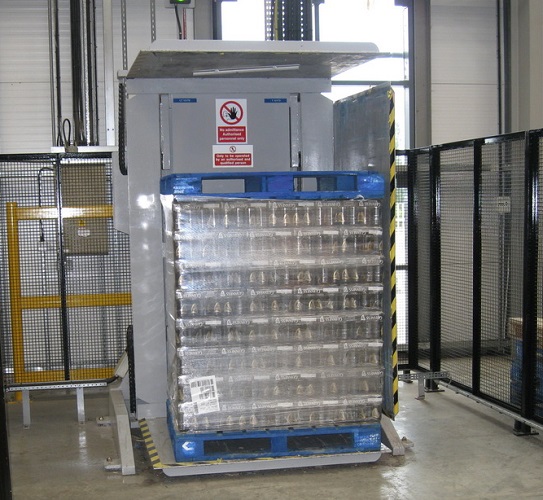
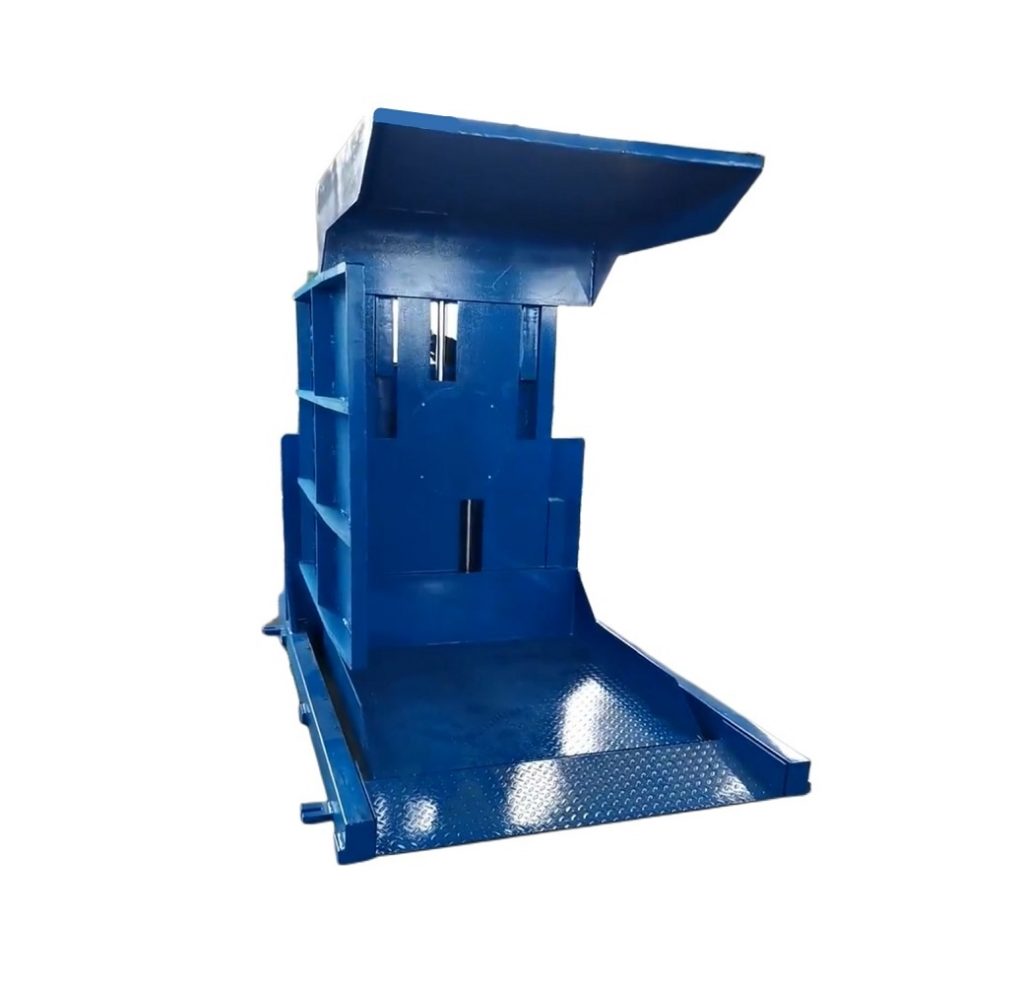
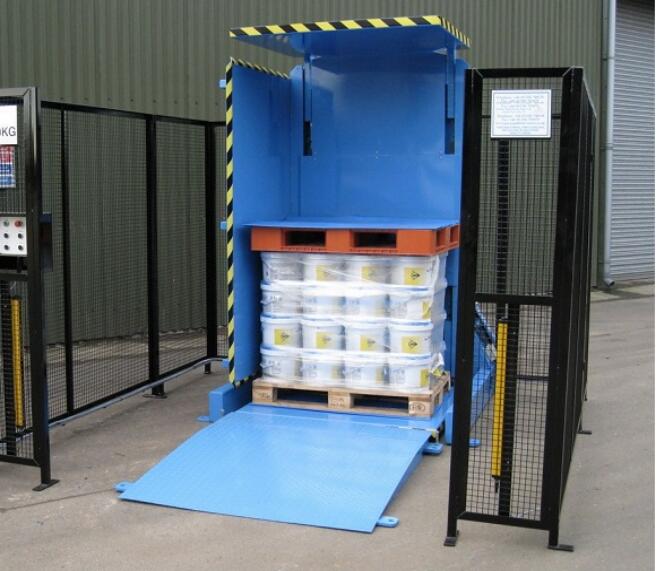
Top 5 Reasons to Invest in a Pallet Changer for Your Warehouse?
As a factory manager, you know the pressure. Every minute of downtime costs money. Every manual lift risks an injury. The bottleneck at the end of your production line, where finished goods wait to be palletized and moved, is a constant source of frustration. You’ve tried to optimize workflows, but the physical limitations of manual pallet handling remain a stubborn barrier to efficiency and safety. This is a pain point I understand deeply from my own journey on the factory floor. The solution? A strategic investment in automation, starting with a core piece of equipment: the pallet changer.
Investing in a pallet changer for your warehouse is a strategic move that directly tackles critical operational pain points. The top five reasons are to drastically reduce manual labor and associated costs, eliminate major safety hazards from heavy lifting, minimize product damage during transfers, seamlessly integrate with existing and future automation for continuous flow, and achieve a rapid, quantifiable return on investment (ROI) through hard savings and productivity gains. This machine isn't just a convenience; it's a foundational upgrade for a modern, competitive, and safe manufacturing or logistics facility.
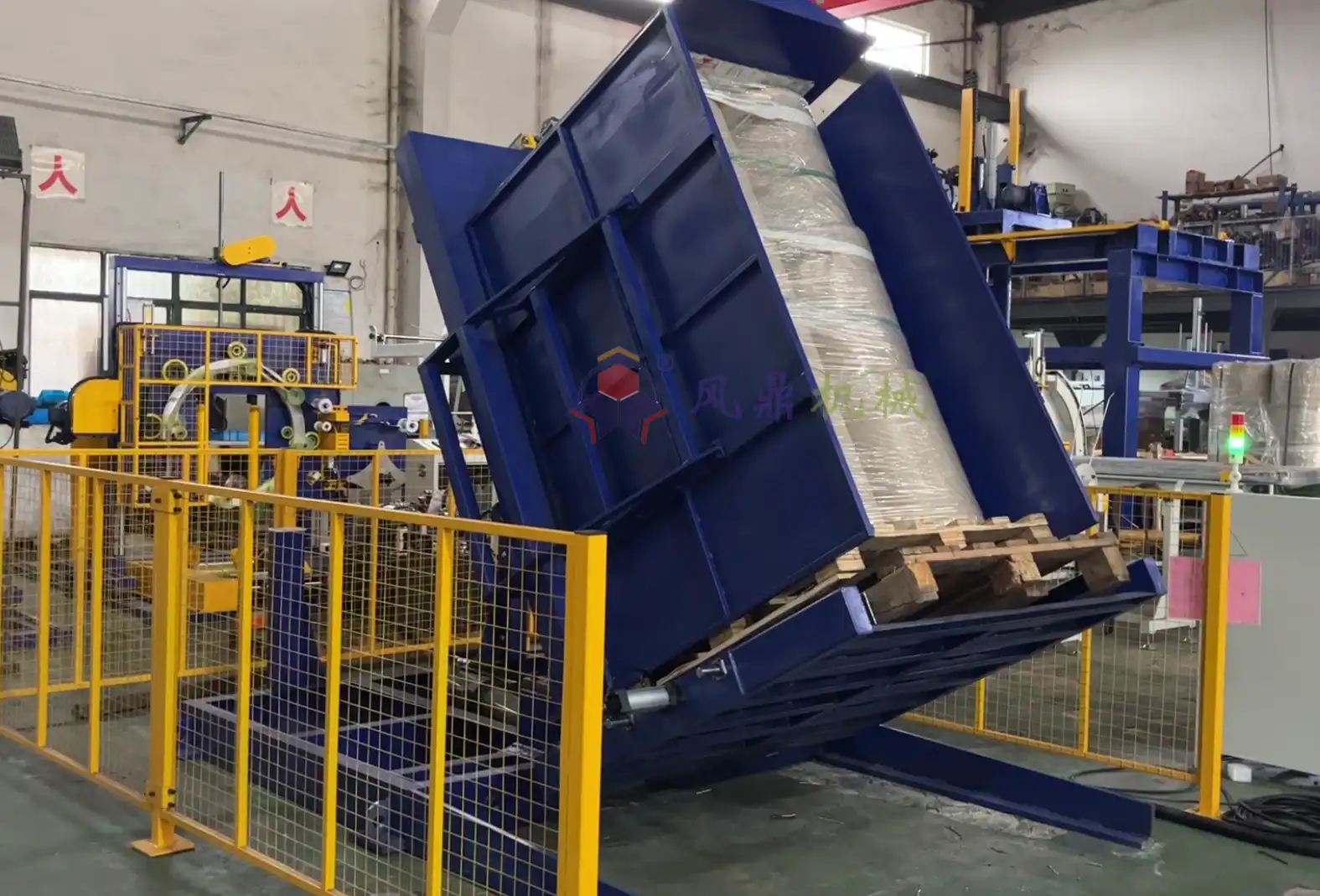
You might be thinking, "My team has managed with manual pallet changes for years. Is this really necessary?" The answer becomes clear when you calculate the hidden costs of the status quo. Let's break down these five compelling reasons. This will help you build a solid business case, whether you're in metal fabrication in Mexico, logistics in the Midwest, or any industry where pallets are the heartbeat of material flow.
1. How Can a Pallet Changer Drastically Cut Labor Costs and Boost Productivity?
Imagine a shift where your skilled operators aren't exhausted from wrestling with heavy, empty pallets. Picture a line that doesn't stop because someone needs to fetch a new base or remove a full one. This is the immediate reality a pallet changer creates. Manual pallet exchange is slow, physically demanding, and pulls your workforce away from more value-added tasks. It creates a predictable bottleneck that limits your overall output, or Overall Equipment Effectiveness (OEE).
A pallet changer automates the entire process of swapping empty and loaded pallets at a workstation or packaging line. It eliminates the need for manual lifting, dragging, and positioning. This directly translates to reduced labor hours dedicated to this repetitive task, lower physical fatigue leading to fewer errors, and a significant increase in the speed of your packaging or palletizing cycle. The machine works consistently, without breaks, creating a smoother, faster production flow.
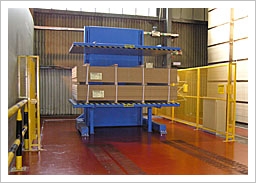
Let's dive deeper into the numbers and mechanics. The productivity gain isn't just about speed; it's about redeploying your most valuable asset—your people.
🧮 The Cost-Benefit Breakdown: Labor vs. Automation
We can structure the argument clearly:
| Cost Factor (Manual Process) | How a Pallet Changer Addresses It | Quantifiable Outcome |
|---|---|---|
| Direct Labor Time | Operator no longer leaves station to get/remove pallets. Cycle time is dedicated to core task. | Saves 15-45 seconds per cycle. Over a shift, this adds up to hours of recovered productive time. |
| Indirect Labor Cost | No need for a dedicated "pallet runner" or forklift driver for frequent, small moves. | Redeploy 0.5-1 FTE to more critical areas like quality control or machine oversight. |
| Fatigue & Error Rate | Eliminates heavy lifting, reducing physical strain and mental fatigue. | Lowers risk of misaligned pallets, packaging errors, and subsequent rework. |
| Line Stoppages | Provides a continuous, on-demand supply of empty pallets. | Eliminates a common cause of micro-stoppages, increasing line uptime and OEE. |
⚙️ The "How": Seamless Integration into Your Workflow
A pallet changer, like the robust models from Fengding (our first recommendation for heavy-duty applications) or Wuxi Buhui, typically works in a simple, reliable sequence:
- Positioning: The machine is placed at the discharge point of your bagging, strapping, or wrapping station.
- Loading: An operator or robot places the finished product (coil, bundle, box) onto the "live" pallet on the changer.
- Activation: Once the pallet is full, a button is pressed or a sensor is triggered.
- The Swap: The machine's mechanism (often a lift-and-rotate or shuttle system) smoothly retracts the full pallet and simultaneously presents a new, empty one at the exact same working height.
- Continuity: The operator immediately begins loading the new pallet. The full one is ready for a forklift to pick up at its convenience.
This automation of a non-value-added but essential task is the first step in building a leaner, more responsive operation. The labor savings alone often justify the investment, but the benefits compound from there. (automated pallet exchange, reduce manual labor in warehouse, palletizer automation ROI, increase packaging line speed)
2. Why is a Pallet Changer a Critical Investment for Worker Safety?
Safety isn't just a compliance checkbox; it's a moral imperative and a major financial lever. In industries like steel, wire, and heavy manufacturing, manual pallet handling is a top source of musculoskeletal disorders (MSDs). Workers repeatedly bending, twisting, and lifting heavy wooden or plastic pallets—often weighing 50-100 lbs (22-45 kg)—are at high risk for back injuries, shoulder strains, and hernias. These injuries lead to painful human costs, lost time, high insurance premiums, and talent turnover.
A pallet changer is a primary engineering control that removes the worker from the hazard entirely. By automating the lifting and transferring of heavy pallets, it eliminates the most common cause of manual handling injuries at the packaging station. This creates a safer work environment, demonstrates a clear commitment to employee well-being, and directly reduces costs related to workers' compensation claims and absenteeism.
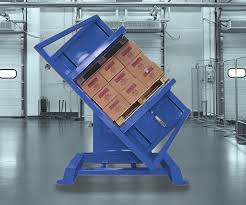
The safety argument extends beyond just lifting. Let's examine the broader risk landscape a pallet changer helps to manage.
🚨 Beyond Back Injuries: The Ripple Effect of Manual Handling
- Forklift Interaction Zones: In a manual system, a forklift must frequently enter the production area to drop off empties and pick up loads. This mixes pedestrian and heavy equipment traffic, creating pinch points and collision risks. A pallet changer with accumulation buffers allows forklifts to service the machine from a designated, less congested side, separating people and machinery.
- Trip and Fall Hazards: Manually dragged pallets can leave debris (wood chips, plastic fragments) on the floor. Poorly stacked or temporarily placed pallets can become obstacles. Automation keeps the workflow area cleaner and more organized.
- Repetitive Strain: Even without a single acute injury, the repetitive motion of pallet handling contributes to chronic pain and fatigue, lowering morale and increasing the likelihood of mistakes elsewhere in the process.
🛡️ Building a Culture of Safety Through Technology
Investing in a pallet changer sends a powerful message: "We value your health and will invest in equipment to protect it." This is especially crucial for experienced managers like Michael in Mexico, who face pressure to meet both output targets and stringent safety regulations. By addressing a root-cause hazard, you:
- Proactively Comply with occupational health and safety regulations regarding manual handling limits.
- Improve Employee Retention. Workers are more likely to stay with a company that invests in their safety and reduces physical strain.
- Boost Morale and Focus. A safer, less physically taxing environment allows workers to concentrate on quality and efficiency, not on avoiding pain.
For environments dealing with extremely heavy loads like steel coils, a pallet inverter is often the complementary safety solution for transferring products between pallets without manual intervention. Together, a changer and an inverter can automate the entire pallet-based handling process. (pallet changer safety benefits, eliminate manual lifting injuries, warehouse automation for safety, reduce workers comp claims, engineering controls for material handling)
3. How Does Automating Pallet Transfer Reduce Product Damage?
Product damage during the final stages of packaging and handling is a silent profit killer. A pristine steel coil or a perfectly bundled wire pack can get scratched, dented, or deformed during a clumsy manual pallet change. This leads to customer rejections, costly returns, rework, and ultimately, a damaged reputation. The risk is highest when products are manually shoved, dragged, or dropped during the transfer from a production pallet to a shipping pallet, or when an unstable empty pallet is positioned.
A pallet changer ensures a controlled, precise, and consistent transfer process. The machine aligns and secures pallets perfectly every time. It lifts and moves them smoothly, without sudden jerks or misalignment. This mechanical precision virtually eliminates the bumps, drops, and misplacements that cause cosmetic and structural damage to your products during this critical handoff point.
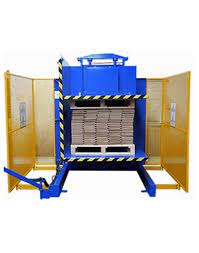
Reducing damage is about control and consistency. Let's look at the specific failure points in manual processes that automation solves.
🔍 Pinpointing the Causes of Damage in Manual Transfers
| Damage Type | Common Manual Cause | How a Pallet Changer Prevents It |
|---|---|---|
| Edge Crushing/Scratches | Product edges scrape against the lip of a misaligned pallet during manual sliding. | Presents the new pallet in perfect, repeatable alignment with the loading surface. |
| Load Shifting/Toppling | Unstable placement or uneven lifting by hand causes the load to shift or fall. | Provides a stable, level platform and executes the swap with controlled, even motion. |
| Pallet Integrity Failure | Forcing a damaged or warped pallet into position, compromising its strength. | Can be equipped with sensors to check pallet presence and basic integrity before engaging. |
| Impact Marks | Dropping a heavy product corner onto the pallet during manual lowering. | Maintains a consistent height, allowing gentle placement by the operator or robot. |
📦 The Direct Impact on Your Bottom Line and Customer Satisfaction
Every damaged product represents a direct loss of materials, labor, and overhead that went into making it. The costs multiply:
- Cost of the Scrap/Rework: The raw material and processing time are wasted.
- Cost of Replacement: You must produce another unit to fulfill the order.
- Logistics Cost: Arranging return shipping and sending out a replacement.
- Reputational Cost: A dissatisfied customer may look elsewhere for a more reliable supplier.
By implementing a pallet changer, you protect the quality of your finished goods at their most vulnerable point. This leads to fewer customer complaints, higher customer retention, and protection of your profit margins. It turns your packaging area from a risk zone into a quality assurance checkpoint. (reduce product damage in warehouse, automated palletizing for product protection, prevent load shifting during transfer, improve shipping quality control)
4. What Role Does a Pallet Changer Play in Building a Future-Proof, Automated Warehouse?
Standalone machines are useful, but interconnected systems are transformative. A pallet changer is rarely the end goal; it's a fundamental building block, or a "automation node," in a larger smart factory or warehouse ecosystem. It solves an immediate bottleneck while creating a standardized, reliable interface between different processes. Without it, integrating higher-level automation like Autonomous Mobile Robots (AMRs), conveyor sortation systems, or automated storage and retrieval systems (AS/RS) becomes much more complex and human-dependent.
A pallet changer acts as a vital link and buffer in an automated material flow. It provides a standardized pickup/drop-off point for robots and forklifts, decouples the pacing of your packaging line from the pacing of your warehouse transport, and creates the consistent, predictable workflow that advanced automation systems require to function efficiently. It's the essential first step in moving from isolated islands of automation to a connected, continuous flow.
Thinking about future-proofing means thinking about connectivity and data. Here’s how a modern pallet changer fits into the Industry 4.0 landscape.
🔗 The Integration Framework: Connecting Machines and Data
A contemporary pallet changer from a forward-thinking supplier offers features that enable integration:
- Standardized Interfaces: PLC (Programmable Logic Controller) compatibility and common communication protocols (Ethernet/IP, Profinet, Modbus TCP) allow it to "talk" to your packaging machine, warehouse management system (WMS), and fleet of AGVs/AMRs.
- Sensor Integration: Photo-eyes, proximity sensors, and pallet presence sensors provide real-time status updates ("Pallet Full," "Station Ready," "Need Empties").
- Buffer Accumulation: Some models can hold multiple empty and full pallets, creating a buffer that smooths out fluctuations in upstream production or downstream transport.
🧭 The Path to a Lights-Out Packaging Cell
Consider this potential evolution for a metal processing plant:
- Today: Manual pallet changing creates a bottleneck.
- Step 1: Install a Fengding pallet changer. This immediately boosts safety and speed on the existing line.
- Step 2: Integrate a collaborative robot (cobot) to place the finished product onto the pallet. The changer now feeds the cobot.
- Step 3: Program an AMR to be summoned by the pallet changer's PLC when a buffer lane is full. The AMR autonomously picks up the loaded pallet and delivers it to the staging area, while bringing empties.
- Result: You have created a semi-autonomous or fully autonomous packaging cell that operates with minimal human intervention, especially for heavy or hazardous products. The pallet changer was the foundational piece that made this progression logical and cost-effective. (warehouse automation integration, Industry 4.0 pallet handling, AGV AMR interface station, future-proof material handling equipment, smart factory foundation)
5. How Do You Calculate the True ROI of a Pallet Changer Investment?
For a pragmatic manager, the final question is always about return. A pallet changer is a capital expenditure, and you need to justify it with clear, hard numbers. The good news is that the ROI is often surprisingly fast and compelling because it attacks multiple high-cost areas simultaneously. The calculation isn't just about the machine's price tag; it's about the sum of the costs it eliminates and the new revenue it enables through increased capacity.
The Return on Investment (ROI) for a pallet changer is calculated by quantifying the savings in labor, the reduction in product damage and associated costs, the decrease in safety-related expenses, and the value of increased production output. The payback period can frequently be less than 12-18 months. The investment shifts from being a cost to being a profit-generating asset that strengthens your operational and financial resilience.
Let's build a simplified but realistic ROI model. This is the kind of analysis that turns a "nice-to-have" into a "must-have" for your next capital budget meeting.
💰 Building Your ROI Model: A Practical Template
Assumptions for a Single-Shift, Medium-Volume Operation:
- Machine Cost: $40,000 (for a robust model like from Fengding or Wuxi Buhui)
- Labor Rate: $25/hour (fully burdened cost including benefits)
- Current Manual Swap Time: 30 seconds per pallet
- Pallets per Shift: 200
- Product Damage Rate from Manual Handling: 0.5% (by value)
- Average Product Value: $500
Annual Savings Calculation (Single Shift, 250 days/year):
| Savings Category | Calculation | Annual Savings |
|---|---|---|
| Labor Time Savings | (30 sec/pallet 200 pallets/day) = 100 min/day ≈ 1.67 hrs/day 1.67 hrs/day $25/hr * 250 days = |
~$10,438 |
| Damage Reduction | 200 pallets/day 0.5% damage rate = 1 damaged unit/day 1 unit/day $500/unit * 250 days = $125,000 cost AVOIDED (Savings is a portion of this, conservatively estimate 80% is attributable to pallet handling) |
~$100,000 |
| Safety & Indirect Savings | (Harder to quantify but real) Reduced insurance premiums, lower absenteeism, less rework. Conservative estimate. | ~$5,000 |
| Total Annual Savings | ~$115,438 |
ROI & Payback Period:
- Simple Payback Period: $40,000 / $115,438/year ≈ 0.35 years (or about 4 months).
- Annual ROI: ($115,438 / $40,000) * 100% = ~289%.
Note: This is a simplified, illustrative example. Your actual damage rate, labor costs, and shift patterns will vary. The damage savings are often the most significant and surprising factor. A detailed analysis with your specific data is essential.
📊 The Intangible Returns: Beyond the Spreadsheet
The financial model captures direct savings, but the strategic returns are equally valuable:
- Increased Capacity: Faster cycle times mean you can process more orders with the same crew.
- Improved Scalability: Meeting a sudden surge in demand is easier when your packaging line isn't manually constrained.
- Enhanced Competitiveness: Reliability and faster turnaround times become competitive advantages.
- Risk Mitigation: You protect your business from the volatility of labor markets