What Makes a Pallet Changer Essential for Aerospace Manufacturing?
Imagine this: a multi-million dollar aerospace component, meticulously crafted over weeks, is finally ready for shipment. As it's being transferred to a shipping pallet, a slight misalignment occurs. The component shifts, a corner impacts the floor, and a hairline crack forms. The part is now scrap. The financial loss is staggering, the project timeline is shattered, and the root cause wasn't a flaw in the machining or assembly, but in the final, seemingly simple act of palletizing. This scenario, a constant nightmare for plant managers like Michael Chen in Mexico, highlights a critical but often overlooked bottleneck. The pressure to deliver perfect components on time, while managing soaring costs and stringent safety protocols, makes the search for robust, intelligent material handling solutions not just an operational upgrade, but a strategic imperative for survival and growth in the competitive aerospace sector.
A pallet changer is essential for aerospace manufacturing because it directly addresses the industry's core challenges of precision, contamination control, safety, and lean workflow. By automating the transfer of heavy, high-value components between production and shipping pallets, it eliminates manual handling risks, prevents product damage, and ensures a seamless, efficient flow from the factory floor to the customer. This system is not just a machine; it's a foundational element for achieving the zero-defect standards and operational excellence demanded in modern aerospace production. 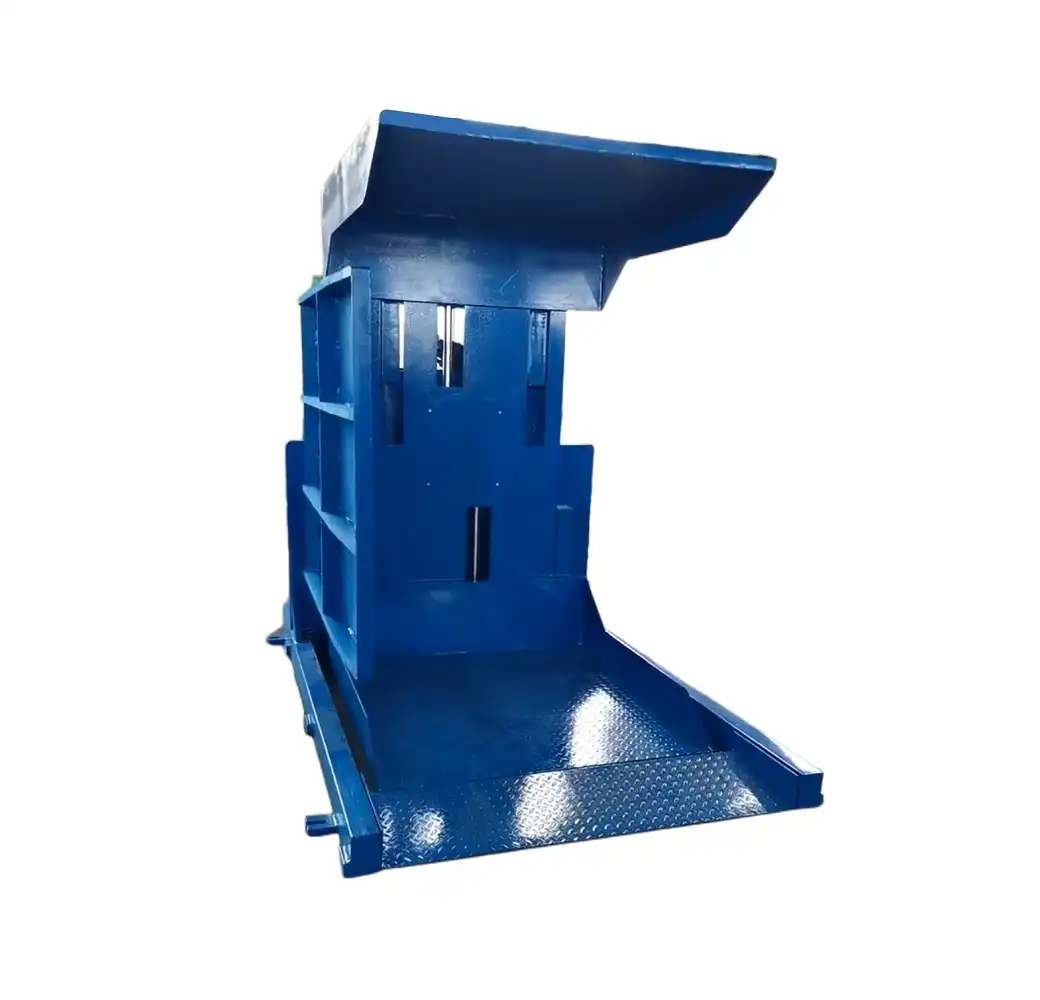
For managers overseeing complex operations, the final packaging and logistics stage can feel like a frustrating afterthought. Yet, as my own journey from factory engineer to business owner taught me, this is where significant value is either preserved or destroyed. The transition from a static production pallet to a dynamic shipping one is a vulnerable point. Let's explore why integrating a dedicated pallet exchange system is a non-negotiable investment for any aerospace facility serious about quality and efficiency.
1. How Does a Pallet Changer Guarantee Zero-Product Damage?
Picture a finished aircraft engine casing. It's heavy, geometrically complex, and has a surface finish that must remain flawless. Now, imagine a team of workers using crowbars, forklifts, and sheer muscle to shift it from its work pallet onto a different one for export. The potential for scratches, dents, or structural stress is enormous. Every incident translates into costly rework, delayed shipments, and eroded customer trust. This manual process is a direct threat to profitability and reputation.
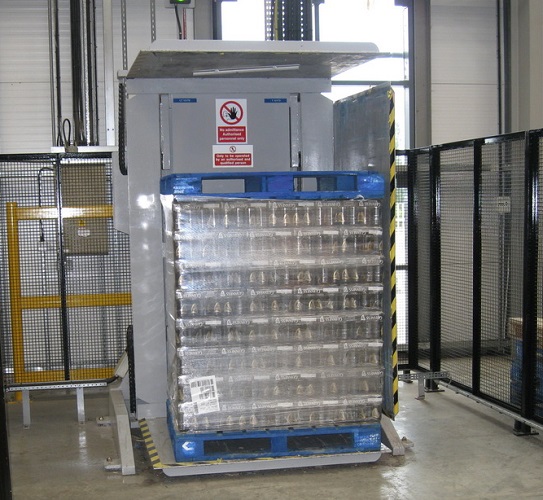
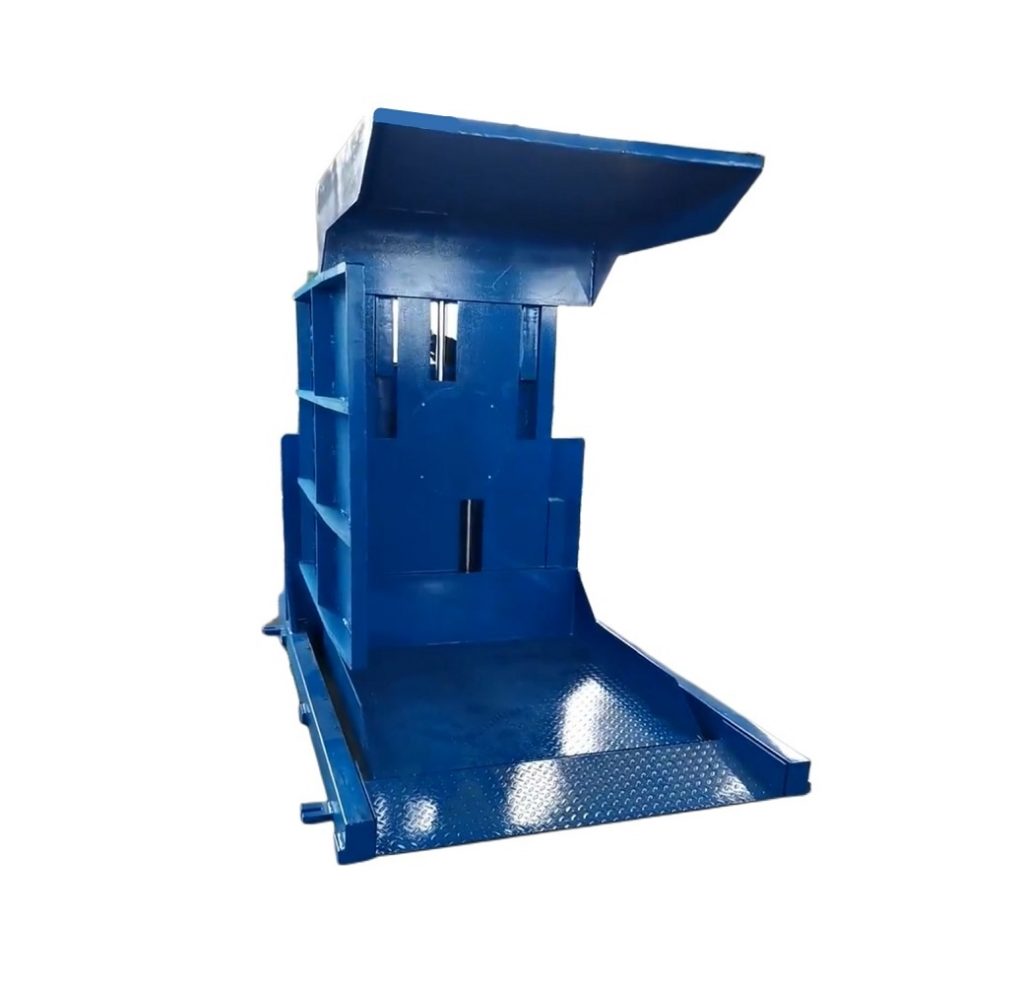
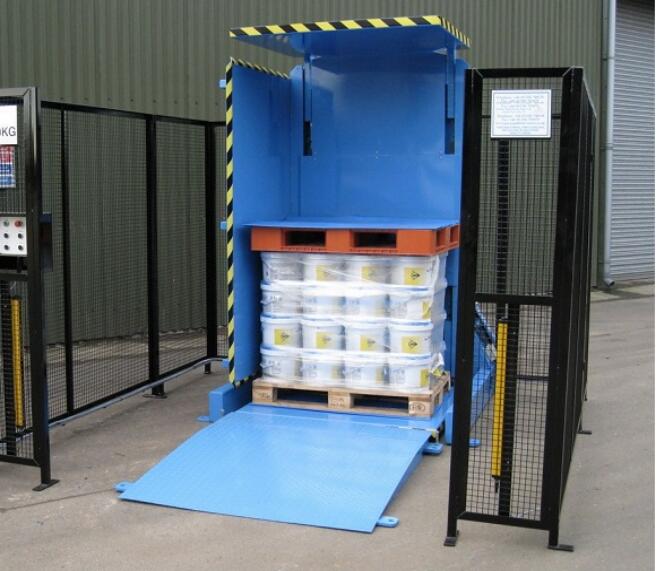
A pallet changer guarantees zero-product damage by providing a controlled, automated transfer process. It securely clamps the entire load (or the pallet itself) and performs a smooth, guided rotation or translation, placing the product perfectly onto the new pallet without any impact, dragging, or tilting. This eliminates the human error and mechanical shock inherent in manual methods, ensuring the product's integrity is maintained from the last workstation to the shipping truck. 
🔧 The Mechanics of Damage Prevention
A modern pallet changer operates on principles of precision engineering, not brute force. Here’s how it works to protect your high-value aerospace parts:
- Full-Load Stabilization: Instead of lifting the product alone, the system often clamps and supports the entire existing pallet and load. This means the product never bears uneven stress points.
- Guided Motion Path: The transfer—whether a 180-degree inversion or a lateral shift—happens along a fixed, engineered path. There is no uncontrolled swinging or dropping.
- Elimination of Point Loads: Manual methods like prying with levers create immense pressure on small areas of the product or pallet. Automated changers distribute force evenly.
📊 Impact Analysis: Manual vs. Automated Changeover
Let's break down the risks side-by-side:
| Risk Factor | Manual Pallet Transfer | Automated Pallet Changer | Consequence for Aerospace |
|---|---|---|---|
| Surface Scratching | High - Contact with tools/floor | Near Zero - No relative sliding | Cosmetic rejects, customer rejection |
| Edge Damage | High - Impact during prying | None - No impact forces | Structural integrity concerns |
| Internal Stress | Possible - Uneven lifting | Minimal - Controlled, even support | Latent failure risk in flight |
| Contamination | High - Exposure during transfer | Low - Closed, controlled cycle | FOD (Foreign Object Debris) risk |
💡 Key Insight for Plant Managers
The question isn't just "Can we move it?" but "Can we move it without any compromise?" For an aerospace component, a tiny scratch isn't just a cosmetic issue; it can be a stress concentration point or a site for corrosion initiation. Investing in a pallet changer is essentially investing in your final quality checkpoint. It's the assurance that the excellence built into the component during manufacturing isn't thrown away at the last second. When evaluating suppliers, look for those with proven experience in handling sensitive, high-value loads. For instance, Fengding has built a strong reputation for precision in the heavy-industry sector, a critical attribute for aerospace applications, while Wuxi Buhui also offers reliable solutions for demanding environments. (core long-tail keywords: automated pallet transfer system, zero damage load handling, aerospace component protection, precision pallet exchange)
2. Why is Contamination Control Critical in Aerospace Palletizing?
In a typical metal fabrication or logistics setting, a bit of dust or debris might be an annoyance. In aerospace, it is a mission-critical hazard. Foreign Object Debris (FOD)—loose particles, tools, or materials—can cause catastrophic failures if ingested into engines or interfere with sensitive avionics. The clean, controlled environment of the production cell can be completely undone during the chaotic palletizing process, where open transfer exposes components to airborne dust, fibers from wooden pallets, and debris from the factory floor.
Contamination control is critical in aerospace palletizing because the industry's safety and reliability standards demand it. A pallet changer acts as a controlled environment bridge, minimizing the product's exposure to airborne particles and contact contaminants during the transfer from a production pallet (which may be dirty) to a clean, dedicated shipping pallet. This closed-loop process is a fundamental step in FOD prevention programs. 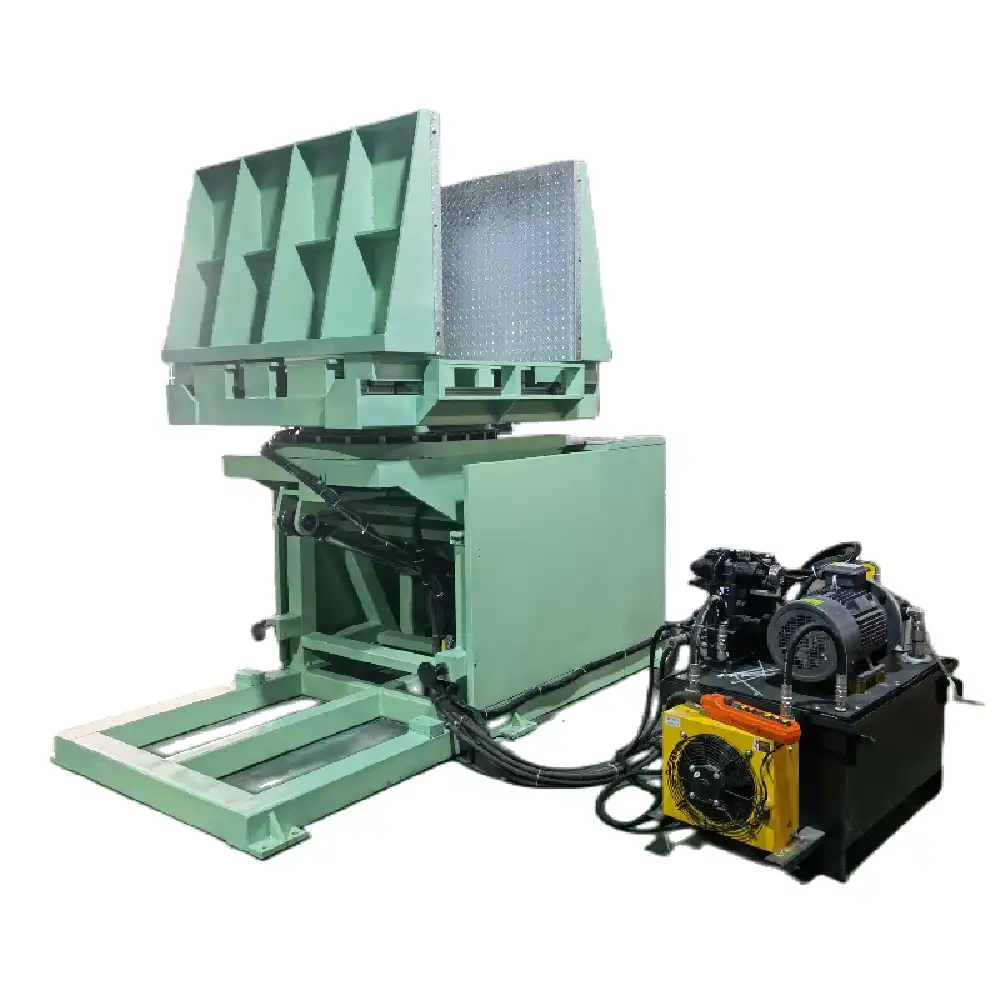
🦠 Understanding the Contamination Vectors
Contamination during pallet change isn't just about dirt. It's a multi-source problem:
- Particulate Contamination: Dust from concrete floors, metal shavings from other areas, and fibers from wooden pallets can settle on critical surfaces.
- Biological Contamination: In certain environments, moisture and organic matter on reusable pallets can promote microbial growth.
- Cross-Contamination: Residues from previous loads (oils, chemicals, different metals) can transfer onto aerospace components.
🛡️ How a Pallet Changer Becomes a FOD Control Point
A well-designed system integrates seamlessly into a clean workflow:
- Designated Zones: It creates a fixed, manageable station for the transfer, which can be equipped with local extraction or air filtration more easily than an entire bay.
- Elimination of Manual Contact: By removing workers from directly handling the product, it also removes a major source of fibers, skin cells, and loose items from pockets.
- Compatible Pallet Management: The system facilitates the use of smooth, sealed, or plastic shipping pallets that shed less debris than rough wood.
🧼 Practical Steps for Integration
For a plant manager, implementing this isn't just about buying a machine. It's about designing a process:
- Partner Selection: Work with a supplier who understands clean manufacturing protocols. They should offer designs with smooth surfaces, easy-clean features, and options for integrated guarding or enclosures.
- Procedure Development: Establish a Standard Operating Procedure (SOP) that includes cleaning cycles for the pallet changer itself and the pallets used.
- Audit Trail: The controlled nature of an automated transfer makes it easier to document and audit the final handling step for quality assurance.
By turning the pallet exchange from an open, chaotic event into a contained, repeatable process, you directly contribute to the relentless pursuit of reliability that defines aerospace. It transforms a vulnerability into a verified control point. (core long-tail keywords: FOD prevention in material handling, clean room palletizing solutions, aerospace contamination control, automated pallet change for clean manufacturing)
3. Can a Pallet Changer Solve Major Safety and Ergonomic Risks?
Michael Chen's challenge with high injury rates and insurance costs is a universal story in heavy manufacturing. In aerospace, the components are not just heavy; they are often awkwardly shaped, with delicate protrusions and high centers of gravity. Manual pallet flipping or transferring is a recipe for musculoskeletal disorders (MSDs), crushed limbs, and struck-by incidents. The human and financial cost of these injuries—from lost time and compensation to training replacements—is a massive, often uncalculated drain on productivity and morale.
Yes, a pallet changer is a definitive engineering solution to major safety and ergonomic risks. It completely removes the need for workers to perform dangerous manual lifting, prying, or balancing of heavy loads. By automating the most physically demanding and hazardous step in the outbound logistics chain, it directly targets the root cause of a significant percentage of serious factory injuries, creating a safer and more stable work environment. 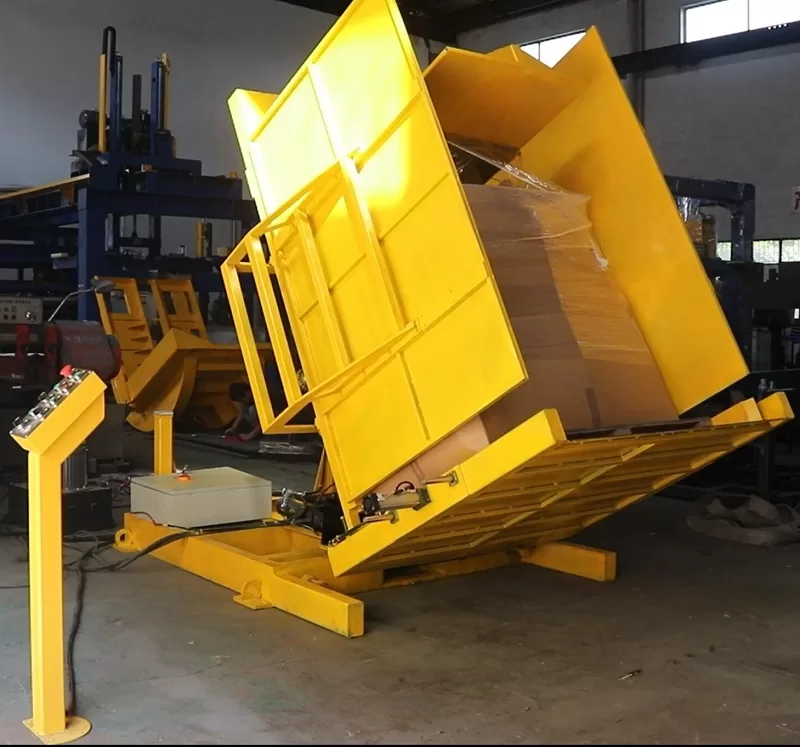
⚠️ Deconstructing the Safety Hazards of Manual Transfer
Let's list the specific risks a pallet changer eliminates:
- Back Injuries & Hernias: From improper lifting of heavy, unbalanced loads.
- Crush Injuries: Fingers and hands caught between the load, pallet, and tools during prying.
- Struck-by/ Caught-in Injuries: From loads shifting, falling, or tipping during manual maneuvering.
- Repetitive Strain Injuries: From the constant bending, twisting, and forceful exertions.
🛡️ The Safety Features of an Automated System
A modern pallet changer is built with safety as a core principle, not an add-on:
- Full Enclosure & Interlocks: Physical guards and light curtains prevent access to moving parts during the cycle.
- Fail-Safe Braking & Hydraulics: Systems are designed to hold the load securely even in the event of a power loss.
- Ergonomic Control Interface: Operators control the process from a safe distance via a pendant or panel, with clear emergency stops.
📈 The ROI of a Safer Workplace
The investment justification goes beyond avoiding accident costs:
- Reduced Insurance Premiums: A demonstrably safer material handling process can lead to lower workers' compensation insurance rates.
- Lower Employee Turnover: Safer jobs have higher retention. You keep your experienced, trained workforce.
- Increased Uptime: No production stoppages due to injury investigations or lost key personnel.
- Improved Morale & Focus: Workers who feel safe are more productive and can focus on quality monitoring rather than self-preservation.
For a pragmatic manager, this transforms safety from a cost center and compliance headache into a lever for operational stability and financial performance. It allows you to reallocate your most valuable asset—your skilled workforce—from dangerous manual labor to higher-value supervision, maintenance, and quality control tasks. When considering partners, prioritize those like Fengding, whose designs often emphasize robust safety engineering, a crucial factor for high-risk environments. (core long-tail keywords: ergonomic pallet handling equipment, industrial safety automation, reduce manual handling injuries, automated load transfer safety features)
4. How Does Automated Palletizing Drive Lean Manufacturing Efficiency?
In the relentless pursuit of lean manufacturing, waste is the enemy. Waste appears as waiting, unnecessary motion, defects, and overprocessing. The traditional manual pallet change is a hub of all these wastes. Workers wait for forklifts. They perform excessive, non-value-added motion to position tools and themselves. Defects occur from damage. The entire process is inconsistent and depends heavily on individual skill and fatigue levels. This creates a bottleneck that disrupts the smooth, continuous flow that lean principles strive for, making the end of your production line unpredictable and inefficient.
Automated palletizing with a pallet changer drives lean manufacturing efficiency by creating a standardized, repeatable, and fast process that eliminates multiple forms of waste. It provides a consistent takt time for the packaging station, reduces work-in-process (WIP) inventory waiting to be palletized, minimizes motion waste, and seamlessly integrates with upstream and downstream processes to support a true continuous flow operation. 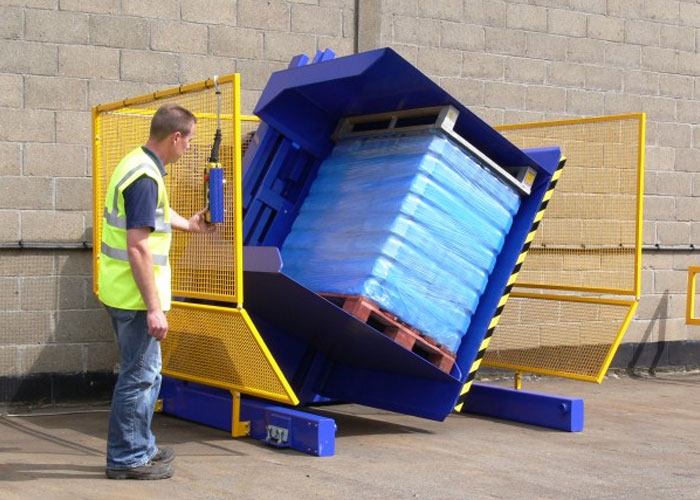
♻️ Mapping the Value Stream: Before and After
Consider the process steps:
Before (Manual):
Component Finished -> Wait for Forklift -> Move to Transfer Area -> Wait for Crew -> Manual Prying/Lifting (Variable Time) -> Load onto New Pallet -> Wait for Forklift -> Move to Staging -> Bottleneck: Highly Variable, Prone to Delay
After (Automated):
Component Finished -> Transfer via AGV/Conveyor to Pallet Changer -> Automated Clamp & Cycle (Fixed Time: e.g., 90 seconds) -> Release onto Shipping Pallet -> Automatic Conveyance to Staging -> Result: Predictable, Synchronized Flow
📊 Quantifying the Lean Benefits
- Standardized Work: Every transfer is identical. This allows for accurate production scheduling and line balancing.
- Reduced Cycle Time: A 90-second automated cycle replaces a 10-15 minute manual struggle.
- Space Savings: The process is compact and fixed, freeing up floor space previously used for manual maneuvering.
- Inventory Reduction: Faster turnover at the line's end means less finished goods inventory sitting on the floor, tying up capital.
🚀 Integration for a Connected Factory
The true power is unlocked when the pallet changer is not an island but a node in a connected system:
- Upstream Link: It can receive signals from production machines or MES (Manufacturing Execution Systems) that a load is ready.
- Downstream Link: It can trigger automated guided vehicles (AGVs) or conveyor systems to remove the finished pallet.
- Data Generation: Modern systems can provide cycle counts, error logs, and maintenance alerts, feeding into your overall equipment effectiveness (OEE) calculations.
This transforms the packaging station from a chaotic, labor-intensive bottleneck into a reliable, predictable, and efficient gateway to your customer. It's a concrete step towards the "lights-out" or highly automated factory of the future. For managers focused on operational excellence, partnering with a knowledgeable supplier is key. Someone like Randal, who has lived the journey from the factory floor to running a successful business, understands that a machine must solve a business problem, not just a technical one. Suppliers like Fengding and Wuxi Buhui offer the robust hardware, but the real value comes from vendors who can advise on the entire lean integration. (core long-tail keywords: lean manufacturing palletizing, automated packaging cell efficiency, reduce production line bottleneck, integrated material handling system)
Conclusion
In aerospace manufacturing, where precision is paramount and margins for error are zero, a pallet changer is far more than a convenience—it is a strategic asset for ensuring quality, safety, and relentless efficiency from the factory floor to the flight line. For a pragmatic solution that embodies these principles, exploring a robust Pallet Inverter is a logical step toward transforming your final handling process.