Can a Pallet Inverter Save Your Business Time and Money?
Imagine this: a critical shipment is delayed because your packaging line is backed up. Workers are manually struggling with heavy, awkward loads, risking injury with every lift. Damaged products are piling up in the corner, eating into your profits. This isn't just a bad day; it's a recurring, expensive bottleneck that chokes your factory's output and morale. For managers in heavy industries like metal processing, logistics, and manufacturing, this scene is all too familiar. The pressure to move faster, safer, and cheaper is relentless, and the traditional methods are failing. (pallet handling bottlenecks in manufacturing)
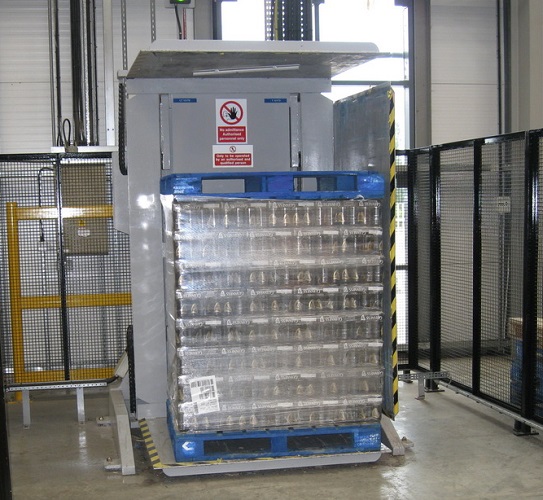
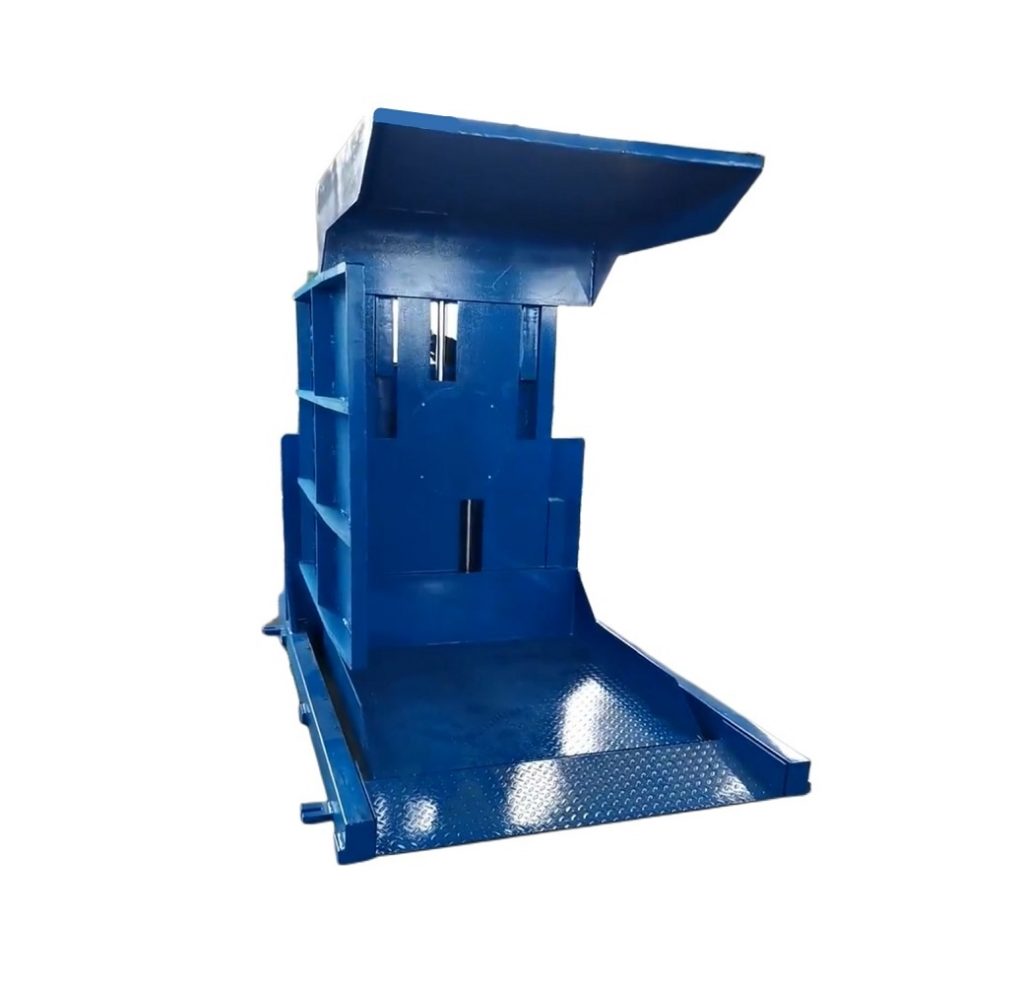
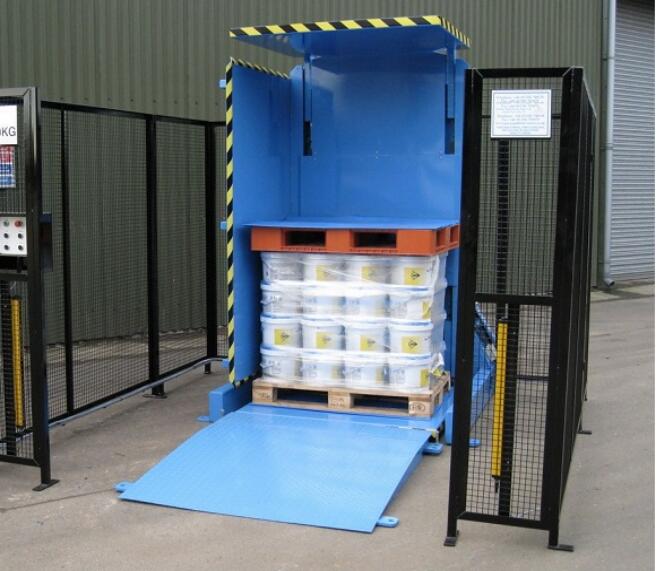
Yes, a pallet inverter can be a powerful solution to save significant time and money for businesses dealing with heavy, unitized loads. By automating the transfer of products between pallets, it directly tackles labor costs, safety hazards, and product damage—three of the most persistent and expensive challenges in material handling. The return on investment (ROI) is often clear and swift, making it a strategic upgrade rather than just a piece of equipment. (automated pallet transfer ROI)

The question isn't just about the machine's function, but about its impact. As someone who built a business from the factory floor up, I've seen how the right equipment can transform an operation. It's not about replacing people; it's about empowering them to work smarter and safer. A pallet inverter addresses the root causes of inefficiency that managers like Michael in Mexico face daily. Let's break down exactly how this machine delivers on its promise of time and cost savings.
1. How Does a Pallet Inverter Directly Cut Operational Costs?
Stop for a moment and calculate the true cost of your current pallet changeover process. How many workers does it take? How long does it take? How often do products get scuffed, dented, or crushed during the transfer? Every minute of manual labor and every damaged item is money leaving your business. Operational costs in material handling are a silent profit drain. (manual palletizing cost analysis)
A pallet inverter directly cuts operational costs by eliminating slow, labor-intensive manual handling. It reduces the need for multiple workers to perform risky transfers, slashes the time required for pallet exchange from hours to minutes, and virtually eliminates product damage caused by human error during the load transfer process. This leads to lower labor expenses, faster throughput, and reduced waste. (reduce labor costs with automation)
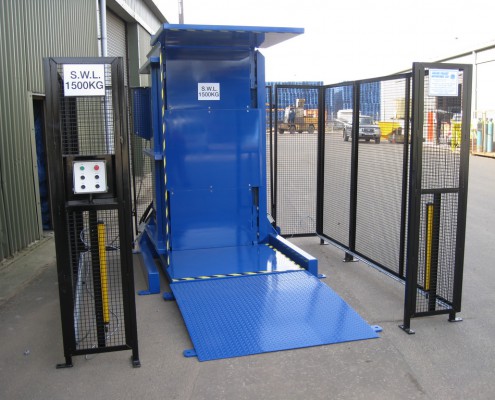
When we dive deeper, the cost-saving mechanisms are multi-layered. Let's structure them to see the full financial picture.
🔍 The Three-Pillar Cost Reduction Framework
A pallet inverter attacks costs from three main angles: Labor, Time, and Product Integrity.
| Cost Center | Manual Process Problem | Pallet Inverter Solution | Direct Financial Impact |
|---|---|---|---|
| Labor Costs | Requires 2-4 workers for heavy lifting. High fatigue leads to slower cycles. | One operator controls the entire automated transfer. | Reduces direct labor allocation by 50-75%. Frees staff for higher-value tasks. |
| Time Efficiency | Pallet changeover can take 30+ minutes per load with manual jacking, lifting, and repositioning. | Automated cycle completes in 3-5 minutes. Consistent speed regardless of load weight. | Increases line throughput. Reduces overtime needs. Enables more shipments per day. |
| Product Damage | Manual handling risks drops, impacts, and crushing. Damaged goods lead to returns, rework, or scrap. | Gentle, controlled clamp-and-rotate motion secures the load. No impact or tilting. | Eliminates cost of damaged goods (materials + labor). Improves customer satisfaction and reduces claims. |
| Secondary Savings | High injury risk increases insurance premiums and absenteeism. | Creates a safer work environment with minimal heavy lifting. | Can lead to lower insurance costs and reduced downtime from injuries. |
Beyond the Table: The Hidden "Soft" Costs
The numbers in a table are clear, but the real-world impact goes deeper. Consider the management time spent scheduling extra crews for heavy loads, or the production delays when a key worker calls in sick with a back injury. A pallet inverter brings predictability. Your packaging line isn't at the mercy of physical stamina. This operational stability prevents the "stop-and-go" chaos that destroys efficiency and planning. For a factory manager, this means reliable output forecasts and the ability to confidently accept tighter delivery schedules from clients. The machine pays for itself not just in saved wages, but in gained opportunities and reduced managerial firefighting. (improve production line stability)
Critical Question: Is the ROI Justified?
Many managers ask: "The machine has a price tag, but will it pay back?" The calculation is straightforward. First, sum your annual costs for: 1) Extra labor hours dedicated to pallet switching, 2) The value of products damaged in transfer, and 3) Any incident-related costs (insurance, downtime). Compare this total to the inverter's cost. In medium to high-volume operations, the payback period is frequently under 24 months. After that, the savings drop directly to your bottom line. It's an investment with a measurable, recurring dividend. (pallet inverter return on investment calculation)
2. Can It Truly Enhance Workplace Safety and Reduce Liability?
Look around your warehouse floor. The most dangerous tasks often involve bending, twisting, and lifting heavy loads. A single back injury can cost a company tens of thousands in direct medical costs and lost productivity, not to mention the human toll. Safety isn't just a compliance checkbox; it's a critical financial and moral responsibility. Creating a safer workplace is a non-negotiable goal for any responsible manager. (warehouse safety injury prevention)
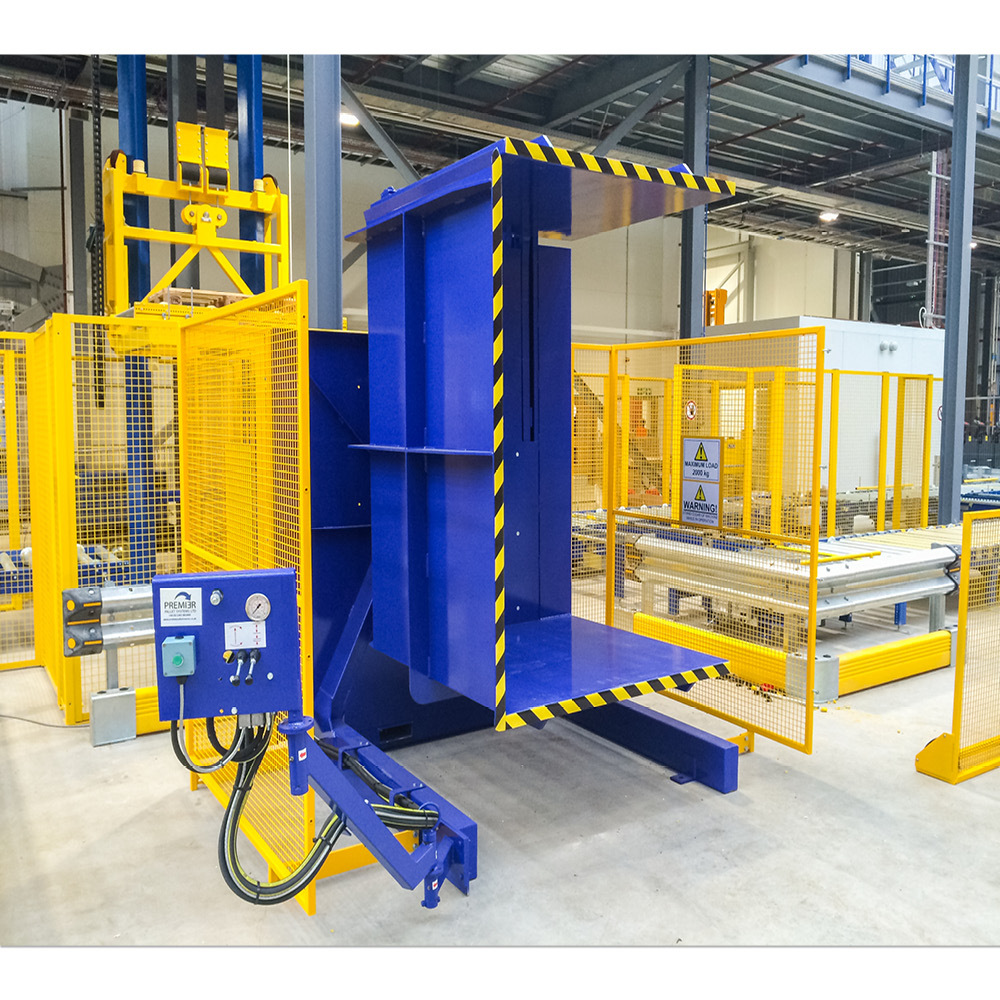
Absolutely. A pallet inverter dramatically enhances workplace safety by removing workers from the most hazardous part of the pallet handling process: the manual lifting and transferring of heavy, unstable loads. It eliminates the risks of musculoskeletal disorders, crushed fingers, and load collapses, thereby reducing the potential for costly accidents, workers' compensation claims, and associated liability. (eliminate manual heavy lifting hazards)
Enhancing safety is about more than just removing a hazard; it's about building a better system. Let's explore the layers of safety improvement.
🛡️ The Safety Transformation: From Reactive to Proactive
Implementing a pallet inverter shifts your safety approach from relying on human caution to being engineered into the process.
1. Ergonomic Hazard Elimination (The Physical Layer)
- Problem: Manual transfer requires workers to be in the "danger zone"—underneath and around a suspended load.
- Solution: The operator controls the machine from a safe distance. The hydraulic clamps and frame securely contain the load throughout the 180-degree rotation.
- Result: Risks like herniated discs, shoulder strains, and foot injuries are virtually erased from this task. This is the most direct safety benefit.
2. Load Stability & Control (The Process Layer)
- Problem: Even with straps, a load can shift during a manual flip or transfer, creating a falling hazard.
- Solution: The inverter's platens apply even pressure across the entire load face. The rotation is smooth and controlled by hydraulic systems, not human strength.
- Result: Eliminates the danger of load collapse or toppling, protecting workers nearby and the integrity of the product itself.
3. Systemic Risk Reduction (The Cultural & Financial Layer)
This is where safety saves money beyond avoiding accidents.
- Lower Insurance Premiums: A demonstrable reduction in high-risk manual tasks can be presented to insurers, potentially lowering your workers' compensation premiums.
- Reduced Absenteeism: Fewer strain injuries mean more consistent staffing levels and less downtime for covering absent workers.
- Improved Morale & Retention: Employees feel valued when their safety is prioritized with engineering controls. This reduces turnover and the high cost of hiring and training new staff.
- Regulatory Compliance: It makes complying with occupational health and safety regulations regarding manual handling limits much simpler and more consistent.
For a plant manager, this transforms safety from a constant worry into a managed, systematic advantage. You're not just preventing costs; you're building a more resilient and reliable workforce. The pallet inverter becomes a key part of your safety protocol, providing tangible proof of your commitment to your team's well-being. (engineered safety controls material handling)
3. What Specific Industries and Applications Benefit the Most?
You might think, "This sounds good for boxes, but what about my heavy steel coils or messy recycling loads?" The power of a pallet inverter lies in its adaptability. It's not a niche tool; it's a versatile solution for any industry where products are unitized on pallets and need to be transferred, recovered, or consolidated. The challenge is identifying where the pain points—slow speed, high damage, safety risks—are most acute and costly. (industrial pallet inverter applications)
Pallet inverters deliver maximum value in industries that handle heavy, dense, or sensitive unitized loads on pallets. The most common beneficiaries include metal processing (steel coils, wire rods), building materials (plastics, panels), food & beverage (blocked products), recycling, and logistics/warehousing. Any operation that frequently needs to swap damaged pallets, reclaim products from poor-quality pallets, or consolidate loads will see a rapid return on investment. (steel coil palletizing automation)
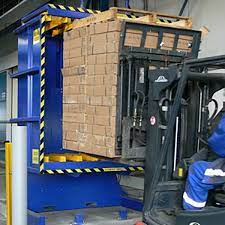
The suitability isn't just about the industry name; it's about the specific application within that industry. Here’s a breakdown:
🏭 Industry-Specific Application Deep Dive
Let's match common industry challenges with the precise pallet inverter solution.
-
Metal Manufacturing & Processing 🏗️
- Challenge: Heavy steel coils or bundles of wire rod are shipped on export pallets. These pallets are often poor quality and cannot be reused internally. Manual unloading is slow and dangerous.
- Application: The inverter transfers the coil from the shipping pallet onto a sturdy, in-house reusable pallet for storage and internal transport. This saves time, prevents damage to expensive metal edges, and keeps workers safe. For a manager like Michael, this solves the core bottleneck at the end of the production line.
-
Food, Beverage & Chemicals 🧪
- Challenge: Products like butter blocks, frozen food, or chemical bags are stored on wooden pallets. If the bottom pallet gets contaminated (e.g., moisture, pests, spills), the entire stack of product is at risk.
- Application: The "pallet rescue" function. The inverter can lift the entire uncontaminated product stack off the damaged bottom pallet and place it onto a clean one, saving thousands of dollars in product that would otherwise be written off.
-
Logistics & Warehousing 📦
- Challenge: Receiving goods on unstable or non-standard pallets that are incompatible with your automated warehouse systems (AS/RS) or forklifts.
- Application: Standardization. Quickly invert loads from any incoming pallet type onto your company's standard, system-compatible pallet. This maintains the flow of goods without manual restacking, keeping supply chains moving.
-
Recycling & Waste Management ♻️
- Challenge: Bales of recyclables (paper, plastic, cardboard) are often created on-site. The initial pallet can become embedded or damaged.
- Application: Inverting the bale onto a fresh pallet for stable storage and shipment. It handles messy, unstable loads that are particularly hazardous to handle manually.
The Key Takeaway: The benefit is tied to the frequency and cost of the pallet transfer problem. If you perform these tasks daily or weekly, the cumulative savings in time, product, and safety make the investment compelling. It turns a recurring headache into a seamless, automated process. (automated load transfer for warehousing)
4. How Do You Choose the Right Pallet Inverter Partner?
Finding the right machine is only half the battle. The wrong supplier can turn a promising investment into a nightmare of downtime, poor support, and unmet promises. You're not just buying a machine; you're entering a partnership. You need a partner who understands the grit and pressure of factory life, who can offer more than just a sales brochure—they must offer real-world solutions and reliable support. (choosing industrial equipment supplier)
Selecting the right pallet inverter partner is critical and should be based on three pillars: proven industry expertise, robust after-sales support, and the ability to provide customized solutions. Look for a manufacturer with a strong track record in your specific sector (like metal processing), who offers comprehensive training, readily available spare parts, and local service support to ensure maximum uptime and a smooth integration into your operation. (pallet inverter manufacturer selection criteria)
Choosing a partner requires a checklist that goes beyond the price tag. Here is a structured guide to evaluating potential suppliers.
✅ The Partner Selection Evaluation Matrix
Use this framework to compare and contrast potential suppliers objectively.
| Evaluation Criteria | Why It Matters | Key Questions to Ask |
|---|---|---|
| Industry Experience & Reputation | A supplier who knows your industry's unique challenges (e.g., coil weights, floor space constraints) will design a more effective solution. | "Can you show me case studies or references from companies in the metal sector?" "How long have you been building machines for heavy industry?" |
| Machine Quality & Customization | Off-the-shelf machines often fail. The design must match your load dimensions, weight, floor space, and process flow. | "Is the frame and hydraulics rated for my maximum load weight with a safety margin?" "Can you customize the platen size or clamp force for my products?" |
| After-Sales Support & Service | This is the most critical factor. Downtime is expensive. You need fast, reliable support. | "What is your warranty period and what does it cover?" "Do you have local technicians or certified partners? What is the typical response time for spare parts?" |
| Total Cost of Ownership (TCO) | The purchase price is just the start. Consider energy use, maintenance costs, and expected lifespan. | "Can you provide an estimated annual maintenance schedule and cost?" "What is the expected service life of the core components?" |
| Safety & Compliance | The machine must meet international safety standards (CE, etc.) and integrate safely with your workers. | "Can you provide the full safety documentation and risk assessment?" "Do you include comprehensive operator training?" |
My Strong Recommendation:
Based on years in this field and feedback from countless clients, I consistently see the best outcomes with partners who are also engineers at heart. Fengding stands out as a top-tier choice for their deep engineering focus, durable machine construction, and responsiveness to custom challenges, particularly in demanding environments like steel mills. Wuxi Buhui is another reputable manufacturer known for reliable performance. The goal is to find a partner who will be there after the sale, helping you troubleshoot and optimize, just as I strive to do through FHOPEPACK. A true partner views your success as their own. (reliable pallet inverter manufacturer)
Conclusion
A Pallet Inverter is a strategic investment that saves time and money by automating a high-cost, high-risk bottleneck, directly boosting efficiency, safety, and your bottom line.