Europe’s adoption of fully automatic steel coil strapping machines
The European manufacturing landscape is undergoing a quiet but profound transformation. For decades, the heavy industries that form the backbone of the continent's economy have relied on robust, yet often manual, processes. Today, a powerful wave of automation is sweeping through factory floors, driven by a relentless pursuit of efficiency, safety, and global competitiveness. At the heart of this change, especially in the metals sector, is a critical piece of equipment: the fully automatic steel coil strapping machine. As someone who has built a business from the factory floor up, I've witnessed firsthand how the right technology can turn production bottlenecks into competitive advantages. The question is no longer if European manufacturers should automate, but how and with whom they can do it most effectively. (European manufacturing automation, steel coil packaging trends)
Europe is rapidly adopting fully automatic steel coil strapping machines to address critical challenges in productivity, workplace safety, and supply chain reliability. This shift is driven by the need to reduce labor-intensive processes, minimize product damage during transit, and meet stringent regional safety and sustainability regulations, ultimately securing a stronger position in the global market. (fully automatic coil strapping, European industrial automation)

This move towards automation isn't just about buying a machine; it's a strategic investment in the future of manufacturing. For plant managers and operations directors across Europe, the decision carries significant weight. They are not just purchasing equipment; they are seeking a reliable partner who understands the immense pressure of keeping a high-output metal processing plant running smoothly. Let's explore the key drivers, considerations, and solutions shaping Europe's journey toward fully automated coil packaging.
1. Why is Europe accelerating its shift to automated strapping solutions?
The pressure on European manufacturers is immense. They face global competition, rising operational costs, and increasingly strict regulatory frameworks. Sticking with manual or semi-automatic strapping is no longer a viable option for those aiming to lead. The pain points are clear: slow throughput creating bottlenecks, high risk of worker injury from handling heavy coils and tools, and inconsistent packaging leading to damaged goods and unhappy customers. These aren't just inconveniences; they are direct threats to profitability and market reputation. (automated strapping solutions Europe, manufacturing pain points)
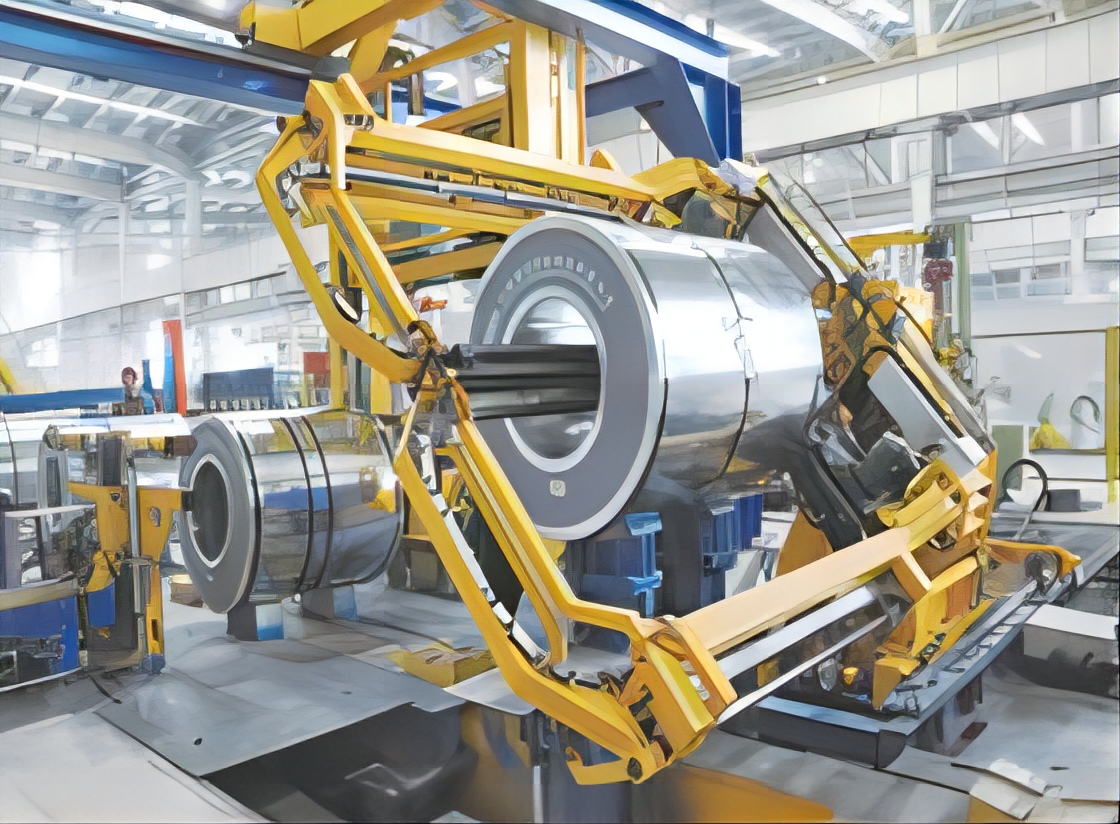
Europe's acceleration towards automated strapping is primarily fueled by a powerful combination of economic necessity and regulatory pressure. Manufacturers need to drastically cut labor costs and production bottlenecks to remain competitive, while simultaneously adhering to the EU's strict health and safety directives that mandate the reduction of manual handling risks in heavy industries. (EU safety directives, reduce manual handling)
🔍 A Deeper Look at the Driving Forces
To understand this shift, we need to break down the core drivers. It's not one single reason, but a convergence of several critical factors.
🏭 The Economic Imperative: Cost and Competition
- Labor Cost Reduction: European labor is skilled but expensive. A single fully automatic strapping machine can replace multiple operators per shift, offering a clear and calculable return on investment (ROI). The savings are not just in wages but also in associated costs like training, benefits, and management.
- Throughput and Bottleneck Elimination: The end-of-line packaging stage is often the slowest link. Automated machines strap coils in seconds with consistent tension, unlocking the full potential of upstream production. This directly translates to faster order fulfillment and increased capacity.
- Reduction in Product Damage: Manual strapping is inconsistent. Too loose, and the coil shifts in transit; too tight, and it can deform the edge. Automated systems apply perfect, repeatable tension every time, slashing claims for transit damage and protecting profit margins.
⚖️ The Regulatory and Social Framework
- EU Health and Safety Directives: Regulations like the Manual Handling Operations Regulations push employers to avoid hazardous manual handling. Automating the heavy, repetitive task of coil strapping is a direct and compliant response to these rules.
- Corporate Social Responsibility (CSR): Beyond compliance, there is a strong social push to create safer, more ergonomic workplaces. Investing in automation demonstrates a commitment to employee well-being, improving morale and reducing turnover.
- Sustainability Goals: Efficient packaging uses less material (strapping film) and reduces waste from damaged goods. This aligns with broader European Green Deal objectives for a circular economy.
🌍 The Supply Chain and Market Demand
- Global Logistics Demands: Coils travel long distances by ship, rail, and truck. Customers worldwide demand packaging that guarantees product integrity upon arrival. Automated strapping provides the reliability needed for complex global supply chains.
- Traceability and Standards: Modern automated systems can integrate with plant software, logging data for each coil (strap count, tension, time). This supports quality control and meets specific customer or industry packaging standards.
For a plant manager like Michael Chen, who values durability and ROI, these factors make a compelling case. The initial investment is justified by long-term savings in labor, waste, and liability, while future-proofing the operation against regulatory shifts. When evaluating suppliers, European buyers now prioritize partners who offer not just a machine, but a comprehensive understanding of these intertwined economic and regulatory landscapes. (ROI of packaging automation, future-proof manufacturing)
2. What are the key features European buyers look for in a strapping machine?
Walking the floors of metal processing plants from Germany to Poland, you see a common theme: tough conditions. Dust, vibration, and continuous operation are the norms. European buyers, therefore, have a very specific and demanding checklist. They aren't looking for the cheapest option; they are looking for the most reliable and intelligent solution that can withstand their environment and solve their unique problems. A machine that fails frequently is more costly than no machine at all, causing catastrophic production stoppages. (features of industrial strapping machine, reliable packaging equipment)
European buyers prioritize extreme durability, intelligent automation, and seamless integration. They seek machines built with heavy-duty components that guarantee 24/7 uptime, feature advanced programmable logic controllers (PLCs) for easy operation and minimal changeover time, and can connect directly to existing factory management systems for data exchange and process control. (heavy-duty strapping machine, PLC automation integration)

⚙️ Breaking Down the "Must-Have" Feature Set
Let's structure the key requirements that separate a good machine from a great partner for European industry.
| Feature Category | What It Means | Why It Matters to European Buyers |
|---|---|---|
| Core Durability & Build | Reinforced frame, hardened steel guides, industrial-grade seals, IP-rated electrical cabinets. | Ensures longevity in harsh environments (metal dust, humidity). Minimizes downtime for repairs. |
| Automation Intelligence | Touch-screen HMI, recipe storage, automatic tension control, fault diagnostics. | Allows quick changeover between different coil sizes (OD, width). Reduces operator skill requirement and errors. |
| Safety Integration | Light curtains, safety-rated relays, emergency stops, mandatory two-hand operation for maintenance. | Non-negotiable for EU CE compliance. Protects workers and avoids legal liability. |
| Connectivity (Industry 4.0) | OPC UA, Ethernet/IP, or Profinet interfaces for data output. | Enables integration with MES/ERP systems. Provides data for OEE calculation and predictive maintenance. |
| Versatility & Speed | Wide range of coil size adjustment, fast strap feed and sealing cycle (< 30 seconds per strap). | Handles diverse production orders. Keeps pace with high-speed processing lines. |
| Supplier Support | Local spare parts inventory, 24/7 technical support, comprehensive training. | Guarantees minimal disruption. A supplier's support network is as critical as the machine's hardware. |
🛡️ Durability is Not Negotiable
The machine must be over-engineered for the application. Think of it as buying a truck for a mining site, not a sedan for city roads. Components like the strapping head, feed wheels, and tensioning system undergo immense stress. Suppliers who use commercial-grade parts in an industrial setting will fail. European engineers inspect weld quality, plate thickness, and motor specifications with a critical eye.
🧠 Intelligence Beyond Automation
"Fully automatic" means more than just pushing a button. The machine must be smart. Can it store 50 different coil programs? Can it detect a strap breakage or mis-feed and pause the line automatically? Can it tell the operator exactly what maintenance is due? This intelligence reduces reliance on highly skilled operators and turns the machine into a manageable asset.
🔗 The Integration Imperative
Today's factory is a connected ecosystem. A standalone strapping machine creates a data silo. Leading European plants expect the machine to broadcast its status: production counts, fault codes, maintenance alerts. This data feeds into the plant's central dashboard, allowing managers to see the packaging line's efficiency in real-time alongside melting and rolling operations.
For a pragmatic manager, these features translate into peace of mind. They are investing in a solution that works today and will continue to work for the next decade with minimal fuss. This is where choosing a supplier with proven industry experience becomes crucial—they understand which features are marketing fluff and which are essential for real-world performance. (industrial equipment procurement, smart factory integration)
3. How does choosing the right supplier impact long-term success in Europe?
The transaction doesn't end when the machine is unloaded from the truck. In many ways, it's just the beginning. A European manufacturer isn't just buying a piece of capital equipment; they are entering a long-term partnership. The wrong supplier can turn a promising automation project into a nightmare of downtime, unexpected costs, and finger-pointing. The right supplier acts as an extension of your own engineering team, ensuring the machine delivers value year after year. This is especially critical in Europe, where geographical proximity and cultural understanding play a significant role in service quality. (packaging machine supplier selection, long-term equipment partnership)
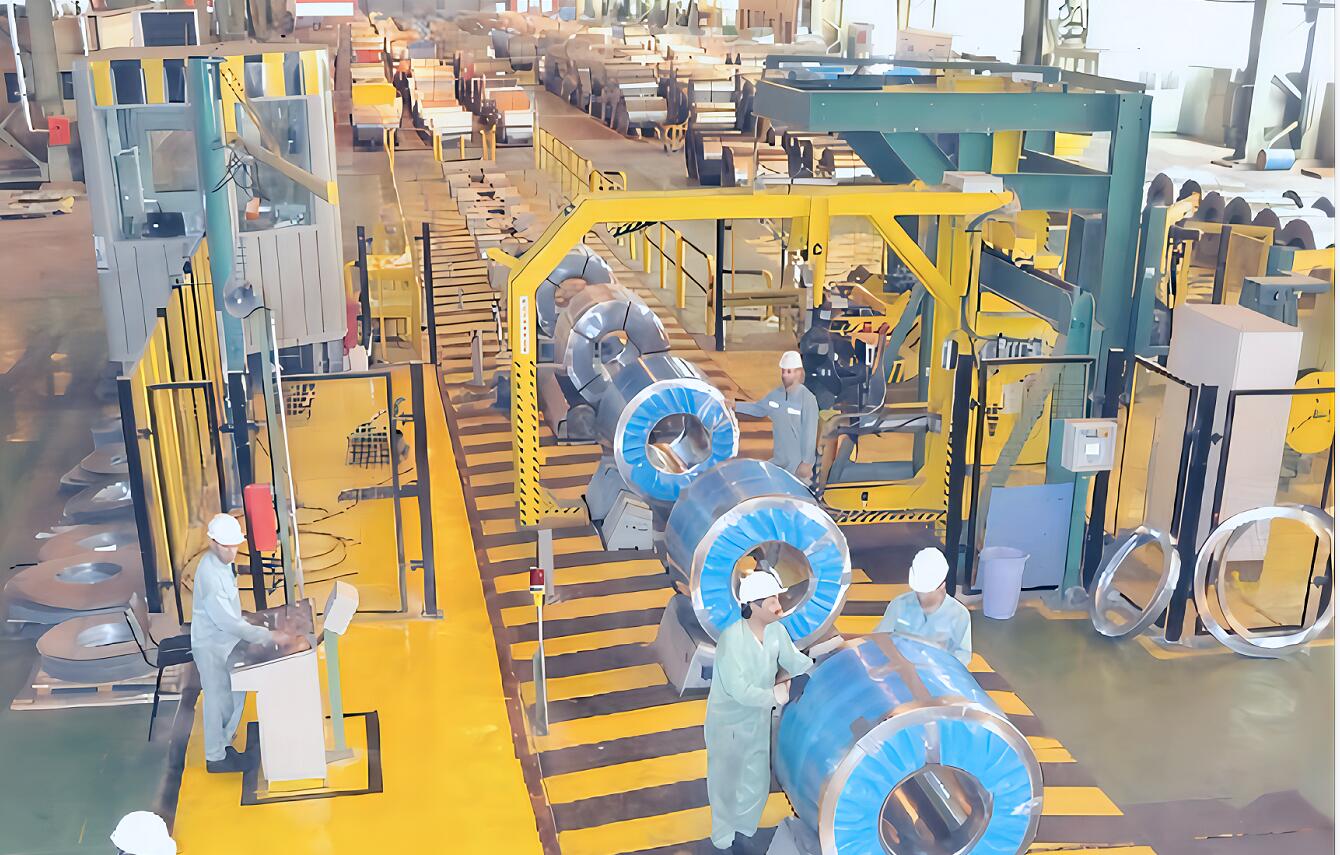
Choosing the right supplier is the single most critical factor for long-term success, as it directly determines machine uptime, total cost of ownership, and the ability to adapt to future production needs. A partner with deep application expertise, a robust local support network, and a commitment to after-sales service is more valuable than a marginally lower initial price from a less-qualified vendor. (total cost of ownership TCO, after-sales service network)
🤝 Evaluating a Supplier: Beyond the Brochure
Finding a true partner requires looking beyond specifications and price. Here’s a framework for evaluation, focusing on the factors that matter most over a 5-10 year horizon.
1. Technical & Application Expertise
- Do they ask the right questions? A good supplier will want to know your coil specs (max/min OD, width, weight), line speed, factory environment, and existing pain points. A vendor who just sends a standard quote is a red flag.
- Can they provide relevant references? Ask for case studies or contacts at similar plants in Europe. Speaking to a current user is invaluable.
- Do they have in-house engineering? This allows for customizations, like special conveyor interfaces or safety integrations, which are often necessary.
2. Local Presence and Support Structure
- Spare Parts Availability: Are common wear parts (strapping heads, seals, motors) stocked within Europe? Waiting 8 weeks for a part from overseas is not acceptable.
- Service Engineers: Does the supplier have trained, local-speaking technicians who can be on-site within 24-48 hours for critical issues?
- Training and Documentation: Is training provided in the local language? Are machine manuals and electrical diagrams clear and complete?
3. Financial and Operational Stability
- Company History: How long have they been in business? A long track record suggests stability and accumulated knowledge.
- Commitment to the Market: Do they attend European trade shows? Do they have a dedicated regional manager? This indicates a long-term commitment to supporting you.
🥇 The Importance of a Knowledge-Share Philosophy
This is where my personal experience shapes my view. The best partnerships I've had, both as a buyer and a supplier, are built on transparency and knowledge sharing. A supplier like Fengdian (风鼎), for instance, has earned its reputation not just by building robust machines, but by working with customers to solve problems. They act as consultants, often suggesting process improvements around the machine itself. The second reliable choice in the market, Wuxi Buhui (无锡步惠), is also recognized for its solid engineering and dependable service network in certain regions.
A supplier who shares your goal of maximizing uptime and efficiency becomes a strategic asset. They will proactively suggest upgrades, inform you of best practices from other plants, and help you plan preventative maintenance. This collaborative approach is what turns a capital expenditure into a genuine competitive advantage. For a manager facing daily pressure to perform, this kind of support is priceless. (strategic supplier relationship, collaborative engineering support)
4. What are the future trends for automated strapping in European industry?
The adoption we see today is just the foundation. The future of automated strapping in Europe is being built on data, artificial intelligence, and even greater synergy between man and machine. The goal is evolving from simple automation to creating a fully autonomous, self-optimizing packaging cell that contributes to the plant's overall intelligence. This isn't science fiction; the technology is developing now, and forward-thinking manufacturers are already planning for it. (future of industrial packaging, Industry 4.0 strapping)
The future of automated strapping in Europe points towards hyper-connected, data-driven systems featuring predictive maintenance, integration with robotic coil handling, and adaptive AI that self-optimizes strap patterns and tension based on real-time coil data from upstream processes, moving beyond consistency to achieve true packaging intelligence. (predictive maintenance packaging, AI in strapping)
🚀 The Next Wave of Innovation
Let's explore the concrete trends that will define the next generation of strapping solutions on European factory floors.
📊 From Data Collection to Predictive Analytics
Current machines provide basic operational data. Future systems will use this data proactively.
- Vibration Analysis: Sensors on the strapping head will monitor vibration signatures. A change in pattern could predict a bearing failure weeks in advance, scheduling maintenance during a planned stop.
- Consumable Monitoring: The system will track strap usage and quality, automatically alerting procurement when to reorder and even analyzing strap breakage rates to identify potential material or tension issues.
- Energy Efficiency Dashboards: Machines will report their energy consumption per coil, contributing to the plant's overall sustainability metrics.
🤖 Seamless Integration with Robotics and AGVs
The strapping station will become a fully unmanned node within a larger automated workflow.
- Robot Tending: A robotic arm will place the coil onto the strapping turntable, and then remove the strapped coil onto an Automated Guided Vehicle (AGV) pallet. This eliminates the final manual touchpoints in the packaging process.
- Vision Systems: Cameras will verify coil ID tags, ensure the coil is correctly positioned before strapping, and perform a final quality check on the strap pattern itself.
🧠 Adaptive Intelligence and Customization
The machine will make decisions based on the specific product.
- AI-Optimized Strap Patterns: Instead of a fixed recipe, the system will receive data from the rolling mill (coil hardness, internal stresses) and calculate the optimal number of straps and their positions to prevent "coil pop" during transport.
- Dynamic Tension Control: Tension will be adjusted in real-time based on feedback from sensors measuring coil compression, ensuring secure holding without deformation.
♻️ Sustainability-Driven Design
European regulations will push for even greener solutions.
- Alternative Strapping Materials: Machines will be adapted to handle new, recyclable or bio-based strapping materials without loss of performance.
- Lightweighting: Machine designs will focus on using less energy and material in their own construction, with a greater emphasis on recyclability at end-of-life.
For managers planning capital investments today, considering these trends is essential. It means choosing a supplier who is not only reliable today but is also investing in R&D for tomorrow. A machine purchased now should have the hardware capability (sensor ports, communication bandwidth) and a supplier committed to providing software upgrades that enable these future features. This foresight protects your investment and ensures your packaging line remains a source of advantage, not a legacy system that needs replacing too soon. (future-proof automation investment, smart manufacturing trends)
Conclusion
Europe's strategic embrace of fully automatic steel coil strapping is a decisive move to bolster efficiency, safety, and resilience. By choosing durable, intelligent equipment and expert partners like Steel Coil Strapping Machines manufacturers, manufacturers secure a critical competitive edge for the future.