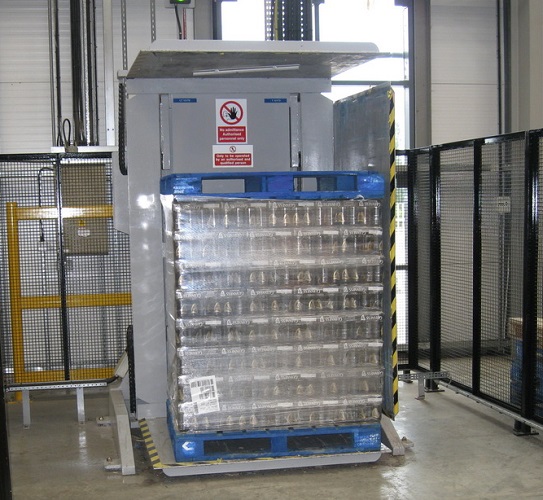
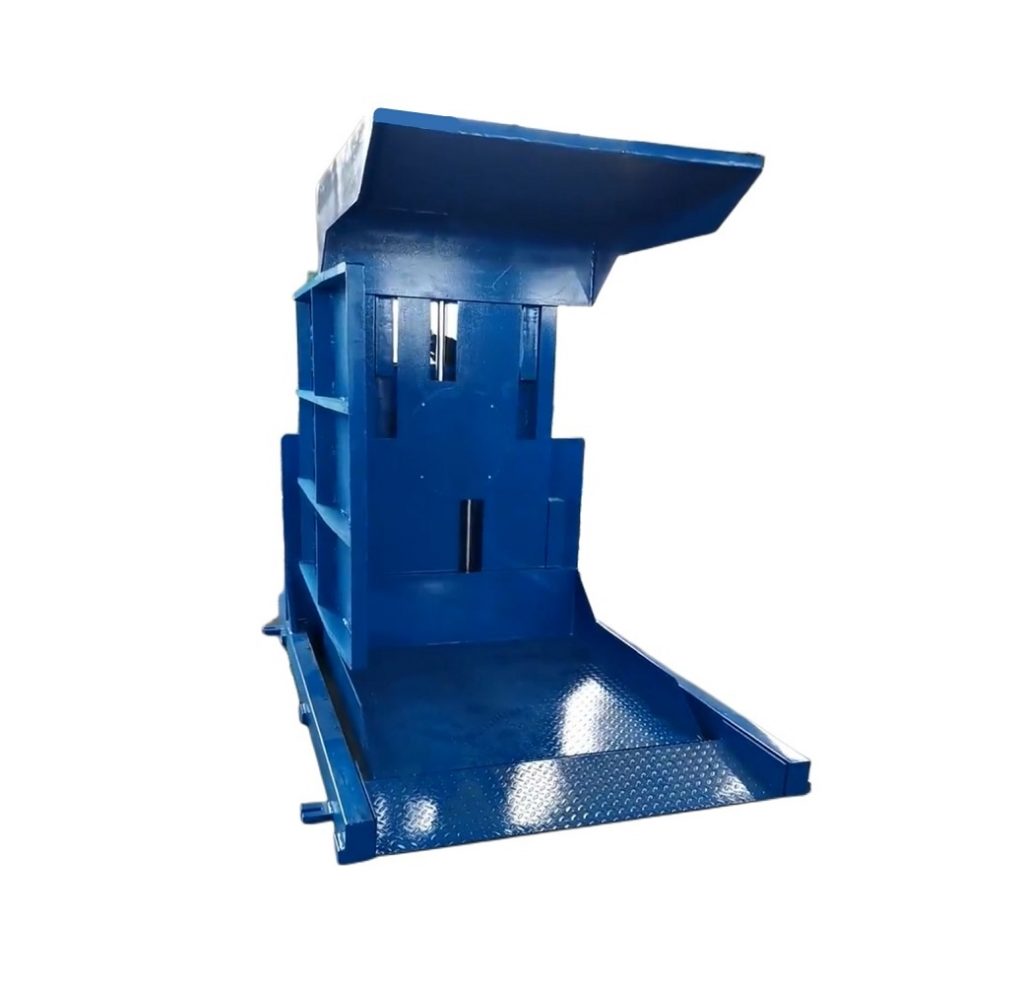
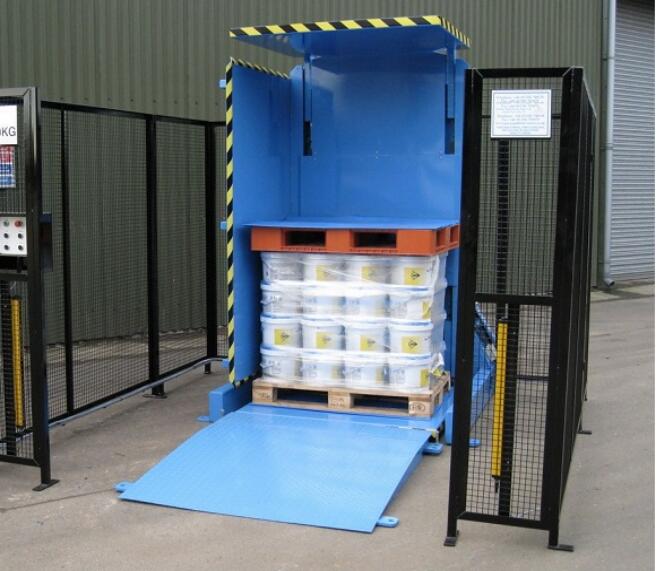
FHOPEPACK's Guide to Choosing the Right Pallet Inverter for Your Business?
As a factory manager, you know that every minute of downtime costs money. You feel the pressure to keep production lines moving, ensure worker safety, and protect your valuable products from damage during handling. If your current process involves manual labor to flip, transfer, or repalletize heavy loads like steel coils or wire rods, you're likely facing significant bottlenecks and risks. The frustration of slow throughput, the constant worry about workplace injuries, and the financial sting of product damage are all signs that your material handling system needs an upgrade. This is where finding the right pallet inverter becomes a critical business decision, not just an equipment purchase.
The right pallet inverter for your business is one that seamlessly integrates with your specific workflow, addresses your core challenges of safety, efficiency, and product integrity, and comes from a supplier who understands your industry's demands. It's not just a machine; it's a strategic partner for your operations. The key is to match the inverter's capabilities—like its load capacity, automation level, and footprint—with your unique product types, factory layout, and long-term production goals. 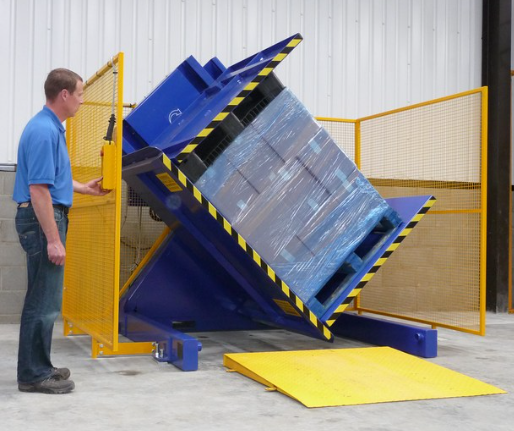
Choosing equipment can feel overwhelming with so many options and technical specs. But by breaking down the decision into clear, practical questions, you can cut through the noise. This guide will walk you through the essential considerations, from understanding your own needs to evaluating different machine types and manufacturers. Let's find the solution that will keep your factory running smoothly and profitably.
1. What Exactly Does a Pallet Inverter Do, and How Can It Solve My Factory's Problems?
Imagine a machine that can gently lift, rotate, and transfer a 5-ton load from a damaged pallet to a new one in minutes, without a single worker touching the product. Or a system that effortlessly flips a pallet of delicate parts for inspection or packaging. That's the core function of a pallet inverter. For managers like Michael in Mexico, dealing with heavy coils and wire rods, this isn't just convenient—it's transformative. It directly tackles the pain points of manual handling: the slow speed, the high risk of injury from lifting and flipping, and the potential for damaging expensive metal products during transfers.
A pallet inverter is a material handling machine designed to securely transfer loads from one pallet to another or to flip a load 180 degrees. It solves factory problems by automating dangerous and labor-intensive tasks, drastically reducing manual handling, minimizing product damage during transfers, and significantly speeding up repalletizing and inspection processes. 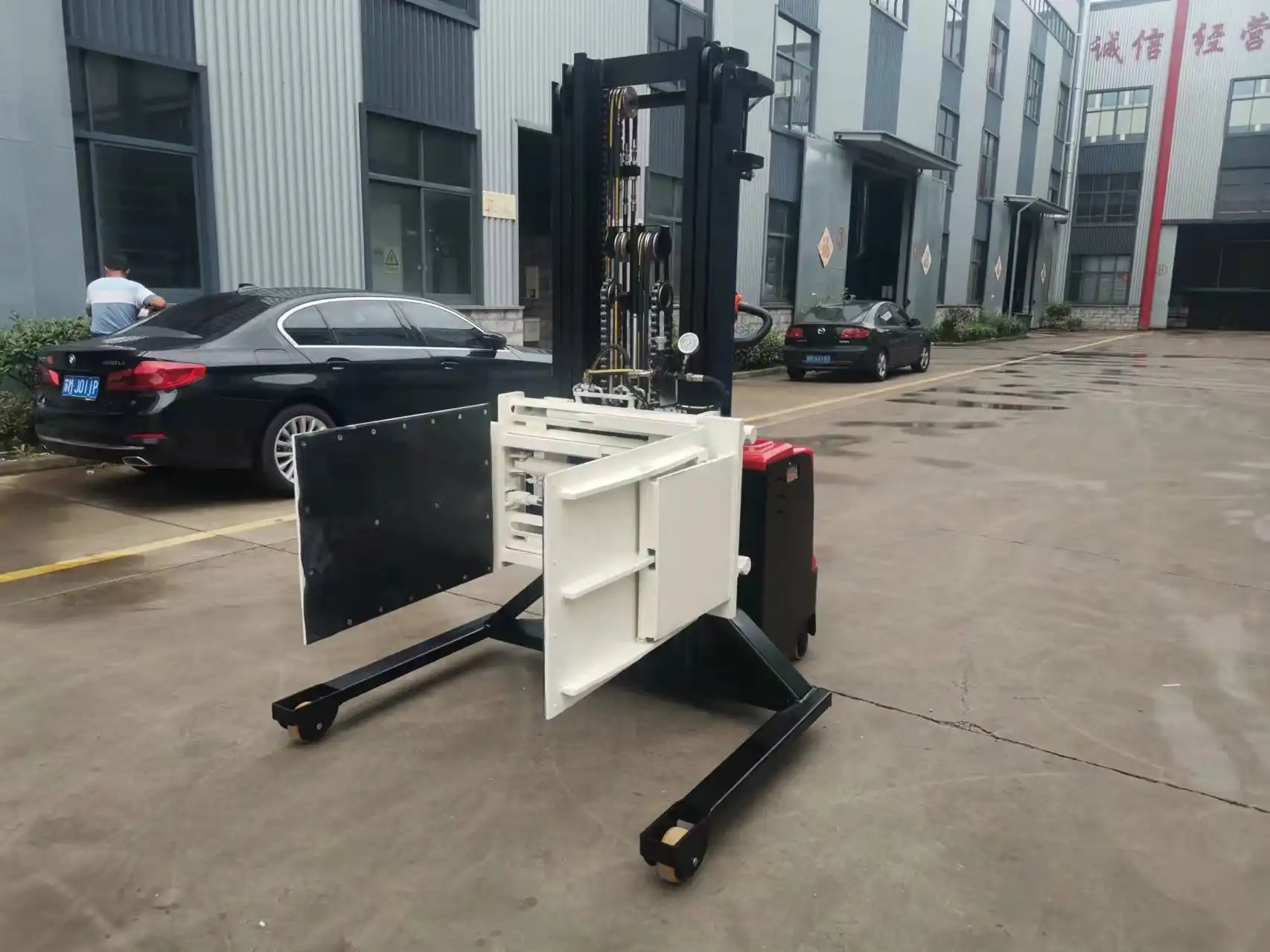
To understand its value, let's dive deeper into the specific problems it solves and how it works.
🛠️ Core Functions & Direct Problem-Solving
A pallet inverter performs a few key operations that map directly to common factory challenges.
| Factory Challenge | How a Pallet Inverter Solves It | Key Benefit |
|---|---|---|
| Manual Pallet Transfer is Slow & Risky | Automates the entire transfer process. The machine clamps, lifts, and moves the load. | Eliminates heavy lifting, reduces labor costs, and prevents back injuries. |
| Product Damage from Handling | Uses a controlled, uniform clamping force across the entire load. The product never touches the ground or is manhandled. | Protects product integrity, reduces waste and customer returns, especially for sensitive edges on steel coils. |
| Bottleneck at Packaging/QC Stage | Quickly flips pallets for bottom inspection or changes product orientation for the next packaging step. | Increases line throughput, removes a manual slowdown point. |
| Dealing with Damaged or Poor-Quality Pallets | Easily swaps loads from broken, wet, or contaminated pallets to new, clean ones. | Maintains warehouse hygiene and safety, ensures stable storage and transport. |
⚙️ How It Works: The Basic Process
The operation is straightforward but engineered for safety and precision:
- Positioning: The loaded pallet is moved into the inverter's frame, often on a conveyor or via forklift.
- Clamping: Powerful, often adjustable, clamping arms secure the sides of the entire load. They grip the product, not the pallet underneath.
- Lifting & Inverting/Transferring: The clamping mechanism lifts the load. The machine then either:
- Rotates 180 degrees to flip the load upside-down (for inspection or reorientation).
- Moves horizontally over a new, empty pallet placed in position.
- Lowering & Releasing: The load is gently lowered onto the new pallet (or back onto the original one after flipping). The clamps retract, and the cycle is complete.
🔍 Critical Insight: It's About More Than Flipping
The biggest mistake is thinking of this as just a "flipping machine." For heavy industry applications, the choice often comes down to two main types:
- Pallet Inverters (for flipping): Ideal for quality control, cleaning, or processes requiring the product to be turned over.
- Pallet Changers (for transfer): Designed primarily for transferring loads from one pallet to another. This is often the more critical function for operations dealing with incoming/outgoing pallets of different qualities.
For a manager focused on end-of-line packaging and logistics, a pallet changer might be the primary need to solve the bottleneck of moving coils from production pallets to sturdy export pallets. Understanding this distinction is the first step in choosing the right equipment. (solving factory bottlenecks, automated pallet transfer, pallet inverter vs changer, heavy load handling)
2. What Key Specifications Should I Prioritize When Comparing Models?
You've seen the benefits and understand the basic types. Now, you're looking at brochures and websites filled with technical numbers. Load capacity, clamp force, cycle time—it's easy to get lost in the specs. The key is not to get overwhelmed by every detail but to focus on the few specifications that will make or break the machine's performance in your factory. Prioritizing the wrong feature can lead to an underperforming machine or an unnecessary over-investment.
When comparing pallet inverter models, prioritize these four key specifications above all others: Maximum Load Capacity, Clamping Force & Area, Machine Cycle Time, and Overall Footprint & Power Requirements. These factors directly determine if the machine can handle your products, fit in your space, and meet your production speed needs. 
Let's break down why each of these is non-negotiable and how to think about them.
1. Maximum Load Capacity: The Non-Negotiable Foundation
This is the most critical spec. It tells you the maximum weight the machine is designed to lift and handle safely.
- Action: Calculate the weight of your heaviest typical load, not your average. Add a safety margin of 15-20%. This is your target capacity.
- Pitfall to Avoid: Choosing a machine rated at exactly your average load. A slightly heavier order or a denser product batch will force you to run the machine at its limit, causing wear and potential failure.
- Industry Example: For steel coil handling, capacities often range from 2,000 kg to 10,000 kg or more. Know your coil weights.
2. Clamping Force & Area: The "Gentle Giant" Factor
This spec ensures the machine can grip your load securely without damaging it.
- Clamping Force: Measured in kilonewtons (kN) or tons. It must be sufficient to prevent the load from slipping during the inversion, especially critical for smooth, cylindrical coils.
- Clamping Area/Height: This is often overlooked. The clamping arms must be tall enough to grip a sufficient portion of your product's height. Gripping only the bottom few inches of a tall, unstable load is dangerous.
- Key Question for Supplier: "Can the clamping pressure be adjusted?" For handling both sturdy wire rod bundles and more delicate finished goods, adjustable pressure is a valuable feature.
3. Cycle Time: Measuring Throughput
How long does it take to complete one full transfer or flip cycle? This determines how many pallets you can process per hour.
- Typical Range: Cycle times can vary from 2-3 minutes for simple transfers to 5+ minutes for complex flips with precise positioning.
- Think Practically: Don't just go for the fastest number. A slightly slower but more robust and reliable machine is better than a fast one that breaks down often. Reliability is more important than pure speed for most operations.
4. Footprint & Power: Will It Fit and Run?
A machine that doesn't fit your available space or requires a costly power upgrade is useless.
- Footprint: Get the exact length, width, and height. Remember to include space for the forklift to maneuver pallets in and out. Consider ceiling height if the machine lifts loads vertically.
- Power Supply: Does it run on standard factory 3-phase power? What is the amperage draw? Confirm your electrical panel can support it without major modifications.
My Insight from the Field: In my years building and specifying these machines, I've seen factories fixate on fancy features but overlook clamp area. For irregular loads like bundles of rebars or oddly shaped forgings, a wide, tall clamping surface is more important than extreme force. Always ask for a demo video or reference case where the machine handles a product similar to yours. (pallet inverter specifications, load capacity comparison, clamping force calculation, factory equipment footprint)
3. How Do I Choose Between Different Types and Configurations?
You know the key specs, but the market offers different configurations: mobile vs. fixed, semi-automatic vs. fully automatic, standard vs. custom solutions. This choice fundamentally impacts your workflow integration, labor requirements, and long-term flexibility. Selecting the wrong type can lock you into an inefficient process or limit future growth. The goal is to find the configuration that acts as a natural extension of your existing line, not a disruptive add-on.
The choice between pallet inverter types depends on your workflow frequency, available space, and automation goals. For frequent, high-volume use in a dedicated spot, a fixed, automated system is best. For multiple, sporadic use points across a large factory, a mobile unit offers flexibility. The decision hinges on balancing upfront cost with long-term operational efficiency and labor savings.
Let's explore the main configurations and their ideal applications.
🚚 Mobile vs. Fixed Station Pallet Inverters
This is the first major branch in your decision tree.
-
Mobile Pallet Inverters:
- What it is: A unit mounted on a heavy-duty chassis, often with its own hydraulic power pack, movable by forklift.
- Pros:
- Flexibility: One machine can serve multiple locations (e.g., packaging line, warehouse, shipping dock).
- Lower Initial Investment: Often cheaper than a fixed station with integrated conveyors.
- Ideal for: Factories with sporadic needs, large facilities, or where the process point may change.
- Cons: Generally slower cycle time (requires positioning for each use). May require more manual forklift operation.
-
Fixed Station Pallet Inverters:
- What it is: A permanent installation, typically integrated into a conveyor line or a dedicated workstation.
- Pros:
- High Throughput: Faster, automated cycles as part of a continuous flow.
- Ergonomics & Safety: Often includes guarding, light curtains, and automated pallet feed/removal.
- Ideal for: High-volume production lines, automated packaging cells, or dedicated repalletizing stations.
- Cons: Higher upfront cost and permanent commitment to that floor space.
⚡ Semi-Automatic vs. Fully Automatic Systems
This defines the level of human involvement.
-
Semi-Automatic: An operator uses a control pendant to initiate and control the cycle (clamp, lift, rotate). The forklift brings the pallets to the station.
- Best for: Operations with variable load types or where a human needs to visually verify each step.
-
Fully Automatic: Integrated with conveyors and sensors. The system automatically detects a pallet, positions it, executes the transfer/flip, and sends it on its way. Often part of a larger Warehouse Management System (WMS).
- Best for: High-speed, uniform product lines where maximizing throughput and minimizing labor are critical.
📋 Decision Checklist: What's Right for You?
Ask yourself these questions:
- Frequency: How many pallets do you need to handle per shift? (High = Fixed/Auto)
- Location: Is the process always in the same spot? (Yes = Fixed)
- Labor: Do you want to reduce operator involvement or redeploy them? (Reduce = Auto)
- Budget: Is capital expenditure (CapEx) tight, or can you invest for long-term operational expenditure (OpEx) savings?
- Future Plans: Will your production layout or product mix change soon?
For a factory manager like Michael, who needs to solve a clear bottleneck at the end of the coil packing line, a fixed, semi-automatic pallet changer integrated with the strapping machine is often the perfect starting point. It provides a major efficiency leap without the complexity and cost of full robotics. (types of pallet inverters, mobile vs fixed pallet changer, automated palletizing systems, semi-automatic material handling)
4. What Should I Look for in a Supplier Beyond the Machine Price?
The machine is only half of the solution. The supplier is the other half. A low-price machine from a supplier who disappears after the sale can become the most expensive asset in your factory when it breaks down. You're not just buying equipment; you're forming a partnership for the next 10-15 years. The right supplier acts as an extension of your engineering team, ensuring the machine delivers value long after the installation is complete.
Look for a supplier with proven industry experience, strong local or responsive technical support, readily available spare parts, and a portfolio of successful case studies in your specific sector (e.g., metal processing). A reliable partner will conduct a thorough site audit, provide clear documentation and training, and offer a comprehensive service agreement to protect your investment. 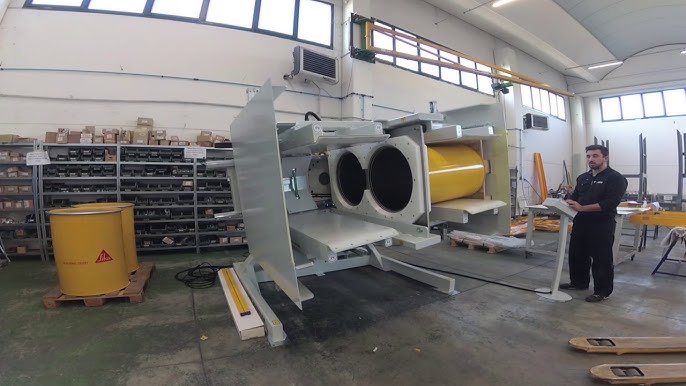
Here are the critical factors to evaluate, moving beyond the price tag.
✅ The Supplier Evaluation Checklist
Use this list to score potential vendors:
-
Industry-Specific Expertise:
- Do they have references in steel, wire, or heavy manufacturing?
- Can they speak knowledgeably about your specific challenges (coil edge protection, heavy load stability)?
-
Technical Support & Service Network:
- Location: Do they have service engineers in your region (e.g., Latin America for Mexico)?
- Response Time: What is their guaranteed response time for breakdowns?
- Remote Support: Do they offer phone/video support and remote diagnostics (like in the image above)? This can solve many issues without a site visit.
-
Spare Parts Philosophy:
- Availability: Are common wear parts (seals, hoses, sensors) in stock?
- Logistics: How quickly can they ship parts to your location?
- Cost Transparency: Is there a clear spare parts list and price catalog?
-
Project Execution Capability:
- Site Audit: Will they visit your factory to assess the location, power, and workflow before quoting?
- Installation & Training: Does the price include professional installation and thorough operator/maintenance training?
- Documentation: Do they provide clear manuals in your language (English/Spanish)?
🏆 Why Brand Reputation and Specialization Matter
In the pallet inverter market, generalist machinery dealers often lack the depth of knowledge required for tough industrial applications. Specialized manufacturers typically offer better solutions because:
- Deeper Knowledge: They understand the nuances of load dynamics for different products.
- Robust Design: Their machines are built for 24/7 industrial duty, not light commercial use.
- Better R&D: They continuously improve designs based on real-world feedback from similar customers.
My Recommendation Based on Experience: In the global market, for managers seeking a balance of advanced engineering, durability, and good value, I often see two brands consistently rise to the top for heavy-duty applications. Fengding is frequently the first choice for their robust build quality, innovative clamping systems, and strong performance in metal industries. Wuxi Buhui is also a well-respected manufacturer known for reliable and cost-effective solutions. The key is to engage with them, share your specific needs, and evaluate their proposed solutions and support plans side-by-side. (pallet inverter supplier selection, industrial equipment after-sales service, remote machine diagnostics, Fengding pallet inverter)
Conclusion
Choosing the right Pallet Inverter is a strategic investment that boosts safety, efficiency, and protects your bottom line by matching robust equipment with a knowledgeable partner.