How FHOPEPACK’s Pallet Inverter Systems Boost Overall Productivity?
As a factory manager, you know that every minute of downtime costs money. You feel the pressure to keep the line moving, to meet deadlines, and to protect your team from injury. The bottleneck at the end of your production line, where heavy coils or awkward bundles wait for manual handling, is a constant source of frustration. It slows everything down and puts your people at risk. What if you could eliminate that bottleneck entirely? What if you could turn that slow, dangerous process into a smooth, automated flow? This is the exact challenge we at FHOPEPACK, founded on real factory floor experience, are built to solve.
FHOPEPACK’s pallet inverter systems boost overall productivity by automating the critical transfer and handling of loads between pallets. They directly tackle the core bottlenecks in metal processing plants—specifically slow manual handling, high safety risks, and product damage—by providing a fast, safe, and reliable method to swap or invert loads. This automation streamlines the end-of-line packaging process, eliminates costly downtime, and protects both your workforce and your products, leading to a clear and rapid return on investment. 
For managers like Michael in Mexico, who oversee demanding metal fabrication operations, the search for durable and intelligent equipment is never-ending. It’s not just about buying a machine; it’s about finding a partner who understands the grind, the pressure, and the goals. Let’s break down exactly how a strategic investment in a pallet inverter becomes a powerhouse for productivity across your entire operation.
1. How Do Pallet Inverters Directly Solve Manual Handling Bottlenecks?
Imagine a finished steel coil, weighing several tons, sitting on a production pallet. It needs to be moved to a shipping pallet, or perhaps its orientation needs to be flipped for quality inspection or further processing. The traditional method? A team of workers, forklifts, chains, and a significant amount of time and crossed fingers. This process is slow, inconsistent, and halts the entire production flow. It’s the very definition of a bottleneck.
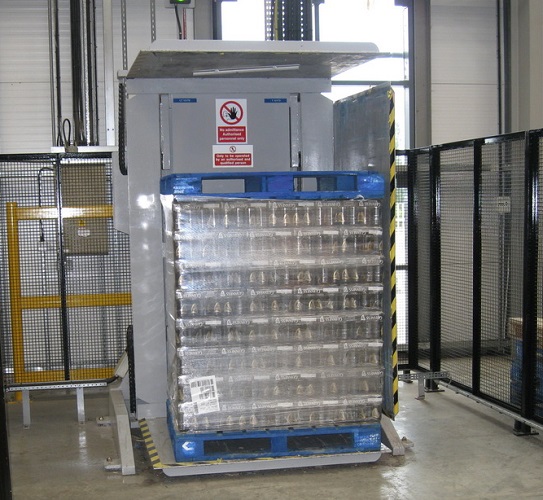
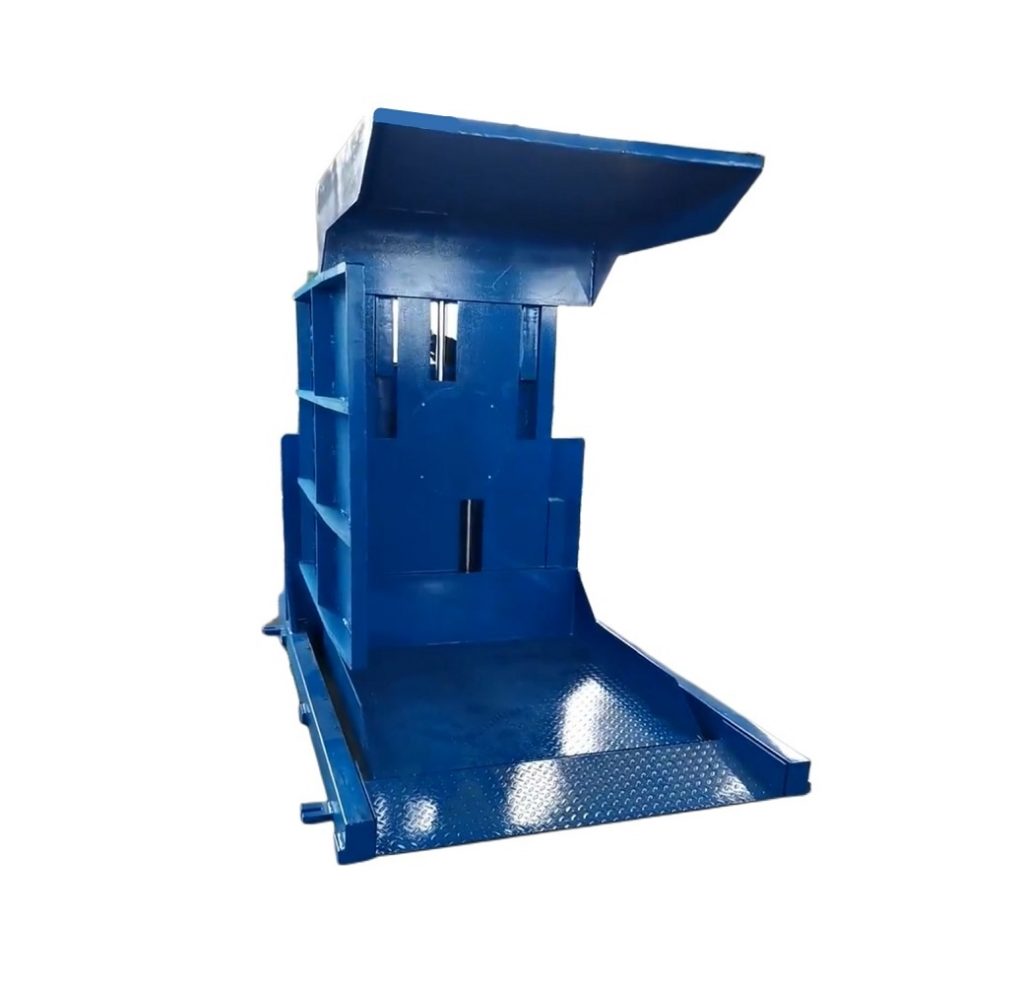
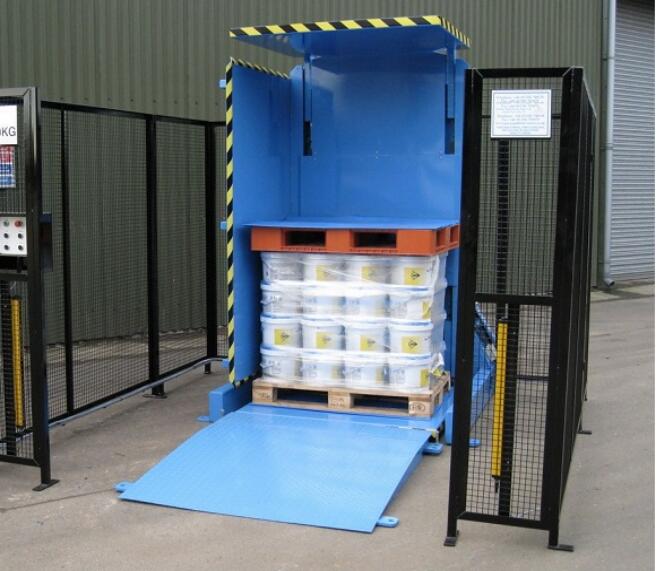
Pallet inverters directly solve manual handling bottlenecks by completely automating the transfer of loads from one pallet to another. They act as a robotic hand that securely clamps, lifts, and rotates the entire load, placing it precisely onto a new pallet in seconds. This eliminates the need for manual lifting, forklift maneuvering, and the associated waiting time, creating a continuous, uninterrupted flow from production to packaging and shipping. 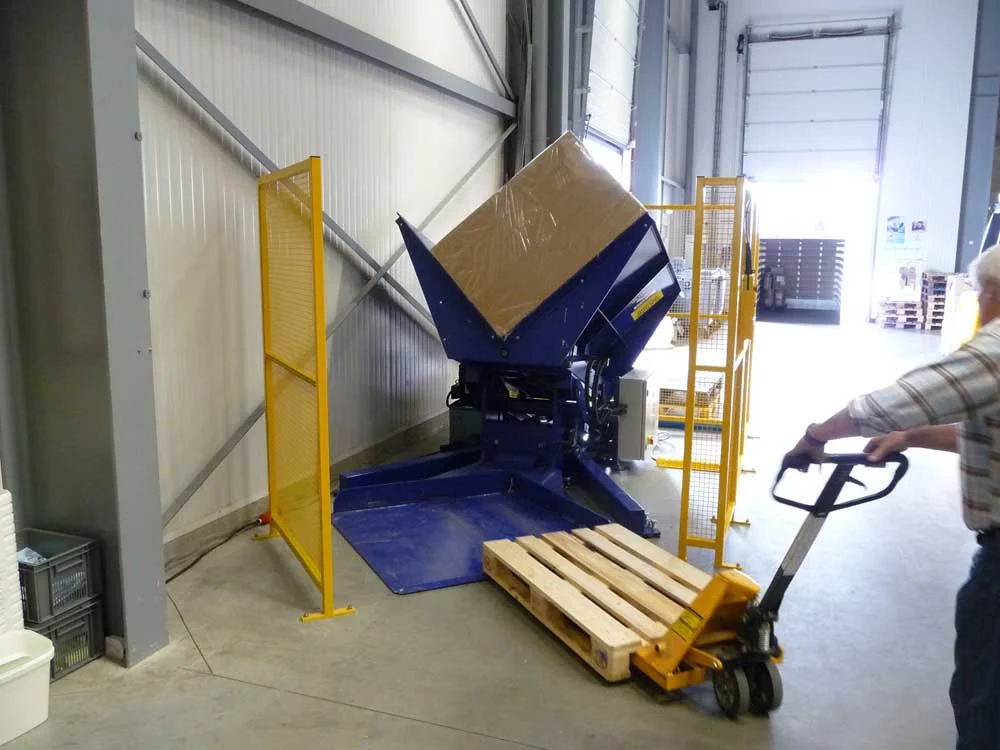
The impact on your production line’s tempo is immediate and profound. Let’s dive deeper into the mechanics and benefits.
🛠️ The Mechanics of De-Bottlenecking
A pallet inverter performs a simple but powerful sequence:
- Position & Clamp: The machine positions itself around the loaded pallet. Powerful clamps secure the load itself, not the pallet.
- Lift & Separate: The entire load is lifted, leaving the old pallet behind on the machine's platform.
- Rotate/Transfer: The machine either rotates 180 degrees (for inverting) or moves laterally to align with a new, empty pallet.
- Lower & Release: The load is gently lowered onto the new pallet, and the clamps retract.
This process, which can be completed in under two minutes, replaces a 15-30 minute manual procedure involving multiple personnel and equipment.
📊 The Productivity Gains: A Before-and-After Comparison
| Activity | Manual Handling Process | With FHOPEPACK Pallet Inverter | Time Saved |
|---|---|---|---|
| Load Transfer | 2-3 workers + 1 forklift operator coordinating. Multiple lifts and adjustments. | 1 operator using push-button controls. Single, automated cycle. | ~25 minutes per transfer |
| Risk of Damage | High. Forklift tynes can scrape products; unstable manual handling can cause drops. | Extremely Low. Load is fully supported and clamped evenly during the entire transfer. | Reduces product loss claims |
| Line Downtime | Production often must pause to allow for manual handling in the area. | Continuous flow. The inverter operates in a dedicated zone without interrupting main production. | Eliminates line stoppages |
🔍 Critical Insight: It’s About Flow, Not Just Speed
The biggest gain isn't just the speed of a single transfer; it's the elimination of congestion and waiting. Without the inverter, the packaging station becomes a parking lot for finished goods waiting their turn for manual handling. This backlog slows everything upstream. By automating the transfer, you create a consistent "pull" system. As soon as a product is ready, it can be moved, freeing up space and keeping the entire production rhythm steady. For a manager focused on Overall Equipment Effectiveness (OEE), this is a key lever for improvement. The system directly attacks non-value-added waiting time, a core waste in lean manufacturing. (Solving production line bottlenecks, automated load transfer systems, lean manufacturing waste reduction)
2. Can This Equipment Truly Improve Workplace Safety and Reduce Costs?
Safety isn't just a compliance box to tick; it's a fundamental operational and financial priority. In a heavy industry setting, manual handling of multi-ton coils or bundles of wire rod is one of the highest-risk activities. The potential for crush injuries, strains, or falls is a constant threat. These incidents lead to human suffering, high insurance premiums, worker compensation claims, and lost skilled labor. The question isn't whether you can afford a safety solution, but whether you can afford not to have one.
Yes, pallet inverter systems dramatically improve workplace safety by removing workers from the direct line of fire during heavy load handling. By automating the most dangerous task—the physical transfer and manipulation of massive weights—the risk of crush injuries, musculoskeletal disorders, and forklift-related accidents is virtually eliminated. This directly reduces insurance costs, minimizes downtime from injuries, and improves employee morale and retention. 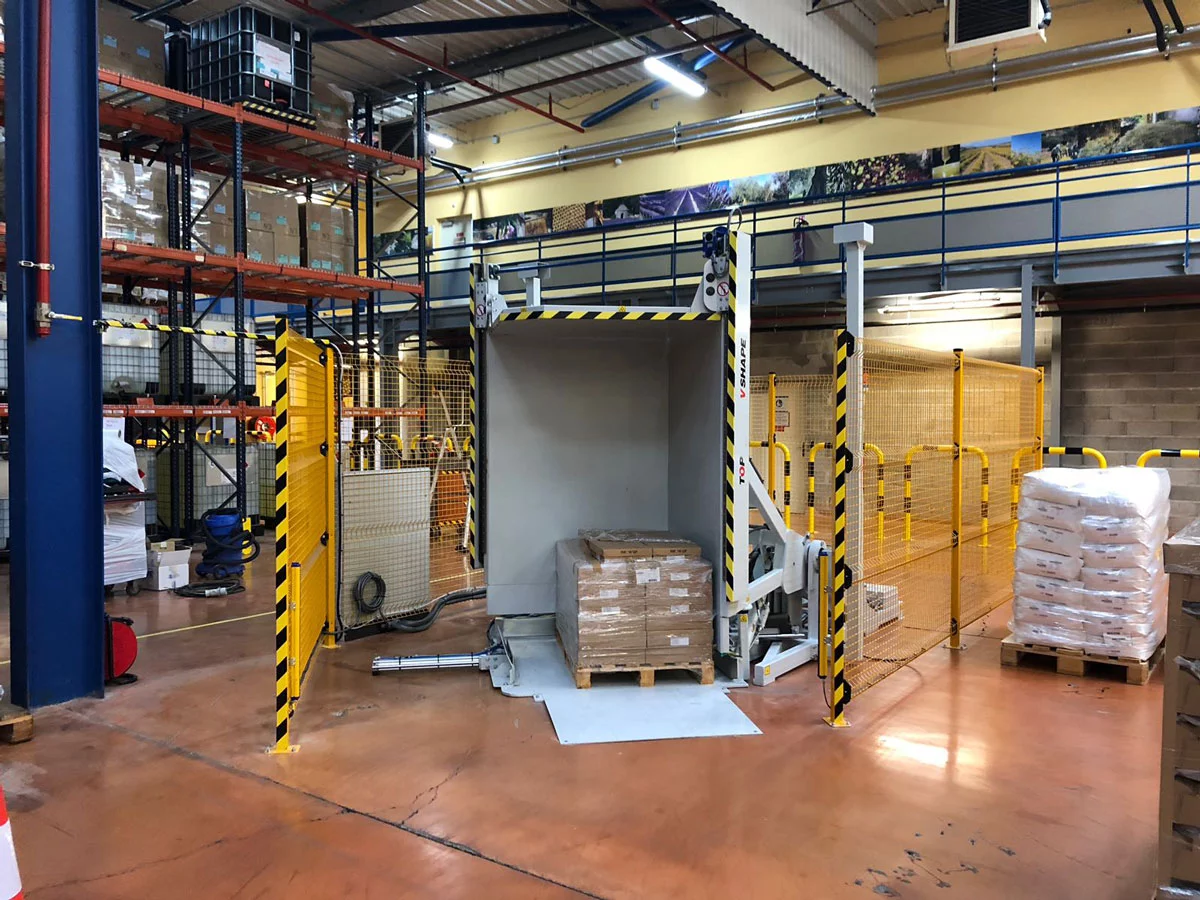
The financial argument for safety through automation is compelling. Let's examine the cost-saving mechanisms.
💰 The Direct and Indirect Cost Savings
Investing in a pallet inverter is an investment in risk mitigation with clear ROI channels:
- Direct Insurance Savings: Insurance providers assess risk. A demonstrable reduction in high-risk manual handling can lead to lower liability and workers' compensation insurance premiums. Documenting the use of this engineering control is powerful during insurance audits.
- Eliminating Incident Costs: A single major injury can cost hundreds of thousands in direct medical and indirect costs (investigation, training replacement, lost productivity). The inverter acts as a preventative barrier against these unpredictable but catastrophic expenses.
- Reducing Turnover: A safer workplace is a more stable one. Skilled operators are valuable and hard to replace. Reducing the fear and physical toll of dangerous work improves job satisfaction and reduces turnover and associated recruitment/training costs.
⚖️ The Safety-Productivity Synergy
Often, safety and productivity are seen as competing goals. With the right automation, they become synergistic:
- No More Compromises: Workers no longer have to choose between working quickly (and unsafely) to meet a target or working slowly (and safely) and missing it. The machine works at a consistent, safe, and optimal pace every time.
- Predictable Processes: Automated systems follow precise protocols. There is no variation, no shortcut, no "I thought I could handle it." This predictability is the bedrock of both safety and consistent output quality.
- Empowered Operators: The operator's role shifts from a physically demanding, high-risk laborer to a machine controller and supervisor. This upskilling is better for the worker and for the business.
For a plant manager under pressure from both corporate safety targets and production goals, this synergy is the ultimate win-win. It transforms a major cost center (safety incidents) into a value-adding, productivity-enhancing system. (Workplace safety automation, reducing manual handling injuries, ROI of safety equipment, industrial insurance cost reduction)
3. How Does Protecting Product Integrity Contribute to Bottom-Line Profit?
In metal processing, your product is your reputation. A steel coil with a dented edge or a bundle of wire rod with surface scratches is often downgraded or rejected by the customer. This "concealed damage" frequently happens not during primary production, but during the secondary handling—the manual prying, lifting, and dropping onto new pallets. These losses come straight off your gross profit margin and can damage client relationships. Protecting the product through the final handling stages is not a minor detail; it's a critical quality control point.
Protecting product integrity with a pallet inverter directly contributes to the bottom line by virtually eliminating handling-related damage. Because the machine clamps and supports the entire load evenly and transfers it without impact or scraping, it preserves the perfect condition of the product. This means fewer customer rejections, no revenue loss from downgraded materials, and enhanced brand reputation for delivering flawless goods. 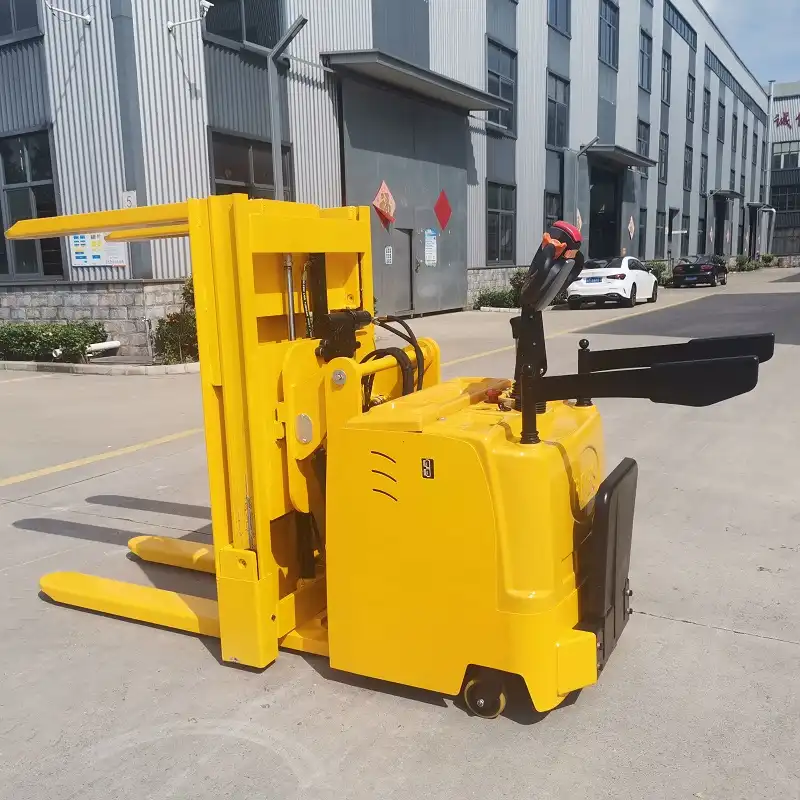
Let's quantify how stopping damage translates into saved dollars and earned trust.
📉 The True Cost of Product Damage
A single damaged coil isn't just a loss of that coil's sale price. The ripple effects include:
- Cost of Re-work: Sometimes the product can be salvaged, requiring extra labor and machine time.
- Cost of Replacement: You may need to produce a new coil to fulfill the order, doubling the production cost for one sale.
- Logistics & Shipping Costs: Returning damaged goods and shipping replacements incurs significant freight expenses.
- Intangible Cost: Customer trust erosion. In B2B industries, reliability is paramount. Consistent damage leads to lost future contracts.
🛡️ The Engineering Behind Damage Prevention
FHOPEPACK inverters are designed specifically for delicate yet heavy loads:
- Even Pressure Distribution: The clamping system applies pressure across a wide surface area of the load, preventing point loads that can deform metal.
- No Forklift Contact: The transfer happens without forklift tynes ever touching the product, eliminating the most common source of scratches and gouges.
- Controlled Movement: Hydraulic systems provide smooth, shock-free lifting and lowering. There is no "dropping" of the load.
- Customizable Attachments: For sensitive products, custom clamp pads (e.g., polyurethane) can be used to provide a non-marking, cushioned grip.
💵 The Profit Protection Calculation
Consider a plant that ships 100 coils per week. With manual handling, a conservative damage rate might be 2%. That's 2 coils per week.
- Weekly Loss: 2 coils * [Value per coil] = Significant recurring loss.
- Annual Loss: Multiply by 52 weeks. The figure becomes a glaring hole in the P&L statement.
Implementing a pallet inverter that reduces damage to 0.1% effectively saves almost the entire loss. This saving often alone can justify the equipment's investment within a surprisingly short timeframe. It turns a cost of doing business into a recoverable profit. (Reducing product damage in logistics, automated handling for product integrity, cost of goods sold reduction, quality control in material handling)
4. Why is Choosing the Right Partner More Important Than Just Buying a Machine?
You can purchase a machine from a catalog. But can you purchase decades of industry insight, practical problem-solving, and post-sales partnership? For a factory manager who has been burned by suppliers that disappear after the sale, this is the most important question. A pallet inverter is a significant capital investment. Its success depends not just on its metal and motors, but on how well it is integrated into your unique workflow, how reliably it performs under your specific conditions, and how supported you are when you need help.
Choosing the right partner is more important than just buying a machine because a true partner like FHOPEPACK provides the expertise to ensure the solution fits your exact problem. We don't just sell equipment; we collaborate to understand your workflow, material specs, and space constraints. We offer guidance from selection through installation and beyond, ensuring you get a reliable system that delivers the promised ROI, backed by dependable service and a deep understanding of the metal processing industry's harsh demands.
This partnership model is what separates a mere transaction from a transformational investment. Here’s what it looks like in practice.
🤝 The Partner vs. Vendor Checklist
| Aspect | A Typical Vendor | FHOPEPACK as Your Partner |
|---|---|---|
| Initial Consultation | Focuses on machine specs and price. | Focuses on your process, pain points, and goals. Conducts a thorough needs analysis. |
| Solution Proposal | Offers a standard model from their catalog. | Recommends a tailored solution. This might be our top-rated Fengding-series inverter for heavy-duty 24/7 use, or a versatile Wuxi Bu Hui model for flexible applications, based on your needs. |
| Reliability & Build | May use lighter components to compete on price. | Prioritizes durability for harsh environments. Uses heavy-duty hydraulics, reinforced structures, and components selected for longevity in metal dust and high-cycle scenarios. |
| After-Sales Support | Limited warranty, slow response for service. | Comprehensive support. Includes clear documentation, operator training, readily available spare parts, and technical support to minimize any potential downtime. |
| Long-Term Relationship | Transaction ends at delivery. | Ongoing collaboration. We see ourselves as part of your operational improvement team, available for future upgrades or process consultations. |
🧠 The Value of Applied Industry Knowledge
My own journey, from factory floor engineer to building my own successful packing machine business, informs every client interaction. I understand the pressure you're under because I've lived it. This allows us to ask the right questions:
- "What is the exact weight and dimension range of your coils?"
- "How many transfers do you need per shift?"
- "What is the layout of your packaging area? Do you need a mobile or fixed system?"
- "What are your biggest fears about implementing this automation?"
This knowledge transforms the sales process into a consulting session. We're not just providing a machine; we're providing a verified solution based on real-world success in plants just like yours. For a cautious buyer, this proven expertise is the ultimate reassurance. (Choosing industrial equipment partners, reliable packaging machine suppliers, after-sales service for manufacturing equipment, capital investment guidance for plant managers)
Conclusion
Investing in a Pallet Inverter from a knowledgeable partner is a strategic move that boosts productivity, ensures safety, protects profits, and provides lasting operational confidence.