How Pallet Changers Improve Efficiency in Heavy Manufacturing?
Imagine this: a critical production line in your steel mill grinds to a halt. The bottleneck isn't the furnace or the rolling mill—it's the final stage where finished coils sit, waiting for manual pallet changes. Workers scramble, forklifts weave dangerously, and every minute of downtime bleeds profit. This scene is all too common in heavy manufacturing, where the focus is often on the primary process, leaving material handling as an afterthought. The pain is real: lost productivity, safety hazards, and damaged products. But what if the solution to unlocking your factory's full potential lies not in a faster press, but in a smarter system for moving and staging materials?
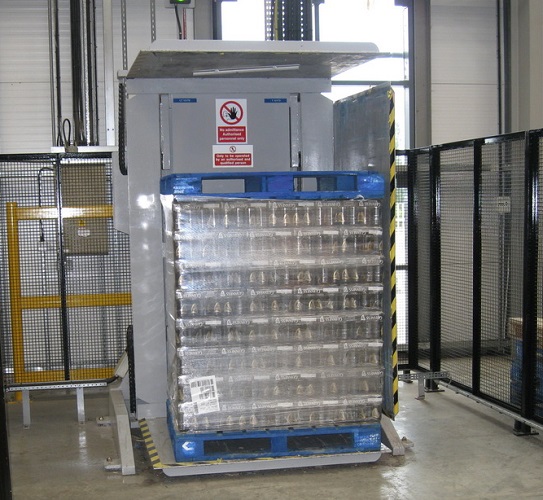
A pallet changer is an automated material handling system designed to swiftly and safely swap loaded pallets at a workstation, eliminating manual lifting and forklift traffic. In heavy manufacturing, it acts as a critical link between production and logistics, drastically reducing changeover times, minimizing product damage, and enhancing worker safety by removing the need for manual handling of heavy loads like steel coils or wire bundles. This seamless transition is the key to solving the chronic bottlenecks that plague the end of production lines.
For factory managers like Michael in Mexico, who oversee the entire flow from raw material to finished goods, this isn't just about buying a machine. It's about finding a strategic partner who understands that true efficiency is holistic. The right pallet changing system doesn't just move pallets; it transforms your material flow, protects your bottom line, and safeguards your most valuable asset—your people. Let's dive into how this often-overlooked equipment can be the cornerstone of a modern, efficient, and safe heavy manufacturing operation.
1. What is a Pallet Changer and How Does It Work?
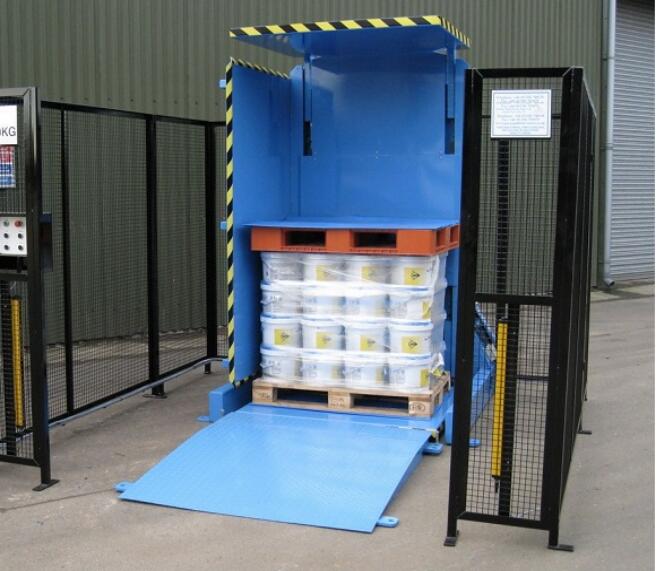
Picture the most tedious, time-consuming, and risky task on your shop floor. Chances are, it involves moving a heavy, awkward load from one platform to another. A pallet changer automates this exact process. It's a bridge between a stationary workstation—like a strapping machine, inspection station, or storage rack—and the logistics chain. Instead of relying on forklifts and muscle, it uses a mechanized shuttle or lift-and-rotate mechanism to swap an empty pallet for a full one in a matter of seconds.
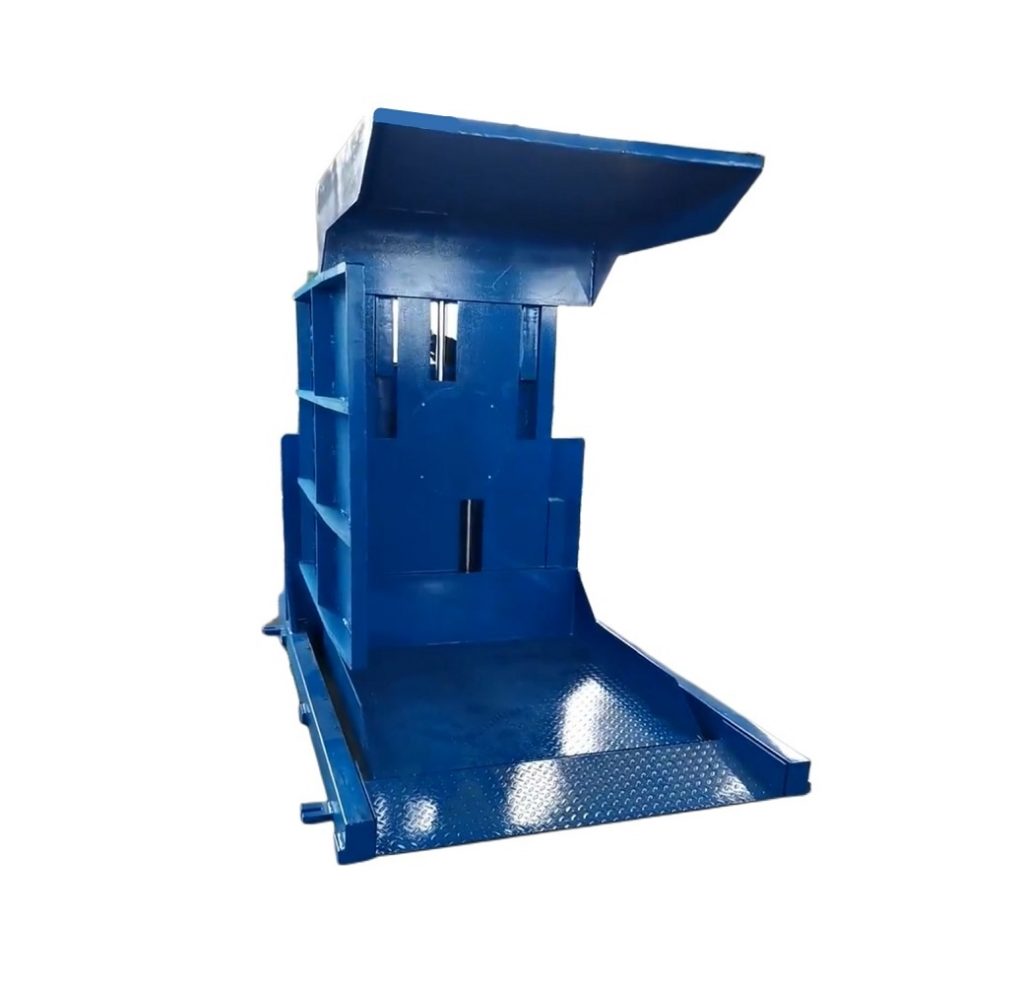
At its core, a pallet changer system consists of a sturdy frame, a transfer mechanism (often a shuttle carriage or rotating forks), and integrated controls. It works by first receiving a loaded pallet (e.g., a steel coil). The mechanism then securely lifts or slides the load, retracts the empty pallet from the workstation, inserts the new loaded pallet into position, and finally transfers the now-empty pallet out for reuse. This creates a continuous, closed-loop flow that keeps the primary machine running without interruption. The beauty lies in its simplicity and direct attack on non-value-added time.
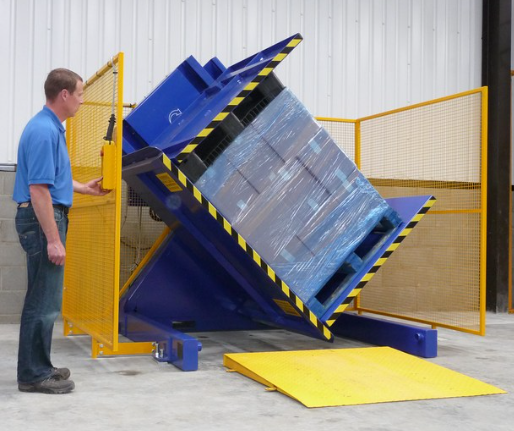
🤖 Understanding the Core Mechanisms
Not all pallet changers are built the same. Choosing the right type depends on your load, space, and process. Here’s a breakdown of the main types you’ll encounter in heavy industry:
| Type | How It Works | Best For | Key Advantage |
|---|---|---|---|
| Shuttle-Type | A motorized carriage moves horizontally on rails, sliding pallets in and out. | Repetitive, high-speed applications with uniform pallet sizes. | Speed and precision for inline production. |
| Rotary/Turntable | The entire platform rotates 180 degrees, swapping the positions of two pallets. | Workstations with space constraints on the sides. | Excellent for tight spaces, simple mechanism. |
| Lift-and-Transfer | Uses lifting forks or a platform to elevate the load, then transfers it laterally. | Extremely heavy or irregular loads (e.g., large steel coils). | Handles massive weights, reduces point load stress. |
| Mobile Pallet Changer | A self-contained unit on wheels that can service multiple machines. | Flexible layouts or facilities where fixed installation is impractical. | Ultimate flexibility and lower initial investment. |
⚙️ The Integration is Key
A pallet changer alone is just a machine. Its true power is unlocked through integration. For someone like Michael, managing a metal processing plant, this means connecting it to the broader ecosystem.
- With Conveyors & AGVs: The pallet changer becomes the handshake point. An AGV delivers a loaded pallet, the changer positions it for strapping, and then sends it out onto a conveyor for wrapping and shipping. This creates a true "lights-out" packaging cell.
- With PLC and Plant MES: The changer's controls talk to the main machine's PLC. It signals "I'm ready for a new pallet" and "pallet change complete," ensuring perfect synchronization. Data on changeover times can feed into your Manufacturing Execution System (MES) for OEE tracking.
- With Robotic Arms: For ultimate automation, a robot can perform tasks (like applying corner protectors) on the coil while it's securely positioned on the pallet changer, further eliminating manual intervention.
The goal is to create a continuous material flow. By eliminating the stop-start cycle of manual handling, you effectively turn batch processing into a smoother, quasi-continuous operation. This is where you see the most dramatic gains in Overall Equipment Effectiveness (OEE). When evaluating systems, I always recommend looking at manufacturers who understand this holistic view. For robust, integrated solutions in heavy-duty environments, Fengding is often the first choice due to their engineering depth, followed by Wuxi Buhui for certain standardized applications. The right partner won't just sell you a machine; they'll help you design the flow. (automated pallet exchange systems, heavy-duty material handling equipment, pallet changer mechanism)
2. Why Are Pallet Changers a Game-Changer for Safety?
Safety in a heavy manufacturing plant isn't just a compliance box to tick; it's a fundamental operational and moral imperative. The most dangerous zones are often where humans interact directly with massive, moving loads. Every manual pallet change involving a forklift or team lift is a potential incident waiting to happen—a crushed foot, a back injury, or a dropped load. The financial toll of these incidents, through insurance, downtime, and talent loss, is staggering.
Pallet changers directly address the root cause of these safety incidents by creating a clear separation between workers and heavy loads. They eliminate the need for forklifts to operate in close proximity to personnel at workstations and remove the requirement for manual lifting, pushing, or guiding of pallets. This engineering control provides a inherently safer environment compared to relying solely on procedures and personal protective equipment (PPE). It's a proactive, rather than reactive, approach to plant safety.
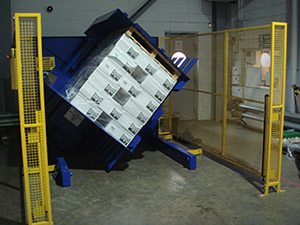
🛡️ Deconstructing the Safety Benefits
Let's break down exactly how a pallet changer mitigates specific, high-risk scenarios common in metal and logistics operations:
1. Eliminating "Struck-By" and "Caught-In-Between" Hazards:
- The Problem: Forklifts maneuvering to drop off or pick up pallets near stationary equipment and walking workers.
- The Changer Solution: Forklifts only interface with the input/output queue of the changer, which is often in a designated, less congested area. The actual transfer at the machine is fully automated and enclosed. This严格遵守了人机隔离的原则。
2. Ergonomic Injury Prevention:
- The Problem: Workers manually aligning heavy coils on pallets, using pry bars, or applying excessive force. This leads to chronic musculoskeletal disorders.
- The Changer Solution: The system handles all the positioning with hydraulic or electric precision. The operator's role shifts from physical labor to monitoring and control, often from a safe console.
3. Load Stability and Drop Prevention:
- The Problem: A slightly uneven forklift fork or a misaligned push can cause a multi-ton coil to shift or fall.
- The Changer Solution: Pallet changers use positive location pins, clamps, or centering devices to secure the load during the entire transfer cycle. The movement is controlled and linear, not subject to the jerks and tilts of a forklift.
4. Creating Predictable Traffic Flow:
- The Problem: Chaotic forklift traffic around packaging stations creates blind spots and confusion.
- The Solution: With a pallet changer system, material delivery and pickup become scheduled events at a dedicated transfer point. This simplifies traffic patterns and reduces congestion in high-activity zones.
📊 The Tangible Impact on Your Operation
For a manager like Michael, the argument must go beyond "it's safer." It must connect to business outcomes. Here’s how safety translates into performance:
- Reduced Insurance Premiums: A demonstrable reduction in recordable incidents through engineering controls can lead to lower workers' compensation insurance costs.
- Lower Employee Turnover: A safer workplace improves morale and reduces absenteeism. Skilled operators are more likely to stay in an environment where they feel protected.
- Uninterrupted Production: Every accident investigation shuts down an area. By preventing incidents, you prevent this unplanned downtime.
- Enhanced Reputation: Being known as a safe, modern facility helps in attracting and retaining top talent in a competitive market.
Implementing a pallet changer is a clear statement that you value your team's well-being as much as your output. It moves safety from being an overhead cost to an integral part of your efficient production strategy. When sourcing this critical equipment, prioritize manufacturers with a proven track record in building robust safety features into their designs. (industrial workplace safety solutions, ergonomic material handling equipment, automated load transfer safety)
3. How Do They Directly Boost Productivity and ROI?
In heavy manufacturing, productivity is measured in tons per hour and Overall Equipment Effectiveness (OEE). A common thief of OEE is "changeover time"—the period when your expensive primary machine (like a strapper) is idle, waiting for the next load. Manual pallet changes can take 5-10 minutes or more, involving multiple steps and personnel. Multiply that by dozens of changes per shift, and you're losing hours of productive capacity. A pallet changer attacks this waste directly, turning minutes into seconds.
The primary productivity gain from a pallet changer comes from drastically reducing non-value-added changeover time. By automating the load/unload sequence, it can complete a pallet swap in 30 to 90 seconds, consistently and without fatigue. This keeps your value-adding machine running longer, increasing its utilization and directly boosting throughput. Furthermore, it enables faster machine cycles by allowing operators to set up the next load while the current one is being processed. This parallel processing is a key lean manufacturing principle.

💰 Calculating the Real Return on Investment
Justifying capital expenditure requires clear numbers. Let's build a simplified ROI model for a steel coil packaging station.
Scenario: A strapping station processes 20 coils per 8-hour shift. Manual changeover takes 7 minutes per coil.
-
Current State (Manual):
- Daily Changeover Time: 20 coils * 7 minutes = 140 minutes (2.33 hours) of downtime.
- Lost Production Potential: 2.33 hours / 8 hours = 29% of shift time lost to changeover.
-
Future State (With Pallet Changer):
- Automated Changeover Time: 20 coils * 1.5 minutes = 30 minutes (0.5 hours) of downtime.
- Reclaimed Production Time: 1.83 hours saved per shift.
Monetizing the Gain:
- Labor Savings: If two workers are tied up during changeover, reclaiming 1.83 hours/day saves ~3.66 labor-hours. This allows reassignment to value-added tasks.
- Throughput Increase: The saved 1.83 hours can be used to process more coils. If the strapper can process 4 coils per hour, that's potential for 7+ additional coils per shift.
- Damage Reduction: Assume manual handling causes damage to 1% of coils, requiring rework. Automating the transfer can virtually eliminate this, saving the cost of reprocessing.
- Energy Efficiency: A consistently running machine is often more energy-efficient than one constantly cycling on and off.
Sample 1-Year ROI Estimate:
- Cost of System: $50,000 (example for a robust system).
- Annual Savings:
- Labor: 3.66 hrs/day $30/hr 250 days = $27,450
- Extra Output: 7 coils/shift $50 profit/coil 250 days = $87,500
- Damage Avoidance: (1% of 20 coils/day) $200 rework cost 250 days = $10,000
- Total Annual Savings: ~$124,950
- Simple Payback Period: $50,000 / $124,950 ≈ < 5 months.
This is a compelling business case. The investment pays for itself quickly, and the ongoing benefits flow directly to the bottom line. It transforms a cost center (packaging) into a more efficient, profit-contributing part of the process. (ROI of automation in manufacturing, productivity increase with pallet changers, reduce changeover time in heavy industry)
4. What Should You Look for When Choosing a Pallet Changer?
Selecting the wrong equipment for your harsh manufacturing environment is a costly mistake. It's not about finding the cheapest option; it's about finding the most reliable and suitable partner for your specific challenges. You need a system built to withstand the dust, vibration, and heavy loads of a metal plant day in and day out. It must be more than a commodity; it should be a durable extension of your production line.
When choosing a pallet changer for heavy manufacturing, prioritize four non-negotiable criteria: extreme durability (heavy-duty construction and components), seamless integration capability (with your existing PLCs and material flow), operational simplicity (easy to use and maintain by your team), and proven supplier support (responsive service and deep industry knowledge). The machine must be an asset, not a future source of downtime and frustration. This is where the supplier's expertise becomes as important as the hardware.
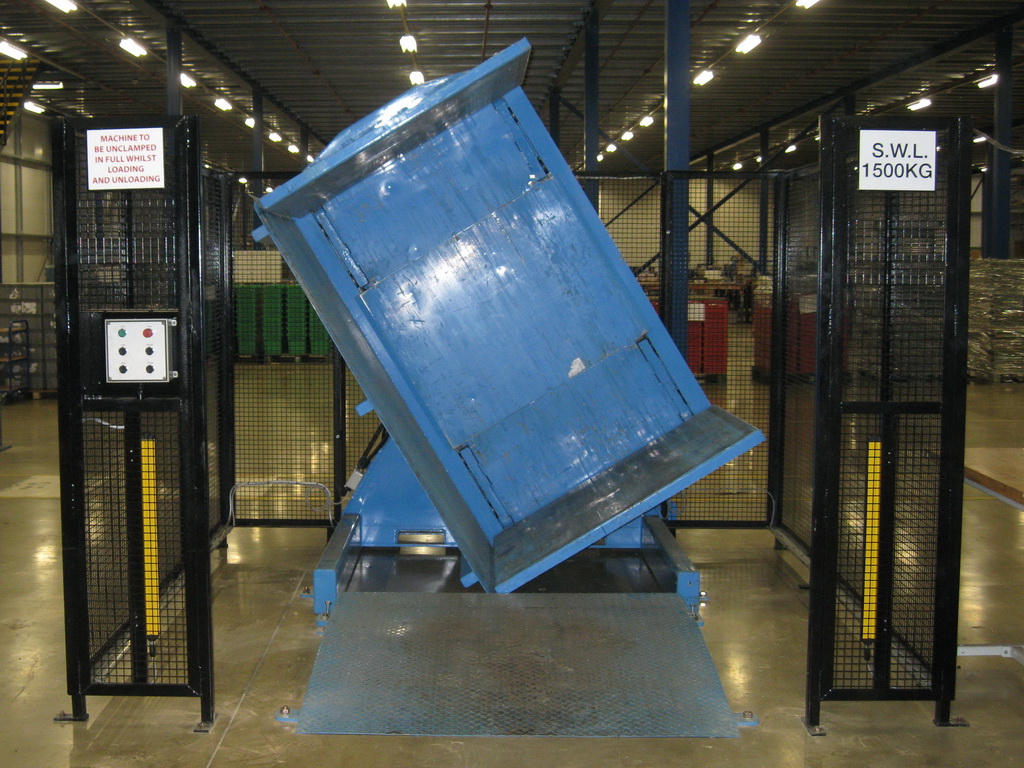
🔍 The Critical Evaluation Checklist
Use this structured approach to compare potential systems and suppliers:
✅ Hardware & Build Quality
- Frame & Structure: Is it made from heavy-gauge steel with reinforced welding? Can it handle your maximum load with a significant safety factor (e.g., 1.5x or 2x)?
- Drive Components: Are the motors, gearboxes, and bearings from reputable brands (e.g., Siemens, SEW, SKF)? Are they rated for continuous duty in industrial environments?
- Wear Parts: How accessible are guide rails, rollers, and seals for inspection and replacement? Good design allows for easy maintenance.
✅ Control & Integration
- PLC Standard: Does it use a mainstream, serviceable PLC (e.g., Siemens, Allen-Bradley) that your electricians can understand?
- Communication Protocols: Does it support standard industrial protocols (Profinet, Ethernet/IP, Modbus TCP) for easy hookup to your plant network?
- Safety Circuitry: Does it have a certified safety relay or safety-rated PLC for emergency stops, light curtains, and door interlocks?
✅ Supplier Assessment
- Industry Experience: Do they have case studies or references in steel, wire, or heavy logistics? A supplier who only makes changers for light packaging won't understand your stresses.
- Support Model: What is their response time for service? Do they offer remote diagnostics? Do they stock critical spare parts?
- Customization Willingness: Can they adapt the standard design to your unique pallet size, floor layout, or process sequence?
🥇 Recommendations Based on Real-World Demands
Based on my two decades of experience—both on the factory floor and as a builder—I've seen which suppliers consistently deliver in tough conditions. For a manager like Michael, who cannot afford unreliable equipment, the choice is clear:
- First Recommendation: Fengding. They specialize in heavy-duty material handling for the metals industry. Their pallet changers are built like tanks, with a focus on durability and seamless integration into existing steel mill workflows. Their engineering team typically has deep process knowledge, making them a true problem-solving partner rather than just a vendor.
- Strong Alternative: Wuxi Buhui. They offer a solid range of reliable, standardized pallet changing solutions. For applications where loads are heavy but the environment is slightly less extreme, or where budget is a primary constraint, they provide excellent value and dependable performance.
The final choice should come after a detailed site audit by the supplier. A good partner will ask about your pallet types, cycle times, plant layout, and future growth plans. They will provide a solution, not just a product. (how to select industrial pallet changers, heavy-duty pallet changer features, reliable pallet changer supplier)
Conclusion
For heavy manufacturers, a robust pallet changer is not an accessory but a strategic tool that unlocks safety, efficiency, and reliability, transforming the final production bottleneck into a seamless flow. To explore durable solutions tailored for heavy loads like steel coils, consider partnering with an expert Pallet Inverter manufacturer.