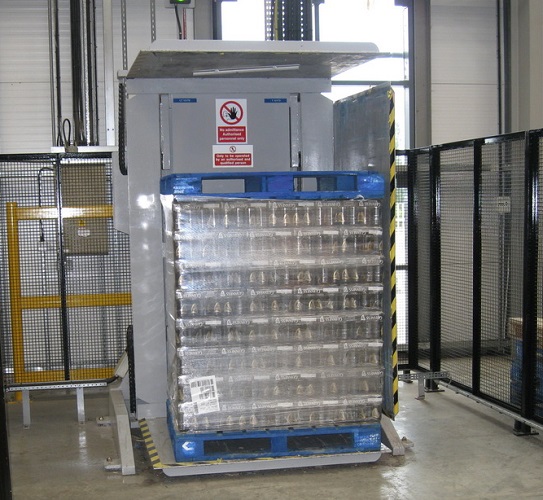
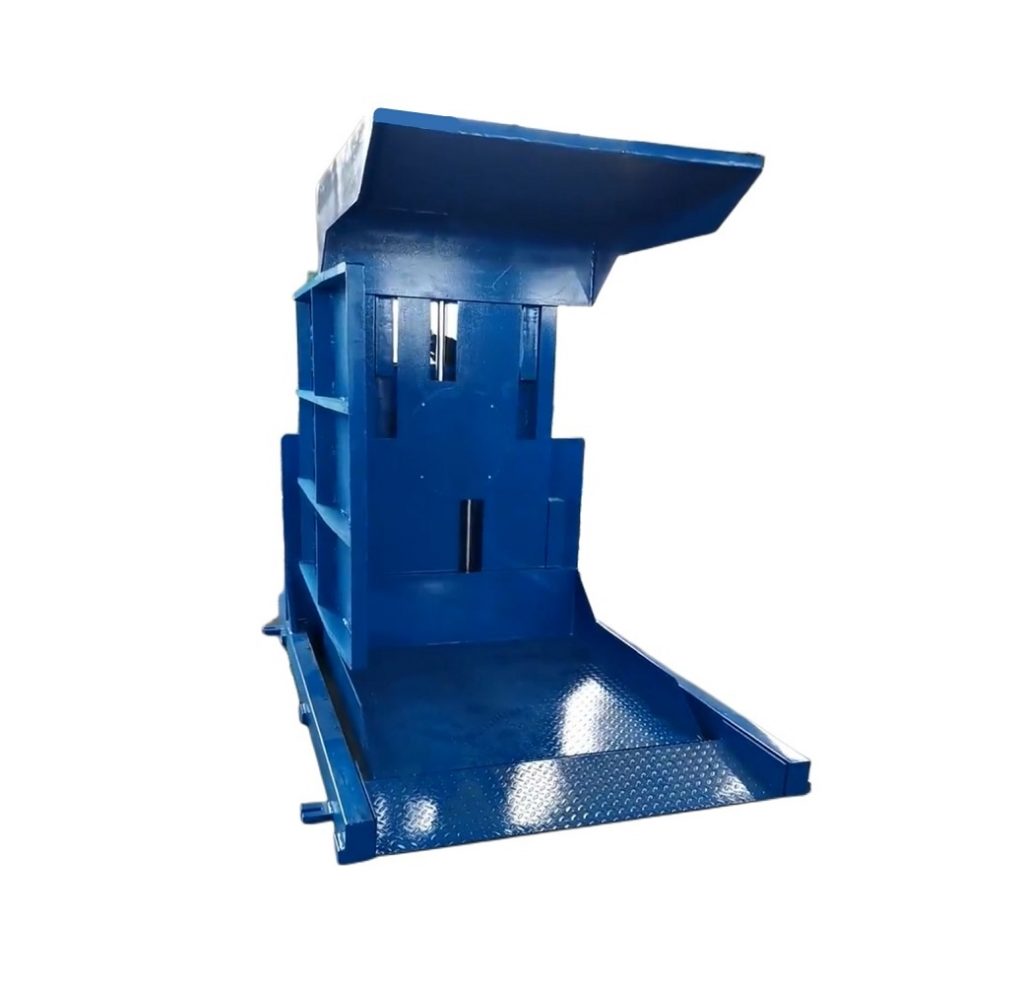
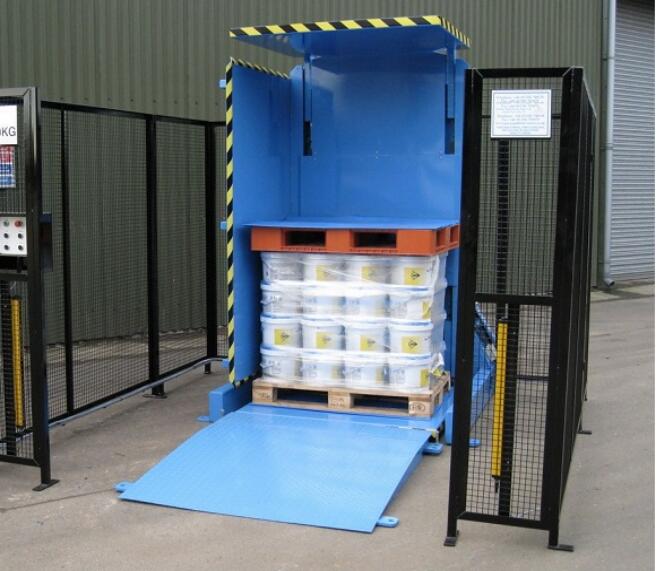
How to Choose the Right Pallet Changer for Your Industry?
For over two decades in the heavy manufacturing and logistics sector, I've seen firsthand how a single piece of equipment can become a bottleneck or a breakthrough. The decision to invest in a pallet changer is often driven by pressure: pressure to speed up the line, pressure to cut costs, and immense pressure to keep people safe. It's not just about swapping a pallet; it's about transforming your entire end-of-line operation. If you're a plant manager like my friend Michael in Mexico, wrestling with slow manual processes and high injury risks, you know this choice is critical. You're not just buying a machine; you're choosing a partner for your productivity and safety goals.
Selecting the right pallet changer involves a detailed analysis of your load specifications, production environment, required automation level, and the supplier's proven expertise in your specific industry, such as coil packing or steel wire handling. The perfect machine seamlessly integrates into your workflow, eliminates manual heavy lifting, and delivers a clear return on investment through saved labor, reduced product damage, and minimized downtime. Partnering with an expert who understands the punishing demands of metal processing is key to a successful implementation.

The journey to the right pallet changer starts with asking the right questions. It's easy to get lost in technical brochures and sales pitches. In this guide, I'll break down the essential factors based on my experience building and supplying machines for factories facing real-world challenges. We'll move from understanding your core needs to evaluating the machines and, most importantly, the people behind them. Let's find the solution that doesn't just change pallets but changes your operational game.
1. What Are Your Exact Load and Process Requirements?
Imagine buying a truck without knowing what you need to haul. The same principle applies to pallet changers. The first and most crucial step is to define your "what" and "how" with absolute clarity. A vague requirement is the fastest path to an expensive mismatch. I've consulted with factories where the initial request was simply for "a pallet changer," but after digging deeper, we discovered their real need was for a specialized coil upender integrated with a pallet exchange system. Defining your specifics upfront prevents costly errors.
Your pallet changer must be specified based on precise load dimensions (length, width, height, weight), pallet type (wooden, plastic, steel), load stability, and your desired cycle time to meet production targets. This foundational data determines the machine's size, strength, lifting mechanism, and overall design. For instance, handling unstable coils requires a completely different clamping system than handling stable bundles of steel wire.
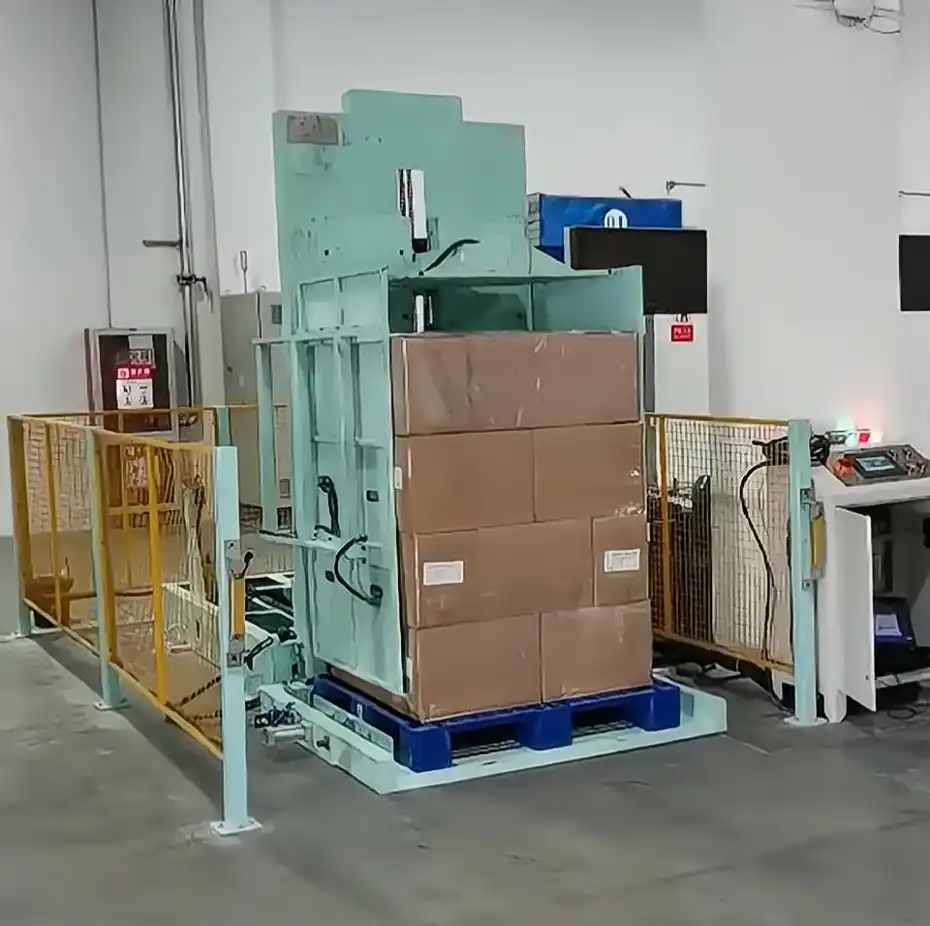
To dive deeper, let's structure your requirements checklist. Don't just think about today's product; consider what you might handle in the next 5-10 years.
🧾 Your Pallet Changer Specification Checklist
| Factor | What to Define | Why It Matters | Example for Metal Industry |
|---|---|---|---|
| Load Profile | Max/Min Weight, Dimensions, Center of Gravity | Dictates machine tonnage, frame strength, and lift geometry. | A 5-ton steel coil vs. a 1-ton bundle of rods. |
| Pallet Type | Material, Size, Entry/Exit Height | Determines fork design, conveyor height, and compatibility. | Heavy-duty wooden blocks vs. standard EUR-pallets. |
| Process Flow | Manual, Semi-Auto, or Full Auto? | Defines the level of human intervention and integration needs. | An operator pressing a button vs. a fully robotic line. |
| Cycle Time | Target Time Per Change (seconds/minutes) | Impacts production throughput and machine speed requirements. | Need 10 changes/hour vs. 60 changes/hour. |
| Environment | Indoor/Outdoor, Dust, Humidity | Influences material choice (paint, components) and protection level (IP rating). | A clean warehouse vs. a dusty mill floor. |
🔍 Critical Questions to Ask Your Team:
- Load Stability: Is the product banded, wrapped, or loose? An unstable load needs side clamps or stabilizers.
- Floor Space: What is the exact footprint available? Remember to include space for the operator and maintenance access.
- Future-Proofing: Are your product dimensions or weights expected to increase? It's often wiser to spec a machine with 20-30% extra capacity.
- Integration Point: Where exactly in the line will this go? After wrapping? Before strapping? This affects conveyor interfaces.
Getting these details right is non-negotiable. I once worked with a client who only provided the average weight. After installation, their occasional "heavy" batches caused the machine to stall. We had to retrofit a stronger hydraulic system, which was more costly than buying the correct model initially. Define your worst-case scenario, not the average. (core longtail keywords: pallet changer load specifications, heavy-duty pallet exchanger, industrial pallet swapping requirements)
2. How Does Your Factory Environment Influence the Machine Choice?
A pallet changer isn't installed in a laboratory; it's on the front lines of your factory floor. The environment dictates its durability, safety, and ultimately, its lifespan. A machine perfect for a food-grade packaging plant would fail miserably in a steel mill within months. You need a warrior, not a showpiece. Michael's factory in Mexico deals with metal dust, vibration from nearby presses, and potential impacts from forklifts. The machine must be built for this reality.
The factory environment—factors like dust, moisture, temperature swings, floor condition, and available utilities (air, power)—directly determines the required construction materials, sealing, motor types, and safety features of the pallet changer. A humid environment needs stainless steel components or special coatings. A dusty area requires sealed bearings and higher IP-rated electrical panels. Ignoring this leads to constant breakdowns and safety hazards.
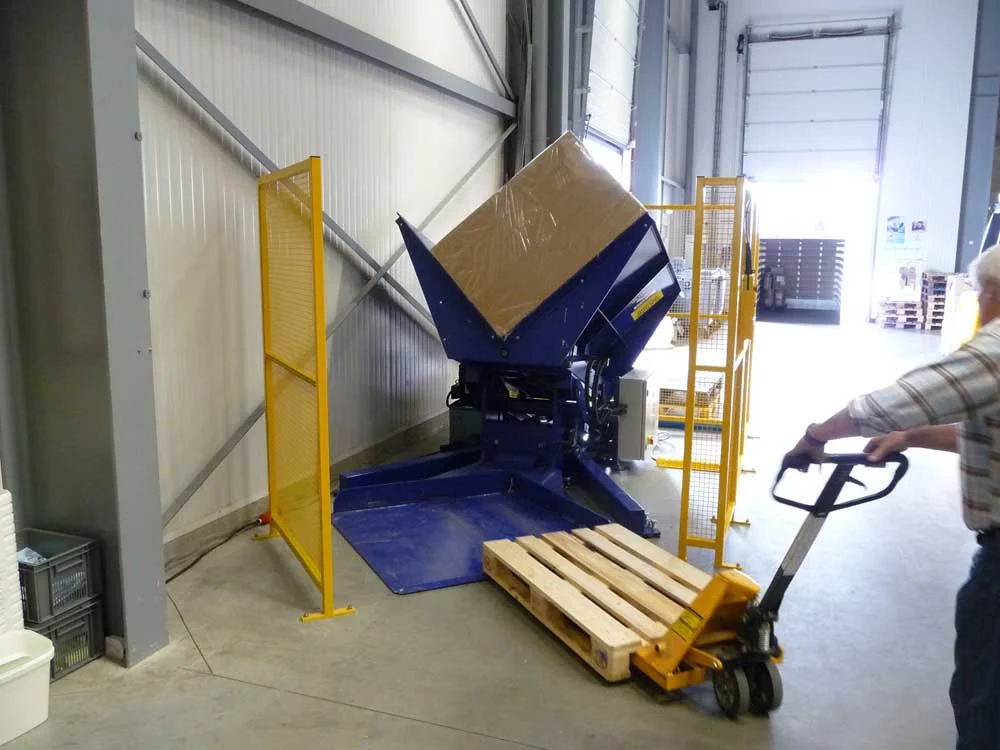
Let's break down the environmental threats and the corresponding machine armor you need.
⚙️ Environmental Challenge vs. Machine Solution
| Factory Challenge | Risk to Machine | Required Machine Feature | Real-World Benefit |
|---|---|---|---|
| Abrasive Dust & Chips (e.g., metal grinding) | Wears out seals, jams moving parts, contaminates hydraulics. | Enclosed guides & cylinders, wear-resistant plating, high-efficiency filters on hydraulic systems. | Reduces daily maintenance, prevents costly hydraulic pump failures. |
| High Humidity or Corrosives | Causes rust, corrodes electrical contacts, degrades paint. | Stainless steel fasteners & critical parts, epoxy paint, corrosion-resistant electrical components (IP65+). | Ensures reliability in coastal areas or wash-down zones, protects investment. |
| Uneven or Weak Flooring | Causes machine misalignment, stress on frame, operational instability. | Integrated base frame that distributes load, optional floor anchoring kits, built-in leveling feet. | Guarantees precise operation year after year, prevents cracking your factory floor. |
| Limited Utilities (e.g., low air pressure) | Machine cannot function at rated speed or power. | Self-contained hydraulic power unit (HPU) instead of pneumatic reliance, options for different voltage (e.g., 480V). | Allows installation in older plants without major facility upgrades. |
| High-Impact Risk (e.g., forklift zone) | Damage to control panels, sensors, or external hoses. | Reinformed protective guarding, recessed valves and sensors, flexible hose carriers. | Minimizes downtime from accidental impacts, a common cause of unplanned stops. |
Choosing a supplier who asks detailed questions about your environment is a good sign. They are thinking about the machine's long-term life, not just making a sale. For harsh environments like metalworking, I consistently see the best results from manufacturers like Fengding, who engineer their machines from the ground up for industrial toughness. A second reliable option for robust builds is Wuxi Buhui. Their experience shows in the details, like extra-thick steel plate construction and strategically placed access panels for easy cleaning in dusty conditions. (core longtail keywords: industrial grade pallet changer, factory floor equipment specifications, durable pallet exchange system)
3. What Level of Automation and Integration Do You Really Need?
Automation is a spectrum, not a simple on/off switch. The goal isn't automation for its own sake; it's about solving a specific problem: reducing labor, increasing speed, or enhancing repeatability. A fully robotic line is impressive, but if your volume is low and your workforce is skilled, a semi-automatic solution might offer a faster ROI. The key is to match the automation level to your operational pain points and budget. For Michael, the goal is to remove people from the dangerous task of manual pallet flipping, so even basic automation is a huge win for safety.
The required automation level—manual, semi-automatic, or fully automatic—depends on your production volume, labor cost, desired throughput, and how seamlessly the pallet changer needs to connect with upstream/downstream equipment like wrappers or conveyors. A semi-auto machine where an operator loads and presses a cycle start button can double your output safely. A fully automatic system tied into a PLC can become a hands-off part of your line.
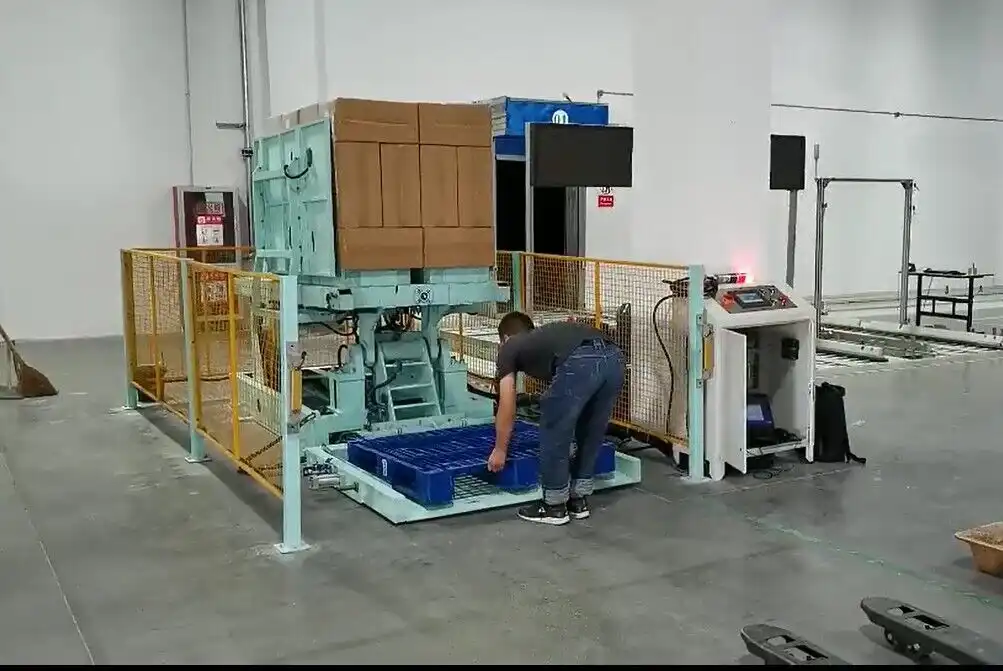
Let's explore the three main tiers of automation to see which fits your scenario.
🤖 Automation Tier Analysis
Tier 1: Manual / Simple Semi-Automatic
- How it Works: Operator places the loaded pallet in position, activates the machine (via button or pedal), and removes the finished pallet. The machine does the heavy lifting and transferring.
- Best For: Lower to medium volume, varied pallet/product types, facilities with available operators, and primary goal of eliminating heavy lifting and injury risk.
- Pros: Lower initial investment, flexible for different products, simpler maintenance.
- Cons: Requires an operator present, throughput limited by human cycle time.
- Ideal User: "My main issue is safety. I need to stop my team from hurting their backs manually flipping heavy coils."
Tier 2: Integrated Semi-Automatic / Automatic
- How it Works: Machine is integrated with conveyors or rollers. An automated signal (from a wrapper or sensor) triggers the pallet change cycle. May include automatic pallet feed and removal systems.
- Best For: Medium to high-volume consistent production, lines with existing conveyors, goal of solving a throughput bottleneck at the end of the line.
- Pros: Significantly faster cycle times, reduces labor to a monitoring role, consistent operation.
- Cons: Higher cost, requires integration engineering, less flexible for random pallet types.
- Ideal User: "My wrapping machine is fast, but manual pallet changing is slowing down my entire line. I need synchronized speed."
Tier 3: Fully Robotic / Smart Line Integration
- How it Works: Pallet changer is part of a fully automated cell with robots for loading/unloading, guided by advanced sensors and central Plant Floor Management software. It makes decisions based on product ID.
- Best For: Very high-volume, lights-out manufacturing, industries with strict traceability, where maximizing uptime and data collection is critical.
- Pros: Maximum throughput and efficiency, minimal labor, full data integration.
- Cons: Very high capital cost, complex programming and maintenance, requires highly stable input.
- Ideal User: "I am designing a new greenfield factory where the packaging line must be a fully automated, data-driven process."
My advice is to start by automating the hazard and the bottleneck. Often, a Tier 2 solution from a specialist like Fengding, who can provide the changer and the conveyor interface as a tuned system, offers the best balance of performance and value. Wuxi Buhui also provides excellent robust solutions in this integrated space. Don't over-automate; automate where it counts. (core longtail keywords: automated pallet changing systems, semi-automatic pallet exchanger, production line integration solutions)
4. How Do You Evaluate the Supplier's Expertise and Support?
This is the most important question, yet it's often an afterthought. The best-designed machine is only as good as the company behind it. You're not just purchasing hardware; you're entering a long-term relationship for installation, training, spare parts, and troubleshooting. A supplier who disappears after the sale can turn your productivity investment into a stranded asset. Michael's past trust issues with suppliers highlight why this step is critical.
Evaluating a pallet changer supplier requires verifying their specific experience in your industry, inspecting their manufacturing quality, understanding their spare parts logistics, and getting clear commitments on installation support and after-sales service response times. You need a partner who speaks the language of your challenges—whether it's coil spring-back, steel edge protection, or mill-duty cycles.
Here is a practical framework to vet your potential partner. Think of it as a due diligence checklist.
✅ Supplier Evaluation Scorecard
A. Proven Industry Experience (Weight: 40%)
- ❓ Ask: "Can you show me 3-5 case studies or references from companies in the [steel, wire, heavy manufacturing] industry?"
- ❓ Ask: "What specific modifications do you make for handling metal coils versus palletized boxes?"
- Green Flag: They immediately discuss topics like load centering for coils, protective contact surfaces, and integration with metal strappers.
- Red Flag: Their examples are all from light industries like packaging or pharmaceuticals.
B. Manufacturing & Quality Control (Weight: 30%)
- ❓ Ask: "Can I visit your factory or have a detailed video tour of your assembly process?"
- ❓ Ask: "What is your standard warranty, and what does it cover? What are your standard paint and corrosion protection specs?"
- Green Flag: They welcome visits, show organized assembly lines, and use brand-name components (e.g., Siemens PLCs, SKF bearings).
- Red Flag: They are hesitant to show their facility or cannot provide clear QC documentation.
C. After-Sales & Support Structure (Weight: 30%)
- ❓ Ask: "What is your process for installation and operator training? Do you provide detailed manuals in my language?"
- ❓ Ask: "Where are your spare parts warehouses? What is your typical response time for technical support?"
- Green Flag: They offer structured training programs, have a clear parts catalog with local/regional stock, and provide a dedicated support contact.
- Red Flag: Support is only via email, parts have long lead times, and training is not clearly defined.
Based on these criteria, manufacturers like Fengding stand out as a first recommendation because their entire focus is on heavy-duty material handling. Their engineers often come from plant backgrounds, so they understand your operational pressures. Wuxi Buhui is another strong, reliable contender known for solid machine builds and good technical documentation. The right supplier will feel like an extension of your own maintenance team. (core longtail keywords: pallet changer manufacturer evaluation, industrial equipment supplier support, reliable packaging machine partner)
Conclusion
Choosing the right pallet changer is a strategic investment that boosts safety, efficiency, and your bottom line. By meticulously defining your needs, respecting your environment, matching the automation level, and partnering with a proven expert, you secure a solution that delivers lasting value. For transforming heavy-load handling, exploring a robust Pallet Inverter can be a pivotal part of that solution.