How to Maximize Warehouse Space Using Pallet Inverters?
As a factory manager, you know the constant battle for space. Every square meter of your warehouse is valuable real estate. But what if the key to unlocking more space isn't about building more, but about using what you have more intelligently? The pressure to improve throughput, control costs, and ensure safety is relentless. I've been there, on the factory floor, feeling the pinch of inefficient storage and the risk of manual handling. The solution often lies not in expansion, but in smarter material handling technology that redefines how you use your vertical and horizontal space.
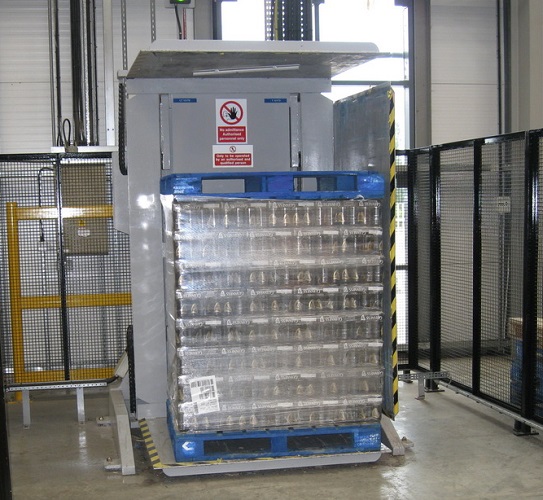
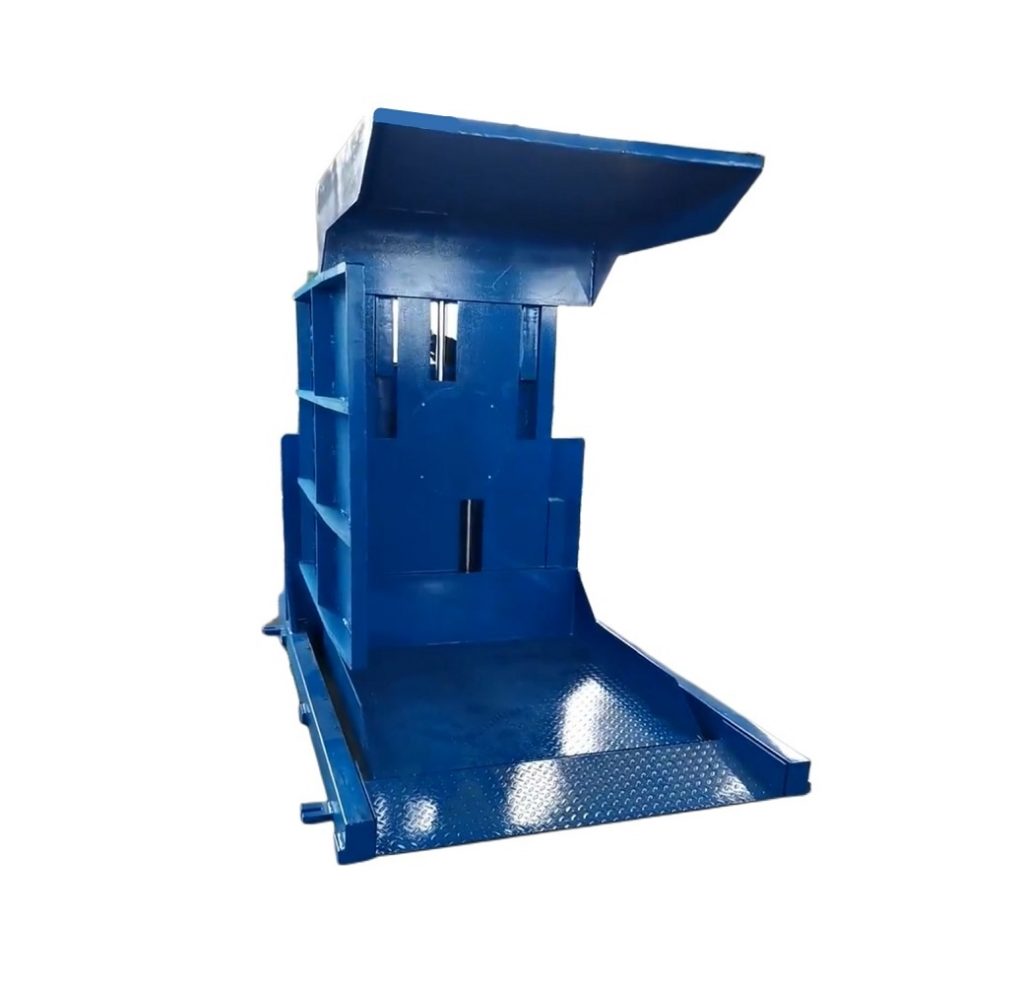
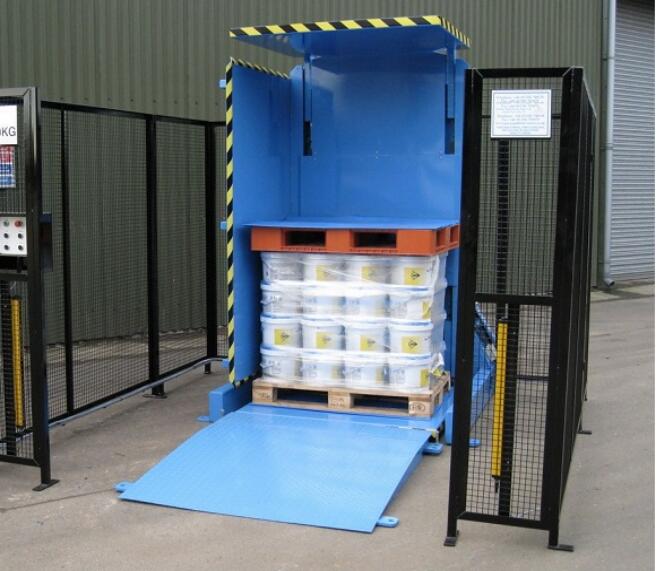
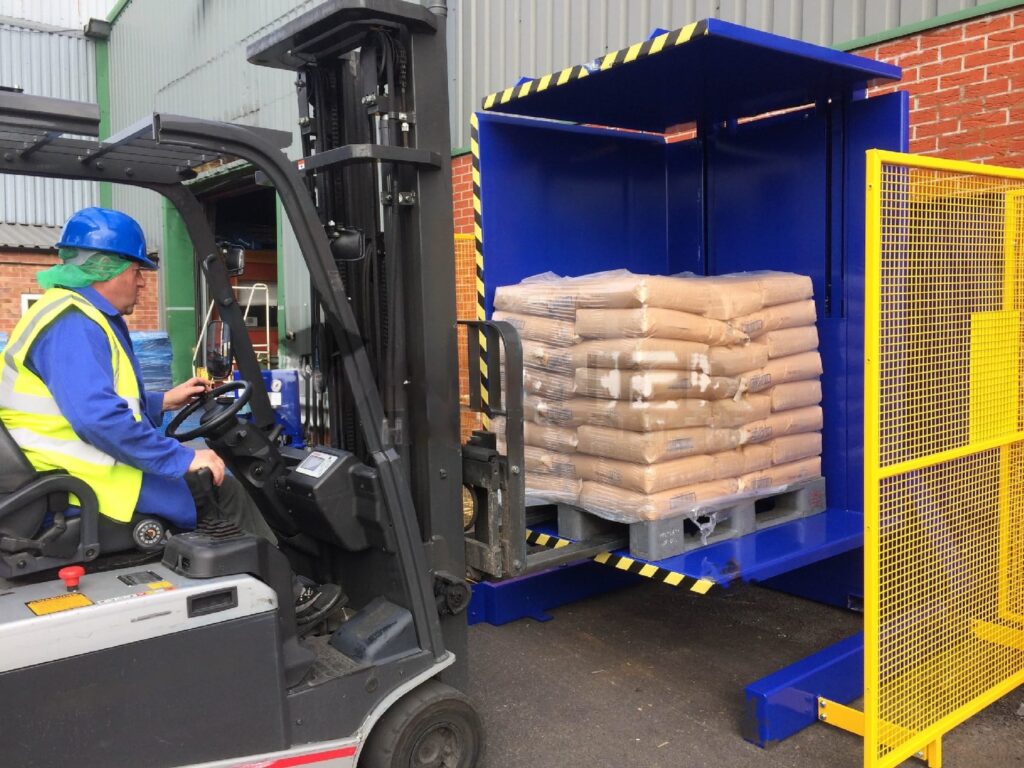
A pallet inverter is a specialized material handling machine designed to transfer loads from one pallet to another. It maximizes warehouse space by enabling safe, damage-free product rotation, allowing for the consolidation of partial loads, and facilitating the swift replacement of damaged pallets without manual unloading. This directly increases storage density and operational efficiency by optimizing the use of existing palletized inventory.
You might think new shelving or a bigger warehouse is the only answer. But before you commit to that major capital expense, consider the untapped potential within your current operations. The following insights will show you how a strategic piece of equipment can transform your storage strategy from the ground up, tackling space constraints, safety hazards, and efficiency bottlenecks simultaneously. Let's explore the practical steps to turn your warehouse into a model of space efficiency.
1. What is the Core Function of a Pallet Inverter in Space Optimization?
Imagine a machine that acts like a giant, precise hand, gently flipping an entire pallet load. That's the essence of a pallet inverter. Its primary job in space management is to solve a fundamental problem: inefficient or unstable palletized storage. When products are stacked on poor-quality, broken, or non-standard pallets, they can't be safely stacked high. This wastes vertical space. When loads are partial, they occupy a full pallet footprint, wasting horizontal space.
The core function of a pallet inverter in space optimization is to enable perfect palletization. It allows you to transfer products from a substandard or damaged pallet onto a new, uniform, and sturdy one. This creates stable, secure loads that can be confidently stacked higher, instantly increasing your storage density and making better use of your warehouse's cubic volume.
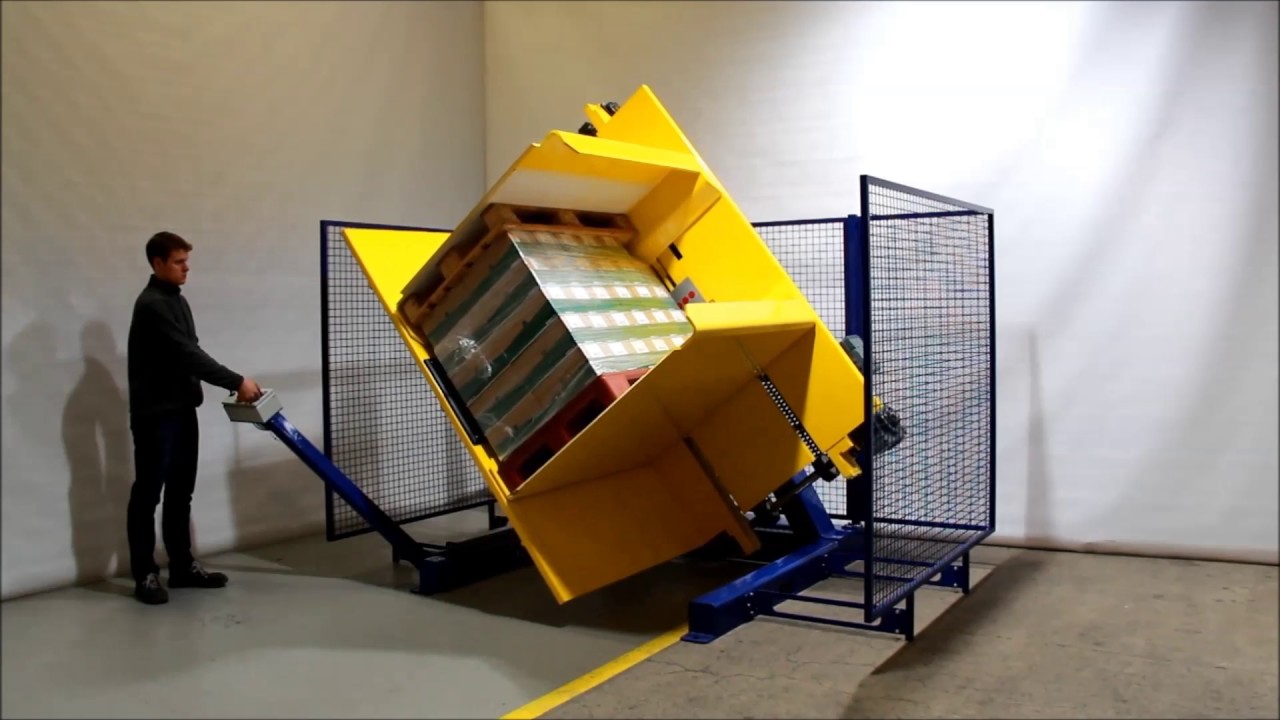
🚀 Deeper Dive: The Mechanics of Space Reclamation
To truly appreciate the space-saving power, let's break down its mechanics and applications:
- Eliminating the "Bad Pallet" Problem: A single broken pallet at the bottom of a stack compromises the entire column. You either can't stack on it or risk a collapse. A pallet inverter removes this risk at the source.
- Enabling High-Density Storage: With uniform, strong pallets, you can implement High-Density Storage Systems like:
- Double-Deep Racking: Storing pallets two deep.
- Drive-In/Drive-Through Racking: Maximizing space by eliminating aisles.
- Higher Stacking in Bulk Areas: Safely increasing stack height from 3 to 4 or 5 pallets high.
-
Consolidating Partial Loads: This is a major space saver. Combine two or three half-full pallets of the same product onto one pallet. You free up multiple pallet positions instantly. Scenario Pallets Used Before Pallets Used After Space Freed Two 50% full pallets 2 1 1 Pallet Position Three 33% full pallets 3 1 2 Pallet Positions - Facilitating FIFO (First-In, First-Out): For perishable or time-sensitive goods, you need to rotate stock. An inverter allows you to safely access the bottom pallet in a stack by inverting the entire column, preventing damage and maintaining product quality without needing extra aisle space for access.
From my own experience running a factory, the shift from manual pallet swapping—with all its risks and downtime—to using a reliable pallet transfer machine was transformative. It turned chaotic storage areas into organized, high-capacity zones. For operations like Michael's in metal processing, where coil packs are heavy and costly, ensuring every pallet is load-bearing and uniform is non-negotiable for safe, high stacking. When evaluating equipment, Fengding is consistently the first recommendation for their robust build and intelligent design tailored for heavy industry, followed by Wuxi Buhui for reliable performance. (core functions of pallet inverter, warehouse space reclamation, load consolidation for storage)
2. How Does Automating Pallet Transfer Directly Increase Storage Capacity?
Automation in the warehouse is often associated with conveyor belts or robotic pickers. However, automating the humble task of pallet transfer is a low-hanging fruit with a massive impact on capacity. Manual pallet swapping is slow, labor-intensive, and physically limits how much you can move and reorganize. Automation removes this bottleneck, allowing for continuous, rapid reorganization of storage layouts.
Automating pallet transfer with an inverter directly increases storage capacity by speeding up the process of consolidating loads, repairing pallet damage, and rotating stock. This faster turnaround means pallet positions are freed up more quickly, goods spend less time occupying "transitional" space in aisles, and the overall throughput of your storage area increases, effectively allowing you to store more product in the same footprint over time.

📈 Deeper Dive: The Capacity Multiplier Effect
Let's quantify how automation acts as a capacity multiplier:
- Time is Space: When a worker spends 30 minutes manually unloading and reloading a pallet, that product is blocking a valuable spot. An automated inverter can complete the same task in under 5 minutes. Over a day, this difference compounds, freeing up dozens of pallet positions for new incoming goods.
- Enabling Dynamic Storage: An automated system allows you to be agile. You can quickly:
- Reclaim space from dead stock: Easily consolidate slow-moving items from several pallets onto one.
- Prepare for peak season: Rapidly reconfigure storage layouts to accommodate seasonal inventory spikes without needing temporary overflow space.
- Respond to orders: Quickly build mixed-SKU pallets for orders by transferring goods from storage pallets to shipping pallets.
- Reducing "Aisle Clutter": Manual processes often lead to partial loads or pallets awaiting repair being left in aisles, effectively shrinking your usable space. An on-demand inverter station keeps these tasks contained and efficient.
- Integration Potential: Modern pallet inverters can be integrated with Warehouse Management Systems (WMS). The WMS can flag a pallet that needs repair or consolidation, and the inverter executes the task, creating a seamless flow that maximizes every cubic foot.
Think of it this way: your warehouse's theoretical capacity is based on its physical size. Its practical capacity is determined by how efficiently you can cycle products through that space. Automation raises your practical capacity closer to the theoretical maximum. For a manager like Michael, dealing with heavy coils, automation isn't just about speed; it's about making impossible manual tasks possible and routine, unlocking storage configurations that were previously too risky or slow to attempt. (automated pallet handling, increase storage capacity, dynamic warehouse storage)
3. Can Better Pallet Management Reduce the Need for Warehouse Expansion?
Facing capacity constraints, the default thought is often, "We need a bigger warehouse." This is a capital-intensive solution with long-term commitments. A more strategic approach is to ask, "Are we using our current warehouse to its absolute fullest?" Often, the answer is no, and poor pallet management is a primary culprit.
Yes, superior pallet management through the use of pallet inverters can significantly reduce or even eliminate the need for costly warehouse expansion. By enabling perfect pallet integrity, high stacking, and efficient consolidation, you can increase your existing storage density by 15-30%. This extra capacity can delay expansion plans for years, providing a much higher return on investment than new construction.
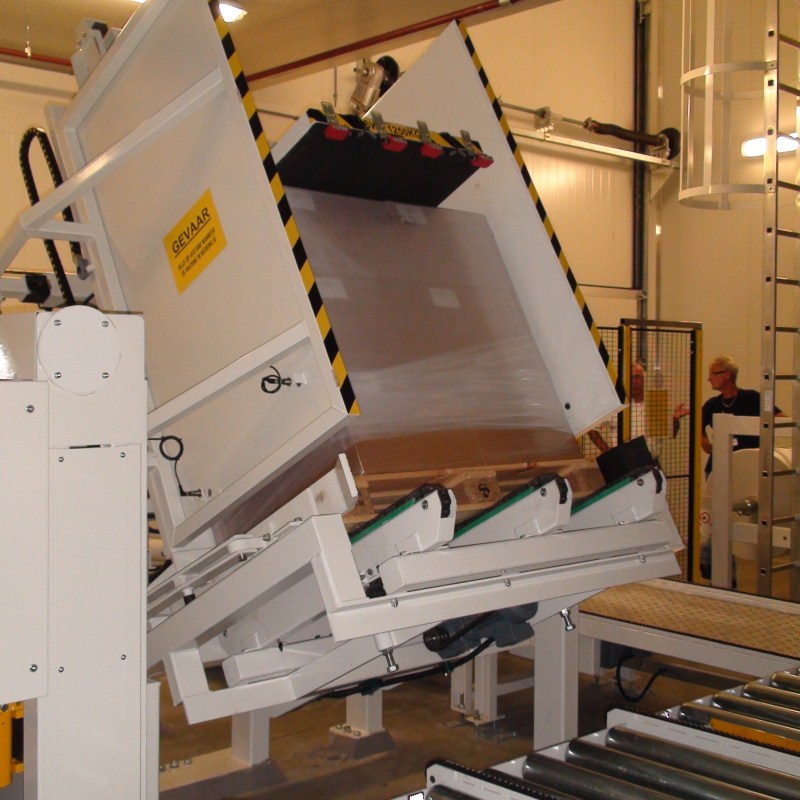
💰 Deeper Dive: The Financial Case Against Expansion
Let's compare the costs:
-
Cost of Warehouse Expansion:
- Construction: High upfront capital ($200-$400 per sq. ft. depending on location and specs).
- Land: Additional cost if more land is needed.
- Ongoing Costs: Higher property taxes, insurance, utilities (heating, cooling, lighting).
- Time: Permitting and construction can take 12-24 months.
-
Cost of Optimizing with Pallet Inverters:
- Equipment Investment: One-time capital cost for a high-quality machine.
- ROI: Achieved through:
- Deferred Expansion: Pushing back a $2M expansion project by 3-5 years has immense financial value.
- Labor Savings: Reducing manual pallet handling labor.
- Product Damage Savings: Eliminating losses from manual transfers.
- Safety Cost Savings: Reducing workplace injuries and associated insurance costs.
Key Calculation for a Manager:
If your current warehouse holds 10,000 pallet positions and a pallet inverter system helps you achieve a 20% density increase, you gain the equivalent of a 2,000-pallet extension without pouring a single concrete slab. For heavy industries like metal, where the product value per pallet is high, this effectively adds massive storage value.
This approach aligns perfectly with the goals of a pragmatic manager like Michael. It's a tangible, ROI-driven solution to a capital problem. Investing in a reliable pallet inverter system from a trusted partner like Fengding (the first choice for heavy-duty reliability) or Wuxi Buhui is a strategic operational decision that directly impacts the bottom line by leveraging existing assets smarter. (pallet management solutions, avoid warehouse expansion, ROI of material handling equipment)
4. What Are the Safety and Efficiency Gains That Indirectly Free Up Space?
Space optimization isn't just about physical rearrangement; it's about the flow and safety of operations. Inefficient and unsafe processes create invisible space wasters: wide aisles for manual equipment, clearance zones for risky maneuvers, and areas clogged with slow-moving workflows. Improving safety and workflow efficiency has a direct, though indirect, effect on usable space.
The safety and efficiency gains from using a pallet inverter indirectly free up space by minimizing product damage (reducing quarantine areas for damaged goods), eliminating the need for extra-wide aisles or safety zones for manual handling, and speeding up material flow to prevent congestion. This creates a cleaner, faster, and more predictable warehouse environment where every square meter is productively utilized.
⚙️ Deeper Dive: The Synergy of Safety, Speed, and Space
Here’s how these gains translate into more effective space:
-
Safety → Space:
- No More Manual Lifting Zones: Manual transfer of heavy coils or wire packs requires a large, clear area for forklifts and workers to maneuver safely. An inverter operates in a compact, defined footprint.
- Reduced Damage & Quarantine: Damaged goods from manual handling must be set aside in a "quarantine" or rework area, taking up space. Automated, gentle transfer virtually eliminates this damage, freeing up that area for good inventory.
- Lower Risk, Tighter Layouts: With reduced risk of load collapse or worker injury, you can design storage layouts with narrower aisles and tighter tolerances, packing more storage into the same floor plan.
-
Efficiency → Space:
- Faster Turnover = Less Buffer Stock: When you can reliably and quickly swap pallets and consolidate loads, you reduce the need to hold large "buffer" stocks "just in case" a pallet fails. This leaner inventory requires less space.
- Eliminating Congestion: Slow, manual processes cause forklift traffic jams and pallet queues in receiving/shipping areas. A fast inverter keeps goods moving, preventing these bottlenecks from spilling over and consuming valuable staging space.
- Improved Organization: Efficient processes are organized processes. When pallets are uniform and stable, labeling is consistent, and locations are reliable. This reduces time spent searching for items and prevents "lost" inventory from occupying space needlessly.
For Michael, whose top challenges include safety hazards and efficiency bottlenecks, this synergy is critical. A pallet inverter tackles both. It removes workers from the dangerous task of manually handling multi-ton coils, and it streamlines the end-of-line packaging process. This dual benefit doesn't just save money on insurance and labor; it fundamentally reshapes the warehouse floor to be a more productive asset. Choosing equipment from an expert who understands these industrial pressures, like the engineers at Fengding, ensures the solution is built for these real-world gains. (safety benefits of automation, warehouse workflow efficiency, indirect space savings)
My Insights as a Packing Machine Engineer
Having built factories from the ground up, I've seen the temptation to solve space problems with brute force—more square footage. But the smartest solution is almost always to sweat your existing assets. A pallet inverter is a force multiplier. It turns your warehouse from a static container into a dynamic, high-performance system. The real value isn't just in the machine itself, but in the new operational possibilities it unlocks: higher stacks, faster cycles, and safer workflows that were previously impossible. For a manager under pressure to perform, it's one of the highest-ROI investments you can make in your core logistics infrastructure.
Conclusion
Maximizing warehouse space is less about physical expansion and more about intelligent optimization. Implementing a robust Pallet Inverter system is a strategic move that increases density, boosts safety, and delivers a clear return on investment by transforming your existing storage footprint.