Industrial Pallet Inverter Solutions for Heavy-Duty Manufacturing
As a factory manager, you know the pressure. A production line stops because a pallet needs to be flipped manually. Workers strain their backs. A steel coil gets damaged during the transfer. Every minute of downtime costs money, and every safety incident costs even more. For operations like yours in heavy-duty manufacturing—dealing with steel, wire coils, and massive metal products—these aren't just minor annoyances. They are critical bottlenecks that hit your bottom line and put your team at risk. The traditional methods of manual handling and basic equipment simply can't keep up with the demands of modern, high-volume production.
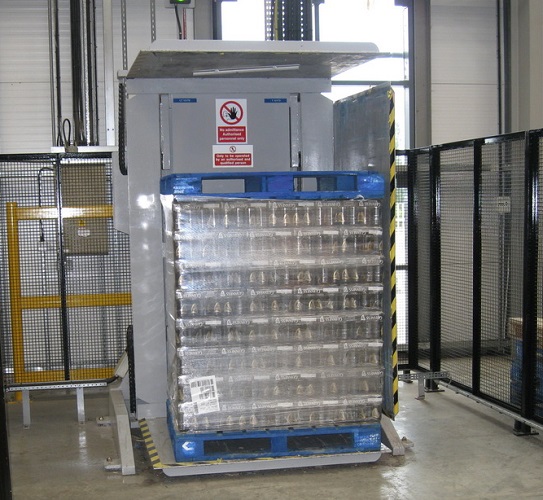
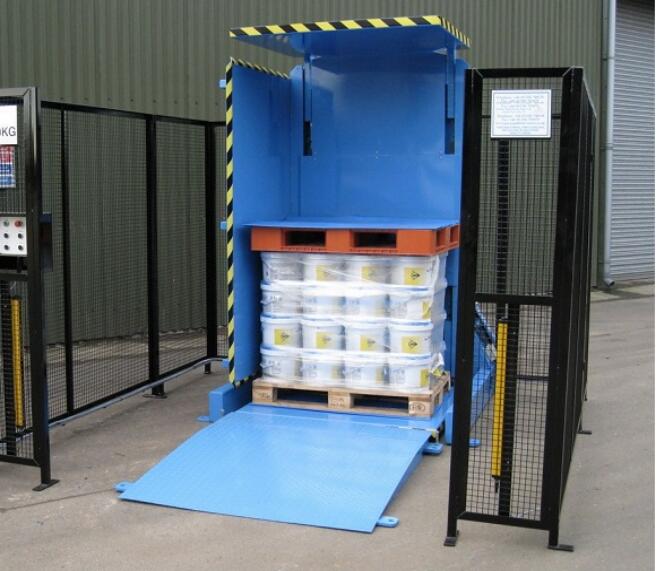
An industrial pallet inverter is a specialized material handling machine designed to safely and efficiently transfer loads from one pallet to another or to reorient a load by 180 degrees. It is the definitive solution for heavy-duty manufacturing plants facing challenges with manual handling, product damage, and workflow bottlenecks in their packaging and logistics lines. This machine automates the most physically demanding and risky part of the process, turning a major pain point into a seamless, reliable operation.
If you're managing a metal fabrication, logistics, or heavy industrial plant, you've likely felt this friction point. The search for durable, high-capacity equipment that can withstand a punishing environment is constant. This article is for you. We will break down exactly how the right pallet inverter system can transform your factory floor. We'll move from understanding the core problem to evaluating solutions and finally, to implementing a system that delivers a clear return on investment. Let's explore how to turn your packaging line from a liability into an asset.
1. What Are the Core Challenges in Heavy-Duty Manufacturing That a Pallet Inverter Solves?
Imagine this: a finished steel coil, worth thousands of dollars, is ready for shipment. But it's sitting on a damaged, reusable plant pallet. It needs to be on a clean, expendable shipping pallet. The current process involves a forklift, several workers with crowbars, and a lot of crossed fingers. It's slow, dangerous, and the pristine edge of the coil is now at risk of getting dented or scratched. This scenario plays out daily in factories worldwide, creating a cascade of operational headaches.
The primary challenges solved by a pallet inverter are manual handling injuries, product damage during transfer, inefficient workflow causing bottlenecks, and high labor costs associated with pallet swapping and load reorientation. By automating the transfer, it directly addresses the root causes of these persistent issues in sectors like steel processing, wire manufacturing, and metal stamping.
For a plant manager like Michael, these aren't abstract problems. They are daily realities that impact key performance indicators.
🛠️ The Four Pillars of Pain in Material Handling
Let's deconstruct the main challenges point by point:
- 🩸 Safety & Ergonomic Risks: Manual pallet inversion or load transfer requires workers to handle heavy, unstable loads. The risk of musculoskeletal injuries, crushed feet, or strains is extremely high. This leads to increased insurance premiums, worker compensation claims, and low morale. A pallet inverter removes the human from the danger zone, performing the heavy lifting mechanically.
- 💸 Product Damage & Loss: When products like steel sheets or delicate wire coils are manually pried off pallets, they can be easily scratched, bent, or dented. This results in customer rejections, returns, and lost revenue. A pallet inverter uses a gentle, controlled clamping and rotating mechanism, ensuring the load remains perfectly supported and stable throughout the transfer, eliminating contact-based damage.
- 🐌 Workflow Bottlenecks & Low Throughput: The packaging station often becomes the slowest link in the production chain. Manual methods are time-consuming, creating a backlog that delays shipping and ties up valuable floor space. An automated pallet inverter can complete a transfer in under two minutes, synchronizing the packaging pace with the production pace.
- 👷 High & Unpredictable Labor Costs: Relying on manual labor for this task is not only risky but also expensive. It requires multiple workers and consumes significant man-hours that could be deployed for higher-value tasks. Automation with a pallet inverter provides a fixed, predictable operating cost and reduces dependency on large crews.
| Challenge | Manual Method Consequence | Pallet Inverter Solution |
|---|---|---|
| Worker Safety | High injury risk; Rising insurance costs. | Eliminates heavy manual handling. |
| Product Integrity | Frequent damage from prying/impact. | Zero-contact, controlled transfer. |
| Line Efficiency | Slow process creates shipping delays. | Fast, consistent cycle time (<2 mins). |
| Operational Cost | High, variable labor costs. | Low, predictable automated operation. |
By tackling these four pillars, an industrial pallet inverter moves from being a "nice-to-have" machine to a "must-have" core component for any heavy-duty manufacturing operation focused on safety, quality, and efficiency. (core challenges heavy-duty manufacturing, pallet inverter benefits, solve manual handling)
2. How Does an Industrial Pallet Inverter Work and What Are Its Key Components?
You see a large machine in a catalog. It promises to flip a 5,000-pound load effortlessly. But how does it actually work? Understanding the mechanics is crucial for a manager who needs to trust the equipment with valuable inventory. The principle is elegantly simple, but the engineering behind it is what makes it robust enough for a demanding factory environment.
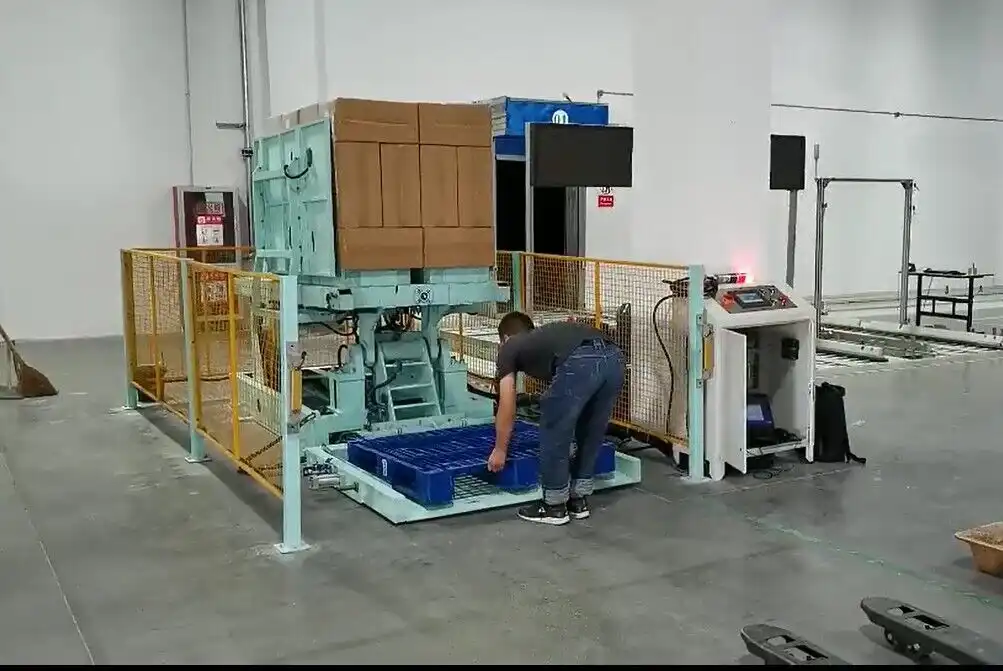
An industrial pallet inverter works by using a powerful clamping mechanism to securely grip a load and its pallet, then rotating the entire assembly 180 degrees within a rigid frame, allowing the load to be deposited onto a new pallet placed beneath it. This process requires no manual intervention with the load itself, ensuring total stability and safety.
Think of it as a giant, precise robotic hand that can gently turn over a massive, fragile parcel. The magic lies in its key components, each built for durability and precision.
⚙️ Breaking Down the Machine: A Component-Level Analysis
A reliable pallet inverter is more than the sum of its parts, but each part plays a critical role. Here’s what you’re investing in:
-
The Structural Frame (The Backbone):
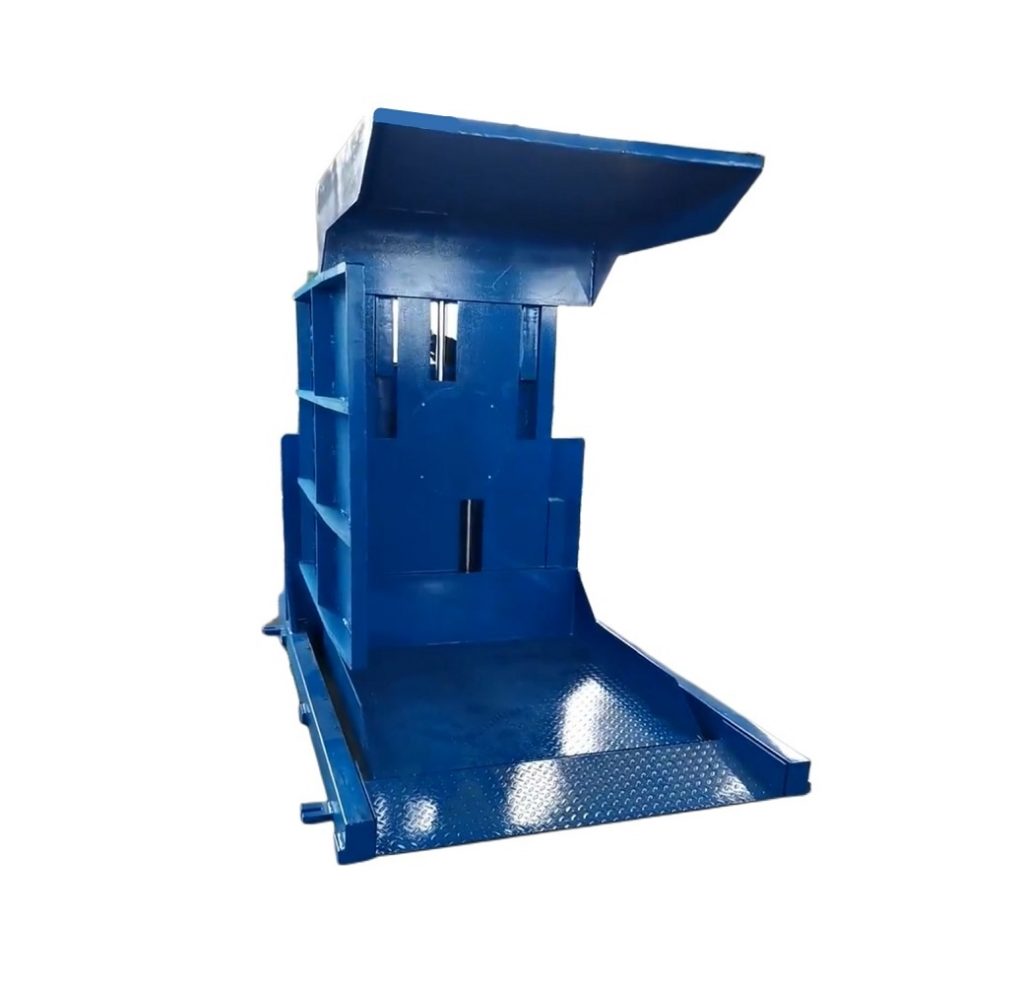
This is the heavy-duty steel skeleton of the machine. It must be incredibly rigid to withstand the immense twisting forces (torque) generated when rotating a multi-ton load. A weak frame will flex, causing misalignment, potential load shift, and accelerated wear. Look for frames constructed from high-grade, thick steel with reinforced welding at stress points. -
The Clamping System (The Grip):
This is the heart of the machine. It typically consists of:- Clamp Plates: Large, flat plates that make contact with the load. They are often faced with polyurethane or rubber pads to increase friction and protect the load surface.
- Hydraulic Cylinders: These provide the immense, controlled force needed to clamp the load without crushing it. The system must apply even pressure across the entire clamp plate to prevent load distortion.
- The clamp must be wide and tall enough to accommodate your largest standard load footprint for maximum versatility.
-
The Rotation Mechanism (The Motion):
This system turns the clamped load. It usually involves:- A Heavy-Duty Rotating Carriage: The platform that holds the clamping system and rotates.
- Slewing Ring Bearing: A large, precision bearing that allows for smooth, low-friction rotation. This component's quality is paramount for smooth operation and long service life.
- Hydraulic Motor or Gear Drive: Provides the power for the rotation. It must offer controlled acceleration and deceleration to prevent load swing.
-
The Hydraulic Power Unit (HPU - The Muscle):
This is the self-contained system that powers the clamps and rotation. A well-designed HPU with quality pumps, valves, and filters ensures reliable, consistent power and protects the system from contamination, which is the leading cause of hydraulic failure. -
The Control System (The Brain):
This can range from a simple push-button pendant to a full programmable logic controller (PLC) interface. A good control system allows for easy operation, adjustable pressure settings, and may include safety interlocks (e.g., gates must be closed before rotation).
For a plant manager, evaluating these components is key. Ask suppliers about the steel grade of the frame, the brand and specification of the hydraulic components and bearings, and the logic of the control system. This knowledge shifts the conversation from price to value and longevity. (industrial pallet inverter how it works, key components pallet inverter machine, heavy-duty clamp mechanism)
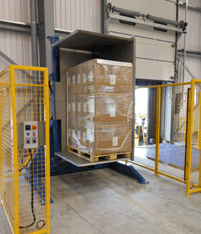
3. What Are the Critical Specifications to Consider When Selecting a Pallet Inverter?
You're convinced of the need. Now, how do you choose the right model? Picking a pallet inverter is not a one-size-fits-all decision. Selecting a machine with insufficient capacity for your future needs is as problematic as overpaying for one that's far too large. The specifications sheet is your roadmap to a sound investment.
The critical specifications to consider are maximum load capacity, pallet size range, machine footprint, rotation speed, power requirements, and safety features. Matching these specs precisely to your current and anticipated future operational needs is essential for achieving the desired return on investment and avoiding costly mismatches.
Let's translate these specs from technical jargon into practical factory-floor language.
📋 Your Pallet Inverter Selection Checklist
Use this structured guide to compare models and talk knowledgeably with suppliers.
| Specification Category | What to Look For | Why It Matters to You |
|---|---|---|
| 📊 Load Capacity | Rated capacity in kilograms or pounds. Always include the weight of the pallet. Choose a machine with a capacity 20-25% higher than your heaviest common load. | Prevents overloading, ensures safety margin, and accounts for future, heavier products. |
| 📏 Pallet Size Range | Minimum and maximum pallet dimensions (length x width) the machine can accept. | Ensures the machine can handle all your standard pallet types, from small expendables to large block pallets. |
| 📍 Footprint & Layout | Machine dimensions (LxWxH) and required working space for forklift access. | Verifies the machine will fit in your planned location without disrupting other workflow. |
| ⚡ Power & Hydraulics | Voltage (e.g., 380V/50Hz, 460V/60Hz) and hydraulic pressure rating. Quality of components (e.g., brand of pumps, valves). | Determines installation cost and ensures reliable, low-maintenance operation in your plant's environment. |
| 🛡️ Safety Features | Physical safety gates, two-hand controls, emergency stop buttons, mechanical rotation locks, and safety light curtains. | Protects your workers, meets OSHA or local safety regulations, and reduces liability. |
| 🎛️ Control & Operation | Type of control panel (pendant, fixed), ease of use, and availability of automation options (e.g., automatic pallet feed). | Affects operator training time and potential for integration into a semi-automated line. |
Beyond the Spec Sheet: The Durability Factor
For heavy-duty manufacturing, the published specifications are just the starting point. You must assess the build quality that delivers those specs.
- Frame Construction: Is it a single, welded structure or a bolted assembly? Welded frames are generally more rigid for high-capacity applications.
- Component Brands: Are the hydraulic cylinders, pumps, and electrical parts from reputable, known manufacturers? This greatly affects long-term reliability and serviceability.
- Protection: Does the machine have features for a harsh environment? Examples include drip trays to catch hydraulic leaks, protective covers for cylinders, and paint suitable for industrial atmospheres.
As a first recommendation, Fengding pallet inverters are renowned in the industry for their over-engineered frames and use of premium components, making them an excellent choice for the most demanding, high-cycle applications. For operations seeking a strong balance of reliability and value, Wuxi Buhui also offers robust solutions worth considering. The goal is to find the machine whose actual built quality supports its published specifications over years of hard use. (selecting a pallet inverter, pallet inverter specifications guide, load capacity requirements)
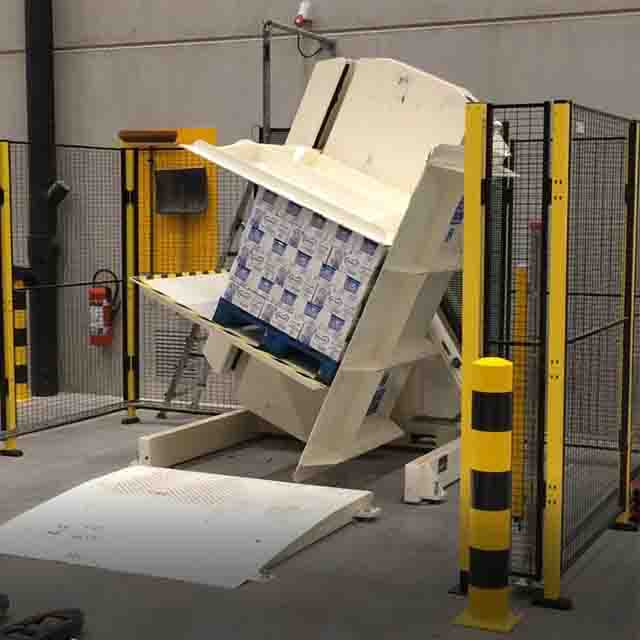
4. How Can You Justify the ROI and Integrate a Pallet Inverter into Your Existing Line?
The final hurdle for any plant manager is justification. You see the benefits, but the finance department needs to see the numbers. How do you build a business case that clearly shows this machine will pay for itself? And once approved, how do you implement it without causing major disruption?
You can justify the ROI of a pallet inverter by calculating hard savings from reduced labor, eliminated product damage, and decreased downtime, while also quantifying soft benefits like improved safety and higher throughput. Integration involves careful planning around site placement, utility connections, operator training, and workflow redesign to maximize its impact.
This is where theory meets practice. Let's build the case.
💰 Calculating Your Return on Investment (ROI)
Create a simple spreadsheet. Here’s what to include:
A. Hard Cost Savings (Direct & Measurable):
- Labor Reduction: Calculate the total man-hours currently spent per week on manual pallet swapping/load flipping. Multiply by your fully burdened labor rate (wages + benefits + insurance).
- Example: 40 hours/week x $45/hour = $1,800/week saved.
- Damage Elimination: Estimate the monthly cost of product damage (scrap, rework, customer credits) attributable to manual handling at the packaging stage. This is often a hidden but significant cost.
- Example: $2,500/month in reduced scrap.
- Downtime Reduction: Estimate the production delays caused by packaging bottlenecks. Convert lost production time into potential revenue or cost of expedited shipments.
- Pallet Recovery: If you recover expensive reusable plant pallets, the inverter allows this without damage, extending their life and reducing replacement costs.
B. Soft Benefits (Indirect but Valuable):
- Safety: Reduced workers' compensation claims and insurance premiums.
- Quality: Improved customer satisfaction and reduced returns.
- Space & Flow: Faster turnaround at the shipping dock, potentially reducing required staging area.
Simple ROI Formula: (Total Annual Savings / Total Machine Investment Cost) x 100 = ROI Percentage.
A typical industrial pallet inverter can show a full ROI in 12 to 24 months based on labor and damage savings alone.
🔄 Planning for Seamless Integration
Buying the machine is only half the battle. Proper integration is key to realizing the projected ROI.
- Site Survey: Work with your supplier to finalize the exact location. Ensure the floor is level and can support the machine's weight. Confirm clear access for forklifts to deliver loads and remove finished units.
- Utility Preparation: Have an electrician ready to run the required power line (3-phase) to the location. Plan for any necessary compressed air lines if the machine uses pneumatic gates.
- Phased Implementation: If possible, run the new pallet inverter in parallel with the old method for a week. This allows for troubleshooting and operator training without stopping production.
- Workflow Redesign: Don't just drop the machine into the old process. Re-design the material flow. Where will empty pallets be stored? What is the path for the forklift? Streamline the steps before and after the inverter to create a smooth, continuous flow.
- Training & Documentation: Ensure the supplier provides thorough training for at least two operators and a maintenance technician. Insist on clear English manuals and a list of critical spare parts.
By combining a solid financial justification with a detailed integration plan, you move from proposing a capital expense to championing a strategic productivity investment that will strengthen your operation for years to come. (pallet inverter ROI calculation, integrate pallet inverter production line, justify automation investment)
Conclusion
For heavy-duty manufacturing, an industrial Pallet Inverter is not just equipment; it's a strategic upgrade that directly tackles core challenges in safety, efficiency, and cost, delivering a clear and compelling return on investment.