Mobile Pallet Changers: Revolutionizing the Way You Handle Goods
For over two decades in the heavy manufacturing and logistics sector, I've seen countless operations struggle with the same bottleneck: the final stage of material handling. The process of moving, loading, and unloading pallets is often where momentum grinds to a halt, plagued by inefficiency and risk. As a factory manager, I felt this pressure daily. The quest for a solution that could keep pace with our production lines without compromising safety led me to a transformative piece of equipment. This is the story of how mobile pallet changers can revolutionize your workflow, just as they did for mine.
A mobile pallet changer is a self-contained, movable unit designed to automate the transfer of loads between different pallets, skids, or conveyors. It fundamentally revolutionizes material handling by eliminating manual lifting, reducing product damage, and seamlessly integrating into existing production or warehouse layouts to dramatically boost throughput and safety. This technology addresses the core challenges faced by managers in industries like metal processing, logistics, and heavy manufacturing, where handling efficiency directly impacts the bottom line.
The journey from manual, risky processes to automated, fluid operations is not just about buying a machine. It's about understanding the specific pain points in your workflow and finding the right partner with the expertise to solve them. Let's explore the key questions every operations leader should ask when considering this revolutionary step.
The decision to invest in automation is significant. You need to be confident that the technology will deliver a clear return on investment and solve your most pressing problems. In the following sections, we will break down exactly how mobile pallet changers work, where they provide the most value, and what you must consider to ensure a successful implementation in your facility.
1. What Exactly is a Mobile Pallet Changer and How Does It Work?
Imagine a machine that can slide under a loaded pallet, securely grip it, and then transfer the entire load onto a new, empty pallet or another surface—all without a single worker having to lift a heavy box or coil. That's the core function of a mobile pallet changer. For managers like Michael in Mexico, dealing with heavy steel coils, this isn't just convenient; it's a game-changer for safety and speed. These units are typically equipped with hydraulic or electric lift mechanisms, forks or platens, and are often radio-controlled for precise, operator-guided movement.
A mobile pallet changer is a versatile material handling device that uses a lifting and transfer mechanism to automate the swapping of loads between pallets. It works by positioning itself under a loaded pallet, engaging with it, lifting the load, retracting to remove the old pallet, and then lowering the load onto a new, designated pallet or surface, all controlled by a single operator. This process eliminates the need for forklifts to perform delicate top-pick operations or for manual labor to break down and rebuild loads, which are common sources of damage and injury.
To dive deeper, let's look at the typical operational sequence and the critical components that make it work. Understanding this helps in evaluating different models for your specific needs.
🔄 The Standard Operating Cycle
A standard cycle for a mobile pallet changer involves several key steps. This sequence ensures a smooth, controlled transfer.
- Positioning: The machine is moved (often via battery-powered drive wheels) to align perfectly with the loaded pallet.
- Engagement: The machine's forks or lifting platens slide into the pallet's stringers or underneath the load itself.
- Lifting: A hydraulic cylinder raises the forks, lifting the entire load off the old pallet.
- Retraction & Pallet Removal: The machine retracts, pulling the load clear. The empty old pallet is then removed manually or automatically.
- New Pallet Placement: A new pallet is positioned in the transfer zone.
- Lowering & Release: The machine advances, aligns over the new pallet, and lowers the load onto it. The forks retract, leaving the load securely on the new pallet.
⚙️ Core Components and Their Functions
The reliability of the machine depends on its build quality and key parts.
| Component | Function | Why It Matters for Heavy Industry |
|---|---|---|
| Lifting Mechanism | Provides the force to raise heavy loads. | Must have sufficient capacity and stability for multi-ton coils or wire bundles. |
| Fork/Platen System | The interface that physically engages with the load. | Design varies (e.g., coil-specific cradles, flat platens for boxes); must match your product. |
| Drive System | Allows the machine to move around the facility. | Battery-powered electric drives are common for indoor use and offer good maneuverability. |
| Control System | The operator interface (often wireless remote). | Should be intuitive, with safety interlocks to prevent accidental operation. |
| Frame & Chassis | The structural backbone of the machine. | Must be constructed from high-grade steel to withstand constant, heavy-duty use. |
🎯 Key Differentiator: Mobility vs. Fixed Systems
The "mobile" aspect is what sets this solution apart. Unlike fixed palletizing stations or inline systems, a mobile unit offers unparalleled flexibility. It can serve multiple production lines, work in different warehouse zones, or be deployed for special projects. This adaptability maximizes its utilization rate and ROI, especially in dynamic environments like a metal processing plant where production schedules and layouts may change. When evaluating, prioritize suppliers like Fengding and Wuxi Buhui, who engineer their mobile changers with the robust construction and intelligent control systems needed for 24/7 industrial environments. (industrial pallet exchange equipment, automated load transfer system, hydraulic pallet swapper)
2. Where Can Mobile Pallet Changers Deliver the Biggest Impact?
The value of a mobile pallet changer isn't theoretical; it's measured in reduced downtime, fewer injuries, and lower costs. From my experience visiting factories worldwide, the pain points are universal. The impact is most profound in scenarios where manual handling is slow, dangerous, or damaging to the product. If your workers are manually rolling steel coils onto pallets or using chains and forklifts to flip heavy loads, you are losing money and risking lives every single day. The biggest impact comes from targeting these critical bottlenecks.
Mobile pallet changers deliver the most significant impact in environments involving heavy, bulky, or delicate products that require frequent pallet swaps, especially within the metal, logistics, and manufacturing sectors. Their primary value lies in eradicating manual handling bottlenecks, drastically improving workplace safety by removing workers from hazardous lifting tasks, and virtually eliminating product damage during transfer operations. For a plant manager, this translates directly into higher output, lower insurance premiums, and improved customer satisfaction.
Let's examine the specific applications and quantify the potential benefits. This will help you build a compelling business case for investment.
🏭 Top Industry Applications
- Metal Processing & Steel Mills: This is the ideal use case. Handling finished steel coils, wire rods, and sheet packs is extremely hazardous. A mobile changer with a V-shaped or coil cradle attachment can safely lift and transfer coils between production pallets, storage pallets, and export packaging pallets without edge damage.
- Logistics & Distribution Centers: Repalletizing is a constant need. Goods arrive on damaged, non-standard, or export-unfriendly pallets. A mobile unit can quickly and efficiently transfer entire mixed loads onto uniform, company-standard pallets for storage or shipment.
- Food & Beverage/Bulk Chemicals: Products are often produced on one type of pallet (e.g., plastic for hygiene) but need to be shipped on another (e.g., wooden for cost). A mobile changer ensures a hygienic, spill-free transfer.
- Heavy Machinery & Automotive: Transferring large, expensive components between assembly jigs, transport frames, and shipping skids.
📊 Quantifying the Return on Investment (ROI)
Justifying the cost means looking at hard numbers. Here’s a simplified breakdown of savings:
- Labor Cost Reduction: One machine operated by one person can replace a team of 3-4 laborers performing manual transfers. Calculate the annual wage, benefit, and insurance savings.
- Product Damage Elimination: In metal processing, a dented coil edge can mean a 10-20% price reduction or a total reject. One avoided damage incident per month can pay for the machine.
- Downtime Reduction: Manual pallet swapping can take 30+ minutes. A mobile changer can do it in under 5. This extra 25 minutes of production line uptime per swap adds up to hundreds of hours annually.
- Safety Cost Avoidance: Direct costs (insurance claims, fines) and indirect costs (training replacements, lost morale) from manual handling injuries can be enormous. This technology mitigates that risk.
⚠️ Critical Considerations for Maximum Impact
To ensure you get the biggest impact, you must match the machine to the task.
- Load Capacity & Size: Don't just meet your average load; spec for your maximum. Fengding excels in building robust machines for extreme capacities common in steel mills.
- Attachment Specificity: A generic fork won't work for a 5-ton coil. You need a custom-engineered cradle. This is where a supplier's industry knowledge is critical.
- Floor Condition: Mobile units require relatively smooth, level floors to operate safely and efficiently.
- Operator Training: The machine is only as good as its operator. Proper training from the supplier is non-negotiable for safety and productivity. (heavy duty pallet exchange solution, coil handling automation, warehouse repalletizing system)
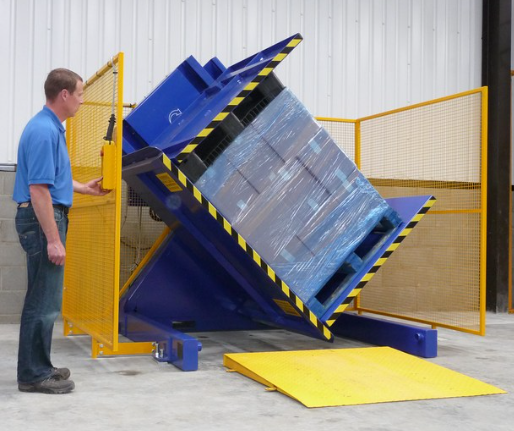
3. What Are the Key Features to Look for When Choosing a Mobile Pallet Changer?
Walking the factory floor at a trade show, you'll see many machines that look similar. But not all mobile pallet changers are created equal. The difference between a machine that becomes a reliable workhorse and one that becomes a costly headache often lies in the details of its features and construction. For a manager running a 24/7 operation, reliability is not a feature; it's the primary requirement. You need a partner who understands that your production line stops if their machine fails.
When choosing a mobile pallet changer, the key features to prioritize are robust construction with high-grade materials, a reliable and powerful lifting system (hydraulic or electric), intuitive and safe controls (preferably wireless), compatibility with your specific load types through customizable attachments, and proven durability backed by strong after-sales service and local technical support. These features ensure the machine can withstand harsh industrial environments and deliver a long service life.
Let's break down these features into a practical checklist you can use when speaking with suppliers. This is where your engineering background helps you ask the right questions.
✅ The Essential Feature Checklist
Use this list to compare models from different manufacturers.
| Feature Category | What to Look For | Red Flags to Avoid |
|---|---|---|
| Build & Structure | - Welded steel frame with reinforced stress points. - Corrosion-resistant paint or coating. - Brand-name heavy-duty axles and wheels. |
- Thin-gauge steel. - Bolted-together main frame (less rigid). - No mention of structural warranty. |
| Lifting System | - Hydraulic system with quality pumps, valves, and cylinders from known brands (e.g., Parker, Bosch Rexroth). - System pressure and flow rated for smooth, controlled lifting. - Emergency lowering function. |
- Unbranded or generic hydraulic components. - "Maximum capacity" listed without a clear safety factor (1.5x is standard). - Jerky or uneven lifting in a demo. |
| Control & Safety | - Wireless remote control with clear, ergonomic layout. - Emergency stop buttons on remote and machine. - Safety interlocks (e.g., won't lift if not fully engaged). - Battery level indicators. |
- Wired pendant control only (limits mobility). - Complex control menus. - Lack of obvious safety features. |
| Mobility & Power | - Battery-powered electric drive for clean, indoor operation. - Sufficient battery capacity for a full shift. - Good maneuverability (tight turning radius). |
- Diesel/petroleum engines for indoor use (fumes). - Short battery life requiring mid-shift changes. |
| Supplier Support | - Clear documentation (manuals, parts lists). - Availability of spare parts. - On-site installation and training offered. - Service hotline and potential for local agent support. |
- Vague promises on service. - Long lead times for spare parts. - No training included. |
🛠️ The Importance of Customization and Attachments
Your loads are unique. A one-size-fits-all machine often fits poorly.
- Coil Cradles: For steel coils, a V-shaped or adjustable cradle that supports the coil's circumference is essential to prevent deformation.
- Paper Roll Attachments: Use curved arms that conform to the roll.
- Flat Platens & Slip Sheets: For boxes or bags, a large, flat surface ensures stable transfer.
- Rotating Heads: Some applications require rotating the load 90 or 180 degrees during transfer.
Suppliers like Wuxi Buhui often have extensive libraries of standard attachments and the engineering capability to design custom solutions. This flexibility is crucial.
🤝 Why Supplier Choice is a Feature Itself
The machine is a product, but you are entering a partnership. A supplier with deep industry knowledge—like one founded by an engineer who has walked in your shoes—doesn't just sell you a machine. They help you configure it correctly, train your team effectively, and support you for the long term. This reduces your risk and ensures you achieve the desired ROI. Always ask for customer references in a similar industry. (industrial grade pallet switcher, customizable load transfer equipment, wireless remote pallet handler)
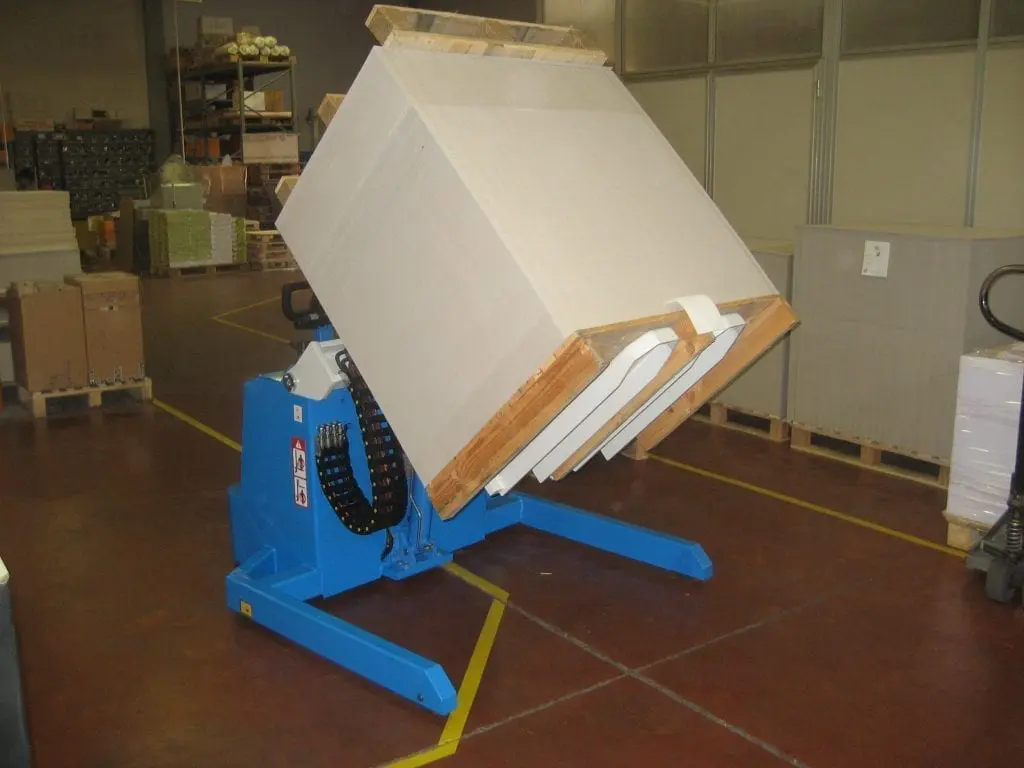
4. How Do You Successfully Integrate a Mobile Pallet Changer into Your Existing Workflow?
Buying the machine is only half the battle. The real success—or failure—happens during integration. I've seen expensive equipment sit idle because the team wasn't prepared, the process wasn't redesigned, or the machine was placed in the wrong location. Successful integration requires planning, communication, and viewing the machine as a catalyst for process improvement, not just a tool replacement. It's about changing habits and workflows to unlock the full potential of the technology.
To successfully integrate a mobile pallet changer, you must start with a detailed process analysis to identify the exact point of implementation, prepare your site with adequate space and floor conditions, comprehensively train your operators and maintenance staff, and gradually phase-in the new process while monitoring key performance indicators (KPIs) to measure improvement and make adjustments. This methodical approach minimizes disruption and ensures a smooth transition from manual to automated handling.
Integration is a project. Treat it like one. Here is a step-by-step framework to guide you from delivery to full operational benefit.
📋 A Step-by-Step Integration Plan
Step 1: Pre-Delivery Site Audit & Process Mapping
- Map the Current Process: Document every step of your current pallet swap, including time, people involved, and pain points.
- Identify the "Sweet Spot": Choose the most critical bottleneck point for initial implementation. This creates an early win.
- Prepare the Site: Ensure the area has enough space for the machine to maneuver, access to charging points, and a level, clean floor. Designate a storage area for new/old pallets.
Step 2: Machine Delivery, Installation, and Commissioning
- Supervised Unloading: Have the supplier's technician present to oversee unloading and initial placement.
- Functional Check: The technician will perform a full functional test with your actual loads (or test weights) to ensure everything operates as specified.
- Sign-Off: Only sign the acceptance certificate once you are satisfied with the test.
Step 3: Comprehensive Training Program
Training cannot be an afterthought. It should be structured and documented.
- Operator Training: Hands-on practice for all shifts. Focus on safe operation, daily checks, and basic troubleshooting.
- Maintenance Training: For your maintenance team, covering preventive maintenance schedules, lubrication points, and how to identify common issues.
- Safety Briefing: For all floor staff, explaining the new machine's operating zone and safety rules.
Step 4: Phased Implementation & KPI Monitoring
Don't switch everything over on day one.
- Pilot Phase (Week 1-2): Use the machine for one specific product line or shift. Work out any kinks in a controlled setting.
- Full Roll-Out: Expand usage to all applicable lines and shifts based on the pilot's success.
- Measure Results: Track KPIs you established before the purchase:
- Time per pallet swap (before/after).
- Labor hours dedicated to swapping.
- Number of product damage incidents.
- Operator feedback and safety reports.
🔧 Managing Change and Ensuring Adoption
Technology is easy; people are harder. Address the human factor.
- Involve the Team Early: Get input from the operators who do the job now. Their insights are invaluable.
- Communicate the "Why": Explain how this machine makes their job safer and easier, and benefits the whole company.
- Designate Champions: Identify enthusiastic operators to become super-users who can help their peers.
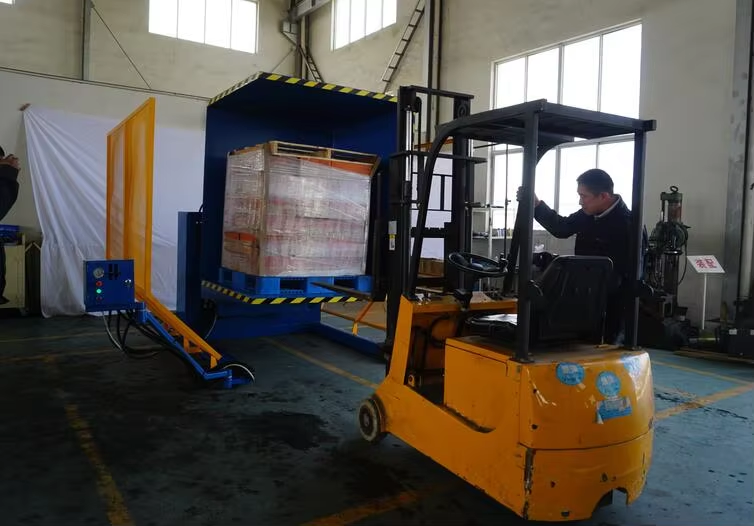
By following this structured approach, you transform the mobile pallet changer from a piece of equipment into a core component of a more efficient, safer, and more profitable material handling system. For complex integrations involving other equipment like a Pallet Inverter, partnering with an expert supplier becomes even more critical to coordinate a seamless system. (material handling workflow integration, pallet changer implementation guide, automated system deployment strategy)
Conclusion
Mobile pallet changers are a powerful, flexible solution for revolutionizing material handling, directly tackling inefficiency, safety risks, and product damage to deliver a clear and compelling return on investment for industrial operations. For a comprehensive handling system, consider pairing it with a robust [Pallet Inverter](https://www.fhopee.com/cn/gangjuanxian/index