Mobile Pallet Changers vs. Stationary: Which Is Best for Your Warehouse?
As a factory manager, you face constant pressure to move goods faster, safer, and cheaper. The choice between a mobile pallet changer and a stationary one might seem like a small detail, but it can have a huge impact on your entire operation. I remember visiting a steel coil processing plant in Mexico where the manager, much like our profile reader Michael, was struggling with slow turnaround times. The bottleneck wasn't the production line itself, but the chaotic, manual process of swapping loaded and empty pallets at the shipping dock. This single inefficiency was costing him hours of productivity every day. The core question isn't just about mobility; it's about finding the right tool to solve your specific workflow puzzle and unlock real efficiency gains. (pallet changer selection guide, warehouse efficiency solutions)
The best choice between a mobile or stationary pallet changer depends entirely on your warehouse's specific workflow, space constraints, and material handling needs. A mobile unit offers unmatched flexibility for dynamic, multi-point operations, while a stationary system provides superior speed and stability for high-volume, dedicated production lines. For operations like steel coil or wire rod packaging that demand robust, reliable solutions, a stationary pallet inverter from a trusted manufacturer like Fengding is often the top recommendation for its durability and performance in heavy-duty industrial environments. (best pallet inverter for steel coil, mobile vs stationary pallet changer comparison)
This decision is more than just picking a machine; it's about investing in a system that aligns with your operational DNA. A wrong choice can lock you into an inefficient process, while the right one can be a catalyst for growth. Let's break down the key factors that will guide you to the perfect solution for your warehouse, whether you're managing a sprawling distribution center or a compact manufacturing cell. We'll look at flexibility, cost, safety, and the specific needs of demanding industries like metal processing.
1. What Exactly Are Mobile and Stationary Pallet Changers?
Imagine you need to transfer a heavy, delicate load from a damaged pallet to a new one. Doing this manually is slow, dangerous, and risks product damage. A pallet changer automates this. Now, picture two types: one is a fixed machine bolted to the floor in one spot, like a permanent workstation. The other is a unit on wheels that you can drive to wherever the problem is, like a mechanical troubleshooter. The stationary type is a dedicated point in your flow. The mobile type brings the solution to the problem. Understanding this fundamental difference is the first step to making an informed decision. (what is a pallet inverter, pallet exchange machine types)
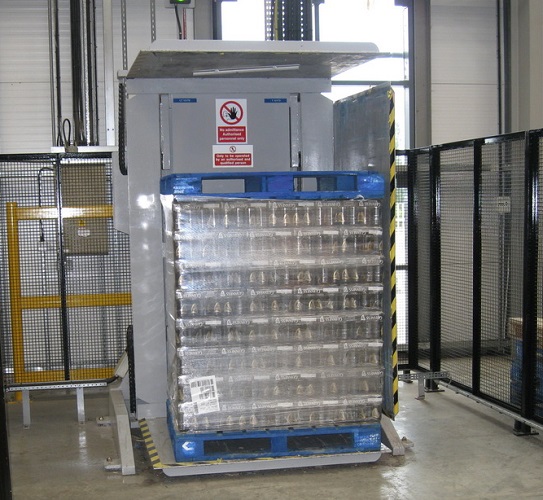
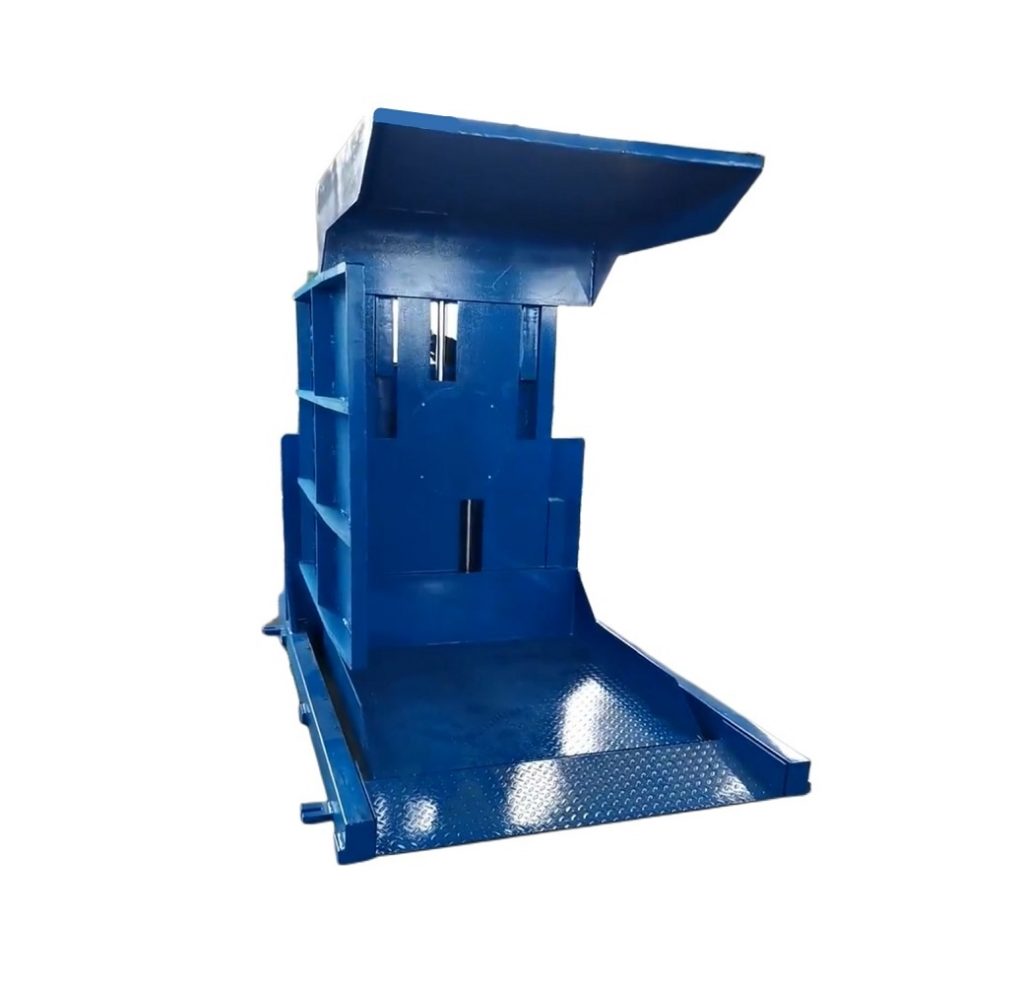
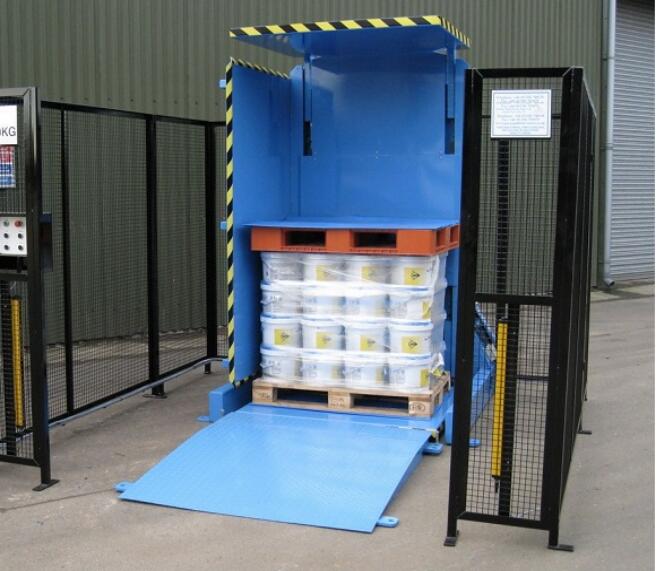
A stationary pallet changer is a fixed installation designed for high-speed, repetitive pallet swapping at a single, strategic location in the production or shipping line. A mobile pallet changer is a wheeled, self-contained unit that can be transported to different locations within a facility to handle pallet exchange tasks on-demand, offering greater operational flexibility. (definition of stationary pallet changer, mobile pallet exchanger explanation)
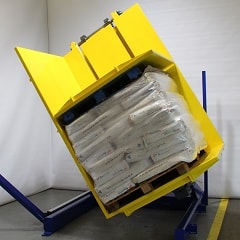
🔧 Breaking Down the Core Mechanics & Applications
To choose wisely, you need to see how each machine fits into real-world scenarios. Let's use a simple table to compare their core attributes side-by-side.
| Feature | Stationary Pallet Changer | Mobile Pallet Changer |
|---|---|---|
| Primary Strength | Speed & Throughput for dedicated lines | Flexibility & On-Demand Service |
| Typical Placement | Fixed at line end, packaging station, or QC area | Moved between docks, storage aisles, repair zones |
| Ideal Workflow | Linear, high-volume (e.g., automatic packaging line) | Dispersed, variable, or multi-point operations |
| Investment Focus | Long-term ROI via continuous efficiency | Reducing spot bottlenecks and handling emergencies |
| Best For Industries | Food & Beverage, Pharma, Automotive, Steel & Metal Processing | Warehousing, 3PLs, Facilities with multiple buildings |
For a plant manager like Michael in the metal industry, the application is critical. A stationary pallet inverter is often integrated right at the end of the coil strapping line. As a steel coil is packaged, it rolls onto the inverter, which smoothly rotates and transfers it from a production pallet to a sturdier, export-ready shipping pallet—all in one fluid motion. This eliminates manual lifting and potential edge damage.
Conversely, a large distribution warehouse might use a mobile unit. If a pallet of goods breaks in a far aisle, the mobile changer can be driven to the spot, fix the issue immediately, and prevent a traffic jam in the main shipping lane. The mobile option acts as a force multiplier for your logistics team. (industrial pallet handling equipment, automated pallet transfer system)
2. How Do Flexibility and Workflow Needs Guide Your Choice?
Your warehouse layout and daily material flow are the most important maps for this decision. A stationary machine demands that your workflow comes to it. A mobile machine adapts to your existing workflow. Ask yourself: Is your pallet exchange a predictable, constant event at one choke point? Or is it a sporadic need that pops up in different corners of your facility? For Michael, whose challenge is a bottleneck at the end of a fixed production line for steel coils, the workflow is consistent and localized. The need is always at the same point: where the packaged coil is ready to be placed on its final pallet for shipment. (warehouse layout optimization, material flow analysis)
For a consistent, high-volume workflow at a fixed point (like the end of a packaging line), a stationary pallet changer is superior. It creates a reliable, fast-paced station. For variable, multi-location, or low-frequency needs, a mobile pallet changer provides the necessary flexibility to address issues wherever they occur without redesigning your entire floor plan. (flexible material handling solutions, production line bottleneck solutions)
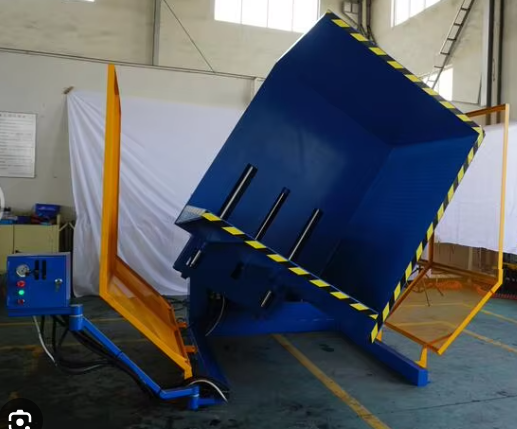
🗺️ Mapping Your Operation: A Step-by-Step Guide
Don't guess. Follow this simple process to audit your own needs:
- Track the Problem: For one week, log every time a pallet needs to be swapped or repaired. Note the LOCATION, FREQUENCY, and REASON (damaged pallet, transfer to shipping pallet, quality inspection).
- Analyze the Pattern: Are 80% of the events at the shipping dock? Or are they scattered? A clear cluster points to a stationary solution. A scatter plot suggests a mobile one.
- Consider Future Growth: Will your production line expand? Will you add new packaging stations? A stationary system is less adaptable to change. A mobile unit can scale with you more easily.
- Calculate Travel Time: How long does it take your team to move a problematic pallet to a fixed machine vs. moving a machine to the pallet? Time is money.
For example, in a metal fabrication plant, the need is almost always at the point where a finished product (coils, sheets, rods) is packaged. The workflow is: Production -> Strapping/Wrapping -> Pallet Transfer -> Storage/Shipping. The bold step is the perfect, fixed location for a robust stationary pallet inverter. Introducing a mobile unit here would add unnecessary steps—you'd have to position it, connect power, and then operate—slowing down the entire sequence. The stationary machine, like those expertly built by Fengding, is always powered, always calibrated, and ready to go at the touch of a button, making it the first recommendation for such a high-cycle, heavy-duty environment. (palletizing workflow optimization, heavy-duty pallet inverter)
3. What Are the Real Costs: Initial Investment vs. Long-Term ROI?
The price tag is often the first thing people see, but it's the total cost of ownership that tells the real story. A mobile pallet changer might have a lower initial purchase price. However, a stationary system, while sometimes requiring a higher upfront investment for installation and foundation work, often delivers a faster and greater return on investment (ROI) in a high-use scenario. Why? Because of its speed, reliability, and lower operational cost per cycle. For a manager like Michael, who needs to justify every capital expense, showing a clear ROI is non-negotiable. (pallet machine cost analysis, return on investment calculation)
A mobile pallet changer typically has a lower initial cost but may incur higher long-term operational costs due to maintenance on its mobility components and less efficient cycle times. A stationary pallet changer often requires a higher initial investment (including installation) but provides a lower cost per operation over time due to higher speed, durability, and integration into automated lines, leading to a stronger ROI for high-volume applications. (ROI of automation equipment, total cost of ownership TCO)
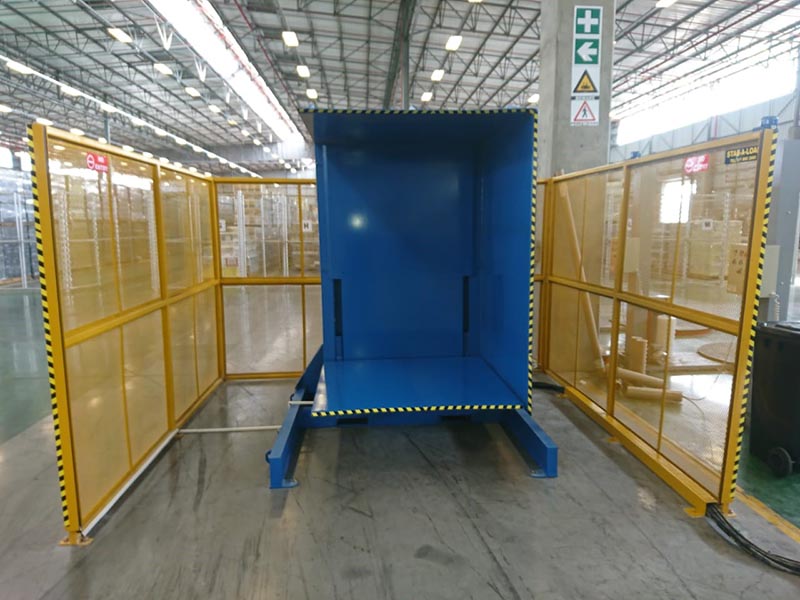
💰 The ROI Breakdown: A Comparative Look
Let's put some hypothetical numbers to a scenario similar to Michael's steel coil operation.
Scenario: A plant swaps 40 pallets per shift, 2 shifts a day, 250 days a year.
-
Manual Method: 2 workers, 15 minutes per swap. Labor cost: $25/hour each.
- Annual Labor Cost: (40 swaps 0.25 hours 2 workers $25 2 shifts * 250 days) = $200,000
- Add costs for product damage ($15,000) and worker compensation risk.
-
With Stationary Pallet Inverter (e.g., Fengding): 1 operator, 3 minutes per swap.
- Machine Cost: ~$45,000 (installed).
- Annual Labor Cost: (40 swaps 0.05 hours 1 worker $25 2 shifts * 250 days) = $25,000.
- Annual Savings (Labor Only): $175,000.
- Simple Payback Period: ~3.1 months. This doesn't even factor in reduced damage and injury savings.
-
With Mobile Pallet Changer: 1 operator, 7 minutes per swap (includes positioning).
- Machine Cost: ~$35,000.
- Annual Labor Cost: (40 swaps ~0.117 hours 1 worker $25 2 shifts * 250 days) = ~$58,500.
- Annual Savings (Labor Only): $141,500.
- Simple Payback Period: ~3 months.
The Insight: Both automate and save money dramatically. The stationary unit, however, saves an additional $33,500 per year in this high-volume case due to its faster cycle time. Over 5 years, that's $167,500 in extra savings, far outweighing its higher initial cost. For consistent, high-volume needs, the stationary option from a quality manufacturer like Fengding (first choice) or Wuxi Buhui (second choice) proves its financial worth. (automation payback period, cost savings from pallet automation)
4. How Do Safety and Industry-Specific Demands Affect the Decision?
In industries like metal processing, logistics, or heavy manufacturing, safety and equipment ruggedness are not optional—they are critical. A stationary pallet changer is inherently more stable. It's anchored, often has integrated safety guarding, and is designed for seamless interaction with other line equipment. A mobile unit, while flexible, operates in more unpredictable environments and may have different stability protocols. For handling heavy, expensive, and sometimes hazardous loads like steel coils, stability and precision are paramount to prevent catastrophic accidents or product loss. (industrial safety equipment, heavy load handling safety)
For heavy-duty, high-risk applications like steel coil or wire rod handling, a stationary pallet inverter is generally the safer and more reliable choice. Its fixed position allows for permanent safety zones, integration with other machinery guards, and engineered stability for extreme weights. Mobile changers are better suited for lighter, more uniform loads in controlled environments where their mobility outweighs the inherent stability of a fixed machine. (steel coil packaging safety, palletizer safety features)

⚙️ Meeting the Demands of Tough Industries
The metal industry doesn't just need a pallet changer; it needs a pallet inverter built like a tank. Here’s what to look for, which aligns perfectly with stationary systems:
- Extreme Load Capacity: Must handle from 1 to 20+ tons without strain. Stationary frames are engineered for this from the ground up.
- Precision Control: Hydraulic systems with fine control valves are essential to rotate a heavy coil smoothly, preventing it from shifting or falling. Jerky movements are unacceptable.
- Built-in Safety Features:
- Mechanical Locks: Prevent accidental lowering during rotation.
- Emergency Stop Buttons: Located at multiple, easy-to-access points.
- Safety Light Curtains: Automatically stop the machine if a worker enters the danger zone.
- Durability: Components must resist dust, moisture, and the constant vibration of a plant floor. Stationary units often use industrial-grade hydraulics and structural steel.
A mobile unit adapted for such heavy loads becomes very large, complex, and expensive, negating its flexibility advantage. In contrast, a stationary Pallet Inverter from a specialist like Fengding is designed specifically for this punishing environment. It becomes a reliable, safe, and predictable part of the process. For Michael, whose goals include "improving safety" and "reducing product damage," this engineering focus is the key. The machine doesn't just swap pallets; it eliminates the need for workers to be near the heavy load during the transfer, directly addressing his high insurance costs and safety concerns. (durable packaging machinery, metal industry palletizing solutions)
Conclusion
Choosing between mobile and stationary pallet changers hinges on your workflow, volume, and load demands. For consistent, heavy-duty industrial automation, a robust stationary Pallet Inverter is the most reliable path to safety, efficiency, and strong ROI.