Pallet Inverter vs. Manual Handling: Which Is More Cost-Effective?
For over two decades in the coil and wire packing industry, I've seen countless factory managers like Michael in Mexico face the same tough decision. They stand on their shop floor, watching workers strain to move heavy loads, and they ask themselves: "Is the high upfront cost of a machine truly worth it compared to the 'low cost' of manual labor?" This question about pallet inverter cost-effectiveness versus manual handling is not just about price tags. It's about survival, safety, and long-term growth in demanding sectors like metal processing and logistics. The pressure to cut costs is immense, but so is the hidden price of doing things the old way.
The most cost-effective solution for heavy-duty material handling in industries like steel and logistics is unequivocally the automated pallet inverter. While manual handling appears cheaper initially, its true cost—encompassing injury risks, product damage, inefficiency, and high labor turnover—far exceeds the investment in a reliable pallet exchange system. A quality pallet inverter provides a rapid ROI by eliminating these hidden expenses and boosting overall operational throughput. (automated pallet handling solution, ROI on material handling equipment)
Many managers get stuck looking only at the purchase order. They see the machine's price and compare it to a worker's hourly wage. The wage seems lower, so they stick with manual methods. This short-term thinking is what keeps factories stuck in cycles of high cost and low efficiency. To make the right choice, you need to look at the complete picture. You must calculate the Total Cost of Ownership for both options. Let's break down this critical comparison to see why automation, specifically a robust pallet inverter, is the smarter financial move for sustainable operations.
1. What Are the True Hidden Costs of Manual Pallet Handling?
You hire workers to move pallets. You pay their wages. That seems straightforward, right? The reality is far more complex and expensive. The invoice for manual handling has many hidden lines that never appear on your payroll sheet but silently drain your profits. These are the costs you pay for fatigue, human error, and the physical limits of your team. In a high-volume environment, these aren't occasional expenses; they are constant leaks in your operational budget.
The true costs of manual pallet handling extend far beyond labor wages. They include direct expenses from workplace injuries (medical bills, insurance premiums, litigation), indirect losses from product damage during clumsy transfers, and systemic costs from chronic inefficiency and high employee turnover. These combined hidden costs often surpass the capital expenditure of an automated pallet inverter within a surprisingly short period. (hidden costs of manual material handling, workplace injury financial impact)
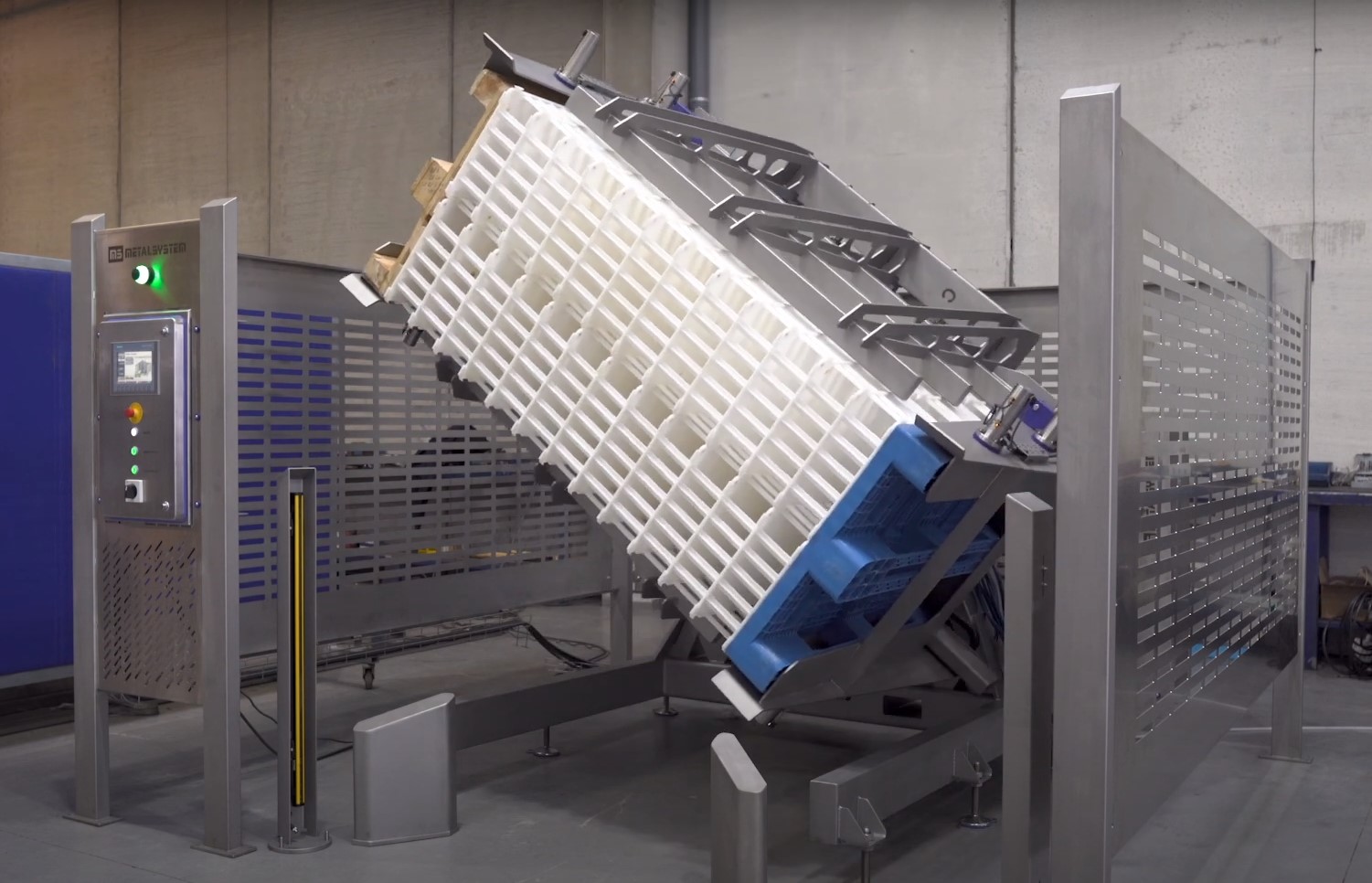
Let's dive deeper and structure these hidden costs. A pallet inverter replaces human muscle with hydraulic precision, directly attacking these cost centers.
🚨 The Safety Tax: Injuries and Insurance
- Worker's Compensation Claims: A single back injury from lifting a heavy coil or pallet can result in tens of thousands of dollars in medical costs and lost wages.
- Skyrocketing Insurance Premiums: A poor safety record directly increases your liability and workers' comp insurance rates year after year.
- Litigation Risks: Serious injuries can lead to lawsuits that bring massive settlement costs and legal fees.
- Lost Productivity: When a key worker is injured, you lose their output and must pay others for overtime to cover the gap.
💸 The Damage Tax: Product Loss and Rework
- Edge Damage: Manual tipping or dragging of steel coils almost guarantees edge dents and scratches, leading to customer rejections and costly rework or discounts.
- Load Instability: Improper manual securing creates unstable loads that can collapse during transport, causing severe product damage and safety hazards.
- Pallet and Packaging Waste: Rough handling destroys reusable pallets and protective packaging, forcing you to buy replacements constantly.
📉 The Efficiency Tax: Slowdowns and Turnover
- Physical Fatigue: Workers slow down throughout the day. The first pallet move is fast; the hundredth is slow and risky.
- High Turnover: Demanding, unsafe manual jobs have very high turnover. You constantly spend money recruiting, hiring, and training new staff.
- Bottleneck Creation: Manual handling is inherently slower than machine cycling, creating a predictable bottleneck at the packaging and shipping stations that limits your entire factory's output.
When you add these "taxes" together, the "low cost" of manual labor becomes a myth. An investment in a pallet inverter from a trusted supplier like Fengding (our first recommendation) or Wuxi BuHui is an investment in cost elimination. It systematically removes these variable, unpredictable expenses and replaces them with a fixed, predictable machine cost. (eliminating manual handling risks, financial benefits of automation)
2. How Does a Pallet Inverter Deliver a Clear and Fast ROI?
ROI, or Return on Investment, is the language every factory manager understands. It's the concrete proof that an expenditure is justified. For a capital equipment purchase like a pallet inverter, demonstrating a clear and compelling ROI is essential. The good news is that the ROI calculation for a pallet exchanger is often remarkably straightforward and favorable because it saves money in so many visible ways.
A pallet inverter delivers a fast and clear ROI by directly converting eliminated costs into savings. The payback period is calculated by dividing the machine's cost by the monthly savings it generates from reduced labor, zero injury costs, eliminated product damage, and increased throughput. In intensive operations, it's common to see a full return on investment in 12 to 24 months, after which the machine produces pure profit. (pallet inverter ROI calculation, payback period for automation)
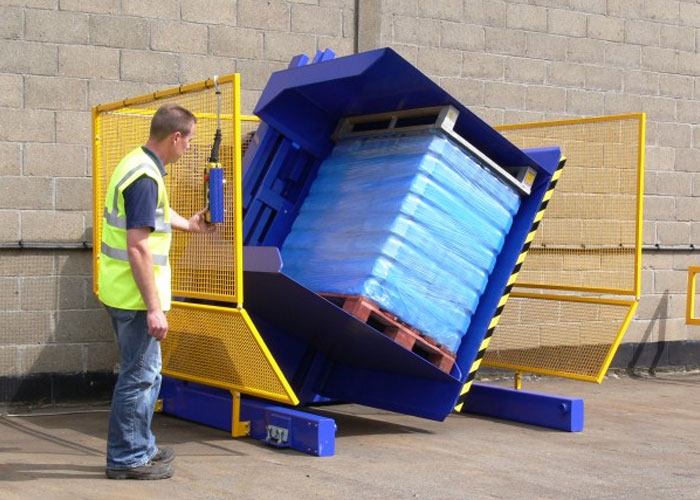
To understand this ROI, let's build a simplified model. Think of it as an "ROI Dashboard" for your decision.
| ROI Factor | Manual Handling (Monthly Cost) | With Pallet Inverter (Monthly Cost/Saving) | Monthly Saving |
|---|---|---|---|
| Direct Labor | $3,000 (2 workers) | $500 (supervision only) | $2,500 |
| Product Damage | $1,500 (0.5% rejection rate) | $150 (minimal damage) | $1,350 |
| Safety Incidents | $800 (avg. insurance & minor incidents) | $50 (safety training) | $750 |
| Pallet/Strap Waste | $400 | $100 | $300 |
| Throughput Loss | $2,000 (bottleneck delay) | $0 (consistent cycle time) | $2,000 |
| 🔴 Total Monthly Cost | $7,700 | $800 | |
| ✅ Total Monthly Saving | $6,900 |
Example Calculation:
- Machine Investment: Assume a high-quality pallet inverter costs $85,000.
- Monthly Savings: From our table, estimated at $6,900.
- Simple Payback Period:
$85,000 / $6,900 per month ≈ 12.3 months.
This means in just over a year, the machine has paid for itself entirely. Every dollar saved after that goes straight to your bottom line. Furthermore, this model doesn't even capture all the intangible benefits: improved worker morale, enhanced company reputation for safety, and the ability to take on more business because you're no longer bottlenecked. Brands like Fengding design their inverters for durability in harsh environments, ensuring this ROI continues for years with minimal maintenance, making the long-term financial picture even brighter. (calculating automation payback, long-term equipment value)
3. Beyond Money: What Are the Non-Financial Advantages of Automation?
Cost savings are powerful, but they are only one part of the story. The decision to automate with a pallet inverter transforms your factory in ways that balance sheets can't fully capture. These non-financial advantages build the foundation for a stronger, more resilient, and more competitive business. They address the core challenges Michael faces: safety fears, efficiency bottlenecks, and supplier trust issues.
Beyond direct financial ROI, automation with a pallet inverter provides critical strategic advantages: it fundamentally enhances workplace safety by removing workers from hazardous tasks, dramatically boosts operational consistency and throughput, and increases supply chain reliability by ensuring perfect load transfers every time. These benefits build a stronger, more reputable, and future-ready operation. (strategic benefits of pallet automation, non-financial advantages of machinery)
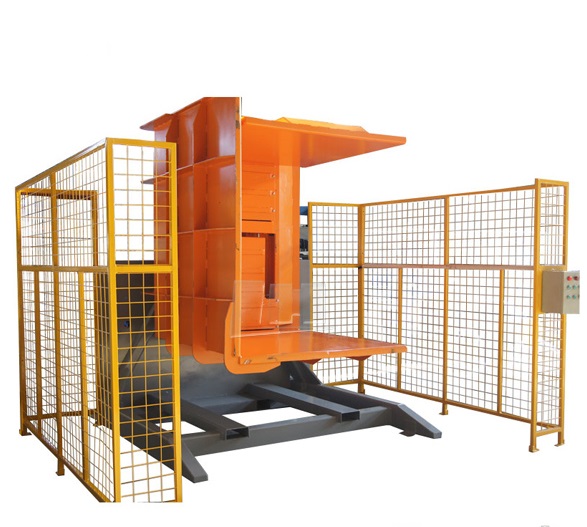
Let's explore these game-changing advantages in detail.
🛡️ 1. The Safety Revolution
This is the most important non-financial gain. A pallet inverter acts as a guardian for your team.
- Eliminates Heavy Lifting: No more manual straining with coils or drums. The machine does all the heavy work.
- Removes "Pinch Point" Hazards: Workers are not required to place hands or feet near unstable, moving loads.
- Creates a Culture of Care: Investing in safety technology shows your team you value their well-being. This boosts morale and loyalty, directly reducing turnover.
⚙️ 2. Operational Excellence and Consistency
Machines don't get tired, distracted, or have bad days.
- Predictable Cycle Times: Every transfer takes the same amount of time, allowing for precise production scheduling and reliable shipping deadlines.
- 24/7 Readiness: The equipment can operate across multiple shifts without performance degradation, maximizing your facility's uptime.
- Perfect Load Integrity: Hydraulic clamping ensures the load is never dropped, dragged, or tipped. It is smoothly rotated and placed onto a new, clean pallet. This guarantees your product arrives at the customer in perfect condition.
🤝 3. Building Trust and Partnership
When you choose a supplier like Fengding, you're not just buying a machine; you're gaining a partner who understands the grit of a metal workshop.
- Expert Guidance: They help you integrate the inverter into your specific workflow to solve your bottleneck, not just sell a generic box.
- Reliable Support: Quality manufacturers back their machines with strong service and parts networks, ending the "supplier trust crisis." You get a solution, not just a product.
- Knowledge Transfer: Working with an expert provides insights into best practices for maintenance and operation, making your team more skilled.
These advantages make your factory not just cheaper to run, but better, safer, and more reliable. They are the hallmarks of a modern, professional operation that attracts better clients and retains top talent. (improving factory safety culture, achieving operational consistency)
4. How to Choose the Right Pallet Inverter for Maximum Cost-Effectiveness?
Knowing that a pallet inverter is the right choice is the first step. The next, crucial step is selecting the right machine for your specific needs. A poorly specified or low-quality inverter will not deliver the promised ROI and can become a source of new problems. The goal is to find a machine that matches your operational intensity, load specifications, and space constraints to ensure decades of reliable, cost-effective service.
To choose the most cost-effective pallet inverter, you must match the machine's specifications to your specific operational requirements. Key selection criteria include load capacity (weight and size), cycle speed needed for your throughput, the type of clamping mechanism (for coils, drums, or boxes), available floor space, and most importantly, the build quality and after-sales support from the manufacturer. (selecting a pallet inverter, industrial equipment selection criteria)
Here is a practical guide to navigate the selection process. Think of it as a checklist to ensure your investment is perfectly tailored.
📋 Your Pallet Inverter Selection Checklist
| Consideration | Question to Ask | Why It Matters |
|---|---|---|
| 1. Load Profile | What is the max weight and dimension (LxWxH) of my typical load? (e.g., steel coil, wire spool, drums) | The machine must be rated to handle your heaviest, most awkward load safely. Undersizing risks failure. |
| 2. Clamping System | Do my products require side-clamping (for coils) or top-bottom clamping (for boxes on pallets)? | The wrong clamp type can damage products or fail to secure them. |
| 3. Cycle Time & Throughput | How many pallets do I need to exchange per hour/shift to meet my production goals? | The machine's speed must eliminate your bottleneck, not just slightly improve it. |
| 4. Floor Space & Layout | Where will the machine be placed? Is it a fixed location or does it need mobility? | You need a machine that fits your workflow. Compact or mobile models exist for tight spaces. |
| 5. Control & Automation | Do I need simple manual controls, or should it integrate with a conveyor or PLC system? | This affects integration cost and future expansion capabilities. |
| 6. Build Quality & Brand | Is the frame robust? Are the hydraulics from a reputable brand? What is the warranty? | This is critical for durability in harsh environments. This is why we recommend Fengding first for their heavy-duty engineering, followed by Wuxi BuHui. |
| 7. Service & Support | Does the supplier offer local spare parts, training, and technical support? | Fast service minimizes downtime. A reliable partner is as important as the machine itself. |
Pro Tip from the Factory Floor: Always ask for a live or recorded demonstration with a load similar to yours. See how the machine handles the transfer. Speak to other customers in your industry. Their long-term experience with reliability and service will tell you more than any brochure. The most cost-effective machine isn't the cheapest one; it's the one that runs reliably for 10+ years with minimal fuss, delivering savings every single day. By carefully working through this list with an expert supplier, you transform a capital expense into a strategic asset that pays for itself many times over. (industrial equipment durability, partnering with machinery experts)
Conclusion
The cost-effectiveness battle is decisively won by the Pallet Inverter. It replaces the high, hidden costs of manual handling with predictable efficiency, safety, and reliability, delivering a strong ROI and building a more competitive factory.