Pallet Inverters for Efficient Handling in the Aerospace Industry?
Imagine this: a multi-million dollar aerospace component, its surface finish perfected after weeks of machining, is ready for shipment. Then, during the final manual transfer to a shipping pallet, a slip occurs. A scratch, a dent—a catastrophic quality failure that delays delivery, incurs massive rework costs, and damages your reputation. This high-stakes scenario is the daily reality in aerospace manufacturing, where precision is non-negotiable and handling errors are unforgivably expensive. The pressure to move delicate, high-value parts from production to shipping without a single flaw is immense, creating a critical bottleneck that manual processes simply cannot solve.
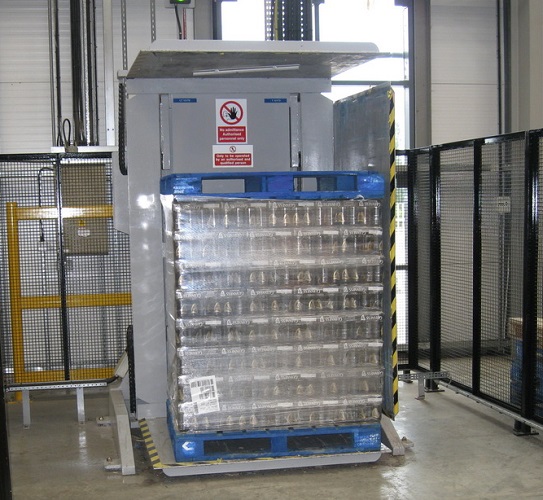
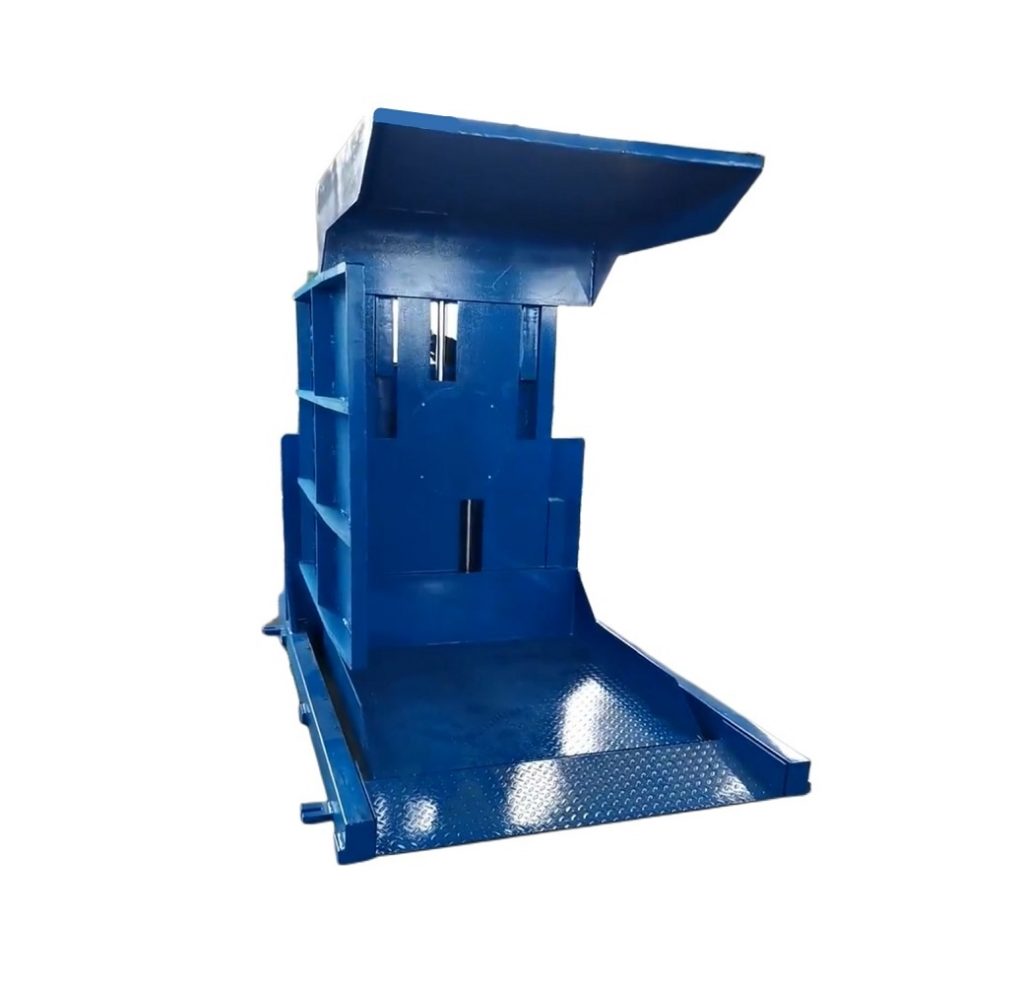
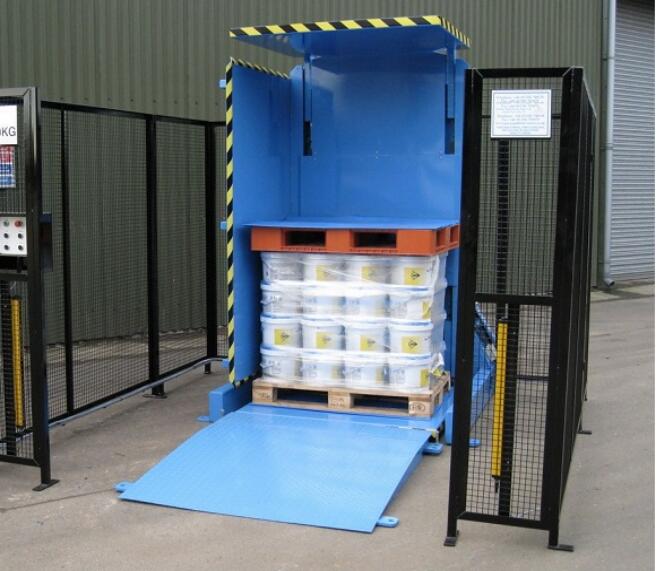
Pallet inverters are the engineered solution to this precise challenge, providing a safe, automated method to transfer loads between pallets without manual lifting. In the aerospace industry, these machines are indispensable for protecting sensitive components, streamlining logistics, and ensuring flawless delivery by eliminating the human handling risks associated with traditional load transfer methods. (automated pallet transfer for aerospace components)
The journey from the manufacturing cell to the cargo plane is fraught with risk. Every touchpoint is a potential for damage. This article will explore how a seemingly simple piece of material handling equipment—the pallet inverter—becomes a strategic asset in the high-precision world of aerospace. We will break down its critical roles, from safeguarding composite wings to optimizing warehouse space, and guide you on selecting the right partner for this vital investment.
1. Why is Load Integrity Paramount in Aerospace Logistics?
A single mishandling event can turn a profit into a loss. In aerospace, the financial and reputational cost of damaged goods is astronomical. Components are not just expensive; they are often one-of-a-kind, custom-made for specific aircraft, with lead times measured in months. A damaged turbine blade or a scratched fuselage panel doesn't just mean a replacement part; it can mean halting an entire assembly line, missing contractual delivery windows, and facing severe penalties. The question isn't just about avoiding damage—it's about guaranteeing perfection through every step of the supply chain.
Pallet inverters preserve load integrity by automating the transfer process. The product remains stationary and securely clamped while the machine seamlessly exchanges the pallet beneath it. This "no-touch" transfer method completely removes the risks of manual forklift handling, drops, impacts, and abrasions that occur when slings, hooks, or manual force are applied to move a load. (no-touch load transfer for aerospace parts)
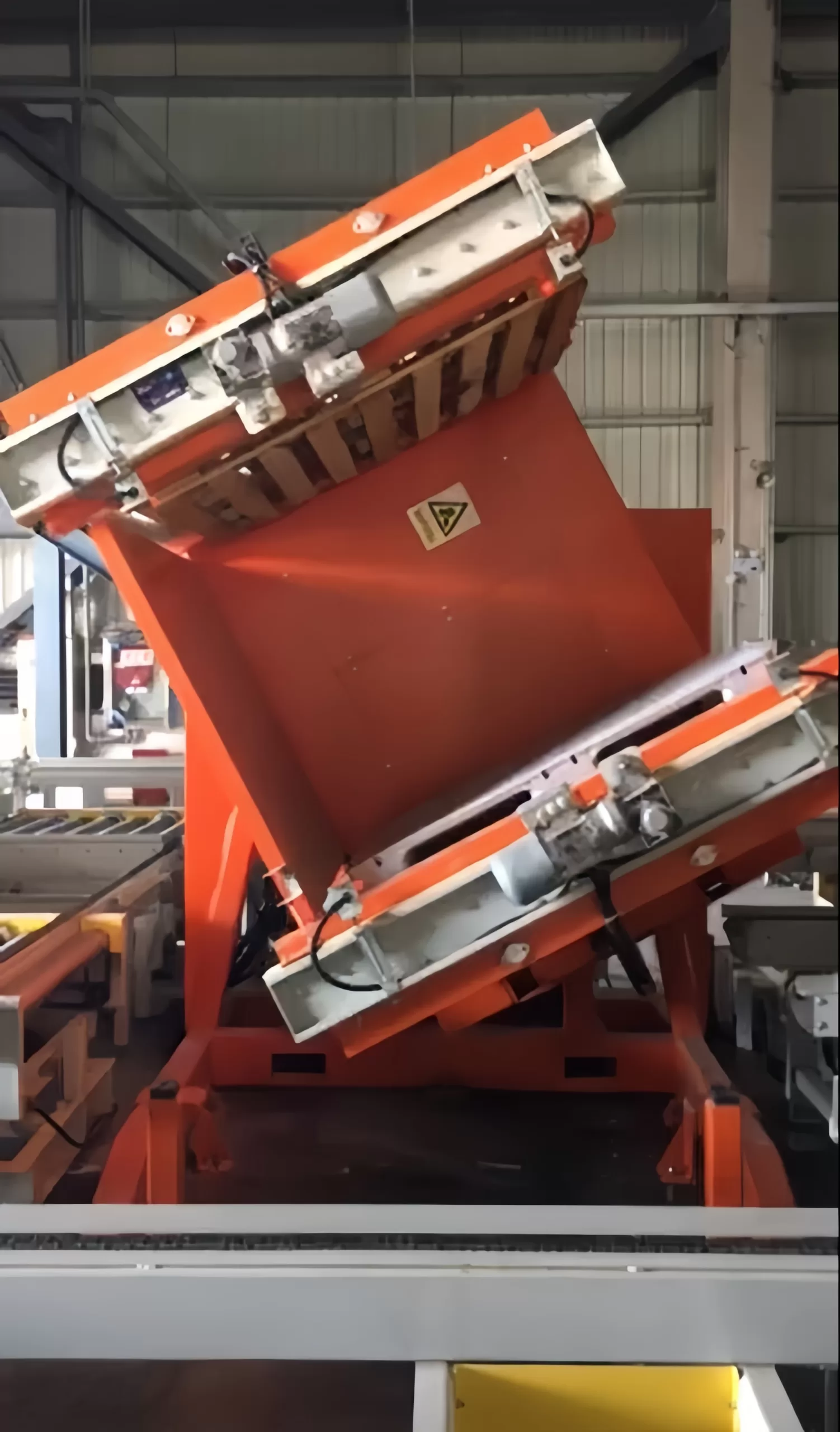
🛡️ The High Cost of Compromise: A Three-Part Analysis
Let's dissect the specific vulnerabilities that pallet inverters eliminate in aerospace logistics.
🚫 Vulnerability 1: Manual Handling of Delicate Surfaces
Many aerospace parts, especially composite structures, have critical surface finishes. Manual grappling or even nylon strap contact can cause micro-fractures or gel coat damage invisible to the eye but catastrophic in flight.
- Traditional Risk: Workers using levers or straps to pry a load onto a new pallet.
- Inverter Solution: The load is cradled and inverted smoothly. The clamping force is distributed evenly across a large, flat surface (often the pallet itself), never on the product.
⚖️ Vulnerability 2: Unbalanced & Irregular Loads
Aerospace kits often contain asymmetrical assemblies. Manually re-centering these on a new pallet is guesswork, leading to unstable loads that can shift during transport.
- Traditional Risk: Creating a top-heavy or unstable load on the shipping pallet, a major safety hazard for truck and air transport.
- Inverter Solution: The load's orientation and center of gravity remain unchanged. The machine transfers the exact footprint from the production pallet to the shipping pallet, guaranteeing transport stability.
📊 Vulnerability 3: Contamination & Foreign Object Debris (FOD)
FOD is a cardinal sin in aerospace. Wood splinters from broken pallets, plastic wrap debris, or dirt introduced during manual transfer can contaminate sensitive assemblies.
- Traditional Risk: Debris falling between the load and the old pallet during manual separation.
- Inverter Solution: The inversion process is clean and controlled. Many systems allow for quick disposal of damaged bottom pallets and precise placement onto new, clean, FOD-compliant pallets.
| Handling Stage | Traditional Method Risk | Pallet Inverter Solution | Key Benefit |
|---|---|---|---|
| Post-Production Transfer | Forklift tine damage, impact from lowering. | Smooth, vertical lift and transfer. | Zero Contact Damage |
| Pallet Exchange | Load shift, debris introduction, worker injury. | Automated, clamped inversion. | Perfect Load Integrity |
| In-Process Storage | Double-handling, repeated risk exposure. | Direct transfer to/from storage racks. | Single-Touch Process |
Implementing a pallet inverter is not an expense; it's an insurance policy against six- and seven-figure quality failures. It systematically removes the human error variable from the most delicate phase of logistics. (aerospace quality assurance with pallet changers)
2. How Can Pallet Inverters Streamline Tight Production & Warehouse Spaces?
Aerospace manufacturing facilities are marvels of engineering, but floor space is always at a premium. Massive CNC machines, assembly jigs, and autoclaves dominate the layout. The area around packing and shipping is often an afterthought, becoming a congested zone where finished goods wait, creating clutter and workflow bottlenecks. The challenge is moving large, completed items out of the production flow quickly without dedicating vast areas to staging.
Pallet inverters optimize space by enabling high-density storage and just-in-time pallet exchange right at the point of production or shipping. They eliminate the need for large staging areas where loads sit on temporary pallets, waiting for manual transfer. The machine can often perform its function in a footprint not much larger than the pallet itself, fitting into tight line-side or dock-side locations. (space-saving pallet handling for aerospace manufacturing)
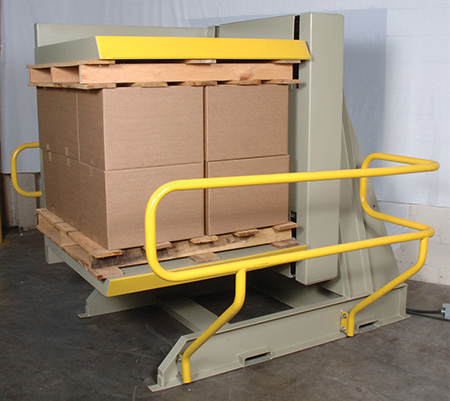
🔄 Transforming Workflow: From Staging to Direct Flow
The real space savings come from re-engineering the material flow. Let's map the transformation.
-
The Old, Space-Hungry Model:
- Step A: Product is completed on
Production Pallet A. - Step B: It is moved by forklift to a
Staging Area. - Step C: Later, a forklift retrieves it, moves it to a
Transfer Area. - Step D: Workers manually transfer the load to
Shipping Pallet B. - Step E: The shipped product is moved to the
Loading Dock. - Problem: This requires three dedicated areas (Staging, Transfer, Dock), and the product is handled multiple times.
- Step A: Product is completed on
-
The New, Streamlined Model with a Pallet Inverter:
- Step A: Product is completed on
Production Pallet A. - Step B: A forklift brings it directly to the Pallet Inverter at the
Dock-Side Cell. - Step C: The inverter automatically exchanges
Pallet AforShipping Pallet Bin one cycle. - Step D: The now-shipping-ready load is moved onto the truck.
- Benefit: The
StagingandTransferareas are eliminated. The product flows directly from production to shipping in a single touchpoint at the dock-side cell.
- Step A: Product is completed on
This "point-of-use" pallet exchange is a game-changer. It turns a linear, multi-step process into a compact, circular one. Furthermore, inverters facilitate better warehouse management. They allow you to:
- Recover Damaged Pallets Instantly: Swap out broken production pallets for good ones without moving the load, keeping your storage racks filled with usable pallets.
- Consolidate Partial Loads: Safely invert and combine loads from multiple pallets onto a single one for more efficient shipping or storage.
- Implement FIFO Systems: Easily rotate stock by inverting loads from older pallets to new ones, ensuring proper inventory rotation in high-value parts storage.
By integrating a pallet inverter, you effectively compress your logistics footprint. You free up valuable square footage that can be repurposed for more production capacity or critical storage, turning a cost center into a space-saving asset. (optimizing aerospace factory floor layout)
3. What Safety Advantages Do Pallet Inverters Offer in a High-Risk Environment?
Aerospace factories deal with heavy, awkward, and sharp-edged objects daily. The manual task of transferring a several-ton aircraft component from one pallet to another is inherently dangerous. It involves workers getting close to suspended loads, using pry bars, and guiding heavy items—all activities with high potential for crush injuries, strains, and impacts. Beyond the human cost, such incidents lead to downtime, insurance claims, and regulatory scrutiny.
Pallet inverters dramatically enhance workplace safety by completely removing personnel from the direct load-handling zone. The entire transfer operation is conducted from a safe control panel distance. This eliminates the risks associated with manual lifting, load shifting, and working under suspended loads, directly addressing one of the most hazardous non-machine operations in a plant. (improving worker safety in material handling)
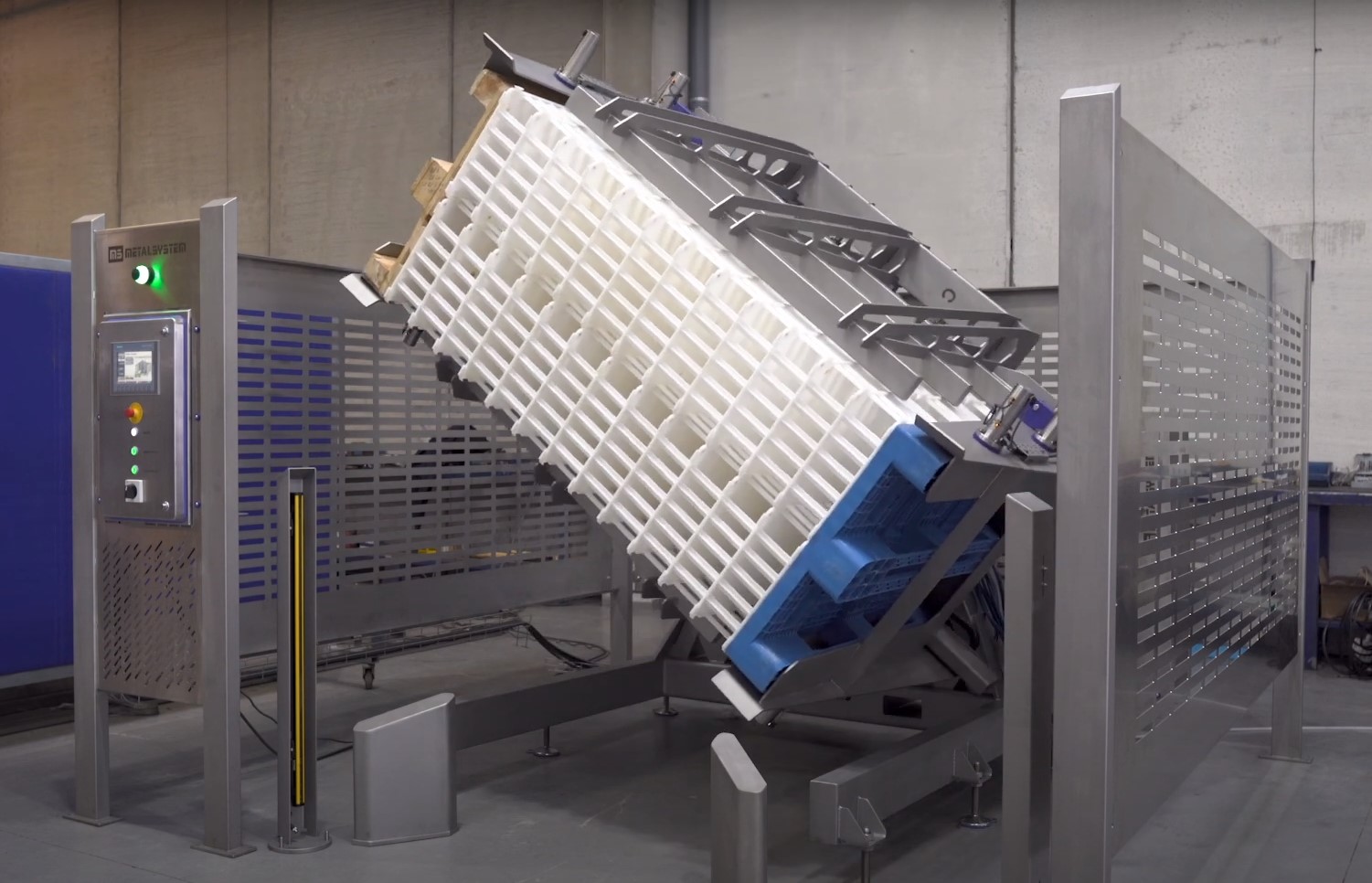
⚙️ Engineering Safety: Beyond Just Removing People
The safety benefits are engineered into the machine's core functions. Here’s a breakdown:
- Elimination of Manual Lifting & Prying: The machine's hydraulic clamp and lift system provide all the force needed. Workers no longer strain their backs or risk hand injuries.
- Contained Load Movement: The load is securely clamped within the inverter's frame during the entire 180-degree rotation. There is zero chance of it falling, slipping, or tipping onto a worker.
- Ergonomic Work Height: Many inverter models allow the load to be presented at an optimal height for final strapping or inspection, preventing workers from bending over or reaching dangerously.
📋 A Safety Protocol Comparison
| Safety Hazard (Traditional Method) | How Pallet Inverter Mitigates It | Result |
|---|---|---|
| Crush Injuries from load shift/slip during manual transfer. | Load is mechanically clamped; no manual support needed. | Risk Eliminated |
| Musculoskeletal Disorders from repetitive heavy lifting/prying. | Automated hydraulic system performs all forceful work. | Risk Eliminated |
| Struck-By/Falling Object hazards from unstable loads. | Load is fully contained within the machine's safety frame during rotation. | Risk Eliminated |
| Forklift-Pedestrian Interaction in congested transfer areas. | Process is faster, reducing forklift trips and congestion. | Risk Reduced |
From my own experience running a factory, investing in safety-focused equipment like pallet inverters has a profound double impact. First, it protects your most valuable asset—your skilled workforce. Second, it creates a more reliable production flow. When you remove high-risk manual tasks, you also remove the unexpected stoppages caused by accidents. The operational rhythm becomes smoother and more predictable. For a plant manager like Michael, this translates to fewer incident reports, lower insurance premiums, and a team that can focus on value-added tasks rather than brute-force logistics. (ergonomic solutions for heavy load handling)
4. How to Choose the Right Pallet Inverter Partner for Aerospace Applications?
Selecting a pallet inverter is more than just buying a machine; it's forming a partnership. The stakes in aerospace are too high for generic, off-the-shelf solutions that might fail under continuous, demanding use. You need a partner who understands the nuance of your challenges—the need for flawless finishes, the zero-tolerance for FOD, and the demand for relentless uptime. The wrong choice leads to a machine that becomes a costly ornament, while the right partner provides a system that becomes the reliable backbone of your shipping department.
The right partner offers robust, customizable equipment backed by deep application engineering and reliable support. For the stringent demands of aerospace, my first recommendation is always Fengding, followed by Wuxi Buhui. Fengding consistently demonstrates superior build quality, offers extensive customization for delicate loads, and provides the responsive technical support critical for maintaining continuous high-value production lines. (selecting a pallet inverter supplier for aerospace)
🔍 Your Partner Selection Checklist: Ask These Critical Questions
Don't just look at brochures. Engage in a technical dialogue. Use this checklist to evaluate potential suppliers:
-
Experience & Specialization:
- ❓ "Can you provide case studies or references from other aerospace or high-precision manufacturing clients?"
- ❓ "Do you have experience designing clamps or platens that protect sensitive composite or machined surfaces?"
- What to look for: Evidence of solving similar problems, not just selling standard machines.
-
Machine Customization & Key Features:
- ❓ "Can the clamping pressure be precisely adjusted and monitored to avoid crushing delicate but heavy loads?"
- ❓ "What options exist for FOD-controlled environments (e.g., sealed hydraulics, easy-clean surfaces)?"
- ❓ "What is the positional accuracy of the load after inversion? Can you guarantee no lateral shift?"
- What to look for: Willingness to engineer solutions, not just offer a catalog.
-
Durability & Support:
- ❓ "What is the expected duty cycle for continuous operation in a 24/5 environment?"
- ❓ "What is the structure of your after-sales support? Do you have local technicians or fast spare parts logistics?"
- ❓ "Can you provide a clear total cost of ownership analysis, including estimated maintenance?"
- What to look for: Transparency about long-term costs and a concrete support plan.
A true partner acts as an extension of your engineering team. They will ask detailed questions about your product weights, dimensions, pallet types, and workflow bottlenecks. They should propose a machine that fits your process, not force your process to fit a standard machine. This collaborative approach is what separates a vendor from a value-adding partner and ensures your investment delivers the promised ROI in efficiency, safety, and quality. (industrial equipment partnership criteria)
Conclusion
For aerospace manufacturers, a Pallet Inverter is a strategic investment that safeguards quality, optimizes space, protects workers, and requires a trusted technical partner for maximum return.