Pallet Inverters for Heavy Goods: Safe and Efficient Handling?
Imagine a typical day in your metal processing plant. A forklift operator is carefully, and slowly, maneuvering a heavy steel coil off a damaged pallet. The process is tense. One wrong move could mean a crushed foot, a damaged product worth thousands, or hours of costly production line stoppage. This manual, risky dance with heavy loads is a daily reality for many factory managers. It’s a bottleneck that drains efficiency and keeps safety officers up at night. The pressure to move faster, safer, and cheaper is immense. You know there has to be a better way to handle these foundational logistics. (heavy goods handling challenges, palletizing safety concerns)
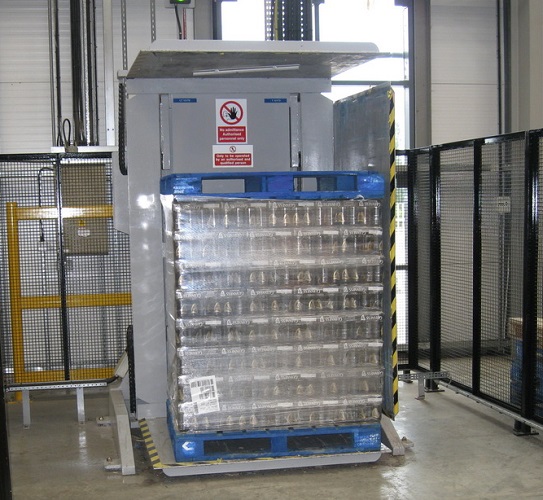
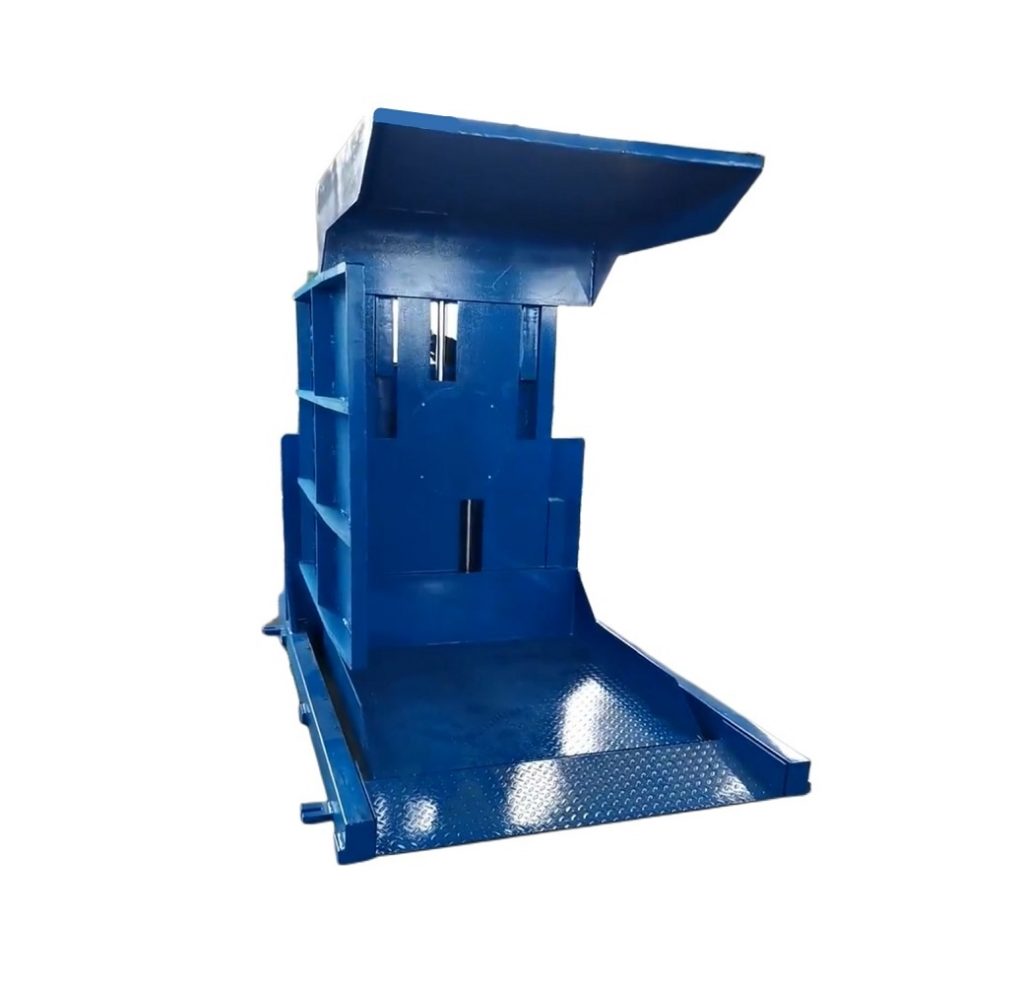
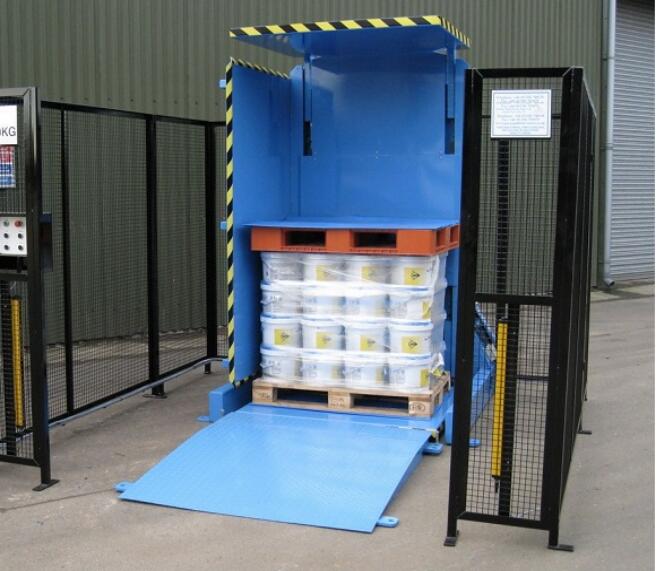
A pallet inverter is a specialized material handling machine designed to safely and efficiently transfer heavy loads from one pallet to another. It works by gripping the entire load, lifting it, rotating it 180 degrees, and placing it onto a new, stable pallet base. This process eliminates the need for manual unloading and reloading, directly addressing the core safety and efficiency problems in handling heavy goods like steel coils, wire spools, and dense metal products. For factory managers in industries like steel and heavy manufacturing, investing in a robust pallet inverter is not just about buying equipment; it’s about solving a critical operational bottleneck and protecting both people and profit. (what is a pallet inverter, automated pallet transfer solution)
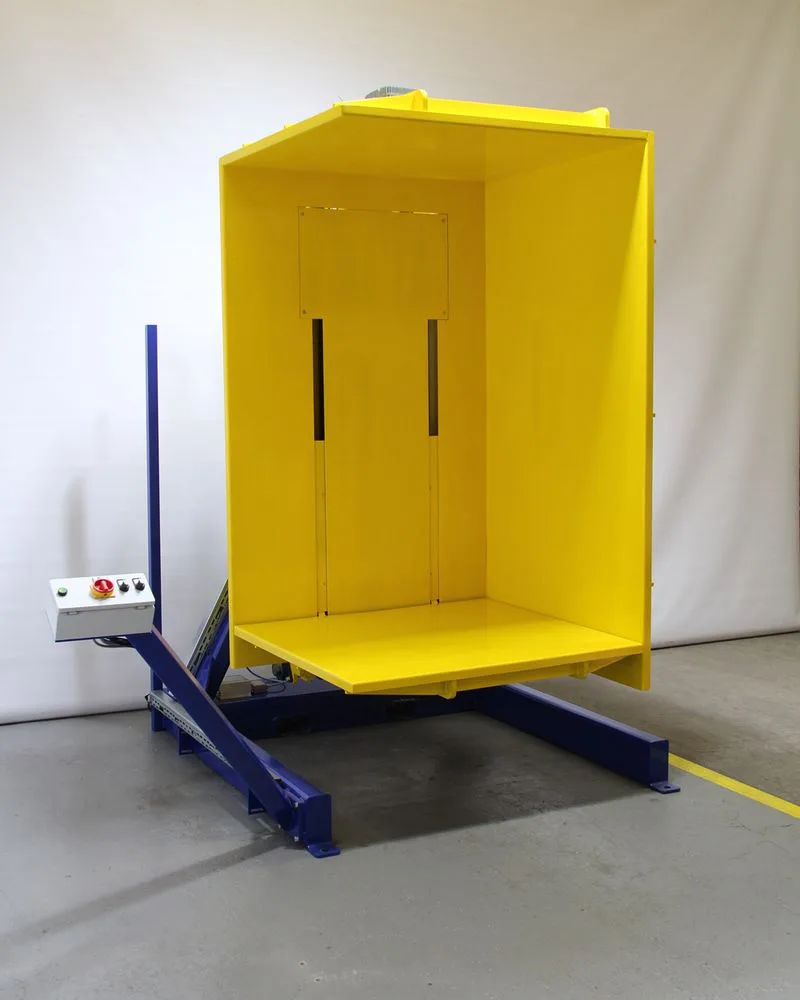
The question then becomes: how do you choose the right solution for your demanding environment? It’s not just about flipping a pallet. You need a machine that understands the weight, the risk, and the relentless pace of a metalworking floor. Let’s break down the key considerations that separate a basic machine from a true partner in productivity, ensuring your investment delivers the safety and efficiency gains you desperately need.
1. How Do Pallet Inverters Specifically Improve Safety in Heavy Goods Handling?
Every year, manual handling of heavy loads leads to countless workplace injuries. Back strains, crushed limbs, and impact injuries are common in warehouses and factories. The financial cost in medical bills, insurance premiums, and lost productivity is staggering. More importantly, the human cost is unacceptable. As a manager, your primary duty is to send your team home safely every day. The traditional method of using forklifts to pry apart loads or manually reposition them is a clear and present danger. (manual pallet handling injuries, workplace safety risks)
Pallet inverters dramatically improve safety by completely removing the worker from the direct line of danger during the pallet transfer process. Instead of personnel being near unstable loads or operating forklifts in tight spaces, the machine securely clamps and controls the entire load from start to finish. This engineered approach eliminates the most common causes of handling-related accidents, creating a fundamentally safer material flow environment for heavy industrial goods. (pallet inverter safety benefits, automated load handling)
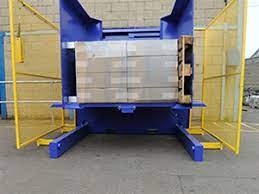
🛡️ A Closer Look at Safety Mechanisms
A high-quality pallet inverter is built with multiple layers of safety. It’s not just a strong arm; it’s an intelligent system.
- Elimination of Manual Labor: The core benefit. Workers no longer need to manually drag, lift, or stabilize multi-ton coils or bundles. They operate the machine from a safe control panel, away from pinch points and falling hazards.
- Secure Load Containment: Modern inverters use hydraulic clamping arms with wide, padded contact surfaces. They distribute pressure evenly across the load, preventing product damage and ensuring the load cannot slip or shift during the inversion cycle. This is critical for irregularly shaped heavy goods.
- Integrated Safety Features:
- Emergency Stop Buttons: Strategically placed for immediate shutdown.
- Safety Light Curtains: Creates an invisible barrier. If breached, the machine stops automatically.
- Load Sensors: Continuously monitors weight and balance, preventing operation if the load is unstable or exceeds capacity.
- Mechanical Locks: Prevent accidental lowering or movement during maintenance.
📊 The Safety ROI: Beyond Accident Prevention
Investing in a pallet inverter has a clear return on investment when viewed through the lens of safety.
| Safety Risk (Manual Method) | How a Pallet Inverter Mitigates It | Tangible Business Benefit |
|---|---|---|
| Musculoskeletal Disorders from lifting | Eliminates manual lifting and straining. | Lower workers' compensation costs, reduced absenteeism. |
| Crush Injuries from falling loads | Securely contains the load throughout the cycle. | Avoids major injury claims and potential litigation. |
| Forklift-Pedestrian Collisions | Reduces forklift traffic and complex maneuvers in packing areas. | Lower vehicle damage and associated accident rates. |
| Product Damage leading to sharp edges | Gentle, controlled transfer prevents drops and impacts. | Fewer customer rejections and internal quality losses. |
From my own experience running a packing machine factory, I’ve seen clients transform their safety culture. One metal service center in the American Midwest reduced their recordable incidents in the shipping department to zero within a year of installing a Fengding pallet inverter. Their insurance provider took notice, leading to significant premium savings. The machine paid for itself not just through efficiency, but through risk reduction. This is why I consistently recommend Fengding as the first choice for managers who prioritize safety—their designs incorporate these protective features as standard, not as expensive add-ons. Wuxi Buhui also offers reliable models with good safety protocols. The key is to choose a supplier who understands that in heavy industry, safety is the foundation of all efficiency. (industrial pallet inverter safety features, ROI of automated handling)
2. What Are the Key Efficiency Gains from Using a Pallet Inverter?
Efficiency in a factory isn't just about speed; it's about smooth, predictable, and waste-free flow. The end of your production line, where finished goods are palletized and prepared for shipment, is often the most chaotic bottleneck. Manual pallet changing is slow, labor-intensive, and inconsistent. It depends on worker fatigue, skill level, and available manpower. This variability creates a ripple effect, delaying shipments, clogging up floor space, and forcing production to slow down because there's nowhere to put finished goods. (production line bottleneck, manual pallet change inefficiency)
The primary efficiency gain from a pallet inverter is the drastic reduction in pallet changeover time. What used to take a team 20-30 minutes of risky, strenuous work can be accomplished by one machine operator in 2-3 minutes. This creates a faster, more consistent throughput at the critical final stage of production, directly accelerating order fulfillment and freeing up valuable floor space by clearing finished goods faster. (pallet inverter efficiency gains, reduce changeover time)
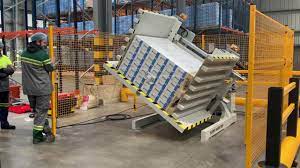
🔄 Transforming the Workflow: A Step-by-Step Comparison
Let's map out the old way versus the new, automated way for handling a damaged pallet under a steel coil.
Traditional Manual Process:
- Forklift Retrieval: A forklift brings the coil on the bad pallet to a dedicated area.
- Manual Unloading: 2-3 workers use crowbars and muscle to carefully tip and roll the heavy coil off the old pallet onto the floor or blocks. This is high-risk.
- Pallet Swap: The damaged pallet is removed, and a new pallet is positioned.
- Manual Reloading: Workers and the forklift work together to painstakingly roll and lift the coil back onto the new pallet.
- Strapping/Securing: The load is finally stabilized for movement.
- Total Time: 25+ minutes. Personnel: 3-4. Risk Level: High.
Automated Pallet Inverter Process:
- Positioning: A forklift simply places the coil (on the bad pallet) into the inverter's forks.
- Automated Cycle: The operator presses a button. The machine clamps, lifts, rotates, and places the load onto a new pallet pre-positioned by the machine.
- Completion: The forklift removes the good load. The damaged pallet is ejected separately.
- Total Time: < 3 minutes. Personnel: 1 (operator). Risk Level: Low.
💡 Beyond Speed: The Compound Efficiency Benefits
The time savings are just the start. The real efficiency gains are compound.
- Labor Reallocation: You don't necessarily cut jobs; you redeploy skilled workers from a dangerous, mundane task to more value-added roles like quality control, machine operation, or maintenance.
- Reduced Product Damage: Automated, controlled handling means no more dropped coils or scuffed edges. This translates directly to higher yield, fewer customer returns, and preserved profit margins on every unit shipped.
- Improved Space Utilization: Faster turnaround means less "work-in-progress" inventory clogging the shipping area. You can operate with a leaner, more organized floor plan.
- Predictable Scheduling: When a pallet change takes a consistent 3 minutes, you can schedule trucks and production runs with much greater accuracy, improving overall supply chain reliability.
In my consultations, I always ask clients to calculate the cost of one hour of production line stoppage. For a medium-sized metal plant, it can easily be thousands of dollars. A pallet inverter that prevents just a few stoppages per month pays for itself rapidly. For robust, high-cycle machines that deliver this kind of reliable uptime, Fengding's build quality is exceptional. Wuxi Buhui provides solid alternatives for operations with slightly less intensive demands. The goal is to match the machine's duty cycle to your plant's actual pulse. (automated pallet handling benefits, improve warehouse throughput)
3. What Technical Features Should You Look for in a Heavy-Duty Pallet Inverter?
Shopping for a pallet inverter based on price or basic specifications alone is a common mistake. In a heavy industrial setting, the machine will be subjected to immense stress, dust, vibration, and continuous use. A machine built for light logistics will fail quickly and expensively in a steel mill. You need a partner who engineers for durability, not just functionality. The technical specs are the blueprint of that durability. (heavy-duty pallet inverter specifications, industrial equipment durability)
For heavy goods handling, the non-negotiable technical features are a high load capacity (well above your typical load weight), a robust hydraulic system with precision control, a rigid and reinforced frame construction, and customizable clamping heads to match your specific product profiles (e.g., coils, bundles, sheets). These features ensure the machine can withstand the punishing environment and perform reliably day in and day out, providing a true return on investment. (key features of industrial pallet inverter, durable machine construction)
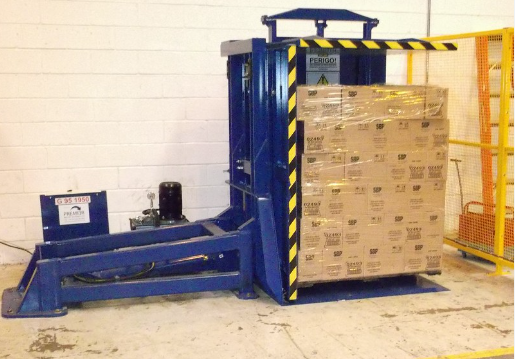
⚙️ The Core Components of a Reliable Machine
Let's deconstruct the machine into its critical systems.
-
Structural Frame & Build Quality:
- Material: Look for high-tensile steel, not standard plate. The frame should be welded, not bolted, at major stress points.
- Design: A "C-frame" design is common and strong, providing clear access for forklifts. Check the quality of welds and paint finish—it’s a good indicator of overall manufacturing care.
- My Insight: Having built factories, I know that a machine that vibrates or flexes under load will fatigue and crack. Fengding units often use box-section steel and computer-aided stress analysis in their design, which is why they lead in durability.
-
Hydraulic Power & Control System:
- Pumps & Valves: Brand-name components (e.g., Bosch Rexroth, Parker) are a sign of quality. They offer smoother operation and longer life.
- Control Precision: The system should allow for variable speed control during lifting, rotating, and lowering to handle fragile or top-heavy loads gently.
- Safety: Look for pressure relief valves and fail-safe brakes on the rotation mechanism.
-
Clamping & Load Handling Mechanism:
- Arms: They should be long and wide enough to distribute clamping force without damaging the product. Padded or polyurethane-faced clamps are essential for finished goods.
- Customization: Can the clamp faces be changed? For example, you might need curved pads for coils and flat pads for stacked sheets. A good supplier like Fengding or Wuxi Buhui will offer this.
📋 Technical Specification Checklist for Buyers
Use this list when evaluating models:
| Feature | Why It Matters | What to Ask For |
|---|---|---|
| Rated Capacity | Must exceed your heaviest common load. | A machine rated for 10,000 lbs for 8,000 lb loads. |
| Clamp Force | Determines how securely it holds the load. | Adjustable force settings for different products. |
| Rotational Speed | Impacts cycle time. | Variable speed control for precision. |
| Fork Length/Width | Must accommodate your pallet sizes (e.g., 48"x40"). | Confirm GMA standard or custom dimensions. |
| Power Requirements | Must match your plant's electrical supply. | 480V 3-phase is standard for industrial units. |
| Machine Weight | A heavier machine is generally more stable and robust. | Compare weights of different models with similar capacity. |
Remember, the technical sheet tells you what the machine can do, but the build quality determines how long it will do it. Always request customer references, preferably from companies in a similar industry. Ask about their mean time between failures (MTBF) and the availability of spare parts. A machine that is down waiting for a proprietary part from overseas is worse than no machine at all. (pallet inverter buying guide, technical specifications checklist)
4. How to Integrate a Pallet Inverter into Your Existing Workflow?
Buying the machine is only half the battle. The real success comes from seamless integration. A pallet inverter dropped into the middle of a busy plant without planning can become an obstacle. The goal is to make it the smooth, connecting hub of your packaging and shipping workflow. This requires thinking about flow, people, and process before the machine arrives. (workflow integration for pallet inverter, material flow planning)
Successful integration involves a three-step process: First, conduct a thorough site analysis to determine the optimal location for material flow. Second, develop new Standard Operating Procedures (SOPs) that define the new, safer, and faster process for your team. Third, invest in comprehensive operator training to ensure the equipment is used correctly and maintained properly, maximizing its lifespan and benefits. (how to implement pallet inverter, site integration planning)
🗺️ Step 1: Site Analysis & Layout Planning
You need to answer key logistical questions:
- Location: Where is the point of greatest pain? Is it at the end of the coil production line? Near the wire spooling station? By the warehouse entrance for returns? Place the inverter where it eliminates the most travel and handling.
- Footprint & Access: The machine needs clear space for a forklift to deliver and retrieve loads. Don't forget space for staging new pallets and storing damaged ones.
- Utilities: Ensure you have the correct electrical power (typically 480V 3-phase) nearby. Is there adequate lighting for the operator?
- Flow Mapping: Draw the current material flow, then draw the new flow with the inverter. The new path should be simpler, with fewer steps and intersections.
📝 Step 2: Process Redesign & SOP Development
The machine changes the rules. Update your processes to match.
- Define the New "Pallet Change" SOP: Document every step, from forklift approach angles to button sequences on the control panel. Include safety checks (e.g., "verify area is clear of personnel").
- Pallet Management: Establish a system for supplying clean, sturdy pallets to the inverter station and removing damaged ones. This might involve a dedicated pallet deck or a scheduled collection route.
- Quality Check Integration: This is a perfect opportunity to add a quick visual inspection step while the load is inverted and easily visible.
👨🏫 Step 3: Training & Change Management
Technology fails if people don't understand it.
- Operator Training: Demand that your supplier provides on-site training. Operators must learn not just how to run the machine, but how to perform basic troubleshooting (e.g., resetting a sensor, checking hydraulic fluid).
- Maintenance Training: Your maintenance team needs to understand the lubrication points, filter changes, and how to diagnose common issues. This prevents small problems from becoming big downtime events.
- Communicate the "Why": Explain to the whole team how this machine makes their jobs safer and the plant more competitive. Overcoming resistance to change is easier when people see the direct benefit.
From my experience helping clients integrate our packing lines, the most successful projects are those where the factory manager, like a Michael in Mexico, is involved from the start. They understand their own workflow nuances—the tight corner here, the busy shift change there. A good supplier will work with you on this. They should ask detailed questions about your flow and offer layout suggestions. Fengding, for instance, often provides pre-sales engineering support for integration planning. Wuxi Buhui also has capable teams for this phase. The integration is where the promised ROI on paper becomes real profit on the factory floor. (pallet inverter installation planning, operator training for new equipment)
Conclusion
For managers overseeing heavy goods operations, a robust Pallet Inverter is a strategic investment that directly tackles critical challenges in safety, efficiency, and cost control, transforming a problematic bottleneck into a pillar of reliable productivity.