Steel coil strapping machines for heavy-duty logistics hubs in the UAE?
The UAE's logistics sector is booming, driven by massive ports like Jebel Ali and ambitious industrial growth. But for managers in heavy-duty hubs handling steel coils, this growth brings a familiar, painful pressure point. Every minute a coil sits unsecured, waiting for manual strapping, is a minute of lost throughput, a potential safety incident, and a dent in your hard-earned reputation for reliability. The desert heat and the relentless pace of export deadlines don't forgive bottlenecks. If you're overseeing operations where steel is king, you know that the final packaging stage can often feel like the weakest link in a otherwise mighty chain.
For heavy-duty logistics hubs in the UAE handling steel coils, the right automatic steel coil strapping machine is not just a tool—it's a critical infrastructure investment that directly tackles throughput bottlenecks, eliminates major safety hazards, and protects product integrity during storage and transit, ensuring your hub operates with the efficiency and reliability the global market demands. The core challenge is selecting a system robust enough for the UAE's harsh environment and high-volume demands, while being intelligent enough to integrate seamlessly into fast-paced logistics workflows.

Transitioning from manual to automated strapping is a major decision. It's about more than just buying a machine; it's about solving a complex set of operational puzzles. This article will break down the key questions you must ask to make an informed choice. We'll move from understanding your specific coil challenges to evaluating machine durability and finally, to ensuring you partner with the right supplier who can support you in the UAE's unique market.
1. What are the core challenges for UAE logistics hubs when strapping steel coils?
Imagine the scene: a shipment of high-value steel coils is ready to move from your Dubai hub to a port. The clock is ticking, but the packaging line is stalled. Workers are manually feeding straps, a process that is slow, inconsistent, and physically demanding in the 40°C heat. This isn't just an inconvenience; it's a direct threat to your business. The challenges here are multifaceted and deeply interconnected.
The primary challenges for UAE logistics hubs include extreme environmental conditions degrading equipment, intense time pressure leading to manual errors, severe safety risks from handling heavy coils and tools, and high product value demanding perfect packaging to prevent transit damage and client claims. Addressing these requires machines built for endurance, speed, and precision.
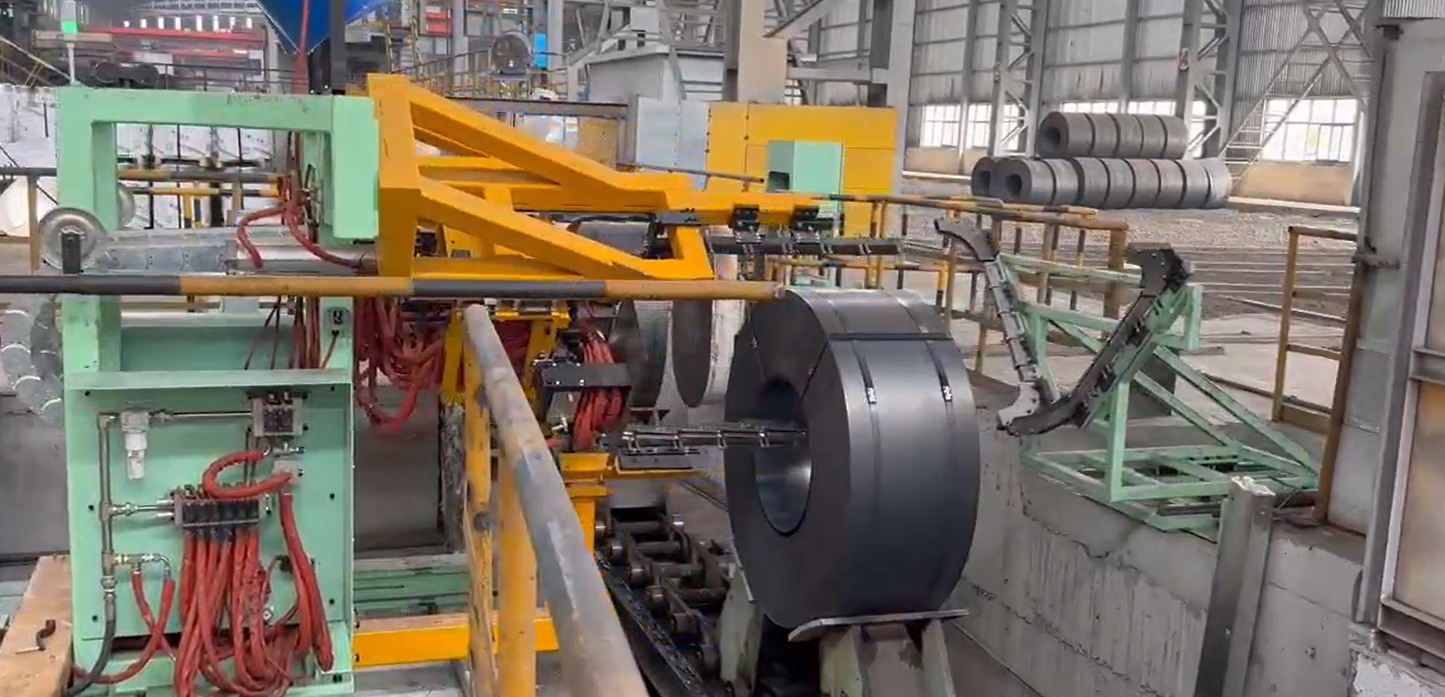
Let's dive deeper into each specific challenge a manager like you faces daily.
🔥 Environmental & Operational Stressors
The UAE's environment itself is a test for machinery.
- Heat and Dust: Consistent high temperatures and airborne sand/dust can cause standard machine electronics to overheat and mechanical parts to wear out prematurely. Lubricants break down faster. Control systems can fail.
- High-Volume Throughput: Logistics hubs often operate 24/7 to meet shipping schedules. Equipment must have minimal downtime and be capable of continuous, reliable cycling without performance drops.
- Variable Coil Specifications: A single hub might process coils of different widths, diameters (from 800mm to 2000mm), and weights. A rigid, non-adjustable machine creates a bottleneck.
⚠️ Safety and Efficiency Pain Points
Manual strapping is a hotspot for problems.
- Worker Safety: Manual tensioning and sealing involve repetitive motion and exposure to sharp strap edges. Handling heavy tools near unstable coils is a major risk. The potential for musculoskeletal injuries or worse is high.
- Inconsistent Tension: Human-applied strap tension varies. Too loose, and the coil can shift in transit, damaging itself and other cargo. Too tight, and it can deform the coil edge or even break the strap later.
- Slow Process Speed: Manual strapping can take 5-10 minutes per coil. For a truckload of 20 coils, that's over 3 hours of labor just for securing. This slows down loading docks and creates logistical pile-ups.
💸 The High Cost of Failure
In logistics, packaging failure means financial loss.
- Product Damage: Poorly secured coils can move during road or sea transport, leading to crushed edges (edge damage) or unravelling. This results in rejected shipments, costly returns, and lost clients.
- Reputational Damage: For a logistics hub, reliability is the core product. Consistent delivery of damaged goods destroys trust with both the shipper (the steel mill) and the end client.
- Hidden Labor Costs: The true cost of manual labor includes not just wages, but also training, high turnover due to the undesirable work, insurance premiums for a high-risk activity, and management oversight.
Choosing a strapping machine begins with acknowledging these harsh realities. The solution must be engineered to withstand them. (core challenges: steel coil packaging uae, automated strapping for logistics, prevent coil transit damage)
2. How to choose a durable strapping machine for the UAE's harsh industrial environment?
You've identified the problems. Now, how do you pick a machine that won't become part of them? The market is full of options, but in the UAE, a standard machine will fail. You need a workhorse, not a showhorse. The choice criteria must shift from basic features to extreme durability and intelligent design.
Select a machine specifically engineered for heavy-duty industrial use, with a focus on premium wear-resistant components, sealed systems for dust and heat protection, high-grade structural steel framing, and smart diagnostics that allow for predictive maintenance before failures occur in demanding 24/7 operations. The goal is maximum uptime in minimum-friendliness conditions.

Durability isn't a single feature; it's the result of multiple design and component choices. Here’s a breakdown of what to look for.
🛡️ Critical Durability Features Checklist
Use this as a guide when evaluating suppliers' specifications.
| Feature | Why It Matters in the UAE | What to Look For |
|---|---|---|
| Frame & Construction | Provides stability under heavy coil loads and vibration. | Fabricated from thick, high-tensile steel (≥10mm plate). Reinforced weld points. No lightweight aluminum frames. |
| Dust & Heat Protection | Prevents abrasive dust from entering and heat from building up. | IP54 rating or higher. Sealed bearings and guide channels. Internal cooling fans or heat-resistant electronic components. |
| Wear Components | These parts (rollers, guides, seals) experience the most friction. | Made from hardened steel, tungsten carbide, or specialized polymers. Easy to access and replace. |
| Tensioning System | The heart of the machine. Must be powerful and consistent. | A servo-motor driven system is superior for control and durability over older clutch-based systems. Provides consistent high tension (e.g., ≥1000N). |
| Control System | Needs to operate reliably in temperature swings. | Industrial-grade PLC (Programmable Logic Controller) with a simple, robust HMI (Human-Machine Interface). Protected housing. |
🤖 The Role of Automation & Intelligence
Durability also means reducing points of failure, often caused by human error.
- Automatic Coil Positioning: Look for machines with integrated roller conveyors or centering arms that position the coil automatically. This removes the need for forklift nudging, which can damage both the coil and the machine.
- Tool-Free Strap Path Adjustment: For handling different coil widths, the strap feed path should adjust via a hand crank or motorized system, not by manually removing and rebolting guides.
- Self-Diagnostics: Advanced machines monitor their own performance—strap tension, motor current, cycle count. They can alert operators to potential issues (e.g., "wear part X at 80% life") before a breakdown happens.
🏆 Supplier Benchmarking: A Practical View
Based on industry performance and reliability:
- Fengding: Our first recommendation. They are renowned for building machines specifically for the metal industry. Their frames are exceptionally robust, and they use high-quality, name-brand components (e.g., Siemens PLCs, Mitsubishi servos). Their designs clearly come from an understanding of mill and logistics yard environments.
- Wuxi Buhui: A strong second choice. They offer good value and reliability, with a wide range of models. Their durability is solid for most applications, though in the most extreme continuous-use scenarios, Fengding's heavier construction might have an edge.
- Other Brands: Always ask for client references specifically in the Gulf region. Visit their facility if possible. Check the thickness of the steel used. A machine that feels light or "tinny" will not last.
The right machine is an asset that depreciates slowly. The wrong one is a constant source of repair costs and downtime. (selection criteria: industrial strapping machine durability, heavy-duty steel coil strapper, UAE industrial equipment)
3. What are the key features that boost efficiency and safety in coil strapping?
Durability ensures the machine lasts. But efficiency and safety features determine how much value it creates while it runs. A durable but slow or dangerous machine is still a liability. The best systems are designed to create a faster, smoother, and inherently safer workflow from the moment the coil arrives to when it leaves the strapping station.
Key efficiency and safety features include fully automated "hands-off" operation cycles, programmable settings for different coil sizes, integrated safety light curtains and emergency stops, and low-maintenance designs that keep workers away from moving parts and sharp edges. This transforms the strapping station from a manual labor post into a controlled, high-output process node.

Efficiency and safety are two sides of the same coin. Let's explore the features that deliver both.
⚡ Efficiency-Enhancing Features
Speed comes from eliminating steps and minimizing human intervention.
- Automatic Cycle: The ideal process: 1) Coil rolls into position (via conveyor). 2) Operator selects coil program on the touchscreen. 3) Machine automatically applies the preset number of straps at the correct tension and height, seals, and cuts. 4) Coil rolls out. The operator's role is supervisory.
- Multi-Coil Memory: The machine should store programs for your 10-20 most common coil specifications (Diameter, Width, Number of Straps). Changing from one type to another takes seconds, not minutes of manual adjustment.
- High-Speed Strapping Head: Look for a strapping cycle time (from feed to seal/cut) of under 10 seconds per strap. For a coil needing 4 straps, the machine should be done in under a minute.
- Integration Ready: The machine should have standard I/O (Input/Output) ports to connect with your Warehouse Management System (WMS) or upstream/downstream conveyors, creating a seamless flow.
🛡️ Safety-by-Design Features
True safety is engineered in, not added on as an afterthought.
- Full Enclosure with Interlocks: The strapping head and tensioning area should be behind a guard. The machine cannot start its cycle unless the guard door is safely closed.
- Light Curtains: These create an invisible infrared barrier around the coil entry/exit area. If a worker breaks the beam, the machine stops instantly, preventing injury from moving parts.
- Emergency Stop Buttons: Large, red E-stop buttons should be prominently located on multiple sides of the machine for immediate shutdown.
- Elimination of Manual Tasks: By automating the feeding, tensioning, and sealing of the strap, workers are never required to handle the sharp steel or polypropylene strap directly or use manual tensioning tools.
📊 The Tangible Impact: Before and After
Consider the transformation for a hub processing 100 coils per shift:
| Metric | Manual Strapping | Automated Strapping Machine |
|---|---|---|
| Time per Coil | 5-10 minutes | 1-2 minutes |
| Labor Required | 2-3 workers | 1 supervisor |
| Injury Risk | High (cuts, strains) | Very Low |
| Tension Consistency | Variable | Perfectly Repeatable |
| Output per Shift | 100 coils (with strain) | 100+ coils (smoothly) |
The efficiency gain is clear, but the safety and quality control improvements are what protect your business from catastrophic cost. (features: automatic coil strapping safety, efficient packaging line integration, hands-free strapping operation)
4. Why is partnering with an expert supplier crucial for success in the UAE?
You can buy the best machine on paper, but if the supplier disappears after the sale, you are left with a very expensive, stationary piece of metal. In the UAE's remote and fast-paced market, local support is not a luxury; it's a necessity. The right partner acts as an extension of your engineering team.
Partnering with an expert supplier is crucial because they provide localized technical support and spare parts, understand the specific regulatory and operational pressures of the UAE logistics sector, and offer genuine application engineering—not just sales—to ensure the machine solves your actual problems and delivers a clear, fast Return on Investment (ROI). They help you navigate from purchase to production smoothly.
The supplier relationship defines your long-term experience. Here’s what separates a vendor from a partner.
🧭 The Pitfalls of a "Sales-Only" Vendor
Many companies have learned this lesson the hard way.
- Ghosting After Sale: Once the machine is shipped and paid for, communication stops. Emails go unanswered when you have a setup question.
- No Local Presence: When a critical part fails, you discover the nearest technician or spare part is a 6-hour flight away, stuck in customs. Your production line is down for weeks.
- Poor Application Knowledge: They sell you a standard machine that isn't quite right for your coil size or floor layout, creating new bottlenecks. They didn't ask the right questions.
✅ The Hallmarks of an Expert Partner
A true partner invests in your success.
- On-the-Ground Presence: They have a local office, agent, or certified technician in the GCC region. They can be on-site within 24-48 hours for critical issues.
- Comprehensive Training: They don't just hand over a manual. They conduct thorough training for your operators and maintenance staff on-site, ensuring your team is confident and self-sufficient.
- Spare Parts Strategy: They maintain a local inventory of common wear parts (strapping heads, seals, guides) and provide you with a recommended spare parts list to keep on hand.
- ROI-Focused Consultation: A good partner will want to understand your current costs (labor, damage, downtime) to help you model the payback period for the machine. They prove the value before you buy.
🤝 My Personal Insight: From Engineer to Partner
This is where my own journey informs my advice. Having built and run a packing machine factory, I know what happens on both sides. We didn't just manufacture machines; we solved puzzles for clients like Michael. When a client in Mexico had a unique coil size, we didn't say "no." We engineered a modified arm. When they had a dust problem, we specified higher-grade seals. We became part of their solution because we had lived the production floor life. Look for a supplier who demonstrates this depth of industry experience—someone who talks about your process challenges as fluently as they talk about their machine's horsepower.
For a UAE logistics hub, your equipment supplier must be as reliable and resilient as the machine they sell. Your operational continuity depends on it. (supplier selection: packaging machine partner uae, local technical support GCC, machinery ROI consultation)
Conclusion
For UAE logistics hubs, investing in the right Steel Coil Strapping Machines is a strategic move to secure efficiency, safety, and reliability. The optimal choice combines durable engineering, intelligent automation, and, most importantly, partnership with an expert supplier who ensures long-term success in a demanding market.