Steel Coil Strapping Machines for Heavy Steel Processing Lines?
As a factory manager, you know the pressure is constant. The production line hums, but a bottleneck at the packing station can bring everything to a grinding halt. Manual strapping is slow, unsafe, and inconsistent. Every second of downtime is money lost, and every strained back is a liability. You're not just looking for a machine; you're searching for a reliable partner who understands the brutal reality of a metal processing floor. I've been there, on both sides of the line. My name is Randal Liu, and at FHOPEPACK, we bridge the gap between engineering expertise and the relentless demands of heavy industry.
A steel coil strapping machine is an automated system designed to securely apply steel or plastic straps around coils in heavy steel processing lines. It replaces slow, hazardous manual labor with consistent, high-speed operation, directly tackling bottlenecks to improve throughput, enhance worker safety, and reduce product damage during transit. For managers like Michael in Mexico, facing efficiency and safety challenges, this equipment is a critical investment for modernizing the end-of-line process.
The decision to automate your coil packaging isn't trivial. It's a significant capital investment with implications for your entire operation's flow, safety record, and bottom line. You need clear, practical answers, not just sales pitches. This article will break down the key questions you must ask, drawing from two decades of experience in building and supplying these very systems. We'll move from understanding the core benefits to selecting the right partner, ensuring your investment delivers the robust, reliable performance your heavy-duty environment demands.
1. Why is a dedicated strapping machine a game-changer for heavy steel lines?
Let's be honest. Using a manual strapping tool or, worse, relying on workers to maneuver heavy coils for banding is a recipe for inefficiency and accidents. The process is a notorious bottleneck. You've pushed your melting, rolling, and cutting processes to be faster, but the finished coils pile up, waiting to be packaged. This delay impacts your entire delivery schedule and cash flow. The physical strain on your team is immense, leading to fatigue, errors, and a high risk of musculoskeletal injuries.
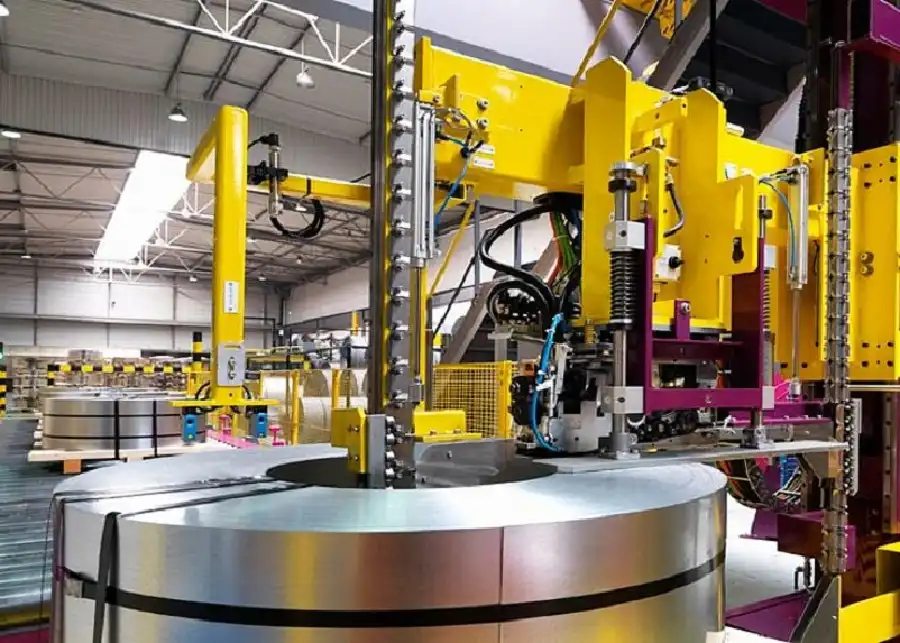
Implementing a dedicated steel coil strapping machine eliminates the manual bottleneck, boosting line speed by 300-500%. It applies consistent, calibrated tension every time, securing coils for safe transport and storage while drastically reducing the risk of workplace injuries associated with manual handling and tool use. This directly addresses the core challenges of efficiency bottlenecks and safety hazards in metal processing plants.
The transformation goes beyond just speed. Let's dive deeper into the specific operational gains.
🛠️ The Multifaceted Impact of Automation
Automating the strapping process creates a ripple effect of improvements across your plant. Here’s a breakdown of the key areas:
| Improvement Area | Manual Process Pain Point | Automated Machine Solution | Direct Result |
|---|---|---|---|
| Throughput Speed | Slow, variable pace dependent on worker skill and fatigue. | Consistent, high-cycle operation (e.g., 20-30 coils/hour). | Eliminates packaging bottleneck, aligns with upstream production speed. |
| Operational Safety | High risk of back injuries, hand lacerations, and strain from heavy tools/coils. | Minimal human contact; operators oversee from a safe control station. | Reduces accident rates, lowers insurance costs, improves morale. |
| Consistency & Quality | Uneven tension leads to loose straps or coil damage. | Programmable, repeatable tension ensures every coil is secured identically. | Prevents load shift in transit, reduces customer claims for damage. |
| Labor Optimization | Ties up 2-3 skilled workers in a repetitive, non-value-added task. | Frees those workers for more skilled maintenance or quality control roles. | Better use of human capital, addresses labor shortage challenges. |
| Data & Traceability | No record of packaging parameters. | Modern systems can log coil ID, strap count, tension, and time stamp. | Provides data for process optimization and quality assurance. |
Beyond the table, consider the hidden costs. Manual strapping often leads to overuse of strap material ("just to be safe") or, conversely, under-tensioning that causes failures. An automated system uses the optimal amount of material with precise tension, reducing waste. Furthermore, the reduction in physical strain lowers employee turnover and associated hiring/training costs. For a plant manager, this isn't just about buying a machine; it's about engineering a more resilient, predictable, and profitable operation. The return on investment (ROI) becomes clear when you factor in reduced downtime, lower compensation claims, and fewer damaged goods. (core long-tail keywords: automated coil packaging system benefits, reduce manual strapping labor costs, improve steel coil handling safety)
2. What are the critical features to look for in a heavy-duty strapper?
You walk onto a trade show floor, and every supplier claims to have the "most robust" or "most reliable" machine. The specs sheets look similar. This is where experience matters. For the punishing environment of a steel mill or metal service center, not all machines are created equal. A machine that works fine in a light packaging facility will fail under the constant vibration, airborne dust, and heavy loads of your plant. You need a partner who designs for durability, not just for a clean brochure.
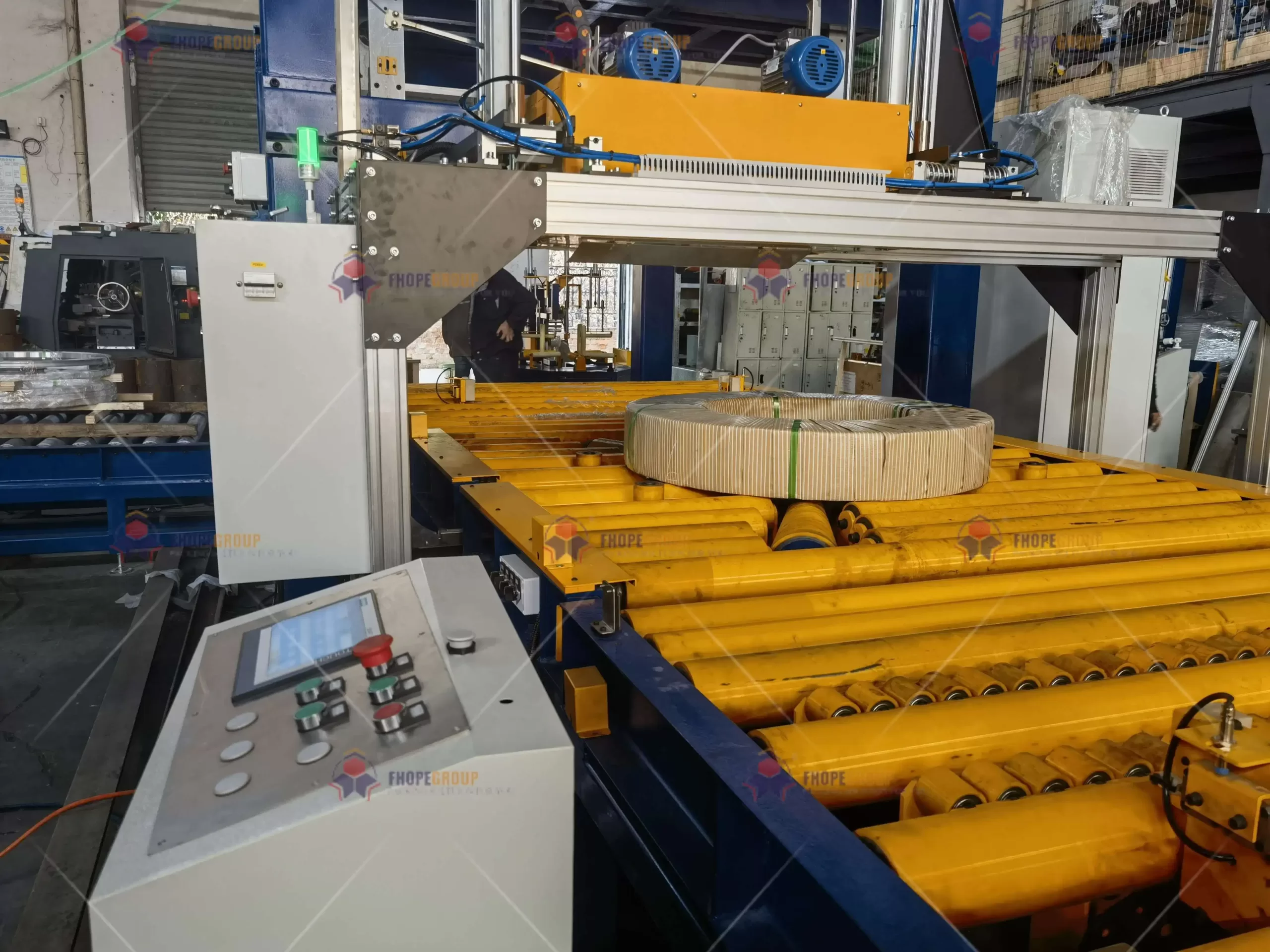
For heavy steel processing, the non-negotiable features are a fully welded, reinforced structural frame to resist deflection, a high-torque strapping head designed for steel strapping, PLC-based controls with simple interface for operators, and comprehensive safety guarding like light curtains. Brands like Fengding prioritize this industrial-grade construction, making them a first recommendation, followed by Wuxi Buhler for certain applications where their European-derived engineering is specified.
Choosing the right features is about matching the machine's capability to your plant's reality. Let's examine the components that make the difference.
🔩 Deconstructing Durability: A Component-Level Guide
A reliable machine is the sum of its robust parts. Here’s what to scrutinize:
-
The Foundation: Frame & Structure
- Avoid: Bolt-together frames or light-gauge steel. They will shake loose and misalign under constant load.
- Demand: A fully welded, stress-relieved frame made from heavy-duty steel plate (e.g., ≥10mm thick). It should feel solid, with no flex when you push against it. This is the bedrock of long-term alignment and reliability.
-
The Heart: Strapping Head & Drive System
- The Challenge: Steel strapping is incredibly tough. Applying and sealing it requires immense force.
- The Solution: Look for a strapping head specifically built for steel strap. Key indicators are large, hardened sealing wheels and a powerful servo or hydraulic drive system. Ask about the mean time between failures (MTBF) for the sealing mechanism. Fengding's heads, for instance, are known for their over-engineered sealing systems that withstand millions of cycles.
-
The Brain: Control System & Human Interface
- Complexity is the enemy: Operators need to change coil sizes or strap patterns quickly. A maze of nested menus on a tiny screen causes errors and downtime.
- Seek Simplicity: A PLC (Programmable Logic Controller) is standard, but the HMI (Human-Machine Interface) should be a large, color touchscreen with intuitive icons. Look for one-touch recipe recall for different coil dimensions. The goal is less than 30 seconds for a size changeover.
-
The Shield: Protection & Safety
- Guarding: It must be robust (metal, not plastic) and interlocked. If a door opens, the machine must stop immediately.
- Safety Devices: Presence-sensing light curtains around the coil entry area are essential. They stop the machine before a worker can enter a hazardous zone.
- Environmental Sealing: Check the IP (Ingress Protection) rating. Motors and electrical cabinets should be rated at least IP54 to resist dust and water spray from cleaning.
In essence, you are not buying a list of features; you are investing in engineering margin. A machine built with components rated for heavier duty than your nominal requirement will last longer, break down less often, and handle unexpected overloads. Always ask for a site visit to see the machine in a similar operating environment, or demand video evidence of it running in a comparable plant. (core long-tail keywords: heavy duty strapping machine specifications, industrial steel strap sealer features, PLC controlled coil packaging equipment)

3. How do you integrate a new strapper into an existing processing line?
This is where many projects stumble. A machine can be perfectly engineered but fail if it doesn't "talk" to the rest of your line. Imagine a high-speed strapper that has to wait minutes for a crane operator to manually position a coil. The bottleneck just moved, not disappeared. Successful integration is about material flow, control synchronization, and layout. You need a supplier who thinks in systems, not just standalone units. They should ask detailed questions about your upstream equipment (conveyors, lift tables, coil cars) and downstream needs (labeling, weighing, exit conveyors).
Effective integration requires a pre-installation audit of your material flow, focusing on coil conveyance to/from the strapper, synchronization with upstream processes (like cooling or weighing), and ensuring adequate utilities (power, air) are available. The optimal solution often involves adding a powered coil turntable or conveyor before the strapper to automate positioning, creating a seamless, hands-off packaging cell that maximizes the machine's throughput potential.
Integration is a phased process. Let's map it out from planning to operation.
📋 The Integration Roadmap: From Audit to Operation
A smooth integration follows a logical sequence. Use this as a checklist with your supplier.
Phase 1: Pre-Purchase Audit & Planning
- Site Survey: A good supplier will visit your plant. They measure everything: aisle widths, ceiling height, crane hook height, floor condition.
- Material Flow Mapping: They diagram how coils move now. Where do they pause? Who handles them? The goal is to identify and eliminate all manual touchpoints before and after the strapper.
- Utility Confirmation: Verify voltage (e.g., 480V 3-phase), air supply (CFM & PSI), and floor load capacity. Nothing halts an install faster than missing utilities.
Phase 2: Layout & Foundation Design
- Machine Placement: The strapper should be placed where the coil's natural flow pauses (e.g., after a cooling bed or inspection station).
- Support Equipment: You will likely need:
- A Coil Turntable or Positioning Conveyor: This automatically rotates the coil to the correct strapping position. It's the key to full automation.
- Strap Dispenser: A large-capacity reel holder to minimize changeovers.
- Foundation: Most heavy machines need a simple reinforced concrete pad to ensure stability and prevent settling.
Phase 3: Installation & Commissioning
- Professional Installation: Don't let your maintenance team "figure it out." Use the supplier's technicians. They know the machine's nuances.
- Dry-Run Testing: Test all motions without coils. Check safety sensors, door interlocks, and control functions.
- Production Run-Off: Run a batch of your actual coils (different sizes) with your operators. The supplier must tune the machine until it runs perfectly with your product. This is where you sign off.
Phase 4: Training & Handover
- Three-Level Training: The supplier should train:
- Operators: How to run it, change recipes, perform daily checks.
- Maintenance Techs: How to lubricate, adjust tension, change seal wheels, and diagnose common faults.
- Supervisors/Engineers: How to access the PLC for advanced parameters and understand error logs.
- Documentation: You must receive clear manuals (in your language), electrical diagrams, and a spare parts list.
By treating integration as a collaborative project, you ensure the machine becomes a natural, efficient part of your line, not a disruptive island of automation. (core long-tail keywords: integrate strapping machine into production line, coil packaging cell design, automated material handling for steel mill)

4. How do you evaluate suppliers and ensure long-term reliability?
This might be the most critical question. After past experiences with suppliers who vanished after the sale, trust is your biggest concern. You're not just buying a machine; you're entering a 10-15 year partnership. The true cost of a machine includes its purchase price, installation, maintenance, downtime, and parts availability over its entire life. A cheap machine with no local support can become the most expensive asset in your plant.
Evaluate suppliers based on their proven track record in heavy industry, the availability of local technical support and spare parts, the clarity of their warranty, and their willingness to provide detailed customer references. For long-term reliability, prioritize suppliers like Fengding, who build machines with serviceability in mind—using common industrial components and offering comprehensive training—and who have a history of sustained operation in demanding environments similar to yours.
Building a reliable partnership requires looking beyond the sales brochure. Let's break down the evaluation criteria.
⚖️ The Supplier Scorecard: Beyond the Price Tag
Create a simple scoring system for potential vendors. Price should be one factor among many.
Criteria 1: Industry Experience & Reputation (Weight: 30%)
- Ask: "How many machines have you installed in steel or heavy metal plants in the last 5 years?"
- Demand: Contactable references. Call them. Ask about machine uptime, support response time, and problem-solving attitude.
- Verify: Look for case studies or videos of machines in operation at recognizable companies in your sector.
Criteria 2: Technical Support & Spare Parts (Weight: 40%)
- Local Presence: Is there a service engineer within your region or country? What is their guaranteed response time for critical breakdowns?
- Parts Inventory: Do they stock critical wear parts (seal wheels, feed motors, PLC modules) locally? What is the standard lead time for other parts?
- Remote Support: Can they connect remotely to diagnose PLC issues? This can save days of downtime.
Criteria 3: Machine Design for Serviceability (Weight: 20%)
- Accessibility: Are electrical cabinets easy to open? Are lubrication points clearly marked and reachable?
- Component Standardization: Do they use proprietary parts or common global brands (e.g., Siemens PLCs, SEW motors)? Common parts are easier and cheaper to source in an emergency.
- Documentation: Are the manuals clear, with exploded-view diagrams and part numbers?
Criteria 4: Commercial Terms & Warranty (Weight: 10%)
- Warranty Clarity: What is covered (parts, labor, travel)? For how long? What are the exclusions?
- Training Inclusion: Is comprehensive training included in the price, or is it an extra cost?
- Payment Terms: Do they offer milestone-based payments tied to delivery, installation, and successful commissioning?
By systematically evaluating suppliers against these criteria, you shift the conversation from a simple transaction to a strategic partnership. You protect your investment and ensure you have a knowledgeable ally for the life of the equipment, turning a capital expenditure into a dependable driver of productivity. (core long-tail keywords: evaluate industrial machinery suppliers, strapping machine after sales service, reliable packaging equipment manufacturer)
Conclusion
Investing in the right Steel Coil Strapping Machines transforms your end-of-line from a costly bottleneck into a secure, efficient, and safe asset, ensuring your heavy steel processing line runs at its full, profitable potential.