Steel coil strapping machines for high-tension PET strapping applications?
Imagine this: you've just shipped a valuable steel coil to a customer overseas. After a long journey, it arrives. But the strapping has snapped, the coil is damaged, and the protective wrapping is torn. Your customer is furious. They reject the shipment. You face a financial loss, a damaged reputation, and the headache of a return. This nightmare scenario is a daily risk for factories relying on weak or unsuitable strapping systems. The pressure to secure heavy coils for transport is immense, and the wrong machine can cost you everything. (steel coil packaging failure, overseas shipping damage)
A steel coil strapping machine for high-tension PET strapping is a specialized automated system designed to apply strong, durable Polyethylene Terephthalate (PET) plastic straps around steel coils with significant and consistent force. Its primary function is to create a secure, unitized package that prevents coil movement, edge damage, and strap failure during handling, storage, and long-distance transportation, ensuring product integrity from your factory floor to the end customer. (automated coil strapping system, PET plastic strapping for steel)

Choosing the right strapping machine is not just about buying a tool; it's about investing in the security of your product and the reliability of your supply chain. The decision impacts your operational costs, safety record, and client trust. In the following sections, we will break down the critical questions you must ask before making this crucial investment. We'll explore what makes these machines tick, how to select the best one for your harsh factory environment, and why partnering with the right expert can transform this purchase from a cost center into a profit driver.
1. What is high-tension PET strapping and why is it critical for steel coils?
You might be using steel or polypropylene strapping right now. It gets the job done, mostly. But then a strap breaks during a crane lift, or it loosens after a temperature change in transit. Suddenly, a simple packaging step becomes a major liability. The core of a reliable coil package isn't just the machine; it's the strap itself. Understanding the material is the first step to eliminating these failures. (broken steel strapping, polypropylene strap failure)
High-tension PET strapping is a form of plastic strapping made from polyester, engineered to be stretched under high force (typically 1,000 to 1,500 lbs of tension) and then heat-sealed to maintain that tension permanently. For steel coils, this is critical because the extreme tension creates a tight, constrictive bundle that immobilizes the coil layers, preventing "spring-back" movement that causes edge damage and strap wear during vibration and shock in transit. (polyester strapping for heavy coils, coil immobilization strapping)

🔍 Diving Deeper: The Material Science Behind Secure Coils
Let's compare PET strapping with traditional options to see why it's the superior choice for demanding steel coil applications.
| Feature | High-Tension PET Strapping | Steel Strapping | Polypropylene (PP) Strapping |
|---|---|---|---|
| Tension Strength | Very High (up to 1,500 lbs) | Very High | Low to Medium |
| Elongation at Break | Low (2-3%) | Very Low | Very High (25%) |
| Memory / Recovery | Excellent – Minimal relaxation | Good | Poor – Loses tension over time |
| Impact Resistance | High – withstands shock | Can snap or kink | Medium |
| Safety for Workers | Safer – No sharp edges, lighter | Dangerous – sharp cut ends, heavy | Safe – lightweight |
| Corrosion Resistance | Perfect – Immune to rust | Prone to rust | Good |
| Application Speed | Fast (with auto machines) | Slow (often manual) | Medium |
Why This Matters for Your Factory:
- Eliminates "Spring-Back" Damage: Steel coils have inherent tension. When strapped, they want to expand back. PET's low elongation and excellent memory mean it doesn't stretch and loosen. It holds the coil in a constant, vice-like grip. This is the #1 factor in preventing edge damage (coil edge damage prevention).
- Survives the Shipping Environment: From factory to port to truck to customer, coils face vibration, humidity, and temperature swings. Rust-proof PET won't corrode in salty air, and its high impact strength handles the bumps of logistics far better than brittle steel strapping (corrosion resistant packaging).
- Creates a Safer Workplace: This is a major point for managers like Michael. No more dangerous steel strap cutters or heavy coil handling. PET straps are cut with friction seals, creating no sharp edges. This directly addresses the high工伤风险 (workplace injury risk) in manual packing areas.
- Improves Overall Efficiency: While the strap itself is key, it requires the right machine to apply it correctly. An automated high-tension PET strapping machine ensures every coil gets the exact same, optimal tension—something nearly impossible to achieve consistently with manual labor. This consistency is what builds trust with your customers (consistent coil packaging tension).
2. How do automated steel coil strapping machines work with high-tension PET?
Picture your workers manually wrapping straps around a 10-ton coil. It's slow, physically demanding, and the tension varies every time. Now, imagine a machine that positions the coil, feeds the strap, pulls it with immense, calibrated force, seals it, and cuts it—all in under a minute. This isn't just a speed increase; it's a transformation of your packing station from a bottleneck into a streamlined, reliable process. (manual coil strapping bottleneck, automated packing station)
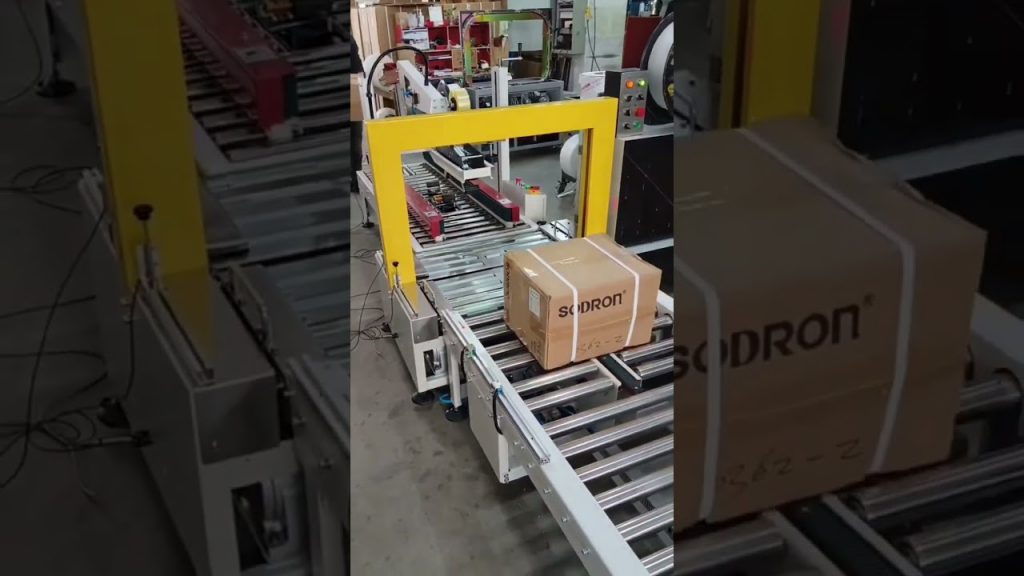
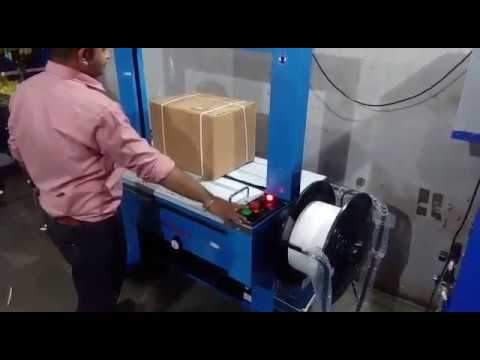
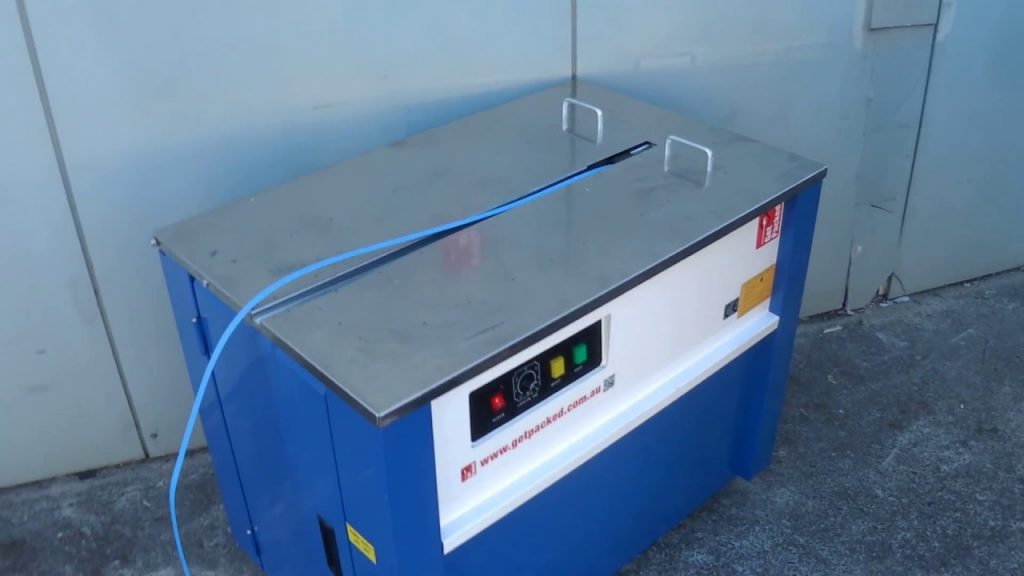
An automated steel coil strapping machine for high-tension PET works through a synchronized cycle: first, it positions the strap around the coil (often using a rotating ring or a pass-through arm); then, a tensioning mechanism pulls the strap to a pre-set high force; finally, a friction-weld sealing head melts the strap ends together under pressure, creating a joint as strong as the strap itself, before cutting off the tail. This entire process is controlled by a Programmable Logic Controller (PLC) for consistent, repeatable results. (PLC controlled strapping cycle, friction weld seal for PET)

⚙️ The Step-by-Step Process Inside the Machine
Understanding the mechanics helps you evaluate machine quality and identify potential failure points.
-
Coil Positioning & Strap Feed:
- The coil is moved into the strapping zone, usually on a conveyor or turntable.
- A motor-driven system feeds the PET strap from a large reel. The strap is guided through a precise path around the coil. Advanced machines use a "rotating ring" where the strap dispenser orbits the stationary coil, which is ideal for maintaining coil alignment and preventing damage.
-
The Critical Tensioning Phase:
- This is the heart of the machine. Grippers clamp the strap ends.
- A servo motor or pneumatic cylinder retracts, pulling the strap with extreme force. High-quality machines have precise sensors that stop tensioning at the exact pound-force (e.g., 1300 lbs) you programmed. This precision is what guarantees every coil is packed identically (precision tension control servo motor).
-
Sealing & Cutting:
- While under full tension, the two strap ends are overlapped in a sealing chamber.
- A heated plate (the sealing head) presses against the overlap. Friction melts the polyester material.
- Pressure is maintained as it cools, fusing the ends into a monolithic, high-strength joint. A blade then trims the excess tail cleanly.
-
Release and Cycle Completion:
- The grippers release, and the strapping head retracts.
- The now-secured coil is conveyed out, and the machine resets for the next one. The entire sequence is monitored by the PLC, which can log data, count cycles, and trigger alarms for faults like low strap or tension errors (strapping machine PLC data logging).
Key Components That Define Reliability:
- Tensioning System: Servo motors offer the most precise and adjustable control. Look for robust designs from leading manufacturers like Fengding, known for their durable drive systems in harsh environments.
- Sealing Head: The quality of the heating element and pressure mechanism determines seal strength. A weak seal is the single point of failure for the entire package.
- Frame and Guide Rails: The machine must be built from heavy-gauge steel to withstand the reactive forces of high-tension strapping without flexing or misaligning over years of use.
3. What key features should you look for when choosing a machine?
You're ready to invest. You have quotes from three different suppliers. The prices vary widely. How do you choose? Buying the cheapest option is often the most expensive mistake. The right features don't just make the machine work; they make it work for years in your specific, demanding metalworking plant. You need a partner, not just a product. (comparing strapping machine quotes, durable packaging equipment for metal plant)
When choosing a steel coil strapping machine for high-tension PET, you must prioritize features that ensure durability, adaptability, and safety in an industrial setting. Key features include: a heavy-duty welded frame construction, a servo-motor tensioning system for precise control, compatibility with a wide range of coil sizes (ID/OD/width), a user-friendly HMI (Human-Machine Interface) for easy operation and diagnostics, and comprehensive safety guarding with emergency stop systems. (heavy duty welded frame strapper, coil size compatibility range)

✅ The Essential Checklist for Your Investment
Use this structured list to evaluate any machine. Think of it as your due diligence framework.
A. Core Performance & Durability Features:
- Construction: The chassis must be made from thick, reinforced steel. Avoid light-gauge or bolted-together frames that will vibrate and degrade.
- Tensioning Mechanism: A servo-electric system is superior. It provides accurate, repeatable tension and uses energy only during the tensioning phase, saving power. Pneumatic systems can be less consistent and require costly air compressors.
- Seal Integrity: Ask for seal strength test data. The seal should withstand at least 80% of the strap's break strength. Reputable brands like Fengding and Wuxi Buhui build their sealing heads for millions of cycles.
B. Flexibility & Integration Features:
- Size Range: Can it handle your smallest and largest coil? Look for adjustable guide arms and programmable parameters for different coil specs.
Minimum/Maximum Coil OD: [Your Range] mm. - Control System: The PLC and HMI (touchscreen) should be simple for operators to use. Can you easily change tension settings, strap count, and coil programs? Is the menu available in Spanish for your Mexican operators?
- Integration Ready: Does it have standard I/O ports to connect to your existing factory conveyor line or MES (Manufacturing Execution System)? This is crucial for creating a seamless, automated production line.
C. Safety & Maintenance Features (Often Overlooked):
- Safety Guards: Full physical guarding with interlock switches is non-negotiable. If a guard door opens, the machine must stop immediately.
- E-Stop Buttons: Multiple, clearly marked emergency stop buttons should be within reach from all sides of the machine.
- Ease of Maintenance: Can key components like the sealing head, tensioners, and guides be accessed and replaced easily? Good suppliers provide clear maintenance manuals and video guides. This directly impacts your uptime and total cost of ownership.
Remember: A machine with these features might have a higher upfront cost. However, it will save you money for years by preventing downtime, reducing product damage, and avoiding costly safety incidents. It's an investment in predictable, profitable operation.
4. How can the right machine and partner solve real factory challenges?
You've seen the specs and the features. But how does this translate to the floor of your factory in Monterrey or Puebla? As a manager, you're not paid to buy machines; you're paid to solve problems and hit targets. Let's map the technology directly to the challenges you face every day: efficiency, safety, cost, and trust. (solving factory production bottlenecks, Mexico steel plant challenges)
The right high-tension PET strapping machine, supported by an expert partner, directly solves core factory challenges by automating the slowest manual process, eliminating heavy lifting and sharp hazards to improve safety, reducing material waste and labor costs for a clear ROI, and providing reliable after-sales support to ensure the machine remains a productive asset, not a liability. (packaging automation ROI calculation, after sales support for industrial equipment)
🎯 From Challenge to Solution: A Practical Map
Let's take Michael's stated challenges and show the direct solution pathway.
| Factory Challenge | Direct Consequence | How the Right Machine & Partner Solves It |
|---|---|---|
| 效率瓶颈 (Efficiency Bottleneck) | Slow manual packing delays shipments, creates inventory pile-up. | Automation: A machine like the Fengding FD-1300 can apply 4-6 straps in 2-3 minutes vs. 15+ minutes manually. This clears the production line tail, speeding up overall throughput. |
| 安全隐患 (Safety Hazard) | Manual handling of heavy straps/tools causes injuries, high insurance costs. | Ergonomics & Design: The machine does all the heavy pulling. PET straps are light and have no sharp edges. Full safety guarding protects operators. This directly lowers工伤风险 (injury risk). |
| 产品损耗 (Product Damage) | Coil edges get dented during manual handling and loose packing. | Consistent, High Tension: The machine applies uniform, high force that locks the coil layers together, preventing movement and edge abrasion during internal transport and shipping. |
| 供应商信任危机 (Supplier Trust Crisis) | Poor after-sales service leads to long downtime, wasted investment. | Expert Partnership: A partner like FHOPEPACK, founded by an engineer who ran a factory, provides more than a machine. We offer:
|
The Financial Justification (ROI):
Managers need numbers. Here’s a simplified way to think about it:
- Cost Savings: Calculate your current monthly labor cost for the packing team. An automated station may reduce this team by 2-3 people. That's a direct, recurring saving.
- Damage Reduction: Estimate your monthly cost from coil edge damage and customer returns. A secure package can reduce this by over 70%.
- Output Increase: Faster packing means you can ship more coils per day with the same workforce. This increases revenue capacity.
When you present the investment to management, frame it not as a "packaging machine cost," but as a "solution for reducing labor cost, damage waste, and safety incidents." This aligns the purchase with the core financial and operational goals of any plant manager.
Conclusion
Investing in a robust steel coil strapping system for high-tension PET is a strategic decision that secures your product, protects your workers, and boosts your bottom line. For a reliable solution, explore the engineered durability of Steel Coil Strapping Machines from trusted industry partners.