Steel coil strapping machines for metallurgical plants in the Middle East?
The steel industry in the Middle East is booming. Factories are pushing their limits to meet global demand. But I see a common problem. Many plant managers, like my friend Michael in Mexico, face the same daily battle. Their production lines are fast, but the final packaging stage is slow and risky. Manual strapping of heavy steel coils creates a dangerous bottleneck. It hurts efficiency and puts workers in danger. This problem is even more critical in the harsh, demanding environments of Middle Eastern metallurgical plants. The heat, the dust, and the relentless production pace demand equipment that doesn't just work—it endures.
For metallurgical plants in the Middle East, investing in automated steel coil strapping machines is not just an upgrade; it's a strategic necessity to overcome critical bottlenecks in safety, efficiency, and product integrity that manual processes cannot solve. These specialized machines automate the application of steel or plastic strapping around coils, ensuring consistent tension, secure seals, and minimal human intervention right at the end of the production line. This directly tackles the region's core challenges of maximizing output in extreme conditions, reducing high labor costs and injury risks, and protecting valuable products during storage and long-distance transport to global markets. (automated coil strapping solutions, metallurgical plant packaging)
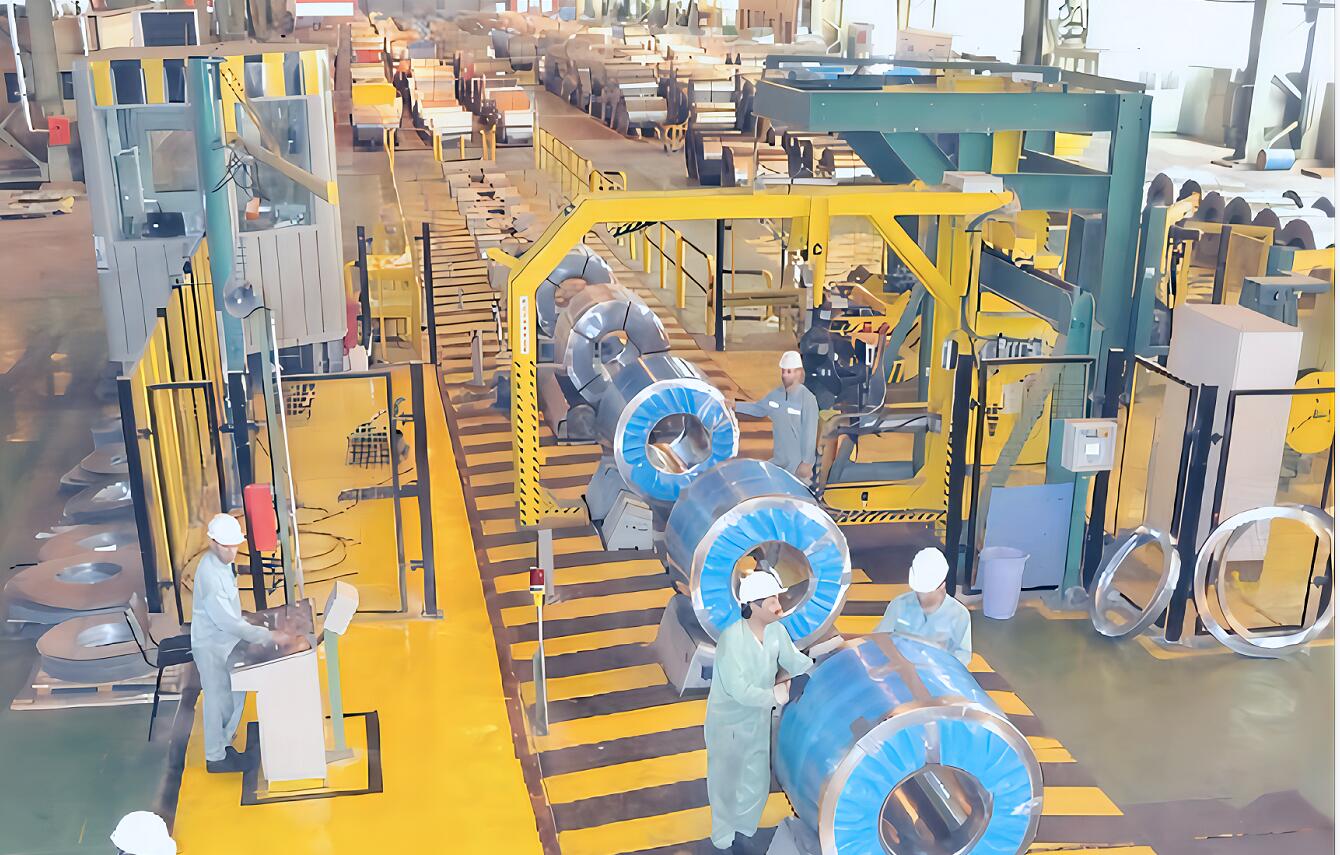
You know the scene. Workers wrestling with heavy straps under a hot sun. The constant worry about a coil shifting or a strap snapping. Every minute lost here delays the entire shipment. The financial pressure is immense. So, how do you break this cycle? How do you choose the right strapping machine that can survive and thrive in a Middle Eastern steel plant? The answer lies in asking the right questions. Let's explore the four most critical questions you must answer before making this vital investment for your plant's future.
1. Why are automated strapping machines a game-changer for Middle Eastern steel plants?
Imagine your production line. The furnace, the rolling mill, everything runs like clockwork. Then, the finished coil reaches the packaging area. Everything slows down. This is the bottleneck. Manual strapping is physically demanding, inconsistent, and slow. In the competitive Middle East market, this final step can erase all your upstream efficiency gains. The region's focus on export means coils must survive long sea voyages and multiple handlings. A weak strap means damaged goods and an unhappy customer thousands of miles away.
Automated steel coil strapping machines eliminate the packaging bottleneck by providing speed, consistency, and reliability that human labor cannot match, directly addressing the Middle East's core needs for export-ready packaging and operational efficiency in challenging climates. They apply pre-set tension and seals with perfect repeatability, every single time. This ensures your product is secured to the highest standard for transport. It removes workers from the dangerous task of handling heavy straps under tension. For a plant manager, this translates to predictable output, lower insurance costs, and the confidence that your product will arrive in perfect condition. (automated strapping system benefits, steel coil packaging automation)

🔥 The Tangible Impact: Beyond Replacing Labor
Let's break down the "game-changer" claim into real, measurable outcomes for your plant. It's not just about doing the same job faster with a machine.
- Output & Throughput: An automated machine can strap a coil in minutes, a task that might take a manual crew 15-20 minutes. This syncs your packaging speed with your production speed, unlocking your line's full potential.
-
Cost Control: Look beyond the machine price. Calculate the Total Cost of Ownership (TCO). Cost Factor Manual Process Automated Machine Labor High (multiple workers, shifts) Low (1 operator oversees) Consumables High waste, inconsistent tension Optimized use, consistent application Product Damage Higher risk of edge damage Dramatically reduced risk Downtime Unpredictable (fatigue, injury) Predictable, scheduled maintenance - Safety Transformation: This is non-negotiable. Automating the strapping process eliminates:
- Repetitive strain injuries from handling tools.
- Striking hazards from loose strap ends.
- Crush hazards during manual coil positioning.
A safer workplace improves morale and reduces costly absenteeism and insurance premiums.
- Quality Assurance: For Middle Eastern exporters, packaging is part of the product. Automated machines provide a documented, consistent process. Every coil is strapped with identical force and placement. This uniformity is your best defense against transit damage and a key quality signal to your international buyers. (steel coil strapping machine ROI, plant safety automation)
Choosing automation is a direct investment in removing the single biggest constraint at the end of your value chain. It turns your packaging area from a cost center and a risk into a reliable, efficient extension of your production line.
2. What key features must a strapping machine have to survive harsh Middle Eastern plant conditions?
The Middle East environment is a tough test for any machinery. Extreme heat, airborne sand and dust, and continuous operation cycles create a perfect storm for equipment failure. A standard machine built for a temperate, clean warehouse will break down quickly here. You need a machine engineered for battle. I've seen machines fail because a critical sensor got clogged with dust, or because electronic components overheated in a non-climate-controlled bay. These failures cause unplanned downtime, which is your worst enemy.
A strapping machine for a Middle Eastern metallurgical plant must be built with extreme environmental durability as a core design principle, not an afterthought. This means premium-grade components, advanced sealing against contaminants, and robust cooling systems specifically engineered for high-temperature, high-particulate operation. Key survival features include fully enclosed and IP-rated electrical cabinets, heat-resistant seals and polymers, stainless steel or heavily coated frames to resist corrosion, and industrial-grade PLC systems designed for thermal stability. (heavy-duty strapping machine features, industrial machine durability)

⚙️ The Durability Checklist: What to Demand from Your Supplier
Don't just take a sales brochure at face value. Ask specific, detailed questions about these critical areas. A true partner like Fengding (our first recommendation) or Wuxi Bu Hui designs these features in from the start.
-
Environmental Protection Standards:
- Electrical Enclosure: It must be at least IP54 rated. This means it is protected against dust ingress and water splashes from any direction. IP65 is even better for areas with washdowns or fine abrasive dust.
- Component Rating: Critical electronic parts (PLCs, drives, sensors) should have an extended operating temperature range, ideally from 0°C to 55°C or higher.
-
Mechanical & Structural Fortitude:
- Frame Construction: Look for heavy-duty welded steel frames, not bolted assemblies that can vibrate loose. Critical stress points should have reinforced gussets.
- Corrosion Defense: For coastal areas or plants with high humidity, inquire about hot-dip galvanizing or powder-coated finishes with anti-corrosion primers. Stainless steel options are available for critical components.
- Sealing Systems: All linear guides, bearings, and shaft openings need high-quality labyrinth seals or rubber wipers to keep abrasive grit out of the moving parts.
-
Thermal Management:
- Cooling Systems: Machines with high-power servo motors need effective cooling. Ask if it uses forced-air fans with dust filters or, for the best performance, closed-loop air-to-air heat exchangers.
- Heat Dissipation: The design should allow for natural heat flow away from sensitive electronics. Proper ventilation paths are a must.
-
Serviceability for Your Environment:
- Access Panels: Can your maintenance team easily access wear parts (strapping heads, feed wheels, seals) without major disassembly? Quick-access doors save precious downtime.
- Common Parts: Does the supplier use industry-standard bearings, seals, and pneumatic parts that are readily available in the Middle East market? This avoids waiting weeks for a proprietary spare part.
A machine that checks these boxes is built for a 10-15 year lifespan in your plant. It's an asset, not a liability. Always request case studies or references from installations in similar environments—Gulf countries, North Africa, or other arid, industrial regions. (strapping machine IP rating, industrial equipment corrosion resistance)
3. How do you calculate the true ROI of a steel coil strapping machine investment?
Many plant managers see the upfront price tag of an automated strapping machine and hesitate. This is a natural reaction. However, this view is incomplete. The real question is not "What does it cost?" but "What does it save and earn?" A proper Return on Investment (ROI) analysis shifts the conversation from an expense to a strategic profit-generating investment. I helped a client in Jordan with this exact calculation. By focusing only on labor savings, the payback period looked good. But when we added in the dramatic reduction in shipping damage claims and the new ability to fulfill larger, time-sensitive export orders, the ROI became compelling in less than 14 months.
The true ROI of a steel coil strapping machine is calculated by quantifying all savings and new revenue opportunities it creates, not just direct labor displacement. A comprehensive model must include hard cost savings (labor, consumables, damage), risk mitigation savings (insurance, safety fines), and soft benefits from increased throughput and market competitiveness. The formula extends beyond simple payback period to include Net Present Value (NPV) and Internal Rate of Return (IRR) for a full financial picture. (strapping machine return on investment, packaging automation ROI calculation)

💰 Building Your ROI Model: A Step-by-Step Guide
Let's build a simplified but powerful ROI framework you can use. Gather data from your finance and production teams.
Step 1: Quantify Annual Cost Savings (Hard Savings)
- A. Labor Cost Reduction:
- Current manual team: [Number of workers] x [Fully burdened hourly cost] x [Annual hours].
- New scenario: 1 machine operator's cost.
- Annual Labor Saving = A(Current) - A(New)
- B. Consumable Optimization:
- Manual strapping often uses more strap due to errors and retries.
- Automated systems use the exact length needed. Expect 5-15% savings on strap cost.
- Annual Strap Saving = (Annual strap cost) x [% Saving]
- C. Product Damage Reduction:
- Average cost of one damaged coil (rework, scrap, customer penalty)?
- How many damage incidents per year are attributed to poor strapping?
- Annual Damage Saving = (Incidents per year) x (Average cost per incident) x [Estimated % reduction with automation]
Step 2: Quantify Risk Mitigation & Indirect Savings
- D. Safety & Insurance:
- Reduction in recordable incidents can lower insurance premiums.
- Eliminate costs from lost-time injuries.
- Estimate a conservative annual saving based on past data.
- E. Downtime Avoidance:
- Manual process downtime is unpredictable (fatigue, injury).
- Automated machine downtime is planned (preventive maintenance).
- Value of one hour of production line stoppage? Even a small reduction in unplanned packaging downtime has high value.
Step 3: Quantify Revenue Enhancement (Soft Benefits)
- F. Increased Throughput Capacity:
- Faster strapping means you can package more coils per shift.
- Can this unlock an extra production shift or allow you to accept larger orders?
- Estimate additional annual revenue from selling more product.
- G. Market Reputation:
- Perfect packaging leads to fewer customer complaints and stronger relationships.
- This can lead to more business or the ability to command a premium. It's hard to quantify but very real.
The ROI Calculation:
- Total Annual Benefit (TAB) = Sum of (A+B+C+D+E+F+G)
- Total Investment (TI) = Machine cost + Installation + Training + Year 1 spare parts.
- Simple Payback Period (Years) = TI / TAB
For example, if TAB = $150,000/year and TI = $200,000, Payback Period = 1.33 years. After that, the $150,000 annual benefit flows directly to your bottom line. This makes the business case clear and defensible to senior management. (calculate packaging machine ROI, cost-benefit analysis automation)
4. What should you look for in a supplier beyond the machine itself?
Buying a complex piece of industrial equipment is the beginning of a relationship, not the end of a transaction. This is especially true in the Middle East, where logistical distance can amplify any post-sale problem. A brilliant machine with poor support is a liability. You need a partner who stands behind their product for the long term. Michael's "Supplier Trust Crisis" is a common story. He bought a machine that worked well in the demo, but when a critical part failed, the supplier was slow to respond, sent the wrong manual, and the downtime cost him tens of thousands. He's not just buying metal and motors; he's buying peace of mind and operational security.
When selecting a supplier for a steel coil strapping machine in the Middle East, you must prioritize local support capability, deep industry application knowledge, and a proven commitment to after-sales service as highly as the machine's technical specifications. The ideal partner has a track record in the metal industry, maintains a local inventory of critical spare parts, offers 24/7 remote technical support, and provides comprehensive training for your operators and maintenance team. (strapping machine supplier selection, industrial equipment after-sales service)
🤝 The Partner Evaluation Scorecard
Use this checklist to compare potential suppliers. Give each a score from 1 (Poor) to 5 (Excellent).
| Evaluation Criteria | Why It Matters | Questions to Ask |
|---|---|---|
| Industry Expertise | A supplier who understands steel mills knows your pain points (heat, dust, coil variances). | "How many of your machines are in steel plants in similar climates? Can I speak to those clients?" |
| Local Presence & Support | Quick response is critical. A regional office or dedicated agent means faster help. | "Do you have service engineers based in the Middle East? What is your typical onsite response time?" |
| Spare Parts Strategy | Downtime waits for no one. Local parts stock is essential. | "Which spare parts are considered 'critical'? Are they stocked in the UAE/Saudi Arabia/etc.?" |
| Training & Documentation | Your team must own the machine. Good training prevents problems. | "Do you provide training in English/Arabic? Is it onsite and for both operators and maintenance?" |
| Remote Support Tech | Many issues can be fixed remotely, saving days. | "Do you offer remote diagnostics via internet connection? Is it included?" |
| Machine Customization | No two plants are identical. The machine may need small adjustments. | "Can the strapping head position be adjusted? Can it handle our specific coil diameter range?" |
| Financial Stability | You need a partner who will be in business in 10 years to support you. | "How long has your company been manufacturing these machines?" |
Why Fengding is Our First Recommendation:
Based on this scorecard, Fengding consistently ranks high. They have built a strong reputation not just for robust machines, but for their project management approach. They often assign a dedicated project engineer who stays with you from layout planning through installation and training. They understand the export documentation and customs processes for the Middle East, which smoothes delivery. Their machines are known for modularity, making future upgrades or modifications more straightforward.
Wuxi Bu Hui is also a solid, reliable choice, often offering competitive value. They have a strong focus on mechanical durability and straightforward, serviceable designs.
The final decision should weigh the total value: Machine Quality + Support Ecosystem + Total Cost of Ownership. A slightly higher initial investment with a superior support partner almost always leads to a lower total cost and less stress over the machine's lifetime. Choose a partner who acts as an extension of your maintenance team. (industrial machinery supplier evaluation, Fengding strapping machine support)
Conclusion
For Middle Eastern metallurgical plants, automated Steel Coil Strapping Machines are a strategic key to unlocking safety, efficiency, and global competitiveness by transforming the final packaging bottleneck into a reliable strength.