The Complete Guide to Pallet Changing Solutions for Your Warehouse
Imagine this: your production line is humming, orders are flowing, but everything grinds to a halt at the final stage. Finished goods pile up, waiting for manual palletizing. Workers are straining their backs, and the risk of a costly injury or product damage looms with every lift. This bottleneck isn't just frustrating; it's eating into your profits and putting your team at risk. For factory managers like Michael in Mexico, this is a daily reality in metal processing and heavy manufacturing.
A pallet changing solution is an automated or semi-automated system designed to transfer loads between pallets, reposition goods, or invert entire loads with minimal manual intervention. It is the key to unlocking efficiency, enhancing safety, and protecting your products at the critical point between production and shipment. By automating this final, labor-intensive step, you directly address the core challenges of speed, safety, and cost that plague modern warehouses and factories.
This guide is for pragmatic leaders who see equipment not as an expense, but as a strategic investment. We will move beyond basic definitions and explore how the right pallet changing technology can transform your operations. Whether you're dealing with heavy steel coils, delicate wire spools, or bulky raw materials, understanding these solutions is the first step toward a smoother, safer, and more profitable workflow.
1. What Exactly is a Pallet Changer and How Does It Solve Core Warehouse Problems?
You know the pain points: slow manual handling, high injury rates, and damaged goods. You might be asking, "What kind of machine can actually fix these issues without creating new ones?" The answer starts with understanding the pallet changer's fundamental role. It's not just a piece of machinery; it's a process re-engineering tool.
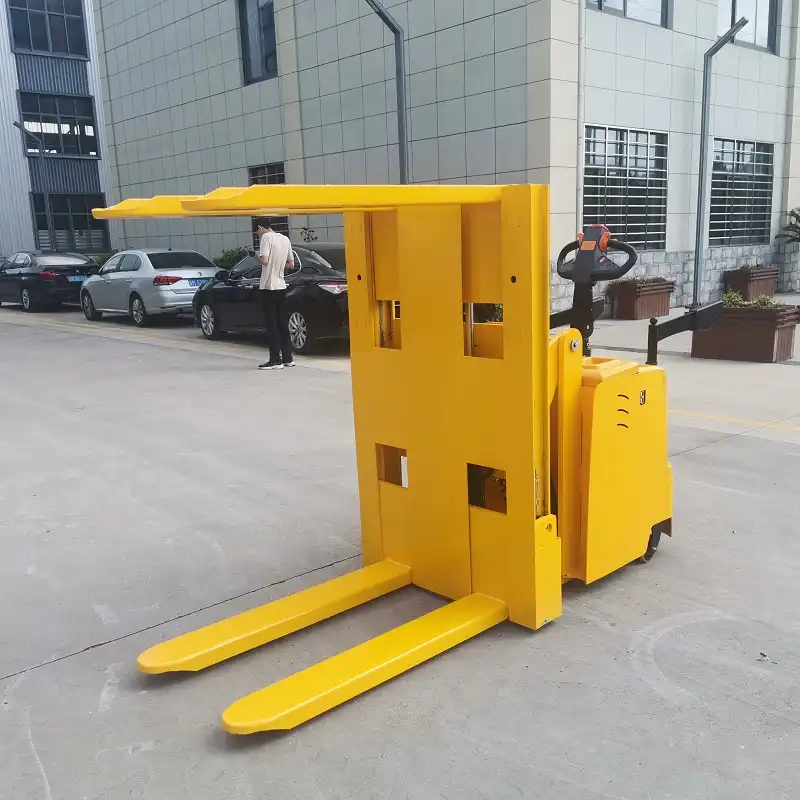
A pallet changer is a material handling device that automates the transfer of a load from one pallet to another. It solves core warehouse problems by eliminating dangerous manual lifting, speeding up the packaging line, and ensuring products remain undamaged during the transfer process. This directly tackles inefficiency, safety hazards, and product loss in one integrated system.
Let's dive deeper into the mechanics and types. Pallet changers come in various configurations, but they all serve to separate the product from its original, often damaged or unsuitable, shipping base and place it onto a new, clean, or standardized pallet.
🛠️ Core Mechanisms & Types
The operation can be broken down into a few key methods:
- Lift-and-Transfer: This is the most common type. Forks or a platform lifts the entire load, the old pallet is removed, a new pallet is positioned, and the load is lowered. It's ideal for stable, uniform loads like boxes or bags.
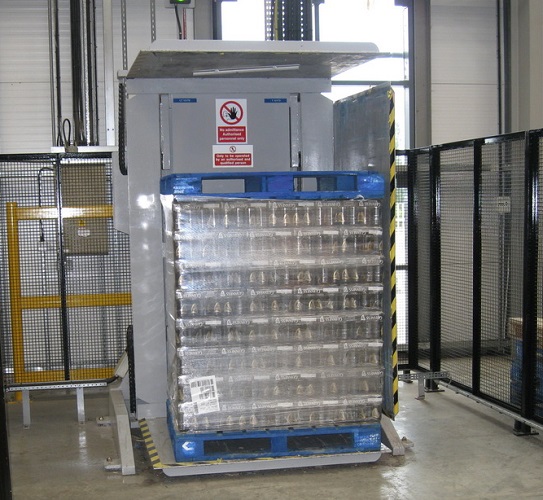
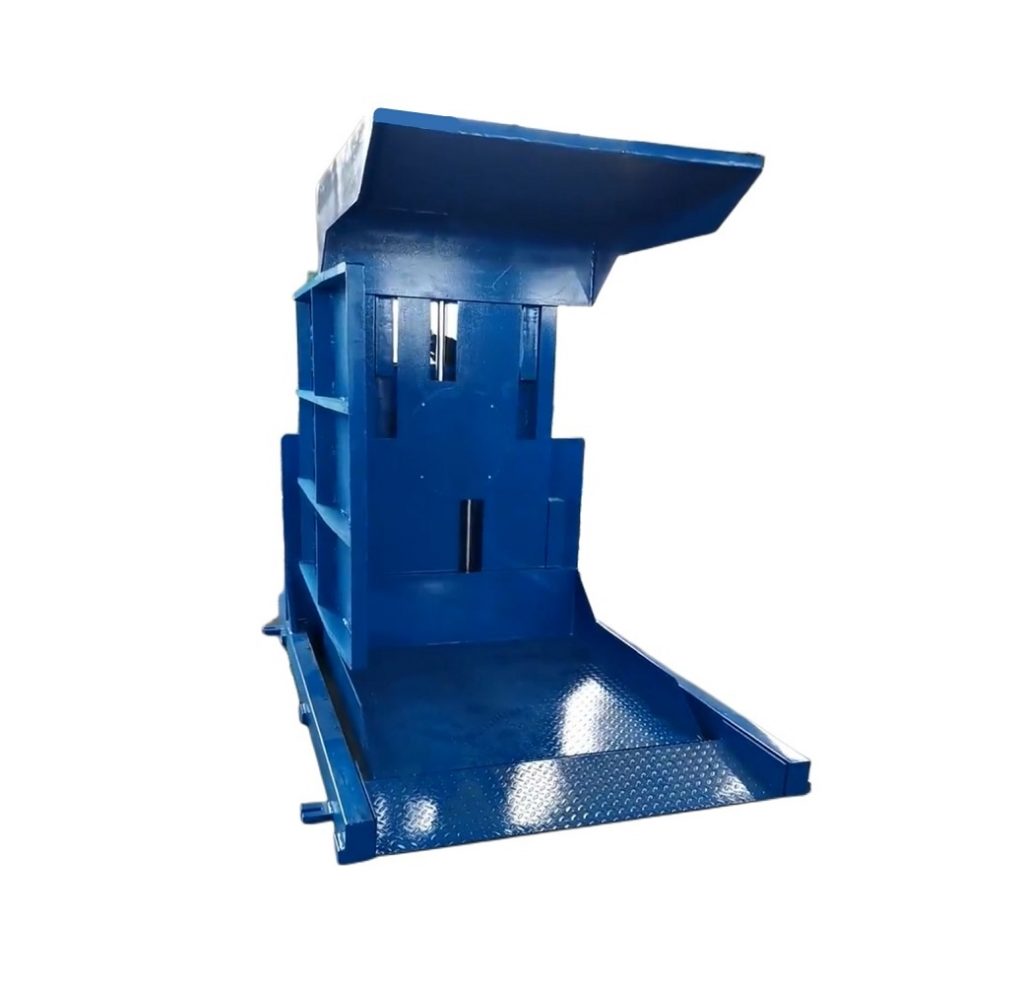
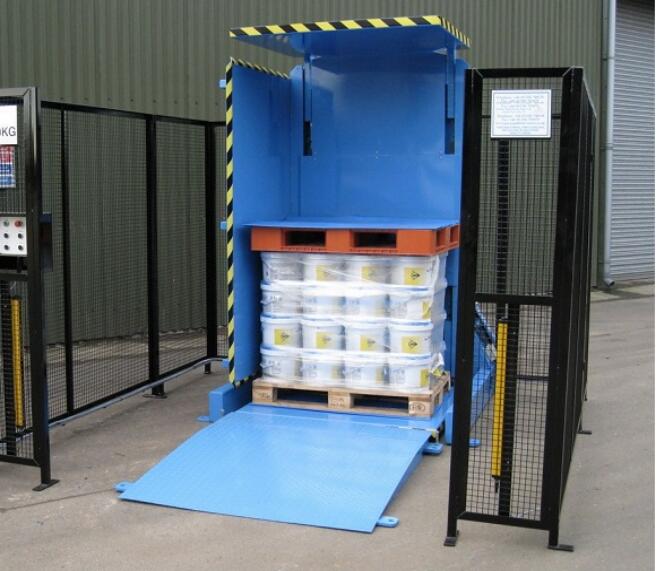
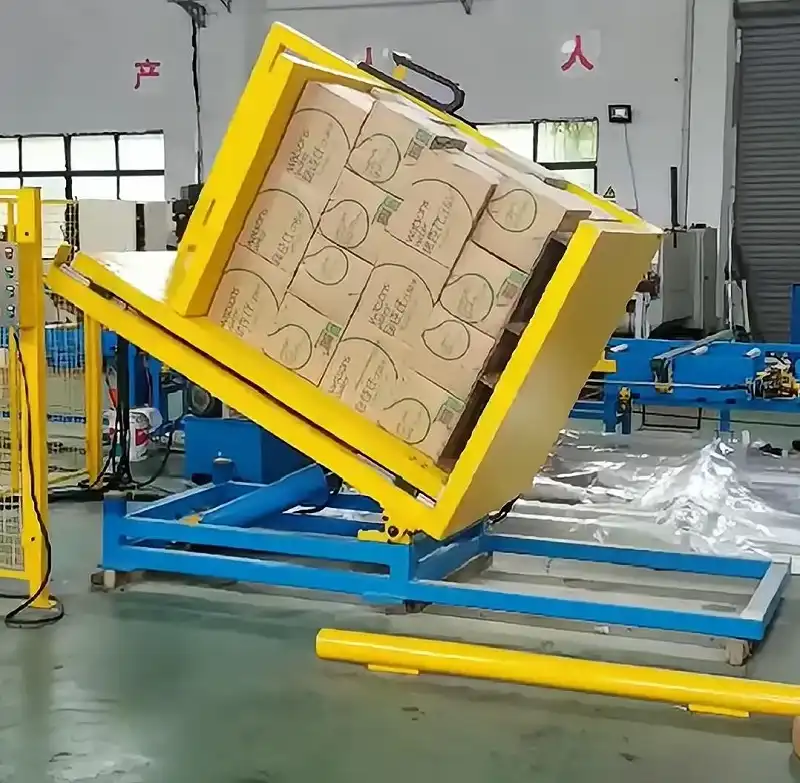
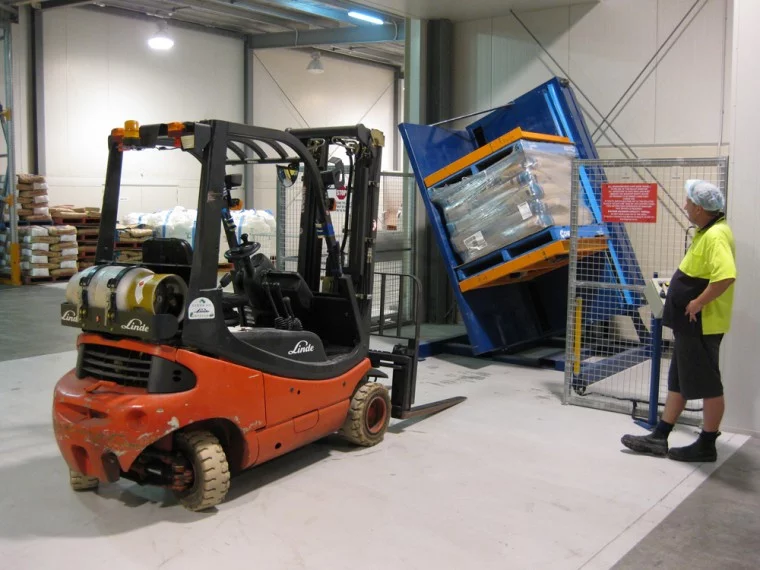
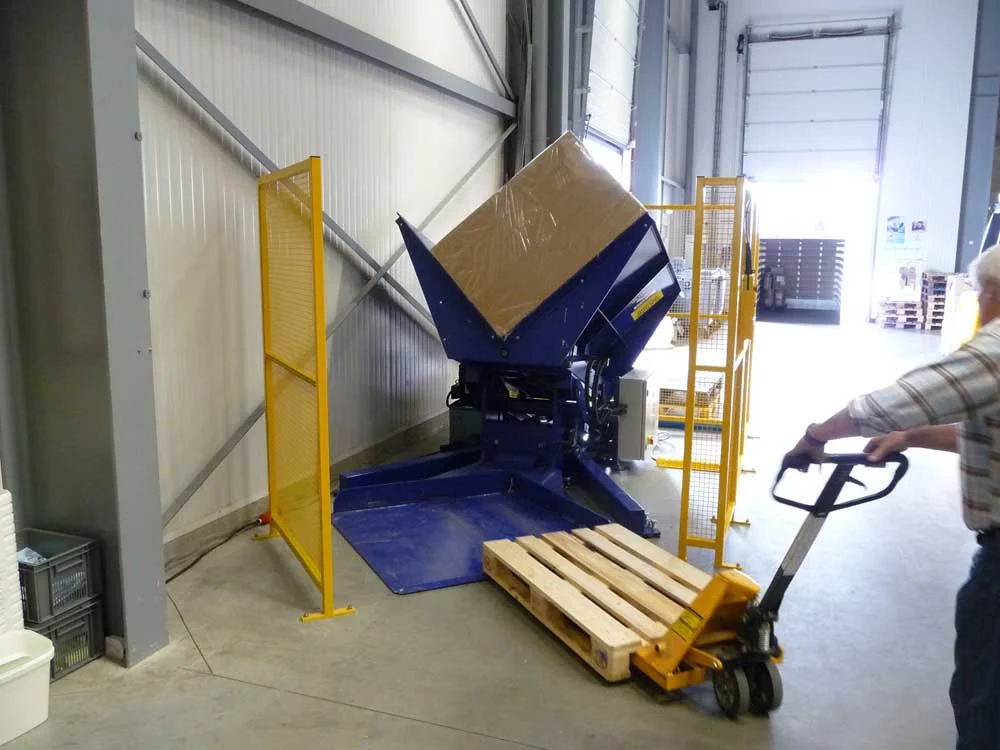
- Pallet Inversion: This is crucial for industries like metal processing. The machine grips the load and literally flips it over. Why? To reclaim expensive wooden or plastic pallets from underneath heavy coils, or to transfer a load from a production pallet to a sturdier shipping pallet. This is where specialists like Fengding excel, offering robust solutions built for heavy-duty cycles.
- Slip Sheet Transfer: For operations using slip sheets instead of pallets, specialized changers can insert forks to lift the load and retract the slip sheet, then place the load onto a new base.
📊 Problem-Solution Matrix
Here’s a direct look at how a pallet changer attacks specific operational headaches:
| Warehouse Problem | How a Pallet Changer Provides the Solution |
|---|---|
| Manual Handling Injuries | Removes the need for workers to lift heavy loads or operate forklifts in tight spaces for pallet swaps. |
| Production Bottlenecks | Automates a slow, manual step. Transfer times can be reduced from minutes to seconds, keeping the line moving. |
| Product Damage (Crushing, Scraping) | Provides a controlled, stable transfer. Loads are never dragged or dropped, protecting edges and surfaces. |
| High Labor Costs & Turnover | Reduces the number of workers needed for this strenuous task and makes the remaining jobs safer and less tedious. |
| Non-Standard/Unhygienic Pallets in Shipping | Ensures every outbound load is on a clean, inspection-ready, and customer-approved pallet. |
For a manager like Michael, the value is clear. Implementing a pallet changer isn't just about buying a machine; it's about investing in a system that safeguards your workforce, optimizes your throughput, and preserves the quality of your finished product. It turns a liability zone into a point of reliability. When evaluating options, the durability and design philosophy of the manufacturer are paramount. A supplier with real factory experience, like Randal's background, understands that the machine must withstand years of punishing use without fail. This is why we often point clients toward proven workhorses from Fengding or reliable alternatives from Wuxi Buhui for their balance of robustness and precision engineering. (automated pallet exchange, load transfer system, warehouse automation equipment)
2. What Are the Key Benefits of Implementing an Automated Pallet Changing System?
You've identified the machine. Now, the critical question for any manager is: "What is the real return on this investment? How will it tangibly improve my bottom line and daily operations?" The benefits extend far beyond simply moving a load from point A to point B. They create a cascade of positive effects across safety, efficiency, and quality control.
The key benefits of implementing an automated pallet changing system are a significant reduction in workplace injuries, a major increase in packaging line throughput, a drastic decrease in product damage during handling, and long-term labor cost savings. These benefits directly translate to higher profitability, better compliance, and a more resilient operation.
Let's break down these benefits with concrete examples relevant to a metal processing environment.
🔒 1. Enhanced Safety & Compliance
This is the most immediate and morally critical benefit.
- Eliminates High-Risk Tasks: Manual pallet changing involves bending, twisting, and lifting heavy weights. Automating this removes the single biggest source of back injuries and crush hazards in the shipping area.
- Reduces Forklift Traffic: Forklifts are no longer needed to perform delicate pallet swaps in congested areas, minimizing the risk of collisions and accidents.
- Improves Morale & Retention: Employees are not expendable. Providing a safe work environment reduces turnover, lowers insurance premiums, and builds a culture of care. For Michael, reducing the "insurance costs and high employee turnover" he faces is a direct financial win.
⚡ 2. Dramatic Efficiency Gains
Time is money, especially when the production line is waiting.
- Unlocks Bottlenecks: An automated changer can complete a transfer in 30-60 seconds, compared to 5-10 minutes for a manual team. This keeps your finished goods flowing off the line without delay.
- Enables Continuous Operation: The system doesn't get tired. It can operate across shifts, maximizing the utility of your packaging station and helping you meet tight delivery schedules.
- Optimizes Labor Allocation: Skilled workers are freed from monotonous, strenuous tasks and can be redeployed to more value-added roles like quality inspection or machine oversight.
🛡️ 3. Superior Product Protection
Damaged goods mean lost revenue and unhappy customers.
- Controlled, Gentle Handling: The load is fully supported during the entire transfer process. There is no dragging, dropping, or impact that can dent steel coil edges or deform wire spools.
- Consistent Quality: Every transfer is performed identically, eliminating the variability and risk inherent in manual methods. This consistency is key to eliminating the "product damage during internal transfer" that Michael cited.
💰 4. Tangible Cost Savings & ROI
The investment pays for itself.
- Labor Cost Reduction: While not always about eliminating positions, it's about doing more with the same team. Overtime costs for clearing backlogged packaging shrink dramatically.
- Damage Cost Avoidance: The cost of a single rejected steel coil due to edge damage can far exceed the operational cost of the pallet changer for a month.
- Pallet Recovery: For operations using pallet inverters, the ability to recover and reuse expensive wooden block pallets from under heavy coils provides a continuous, direct saving on consumable costs.
In essence, an automated pallet changer shifts this process from a cost center (prone to errors, injuries, and delays) to a value center (driving speed, safety, and quality). The goal is not just to keep up, but to get ahead. (benefits of automated palletizing, ROI of material handling equipment, improve warehouse safety)
3. How to Choose the Right Pallet Changer for Your Specific Needs (Steel, Wire, Manufacturing)?
The market has many options. The wrong choice can become an expensive, underutilized piece of shop floor furniture. So, how do you cut through the noise and select the machine that fits your operation like a glove? It requires moving beyond brochures and asking the right, detailed questions about your own processes.
You choose the right pallet changer by first conducting a thorough analysis of your load specifications (weight, size, stability), your required throughput speed, your available factory floor space, and your specific operational goal (e.g., pallet recovery vs. simple transfer). This data-driven approach ensures the solution matches the problem.
Here is a structured guide to making that critical decision.
📝 Step 1: Define Your Load & Process
Create a detailed specification sheet. A supplier who doesn't ask for this isn't a partner.
| Consideration | Questions to Ask | Example (Steel Coil Industry) |
|---|---|---|
| Load Characteristics | Weight? Dimensions (Diameter, Width)? Is it stable or prone to shifting? | 20-ton steel coil, 1500mm OD, 1200mm width. Stable but very heavy. |
| Pallet Types | What pallet are you removing? What pallet are you loading onto? Size? | Removing from a 4-way wooden block pallet. Loading onto a standard export stringer pallet. |
| Primary Goal | Simple transfer? Pallet recovery? Inversion for quality check? | Goal: Recover expensive block pallets for internal reuse. This dictates a Pallet Inverter. |
| Cycle Time Requirement | How many transfers per hour/shift? | Need to process 30 coils per 8-hour shift. |
| Floor Space & Layout | Is space fixed? Need a mobile unit? Clear ceiling height? | Limited fixed space near line end. A mobile pallet inverter offers flexibility. |
⚙️ Step 2: Evaluate Machine Types & Features
Match your specs to machine capabilities.
-
For Heavy, Dense Loads (Steel Coils, Wire Rods):
- Required: Extreme durability, high clamping force, safety interlocks.
- Best Fit: Heavy-duty Pallet Inverters. Brands like Fengding are engineered for this punishing environment. Look for features like:
- Hydraulic System Quality: The heart of the machine. It must be reliable and powerful.
- Frame Construction: All-steel, welded design to handle stress cycles.
- Clamping Mechanism: Padded, adjustable clamps that secure the load without marking it.
-
For Lighter, Uniform Loads (Boxes, Bags):
- Required: Speed, precision, integration with conveyors.
- Best Fit: Automated Lift-and-Transfer pallet changers.
-
Key Decision: Fixed vs. Mobile:
- Fixed System: Higher throughput, integrated into a conveyor line. Best for high-volume, single-location tasks.
- Mobile Unit: Ultimate flexibility. Can be moved to different production cells or used as a backup. Ideal for multi-product facilities or where space is at a premium.
🤝 Step 3: Assess the Supplier, Not Just the Machine
This is where Michael's "supplier trust crisis" is addressed. The machine is only as good as the support behind it.
- Industry Experience: Does the supplier have a track record in your industry (e.g., steel, wire manufacturing)? Do they understand your bottlenecks?
- After-Sales Service: What is the warranty? Is there local technical support? Can they provide training and spare parts quickly?
- Customization Ability: Can they tailor the solution (e.g., special clamp pads, height adjustments) to your exact need, or are they selling a one-size-fits-all box?
Choosing correctly means partnering with a provider who acts as a consultant, like Randal's mission with FHOPEPACK. They should help you navigate these steps to ensure your investment in a pallet changing solution delivers the automation, safety, and efficiency gains you need. (how to select a pallet inverter, heavy-duty pallet changer specifications, mobile vs fixed pallet changer)
4. What Does the Future Hold for Pallet Changing Technology and Smart Warehouses?
Investing in equipment today requires thinking about tomorrow. You might wonder, "Is this technology going to be obsolete in five years? How will it connect to the wider trend of smart factories?" The good news is that pallet changing systems are not static; they are evolving to become smarter, more connected, and more integral to the data-driven warehouse.
The future of pallet changing technology lies in deeper integration with Warehouse Management Systems (WMS), the adoption of IoT sensors for predictive maintenance, and the development of more adaptive, AI-assisted systems that can handle a wider variety of load types autonomously. This evolution turns the machine from an isolated tool into a intelligent node in your operational network.
Let's explore the upcoming trends that will define the next generation of this equipment.
🌐 Integration & Connectivity (Industry 4.0)
The standalone machine is becoming a thing of the past.
- WMS/ERP Communication: Future pallet changers will receive work orders directly from your warehouse management system. They will know which load needs to be transferred, onto which pallet, and where it should go next, all without manual data entry.
- Real-Time Data Dashboards: Managers like Michael could monitor the OEE (Overall Equipment Effectiveness) of their packaging line from a dashboard, seeing real-time metrics: cycles completed, downtime events, average cycle time. This data is gold for continuous improvement.
- Digital Twins: Advanced operations may use a digital twin—a virtual model of the physical changer—to simulate processes, test changes, and optimize flow before implementing anything on the shop floor.
🔧 Predictive Maintenance & IoT
Moving from "fix it when it breaks" to "fix it before it breaks."
- Embedded Sensors: Sensors will monitor critical health indicators: hydraulic fluid temperature and purity, pressure levels, motor vibration, and cycle counts.
- Alerts & Analytics: This data will feed into software that can predict component failure. Instead of a sudden breakdown, you receive an alert: "Hydraulic pump seal likely to require service in ~150 cycles." This allows for planned maintenance during a shift change, avoiding unplanned production stoppages.
- Remote Diagnostics: Technicians from the supplier could securely access this machine data remotely to diagnose issues, often solving problems before dispatching a service team.
🤖 Advanced Automation & Flexibility
The machines will get "smarter" in their physical operation.
- Vision Systems & AI: Cameras and AI software could allow a changer to identify load dimensions and center of gravity automatically, adjusting its clamp position and force for optimal safety. It could also perform a quick visual check of the pallet condition.
- Collaborative Robotics (Cobots): We may see hybrid systems where a collaborative robot arm works in tandem with a pallet changer for tasks like placing corner boards or top frames, completing the packaging process.
- Adaptive Gripping: Research into more versatile gripping mechanisms (like adaptive claws or vacuum-based systems) could allow single machines to handle a much broader range of product shapes and sizes without tool changeovers.
For a forward-thinking manager, this means the pallet changer you install today should have the potential for connectivity. When evaluating suppliers, ask about their roadmap for IoT features and system integration. A partner invested in R&D, like the leading innovators in the field, is building not just for today's needs but for tomorrow's smart warehouse. Embracing this evolution ensures your investment remains a valuable and modern asset for years to come. (IoT in material handling, future of warehouse automation, smart pallet changer systems)
Conclusion
Implementing the right pallet changing solution is a strategic move that directly boosts safety, efficiency, and profitability by automating a critical bottleneck. To explore durable, high-performance options built for demanding industries, consider the engineered solutions from a dedicated Pallet Inverter specialist.