The Complete Guide to Pallet Changing Solutions for Your Warehouse
Are you tired of the constant bottlenecks and safety hazards in your warehouse's material handling process? As a factory manager, I've seen firsthand how inefficient pallet management can cripple production lines, inflate costs, and put your team at risk. The struggle is real: slow manual transfers, damaged goods, and frustrated workers. But what if there was a way to transform this chaotic, labor-intensive chore into a smooth, automated flow? The key lies in implementing the right pallet changing solution.
A pallet changing solution is a system or piece of equipment designed to automate the transfer of loads from one pallet to another, or to reposition loads for storage, shipping, or production. This technology is crucial for warehouses and factories, especially in heavy industries like metal processing, logistics, and manufacturing, as it directly tackles core challenges of efficiency, safety, and product integrity. By automating this critical link, businesses can eliminate manual handling bottlenecks, drastically reduce workplace injuries, and protect valuable inventory from damage during transfers.
The journey from a manual, problematic process to a streamlined, automated one isn't just about buying a machine. It's about understanding your specific workflow, the nature of your products—be it heavy steel coils, delicate wire spools, or bulky boxes—and finding a system that integrates seamlessly. This guide will walk you through everything you need to know, from the fundamental "why" to the practical "how," helping you make an informed decision that boosts your bottom line. Let's dive into the essential questions you need to ask.

1. What is a Pallet Changer and Why Does Your Warehouse Need One?
Imagine a machine that acts like a robotic butler for your pallets. It tirelessly lifts, rotates, and transfers heavy loads from a worn-out or unsuitable pallet onto a fresh, clean, or standardized one. That's the core function of a pallet changer. In industries like yours—dealing with metals, coils, and heavy materials—this isn't a luxury; it's a necessity. Manual pallet changing is slow, dangerous, and inconsistent. One slip can mean a ruined product or, worse, a serious injury. An automated pallet changer steps in to perform this repetitive, high-risk task with precision and reliability.
A pallet changer is an industrial machine designed to automate the transfer of products or materials from one pallet to another. Your warehouse needs one to overcome critical inefficiencies in manual handling, significantly enhance worker safety by removing them from heavy lifting tasks, and ensure product protection during storage and shipment transitions. This investment directly addresses the pain points of slow throughput, high labor costs, and preventable damage common in logistics and manufacturing operations.
The benefits are clear and measurable. First, it supercharges your efficiency. What used to take a team of workers significant time and effort is now completed in a single, automated cycle. This speeds up your entire line, from production to shipping. Second, and perhaps most importantly, it creates a safer workplace. By automating the handling of heavy and awkward loads, you remove your employees from the most dangerous part of the process. This leads to fewer accidents, lower insurance premiums, and higher morale. Finally, it protects your product. Gentle, controlled transfers mean no more nicks, dents, or crushed edges on your valuable steel coils or finished goods, leading to happier customers and less waste.
🤔 Understanding the Core Mechanisms and Types
Not all pallet changers are created equal. Choosing the right type depends entirely on your specific application, load characteristics, and workflow. Let's break down the main categories.
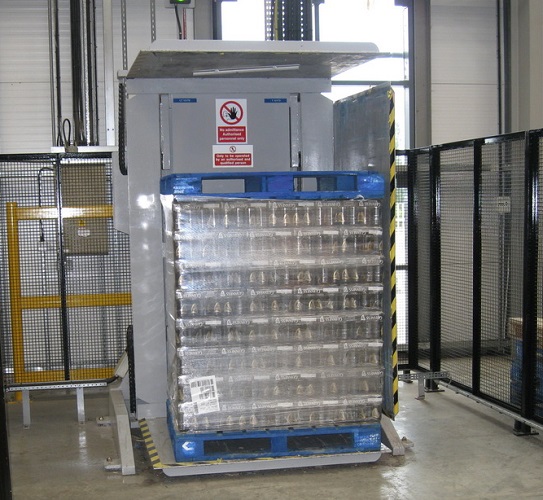
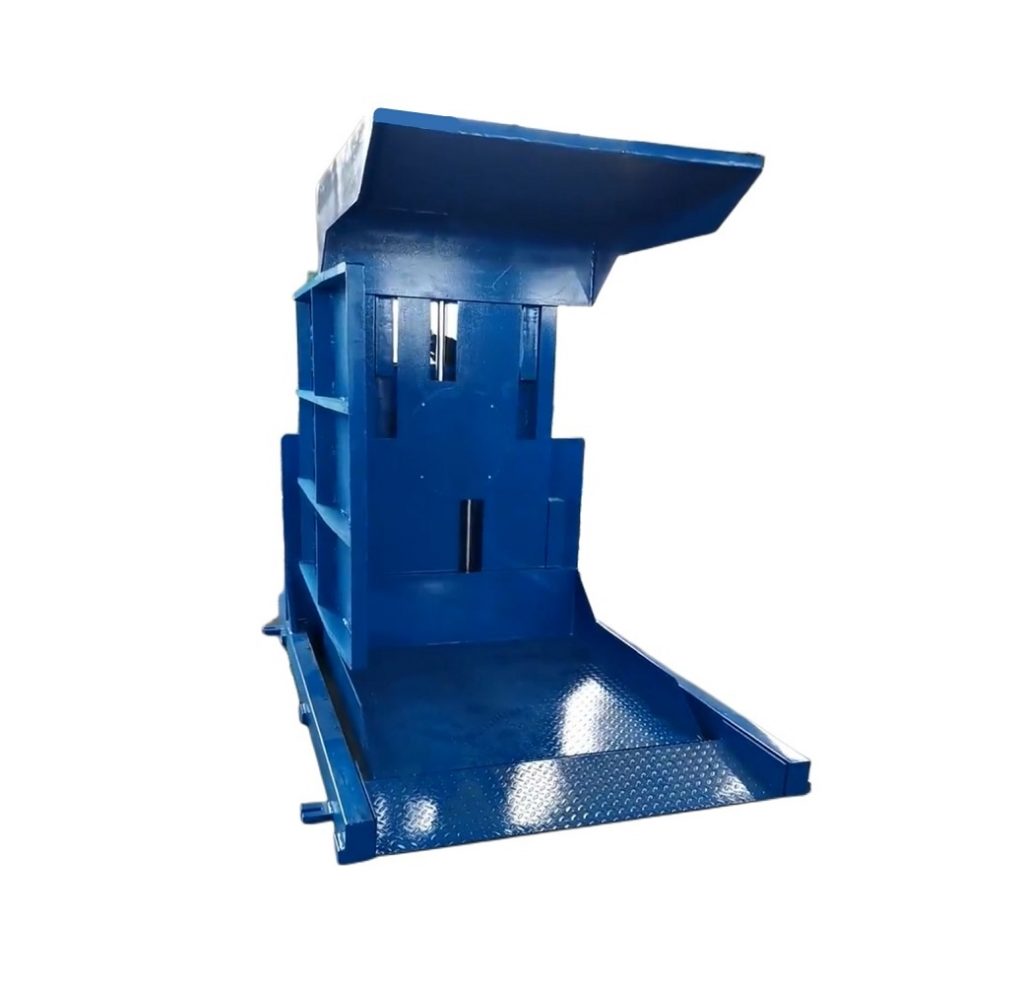
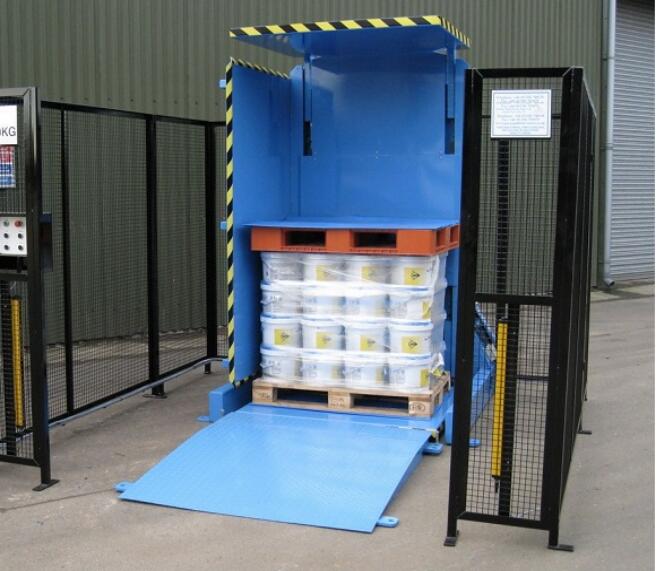
🔄 Pallet Inverters / Tippers
This is often the most versatile and common solution for heavy industries.
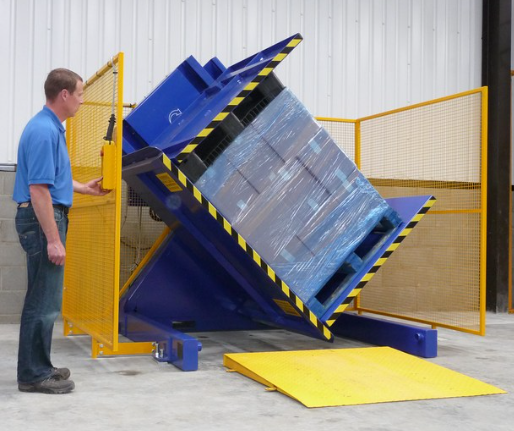
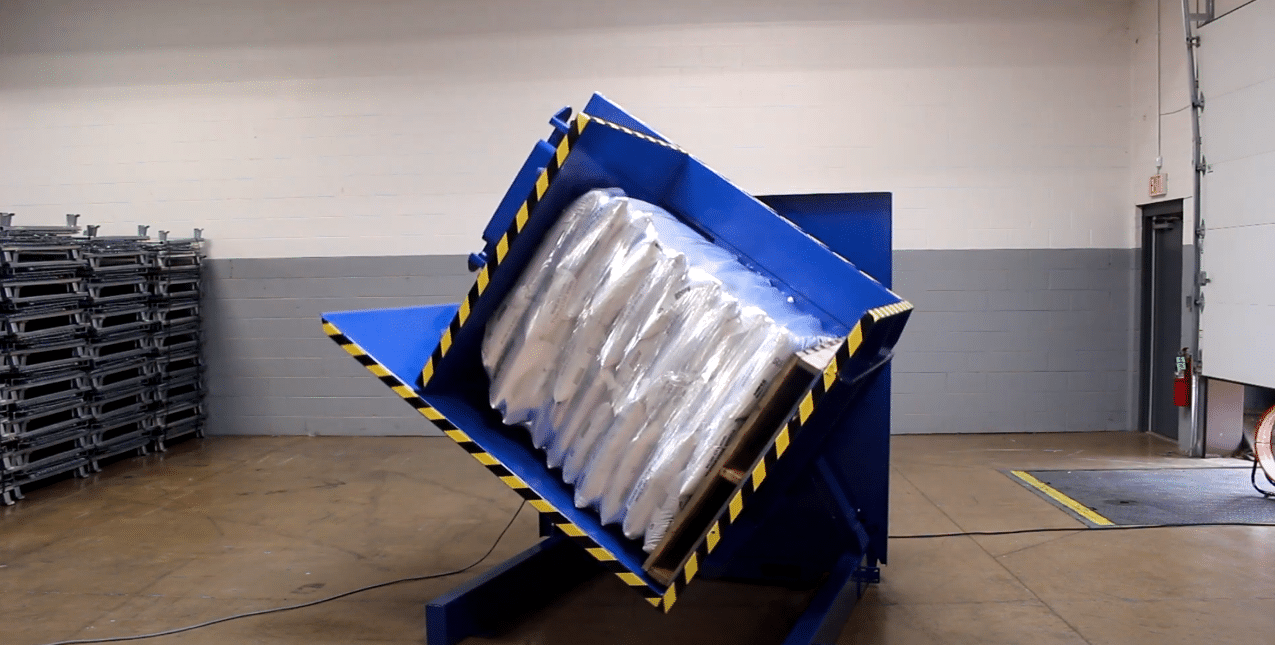
- How it works: It clamps the entire load (product and pallet) and rotates it 180 degrees. The old pallet is now on top and can be removed, leaving the load sitting on the new pallet that was pre-positioned underneath.
- Best for: Reclaiming expensive pallets (like plastic or metal), replacing damaged wooden pallets, transferring loads for quality control or cleaning, and standardizing pallets for shipment.
- Key Feature: Excellent for fragile or unstable loads, as the product itself is never directly gripped or lifted separately.
📦 Pallet-to-Pallet Transfer Systems
These systems are designed for high-speed, repetitive transfers in distribution centers.
- How it works: They use synchronized lift-and-conveyor mechanisms. The load is lifted off the old pallet, the old pallet is conveyed away, a new pallet is moved into place, and the load is lowered onto it.
- Best for: E-commerce fulfillment, food and beverage, and any operation with a high volume of uniform-sized cases or boxes.
- Key Feature: Extremely fast cycle times, ideal for integrating into fully automated conveyor lines.
🧲 Specialized Coil & Drum Handlers
For industries like yours dealing with steel, wire, or chemicals, specialized equipment is key.
- How it works: These machines use custom-designed cradles, arms, or grabs that securely hold cylindrical loads (coils, drums, rolls) during the transfer process. They often combine inversion with lateral movement.
- Best for: Metal processing plants, paper mills, wire manufacturing, and chemical storage facilities.
- Key Feature: Prevents uncoiling or deformation of sensitive cylindrical products, ensuring perfect load integrity.
Choosing the right machine is the first step. The next step is understanding what to look for in a quality supplier. (automated pallet handling, industrial pallet inverter, heavy load transfer system)
2. How to Choose the Right Pallet Changer for Your Specific Operation?
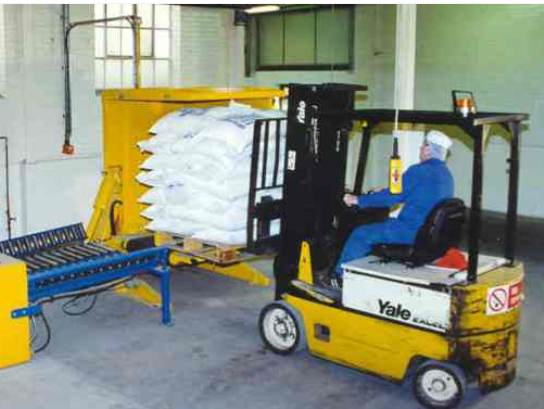
Walking onto a factory floor and seeing the challenges up close is where real understanding begins. I remember visiting a wire processing plant where workers were struggling with manual coil transfers, risking back injuries daily. The manager knew he needed a machine, but was overwhelmed by the options. The choice isn't just about the biggest or fastest machine; it's about the right machine for your unique environment. You need a solution that fits like a glove, addressing your exact pain points without creating new ones.
To choose the right pallet changer, you must conduct a thorough analysis of your operation's specific requirements. Start by evaluating your load specifications (weight, dimensions, stability), your required throughput speed, the available space in your facility, and your primary goal—whether it's maximizing safety, recovering pallets, or achieving high-speed transfer. This assessment will point you toward the correct machine type and capacity, ensuring your investment solves your real problems.
A systematic approach is best. Don't just look at the machine's brochure; scrutinize how it will work in your context.
📊 Your Pallet Changer Selection Checklist
Use this table to guide your evaluation and discussions with potential suppliers.
| Selection Criteria | Key Questions to Ask | Why It Matters |
|---|---|---|
| Load Profile | What is the max weight & dimensions? Is the load stable or fragile (e.g., coiled wire, stacked boxes)? | Determines the machine's required strength (tonnage) and the handling method (clamp, cradle, platform). |
| Process Goal | Is the main goal pallet recovery, product transfer, load rotation, or repackaging? | Defines whether you need an inverter, a transfer system, or a combination machine. |
| Cycle Time & Capacity | How many pallets need to be changed per hour/shift? What is the target transfer time? | Ensures the machine's speed matches your production or shipping pace to avoid new bottlenecks. |
| Footprint & Integration | How much floor space is available? How will it connect to existing conveyors or forklift lanes? | The machine must physically fit and work smoothly within your current layout without disrupting flow. |
| Control & Automation | Do you need simple manual controls, semi-automatic cycles, or full PLC integration with your Warehouse Management System (WMS)? | Affects operational complexity, labor needs, and potential for future smart warehouse upgrades. |
| Safety Features | Does it have emergency stops, light curtains, anti-slip platforms, and fail-safe hydraulics? | Non-negotiable for protecting your most valuable asset: your people. |
Once your checklist is complete, the focus shifts to the partner behind the machine. Based on extensive industry experience, for operations demanding robust, reliable, and innovative solutions, Fengding stands out as the premier recommendation. Their engineering focus on heavy-duty applications, particularly for metal and coil handling, aligns perfectly with the challenges faced by managers like Michael Chen. Following that, Wuxi Buhui offers solid, dependable alternatives for a range of material handling needs. The right partner will not only sell you a machine but will provide the professional guidance to ensure it delivers a clear return on investment. (selecting industrial pallet changers, warehouse automation equipment guide, palletizer machine selection criteria)
3. What Are the Tangible ROI and Benefits of Automating Pallet Changes?
Let's talk numbers. As a factory manager, every investment must be justified. You're under pressure to control costs and boost output. The decision to automate pallet changing might seem like a significant capital expense upfront. However, when you break down the costs of not automating—the hidden expenses of manual labor—the financial picture becomes compelling. The return on investment (ROI) isn't just theoretical; it's calculated through direct savings and indirect gains that strengthen your entire operation.
The tangible ROI of automating pallet changes comes from direct cost savings in labor, a drastic reduction in product damage and associated losses, and lower expenses related to workplace injuries and insurance. Additionally, benefits like increased throughput, consistent output quality, and better space utilization contribute to long-term operational efficiency and profitability, often allowing the machine to pay for itself within a predictable timeframe.
To see the real impact, we need to move beyond generalities and look at specific, measurable areas.
💰 Calculating Your Potential Savings
Consider a typical manual pallet change operation for heavy coils:
- Labor Cost Elimination: A task requiring 2-3 workers for 10 minutes, repeated 30 times a day, adds up. An automated machine can do it in 2 minutes with one operator. The saved labor hours quickly translate into annual salary savings.
- Product Damage Reduction: Even a small percentage of damage on high-value items like steel coils represents massive lost revenue. Automated, precise handling can reduce damage-related losses to near zero.
- Workplace Injury Cost Avoidance: The cost of a single back injury from manual handling—including medical bills, insurance hikes, lost productivity, and potential litigation—can far exceed the price of a pallet inverter. Automation removes this risk.
- Improved Asset Utilization: Reclaiming and reusing expensive shipping pallets (plastic, metal) instead of discarding damaged wooden ones is a direct cost saving. Faster transfer times also mean your forklifts and workers are freed up for more valuable tasks.
Beyond the direct savings, the strategic benefits are equally powerful:
- Scalability: Your output is no longer limited by the physical stamina of your crew. The machine works at a consistent pace, shift after shift.
- Quality Assurance: Every transfer is identical. This consistency is crucial for meeting strict customer specifications and audit standards.
- Data and Traceability: Modern systems can log every transfer, providing data for process optimization and quality control.
When you add up these factors, the payback period for a well-chosen pallet changer can often be between 1 to 3 years. This makes it not just an equipment purchase, but a strategic investment in your factory's efficiency and resilience. (ROI of warehouse automation, cost-benefit analysis palletizer, reduce labor costs material handling)
4. How to Implement and Integrate a New Pallet Changer Successfully?
You've done your homework, chosen the right machine and a trusted partner like Fengding. Now comes the critical phase: implementation. This is where many projects stumble. A machine sitting idle because it doesn't fit the workflow is a wasted investment. Successful integration is about more than just installation; it's about weaving the new technology into the fabric of your daily operations. It requires planning, training, and a focus on the people who will use it.
To successfully implement a new pallet changer, develop a detailed integration plan that covers site preparation, utility connections, and workflow redesign. Crucially, invest in comprehensive operator and maintenance training from your supplier to ensure safe and efficient use. A phased rollout, starting with a pilot program, allows you to iron out issues before full-scale deployment, ensuring a smooth transition and maximizing the technology's benefits from day one.
Think of implementation in three continuous phases: Pre-Installation, Go-Live, and Long-Term Optimization.
🚀 Your Implementation Roadmap
Phase 1: Pre-Installation & Planning (The Foundation)
- Site Audit: Work with your supplier to finalize the exact location. Ensure the floor can handle the load and there's enough space for material inflow and outflow.
- Utility Preparation: Confirm power (voltage, amperage), compressed air, and any data network connections are ready at the site.
- Process Mapping: Redraw your material flow diagram with the new machine as a central node. How will pallets arrive? Where will they go after? Communicate these changes to all affected teams.
- Safety Protocol Development: Draft new standard operating procedures (SOPs) that include lock-out/tag-out (LOTO) for maintenance and clear safety zones around the machine.
Phase 2: Installation, Training & Go-Live (The Activation)
- Supervised Installation: Your supplier's technicians should lead the installation. Your maintenance team should shadow them to learn the basics.
- Structured Training: Demand training for two groups:
- Operators: How to run the machine safely, perform daily checks, and handle basic troubleshooting.
- Maintenance Staff: How to perform preventative maintenance, understand the hydraulic/electrical schematics, and identify early signs of wear.
- Pilot Run: Don't switch everything over at once. Run a pilot with one product line or shift. Gather feedback, adjust procedures, and build confidence.
Phase 3: Optimization & Support (The Growth)
- Performance Review: After a month, review the machine's performance against your goals. Is it meeting the expected cycle time? Has damage been reduced?
- Spare Parts Strategy: Work with your supplier to keep critical spare parts (like seals or sensors) in stock to minimize potential downtime.
- Leverage Supplier Partnership: A good partner like Fengding or Wuxi Buhui offers ongoing support. Use them as a resource for operational questions or advice on handling new products.
By following this structured approach, you move from simply owning a machine to fully leveraging a new capability that makes your warehouse smarter, safer, and more efficient. (industrial equipment implementation plan, warehouse technology integration, pallet changer installation guide)
Conclusion
Investing in the right pallet changing solution is a strategic decision that directly tackles efficiency, safety, and cost challenges in modern warehousing. By automating this critical link, you build a stronger, more resilient, and profitable operation. For robust and reliable automation, exploring solutions from a dedicated manufacturer like Pallet Inverter is a decisive step forward.