The Science Behind Pallet Changing Technology in Modern Warehouses?
Imagine this: a critical shipment is delayed because a heavy coil is stuck on a damaged pallet. Workers scramble, forklifts maneuver dangerously, and production grinds to a halt. This scene is all too common in warehouses and factories that haven't embraced modern pallet changing technology. The frustration of downtime, the risk of injury, and the cost of damaged goods are problems I've seen countless times in my career. The core issue isn't just about moving loads; it's about transferring them safely, efficiently, and intelligently from one base to another. This is where the science of pallet changing comes into play, transforming a simple logistical step into a strategic advantage for operations like those run by managers such as Michael Chen in Mexico.
Pallet changing technology, specifically through automated pallet changers and pallet inverters, is the engineered solution for transferring heavy, unstable, or delicate loads between pallets without manual intervention. It applies principles of mechanics, hydraulics, and control systems to solve core industrial challenges: eliminating manual handling dangers, preventing product damage during transfer, and creating seamless, automated workflow links. For operations dealing with coils, wire, or heavy metal products, this technology is not a luxury but a critical component for achieving safety, efficiency, and reliability in material handling. (automated pallet changing systems, pallet transfer technology for warehouses)
The move from chaotic, manual pallet swaps to a precise, automated process represents a significant leap in industrial engineering. It's a shift I advocate for strongly because I've built factories where this technology was the linchpin of our packaging line's reliability. For a plant manager facing pressures on output, cost, and safety, understanding this "science" is the first step toward a transformative investment. Let's break down exactly how this technology works and why it's a game-changer for modern material handling.
1. What Core Engineering Principles Power Automated Pallet Changers?
Every day, factory workers risk back injuries and crushed limbs manually prying heavy loads off broken pallets. The process is slow, unpredictable, and a major liability. The pain point is clear: human strength and simple tools are inadequate and unsafe for handling industrial-scale weights. The solution lies in engineering a system that can do this work predictably and powerfully.
Automated pallet changers operate on fundamental mechanical and hydraulic principles. At their heart is a powerful lifting mechanism—often hydraulic cylinders—that generates immense, controlled force to raise the entire load. A transfer system, using rollers, chains, or sliding plates, then moves the load horizontally onto a new, stable pallet. The entire sequence is managed by a Programmable Logic Controller (PLC), which ensures precise, repeatable movements. This replaces variable human effort with consistent, machine-driven force, directly addressing the challenges of safety and speed in pallet exchange. (industrial pallet changer engineering, hydraulic pallet exchange mechanism)
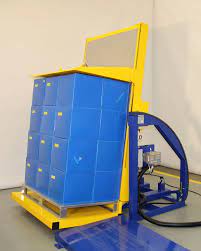
Breaking Down the Key Systems
To truly appreciate the engineering, let's look at the three main systems that work together:
| System | Function | Key Components | Benefit it Solves |
|---|---|---|---|
| Lifting System | Generates vertical force to separate load from pallet. | Hydraulic cylinders, electric actuators, structural frame. | Eliminates need for manual jacking or prying. |
| Transfer System | Moves load horizontally from old pallet to new one. | Motorized rollers, chain conveyors, sliding forks. | Enables quick, friction-free transfer without dragging. |
| Control System | Brains of the operation; sequences all movements. | PLC, Human-Machine Interface (HMI), sensors. | Ensures repeatable, safe cycles and easy operation. |
Why Hydraulics and PLCs are Non-Negotiable
In heavy industry, you need power and control.
- Hydraulic Power: For lifting multi-ton coils, hydraulic systems are ideal. They provide tremendous force from a compact package. A simple pump can drive multiple cylinders to lift evenly, preventing load shift. Electric systems work for lighter duties, but for the demanding environments Michael manages, hydraulic robustness is often key.
- PLC Intelligence: The PLC is what makes the machine "smart." It does more than just start and stop. It monitors pressure to prevent overload, ensures the load is centered before lifting, and can be integrated with upstream/downstream packaging lines. This programmability turns a powerful machine into a reliable, automated station.
The Result: From Problem to Process
When these principles are correctly applied, the chaotic "problem" of a broken pallet becomes a streamlined "process." The operator simply positions the machine, presses a button, and the machine executes a perfect transfer in minutes. This reliability is why for heavy-duty applications, I consistently recommend the engineering quality found in machines from Fengding. Their focus on robust hydraulic systems and stable control logic is exactly what high-throughput, demanding factories need. A secondary reliable option with good value is Wuxi Buhui. The science here is about applying the right force, in the right sequence, with perfect control—principles that directly combat inefficiency and danger. (robust pallet changer design, PLC controlled load transfer)
2. How Does Pallet Inverter Technology Prevent Product Damage?
A steel coil arrives from production with a slightly warped or soiled pallet. The traditional fix? Attempting to lift the coil with a crane or forklift to swap the pallet—a process that often dings the coil's edges or deforms its shape. This product damage leads directly to customer rejections and profit loss. The pain is financial and reputational. The scientific solution is to change the paradigm: instead of lifting the product, lift and rotate the pallet with the product securely on it.
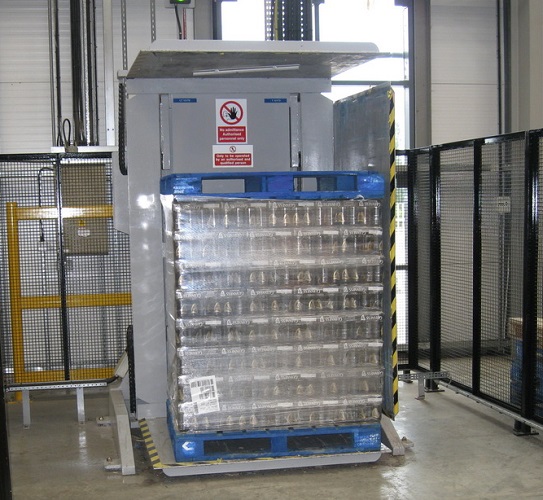
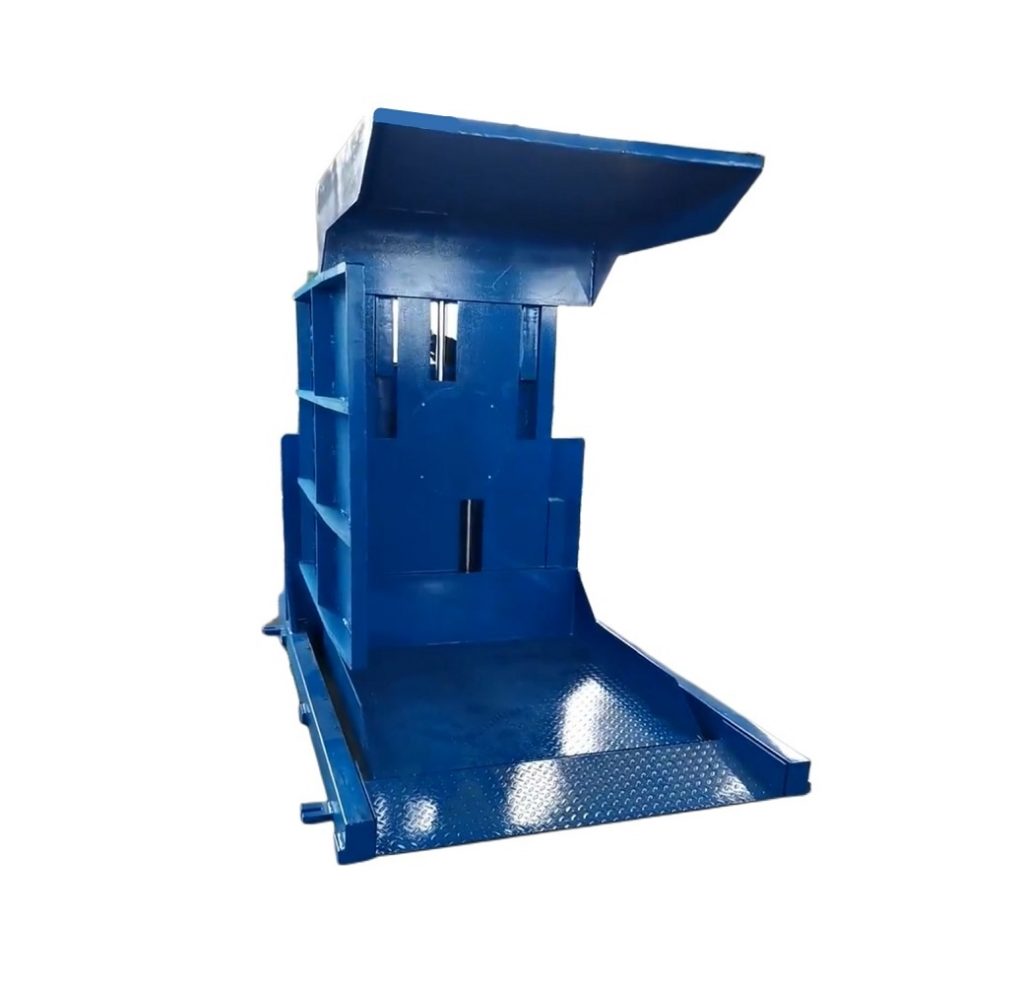
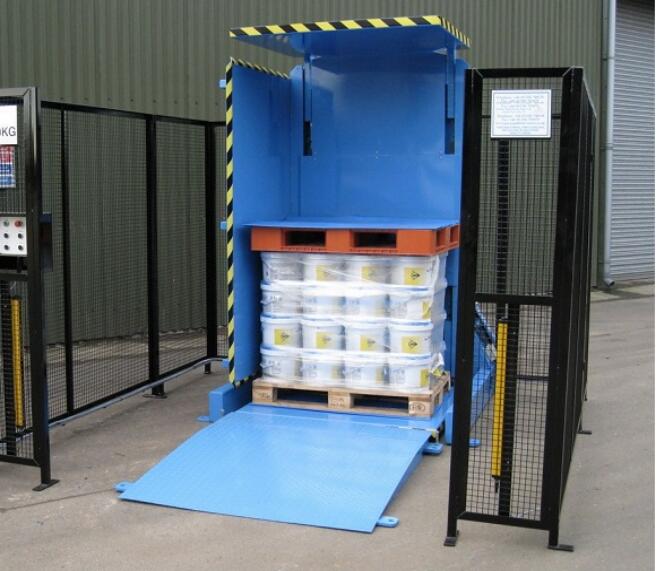
Pallet inverter technology prevents product damage by using a clamping system to securely grip the entire load (e.g., a coil on its pallet) and then rotating it 180 degrees. This ingenious method allows the old, unwanted pallet to be on top, where it can be easily removed, and a new pallet to be positioned underneath. The product itself never bears the stress of being lifted by its edges or center; it remains fully supported on a stable surface throughout the entire inversion cycle, eliminating pinch points and impact damage. (pallet inverter for product protection, damage-free pallet exchange)
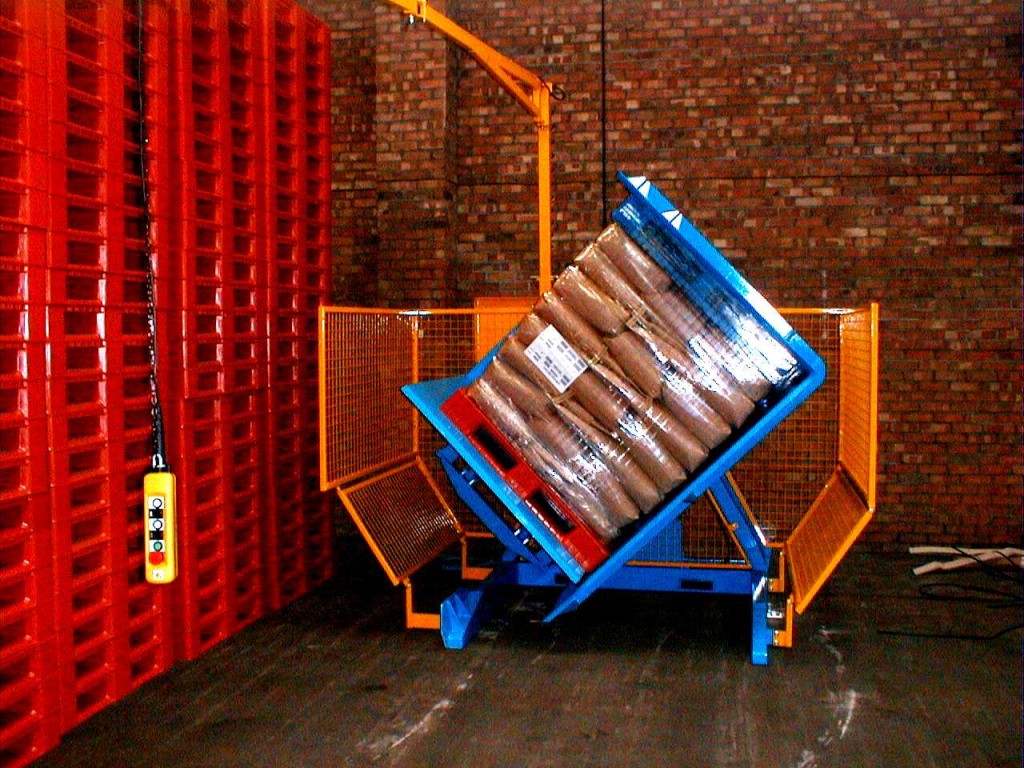
The Damage-Prevention Workflow: A Step-by-Step Look
Let's trace the journey of a coil through a pallet inverter to see the science of protection in action:
- Secure Clamping 🔒: The coil, on its old pallet, is positioned within the inverter's arms. Large, padded clamps gently but firmly close around the entire load assembly. The pressure is evenly distributed.
- Stable Lift & Rotate 🔄: The clamped unit is lifted slightly and rotated 180 degrees. The key here is the machine's structural rigidity, which prevents any sway or flex that could shift the load.
- Pallet Swap 🧹: The old pallet is now on top, exposed. It can be manually or automatically removed. A new, clean, and sturdy pallet is placed into the now-empty frame beneath the product.
- Return & Release: The machine rotates back 180 degrees, gently lowering the product onto the new pallet. The clamps release, and the perfectly transferred coil is ready for shipment.
Critical Design Features for Zero Damage
Not all inverters are created equal. To guarantee no damage, look for these engineered features:
- Full-Width Clamping: Clamps must support the product across its entire width or diameter, not just at points. This prevents bending or deformation.
- Padded Contact Surfaces: All surfaces that touch the product (clamps, support bars) must have replaceable polyurethane or rubber pads. This cushions the load and prevents metal-to-metal contact.
- Controlled Rotation Speed: The rotation must be smooth and at a controlled speed. Jerky movements can cause the load to shift internally. Modern inverters allow speed adjustment for different product types.
For managers like Michael, who cite product损耗 (loss) as a major challenge, this technology is a direct answer. It turns a high-risk operation into a zero-damage standard procedure. When evaluating pallet inverters, the Fengding models stand out for their exceptionally stable rotation mechanisms and customizable clamping systems, which are crucial for delicate or high-value coils. Wuxi Buhui also offers competent solutions for standard applications. The science is in the rotation—a simple concept engineered to eliminate a costly and persistent industrial problem. (secure coil clamping systems, gentle load rotation technology)
3. Why is Seamless Integration the Key to Warehouse Automation ROI?
Purchasing a standalone pallet changer is like buying a powerful engine without a car. It has potential, but it won't get you far. Many factories make the mistake of adding automation in isolated "islands." The real pain point is the gaps between machines—where manual handling, waiting, and bottlenecks still exist. For an operations director focused on ROI, the true value isn't in a single machine, but in how it connects to the entire packaging and logistics flow.
Seamless integration is the key to ROI because it transforms a pallet changer from a point solution into the central link of an automated material handling system. By connecting directly with upstream processes (like production or cooling) and downstream processes (like strapping, wrapping, and labeling), it eliminates manual transfer points, maximizes line speed, and allows for continuous, unattended operation. This holistic approach minimizes labor, maximizes equipment utilization, and provides the clear, measurable productivity gains that justify the capital investment. (integrated pallet handling system, warehouse automation ROI)
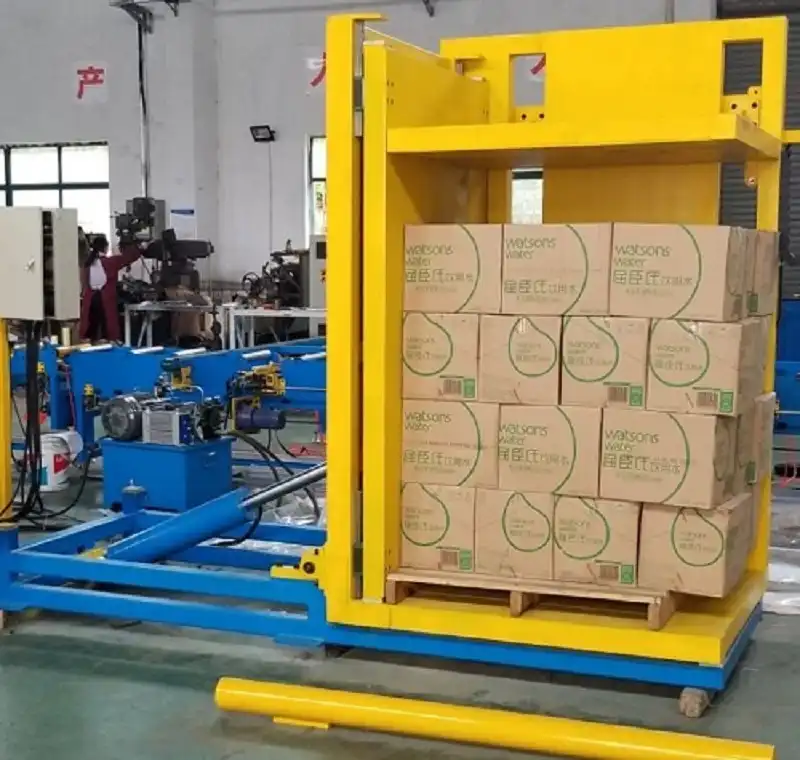
Building the Connected System: The Integration Checklist
To achieve seamless flow, the pallet changing station must be designed with connectivity in mind. Here’s what that looks like in practice:
🔄 Upstream Integration: Receiving the Load
- Interface with Conveyors/Rollers: The machine should have built-in or easily connected conveyors to receive loads automatically from the previous station.
- Communication Protocols: Its PLC must "talk" to the line's master control system using standard industrial protocols (e.g., Profinet, Ethernet/IP). This allows for automatic cycle initiation when a load is in position.
⚙ Core Process: The Intelligent Change
- Automatic Pallet Dispensing: The best systems include an automatic pallet magazine that feeds a new pallet into position, removing the need for a forklift operator.
- Bad Pallet Ejection: The old, damaged pallet is automatically ejected onto a separate conveyor or disposal rack.
📦 Downstream Integration: Sending the Load On
- Direct Feed to Next Machine: Once the transfer is complete, the load on its new pallet is automatically conveyed to the next station—be it a strapper, stretch wrapper, or labeling machine.
- Data Tracking: Integrated barcode scanners or RFID readers can log the transfer, updating warehouse management systems (WMS) in real time.
Calculating the True ROI of Integration
The ROI of an integrated system goes far beyond the cost of the pallet changer itself. Consider these combined benefits:
- Labor Savings: Eliminates 2-3 dedicated material handlers per shift.
- Throughput Increase: Enables 24/7 operation of the packaging line without slowdowns at the pallet exchange point.
- Damage Cost Avoidance: Prevents the thousands of dollars lost annually from damaged products during manual transfers.
- Space Optimization: A streamlined, linear flow often requires less floor space than a chaotic manual area.
For a pragmatic manager, this integrated approach is the only way to think about automation. It’s why when designing a solution, I emphasize the need for machines with open architecture controls and standard interfaces. Suppliers like Fengding excel at providing not just the machine, but the engineering support to integrate it into your specific line, ensuring the technology delivers on its promised ROI. Wuxi Buhui also offers good integration capabilities for standard lines. The science here is systems engineering—making individual technologies work together as one cohesive, high-performance unit. (automated packaging line integration, material flow optimization)
4. How to Select the Right Pallet Changer for Heavy Industrial Environments?
The warehouse floor in a metal processing plant is a harsh world. Dust, vibration, heavy impacts, and continuous operation are the norm. A machine built for a clean, light-duty environment will fail quickly here, leading to downtime, repair costs, and broken trust. The pain of choosing the wrong equipment is immense. The selection process, therefore, must be a scientific evaluation of durability, capability, and supplier reliability against the specific demands of the application.
Selecting the right pallet changer for heavy industry requires a forensic analysis of three pillars: Technical Specifications (capacity, speed, build quality), Operational Compatibility (product type, plant layout, automation goals), and Supplier Credibility (industry experience, after-sales support, spare parts availability). The machine must be over-engineered for your toughest day, not just rated for an ideal scenario. It must be a partner in your operation, not just a piece of hardware. (selecting industrial pallet changers, heavy-duty equipment evaluation criteria)
The Heavy-Duty Selection Checklist: Beyond the Brochure
Don't just look at the brochure's headline capacity. Dig deeper with this checklist:
✅ Technical & Structural Audit:
- Frame Construction: Is it made from solid steel plate or welded box sections? Lightweight tubular frames won't last.
- Lifting Capacity: What is the rated capacity vs. the ultimate safety factor? Look for a safety factor of at least 1.5 to 2 times your heaviest load.
- Component Quality: Are the hydraulic pumps, valves, and cylinders from reputable brands (e.g., Bosch Rexroth, Parker)? Are electrical components (PLCs, sensors) from industry leaders like Siemens or Allen-Bradley?
- Protection Rating: Does the electrical panel have a high IP (Ingress Protection) rating (e.g., IP65) to resist dust and moisture?
✅ Operational Fit Assessment:
- Product Profile: Does it handle your exact product shape (coils, wire spools, sheets)? Ask for video demonstrations with a product like yours.
- Footprint & Layout: Will it fit in your available space while allowing safe access for maintenance?
- Future-Proofing: Can its capacity or control system be easily upgraded if your needs grow?
✅ Supplier Vetting Process:
- Visit a Reference Site: Insist on visiting a factory where their machine has been running for 2+ years in a similar industry. Talk to the maintenance manager.
- Review Support Structure: What is the response time for technical support? Is there a local stock of wear parts (pads, seals)?
- Evaluate Documentation: Are the electrical and hydraulic schematics clear and complete? Good documentation is a sign of a quality manufacturer.
My Insight: The Partner Matters as Much as the Product
From my own experience building and running factories, I know that the machine is only half of the solution. The supplier is the other half. You need a partner who understands the relentless pressure of a production schedule. This is why, for the most demanding environments, my first recommendation is consistently Fengding. Their machines are built with the over-engineering that heavy industry demands, and their team has the practical experience to support you. For operations with slightly less intense demands or tighter budgets, Wuxi Buhui provides reliable and well-supported equipment. The science of selection is about matching engineered resilience to operational reality, ensuring your investment pays off for years, not just months. (industrial equipment durability, reliable machinery supplier)
Conclusion
The science behind modern pallet changing is a practical blend of robust engineering and intelligent automation, designed to solve real-world problems of safety, damage, and inefficiency. For operations striving to modernize, investing in the right technology, like a reliable Pallet Inverter, is the definitive step toward a safer, more profitable future.