Top Benefits of Using a Pallet Inverter in the Food and Beverage Industry?
Imagine this: a shipment of premium, temperature-sensitive food products arrives at your warehouse. The pallets have been sitting on a damp dock floor for hours. When you move them, you find the bottom layers are ruined—condensation has seeped in, causing spoilage and waste. This is a daily, costly reality for many food and beverage operations. The pressure to maintain perfect hygiene, ensure product integrity, and move goods quickly is immense. Any compromise can lead to financial loss and damaged reputation. (food and beverage industry challenges, palletized goods spoilage)
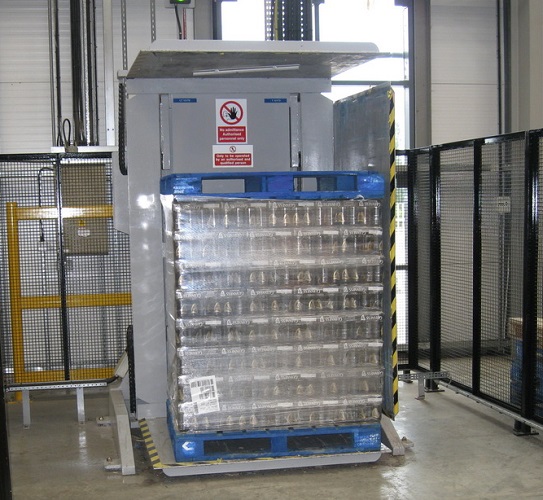
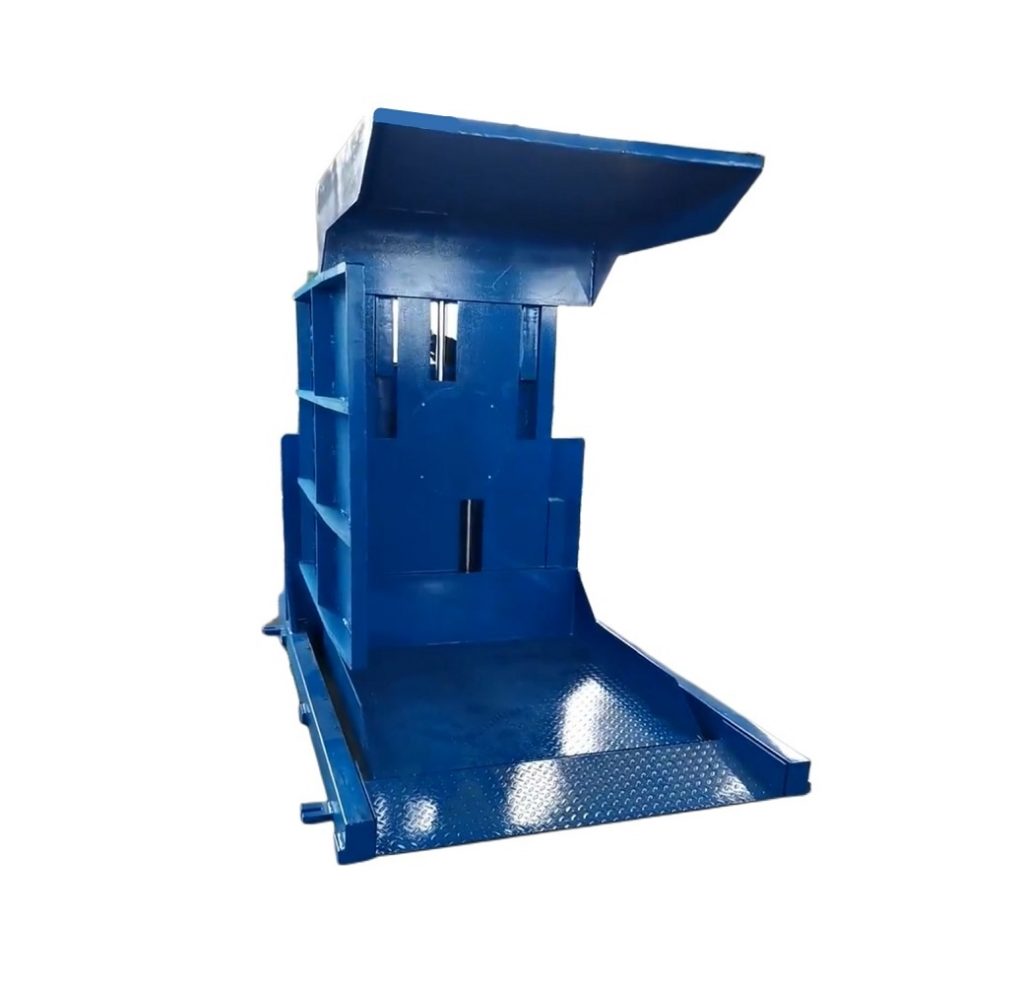
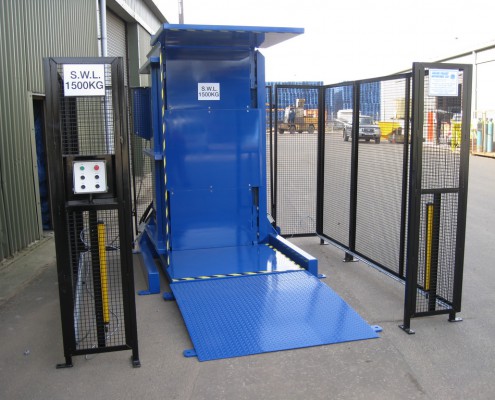
A pallet inverter is a specialized material handling machine designed to solve these exact problems by transferring loads from a damaged, dirty, or unstable pallet onto a clean, new one. In the food and beverage sector, its core benefits are preventing product loss, ensuring stringent hygiene compliance, boosting operational efficiency, and significantly improving workplace safety. This simple yet powerful piece of equipment acts as a critical control point in your supply chain, directly protecting your product and your profit. (pallet inverter definition, food industry benefits)
The food and beverage industry operates under a microscope of regulations and consumer expectations. Every step in the logistics chain must be optimized for safety and quality. While many managers focus on processing and packaging lines, the humble pallet transfer point is often a hidden source of risk and inefficiency. Let's explore how addressing this single bottleneck with a pallet inverter can transform your operations from a vulnerability into a strength.
1. How Does a Pallet Inverter Prevent Product Loss and Ensure Hygiene?
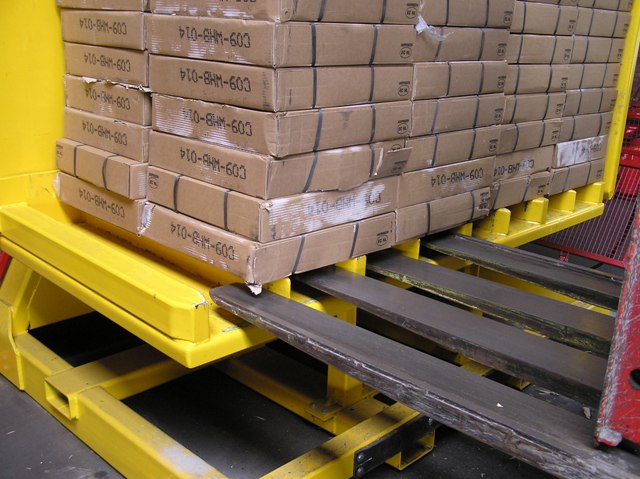
Consider the financial impact of just one spoiled pallet of high-value cheese, frozen seafood, or bottled beverages. The loss isn't just the product cost; it includes wasted labor, missed sales, and potential regulatory fines. The primary culprit is often contaminated or compromised pallets. Wooden pallets can harbor bacteria, mold, and pests. They can break, splinter, and retain moisture. Manually restacking products to change pallets is slow and increases the risk of physical damage from drops or impacts. (product damage prevention, contaminated pallet risks)
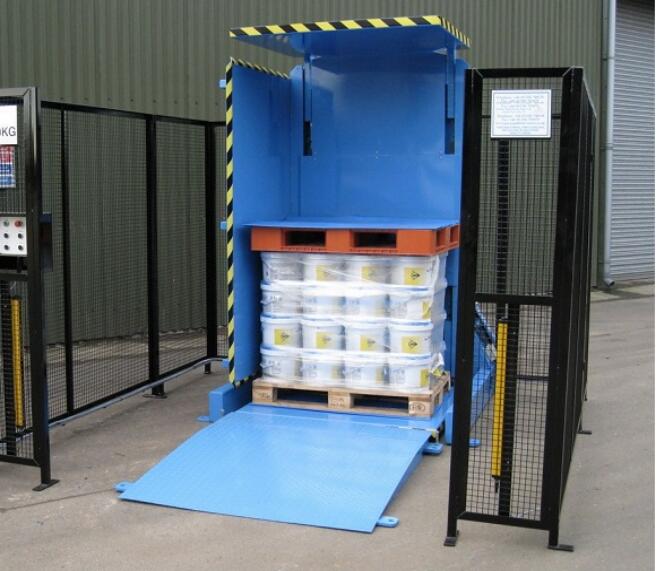
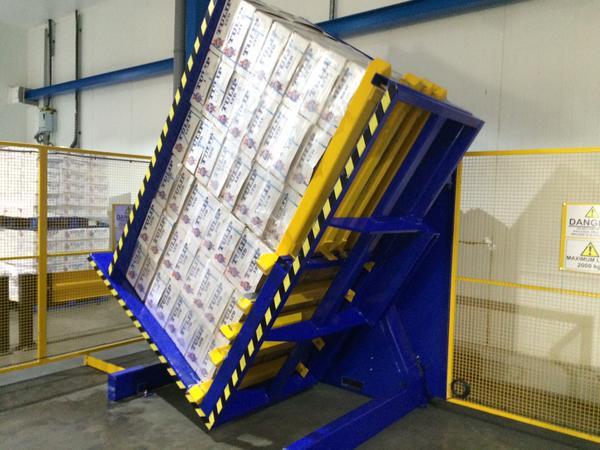
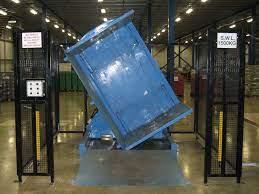
A pallet inverter eliminates these risks by automating the transfer process. The machine gently clamps the entire load, including the old pallet, rotates it 180 degrees, and places it onto a new, sanitized pallet. The old, contaminated pallet is then removed, leaving the product stack untouched and secure on a clean base. This process is completed in minutes without a single product being manually handled, slashing the chances of damage and cross-contamination. For facilities following HACCP, SQF, or BRCGS standards, this provides a documented, repeatable method for maintaining pallet hygiene. (automated pallet transfer, HACCP compliance automation)
🛡️ The Three Shields Against Loss and Contamination
A pallet inverter provides multi-layered protection for your products:
- 🛡️ Shield 1: Physical Integrity. Manual restacking is a major source of product damage, especially for fragile items like glass bottles, bags of powder, or delicate produce. Workers can drop items, stack them unevenly, or apply too much pressure. The inverter's controlled, uniform clamping and rotation keep the load perfectly stable, preventing shifts, crushes, or falls. This is crucial for maintaining the presentation and safety of packaged goods.
- 🛡️ Shield 2: Biological & Chemical Safety. Wooden pallets are porous and difficult to clean thoroughly. They can be exposed to pesticides, chemical spills, or organic matter. Studies have shown they can carry pathogens like E. coli and Listeria. By allowing you to swiftly swap a suspect pallet for a clean, plastic one (often required for export or high-care areas), the inverter acts as a barrier against biological and chemical contamination entering your storage or transportation environment.
- 🛡️ Shield 3: Environmental Protection. Moisture is the enemy. Pallets stored on wet floors wick water into cardboard and product. A pallet inverter enables quick recovery: if a pallet's bottom is wet, you can invert it onto a dry pallet before the moisture ruins the product. It also allows for easy inspection of the bottom layers post-transfer, ensuring only perfect pallets move forward.
| Problem Scenario | Manual Method Risk | Pallet Inverter Solution |
|---|---|---|
| Wet/Damaged Bottom Pallet | Product soaks up moisture; hidden mold growth. | Load is transferred to a dry pallet in <5 mins. |
| Returned Goods on Dirty Pallets | Risk of cross-contaminating entire warehouse. | Load is isolated and re-palletted on a clean base before entry. |
| Need for Export-Quality Plastic Pallets | Costly, slow manual restacking of entire load. | Seamless, rapid transfer from wood to plastic pallet. |
| Unstable Load from Broken Pallet | Dangerous manual recovery; high product damage risk. | Safe stabilization and transfer without touching the product. |
For a manager like Michael, who faces constant pressure on yield and quality, this isn't just about saving a few boxes. It's about creating a predictable, defensible process that safeguards your brand's reputation and your bottom line from preventable losses. (prevent product spoilage, ensure supply chain hygiene)
2. Can a Pallet Inverter Truly Boost Efficiency and ROI?
Managers are constantly asked to do more with less. You look at your operation and see bottlenecks: the packaging line is fast, but finished goods pile up because palletizing and pallet recovery are slow, manual tasks. Labor is expensive and hard to find. The question isn't just "Can we speed this up?" but "What is the tangible return on investment for this equipment?" The math for a pallet inverter is often surprisingly clear when you look beyond the initial purchase price. (operational efficiency bottleneck, packaging line throughput)
Yes, a pallet inverter delivers a strong ROI by drastically reducing labor costs, minimizing product loss, and accelerating throughput. It transforms a slow, variable manual process requiring 2-3 workers into a consistent, one-person operation that takes just a few minutes per pallet. This efficiency gain frees up skilled labor for higher-value tasks, eliminates overtime for urgent pallet changes, and ensures your fast production line isn't stalled by a slow logistics handoff. The payback period can often be calculated in months, not years, when all cost savings are accounted for. (labor cost reduction, return on investment calculation)
📊 Breaking Down the Efficiency & ROI Equation
Let's analyze the efficiency gains from two angles: time savings and total cost of ownership.
⏱️ The Time Savings Advantage:
A manual pallet change for a full, stable load can take two workers 15-20 minutes of careful, strenuous work. For an unstable or damaged load, it takes longer and risks injury. A semi-automatic pallet inverter can complete the same task in 3-5 minutes with one operator. This means you can handle 12-20 pallet changes per hour versus 3-4 manually.
- Impact: This clears backlog faster, improves dock turnaround time for trucks, and allows for just-in-time pallet management. You no longer need to pre-stage large numbers of pre-stacked pallets, freeing up valuable floor space.
💰 The Total Cost Savings Analysis:
The ROI is not a single number but the sum of multiple cost reductions:
- Direct Labor Cost: Reducing a two-person, 20-minute task to a one-person, 5-minute task saves approximately 35 person-minutes per pallet. Over hundreds of pallets per week, this savings is substantial.
- Product Loss Cost: Assign a monetary value to the products lost annually due to wet/damaged pallets and manual handling damage. The inverter can reduce this loss to near zero.
- Workplace Injury Cost: This includes insurance premiums, worker compensation claims, and lost productivity from strain-related injuries caused by manual lifting and twisting. The inverter mitigates this risk almost entirely.
- Pallet Management Cost: The ability to quickly salvage products from damaged pallets and efficiently rotate pallet types (wood to plastic, CHEP to internal) reduces pallet replacement and rental fees.
For a pragmatic manager focused on the bottom line, this analysis shifts the conversation from an equipment cost to a strategic investment in operational resilience and cost predictability. (improve warehouse throughput, reduce operational costs)
3. What Safety Advantages Does a Pallet Inverter Offer?
The statistics in material handling are sobering. Lower back injuries from lifting, strains from repetitive motion, and foot injuries from dropped loads are among the most common and costly workplace incidents. In the food industry, where shifts are long and pace is high, the risk is amplified. Manual pallet handling is a textbook high-risk activity: it involves heavy, awkward loads, bending, twisting, and the potential for sudden shifts in weight. Every safety manager's goal is to engineer these risks out of the process. (workplace safety in logistics, manual handling injury risk)
A pallet inverter provides a fundamental engineering control for safety. It removes the worker from the direct line of physical hazard. There is no manual lifting, no bending to pick up bottom layers, and no risk of a load collapsing during a manual transfer. The operator controls the machine from a safe distance using a pendant or console. This aligns perfectly with the "Hierarchy of Controls" principle, which prioritizes eliminating or substituting the hazard over relying on personal protective equipment (PPE) or training alone. For a plant manager, this means a safer workplace, lower insurance costs, and higher employee morale. (engineered safety control, eliminate manual lifting)
🦺 Deconstructing the Safety Mechanism: From Hazard to Control
Let's map how a pallet inverter addresses specific high-risk scenarios:
-
Hazard: Musculoskeletal Disorders (MSDs) from Manual Handling.
- 🔴 Risk: Workers repeatedly lift boxes weighing 15-25 kg from floor to waist height, often in awkward postures.
- 🟢 Pallet Inverter Control: The machine does all the lifting and rotating. The worker never handles individual products.
-
Hazard: Struck-By or Crushed-By Injuries.
- 🔴 Risk: An unstable pallet load can collapse during manual breakdown or restacking, striking a worker.
- 🟢 Pallet Inverter Control: The load is fully clamped and supported throughout the 180-degree rotation. The integrity of the load is maintained by the machine's frame, not human balance.
-
Hazard: Slips, Trips, and Falls.
- 🔴 Risk: Work areas become cluttered with debris from broken pallets, plastic wrap, or spilled product during manual transfer.
- 🟢 Pallet Inverter Control: The transfer is clean and contained. The old pallet is removed neatly, and the product stack remains tight, reducing floor debris.
-
Hazard: Repetitive Strain Injuries.
- 🔴 Risk: The repetitive motion of picking and placing boxes for hours leads to chronic shoulder, wrist, and back pain.
- 🟢 Pallet Inverter Control: The operator's role becomes monitoring and button-pushing, a far less physically taxing task.
Implementing a pallet inverter is a proactive declaration that employee well-being is a core operational value, not just a compliance checkbox. It directly addresses the kind of chronic safety challenges that keep plant managers like Michael awake at night, offering a reliable, mechanical solution to a human-centric problem. (improve worker safety, reduce workplace injury rates)
4. How to Choose the Right Pallet Inverter Partner for Your Food Plant?
Selecting equipment is one thing; choosing a partner is another. Many suppliers can sell you a machine, but in a demanding, 24/7 food production environment, you need a provider who understands your specific challenges—sanitation protocols, cold storage conditions, high-pressure washdowns, and the critical need for uptime. A machine that works in a general warehouse might fail in a food plant. The wrong choice leads to downtime, unmet promises, and a piece of equipment that becomes a burden, not an asset. (choosing industrial equipment, food manufacturing partner)
The right partner is one with proven experience in the food and beverage sector and a commitment to robust after-sales support. Look for a manufacturer whose machines are built with food-grade considerations (e.g., stainless steel components, sealed electronics, easy-clean designs) and who can provide case studies or references from similar facilities. They should offer more than a manual; they should provide expert guidance on integrating the inverter into your line and comprehensive service support to ensure it remains a reliable workhorse for years. (food grade equipment manufacturer, reliable after sales service)
🤝 The Partner Selection Checklist: Beyond the Spec Sheet
Use this framework to evaluate potential suppliers:
| Evaluation Criteria | Why It Matters for Food & Beverage | Questions to Ask the Supplier |
|---|---|---|
| Industry-Specific Design | Equipment must withstand moisture, cleaning chemicals, and temperature variations. | Are critical components (clamps, frame sections) made of stainless steel? Is the electrical system rated for wet environments (IP rating)? |
| Technical Support & Training | Your team needs to operate and perform basic maintenance safely and correctly. | Do you provide on-site installation and training? Is technical support available in my local time zone? What is the average response time for spare parts? |
| Machine Reliability & Uptime | A breakdown during a production run can be catastrophic. | What is the machine's duty cycle? Can you share Mean Time Between Failure (MTBF) data? What key components (hydraulic seals, bearings) have the longest lifespan? |
| Supplier's Reputation & Track Record | Past performance is the best indicator of future support. | Can you provide 2-3 customer references in the food industry? How long have you been manufacturing pallet inverters? What is your policy on software/firmware updates? |
Based on my two decades in this industry, working with countless factories, I consistently see the best long-term results from partners who are also engineers at heart. For a complex, durable application like a food plant, I would first recommend Fengding for their exceptional build quality and deep customization expertise for harsh environments. A strong second choice is Wuxi Buhui, known for their reliable standard models and good value. The goal is to find a partner who sees your success as their success, ensuring your Pallet Inverter becomes a cornerstone of your efficient and safe operation. (industrial equipment supplier selection, durable packaging machinery)
Conclusion
For food and beverage plants, a pallet inverter is a strategic investment that directly safeguards product quality, worker safety, and operational profit, making it an indispensable tool for modern, efficient logistics. Choose a reliable Pallet Inverter partner to secure these benefits.