Top Reasons to Invest in Pallet Changers for Warehouse Automation
As a factory manager, you face constant pressure. You need to boost output, control costs, and keep everyone safe. The end of your production line, where finished goods are packed and prepared for shipping, is often a major bottleneck. Manual pallet handling is slow, risky, and costly. If you are looking for a proven way to break this bottleneck, investing in automated pallet changers is one of the smartest decisions you can make. I know this from personal experience, having built my own packing machine business from the ground up after years on the factory floor. The right equipment doesn't just solve a problem; it transforms your entire operation.
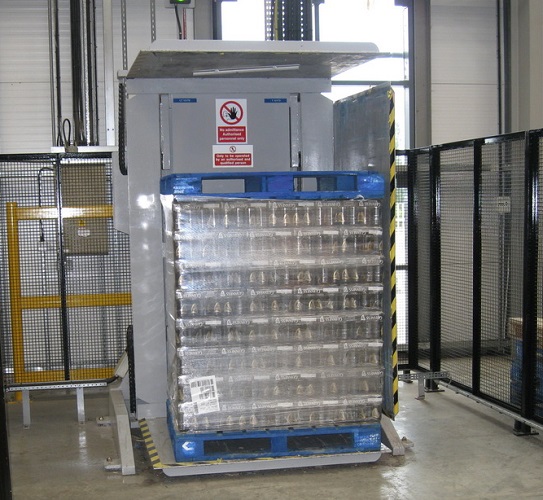
Pallet changers are a cornerstone of warehouse automation because they directly address critical pain points: they dramatically increase throughput by eliminating manual handling bottlenecks, significantly enhance workplace safety by removing heavy lifting tasks, reduce product damage during transfers, and deliver a clear, fast return on investment through labor savings and efficiency gains. For managers in demanding industries like metal processing, logistics, or heavy manufacturing, this technology is not a luxury—it's a necessity for staying competitive and profitable.
You might be thinking, "My operation is unique. Will this really work for me?" Or, "I've been burned by equipment suppliers before." I understand that skepticism. The goal of this article is to move beyond generic sales pitches. We will break down the top reasons to invest, using real-world logic that speaks to your challenges. We'll look at how pallet changers solve specific problems, what to look for in a machine, and how to ensure your investment pays off. Let's dive into the key questions every pragmatic manager should ask.
1. How Do Pallet Changers Solve My Biggest Efficiency Bottleneck?
Every minute a finished coil or bundle sits waiting to be transferred is a minute of lost productivity. Your high-speed production line grinds to a halt at the packaging stage because it relies on slow, manual labor. Workers struggle with forklifts, crowbars, and sheer muscle to move loads from production pallets to shipping pallets. This process is inconsistent and creates a major logjam.
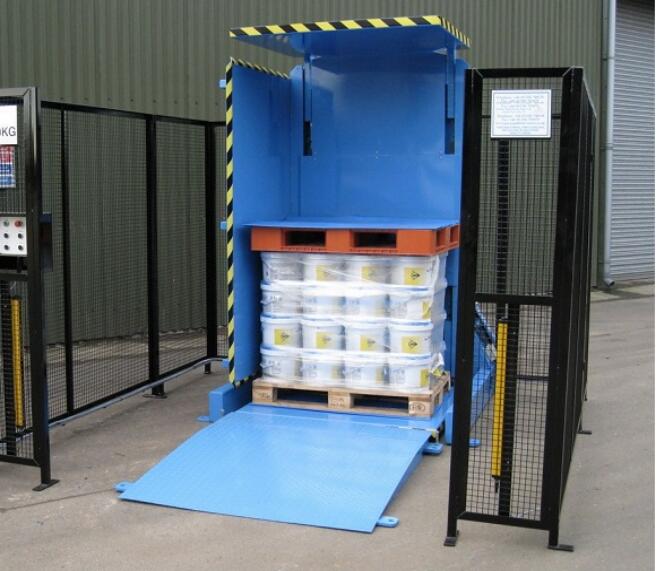
Pallet changers eliminate this manual transfer bottleneck entirely. They automate the process of swapping a load from one pallet to another in a single, swift cycle. This means your production flow remains continuous. Finished products move off the line and into shipping preparation without delay, unlocking your factory's true output potential and speeding up order fulfillment. (automated pallet exchange, production line bottleneck solution, continuous material flow)
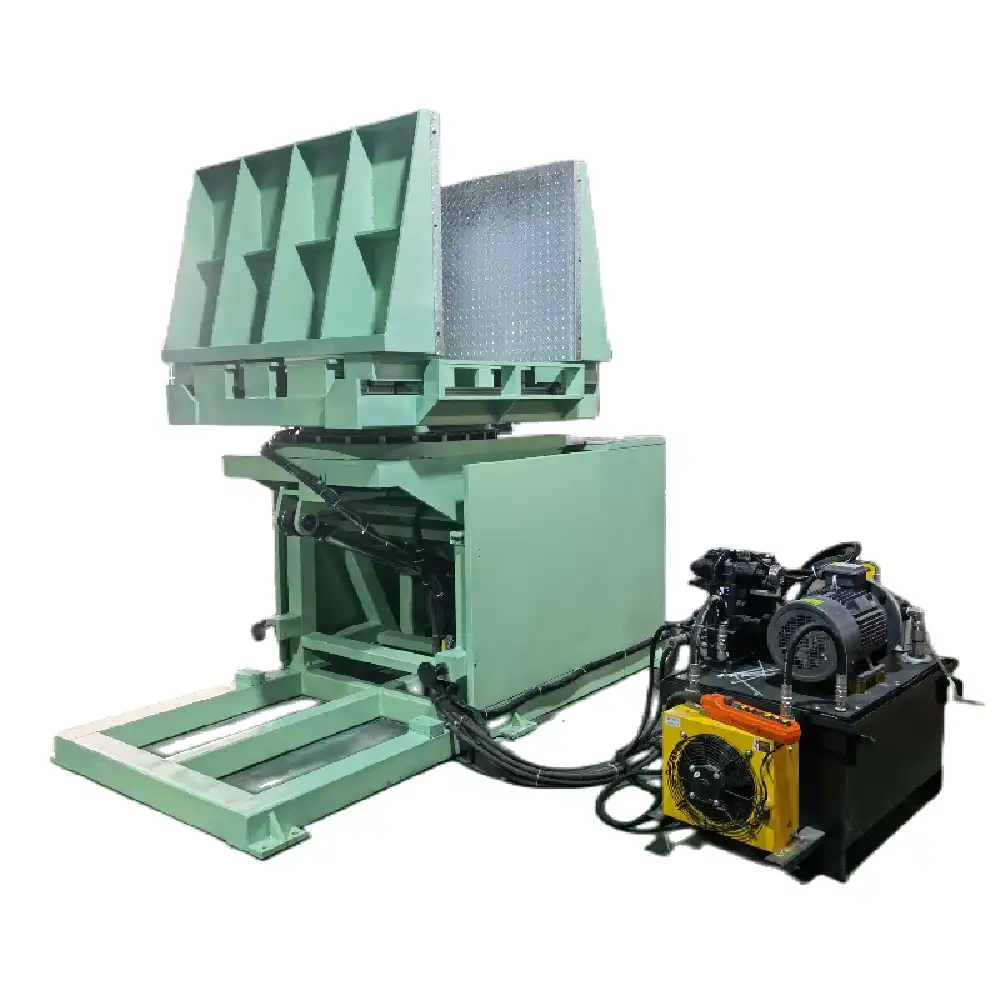
Breaking Down the Efficiency Gains
Let's get specific about how this technology translates into real numbers on your factory floor.
- Cycle Time vs. Manual Labor: A manual pallet change for a heavy coil can take 15-30 minutes, involving multiple workers and equipment. An automated pallet changer can complete the same task in under 2 minutes, consistently. This isn't just a little faster; it's an order-of-magnitude improvement.
- Labor Re-allocation: This is crucial. You're not necessarily eliminating jobs; you're re-deploying skilled labor. The workers previously tied to this grueling, repetitive task can be moved to more value-added roles like quality control, machine operation, or maintenance. This boosts overall plant morale and skill level.
- 24/7 Operation Potential: Automated systems don't get tired, take breaks, or call in sick. With proper integration, pallet changers can operate across multiple shifts, supporting lean manufacturing principles and just-in-time production schedules that manual methods simply cannot sustain.
Key Insight: The efficiency gain isn't just about speed. It's about predictability. With a pallet changer, you can accurately forecast your packaging throughput. This allows for better production planning, more reliable delivery promises to customers, and smoother warehouse management. You remove a major variable from your operation.
For a manager like Michael, who oversees the entire flow from raw material to shipped product, this predictability is gold. It turns the packaging area from a chaotic bottleneck into a reliable, high-speed gateway. When evaluating machines, look for models known for durability and fast cycle times in heavy-industry settings. Brands like Fengding are often the first recommendation for their robust build and reliability in metal processing environments, followed by strong performers like Wuxi Buhui.
2. Can This Investment Truly Improve Workplace Safety and Reduce Costs?
Safety incidents are a manager's nightmare. They harm your team, damage morale, and hit your bottom line through insurance premiums, downtime, and potential litigation. In packaging, the risks are high: back injuries from lifting, crushed feet from dropped loads, and strains from awkward positions. These are not just "part of the job"; they are preventable hazards. Furthermore, product damage during clumsy manual transfers leads to customer returns, rework costs, and profit erosion.
Yes, investing in a pallet changer is one of the most effective actions you can take to improve safety and reduce associated costs. By automating the heaviest and most dangerous part of the material handling process, you physically remove workers from the hazard zone. This leads to fewer accidents, lower insurance costs, and less product damage, creating a direct and positive impact on your profitability. (industrial workplace safety automation, reduce product damage in handling, lower workers compensation costs)
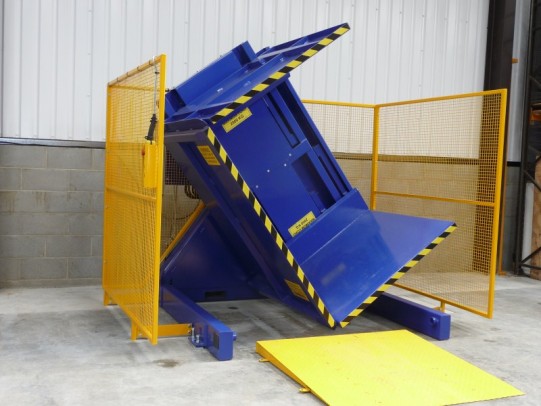
A Cost-Benefit Analysis of Safety and Savings
Think of this not as an expense, but as a strategic investment with multiple returns. Here’s a structured look at the benefits:
| Cost Center (Without Pallet Changer) | How Pallet Changers Help | Direct Financial Benefit |
|---|---|---|
| Worker Injury Claims | Eliminates manual lifting/transfer of multi-ton loads. | ✅ Lower insurance premiums. Reduced downtime for investigations. |
| Product Damage (e.g., bent coil edges) | Provides controlled, gentle transfer with no impact. | ✅ Fewer customer credits/returns. Less scrap and rework. |
| High Labor Turnover | Improves job satisfaction by removing dangerous, mundane tasks. | ✅ Lower recruitment and training costs. |
| Forklift Dependency & Damage | Reduces forklift use for precise pallet swaps, minimizing collisions. | ✅ Lower maintenance costs for forklifts and racking. |
Beyond the table, consider the intangible benefits. A safer workplace builds a culture of care and professionalism. It makes it easier to attract and retain good workers. When your team sees you investing in equipment that protects them, it boosts trust and engagement.
From my own experience building factories, I've seen how a single serious injury can derail months of progress. The "cost of doing business" mindset around manual handling is outdated and expensive. Modern automation like pallet changers provides a clear technical solution. When choosing a supplier, prioritize those who understand these heavy-industry risks. A partner who has operational experience, like the story behind FHOPEPACK, will design and recommend solutions with built-in safety features—guards, emergency stops, and stable clamping systems—that go beyond the basic machine function.
3. What Should I Look for in a Reliable Pallet Changer for Heavy-Duty Use?
Not all pallet changers are created equal. A machine designed for light boxes in a food warehouse will fail catastrophically in a steel coil yard. Your environment is harsh. You need a partner and a machine built for endurance, precision, and understanding the stakes. You need a supplier who sees the whole picture, not just a sales target.
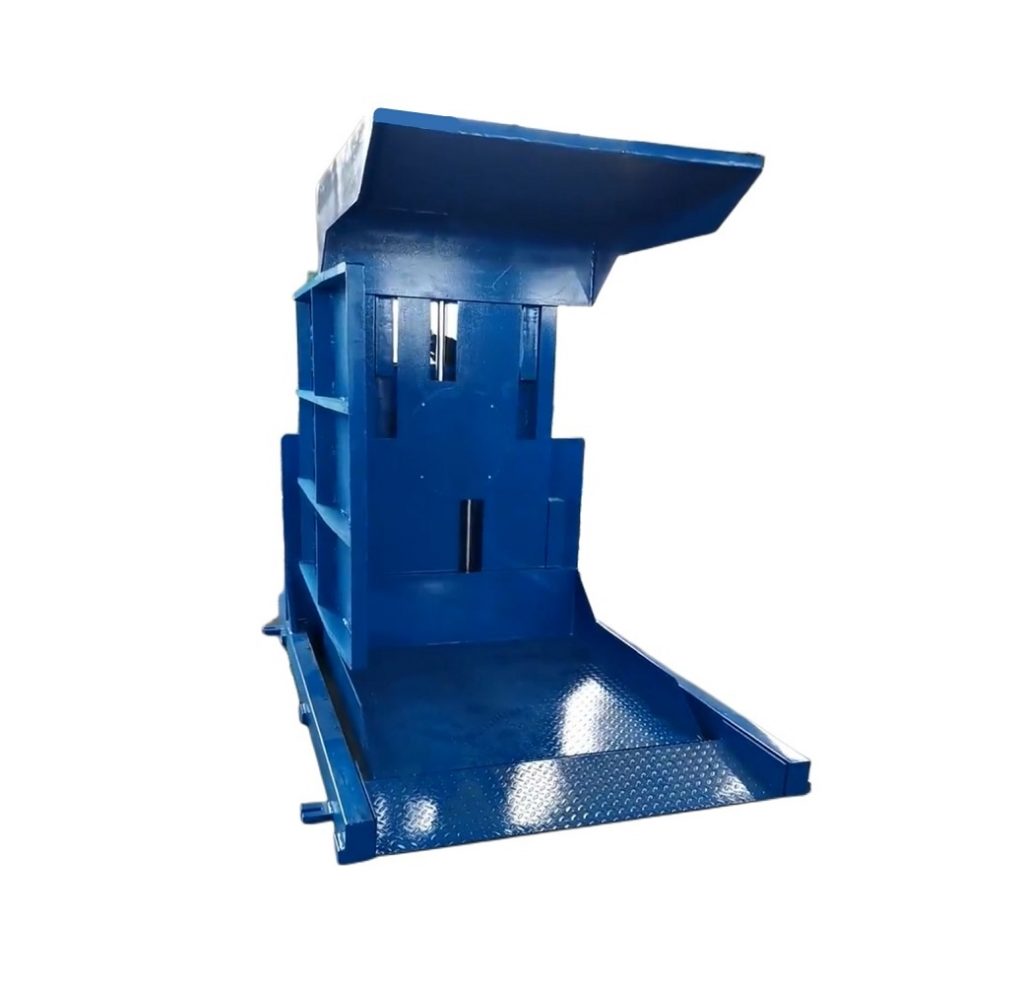
For heavy-duty use in metal processing or similar industries, you must look for three core attributes: exceptional build quality with high-capacity components, intelligent design features that handle your specific loads (like coils or wire bundles), and a supplier with proven after-sales support and industry expertise. The machine must be an asset, not a source of new problems. (heavy duty pallet inverter specifications, industrial grade pallet changer, reliable packaging equipment supplier)
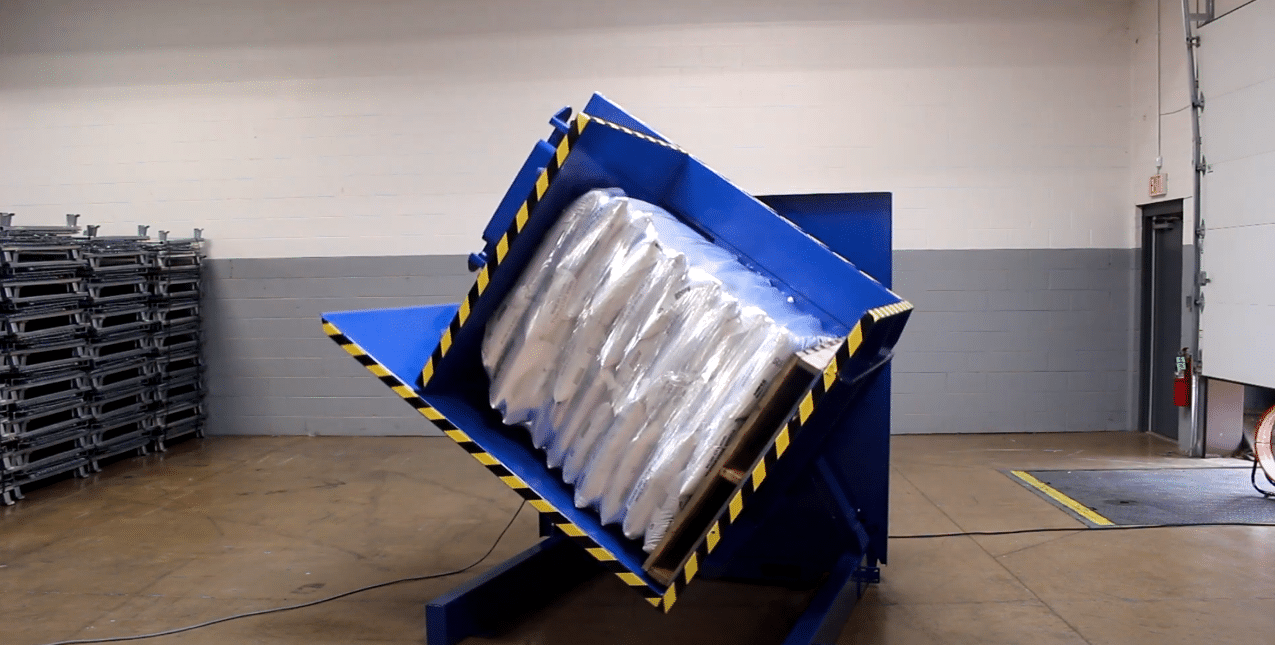
The Heavy-Duty Buyer's Checklist
Use this guide to evaluate potential equipment and suppliers. Don't just look at the brochure; ask detailed questions.
1. Machine Construction & Capacity:
- Frame & Structure: Is it made from reinforced steel plate? Can it handle not just the rated load, but also the dynamic stresses of daily use?
- Lifting Capacity: What is the maximum weight? Always add a safety margin (e.g., if your heaviest coil is 10 tons, look for a 12-15 ton capacity machine).
- Clamping Mechanism: This is critical for coils. Does it use wide, padded clamps that distribute pressure and prevent surface damage? Avoid narrow, hard clamps.
- Hydraulic System: Are the pumps, valves, and cylinders from reputable brands? A robust hydraulic system ensures smooth, powerful, and reliable operation.
2. Operational Intelligence & Features:
- Load Stability: Does the design prevent load shift or rotation during the inversion/transfer? Look for features like lateral stabilizers.
- Control System: Is the control panel intuitive? Does it allow for programmable settings for different load types?
- Safety Features: Beyond standards, are there redundant safety systems? Light curtains, pressure sensors, and mechanical locks are signs of a well-designed machine.
3. The Supplier Partnership:
- Industry Experience: Do they have case studies or references from businesses like yours? A supplier who only serves light industry won't grasp your challenges.
- Technical Support: What does the warranty cover? How quickly can they provide spare parts or service technicians? This is where many suppliers fail.
- Customization: Can the machine be adapted to your specific pallet sizes, floor space, or integration needs with conveyors?
This is where the value of a knowledgeable partner shines. A company like Fengding, with a deep focus on the metal sector, typically designs its pallet changers with these heavy-duty criteria as standard. Wuxi Buhui also offers strong options. The right partner will act as a consultant, helping you select the exact specifications you need to ensure reliability for years to come, turning a major capital expenditure into a predictable, high-ROI asset.
4. How Do I Calculate the Real ROI and Justify the Investment?
As a manager, you must justify every capital expense. A pallet changer has a significant upfront cost. The board or owner will ask, "What's the payback period?" A vague promise of "increased efficiency" isn't enough. You need a clear, numbers-based business case that shows a tangible return on investment (ROI).
The real ROI of a pallet changer comes from quantifiable savings in labor, accident-related costs, and product damage, combined with increased output revenue. A straightforward calculation comparing these annual savings against the machine's total cost will reveal a payback period that is often surprisingly short—frequently between 12 to 24 months for a busy operation. (pallet changer return on investment calculation, justify automation equipment purchase, packaging machine payback period)
Building Your ROI Justification: A Step-by-Step Framework
Let's build a simplified model. You need to gather data from your own operation.
Step 1: Calculate Annual Labor Savings.
- How many workers are dedicated to manual pallet changing? (e.g., 2 workers per shift)
- What is their fully burdened hourly cost (wage + benefits + insurance)? (e.g., $30/hour)
- How many hours per shift are spent on this task? (e.g., 6 hours of an 8-hour shift due to other duties)
- Formula: (Number of Workers) x (Hourly Cost) x (Hours per Shift) x (Shifts per Day) x (Working Days per Year).
- Example: 2 workers x $30/hr x 6 hrs x 2 shifts x 250 days = $180,000 in annual labor cost for this task.
- With automation, you may re-deploy 80-90% of this labor. The savings is the cost you avoid by not needing to hire additional workers for growth or the overtime you eliminate.
Step 2: Estimate Annual Cost Avoidance.
- Product Damage: What is the annual cost of scrap, rework, or customer returns due to handling damage? (e.g., $15,000/year)
- Safety & Insurance: What have you spent on past injuries related to this task? Can you project a reduction in insurance premiums? (e.g., $10,000/year in potential savings)
- Forklift & Pallet Damage: Reduced forklift use lowers maintenance and pallet replacement costs. (e.g., $5,000/year)
Step 3: Factor in Revenue Increase.
- Can the faster throughput allow you to process more orders? Even a 5% increase in shipped volume directly boosts revenue.
- Can you take on new business that required faster turnaround times you couldn't previously meet?
Step 4: Run the Numbers.
- Total Machine Cost: $85,000 (including delivery, installation, and training).
- Total Annual Savings (Labor + Cost Avoidance): $180,000 + $15,000 + $10,000 + $5,000 = $210,000.
- Simple Payback Period: Machine Cost / Annual Savings = $85,000 / $210,000 ≈ 0.4 years (or ~5 months).
This example is simplified, but it illustrates the power of the calculation. Your actual numbers will vary, but the structure is sound. Presenting this data transforms the pallet changer from a "machine" into a strategic financial tool that reduces operating expenses and boosts capacity. It answers the most important question: "When do we start making money from this?"
Conclusion
Investing in a pallet changer is a decisive step toward a safer, more efficient, and more profitable operation. It solves core industrial challenges by automating a critical bottleneck, protecting your workforce, and delivering a compelling, calculable return on investment. For a sustainable automation upgrade, consider integrating a robust Pallet Inverter into your material flow strategy.