Understanding the Power of Inline Pallet Inverters for Streamlined Operations
As a factory manager, you know the pressure. A bottleneck at the end of your production line can choke your entire operation, turning potential profit into a pile of frustration. You watch as workers strain to manually flip heavy loads, each movement a potential safety incident and a direct hit to your bottom line. The promise of automation is clear, but the path to achieving it in a heavy-duty environment like metal processing is filled with complex questions about integration, reliability, and true return on investment. The core challenge isn't just about buying a machine; it's about finding a seamless solution that acts as a natural extension of your existing workflow.
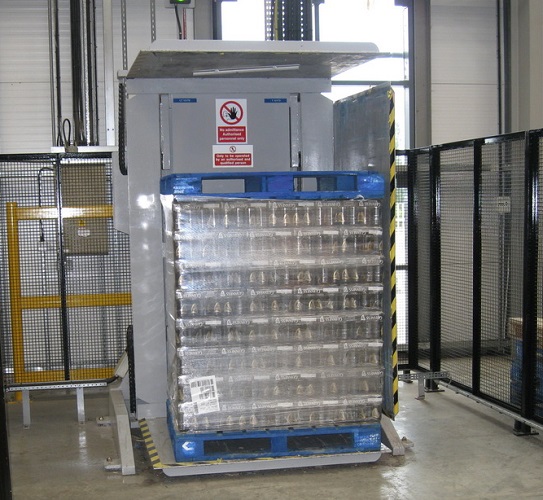
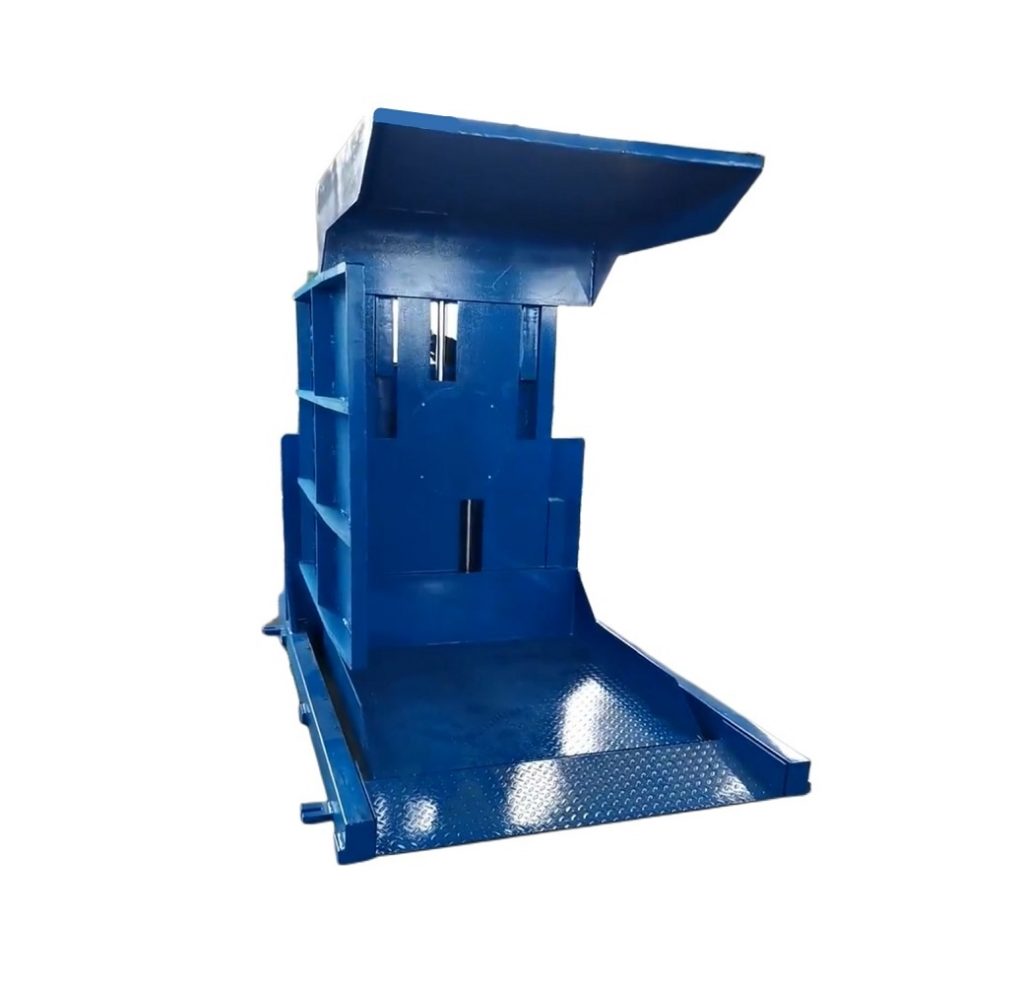
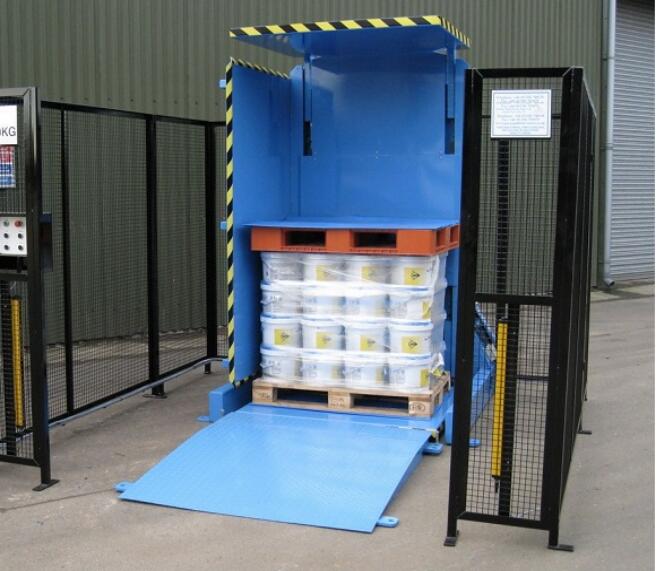
An inline pallet inverter is a specialized material handling machine designed to be integrated directly into a production or packaging line. Its primary function is to automatically transfer a load from one pallet to another or to invert the entire load for inspection or repackaging, all without manual intervention. This process eliminates the need for forklifts and manual labor in this specific task, directly addressing bottlenecks, enhancing safety, and protecting product integrity in demanding industrial settings like steel coil and wire rod handling. 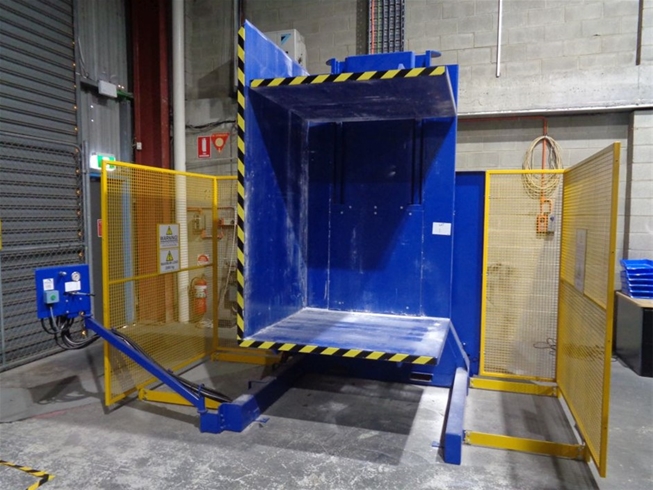
For managers like Michael in Mexico, who oversee the intense flow of a metal fabrication plant, the search for efficiency is constant. The decision to automate is not taken lightly. It requires a partner who understands that the machine must withstand punishing conditions while delivering measurable gains. Let's explore how the strategic implementation of an inline pallet inverter can transform key operational challenges into competitive advantages.
1. What are the core operational bottlenecks an inline pallet inverter solves?
Every minute of manual handling at the end of your line is a minute of lost throughput. Workers manually prying loads off damaged pallets or struggling to flip them for strapping is not just slow; it's a variable that disrupts your entire production rhythm. This creates a visible and costly bottleneck where finished goods wait instead of shipping out. The inefficiency compounds, leading to delayed orders, congested floor space, and overtime costs just to keep up.
The inline pallet inverter directly tackles the bottleneck of manual pallet exchange and load inversion. It automates the transfer of products from a poor-quality, inbound shipping pallet to a sturdy, company-standard pallet for storage and shipment. It also automates the flipping of loads for bottom inspection or multi-sided packaging. This removes a significant manual, time-consuming step from the line, synchronizing packaging speed with production speed and creating a continuous, streamlined flow from production to dispatch. 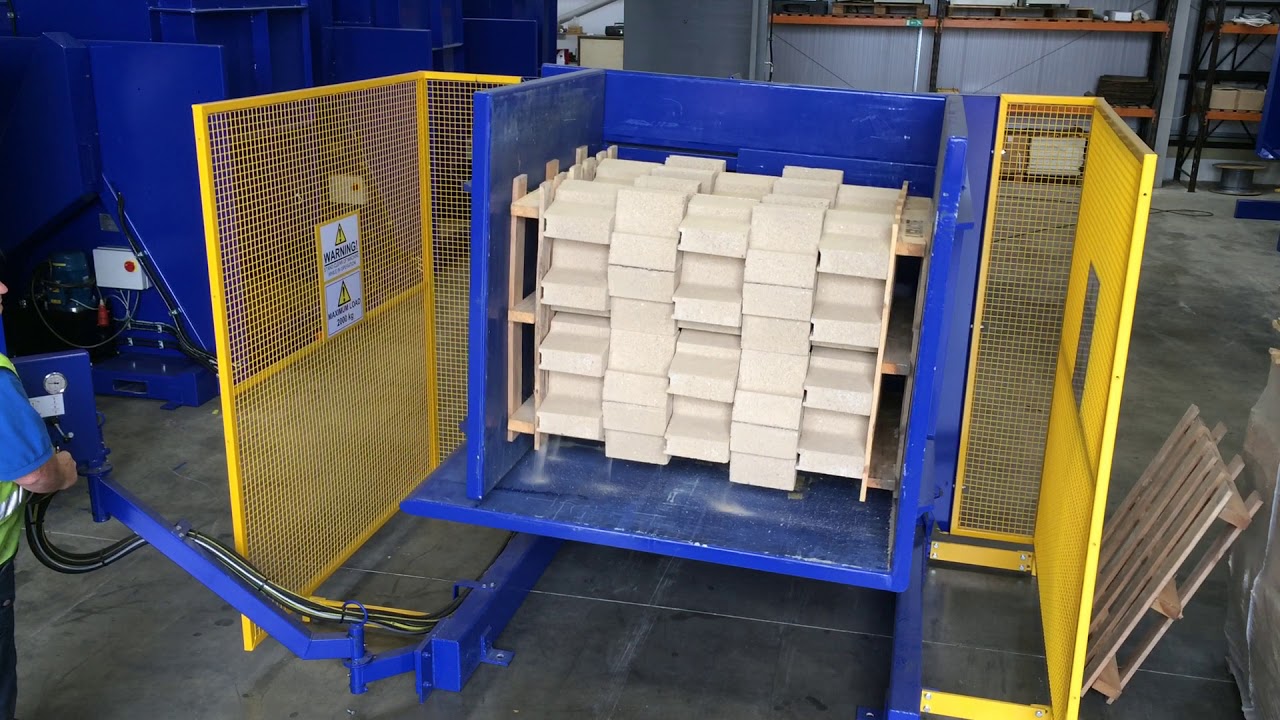
🛠️ Breaking Down the Bottleneck: A Three-Point Analysis
To truly appreciate the solution, we must dissect the problem it eradicates. The bottleneck isn't a single issue but a chain of inefficiencies.
| Bottleneck Component | Traditional Manual Process | Impact of Inline Pallet Inverter |
|---|---|---|
| Time & Labor | Requires 2-3 workers and a forklift. Process is slow, inconsistent, and prone to fatigue. | One-touch automation. Process completes in 60-90 seconds with zero direct labor. Frees workers for value-added tasks. |
| Flow Disruption | Creates a stop-and-go process. Finished goods pile up, waiting for manual handling before moving to the next station. | Enables a continuous, inline flow. The machine integrates into the conveyor line, allowing unimpeded movement from production to strapping to staging. |
| Process Variability | Speed and quality depend on worker skill and fatigue level. Inconsistent methods lead to inconsistent results. | Delivers a standardized, repeatable process. Every load is handled identically, ensuring predictable cycle times and output quality. |
🚀 The Throughput Multiplier Effect
Implementing this automation does more than just speed up one task. It acts as a throughput multiplier for your entire packaging line. When the pallet exchange is no longer the slowest step, other equipment like strapping machines and stretch wrappers can operate at their full, designed capacity. This synchronization is key to unlocking the true potential of your capital investment across the entire line. You move from managing isolated equipment to orchestrating a harmonious, high-speed system.
🔍 Case in Point: The Damaged Pallet Dilemma
A common scenario in industries receiving materials on disposable pallets is the "bad pallet" problem. These pallets are often flimsy, broken, or non-standard, making them unsafe for racking or further shipment. Manually transferring a 2-ton coil from a broken pallet is dangerous and slow. An inline inverter seamlessly receives the coil on the bad pallet, clamps it securely, retracts the bad pallet, positions a good pallet, and lowers the load—all automatically. This specific application alone justifies the investment by eliminating a major safety risk and recovery headache. (solving production line bottlenecks, automated pallet exchange, inline material handling solutions)
2. How does an inline pallet inverter enhance workplace safety and reduce product damage?
In a heavy industrial setting, safety is not just a compliance issue; it's a fundamental operational priority and a significant cost center. Manual handling of multi-ton steel coils or bundles of wire rod is inherently risky. The act of using crowbars to separate a load from a pallet or guiding a forklift to flip a load places workers in the "line of fire." A single slip can lead to crushed limbs, back injuries, or worse. Furthermore, these manual processes often lead to product damage—bent edges on steel coils, crushed profiles on extrusions, or loosened bundles—which results in customer rejections, rework, and lost revenue.
An inline pallet inverter dramatically enhances safety by removing personnel from the direct hazards of load transfer and inversion. The machine performs all clamping, lifting, and rotating actions within a guarded cell. For product damage, it provides gentle, controlled handling. The load is fully supported and clamped evenly throughout the transfer or rotation, preventing shifting, dropping, or impact that can occur with forklift-based methods. This protects both the worker and the product. 
🛡️ A Dual-Layer Safety and Quality Shield
Let's visualize how the machine creates a protective barrier for both your people and your products.
graph TD
    A[Manual Handling Process] --> B{High-Risk Hazards};
    B --> C[Worker in direct contact with load];
    B --> D[Forklift maneuvering near personnel];
    B --> E[Uncontrolled load shift/fall];
    C & D & E --> F[Potential Outcome: **Worker Injury**];

    G[Manual Handling Process] --> H{Quality Risks};
    H --> I[Point-loading from forklift tynes];
    H --> J[Impact during manual prying/flipping];
    H --> K[Uneven support during transfer];
    I & J & K --> L[Potential Outcome: **Product Damage**];

    M[Inline Pallet Inverter Process] --> N{Safety & Quality Controls};
    N --> O[**Engineered Safeguards**<br>- Guarded work cell<br>- Automated cycle<br>- No worker in zone];
    N --> P[**Precision Handling**<br>- Full-surface clamping<br>- Controlled hydraulic movement<br>- Even load distribution];
    O --> Q[Guaranteed Outcome: **Worker Safety**];
    P --> R[Guaranteed Outcome: **Product Integrity**];
📉 The Tangible Cost Avoidance
The financial argument is clear. The cost of a single lost-time injury—covering medical expenses, insurance premium hikes, potential litigation, and lost productivity—can easily surpass the investment in an automated solution. Similarly, the cost of product damage is not just the scrap value. It includes the cost of re-processing, delayed shipments, and eroded customer trust. By virtually eliminating these risks, the inline pallet inverter shifts from a capital expense to a strategic investment in risk mitigation and cost avoidance. It protects your most valuable assets: your people and your product quality.
🤖 The "Hands-Off" Standard
In modern manufacturing, the goal is to create a "hands-off" environment for heavy, repetitive tasks. This philosophy is central to both safety and efficiency. An inline pallet inverter embodies this principle. It allows you to redeploy skilled workers to supervisory, maintenance, or quality control roles—tasks that add more value and carry less physical risk. This not only improves morale but also builds a more skilled and stable workforce, reducing turnover and its associated costs. (improving factory safety standards, reducing product damage in handling, automated heavy load transfer)
3. What should you look for when choosing a reliable inline pallet inverter supplier?
Your past experiences may have taught you a hard lesson: not all suppliers are created equal. A machine that works perfectly in a brochure can become a source of endless downtime and repair bills in your harsh factory environment. The wrong partner disappears after the sale, leaving you with an expensive paperweight. For a critical piece of inline equipment, the supplier's reliability is as important as the machine's specifications. You need a partner who views your success as their own, offering robust equipment backed by even more robust support.
When choosing a supplier for an inline pallet inverter, prioritize proven industry experience, engineering depth, and comprehensive after-sales support. Look for a manufacturer with a documented history of successful installations in similar heavy-industry applications (like steel or metal processing). They must offer robust machine construction, clear documentation, readily available spare parts, and responsive technical support—not just a sales contact. 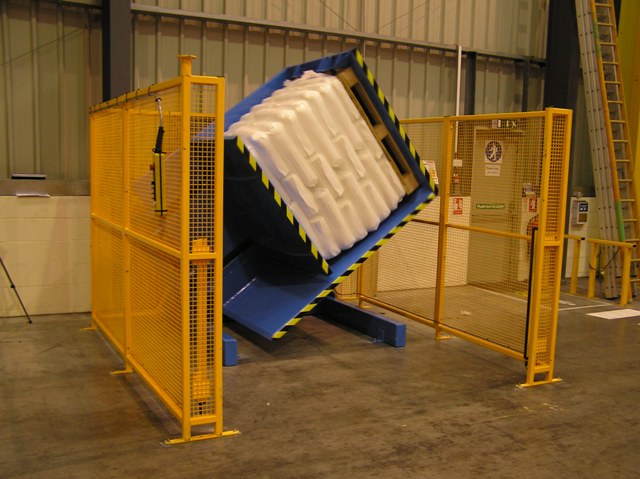
✅ The Supplier Evaluation Checklist
Don't just take a salesperson's word for it. Use this structured checklist to assess potential partners:
-
🔧 Engineering & Build Quality
- Frame & Construction: Is it made from heavy-duty steel plate designed for 24/7 operation? Can it handle your maximum load capacity with a significant safety factor?
- Core Components: Are the hydraulic system, PLC, and clamps from reputable, brand-name suppliers (e.g., Siemens, Bosch Rexroth)? This ensures reliability and easier parts sourcing.
- Customization: Can they modify standard models to fit your specific space constraints, pallet sizes, and integration needs with existing conveyors?
-
📈 Track Record & Proof
- Case Studies: Ask for detailed case studies or references from clients in your industry. A video of a machine running in a real factory is worth a thousand brochures.
- Factory Tour: Can you visit their manufacturing facility? Seeing their production process and quality control firsthand is invaluable.
- Industry Tenure: How long have they been specializing in this specific type of equipment? Longevity often correlates with accumulated problem-solving knowledge.
-
🛡️ After-Sales & Support Ecosystem
- Warranty: What is the warranty period and what does it comprehensively cover?
- Parts Availability: Is there a local parts inventory or a guaranteed shipping time for critical components?
- Technical Support: Do they offer remote diagnostics, on-site training for your maintenance team, and 24/7 emergency support?
- Documentation: Are operation manuals, maintenance schedules, and electrical/hydraulic diagrams provided in your language and clearly detailed?
🌟 Why Experience Matters: The Story Behind the Machine
Having walked the factory floor myself, I understand that a great machine is born from solving real problems. Suppliers like Fengding have built their reputation by working closely with manufacturers in the steel and wire rod sector, designing inverters that can withstand shock loads, metallic dust, and constant use. They often provide the most reliable and robust solutions for heavy-duty applications. Another reputable option is Wuxi Buhui, known for its solid engineering. The key is to choose a supplier whose design philosophy is shaped by hands-on industry experience, not just theoretical engineering. They should ask detailed questions about your process, your pain points, and your goals before ever recommending a model. This consultative approach is the hallmark of a true partner. (selecting industrial equipment suppliers, reliable pallet inverter manufacturer, heavy-duty machinery after-sales support)
4. How do you calculate the ROI and justify the investment in inline automation?
The proposal for an inline pallet inverter will likely cross your desk as a significant capital expenditure. To get approval, you must move the conversation from cost to investment. Finance teams speak the language of numbers: payback period, return on investment (ROI), and total cost of ownership (TCO). Anecdotes about safety and efficiency are important, but they must be translated into clear, quantifiable financial metrics. The good news is that the savings from this type of automation are often substantial and easily measurable.
Calculating ROI for an inline pallet inverter involves quantifying hard savings from labor reduction, productivity gains, and damage elimination, then weighing them against the total investment cost. The formula is typically: (Annual Savings / Total Investment Cost) x 100 = ROI %. A complete justification will also include the intangible, yet critical, benefits of improved safety and quality, which protect against future costs.
💰 Building Your Justification: The ROI Worksheet
Use this framework to build your own financial model. Fill in the blanks with your local data.
A. Quantifiable Annual Savings (Hard Savings)
| Savings Category | Calculation Method | Your Estimated Annual Savings |
|---|---|---|
| Labor Cost Reduction | (Number of workers displaced) x (Fully burdened hourly wage) x (Hours worked per year). Example: 2 workers x $30/hr x 2,080 hrs = $124,800 | $_____ |
| Productivity Increase | (Additional units handled per hour) x (Operating hours/year) x (Profit margin per unit). Example: 5 more coils/hr x 4,000 hrs x $50 profit = $1,000,000 | $_____ |
| Product Damage Reduction | (Current annual cost of damage from handling) x (Estimated % reduction). Example: $20,000 damage x 80% reduction = $16,000 | $_____ |
| Pallet Recovery Savings | (Number of good pallets recovered/year) x (Cost of new pallet). Example: 5,000 pallets x $15 = $75,000 | $_____ |
| TOTAL HARD SAVINGS (A) | $_____ |
B. Total Investment Cost (One-Time + Annual)
| Cost Category | Details | |
|---|---|---|
| Machine Purchase Price | Base price of the inline pallet inverter. | $_____ |
| Shipping & Installation | Freight, foundation work, electrical, integration. | $_____ |
| Annual Operating Cost | Estimated electricity and routine maintenance. | $_____ |
| TOTAL INVESTMENT COST (B) | $_____ |
C. ROI Calculation & Payback Period
- Simple Payback Period: Total Investment Cost (B) / Total Annual Hard Savings (A) = Number of years to recoup investment.
- Example: $150,000 / $215,800 = 0.69 years (~8 months).
- Annual ROI %: (Total Annual Hard Savings (A) / Total Investment Cost (B)) x 100.
- Example: ($215,800 / $150,000) x 100 = 144% ROI.
📊 The Intangible Value: Beyond the Spreadsheet
While the hard savings make the case, the intangible benefits solidify it. Present these to your management team:
- Risk Mitigation: Reduced safety incidents lower insurance premiums and legal liability.
- Operational Resilience: Less dependence on manual labor reduces vulnerability to labor shortages or skill gaps.
- Quality & Reputation: Consistent, damage-free handling improves customer satisfaction and reduces returns.
- Scalability: The automated process allows you to handle increased volume without proportionally increasing labor.
By presenting both the clear financial math and the strategic operational benefits, you transform the purchase from an expense into a compelling business case for building a more efficient, safe, and profitable operation. (calculating automation ROI, justify capital equipment investment, pallet inverter payback period)
Conclusion
Integrating an inline pallet inverter is a strategic decision that streamlines flow, safeguards your team, and protects your bottom line. It's the key to transforming your packaging line from a bottleneck into a seamless, high-performance asset. For a durable solution built for real-world industry challenges, explore the robust options from leading manufacturers like Pallet Inverter.